UN Official Fired Over Gaza Comments? The Benjamin Davis FAO Timeline
Benjamin Davis left the UN food agency FAO after 26 years. It cited impartiality; he says Gaza vigils were the reason. Timeline, rules and his 2026 appeal.
Latest Story
Benjamin Davis spent 26 years at the UN’s Food and Agriculture Organization. On 30 September 2026 his employment ended, at the request of Director-General Qu Dongyu. The documents cited breaches of the impartiality rules for international civil servants. Davis says the real reason was Gaza: weekly staff vigils for people facing famine, and a report on food in Gaza that he says he was told to take down. He has appealed. Is this a UN official fired for Gaza comments, or an organisation enforcing neutrality? The appeal will decide. This timeline sets out what is on record.
The headline version, “fired for criticising Israel”, is Davis’s account, and it may prove right. But it is not yet a finding. FAO has not explained its decision in public and did not respond to Reuters or AFP. What is documented: a contract that was not renewed, a stated reason about impartiality, a Director-General who told staff, the day before Davis left, that “we don’t allow you to play the game here of human rights”, and an appeal now in the system. This page keeps fact, claim, rule and open question apart.
💡 Short Answer
Benjamin Davis, a 62-year-old director at the UN Food and Agriculture Organization, left on 30 September 2026 after 26 years when FAO declined to renew his contract. Documents cited breaches of impartiality standards. Davis says the real reason was his part in weekly staff vigils for Gaza famine victims and a May 2025 Gaza food report. He filed an appeal, reported on 2 October. FAO has not commented.
The Benjamin Davis FAO Case: Key Questions
The Case in Ten Points
- The person: Benjamin Davis, 62, Spanish American, 26 years at FAO, director of Rural Transformation and Gender Equality.
- The decision: told in July 2026 his contract would end; employment ended 30 September 2026.
- Stated grounds: breaches of the impartiality standards of the international civil service, per documents seen by Reuters.
- His account: he was targeted for Gaza activism, accused of organising weekly moments of silence.
- The report: a May 2025 study on food in Gaza and humanitarian law, which he says he was told to take down.
- The famine: the IPC confirmed famine in Gaza Governorate on 22 August 2025.
- The remarks: Qu Dongyu told staff on 29 September they could not “play the game here of human rights”.
- The appeal: filed in FAO’s internal justice system, reported 2 October 2026.
- FAO’s side: no public response to Reuters or AFP.
- Still open: whether Gaza advocacy was the reason, and whether the decision broke FAO rules.
The Full Timeline
Newest first, with the background rules and appointments at the end.
2026
Davis appealsDocumented
Reuters reports that Davis has launched an appeal against his dismissal through FAO’s internal justice process. “I feel it’s a terrible injustice,” he says. “I’ve been disciplined without due process for speaking up about a subject at the core of FAO’s mandate about the right to food, which is the most basic of human rights.” FAO does not respond to requests for comment.
2026
Last day after 26 yearsDocumented
Davis’s employment ends. A large crowd of staff gathers at FAO headquarters in Rome to applaud him as he leaves. The same day he tells AFP he was informed in July that his contract would not be renewed because he had allegedly breached impartiality rules. “They accused me of organising these moments of silence on the situation of starvation and famine in Gaza,” he says. He says he fears colleagues who joined the vigils could face retaliation.

2026
Qu: “play the game of human rights”Documented
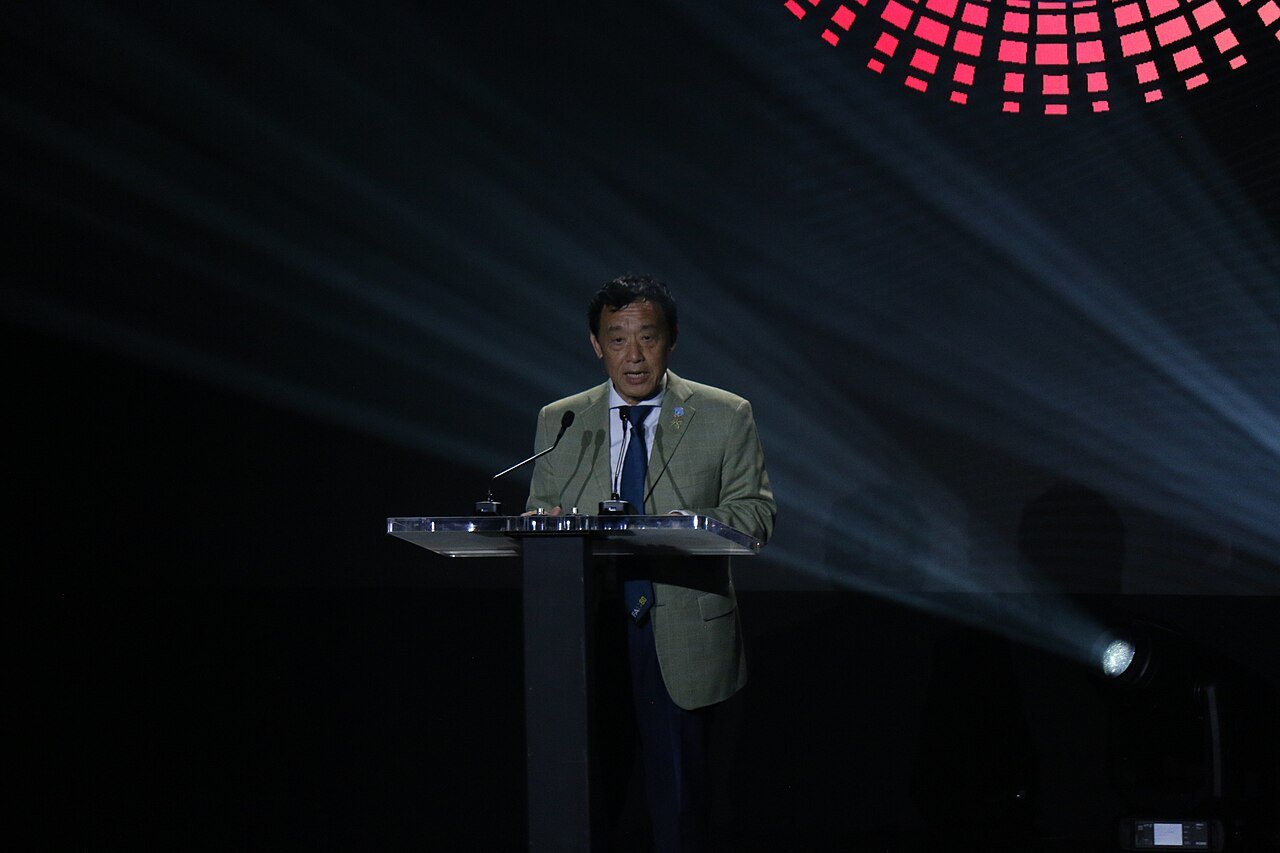
At a filmed session on forestry, Director-General Qu Dongyu appears to warn staff: “We don’t allow you to play the game here of human rights.” He adds: “Of course, human rights is very important but we have the human rights agency in Geneva. If you want to take care, go there,” and says he “will fire more people if they are against the law.” Reuters reports he defended the dismissal of an unnamed senior staff member.
2026
Italian Insider’s claimSingle-outlet claim
The Rome-based Italian Insider reports that a diplomat from the Israeli embassy filmed one of the silent staff protests at FAO headquarters, and that FAO published and then deleted Davis’s starvation report “under pressure from Israel and the United States”. The report relies on unnamed sources. Neither claim has been confirmed by Reuters, AFP or FAO.
Told his contract will endDavis’s account
Davis is informed that his employment will end on 30 September, at the request of the Director-General. Documents seen by Reuters cite breaches of the international civil service standards that require staff to act with impartiality. Davis rejects that. According to his account, he was accused of organising the Gaza moments of silence.
2025
IPC: famine pushed backDocumented
A new IPC analysis finds no area of Gaza still classified in famine, after the ceasefire improved access. FAO, UNICEF, WFP and WHO warn that 1.6 million people, 77 percent of the population, still face acute food insecurity, and that gains could reverse without sustained aid.

2025
Gaza ceasefire takes effect
A ceasefire between Israel and Hamas takes effect, with more aid trucks allowed in. Violence continues at a lower level: AFP counts around 1,431 Palestinians killed since the truce began.
2025
Famine confirmed in Gaza GovernorateDocumented
The IPC Famine Review Committee confirms famine (IPC Phase 5) in Gaza Governorate, the first famine confirmed in the Middle East. It projects famine spreading to Deir al-Balah and Khan Younis. This is the crisis the FAO vigils were held for, and the reason Davis argues the subject sits at the core of FAO’s mandate.
onward
Weekly moments of silenceDocumented
Staff hold silent gatherings inside FAO headquarters, reported as weekly on Thursdays, for people facing starvation and famine in Gaza. At their height hundreds of employees take part; by October 2026 around 30 to 40 attend. Davis is one of the participants. FAO management, by his account, sees his role as organising them.
2025
FAO figures: ‘below survival level’Documented
UN News publishes FAO analysis showing food energy availability in Gaza at about 1,470 kcal per person per day on 11 May 2025, during the aid blockade, against 2,100 kcal needed. Meeting that need would take 2,297 tonnes of food a day, about 120 trucks. FAO says the findings reveal violations of international human rights and humanitarian law, including the prohibition of starvation as a method of warfare.
Davis’s Gaza reportDocumented
A report Davis worked on about food availability in Gaza and humanitarian law is published. He later tells AFP: “We were told to take it down. We weren’t allowed to make any references to humanitarian law.” The disagreement is about mandate: whether a technical food agency should draw legal conclusions about a party to a war.
2025
Total aid blockade begins
Israel stops all aid entering Gaza, a blockade that lasts into May. The FAO figures above model food availability during this period.
2019
Qu Dongyu takes over FAO
Chinese agronomist Qu Dongyu becomes FAO’s ninth Director-General, the first from China. Member states re-elect him in July 2023. Senior contract decisions, such as Davis’s, are made at his request.
ICSC standards updated
The International Civil Service Commission revises the Standards of Conduct for the International Civil Service, which FAO applies to its staff. They say staff members’ personal views “remain inviolate”, but that they “do not have the freedom of private persons to take sides or to express their convictions publicly on controversial matters”. This is the rule cited against Davis.
Davis joins FAO
Davis begins a 26-year career at FAO, working on social protection, rural poverty and agricultural economics. He later leads the From Protection to Production project, serves as deputy director of the agricultural development economics division and becomes director of the Rural Transformation and Gender Equality Division.
Seventeen Months, From Report to Appeal
The famine, the vigils and the employment decision on one line.
Tap each event. See what kind of statement it is, and who it comes from.
A story like this mixes documented facts, one side’s account, institutional rules and open questions. Keeping them apart is the whole point.
What Is Documented, What Is Claimed
Every key statement in this story, with its source.
| Statement | Source | Status |
|---|---|---|
| Employment ended 30 Sep 2026 after 26 years | Reuters, AFP | Documented |
| Decision cited breaches of impartiality standards | Documents seen by Reuters | Documented |
| Qu: “we don’t allow you to play the game here of human rights” | Filmed session, AFP, Reuters | Documented |
| Accused of organising the Gaza moments of silence | Davis to AFP | Davis’s account |
| Told to take down the May 2025 report | Davis to AFP | Davis’s account |
| Disciplined without due process | Davis to Reuters | Davis’s account |
| Israeli diplomat filmed a staff protest | Italian Insider, unnamed sources | Unconfirmed |
| Report deleted under Israeli and US pressure | Italian Insider, unnamed sources | Unconfirmed |
| Gaza advocacy was the decisive reason | Not established | Open |
| The decision breached FAO rules | For the appeal to decide | Open |
The Two Versions of the Story
Same events, two readings. The appeal decides which one fits the rules.
Davis’s account
- He worked on research into food availability in Gaza.
- He joined weekly moments of silence for people facing famine.
- Hunger and the right to food are FAO’s core mandate.
- Management treated this as political activity.
- His contract was not renewed, without due process.
- He appealed.
The institutional framework
- FAO staff are international civil servants.
- They must stay impartial and independent.
- They may not take sides publicly on controversial matters.
- Management cited breaches of those standards.
- A senior contract was not extended at the DG’s request.
- The decision is subject to appeal.
“I’ve been disciplined without due process for speaking up about a subject at the core of FAO’s mandate about the right to food, which is the most basic of human rights.”
Benjamin Davis, to Reuters, 2 October 2026
“Of course, human rights is very important but we have the human rights agency in Geneva. If you want to take care, go there.”
Qu Dongyu, FAO Director-General, 29 September 2026, as reported by AFP

The Rules Behind the Dispute
UN staff keep their opinions. The question is what they may do with them.
FAO applies the Standards of Conduct for the International Civil Service, written by the International Civil Service Commission and last revised in 2013 with the approval of the UN General Assembly. Two lines in them pull in opposite directions, and the Davis case sits between them.
Views stay private and protected
The standards say staff members’ personal views and convictions “remain inviolate”. Nobody loses their beliefs by joining the UN.
No public side-taking
They also say international civil servants “do not have the freedom of private persons to take sides or to express their convictions publicly on controversial matters, either individually or as members of a group.”
FAO exists to end hunger
FAO’s goal is a world free from hunger and malnutrition. Davis argues that speaking about famine is doing the job, not taking a side.
“As members of a group” matters here. A single staff member’s silent gesture is one thing; a recurring collective gathering inside headquarters about a war is closer to what the rule describes. On the other side, the gatherings were silent, about hunger, and within the agency’s own subject. Neither reading is obviously wrong, which is why the case is in an appeals process rather than settled.
You are a senior international civil servant. Where does each activity sit on the impartiality scale?
Based on the wording of the ICSC Standards of Conduct. This is a reading guide, not a legal ruling: the tribunal decides real cases on their facts.
Where would you draw the line for a food-agency director?
Pick an answer.
Why FAO’s Mandate Makes This Harder
Hunger data is FAO’s job. Legal conclusions are where the argument starts.
Topics like famine, food access, destroyed farmland and aid restrictions are squarely FAO’s field. In June 2025 FAO itself published figures showing food availability in Gaza had fallen to about 1,470 kcal per person per day on 11 May, and said the findings revealed violations of international humanitarian law. So the agency, at the institutional level, did speak about legal implications.
Davis’s account is that his own team’s report, combining food data with humanitarian law, was ordered down because FAO lawyers said it went beyond the mandate. If both are true, the line FAO drew was not “never mention law” but something about who may say it and in what form. That nuance is likely to matter in the appeal.
Food data
Calories available, tonnes needed, trucks required, famine risk.
Legal framing
Whether a technical agency’s staff should conclude that a party broke humanitarian law.
Partisan politics
Campaigning for one side of the war, which nobody says Davis did in his official role.
The Other Side of the Hunger Debate
The underlying facts about food in Gaza are themselves disputed. UN agencies and the IPC found famine in 2025; Israel has rejected those findings. A report by COGAT, the Israeli defence body that controls aid entry, said food entering Gaza between October 2025 and June 2026 “significantly exceeded” UN-identified requirements, at about 1.78 million tons. This is part of why food-agency staff talking about Gaza is sensitive: even the numbers are contested between a UN member state and UN bodies.
What Happens Next: The Appeal Path
Internal steps first, then a tribunal in Geneva.
Decision upheld
The Appeals Committee and the DG find management acted within its authority.
Decision overturned
A finding that procedure or the standards were wrongly applied, possibly with compensation.
Tribunal
If internal appeal fails, a complaint to the ILO Administrative Tribunal, which can award damages.
Policy change
Whatever happens to Davis, UN agencies may face pressure to clarify what staff may do on humanitarian causes.
The Case in Numbers
| Measure | Figure |
|---|---|
| Years at FAO | 26 |
| Age | 62 |
| Nationality | Spanish American |
| Last post | Director, Rural Transformation & Gender Equality Division |
| Gaza report | May 2025 |
| Told contract would end | July 2026 |
| Employment ended | 30 September 2026 |
| Qu remarks | 29 September 2026 |
| Appeal reported | 2 October 2026 |
| Vigil attendance | Hundreds at peak, 30–40 by Oct 2026 |
| FAO food availability, 11 May 2025 | ~1,470 kcal per person per day (modelled) |
| Food needed daily | 2,297 tonnes, ~120 trucks |
| FAO public response | None to Reuters or AFP |
| Final ruling | Not yet |
Who Is Who
Benjamin Davis
Economist; social protection and rural poverty specialist; led FAO’s Rural Transformation and Gender Equality Division until 30 September 2026.
Qu Dongyu
In office since 1 August 2019, re-elected in 2023. Contract decisions on senior staff are made at his request.
ICSC
The International Civil Service Commission sets the conduct standards FAO applies, including impartiality.
ILO Administrative Tribunal
Geneva court that hears employment complaints from staff of FAO and dozens of other international organisations.
What We Know vs What We Don’t
Documented
26 years at FAO; employment ended 30 September 2026; impartiality breaches cited; he took part in the Gaza moments of silence; he worked on a May 2025 Gaza food report; Qu’s 29 September remarks; the appeal.
Davis’s account
He was accused of organising the vigils; the report was ordered down; he was disciplined without due process; the real motive was his Gaza advocacy.
Unconfirmed claims
An Israeli diplomat filmed a staff protest; the report was deleted under Israeli and US pressure (Italian Insider, unnamed sources).
Unresolved
Whether Gaza advocacy was the decisive reason; whether his conduct breached the standards; whether the decision followed due process; whether others will be disciplined.
Corrections to What Is Circulating
“Qu spoke on 1 October”
The remarks were made on Tuesday 29 September 2026, at a filmed forestry session, the day before Davis left. AFP reported them on 30 September and 1 October.
“It was Craig Mokhiber”
No. Mokhiber, a director at the UN human rights office in New York, resigned in October 2023 with a letter on Gaza. That is a separate case. The 2026 FAO case is Benjamin Davis.
“Fired”
Technically his renewable contract was not renewed. He and much of the coverage call it a dismissal, and the stated grounds were disciplinary in nature.
“The IPC cited his report”
AiTimeline could not verify that the IPC’s August 2025 famine analysis cites Davis’s report by name, so this page does not claim it.
Did You Know?
- A Mussolini-era building: FAO headquarters on Viale Aventino was designed in 1938 as Italy’s Ministry of Italian Africa.
- A first for the region: the August 2025 Gaza famine finding was the first famine the IPC confirmed in the Middle East.
- Geneva twice: the human rights agency Qu mentioned and the tribunal that could hear Davis’s case are both in Geneva.
- “As members of a group”: the ICSC rule explicitly covers collective expression, not just individual statements.
- Silent, not silent: the vigils had no speeches, but their meaning was clear to everyone in the building.
Test Yourself: The Davis Case Quiz
1. Which UN agency did Benjamin Davis work for?
2. When did his employment end?
3. What did Qu Dongyu say staff should not “play the game” of?
4. On what day did Qu make the remarks?
5. When did the IPC first confirm famine in Gaza Governorate?
6. Which tribunal can hear FAO staff complaints after internal appeals?
Explore More Timelines
People Also Ask
Frequently Asked Questions
The Bigger Story
Humanitarian agencies exist to confront suffering. The people inside them are also required to stay institutionally neutral. In most crises those two duties sit together comfortably. In a war as politically charged as Gaza, they collide. Davis says his work on Gaza was an expression of FAO’s core concern, food and hunger. FAO’s documents cite the separate obligation of senior staff to keep impartial. Neither side’s reading is a legal finding while the appeal is pending. Whatever the outcome, it will help answer a question every international organisation faces: how much can the experts inside the system say about a crisis before speaking about it becomes part of the controversy?
Related AiTimeline Stories
⚠️ Editorial Note
This is a developing story, last updated 3 October 2026. Employment dates, the stated grounds and the appeal come from Reuters (including documents it reviewed) and AFP. Davis’s explanations are attributed to him. Qu Dongyu’s words are as reported by AFP and Reuters from a filmed session on 29 September 2026. Claims from the Italian Insider rest on unnamed sources and are labelled unconfirmed. Gaza food and famine figures come from FAO via UN News (5 June 2025) and the IPC. FAO did not respond to requests for comment from Reuters or AFP. Corrections to some early summaries: Qu’s remarks were on 29 September, not 1 October; a precise 1 July memo date is not in the published reporting; and AiTimeline could not verify that the IPC cited Davis’s report. This page will be updated when the appeal produces a decision.
Sources & further reading
Every dated entry above was checked against these references. Last reviewed 3 October 2026.
- Reuters via TimesLIVE: Ex-UN director who protested Gaza famine challenges his dismissal (2 October 2026)
- AFP via Arab News: Senior UN figure says lost job for criticising Israel over Gaza (1 October 2026)
- Al Jazeera: FAO official says he lost his job for criticising Israeli policies in Gaza (2 October 2026)
- UN News: In Gaza, daily food intake has fallen well below 'survival' level (5 June 2025)
- IPC: Gaza Strip, famine confirmed in Gaza Governorate, projected to expand (August 2025)
- WFP: UN agencies welcome news that famine has been pushed back in the Gaza Strip (19 December 2025)
- International Civil Service Commission: Standards of Conduct for the International Civil Service (2013)
- ILO Administrative Tribunal: practical guide to the procedure