Black Wednesday 1992: UK’s ERM Exit and Financial Impact
Black Wednesday 1992 timeline: how Britain raised rates to 12%, announced 15% and still left the ERM on 16 September, the £3.3bn cost and what followed.
Latest Story
On Wednesday 16 September 1992, Britain spent a day trying to defend the pound at almost any cost, and lost. The Bank of England bought sterling with its reserves, interest rates were raised from 10% to 12%, a further rise to 15% was announced, and that evening the government pulled the pound out of the European Exchange Rate Mechanism. Black Wednesday cost the Treasury about £3.3 billion, wrecked the Conservatives’ reputation for economic competence and gave Britain the inflation-targeting system it still uses. This timeline follows the day hour by hour, the two years that led to it, and why it still sets the benchmark for British market shocks in 2026.
💡 Short Answer
Black Wednesday was 16 September 1992, when Britain suspended sterling’s membership of the ERM after failing to keep the pound above its floor of about DM2.78. The government raised the base rate from 10% to 12%, announced a rise to 15% and spent billions in reserves, but the selling did not stop. The 15% rise was cancelled, rates were back at 10% the next day, and the Treasury later estimated the cost at about £3.3 billion.
Black Wednesday 1992: Key Questions
Black Wednesday in Ten Points
- The date: Wednesday 16 September 1992; ERM membership suspended that evening.
- The peg: DM2.95 since October 1990, with a floor of about DM2.78.
- The mismatch: high German rates after reunification, a British recession.
- The triggers: the Danish ‘no’, the lira’s devaluation and a Bundesbank remark.
- The defence: heavy intervention and a rate rise to 12%, with 15% announced.
- The reversal: 15% cancelled, back to 10% on 17 September, 6% by January 1993.
- The cost: about £3.3 billion, by the Treasury’s 2005 estimate.
- The trader: Soros’s fund made around $1 billion, but did not act alone.
- The legacy: inflation targeting from October 1992, Bank independence in 1997.
- The politics: the Conservatives lost their economic reputation and the 1997 election.
Black Wednesday at a Glance
Scroll sideways on a phone.
| Detail | Key fact | Source |
|---|---|---|
| Event | Black Wednesday: sterling leaves the ERM | Bank of England |
| Date | Wednesday 16 September 1992 | Bank of England |
| Prime Minister | John Major (Conservative) | UK Parliament |
| Chancellor | Norman Lamont | UK Parliament |
| Central bank | Bank of England (Governor Robin Leigh-Pemberton) | Bank of England |
| ERM entry | 8 October 1990 at DM2.95, 6% band | UK Parliament |
| Rate moves on the day | 10% to 12%; 15% announced, then cancelled | Bank of England |
| Rate on 17 Sep | Back to 10%; 6% by 26 Jan 1993 | Bank of England |
| Pound’s low after exit | DM2.3709 on 5 Oct 1992 | BoE Quarterly Bulletin |
| Cost to the Treasury | ~£3.3bn (Treasury, measured Feb 1994) | HM Treasury papers, 2005 |
| New policy | Inflation target 1%–4%, 8 Oct 1992 | BoE Quarterly Bulletin |
| Best-known trader | George Soros, Quantum Fund (~$1bn reported gain) | Press reports |
Timeline: How Britain Lost the Battle for Sterling, and What Followed
Newest first, from October 2026 back to 1979. Tags mark events, pressure, crisis moments, rates, policy, aftermath and 2026 developments.
Gilt yields hit a 28-year high 2026
In a global bond sell-off, the yield on 30-year UK government bonds peaked at 6.036% on 7 October 2026, the highest since January 1998, Reuters reported. Higher borrowing costs had already eaten into the fiscal room of John Healey, Chancellor since Andy Burnham became Prime Minister on 20 July 2026, ahead of his first budget on 28 October.
This is a different kind of pressure from 1992. Sterling floats, so there is no exchange-rate floor for markets to attack, and no reserves are being spent defending one. The test now is fiscal credibility, but the underlying question is the one Black Wednesday asked: will markets believe the government’s plan?
2026
Gilts’ worst day since Black Wednesday 2026
Short-dated gilts suffered one of their worst days on record after Iranian strikes on Gulf energy infrastructure sent gas prices up and Bank of England officials signalled that rates might have to rise. The two-year yield closed 30 basis points higher at 4.107%.
Leaving aside the 2022 mini-budget, it was likely the worst day for short-dated gilts since Black Wednesday in 1992, according to a Reuters analysis. Thirty-four years on, 16 September 1992 is still the benchmark for a British market shock.
Thirty years on, the pound falls again Crisis
On the 30th anniversary of Black Wednesday, sterling fell to its lowest level against the dollar since 1985. A week later, Kwasi Kwarteng’s unfunded ‘mini-budget’ triggered a gilt-market crash, and the Bank of England stepped in on 28 September to buy long-dated bonds and protect pension funds.
The comparison was everywhere, but the mechanics were different: in 2022 the pound floated and the Bank’s job was to stop a bond-market spiral, not defend a fixed rate.
2020
Britain leaves the EU Aftermath
The UK left the European Union after the 2016 referendum. Brexit was a separate political process, but historians often trace the depth of Conservative Euroscepticism back to Black Wednesday, when European monetary co-operation was blamed for recession and humiliation.
2005
The secret files are released Aftermath
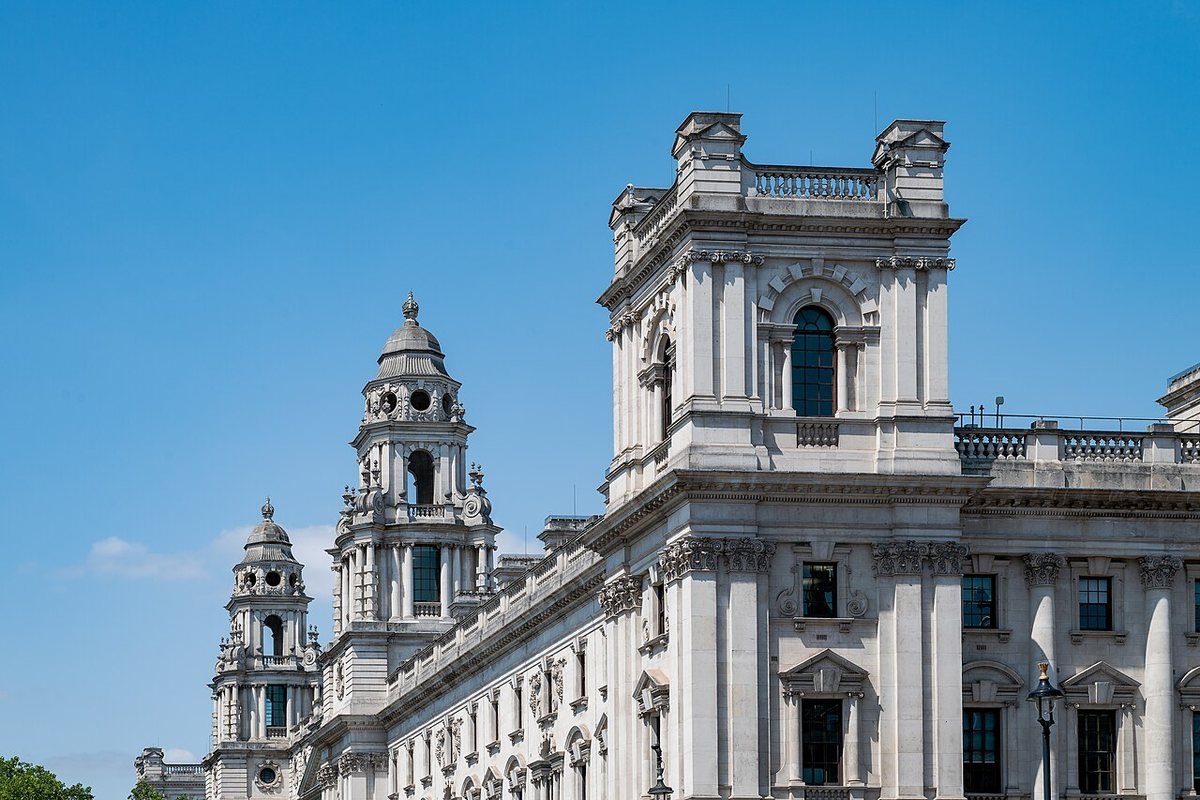
After a request by the Financial Times under the new Freedom of Information Act, the Treasury published its internal papers on Black Wednesday. They put the cost to the taxpayer at about £3.3 billion, far below some earlier estimates, and showed how badly official forecasts of the economy had gone wrong in 1992.
2003
No return: independence and the euro tests Policy
Labour won a landslide on 1 May 1997, ending 18 years of Conservative government. Five days later, Chancellor Gordon Brown gave the Bank of England operational independence to set interest rates to meet the inflation target.
In October 1997 Brown set five economic tests for joining the euro. The Treasury’s June 2003 assessment found four had not been met, and Britain never joined. The euro had launched on 1 January 1999 without it.
1993
The ERM is loosened to survive Crisis
A second wave of attacks hit the French franc and other currencies in the summer of 1993. European finance ministers responded by widening the ERM bands from 2.25% to 15% either side, so loose that the system no longer behaved like a fixed-rate regime. It survived only as a stepping stone to the euro.
1993
Lamont is sacked Aftermath
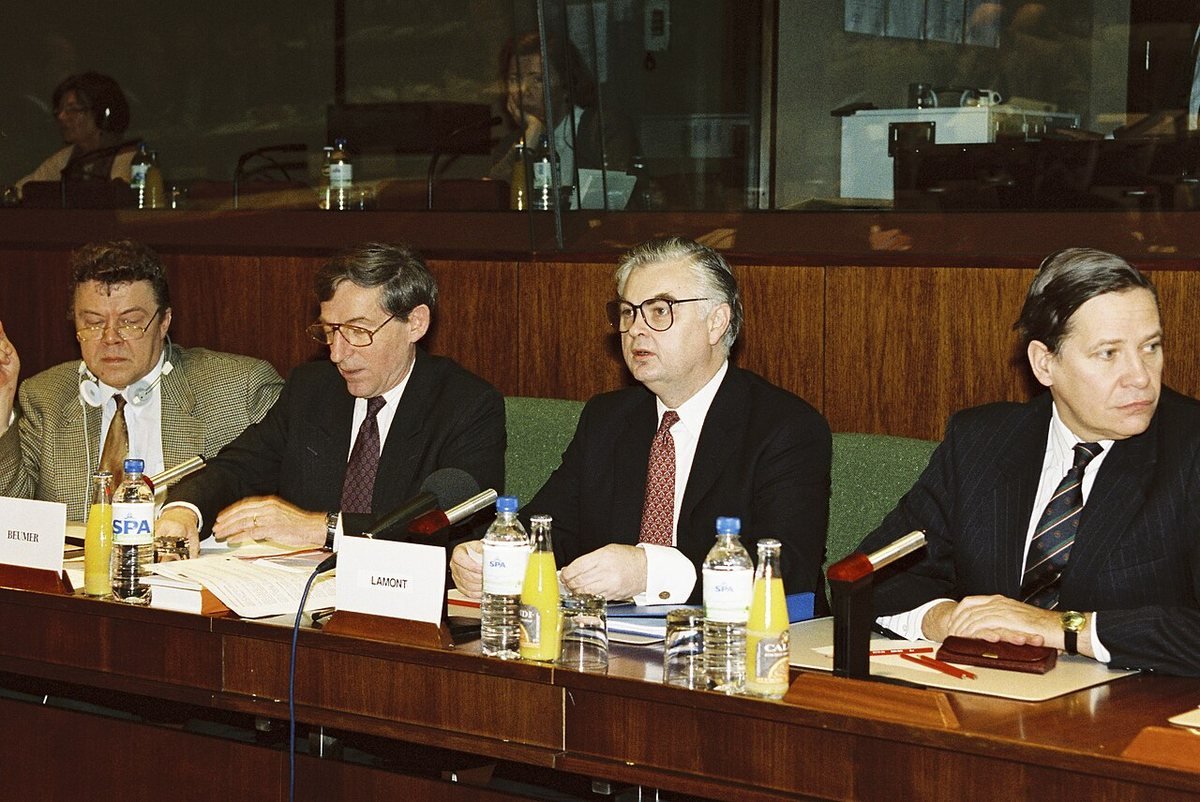
Eight months after Black Wednesday, John Major replaced Norman Lamont with Kenneth Clarke. In his resignation speech in the Commons on 9 June, Lamont said the government gave the impression of being ‘in office but not in power’. Earlier that spring he had said of the ERM exit, ‘Je ne regrette rien’.
Jan 1993
Rates fall to 6% Rates
Freed from the ERM, the government cut interest rates fast. Base rates fell by a percentage point on 22 September, then again on 16 October and 13 November, reaching 6% by 26 January 1993, against 10% before the crisis and 15% announced at its height.
The pound kept falling at first, to a low of DM2.3709 on 5 October, before steadying around DM2.50 later that month, according to the Bank of England.
1992
Britain adopts an inflation target Policy
With no exchange-rate anchor left, Lamont wrote to the Treasury Committee setting an explicit inflation target of 1% to 4%. The Bank of England began publishing an Inflation Report, and the Chancellor and Governor began regular monthly meetings with published minutes from 1994.
It was the start of the framework Britain still uses: today’s target is 2% on the consumer prices index, set by an independent Bank of England.
1992
France votes a narrow ‘yes’ Event
French voters approved the Maastricht Treaty by a margin of about 51% to 49%, the ‘petit oui’. The result kept the single-currency project alive, but was too close to settle the markets. Speculators turned on the French franc, which survived with heavy support from the Bundesbank.
1992
The morning after Aftermath
The cancelled 15% rise never took effect, and the 12% rate set on 16 September was reversed: base rates were back at 10% on 17 September. Italy pulled the lira out of the ERM the same day, and Spain devalued the peseta by 5%.
1992, evening
Britain leaves the ERM Crisis
That evening, after an emergency meeting of ministers and a request to fellow ERM members, Chancellor Norman Lamont announced that Britain was suspending its membership of the ERM and that the rise to 15% would not go ahead. Sterling was left to float.
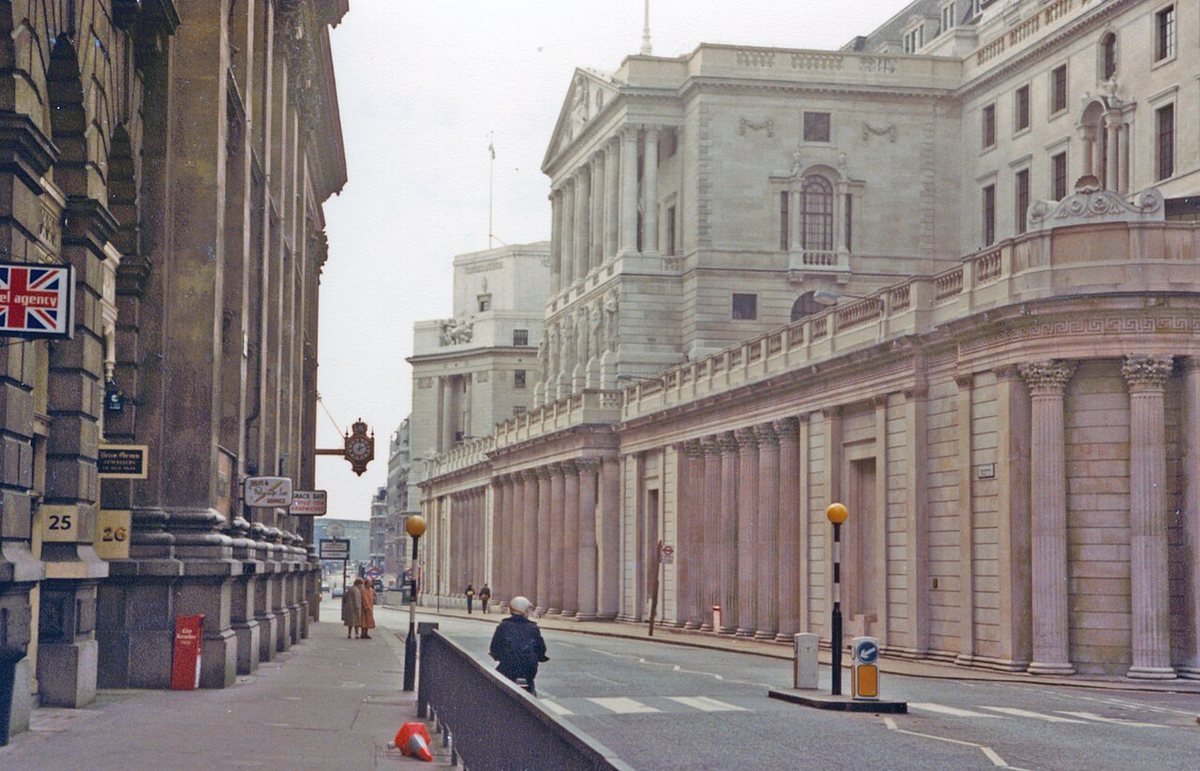
The Bank of England’s own history records that the next day’s rise to 15% was cancelled and that the crisis cost the Treasury over £3 billion.
1992, afternoon
15% announced, and ignored Rates
In the early afternoon, with the 12% rate making no difference, the government announced a further rise to 15%, due the following day. It was meant to show that Britain would pay any price to stay in. Traders concluded the opposite: no government in a recession could keep rates there for long. Selling continued.
1992, morning
The Bank of England buys, rates go to 12% Crisis
From the start of trading the Bank of England bought pounds in huge amounts, with foreign reserves, to hold sterling above its floor of about DM2.78. One widely used estimate puts the intervention at about $22 billion. When that failed, the base rate was raised from 10% to 12% in the late morning, the first rate change of the day.
1992
The Bundesbank remark Pressure
On the evening of 15 September, comments by Bundesbank President Helmut Schlesinger were reported suggesting that a more comprehensive realignment of ERM currencies would have been better than the lira’s devaluation alone. Markets read that as confirmation that the pound was next. Overnight and into the morning, the selling became overwhelming.

1992
The lira is devalued Pressure
Over the weekend, Italy agreed a 7% devaluation of the lira within the ERM, and on 14 September the Bundesbank made a small cut in its interest rates. It was not enough. The realignment showed that ERM rates could be changed, and investors turned to the next weakest currency: sterling.
1992
Pressure builds on the pound Pressure
Danish voters rejected the Maastricht Treaty on 2 June 1992, raising doubts about the single currency. In July the Bundesbank raised its discount rate again to 8.75%. Britain, in recession with base rates at 10%, could not follow without deepening the slump.
On 3 September the government announced it would borrow ECU 10 billion in foreign currencies to strengthen its reserves, and ministers repeated that there would be no devaluation.
1992
Major wins, rates are cut to 10% Rates
John Major won the general election on 9 April 1992 against expectations. In May the base rate was cut to 10%, the last cut ERM membership would allow after a run of reductions from 15% just before entry. Inflation was falling, but the recession had not ended and house prices were still dropping.
1990
Britain joins the ERM Event
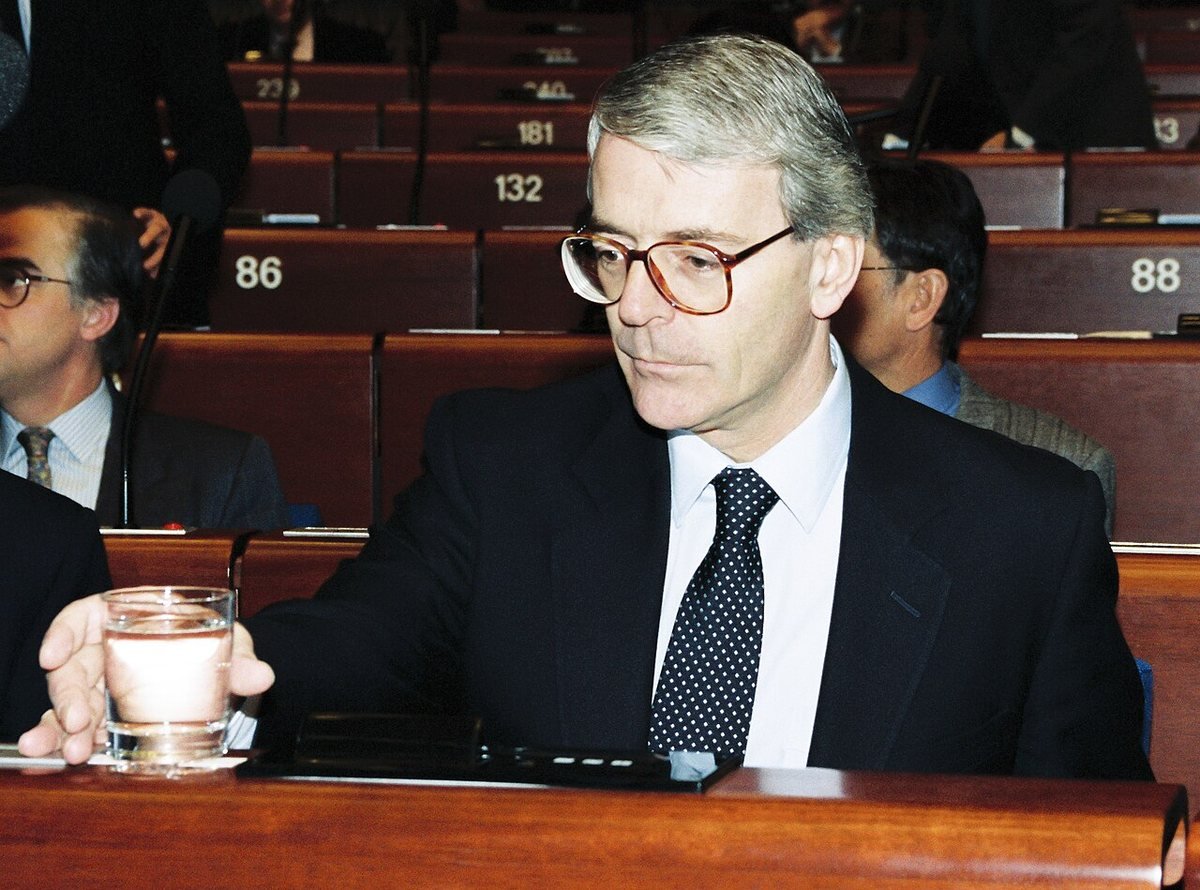
Britain took sterling into the ERM, announced on 5 October and effective on 8 October, at a central rate of DM2.95 with a wide 6% band. Chancellor John Major argued that a link to the Deutschmark would bring discipline to British inflation, then near 10%. Within weeks he had replaced Margaret Thatcher as Prime Minister, with Norman Lamont as his Chancellor.
Critics said the rate was too high, and the timing poor: Germany had reunified on 3 October 1990 and was about to need high interest rates while Britain slid into recession.
1979
Europe launches the ERM Event
The ERM began operating on 13 March 1979 to limit swings between European currencies. Members kept their currencies within bands around central rates, defended by central-bank intervention and interest rates. In practice the Deutschmark became the anchor. Britain stayed out for more than a decade.
The Day in Interest Rates
Raising rates makes holding pounds more rewarding. It only works if markets believe the rate can stay there.
Pick a moment. What was the interest rate, and what would it cost a borrower?
The meter shows the UK base rate against the 15% peak announced on Black Wednesday. The cost line is simple yearly interest on £50,000 at the base rate itself, for illustration; real mortgage rates were higher.
Why Did Black Wednesday Happen?
The speculators were the trigger. The peg was the weakness.
1. The pound joined at a demanding rate
Britain entered at DM2.95, a rate many economists thought too high for an economy with inflation near 10% and a big trade deficit. A strong pound helped bring inflation down, but made exporters less competitive and left little room for error.
2. Britain and Germany needed opposite interest rates
German reunification in October 1990 brought a spending boom and rising inflation in Germany, and the Bundesbank kept rates high. Britain went into recession, with falling house prices and rising unemployment. Inside the ERM, Britain could not cut rates much below Germany’s without weakening the pound.
3. Europe’s political anchor slipped
The Danish ‘no’ in June 1992 and the close French vote in September put the single-currency plan in doubt. If monetary union might not happen, the reason to suffer for an ERM rate weakened, and markets knew it.
4. The defence lacked credibility
Rate rises and intervention can buy time, but traders faced a one-way bet: if the pound held, they lost little; if it broke, they made a fortune. Raising rates to 15% in a recession signalled desperation rather than strength, because no one believed it could last.
Pick a date. How far was the pound below its ERM central rate?
The meter shows the fall from DM2.95, the rate Britain promised to keep within 6% of. Past 6%, the government had to act, or leave.
The Financial Impact: What Did Britain Lose?
Different numbers measure different things. Intervention is not the same as loss.
| Figure | Value | What it measures |
|---|---|---|
| Central rate | DM2.95 | Sterling’s ERM parity from October 1990 |
| ERM floor | ~DM2.78 | Lowest rate allowed within the 6% band |
| Peak rate announced | 15% | Due 17 Sep 1992; cancelled |
| Rate actually applied | 12% | For one day, 16–17 Sep 1992 |
| Intervention | ~$22bn (estimate) | Reserves used buying pounds; not a loss figure |
| Reserves borrowed | ECU 10bn | Foreign-currency loan announced 3 Sep 1992 |
| Treasury cost | ~£3.3bn | Net loss, Treasury estimate released Feb 2005 |
| Earlier loss figure | ~£800m | Trading losses in August and September 1992 only |
| Pound’s low | DM2.3709 | 5 Oct 1992, ~20% below the central rate |
| Soros profit | ~$1bn | Reported gain for the Quantum Fund |
| Tory poll rating | 43% to 29% | Gallup, September to October 1992 |
The Treasury bill
The Treasury’s internal estimate, made public in February 2005, was ‘a loss of £3.3bn measured at February 1994’. The Bank of England’s history says ‘over £3 billion’. Both measure the net loss from buying pounds at about DM2.78 and later rebuilding reserves at a lower price, not the gross amount spent on intervention.
Households and businesses
The rate rises themselves lasted a day, but the two years of high rates needed to stay in the ERM had already hurt. Many families with variable-rate mortgages were in negative equity after the housing crash, and business failures were high. The rapid cuts after the exit eased that pressure, and a cheaper pound helped exporters.
The political price
The Conservatives had made ERM membership the centrepiece of their anti-inflation policy. After Black Wednesday their Gallup rating fell from 43% to 29% within a month, and they never recovered a lasting lead before Labour’s 1997 landslide.
Black Wednesday or White Wednesday?
In the short term, it was a policy failure: billions lost, a promise broken and a government humiliated. In the medium term, leaving freed Britain to cut rates from 10% to 6% within four months, the pound became more competitive and the economy grew through the mid-1990s with low inflation. That is why some economists and Eurosceptics began calling it ‘White Wednesday’.
It is impossible to separate the effect of the exit from other forces, such as falling global rates and the end of the housing slump. The fair conclusion is narrower: Black Wednesday did not prove that fixed exchange rates always fail. It proved that a peg must fit the economy that is asked to defend it.
George Soros and ‘the Man Who Broke the Bank of England’
George Soros’s Quantum Fund, with his chief investment manager Stanley Druckenmiller, built a short position against the pound estimated at about $10 billion, and is reported to have made around $1 billion when sterling left the ERM. The trade made Soros famous and gave him the nickname ‘the man who broke the Bank of England’.
The nickname oversimplifies. Banks, pension funds, multinational companies and other hedge funds were selling pounds too, many to protect themselves rather than to speculate. They did so because Britain’s commitment had become implausible. Soros’s trade became the symbol of the crisis, but the vulnerability was the policy.
Who Was Involved
John Major
Took Britain into the ERM as Chancellor in 1990; Prime Minister from November 1990 to 1997.
Norman Lamont
Announced the suspension on 16 September 1992; set the first inflation target; sacked in May 1993.
Bank of England
Intervened to buy pounds under Governor Robin Leigh-Pemberton; independent on rates from 1997.
Bundesbank
Kept rates high after reunification; President Helmut Schlesinger’s remark of 15 September hit sterling.
George Soros
Quantum Fund’s bet against sterling made around $1 billion and the crisis’s most famous trade.
ERM
European exchange-rate bands from 1979; loosened to 15% in 1993; a stepping stone to the euro.
Meanwhile in India: 1991–92
A year before Black Wednesday, India faced its own currency emergency. In July 1991, with reserves down to a few weeks of imports, the Reserve Bank of India pledged gold with the Bank of England to raise emergency dollars, devalued the rupee and began the liberalisation that reshaped the economy. In 1992, as sterling broke, Mumbai was gripped by the Harshad Mehta securities scam. Both episodes taught the same lesson as Black Wednesday: reserves and promises cannot hold a currency or a market up for ever if confidence goes.
Lessons From Black Wednesday
- Pegs need the right economy: a fixed rate must fit domestic inflation, growth and jobs.
- Rates have limits: higher rates support a currency only if markets believe they will last.
- Reserves buy time, not belief: intervention cannot beat a market convinced the peg will go.
- Credibility is built, not declared: ‘no devaluation’ promises mean little without a plan that works.
- A crisis can reset policy: inflation targeting and an independent Bank of England grew out of the wreckage.
Explore More Timelines
People Also Ask
Frequently Asked Questions
Conclusion: The Day Markets Defeated a Currency Commitment
Black Wednesday exposed the limits of defending sterling when the exchange-rate target conflicted with Britain’s domestic needs. The government spent heavily, raised rates sharply and still had to leave the ERM, at a cost of about £3.3 billion and its reputation. But it also created space for a more flexible framework: an inflation target within weeks, and an independent Bank of England five years later.
Thirty-four years on, with sterling floating and gilt yields at their highest since the late 1990s, the lesson is still the same: even a determined government cannot sustain a commitment that markets no longer believe.
Related AiTimeline Stories
⚠️ Editorial Note
Figures come from the Bank of England, its Quarterly Bulletins for 1992-93, UK Parliament and House of Lords Library material, HM Treasury papers released in 2005 and contemporary reporting. The £3.3 billion figure is the Treasury’s estimate of net loss; intervention estimates such as $22 billion measure reserves used, not money lost. Soros’s profit and position sizes are press estimates. Market data for 2026 is from Reuters reporting. Current to 14 October 2026. This is general information, not investment advice.
Sources & further reading
Every dated entry above was checked against these references. Last reviewed 14 October 2026.
- Bank of England: Our history (16 September 1992, UK crashes out of the ERM; cost to HM Treasury over £3 billion)
- Bank of England Quarterly Bulletin: Operation of monetary policy, 1992 Q4
- Bank of England Quarterly Bulletin: Operation of monetary policy, February 1993 (1-4% inflation target, DM2.3709 low on 5 October 1992)
- UK Parliament: The ERM and the single currency
- House of Lords Library: The UK economy in the 1990s
- Hansard (House of Lords): Economic Policy debate, 24 September 1992
- Hansard (House of Lords): Sterling: Withdrawal from ERM, 11 March 1996
- Financial Times (via European Sources Online): Lessons learnt after forecast went 'spectacularly wrong', on the Treasury's Black Wednesday papers (11 February 2005)
- Economics Observatory: The birth of inflation targeting: why did the ERM crisis happen?
- NIESR (David Marsh): Six lessons from Black Wednesday for today's central bankers (16 September 2022)
- Reuters via Euronext: UK 30-year gilt yields hit 28-year high in global selloff (7 October 2026)