Japanese Yen Carry Trade Timeline 1990–2026: How Cheap Yen Shaped Global Markets
Yen carry trade timeline: Japan's 1990 bubble collapse to zero rates, Abenomics, negative rates, the 2024 global unwind and the 2026 BOJ rate-hike risk.
Latest Story
Most people do not wake up worrying about Japanese interest rates. But global investors do. For more than 30 years, Japan’s ultra-low rates helped turn the yen into one of the world’s favorite borrowing currencies — the yen carry trade: borrow cheaply in yen, convert into dollars or other currencies, and buy higher-yielding bonds, stocks or emerging-market assets. That worked beautifully while the yen stayed weak and Japan kept rates near zero. The danger appears when the yen rises. This yen carry trade timeline traces that story from Japan’s 1990 asset-bubble collapse to the 2024 unwind scare and the September 2026 rate-hike standoff that has traders watching Tokyo again.
What If the Yen Carry Trade Unwinds?
🧠 Quick Answer
The yen carry trade is a strategy where investors borrow money in Japanese yen at low interest rates, convert it into another currency, and invest in higher-yielding assets elsewhere. The profit comes from the interest-rate gap, but the risk is currency movement: if the yen strengthens sharply, the rising cost of repaying yen loans can wipe out the yield advantage — and force a rush of selling known as a carry-trade unwind.
The Yen Carry Trade: Key Questions
What this yen carry trade timeline really shows
- The yen carry trade is not a single trade; it’s a decades-long pattern built on one fact — Japan kept interest rates near zero far longer than any other major economy.
- The danger appears when the yen strengthens, not when it weakens. A weak yen is what makes the trade profitable; a rising yen is what forces it to unwind. Conflating the two is the most common mistake in coverage of this topic.
- The 5 August 2024 unwind is the clearest real-world case study, when a BOJ rate hike and a soft U.S. jobs report combined to send the Nikkei down 12.4% in a single day — its steepest one-day fall since 1987.
- Japan’s negative-rate experiment lasted about eight years (2016–2024), the longest sustained sub-zero policy of any major central bank in modern history.
- The BOJ has raised rates five times since ending negative rates in March 2024, moving from 0% to a current 1.00%, with a sixth hike to 1.25% expected on 17–18 September 2026.
- September 2026’s yen rally is a symptom, not a proven cause, of any single market move — carry positions are difficult to measure precisely, and this article does not claim otherwise.
- “Mrs Watanabe,” Japan’s retail foreign-currency investors, are a real but often overstated part of the story — institutional hedge funds and banks move far larger sums.
- The carry trade is not free money. Every yen borrowed must eventually be repaid in yen, and that repayment cost is the entire risk of the trade.
Why Japan Matters to Wall Street
Tap either state to see the flow of money — and what happens when it runs in reverse
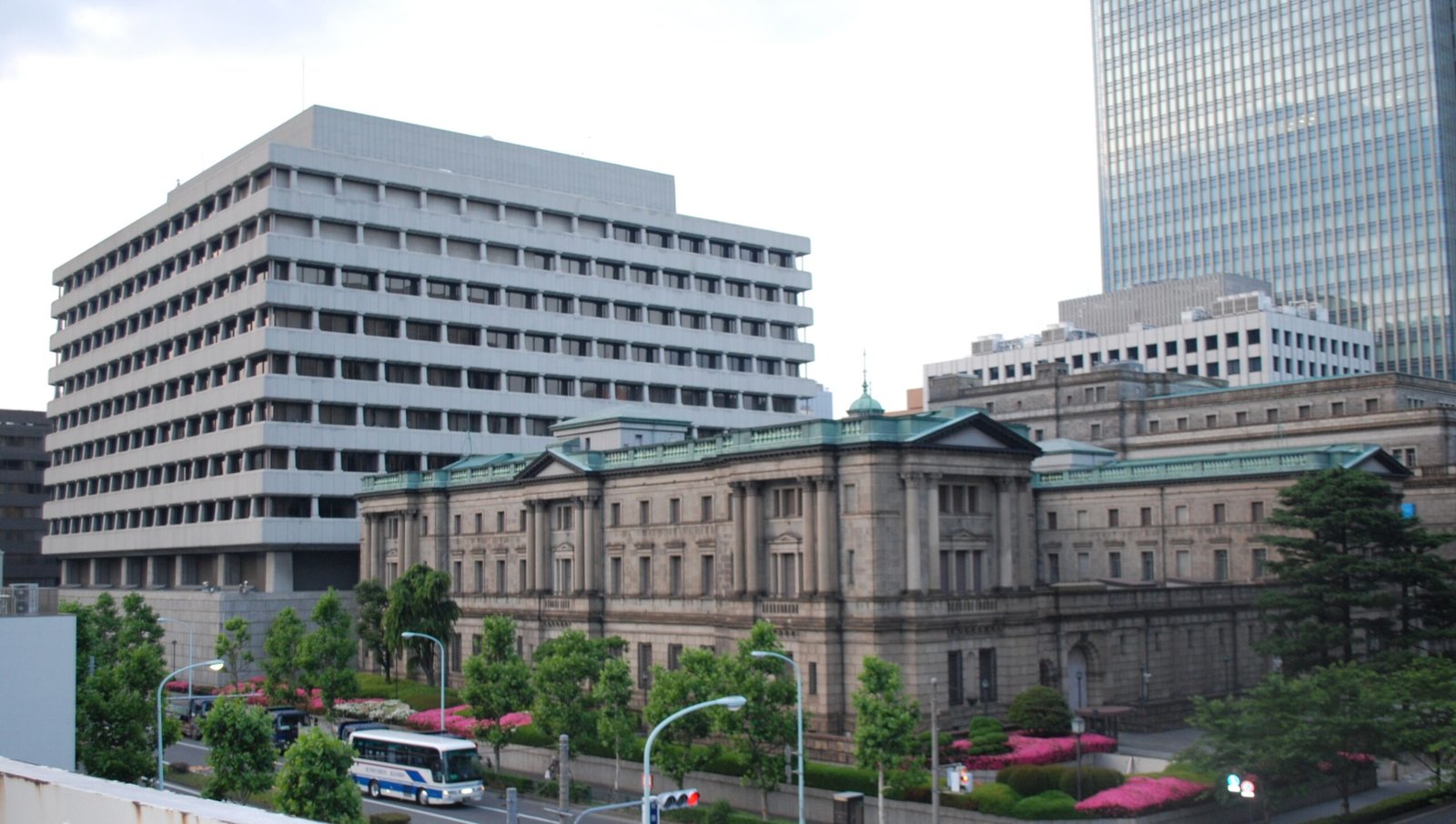
The Bank of Japan’s head office in Nihonbashi-Hongokucho, Tokyo — the source of the interest-rate decisions that shaped four decades of global carry-trade flows. Photo: katorisi, CC BY-SA 3.0, Wikimedia Commons.
The Yen Carry Trade Timeline: 1990–2026
Newest first — from this week’s BOJ standoff back to Japan’s 1990 bubble collapse
Sep 2026
BOJ meeting: a hike to 1.25% is expected, not yet decided
What’s expected: Kyodo News reported the Bank of Japan plans to raise its policy rate by 25 basis points, from 1.00% to 1.25%, at its 17–18 September meeting — which would be the highest level in roughly 31 years. Market pricing has shown a high probability of a hike but this is a forecast, not a completed decision.
Why it matters: a confirmed hike would narrow the rate gap with other major economies further and add fresh pressure on any yen-funded position that has not already been reduced.
2026
Yen reaches a seven-month high on hike bets and repatriation flows
What happened: the yen strengthened to its highest level since February 2026, as traders priced in a faster pace of BOJ tightening, the possibility of Japanese investors repatriating funds ahead of the fiscal half-year close, continued unwinding of short-yen positions, and U.S. political pressure on the dollar.
Why it revived carry-trade fears: a fast, sizable yen move — in either direction — is what forces leveraged positions to adjust quickly. A stronger yen specifically raises the cost of any position still funded in yen.
2026
BOJ hikes to 1.00%, highest since 1995
What happened: the BOJ raised its policy rate by 25 basis points to 1.00%, citing sustained inflation pressure from yen depreciation and elevated energy costs tied to Middle East tensions. Governor Ueda did not attend, hospitalized the previous week; Deputy Governor Himino chaired the meeting.
Why it mattered: a firmer 7–1 vote, compared with a 6–3 split at the prior meeting, signaled a hardening consensus inside the BOJ for continued tightening rather than a pause.
2025
BOJ hikes to 0.75%, highest since 1995
What happened: the BOJ raised its benchmark rate by 25 basis points to 0.75%, its second hike of 2025, lifting 10-year JGB yields past 2% and marking the highest policy rate since September 1995.
Why it mattered: the move confirmed the BOJ was continuing a steady, multi-year normalization path rather than a one-off correction — each hike since 2024 has narrowed the gap that originally made yen funding so attractive.
2025
BOJ hikes to 0.50%, a 17-year high
What happened: the BOJ raised its policy rate by 25 basis points to 0.50%, continuing the tightening path it began in mid-2024 and reaching its highest level in roughly 17 years.
Why it mattered: each additional hike further eroded the interest-rate gap between Japan and economies like the U.S., squeezing the profit margin that carry trades depend on.
2024
The 2024 carry-trade unwind: Nikkei’s worst day since 1987
What happened: after the BOJ’s July 31 hike and a weak U.S. jobs report on August 2 raised fears of a faster Fed rate-cut cycle, the yen surged and leveraged carry positions unwound violently. Japan’s Nikkei 225 and Topix plunged more than 12% in a single session on August 5 — the Nikkei’s steepest one-day drop on record, exceeding 1987’s Black Monday — while the S&P 500 fell roughly 3% the same day.
Why it matters: this is the clearest modern proof that a yen carry-trade unwind can transmit stress from Tokyo to Wall Street within hours, even though the trade itself is largely invisible in everyday market data.
2024
BOJ hikes to 0.25% — the trigger
What happened: the BOJ raised its benchmark rate from around 0.1% to 0.25%, an unexpectedly hawkish move that immediately increased the cost of yen funding worldwide.
Why it matters: combined days later with a soft U.S. jobs report, this single 15-basis-point-equivalent surprise was enough to help trigger the August 5 global unwind — a reminder of how tightly wound leveraged carry positions can be.
2024
BOJ ends negative interest rates after eight years
What happened: the BOJ scrapped its −0.1% negative rate, moving to a 0%–0.1% range, and abandoned its yield-curve-control program while ending ETF purchases — ending the world’s last negative-rate regime and raising rates for the first time in 17 years.
Why it matters: this was the historic pivot point. For eight years Japan had been the world’s most reliable source of near-free money; this decision marked the start of that era’s unwind, even though rates stayed extraordinarily low for years afterward.
The Fed hikes aggressively while Japan stays ultra-loose
What happened: the U.S. Federal Reserve raised rates aggressively to fight inflation, while the BOJ kept policy far looser for far longer, widening the interest-rate gap between the two economies to its largest in decades.
Why it matters: the wider the gap, the more attractive yen-funded trades become — this period rebuilt carry-trade positioning at a scale not seen since before the 2008 financial crisis.
Pandemic monetary shock resets global rates
What happened: central banks worldwide slashed rates and injected liquidity to counter the pandemic shock. Many economies briefly approached Japan’s own near-zero territory, temporarily narrowing the funding-currency advantage the yen had long held.
Why it matters: even in a world of globally cheap money, Japan’s negative-rate policy meant the yen remained one of the very cheapest currencies to borrow, keeping it structurally relevant even when the rate gap briefly compressed.
BOJ introduces negative interest rates
What happened: the BOJ cut its policy rate to −0.1%, becoming the world’s last major central bank to adopt a negative-rate policy, aimed at pushing banks to lend rather than hoard reserves.
Why it matters: negative rates cemented the yen’s status as one of the cheapest major funding currencies on Earth for the next eight years, extending and deepening the carry trade’s global reach.
Abenomics launches aggressive monetary easing
What happened: newly appointed BOJ Governor Haruhiko Kuroda launched large-scale quantitative and qualitative easing under Prime Minister Abe’s economic program, aiming explicitly to weaken the yen and end deflation.
Why it matters: a policy that deliberately pushed the yen weaker made yen-funded trades more profitable almost by design, reviving global interest in the carry trade after the 2008 shock had scared many investors away.
The first great unwind: the global financial crisis
What happened: as the global financial crisis triggered panic and forced deleveraging worldwide, investors rushed to buy back yen to repay carry-trade loans, sending the yen sharply higher even as nearly every other asset fell.
Why it matters: this was the first large-scale demonstration that carry trades can reverse violently and fast — a lesson the market would need re-learning again in August 2024.
The carry trade expands and reaches peak confidence
What happened: Japanese retail investors and global hedge funds increasingly borrowed yen to fund positions in Australian dollars, U.S. bonds, emerging-market debt and global equities. By 2006–2007, risk appetite was high and many believed stable currency conditions could sustain the trade indefinitely.
Why it matters: this eight-year run built the template — and the false sense of safety — that the 2008 crisis would later shatter.
Japan adopts a zero-interest-rate policy
What happened: the BOJ cut its policy rate effectively to zero, the first time any major central bank had done so in the modern era, in an effort to lift Japan out of prolonged deflation.
Why it matters: this is the moment the yen became structurally attractive as a global funding currency — the interest-rate gap with the rest of the world was now about as wide as it could get.
Rates fall dramatically
What happened: the BOJ cut its official discount rate sharply through 1995, down to roughly 0.5%, as Japan’s economy struggled with the aftermath of the bubble collapse and a strong yen that was hurting exporters.
Why it matters: this was the decisive move toward the ultra-low-rate environment that would, within a few years, make Japan the default source of cheap global funding.
Japan’s asset bubble begins to collapse
What happened: Japan’s stock and property bubble, which had peaked in December 1989, began a sustained collapse through 1990, dragging the country into a long period of weak growth, falling asset prices and deflationary pressure.
Why it matters: everything in this timeline traces back to this collapse — without it, Japan would not have spent the following three-plus decades cutting rates toward, and then below, zero.
Who Actually Uses the Yen Carry Trade?
No single group runs this trade — it spans institutions and individuals alike
Bank of Japan
Sets the interest-rate policy that determines how cheap yen funding is. Every entry in this timeline traces back to a BOJ decision.
Global hedge funds & banks
Run the largest yen-funded positions, often across multiple currencies and asset classes, using leverage that amplifies both gains and unwind risk.
“Mrs Watanabe” — Japanese retail investors
A market nickname for ordinary Japanese savers who moved money into foreign-currency assets seeking better returns than Japan’s near-zero domestic rates offered.
U.S. Federal Reserve
Fed policy sets the other side of the rate gap. When the Fed hikes while the BOJ stays loose, the carry trade becomes more attractive; when that gap narrows, it becomes less so.
Emerging-market bonds & currencies
A common landing spot for borrowed yen seeking yield — and a common casualty when unwinds force rapid selling across unrelated economies.
Global equity markets
The 5 August 2024 unwind showed how quickly carry-trade stress in currency markets can spill into stock markets on the other side of the world.
BOJ Policy Rate, Side by Side
Every rate move since the 2024 pivot, per Bank of Japan and Reuters reporting
| Date | Move | New rate |
|---|---|---|
| 19 Mar 2024 | Ends negative rates, ends yield-curve control | 0%–0.1% |
| 31 Jul 2024 | First post-ZIRP hike | 0.25% |
| 24 Jan 2025 | Hike, 17-year high | 0.50% |
| 19 Dec 2025 | Hike, highest since 1995 | 0.75% |
| 16 Jun 2026 | Hike, highest since 1995 | 1.00% |
| 17–18 Sep 2026 | Hike expected (not yet decided) | 1.25% (forecast) |
Carry Trade Eras Compared
How the funding environment changed the trade’s character over time
| Era | Rate environment | What defined it |
|---|---|---|
| 1999–2007 | Zero rates | The trade’s first global expansion; “Mrs Watanabe” enters the vocabulary |
| 2008 | Crisis unwind | Violent yen spike as leveraged positions unwound worldwide |
| 2013–2015 | Abenomics easing | Deliberate yen weakening reignites carry-trade interest |
| 2016–2024 | Negative rates | Eight years as the world’s single cheapest major funding currency |
| 2024 | Normalization begins | August 2024 unwind proves the risk is real, not theoretical |
| 2025–2026 | Steady tightening | Five hikes narrow the gap; September 2026 tests it again |
💡 Worth Knowing
- The carry trade does not require a formal contract or product — it is simply the act of borrowing in a low-rate currency and investing in a higher-yielding one, which is why its true global size is genuinely hard to measure.
- A weakening yen makes the trade more profitable; a strengthening yen is what triggers an unwind. These are opposite directions, and conflating them is one of the most common errors in casual coverage of this topic.
- Japan’s negative-rate era, from February 2016 to March 2024, was the longest sustained sub-zero policy of any major central bank in modern financial history.
- The 5 August 2024 Nikkei plunge of 12.4% remains the single clearest, most-cited real-world proof that a yen carry-trade unwind can move markets far beyond Japan within hours.
- This article does not claim the yen carry trade is the sole cause of any specific market decline — multiple factors usually combine, and carry positions are not precisely measurable from public data.
Explore More Timelines
People Also Ask
Frequently Asked Questions
⚠️ Editorial Note
This article separates confirmed BOJ decisions and dated market events (sourced to the Bank of Japan, Reuters, Kyodo News, CNBC and Bloomberg) from forward-looking market expectations, such as the widely reported but not-yet-confirmed 17–18 September 2026 rate decision, which is clearly labeled as a forecast. It does not claim the yen carry trade is the sole cause of any specific market move, does not cite an unsourced total size for the global carry trade, and is not investment advice. This is editorial and educational analysis only.
Sources & further reading
Every dated entry above was checked against these references. Last reviewed 15 September 2026.
- Bank of Japan — Change in the Guideline for Money Market Operations, 16 June 2026
- CNBC — Bank of Japan ends the world's only negative rates regime, 19 March 2024
- Bloomberg — Japan Ends Era of Negative Rates With Few Clues on Further Hikes
- World Economic Forum — What are carry trades and how do they impact global markets?
- CNBC — Bank of Japan hikes rates to 1%, highest since 1995, 16 June 2026
- CNBC — Yen extends rally to new seven-month high, 8 September 2026
- Seoul Economic Daily / Kyodo — BOJ to raise policy rate to 1.25% in September