Jet Airways Collapse: A Timeline of Missed Warnings
Jet Airways collapse timeline: 2018 losses, the 31 Dec 2018 default, the 17 April 2019 shutdown, the failed revival and the 2024 liquidation order.
Latest Story
Jet Airways did not collapse overnight. India’s once-leading private airline spent more than a year sending out warning signs before its aircraft stopped flying on 17 April 2019: a string of large losses, delayed results, a missed loan payment and a fleet that shrank as lessors took back unpaid planes. This timeline follows the Jet Airways collapse from its 1993 take-off to the 2024 liquidation order and the 2026 aircraft auctions, and shows why a famous brand could not save a company that had run out of cash.
💡 Short Answer
Jet Airways stopped flying on 17 April 2019 after lenders refused about ₹400 crore of emergency funding. Four straight losing quarters, a missed loan payment on 31 December 2018 and aircraft grounded by unpaid lessors had drained its cash. A revival plan approved in 2021 was never completed, and the Supreme Court ordered liquidation on 7 November 2024.
Jet Airways Collapse: Key Questions
The Fall of Jet Airways in Nine Points
- The rise: founded by Naresh Goyal, Jet first flew on 5 May 1993 and became India’s largest private airline.
- Costly growth: the 2007 Air Sahara purchase and wide-body expansion added debt and complexity.
- A partner, not a cure: Etihad’s 24% stake in 2013 bought time but did not fix costs.
- Losses mount: four straight losing quarters from January 2018, starting with ₹1,036 crore.
- The default: a loan instalment to SBI-led banks was missed on 31 December 2018.
- The spiral: unpaid lessors grounded aircraft, cutting revenue further.
- The end of flying: lenders refused ₹400 crore and flights stopped on 17 April 2019.
- A failed revival: the Jalan-Kalrock plan was approved in 2021 but never completed.
- Liquidation: ordered by the Supreme Court on 7 November 2024; assets are being sold in 2026.
Jet Airways Collapse at a Glance
The key dates. Scroll the table sideways on a phone.
| Key question | Answer |
|---|---|
| Founded | Incorporated 1 Apr 1992; first flights 5 May 1993 |
| Founder | Naresh Goyal |
| Peak | India’s largest private airline in the 2000s; 120+ aircraft |
| First missed loan payment | 31 Dec 2018 (SBI-led consortium) |
| Last flight | 17 Apr 2019, 9W 2502 Amritsar–Mumbai |
| Insolvency began | 20 Jun 2019, NCLT Mumbai |
| Revival bidder | Jalan-Kalrock Consortium (plan approved 22 Jun 2021) |
| Liquidation ordered | 7 Nov 2024, Supreme Court; NCLT order 26 Nov 2024 |
| Status in 2026 | Under liquidation; assets being auctioned; creditors supervise liquidator |
The Timeline, Newest First
From the 2026 liquidation sales back to the first flight in 1993.
Creditors take charge of the liquidation 2026
A change in India’s insolvency law reached Jet’s case. The Ministry of Corporate Affairs brought parts of the Insolvency and Bankruptcy (Amendment) Act, 2026 into force on 26 May 2026. Under the new Section 21(11), the committee of creditors that ran the failed resolution process now also supervises the liquidator in ongoing liquidations where no dissolution application has been filed.
In a notice dated 12 June 2026, liquidator Satish Kumar Gupta told stakeholders that the stakeholders’ consultation committee he had set up had been dissolved and the creditors’ committee would be reconstituted to oversee the rest of Jet’s wind-down.
Two Boeing 777s sold above reserve 2026
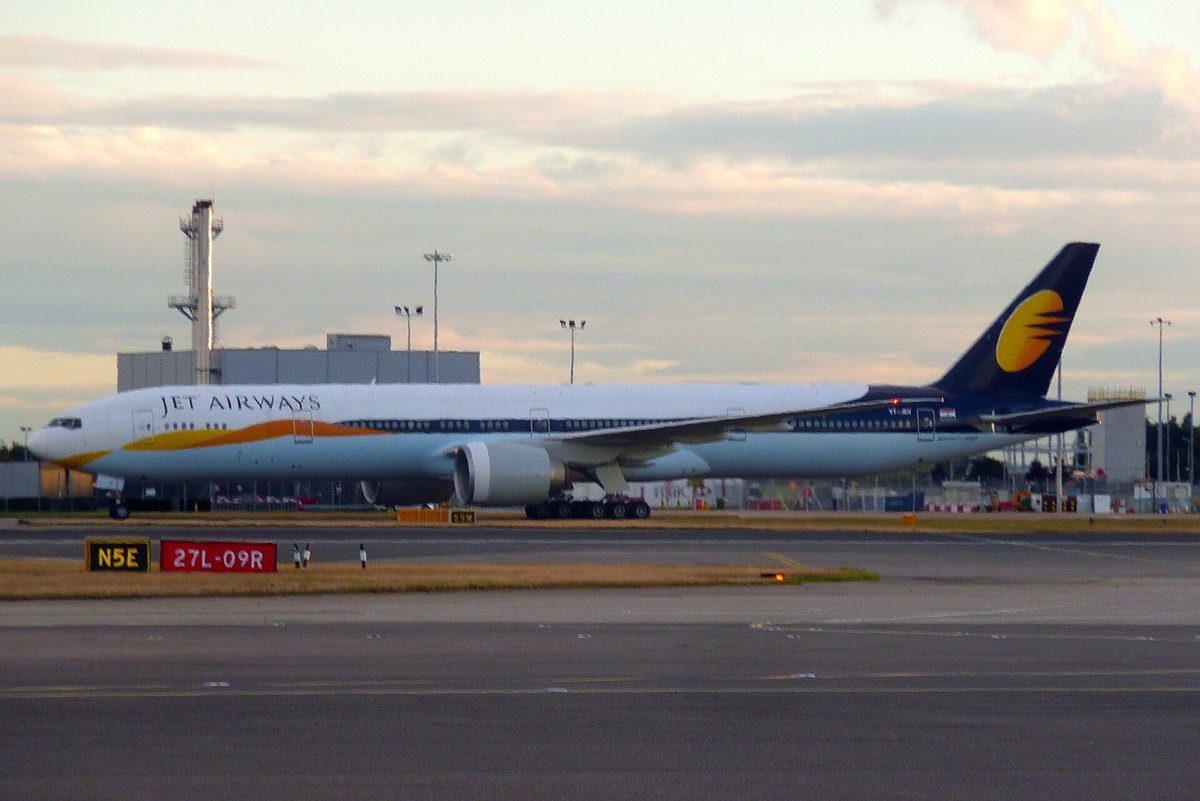
Jet’s two owned Boeing 777-300ER wide-bodies, parked since 2019, were auctioned on the government-run BAANKNET platform. Ace Aviation XIV bought VT-JET for ₹309.25 crore and Ace Aviation XV bought VT-JEU for ₹258.93 crore: ₹568.18 crore in all, against a combined reserve price of ₹356.76 crore.
The sale was one of the largest single recoveries of the liquidation. The liquidator has also listed other lots, including Boeing aircraft, spare parts, rotables and ground equipment.
2024
NCLT issues the liquidation order Failure
Following the Supreme Court’s direction, the NCLT Mumbai bench passed a formal liquidation order and appointed Satish Kumar Gupta as liquidator. From this point Jet Airways (India) Ltd existed only to sell its assets and pay creditors in the order the Insolvency and Bankruptcy Code sets out.
2024
Supreme Court orders liquidation Legal
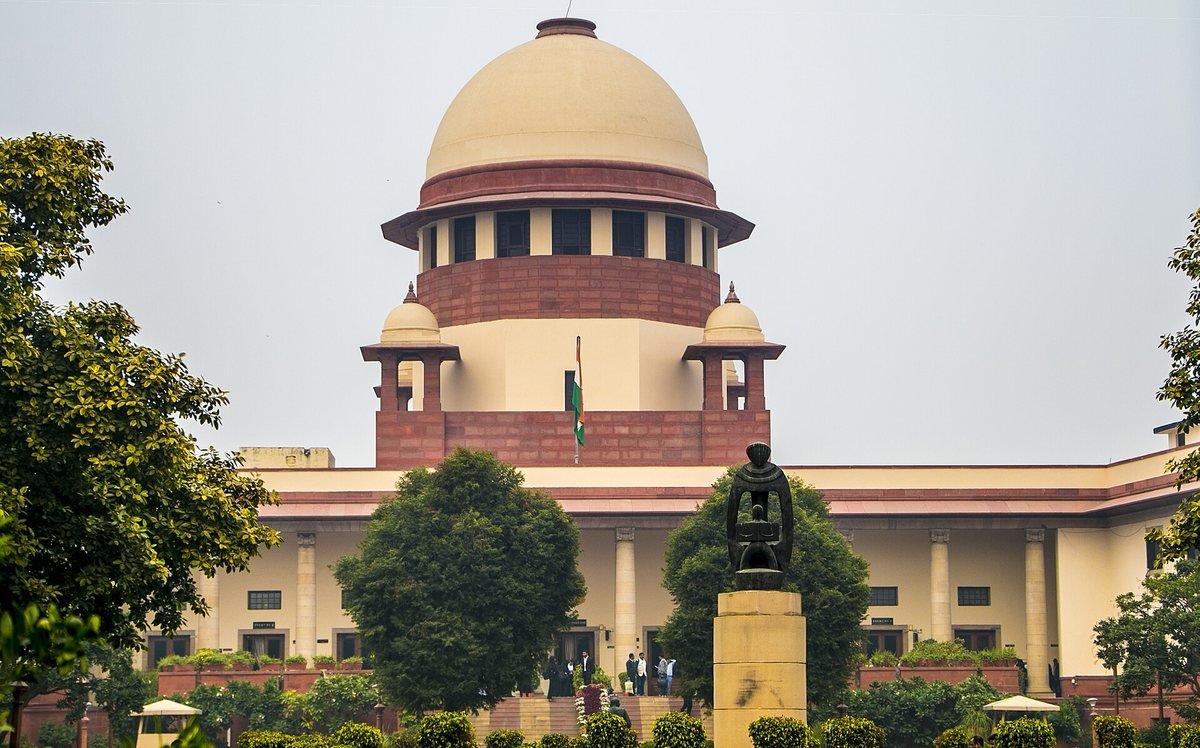
Five years after the last flight, the Supreme Court of India overturned the appellate tribunal’s decision and ordered Jet’s liquidation. The bench found that the Jalan-Kalrock Consortium had not paid the amounts the approved resolution plan required, and that the NCLAT was wrong to let its ₹150 crore performance bank guarantee count as part of the first instalment.
Using its special powers under Article 142 of the Constitution, the court directed that the ₹200 crore the consortium had put in be forfeited and that lenders could encash the ₹150 crore guarantee. It said the case was an eye-opener about how long insolvency proceedings had been allowed to drag on.
Appellate tribunal backs the revival plan Legal
The National Company Law Appellate Tribunal upheld the resolution plan and directed that ownership pass to the Jalan-Kalrock Consortium within 90 days, allowing the consortium’s bank guarantee to be adjusted against its payment. The lenders, led by SBI, argued that the consortium had not met its obligations and went to the Supreme Court.
Naresh Goyal is arrested in a separate case Legal
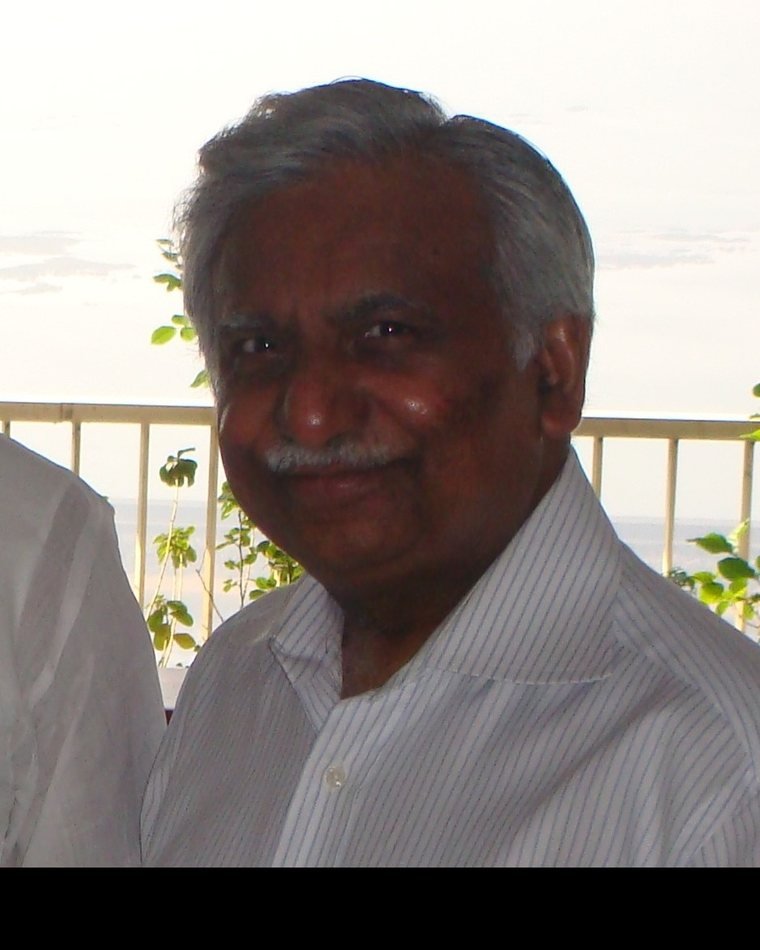
The Enforcement Directorate arrested Jet’s founder in a money-laundering case based on a CBI complaint that loans from Canara Bank to Jet, of which about ₹538 crore was outstanding, had been diverted. Goyal denies wrongdoing. His wife Anita Goyal was also named; she died of cancer on 16 May 2024. The Bombay High Court granted Goyal interim bail on medical grounds in May 2024.
The case is a separate legal matter that is still before the courts. It does not by itself explain why the airline ran out of cash in 2019.
Cleared to fly, but it never takes off Warning
After proving flights with regulators on board, the aviation regulator DGCA revalidated Jet’s air operator certificate. The consortium said it had met all the plan’s conditions and talked of restarting flights later in 2022. But it and the lenders soon disagreed over payments, the transfer of ownership and dues to employees, and the dispute moved through the tribunals for two more years.
NCLT approves the Jalan-Kalrock plan Growth
After the first sale attempt drew no workable bid, a second round produced an offer from the Jalan-Kalrock Consortium: London-based Kalrock Capital and UAE businessman Murari Lal Jalan. Jet’s committee of creditors approved it on 17 October 2020, and the NCLT approved the plan on 22 June 2021. The consortium proposed an initial investment of about ₹1,000 crore and a relaunch as a full-service airline.
2019
Jet Airways enters insolvency Failure
Two months after flights stopped, the National Company Law Tribunal in Mumbai admitted SBI’s petition and started Jet’s corporate insolvency resolution process under the Insolvency and Bankruptcy Code. A resolution professional took over the company to look for a buyer.
By now the most valuable parts of an airline, its aircraft, crews and airport slots, were already scattering: lessors had taken back planes and the government had temporarily handed many of Jet’s slots to other carriers.
2019
Jet Airways suspends all flights Failure
On 16 and 17 April the lenders declined Jet’s plea for about ₹400 crore of interim funding. Without it, the airline could not pay for fuel or other critical services. It announced a “temporary” suspension of all flights, and its last service, 9W 2502 from Amritsar to Mumbai, landed late that night.
About 16,000 employees, many unpaid for months, were left without work, and thousands of passengers were stranded with unused tickets. The suspension turned out to be permanent.
A buyer is sought, too late Warning
The lenders, now in control, invited expressions of interest from investors for a majority stake. Etihad was among the parties that showed interest. But a sale would take weeks; Jet needed cash in days. The ₹1,500 crore the banks had promised in March had not reached the airline in time to keep its shrinking fleet flying.
2019
The Goyals step down Warning
Under pressure from lenders, founder Naresh Goyal and his wife Anita Goyal resigned from the board, ending 26 years of control. The board approved a lender-led plan in which banks led by SBI would take charge and provide up to ₹1,500 crore in immediate funding. Jet’s share price jumped on the news.
Lenders get control for ₹1, and lessors ground planes Warning
Jet’s board approved a bank-led provisional resolution plan, and on 21 February shareholders voted to issue 11.4 crore shares to lenders for a total of ₹1, making the banks the largest shareholders. The plan aimed to close a funding gap of about ₹8,500 crore.
Meanwhile, aircraft lessors who had not been paid began grounding planes. Each grounding cut revenue, which made the next payment harder still: the classic airline death spiral.
2018
The first missed loan payment Failure
Jet told the stock exchanges it had delayed payment of principal and interest due on 31 December to a consortium of Indian banks led by SBI, blaming a temporary cash-flow mismatch. Rating agency ICRA cut its rating to D, the default grade, in the first days of January.
A missed payment is the clearest warning a company can give: it means it no longer has enough cash to meet its obligations on time. From here, suppliers and lessors began to demand payment up front.
Results delayed, then a ₹1,323 crore loss Warning
On 9 August Jet’s board deferred its April-June results, citing “pending closure of certain matters”. The shares fell sharply. When the results came on 27 August, they showed a standalone loss of ₹1,323 crore. In September income-tax officials surveyed its books.
A surprise ₹1,036 crore quarterly loss Warning
Jet reported a standalone net loss of ₹1,036 crore for January-March 2018, against a profit of ₹602 crore a year before. Fuel costs had risen 31% and the rupee had weakened, while fierce competition kept fares down. Its auditors flagged concerns about its negative net worth.
Etihad buys 24% Growth
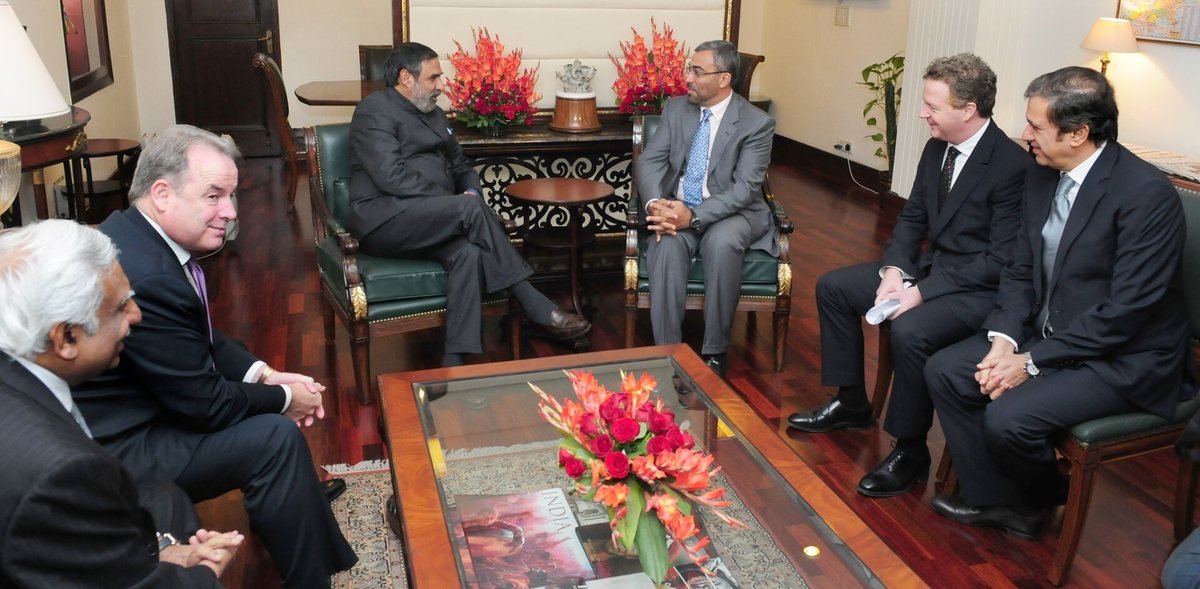
After India allowed foreign airlines to own up to 49% of Indian carriers in 2012, Etihad Airways of Abu Dhabi agreed to buy 24% of Jet for about ₹2,058 crore. The shares were allotted on 20 November 2013. The deal brought fresh capital, a code-share network through Abu Dhabi and, later, the sale of Jet’s London Heathrow slots to Etihad.
Fuel shock and the first cracks Warning
Record oil prices in mid-2008, followed by the global financial crisis, pushed Indian airlines into heavy losses. In October 2008 Jet laid off about 1,900 mostly junior staff, then reversed the decision within a day after protests and political pressure. Days later it formed an alliance with Kingfisher Airlines, its main full-service rival, to cut costs.
Air Sahara becomes JetLite Growth
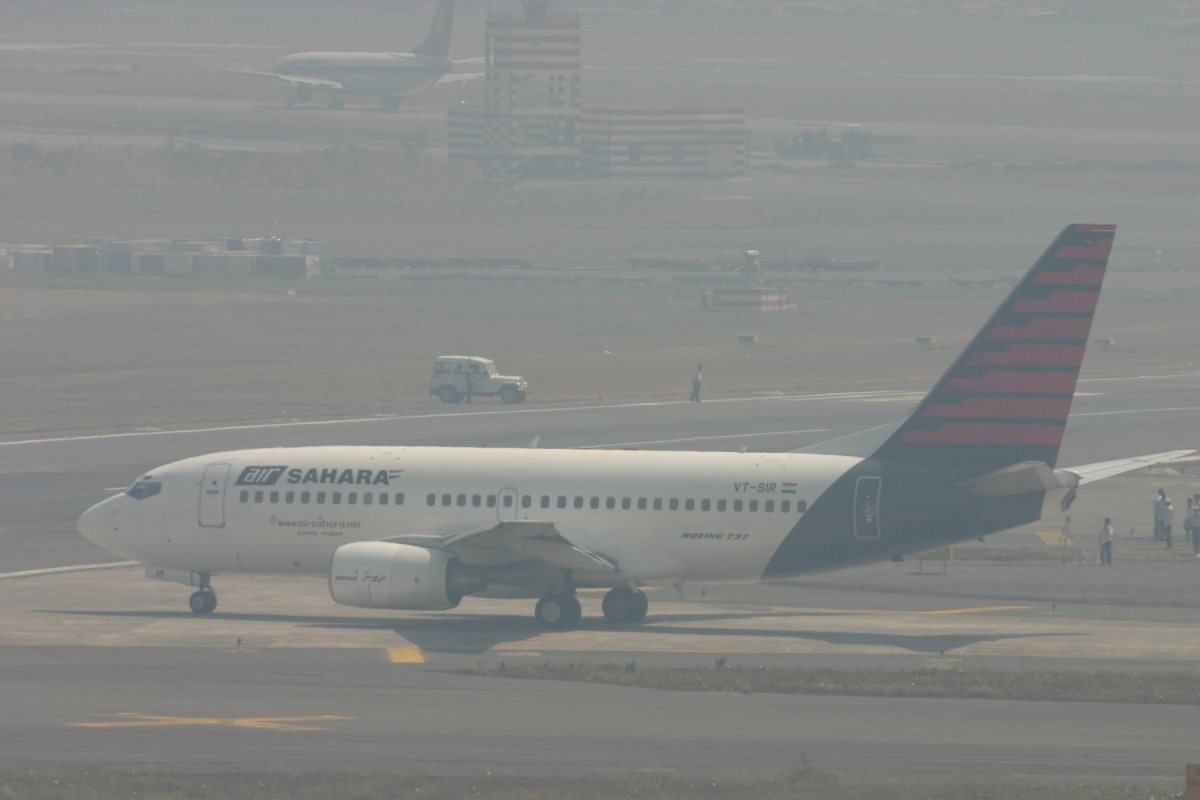
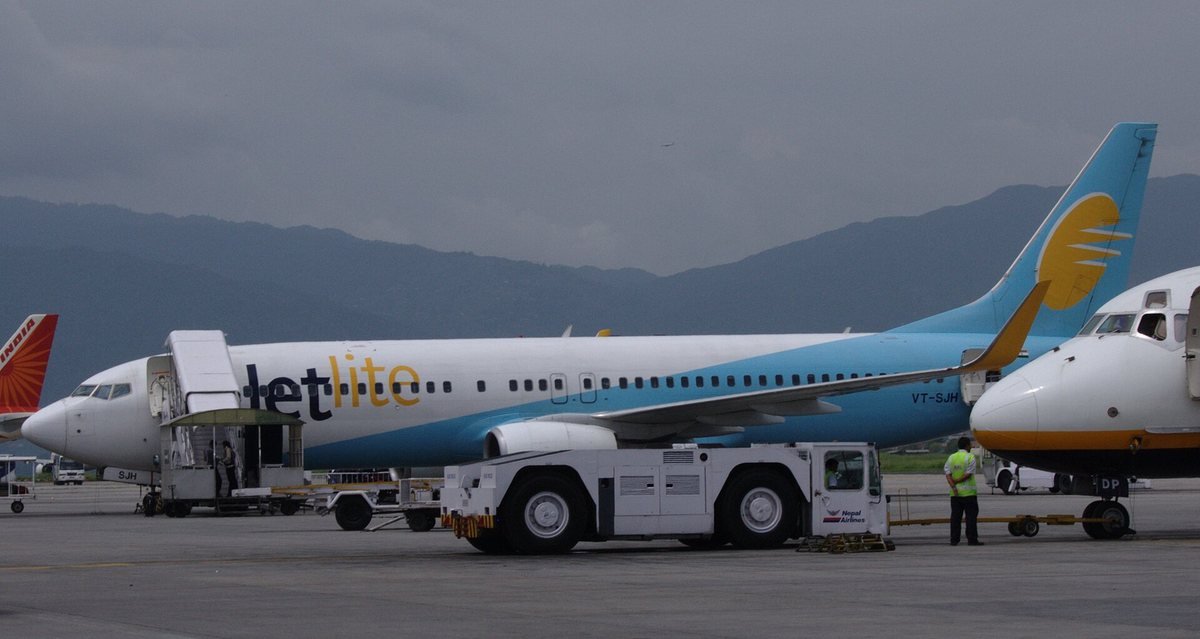
Jet first agreed to buy rival Air Sahara in January 2006 for about US$500 million, but the deal collapsed that June over the price and other terms. After arbitration, Jet bought the airline in April 2007 for ₹1,450 crore, about 40% less, and renamed it JetLite. The deal gave the group roughly a third of the domestic market.
It also brought an older fleet, a second brand and a loss-making subsidiary just as low-cost carriers such as IndiGo, launched in 2006, were cutting fares.
2005
International flights and a stock-market listing Growth
Jet launched international flights in 2004 and, in March 2005, became the first Indian airline to offer shares to the public, raising about ₹1,900 crore for a 20% stake. It went on to fly wide-body Airbus A330s and Boeing 777s to London, Brussels and Southeast Asia.
1995
Jet Airways takes off Growth
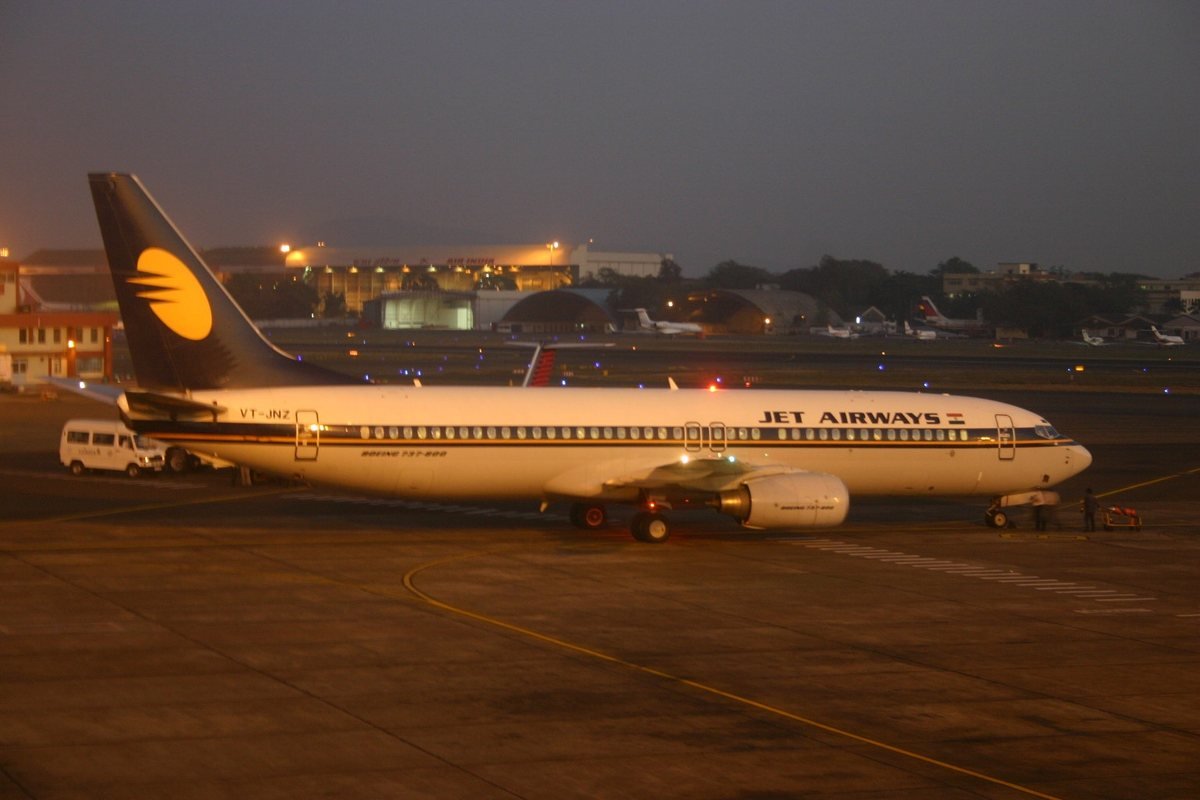
Founded by Naresh Goyal, a former travel agent, Jet Airways began flying on 5 May 1993 with four leased Boeing 737-300s, at first as an “air taxi” operator because private scheduled airlines were not yet allowed. It received scheduled-airline status on 14 January 1995.
Jet built a reputation for punctuality and service that outlasted rivals such as East-West, ModiLuft and Damania, which all closed in the 1990s.
The Warning Lights, Date by Date
How the signals stacked up in the 11 months before the last flight.
The warnings were there. Which ones were lit, and when?
Pick a date to see which of the five warning signs were showing on Jet Airways’ dashboard.
The Five Missed Warnings Behind the Collapse
None guaranteed failure on its own. Together, they reinforced each other.
| Warning sign | When | What happened | Why it was serious |
|---|---|---|---|
| Sustained losses | May 2018 onwards | ₹1,036 cr quarterly loss, then three more | Ate the cushion needed to absorb shocks |
| Disclosure doubts | Aug 2018 | Results deferred; auditors’ questions | Lenders and investors could not judge the risk |
| Missed payment | 31 Dec 2018 | Instalment to SBI-led banks delayed | Proved the cash had run short |
| Grounded fleet | Feb–Apr 2019 | Unpaid lessors took back aircraft | Less flying meant less revenue |
| No emergency cash | 16–17 Apr 2019 | ₹400 cr interim request declined | Nothing left to pay for fuel |
Each warning made the next more likely. Losses wore away the airline’s financial cushion; delayed results made lenders cautious just when Jet needed them most; the missed payment told every supplier that cash was short; unpaid lessors then grounded aircraft, which cut the revenue Jet needed to pay anyone. By April 2019 the airline needed money within days, and a sale process that would take weeks could not provide it.
Rescue Attempts: Promised vs Paid
Several rescues were announced. Only some delivered money.
A rescue announcement is not a funded rescue
Pick a rescue attempt to see whether the money actually arrived.
The Revival That Never Took Off
From insolvency to liquidation, 2019–2026.
| Stage | Date | Decision | Result |
|---|---|---|---|
| NCLT admits case | 20 Jun 2019 | Insolvency process starts | Resolution professional takes over |
| Creditors vote | 17 Oct 2020 | Jalan-Kalrock plan approved | About 99% in favour |
| NCLT approval | 22 Jun 2021 | Plan approved | Conditions to be met |
| DGCA | 20 May 2022 | Air operator certificate revalidated | No flights followed |
| NCLAT | 12 Mar 2024 | Transfer to JKC within 90 days | Lenders appeal |
| Supreme Court | 7 Nov 2024 | Liquidation ordered | ₹200 cr forfeited |
| NCLT | 26 Nov 2024 | Liquidator appointed | Asset sales begin |
| Auction | 27 Mar 2026 | Two 777-300ERs sold | ₹568.18 cr |
The Jalan-Kalrock plan cleared every formal hurdle: the creditors’ vote, the tribunal’s approval and even a renewed operating licence. What it never achieved was the transfer of control backed by the agreed payments. In ruling for liquidation, the Supreme Court said the delays had only eroded what was left of the airline’s value.
The People and Institutions Involved
Naresh Goyal
Founded Jet and chaired it until 25 March 2019. Arrested in 2023 in a separate money-laundering case, which he denies; on medical bail since 2024.
State Bank of India
Led the bank consortium that took control in 2019, filed the insolvency petition and fought the revival plan in court.
Etihad Airways
Bought 24% in 2013 for about ₹2,058 crore. Showed interest in a 2019 rescue, but no deal followed.
Jalan-Kalrock Consortium
Kalrock Capital and Murari Lal Jalan. Won the creditors’ vote in 2020; its plan was set aside in 2024.
NCLT and NCLAT
The insolvency tribunal admitted the case and approved the plan; the appellate tribunal upheld it in March 2024.
Satish Kumar Gupta
Appointed on 26 November 2024 to sell Jet’s assets and repay creditors.
Why Did Jet Airways Collapse?
Six forces that worked together.
Debt and cash flow
About ₹8,400 crore of bank debt plus lease payments left little room when revenue fell short.
High costs
Fuel, priced in dollars, rose sharply in 2018 as the rupee weakened; leases, staff and maintenance kept running.
Low-cost competition
IndiGo and SpiceJet kept fares low, so Jet could not pass its higher costs on to passengers.
A shrinking fleet
Every grounded aircraft cut revenue and weakened the network that full-fare flyers paid for.
A slow rescue
Ownership plans moved in weeks and months; the airline needed cash within days.
A revival that stalled
An approved plan was not carried out, and by 2024 there was little left to revive.
What Businesses Can Learn From Jet Airways
- Treat cash flow as the early-warning system: a company can own valuable assets and still run out of money to pay its bills.
- Do not mistake a rescue announcement for a funded rescue: a plan only works when promises turn into cash.
- Protect the core operation: once a crisis shrinks the service a company sells, the loss of revenue speeds up the crisis.
- Act before suppliers feel it: missed payments and delayed results narrow the options available.
- Fix the business model, not just the balance sheet: new capital buys time; only a viable cost base buys a future.
Common Myths About the Jet Airways Collapse
“Goyal’s arrest brought Jet down”
The arrest came in 2023, four years after the last flight, in a separate case still before the courts.
“It collapsed overnight”
Losses began in early 2018 and the first default came in December 2018, months before the shutdown.
“Premium airlines can’t work in India”
Jet’s case shows the danger of high costs and debt, not that full-service flying is impossible.
“Jet came back in 2022”
It regained its operating licence in May 2022 but never resumed commercial flights.
Explore More Timelines
People Also Ask
Frequently Asked Questions
Conclusion: The Warnings Were Visible Before the Final Flight
Jet Airways’ story is more than the fall of a famous airline. It is a sequence of financial warnings that turned into operational failure: losses and debt, a missed payment, grounded aircraft, a rescue that arrived only on paper and a shutdown in April 2019. The revival effort that followed showed that a respected brand and an approved plan were not enough. After more than five years of delay, the Supreme Court’s liquidation order in November 2024 ended it, and in 2026 the airline’s aircraft are being sold to pay its creditors.
A business rarely runs out of options all at once. Its options narrow as warnings go unaddressed, and once it can no longer pay for its core operation, even a famous brand may not be enough to save it.
Related AiTimeline Stories
⚠️ Editorial Note
Dates and figures come from Jet Airways’ stock-exchange results and disclosures as reported by Business Standard, The Economic Times and others; the Supreme Court’s judgment of 7 November 2024; the liquidator’s notices on jetairways.com, including the 12 June 2026 communication; and reports of the March 2026 aircraft auction. Loss figures are standalone unless stated. The money-laundering case against Naresh Goyal is pending, and he denies the allegations. This article is for general information and is not financial or legal advice.
Sources & further reading
Every dated entry above was checked against these references. Last reviewed 13 October 2026.
- Jet Airways (India) Ltd (Under Liquidation): official liquidation proceedings and stakeholder notices
- Jet Airways liquidator: Communication to stakeholders on the IBC (Amendment) Act, 2026 (12 June 2026)
- DD News: Supreme Court overturns NCLAT order, Jet Airways to go into liquidation (7 November 2024)
- The Economic Times: Jet Airways misses payment to lenders, rating cut to default (January 2019)
- Business Standard: Jet Airways Q4 loss at Rs 1,036 crore on oil price rise, weak rupee (23 May 2018)
- Moneycontrol: Jet Airways timeline, when and what happened (April 2019)
- ThePrint: Jet Airways' smooth take-off, turbulence and crash landing, key events leading to SC-ordered liquidation
- Free Press Journal: Jet Airways concludes aircraft auction, raises Rs 568.17 crore (April 2026)