Kingfisher Airlines: Rise and Fall of India’s ‘Good Times’ Airline
Kingfisher Airlines collapse timeline: the 2005 luxury launch, Air Deccan deal, debt recast, unpaid salaries, 2012 grounding and the 2026 court fight.
Latest Story
Kingfisher Airlines promised flying that felt like a five-star hotel: brand-new jets, seat-back screens, gourmet meals and the red-and-white glamour of Vijay Mallya’s ‘King of Good Times’ brand. Within seven and a half years of its first flight it was grounded, its staff unpaid and its flying permit suspended. This timeline follows the Kingfisher Airlines collapse from the 2005 launch through the Air Deccan deal, the 2010 debt recast and the 2012 shutdown to the recovery fight still running in the Bombay High Court in October 2026.
💡 Short Answer
Kingfisher Airlines, launched by Vijay Mallya’s UB Group on 9 May 2005, never made an annual profit. Heavy losses, the 2007 Air Deccan deal, debt of about ₹7,000 crore and months of unpaid salaries led to a strike and lockout in October 2012. The DGCA suspended its permit on 20 October 2012; it lapsed on 31 December 2012 and the airline never flew again.
Kingfisher Airlines Collapse: Key Questions
The Kingfisher Story in Ten Points
- Glamorous launch: first flight on 9 May 2005, Mumbai to Delhi, with four new A320s.
- Never profitable: it did not report a single year of net profit.
- The Deccan deal: 26% of Air Deccan for about ₹550 crore in 2007, then a full merger.
- A rule-driven merger: Deccan’s older licence let Kingfisher fly abroad from September 2008.
- Debt recast: about ₹8,000 crore restructured with 18 lenders in November 2010.
- Brand retreat: the low-cost Kingfisher Red was shut from September 2011.
- Cash runs out: salaries late from August 2011; loans became NPAs in early 2012.
- Grounded: strike and lockout from 1 October 2012; permit suspended 20 October.
- The long tail: Mallya left India in 2016 and was declared a fugitive economic offender in 2019.
- Still in court: staff got ₹311.67 crore in December 2025; banks and Mallya are still fighting over the balance in 2026.
Kingfisher Airlines at a Glance
The key dates. Scroll the table sideways on a phone.
| Milestone | Details |
|---|---|
| Company set up | 2003, by Vijay Mallya’s UB Group |
| First commercial flight | 9 May 2005, Mumbai–Delhi, four new Airbus A320s |
| Air Deccan stake | 26% for about ₹550 cr, approved 31 May 2007 |
| Kingfisher Red | Air Deccan rebranded Aug 2008; shut from Sep 2011 |
| International flights | 3 Sep 2008, Bengaluru–London |
| Debt recast | Nov 2010, about ₹8,000 cr with 18 lenders |
| Lockout | 1 Oct 2012, amid a strike over unpaid salaries |
| Permit suspended | 20 Oct 2012, by the DGCA |
| Permit lapsed | 31 Dec 2012; never flew again |
| Status in 2026 | Defunct; recovery and criminal cases continue in Indian and UK courts |
The Timeline, Newest First
From the 2026 court fight back to the first flight in 2005.
Banks say ₹8,752 crore is still due 2026
Answering Mallya’s claim that the banks have already been repaid, the SBI-led consortium told the Bombay High Court that ₹8,135.63 crore was outstanding in January 2026 and that, with legal and other costs, the figure had risen to about ₹8,752 crore by 31 August 2026. It said about ₹10,270 crore had been recovered only “temporarily”, under an undertaking, and that some attached shares had not yet been sold.
The court listed the matter for arguments on 13 October 2026.
“Time to move on”: the High Court presses for an answer 2026
Hearing Mallya’s 2020 petition against a money-laundering court order that let banks sell attached assets, the Bombay High Court said the dispute needed to be brought to an end and asked the Enforcement Directorate to say whether the recovery process was complete. Mallya’s lawyer argued that the banks had recovered about ₹15,000 crore against principal dues of ₹6,203.35 crore.
The ED replied that about ₹14,132 crore in assets had been restored to the banks, but that civil recoveries do not wipe out the criminal money-laundering case.
Former staff finally receive ₹311.67 crore Growth
More than 13 years after the lockout, the Debts Recovery Tribunal in Chennai ordered the release of ₹311.67 crore to the official liquidator for distribution to former Kingfisher employees. The money came from assets that the Enforcement Directorate had restored to the SBI-led consortium.
Supreme Court sentences Mallya for contempt Legal
The Supreme Court, which had found Mallya guilty of contempt in 2017 for transferring US$40 million to his children in breach of court orders, sentenced him to four months in prison and a fine of ₹2,000. It ordered the money returned with 8% interest within four weeks, failing which it could be recovered through attachment.
Declared bankrupt in London Legal
On a petition by the SBI-led banks, the High Court in London made a bankruptcy order against Mallya, allowing a trustee to pursue his assets worldwide on behalf of creditors. The same year, Kingfisher House, the airline’s former Mumbai headquarters, was finally sold after many failed auctions.
2020
Extradition ordered; fugitive status declared Legal
A court in London approved India’s request to extradite Mallya in December 2018, and the UK Home Secretary signed the order in 2019. In January 2019 a special court in Mumbai declared him a fugitive economic offender, the first businessman to receive the label under the 2018 Act. He lost his final appeal in the UK in May 2020.
He has not been returned. The UK government has said a separate, confidential legal matter must be resolved first.
Mallya leaves India Warning
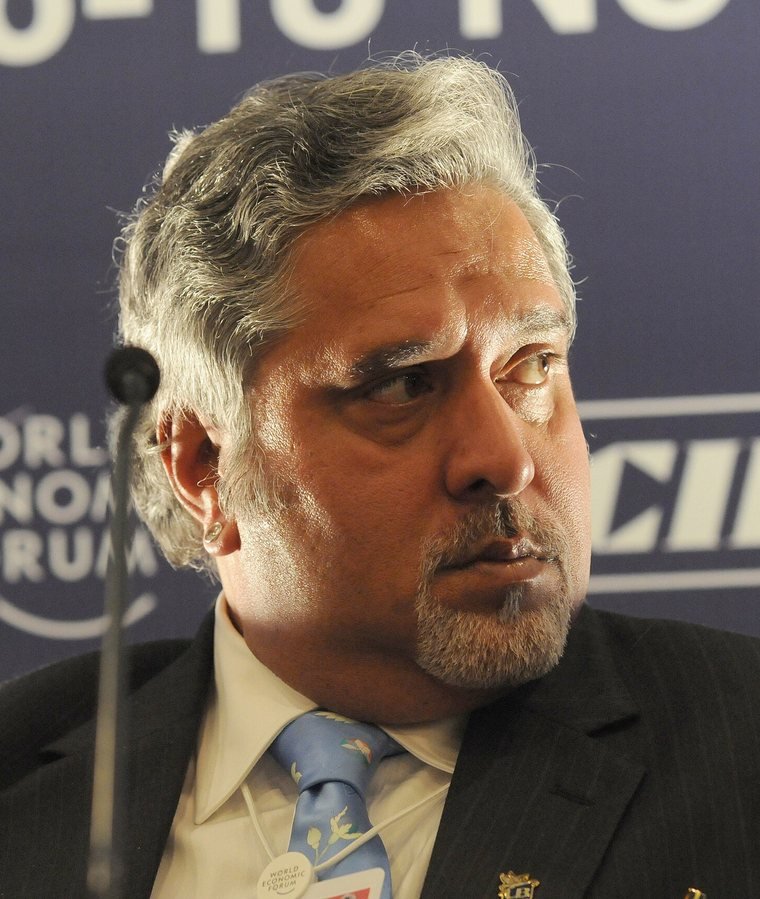
As the banks pressed their claims, Vijay Mallya left India for the United Kingdom on 2 March 2016. In the weeks before, he had agreed to step down as chairman of United Spirits under a deal with Diageo that included a US$75 million payment, which lenders then tried to block.
2017
Lenders chase recovery Failure
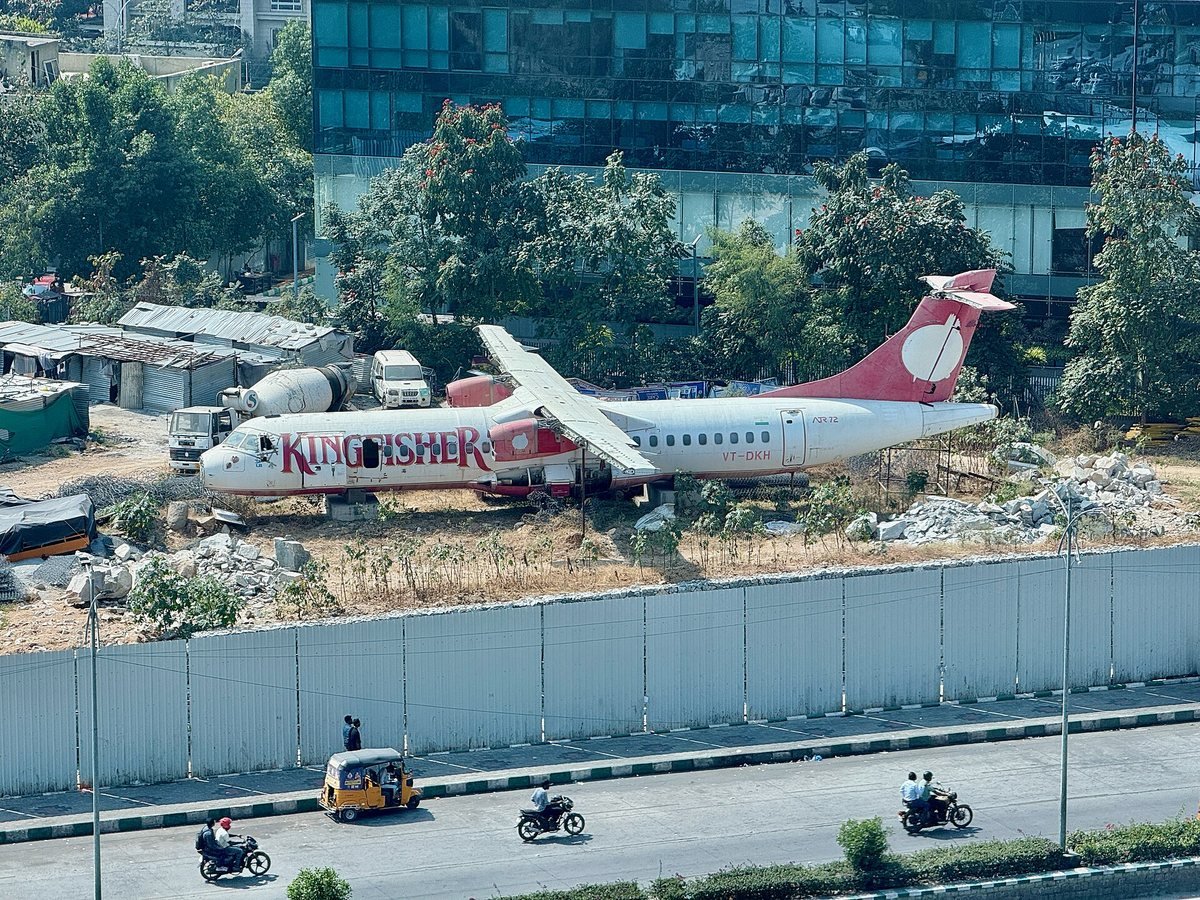
With the airline grounded, its 17 lenders, led by the State Bank of India, turned to recovery. Contemporary reports put the principal owed at a little over ₹7,000 crore. Kingfisher’s results for 2012-13 showed a net loss of ₹4,301 crore, accumulated losses of ₹16,023 crore and a deeply negative net worth.
From 2014 several banks declared Kingfisher and Mallya wilful defaulters. In January 2017 the Debts Recovery Tribunal in Bengaluru allowed the consortium to recover ₹6,203.35 crore with 11.5% annual interest.
2012
The flying permit lapses Failure
Kingfisher applied to renew its Scheduled Operator Permit in December, but it had no new investor, no working fleet and no settlement with staff. The permit lapsed on 31 December 2012.
The distinction matters: the October suspension stopped flights; the lapse removed any chance of simply restarting under the old permit. To fly again, Kingfisher would have needed to apply afresh and prove it could operate safely.
2012
DGCA suspends Kingfisher’s permit Failure
The Directorate General of Civil Aviation suspended Kingfisher’s Scheduled Operator Permit, saying the airline had not given a satisfactory financial and operational plan to resume flying safely and had not resolved the dispute with its staff. Kingfisher stopped taking bookings.
2012
Show-cause notice from the regulator Warning
With the entire fleet idle, the DGCA asked Kingfisher to explain within 15 days why its permit should not be suspended or cancelled, on the ground that it had failed to establish a safe, efficient and reliable service. The government’s Press Information Bureau published the notice the same day.
2012
Strike, lockout and a fleet at a standstill Failure
By September 2012 many employees said they were owed several months of salary. Engineers and pilots stopped work, and the company declared a lockout from 1 October, grounding its remaining flights. Days later the wife of an unpaid Kingfisher technician died in Delhi; her death, reported as a suicide linked to financial stress, became a symbol of the crisis and intensified the protests.
2012
The network unravels Warning
Unpaid bills began to cut Kingfisher off. The IATA clearing house suspended it in early February 2012, which put its long-planned entry to the Oneworld alliance, due on 10 February, on hold. Tax authorities froze bank accounts over unpaid dues, and by 20 February only 22 of its 64 aircraft were reported to be flying. In March IATA suspended its ticket sales through travel agents.
Loans turn non-performing Warning
The State Bank of India classified Kingfisher’s loans as non-performing assets in early January 2012, and other banks followed in February. An NPA classification means a borrower has missed repayments beyond the regulator’s limit; it forces banks to set money aside and makes fresh lending much harder.
Mass cancellations begin Warning
Short of cash to fly its full schedule, Kingfisher cancelled hundreds of flights in November 2011, stranding passengers. Mallya sought support from lenders and floated the idea of help from the government, which drew a public backlash. The airline’s net loss for 2011-12 reached ₹2,328 crore.
Kingfisher Red is shut Warning
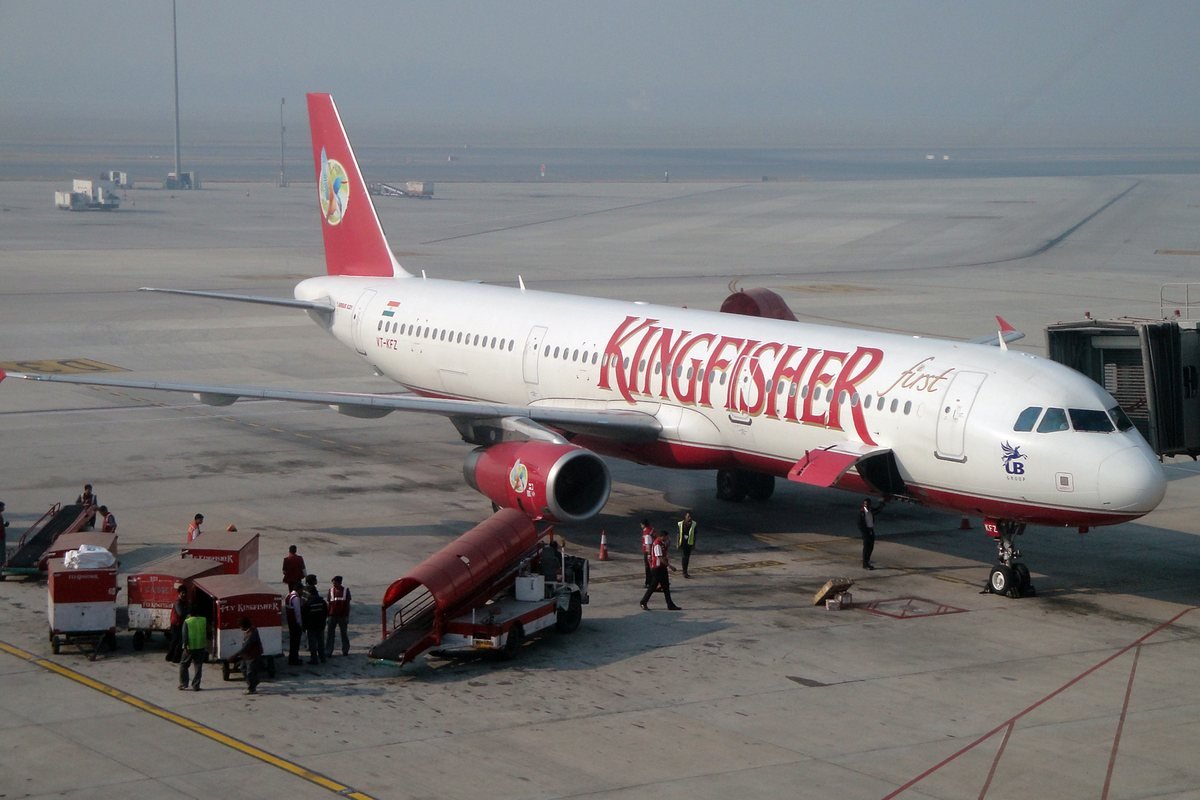
Kingfisher announced it would leave the low-fare market and phase out Kingfisher Red, the former Air Deccan. The aim was to simplify the business and focus on higher-yield, full-service flying.
An ₹8,000 crore debt recast Warning
Kingfisher completed a restructuring of about ₹8,000 crore of debt with its 18 lenders. Interest rates were cut, repayments stretched, and up to ₹1,355 crore of loans converted into shares. The conversion price, ₹64.48 a share, was fixed in March 2011 under SEBI rules and was about 60% above the market price at the time.
The deal made banks led by SBI major shareholders, and it gave Kingfisher breathing room. It did not change the underlying problem: the airline was still losing money.
2010
Fuel shock and year after year of losses Warning
Record oil prices in 2008 and the global financial crisis hit Indian airlines hard. Kingfisher lost about ₹1,609 crore in 2008-09 and ₹1,647 crore in 2009-10. In October 2008 it formed an alliance with Jet Airways, its main full-service rival, to share costs. At the same time, low-cost carriers such as IndiGo kept fares low.
2008
International flights begin Growth
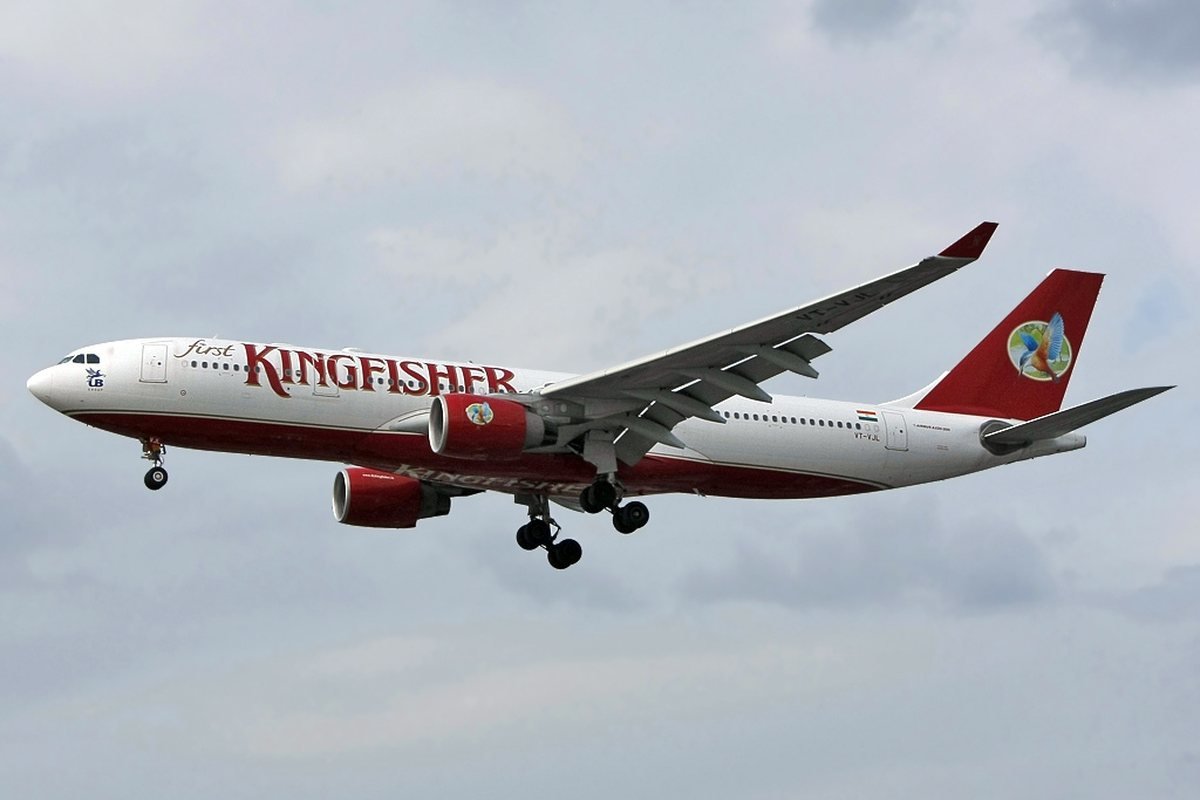
Kingfisher launched its first international route, Bengaluru to London, with Airbus A330s. Under India’s rules then, an airline needed five years of domestic flying before going abroad; merging into the older Deccan Aviation gave Kingfisher that record.
Long-haul flights brought prestige but also big fixed costs, just as the global economy was turning down.
Air Deccan becomes Kingfisher Red Growth
Air Deccan was first renamed Simplifly Deccan and repainted in Kingfisher red and white. Kingfisher Airlines was then merged into Deccan Aviation, which took the name Kingfisher Airlines Ltd, and in August 2008 the low-cost operation became Kingfisher Red.
UB Group buys into Air Deccan Growth
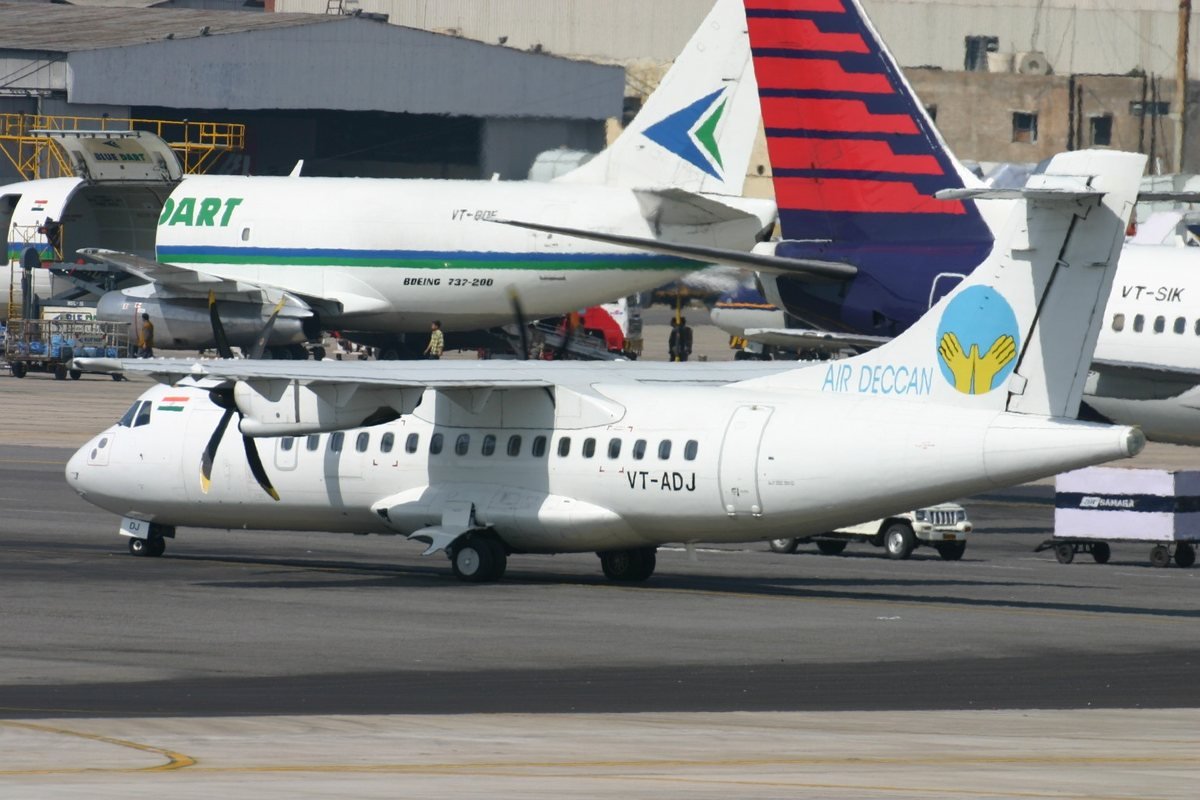
The UB Group bought 26% of Deccan Aviation, the company behind India’s first low-cost airline, Air Deccan, founded by Captain G. R. Gopinath. It paid about ₹550 crore, at ₹155 a share, and took an option to buy a further 20%.
The idea was to reach every kind of flyer: Kingfisher at the top, Deccan at the bottom. By late 2007, though, reports showed that both businesses were losing heavily.
2005
Kingfisher Airlines takes off Growth
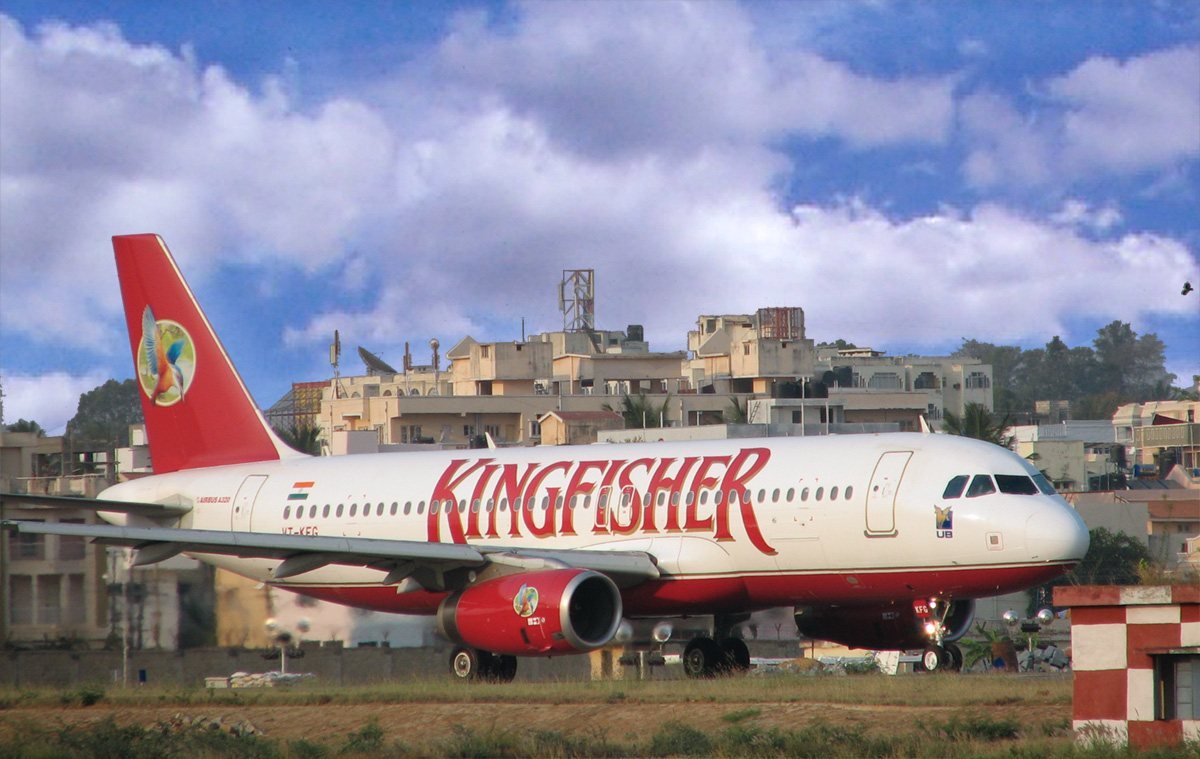
Founded by Vijay Mallya’s United Breweries Group in 2003, Kingfisher began scheduled flights on 9 May 2005 between Mumbai and Delhi, with four brand-new Airbus A320s. It set out to be a premium airline: seat-back entertainment screens, designer uniforms, gourmet meals and a brand borrowed from the group’s best-known beer.
The pitch worked with passengers. The question was whether fares would ever cover the cost.
The Losses, Year by Year
Kingfisher’s net loss in each of its last five financial years.
Pick a year. How much did the ‘Good Times’ airline lose?
Tap a financial year to fill the meter with Kingfisher’s net loss for that year.
Six Warning Signs Before the Fall
None was fatal on its own. Together they made recovery impossible.
| Warning sign | When | What happened | Why it was serious |
|---|---|---|---|
| Losses from day one | 2005 onwards | No annual net profit, ever | Every expansion added to a loss-making base |
| Losses at the acquired airline | Late 2007 | Air Deccan losing heavily too | Two loss-makers do not make a profit-maker |
| Debt recast | Nov 2010 | ₹8,000 cr restructured | Bought time without fixing costs |
| Late salaries | From Aug 2011 | Pay delayed for months | Staff morale and safety culture at risk |
| Bad loans | Jan–Feb 2012 | Loans classified as NPAs | New bank money became almost impossible |
| Shrinking fleet | Feb 2012 | 22 of 64 aircraft flying | Less flying, less revenue |
Each problem fed the next. Losses meant more borrowing; the debt recast lowered interest but did not stop the losses; late salaries damaged morale and raised safety questions; bad-loan classification cut off fresh bank money; and as aircraft were grounded for unpaid bills, revenue fell further. By the time employees stopped work in late September 2012, there was no cash cushion left to restart.
After the Crash: Who Got Paid?
Fourteen years on, not every creditor has been treated equally.
When the Good Times ended, who got their money back?
Pick a group owed money by Kingfisher to see what happened to it.
The People and Institutions Involved
Vijay Mallya
Chairman of the UB Group and Kingfisher Airlines. Left India in March 2016; declared a fugitive economic offender in 2019. Denies wrongdoing and says the banks have been more than repaid.
State Bank of India
Led the consortium of 17 banks that lent to Kingfisher, converted debt into shares in 2011 and has pursued recovery since 2012.
Air Deccan
India’s first low-cost airline, founded by Captain G. R. Gopinath in 2003. Became Simplifly Deccan and then Kingfisher Red.
DGCA
Issued the show-cause notice on 5 October 2012 and suspended Kingfisher’s permit on 20 October 2012.
Enforcement Directorate
Runs the money-laundering case and says it has restored assets worth about ₹14,132 crore to the lenders.
DRT, Bombay HC, Supreme Court
The tribunal set the ₹6,203 crore recovery in 2017; the Supreme Court sentenced Mallya for contempt in 2022; the Bombay High Court is hearing the asset dispute in 2026.
Why Did Kingfisher Airlines Fail?
Six forces that worked together.
A costly premium model
Seat-back screens, lavish service and a glamorous brand needed fares that India’s price-sensitive market would not pay.
Growth before profit
New aircraft, new routes and long-haul flights raised costs faster than revenue.
A difficult merger
Combining a luxury airline with a no-frills one created conflicting demands and added a second loss-maker.
Debt instead of equity
Losses were funded largely with loans. Restructuring changed the terms but not the trend.
A hostile market
High fuel taxes, a weak rupee and fierce low-cost competition squeezed every Indian airline.
Unpaid staff
Once salaries went unpaid for months, the workforce stopped and the regulator stepped in.
Kingfisher vs Jet Airways: Similar Endings, Different Paths
| Factor | Kingfisher Airlines | Jet Airways |
|---|---|---|
| First flights | 9 May 2005 | 5 May 1993 |
| Stopped flying | Late Sep 2012 (lockout 1 Oct) | 17 Apr 2019 |
| Warning signs | Never profitable, late salaries, NPAs, fleet grounding | Losses, missed loan payment, lessors grounding planes |
| Final trigger | Strike, lockout and DGCA permit suspension | Lenders refused ₹400 cr emergency funding |
| Legal route | Debt recovery, winding up, criminal cases against promoter | Insolvency code; revival plan failed |
| Outcome | Permit lapsed 31 Dec 2012; never flew again | Supreme Court ordered liquidation, Nov 2024 |
Both collapses moved from the balance sheet into the cockpit: cash ran short, aircraft were grounded and employees went unpaid. But their legal endings differ. Jet Airways went through India’s insolvency code, a failed revival and a court-ordered liquidation. Kingfisher stopped before that code existed; its story became one of a lapsed permit, debt recovery and criminal cases against its promoter. Read the full Jet Airways collapse timeline.
Five Lessons From the Kingfisher Collapse
- Growth is not profit: more routes and aircraft can make losses bigger if costs rise faster than revenue.
- Acquisitions need a plan to pay off: combining fleets and brands is easy; making them earn more together is not.
- Restructuring buys time, not success: a company still has to generate cash from its core business.
- Payroll is part of operations: unpaid salaries hit morale, safety and, eventually, the ability to operate at all.
- A brand cannot replace economics: marketing fills seats; only sound pricing and costs keep aircraft in the air.
Common Myths About Kingfisher Airlines
“It failed only because of extravagance”
Lavish service mattered, but fuel costs, debt, fare wars and the Deccan merger all played a part.
“It collapsed suddenly in 2012”
It never made a profit, and salaries were late from August 2011, more than a year before the lockout.
“The banks got nothing back”
Assets worth about ₹14,132 crore have been restored to the lenders, though they say more is owed.
“It was shut down by the government”
The DGCA suspended its permit after it stopped flying and could not show a credible plan to restart safely.
Explore More Timelines
People Also Ask
Frequently Asked Questions
Conclusion: The Price of Chasing ‘Good Times’
Kingfisher Airlines began with a compelling idea: make flying in India comfortable, stylish and aspirational. Its brand stood out, and the Air Deccan deal and London flights promised a bigger future. But it never made money. Losses, an awkward merger, a debt recast and a growing need for cash were followed by unpaid salaries, grounded aircraft and regulatory action. On 20 October 2012 the DGCA suspended its permit, and at the end of that year the permit lapsed. Fourteen years later, the courts are still deciding how much of the bill has been paid.
A strong brand can attract passengers. Only disciplined costs, sustainable financing and a workforce that is paid on time can keep the aircraft in the air.
Related AiTimeline Stories
⚠️ Editorial Note
Dates and figures come from the DGCA notice published by the Press Information Bureau on 5 October 2012; Kingfisher’s stock-exchange results as reported by Business Standard, Business Today and Moneylife; the Supreme Court’s contempt ruling of July 2022; and reports of Bombay High Court hearings in August and October 2026. Debt figures vary by date and definition. The criminal cases against Vijay Mallya are pending and he denies wrongdoing. This article is for general information and is not financial or legal advice.
Sources & further reading
Every dated entry above was checked against these references. Last reviewed 13 October 2026.
- Press Information Bureau: DGCA issues show-cause notice to Kingfisher Airlines on why its permit should not be cancelled or suspended (5 October 2012)
- The Economic Times: Kingfisher-Deccan means big losses too (December 2007)
- Business Today: PSU banks convert Kingfisher's debt into equity (2011)
- Business Standard: Kingfisher Airlines 2012-13 net loss at Rs 4,301 crore (31 May 2013)
- Moneycontrol: Kingfisher timeline, how Vijay Mallya's bird fell sick
- LiveLaw: Supreme Court sentences Vijay Mallya to 4 months imprisonment for contempt of court (11 July 2022)
- Outlook Business: Kingfisher Airlines ex-employees to get over Rs 300 crore pending dues (December 2025)
- Business Today: SBI-led banks tell Bombay High Court Rs 8,752 crore still recoverable from Vijay Mallya (3 October 2026)