World Water Day: India’s Water Crisis & Solutions Timeline
India's water crisis from the dam era to 2026: 1,486 m3 per person, groundwater, Jal Jeevan Mission's 82% taps, Atal Bhujal, Catch the Rain and reuse.
Latest Story
India gets about 4,000 billion cubic metres of rain and snow a year, has some of the world’s largest rivers and pumps more groundwater than any other country. Yet water stress is one of its defining problems. This World Water Day timeline of India’s water crisis and solutions follows how the country moved from building dams to managing the whole water cycle, and scores each major programme against the latest official data.
💡 Short Answer
India is water-stressed on average: the Central Water Commission puts availability at 1,486 cubic metres per person for 2021, below the 1,700 m³ stress line. The problem is less total rain than timing, place, pollution and over-pumped groundwater. The response has shifted from dams to taps (82.09% of rural homes connected by July 2026), community groundwater control, rain capture and wastewater reuse.
India’s Water Crisis: Key Questions
India’s Water Story in Ten Points
- Stressed, not empty: 1,486 m³ per person for 2021, under the 1,700 m³ stress line.
- Most rain is not usable: about 1,126 of 4,000 BCM, because it falls in a few monsoon months.
- Groundwater is the backbone: 247.22 BCM pumped in 2025, roughly 87% of it for irrigation.
- Slight national recovery: over-exploited blocks fell from 17.2% (2017) to 10.8% (2025).
- Taps: rural coverage rose from 16.72% in 2019 to 82.09% in July 2026.
- Connection is not supply: JJM 2.0 (to December 2028) is about daily, safe, adequate water.
- Community control: Atal Bhujal gave 8,203 panchayats water budgets; 1,603 saw water levels improve.
- Catch the rain: 1.58 crore recharge structures reported, though water recharged is rarely measured.
- Cities leak water away: sewage generation is far above treatment actually used.
- Gender: the 2026 theme puts women’s time, health and decision-making at the centre.
World Water Day 2026: Water and Gender Equality
Why 22 March matters, and why this year’s theme fits India.
The UN General Assembly declared 22 March the World Day for Water in December 1992, after the Rio Earth Summit, and the first one was held in 1993. It now backs Sustainable Development Goal 6: safe water and sanitation for everyone by 2030. UN-Water says 2.1 billion people still lack safe water close to home.
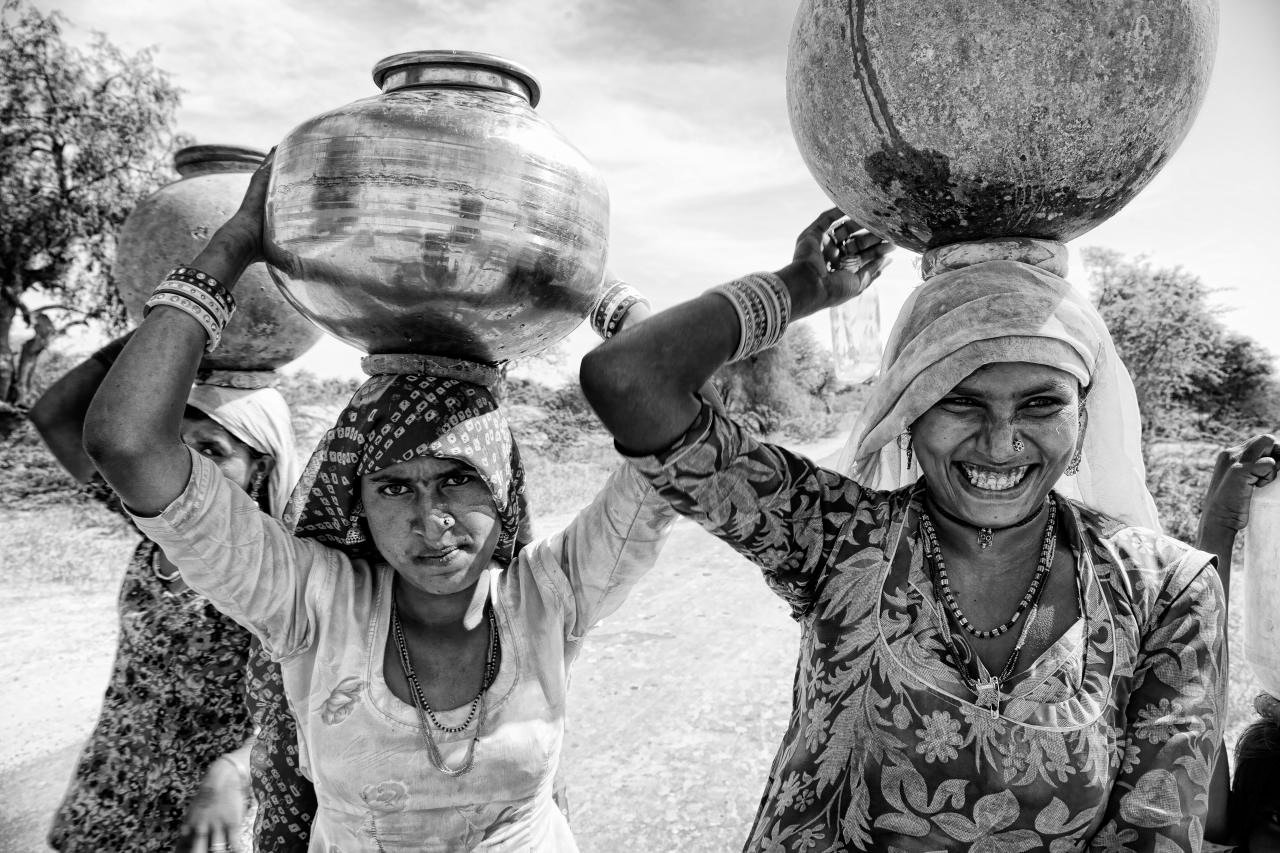
The 2026 campaign, “Where water flows, equality grows”, is about water and gender equality. It is led by UNICEF and UN Women, and was marked at UN headquarters on 19 March with the launch of the UN World Water Development Report 2026, Water for all people: Equal rights and opportunities. Its argument is simple: in two of every three households without water at home, women are mainly responsible for fetching it, and in 53 countries with data, women and girls spend 250 million hours a day doing so.
That lens matters in India, where a reliable tap and a two-hour walk are different lives. India’s schemes have written women into their rules: Jal Jeevan Mission’s village water committees must be at least half women, and Atal Bhujal requires at least 33% women in decision-making roles. Catch the Rain’s 2024 edition ran under the theme Nari Shakti se Jal Shakti. How far that has shifted real power over water is harder to measure than the number of taps.
The Big Picture: Why a Rainy Country Is Water-Stressed
Six connected pressures: geography, population, groundwater, pollution, farming and cities.
India gets about 4,000 BCM of precipitation a year. The CWC’s 2019 reassessment puts the water that actually flows through its river basins at 1,999.20 BCM, and the amount that can be used, given terrain and timing, at about 1,126 BCM: 690 BCM of surface water and 436 BCM of groundwater. Most of the year’s rain falls in the June-September monsoon, so a district can flood in August and run short in May.
Divide that by a growing population and the average falls. The government uses 1,700 m³ per person per year as the water-stress line and 1,000 as scarcity. India was at 1,545 m³ in 2011 on an older resource estimate, and 1,486 m³ for 2021 on the 2019 reassessment, with 1,367 m³ projected for 2031. The two sets use different estimates of total water, so the 2011-to-2021 drop is not a precise measurement. Either way, a national average hides the difference between Meghalaya and western Rajasthan.
Groundwater: The Water You Cannot See
After the dams of the 1950s and 1960s, the real irrigation revolution was underground. Cheap pumps and, in many states, free or subsidised farm power let millions of farmers drill tube wells. Groundwater became India’s largest source of irrigation and of rural drinking water. The problem: a reservoir can be seen; an aquifer cannot. Water can be pumped farm by farm until a whole region is in deficit.
The Central Ground Water Board now assesses every block each year. In the 2025 assessment, released in January 2026, annual recharge was 448.52 BCM, extractable resources 407.75 BCM and extraction 247.22 BCM, a national stage of extraction of 60.63%. Of 6,762 assessment units, 730 (10.8%) were over-exploited, meaning they pump more than 100% of what can be sustainably extracted. That is an improvement on 2017, when 17.2% were over-exploited. The government credits recharge work and better monitoring; rainfall variation also plays a part.
1950s-1980s: Dams, Canals and a Pollution Law
Independent India saw water as development: store water, irrigate farmland, generate electricity, control floods. The Bhakra Dam on the Sutlej, which Nehru dedicated to the nation on 22 October 1963, was the flagship. That infrastructure still matters. But the Water (Prevention and Control of Pollution) Act of 1974, which created the pollution control boards, was an early admission that quantity alone was not the problem.
The first National Water Policy in 1987 set drinking water as the top priority for allocation. It was revised in 2002 and again in 2012, which added river-basin planning and water-use efficiency. A new draft, from a committee chaired by economist Mihir Shah and submitted in 2021, argued for managing demand and groundwater rather than only building supply. It has not been adopted. Because water is a State subject, most of the real decisions sit with state governments anyway.
Rain → Recharge → Storage → Supply → Use → Treat → Reuse
Water security is a chain, and the weakest link decides how strong it is. Tap each stage to see India’s latest official number and where that link is weakest.
Weak link:
The Solutions India Is Trying, and What They Show So Far
Every figure below is government-reported unless stated otherwise.
1. Taps: Jal Jeevan Mission (2019). Launched on 15 August 2019, Har Ghar Jal promised every rural home a functional tap supplying 55 litres per person per day of safe water. At launch, 3.23 crore homes (16.72%) had one. By 18 July 2026 the government reported 15.89 crore of 19.36 crore (82.09%). The original outlay of Rs 3.60 lakh crore was nearly used up by 2024-25, and on 10 March 2026 the Cabinet approved JJM 2.0 to December 2028 with Rs 8.69 lakh crore. Its stated shift is from connections to service: formal handover of schemes to panchayats (Jal Arpan), digital asset IDs, water-quality surveillance and source protection. That shift is the honest test, because a pipe to a house whose borewell has dried up is not water security.
2. Groundwater budgets: Atal Bhujal Yojana (2019-2026). Launched on 25 December 2019 and run for six years from April 2020, it covered 8,203 water-stressed gram panchayats in 229 blocks of 80 districts in seven states. The method is measure, budget, conserve, monitor: villages get water-level recorders and rain gauges, publish the data, and draw up annual water budgets and water security plans. The government reports about 9 lakh hectares moved to drip, sprinklers, mulching or different crops, more than 83,000 recharge structures, and 1,603 panchayats in 83 blocks with improved groundwater levels. It is the only major scheme built on cutting demand, not adding supply.
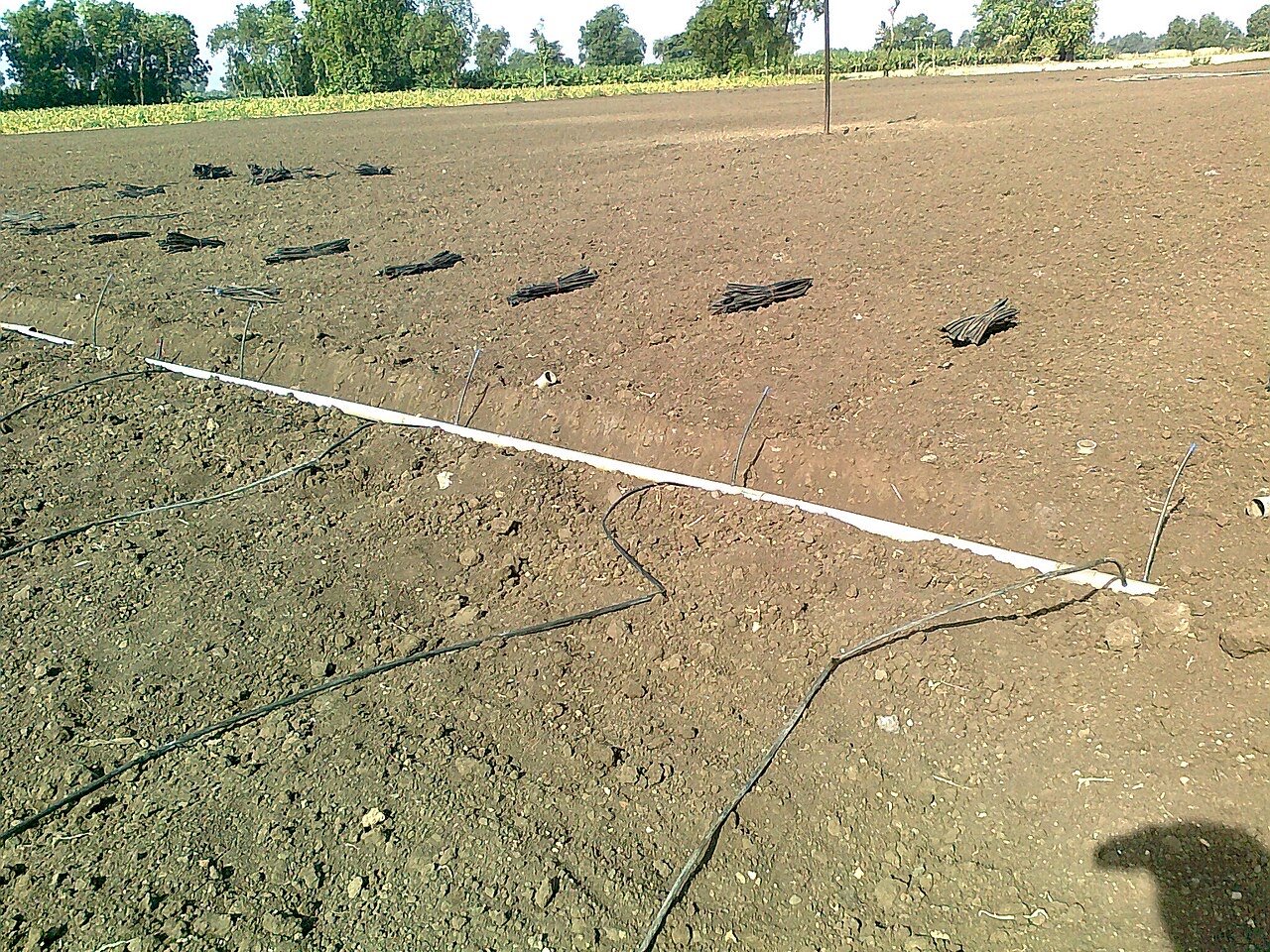
3. Rain capture: Jal Shakti Abhiyan and Catch the Rain (2019 onward). The first Jal Shakti Abhiyan in 2019 targeted 1,592 water-stressed blocks in 256 districts. On World Water Day 2021 it went national as Catch the Rain: “where it falls, when it falls”. It was followed by Mission Amrit Sarovar (2022, nearly 69,000 ponds) and Jal Sanchay Jan Bhagidari (2024), which reports more than 1.58 crore recharge structures. Since September 2025, at least 65% of rural-jobs money in over-exploited and critical blocks must go to water-conservation work. The weak point is measurement: these programmes count structures, not the water they put back underground.
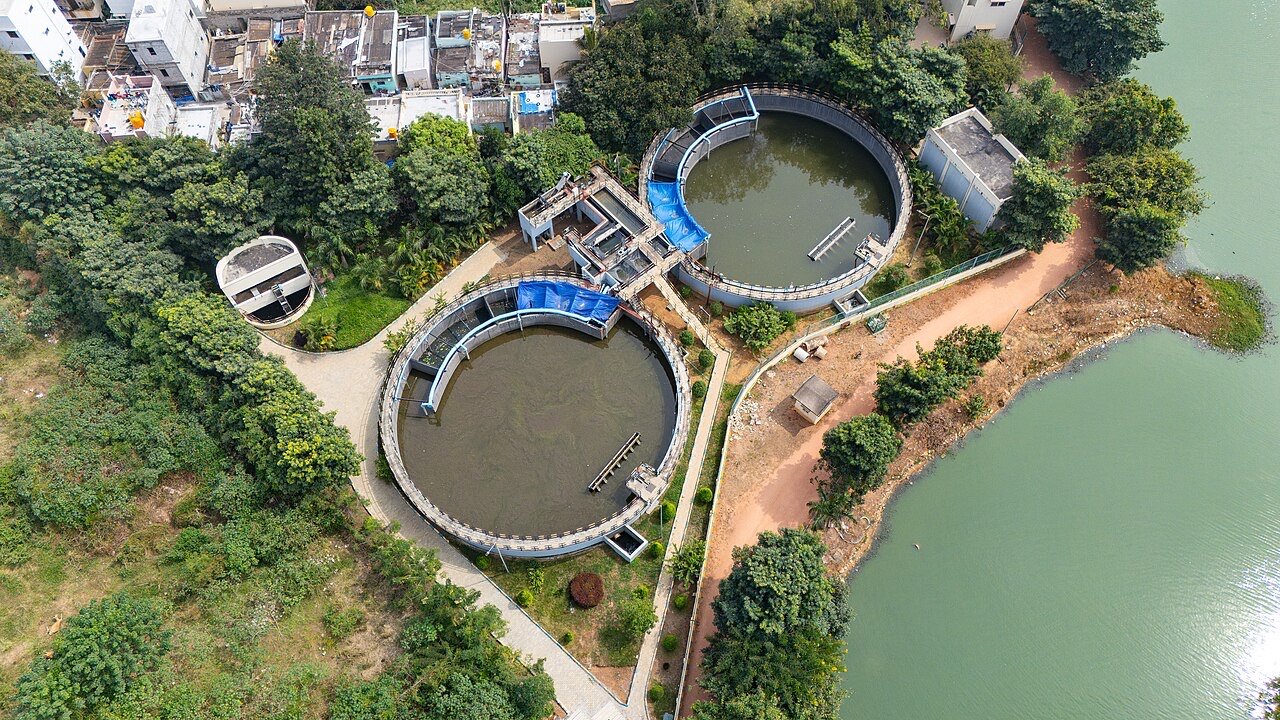
4. City water and reuse: AMRUT 2.0 (2021). Cities need a loop: source, treatment, supply, sewage collection, treatment and reuse. Skip the last steps and a city uses fresh water once and dumps it. The CPCB’s 2021 inventory estimated urban sewage at 72,368 MLD against 31,841 MLD of installed treatment capacity, of which about 20,236 MLD was actually used. Under AMRUT, 4,447 MLD of treatment capacity has been created or added, 1,437 MLD of it for reuse, and AMRUT 2.0 aims to meet 20% of city demand and 40% of industrial demand from recycled water. In November 2025, a NITI Aayog workshop in Bengaluru urged every state to adopt a reuse policy by 2030.
Traditional Water Systems: India’s Older Technology
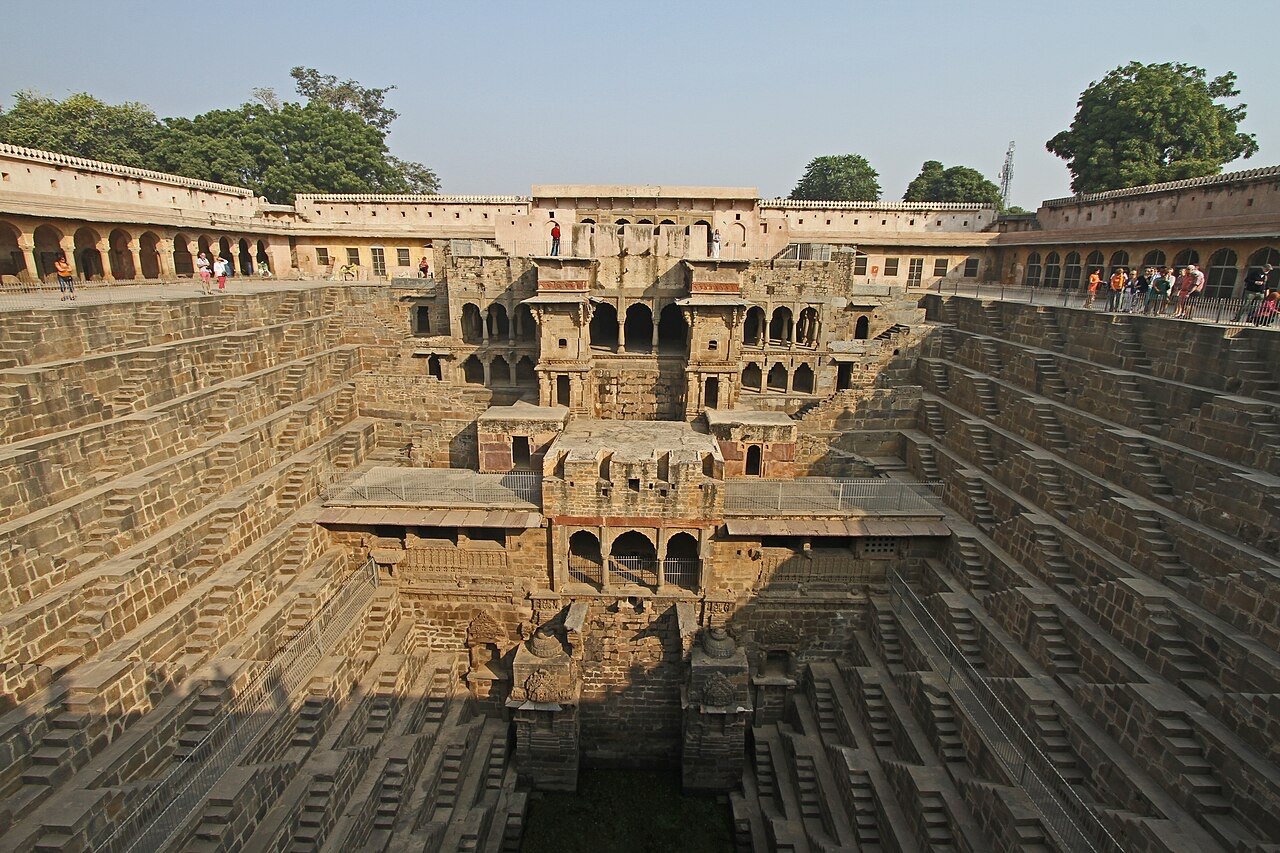
Long before tube wells, communities stored water in stepwells, tanks, johads, ahar-pynes, kunds, temple tanks and village ponds. Many were lost to encroachment, silt and neglect once piped water and pumps arrived. Modern policy keeps coming back to their principle: many small structures spread across a landscape can recharge an aquifer better than one large reservoir far away. Reviving them is now part of every Catch the Rain edition.
The Full Timeline: India’s Water Crisis and Solutions, 1950s-2026
Newest first. Entries tagged 2026 are this year’s developments.
1.58 crore recharge structures reported2026
The government reports more than 1.58 crore artificial groundwater recharge structures built under Jal Sanchay Jan Bhagidari as of 3 September. The number counts structures, not water: how much each one recharges depends on rain, soil and upkeep.
JJM 2.0 money starts moving2026
The Centre reimburses states that kept building rural water schemes with their own money between the two phases, and starts paying scheme by scheme through the SNA SPARSH platform. Completed schemes are formally handed to gram panchayats under Jal Arpan.
Rural tap coverage passes 82%2026
The government reports 82.09% of rural households with a tap connection, up from 16.72% in August 2019. A month-long Catch the Rain drive runs from 4 July to 4 August after the Prime Minister’s Mann Ki Baat appeal.
Catch the Rain and Jan Bhagidari merge2026
The two community water-conservation campaigns become one, drawing money from the rural jobs scheme, Per Drop More Crop, water-body repair funds, CAMPA and Finance Commission grants.
Jal Jeevan Mission 2.0 approved2026
The Union Cabinet extends the rural drinking-water mission to December 2028, with Rs 3.59 lakh crore of central assistance. The stated shift: from creating connections to assured service, run by panchayats, with water-quality surveillance and source protection. On 22 March, World Water Day’s theme is water and gender equality.
Groundwater assessment 2025 released2026
Annual extraction is 247.22 BCM against 407.75 BCM that can be extracted, a national stage of 60.63%. 10.8% of blocks are over-exploited, down from 17.2% in 2017, concentrated in the north-west, west and south.
NITI Aayog pushes wastewater reuse
Officials from 18 states back state-level reuse policies by 2030 and common standards for farm, industrial and non-drinking urban use. NITI member V.K. Paul points to new demand such as data centres.
Rural jobs money steered to recharge
The rural development and Jal Shakti ministries decide that at least 65% of rural-employment funds in over-exploited and critical blocks, and 40% in semi-critical blocks, go to water-conservation work.
Women lead the water campaign
Catch the Rain takes women-led conservation as its theme. Bengaluru faces a severe summer shortage. In September the Prime Minister launches Jal Sanchay Jan Bhagidari in Surat; its first phase reports over 27 lakh recharge structures.
Mission Amrit Sarovar
Launched on National Panchayati Raj Day, the mission sets out to build or revive at least 75 ponds and lakes in every district. The government later reports nearly 69,000 Amrit Sarovars.
AMRUT 2.0 targets city water
The urban mission aims at universal water supply and “water-secure” cities, with a reform target to meet 20% of city demand and 40% of industrial demand from recycled wastewater.
2021
Catch the Rain goes national
“Catch the rain, where it falls, when it falls.” The campaign adds geo-tagging of water bodies, district water-conservation plans and Jal Shakti Kendras to rainwater harvesting and recharge work.
Atal Bhujal starts work
A World Bank-supported scheme that pays states for results in community groundwater management: public water-level data, village water budgets, and at least 33% women in decision-making roles.
Jal Jeevan Mission launched
Har Ghar Jal promises every rural home a functional tap supplying 55 litres per person per day of safe water. Village water committees must be at least half women.
Chennai’s reservoirs run dry
After a failed monsoon, Chennai relies on tankers and water trains. The Ministry of Jal Shakti is formed in May, and the first Jal Shakti Abhiyan targets 1,592 water-stressed blocks, reporting 2.73 lakh conservation structures and 45,000 renovated water bodies.
NITI Aayog’s water index
NITI Aayog’s first state ranking says about 600 million Indians face high to extreme water stress, and warns that water will be a growing constraint on growth.
Third National Water Policy
The policy treats water as an economic good as well as a basic need, and calls for river-basin planning and water-use efficiency. A new draft by a committee under Mihir Shah, submitted in 2021, has not been adopted.
Below the water-stress line
Using an older estimate of India’s water resources, the government puts availability at 1,545 cubic metres per person, under the 1,700 m³ stress line. The CWC’s 2019 reassessment later gives 1,486 m³ for 2021.
Water becomes a human right
The UN recognises safe drinking water and sanitation as a human right. It is the basis for the 2026 World Water Day argument that access is also about equality.
National Water Policies
India’s first water policy puts drinking water first in allocation, followed by irrigation and hydropower. Water stays a State subject, so the Centre’s role is funding and guidance.
The first World Water Day
Following the 1992 Rio Earth Summit, the UN General Assembly declares 22 March World Day for Water.
The Water Act
India’s first major pollution law sets up the Central and State Pollution Control Boards, recognising that water you cannot use is as much a problem as water you do not have.
1960s
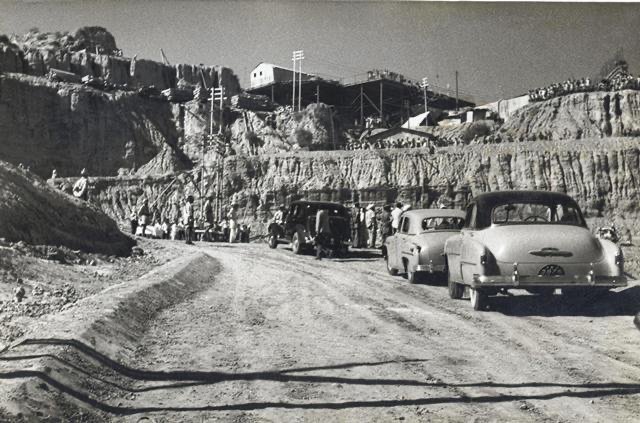
The age of dams
Big dams and canals were built for irrigation, hydropower and flood control. Nehru called such projects the “temples of modern India”. The tube-well boom that followed made groundwater the country’s main irrigation source.
2026 Scorecard: Where Each Programme Stands
Reported progress vs what is still open. No single number says whether India has “solved” water.
| Programme | Promise | Latest reported | Still open |
|---|---|---|---|
| Jal Jeevan Mission | Tap water in every rural home | 82.09% of homes connected (Jul 2026) | Daily, adequate, safe supply; JJM 2.0 to Dec 2028 |
| Atal Bhujal Yojana | Community groundwater control | 8,203 panchayats with water budgets; 1,603 show improved levels | Scaling beyond 7 states |
| Catch the Rain / JSJB | Store rain where it falls | 1.58 crore recharge structures reported | Measuring water recharged, not structures built |
| Mission Amrit Sarovar | 75 water bodies per district | Nearly 69,000 built or revived | Upkeep and encroachment |
| AMRUT 2.0 | Water-secure cities, reuse | 4,447 MLD treatment added, 1,437 MLD for reuse | Actual reuse rarely published |
| Groundwater assessment | Annual block-level data | Yearly since 2022; OE blocks 10.8% | North-west, west and south hotspots |
| National Water Policy | A modern policy framework | 2012 policy in force | 2021 draft not adopted |
What share of your city’s wastewater comes back as a resource?
Enter figures from your municipal corporation, water board or state pollution control board, all in million litres a day (MLD). The example values are round numbers for illustration, not any real city.
The Five-Layer Fix
No single mega-project solves this. Five layers have to work together.
1. Save
Efficient irrigation, leak repair, water-efficient fixtures, suitable crops.
2. Store
Ponds, tanks, check dams, recharge pits, wetlands, rooftop harvesting.
3. Protect
Aquifers, rivers, lakes and catchments, kept clean and unencroached.
4. Reuse
Treated wastewater for industry, cooling, landscaping and construction.
5. Govern
Groundwater data, water budgets, basin planning, accountable utilities.
The fifth layer may matter most, because without measurement the other four cannot be managed. Six numbers tell the story better than rainfall alone: groundwater level, extraction against recharge, whether homes get water every day, whether it is safe, how much crop value each litre produces, and how much wastewater is reused. India now publishes the first two every year and reports the third through JJM. The last three are still patchy.
Did You Know?
- Same day, same cause: Catch the Rain was launched on World Water Day, 22 March 2021.
- Recharge up: annual groundwater recharge rose from 432 BCM in 2017 to 448.52 BCM in 2025.
- Not like for like: the widely quoted drop from 1,545 to 1,486 m³ per person mixes two different estimates of India’s total water.
- Women in charge: Atal Bhujal required at least a third of decision-making roles to go to women.
- Data centres: NITI Aayog now counts them among the new users that treated wastewater could supply.
Test Yourself: India Water Quiz
1. When is World Water Day observed?
2. Below what per-person figure is a country considered water-stressed?
3. What share of rural homes had tap water when Jal Jeevan Mission began in 2019?
4. Which scheme is about community groundwater management?
5. On what date was Catch the Rain launched?
6. What share of groundwater blocks was over-exploited in 2025?
7. What is the World Water Day 2026 slogan?
Explore More Timelines
People Also Ask
Frequently Asked Questions
The Real Question for the Next World Water Day
India’s water crisis is several crises at once: too much water in the wrong place and season, too little in another, aquifers pumped faster than they refill, rivers polluted before their water can be used, and millions of homes connected to pipes whose sources are not yet secure. The pieces of a solution are visible: taps under Jal Jeevan Mission, groundwater budgets under Atal Bhujal, rain capture under Catch the Rain, reuse under AMRUT 2.0, and more voice for women who carry the burden. The question is no longer only “where will the next drop come from?” It is “can India use today’s water without taking tomorrow’s?”
Related AiTimeline Stories
⚠️ Editorial Note
Programme figures (tap connections, recharge structures, Amrit Sarovars, reuse capacity) are as reported by the Ministry of Jal Shakti, Ministry of Housing and Urban Affairs and PIB, and have not been independently verified; a reported tap connection is not the same as measured daily supply. Groundwater data is from the CGWB’s annual assessments, per-person availability from the Central Water Commission, sewage figures from the CPCB’s 2021 inventory, and World Water Day material from UN-Water. The 2011 and 2021 per-capita figures rest on different resource estimates and are not a strict series. This is not engineering or policy advice.
Sources & further reading
Every dated entry above was checked against these references. Last reviewed 30 September 2026.
- United Nations: World Water Day 2026 fact sheet - water and gender equality
- PIB: Dynamic Ground Water Resources Assessment 2025 (29 January 2026)
- PIB: Jal Jeevan Mission 2.0 gains further momentum (6 August 2026)
- PIB: Ensuring tap water for all - JJM progress (2 February 2026)
- PIB: Per capita water availability - CWC 2019 reassessment (5 February 2024)
- PIB: Implementation of Atal Bhujal Yojana (24 July 2025)
- PIB Research: Catch the Rain - A renewed national call for water conservation (19 July 2026)
- PIB: NITI Aayog national workshop on reuse of treated wastewater, Bengaluru (November 2025)