T20 World Cup hall of fame: every tournament from 2007 to 2026 - winners, finals, top performers and records across all editions of the event.
T20 World Cup Hall of Fame
From the miracle in Johannesburg to the triumph in Barbados. A complete history of the ICC Men’s T20
World Cup champions, key moments, and legacy.
↓
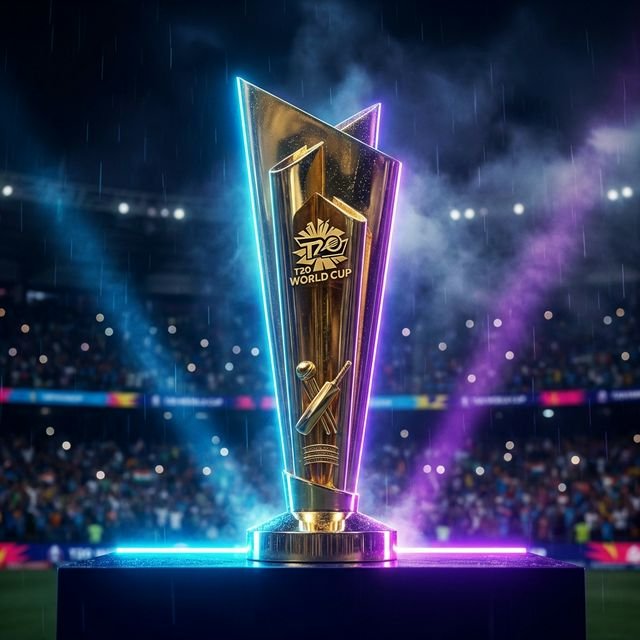
Host: India & Sri Lanka
India’s Historic Defence

Runner-up: New Zealand
Narendra Modi Stadium, Ahmedabad
Sanju Samson (IND)
Sahibzada Farhan (383)
Bumrah & Varun (14 each)
Sanju Samson (24)
Turning Points
- Sanju Samson’s back-to-back 89s vs England (semi-final) and New Zealand (final).
- Sahibzada Farhan’s 383 runs — breaking Virat Kohli’s 2014 single-edition record.
- Jasprit Bumrah’s 4/15 in the final dismantling New Zealand chasing 256.
India became the first team in history to defend the ICC Men’s T20 World Cup title, claiming their third crown with a dominant 96-run victory — cementing their status as the greatest T20 team of all time.
Host: USA & West Indies
India Ends the Drought
Runner-up: South Africa
Kensington Oval, Barbados
Jasprit Bumrah (IND)
Rahmanullah Gurbaz (281)
Fazalhaq Farooqi (17)
Nicholas Pooran (17)
Turning Points
- The USA defeating Pakistan in a historic group stage upset.
- Afghanistan reaching their first-ever World Cup semi-final.
- Suryakumar Yadav’s juggling boundary catch in the final over to dismiss David
Miller.
India ended a 13-year ICC trophy wait with an undefeated campaign. It
marked
the perfect T20I farewell for legends Virat Kohli, Rohit Sharma, and Ravindra Jadeja.

Host: Australia
England’s Double Glory
Runner-up: Pakistan
Melbourne Cricket Ground (MCG)
Sam Curran (ENG)
Virat Kohli (296)
Wanindu Hasaranga (15)
Sikandar Raza (11)
Turning Points
- Virat Kohli’s magical 82* vs Pakistan in a thriller at the MCG.
- The Netherlands shocking South Africa, clearing Pakistan’s path to the
semi-finals. - Ben Stokes’ gritty 52* in the final to anchor the chase.
England became the first men’s team to hold both the ODI
(50-over) and T20
World Cup titles simultaneously, cementing their white-ball dynasty.
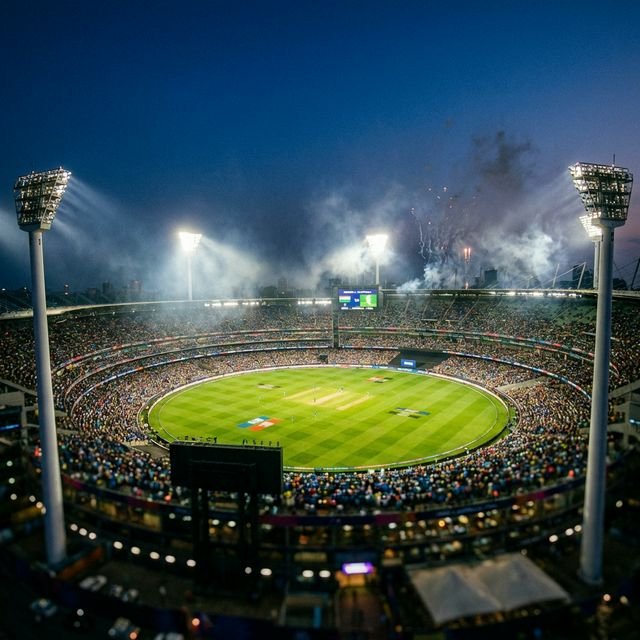
Host: UAE & Oman
Australia’s Maiden Title
Runner-up: New Zealand
Dubai International Stadium
David Warner (AUS)
Babar Azam (303)
Wanindu Hasaranga (16)
Jos Buttler (13)
Turning Points
- Shaheen Afridi’s destructive opening spell against India.
- Matthew Wade’s three consecutive sixes off Shaheen in the semi-final.
- Mitchell Marsh’s power-hitting (77*) in the final.
Australia finally completed their trophy cabinet. The
tournament was defined
by the “toss factor,” with chasing teams winning almost every night game.
Host: India
“Radioactive” West Indies
Runner-up: England
Eden Gardens, Kolkata
Virat Kohli (IND)
Tamim Iqbal (295)
Mohammad Nabi (12)
Tamim Iqbal (14)
Turning Points
- Carlos Brathwaite hitting 4 consecutive sixes in the final over:
“Remember the name!” - Lendl Simmons riding his luck (caught off no-balls) to knock India out
in the semis. - West Indies completing a treble (U19, Women’s, and Men’s titles) in the
same year.
Established West Indies as the undisputed kings of the
T20 format with their
second title, characterized by raw power and flair.
Host: Bangladesh
Legends’ Farewell
Runner-up: India
Sher-e-Bangla Stadium, Dhaka
Virat Kohli (IND)
Virat Kohli (319)
Imran Tahir (12)
Stephan Myburgh (13)
Turning Points
- Rangana Herath’s magical 5/3 against New Zealand defending 119.
- Sri Lanka’s disciplined death bowling keeping Yuvraj Singh quiet in
the final. - Current legends Sangakkara and Jayawardene retiring from T20Is with
a win.
Sri Lanka broke their “final hoodoo” after multiple
runners-up finishes in
global events, giving a golden generation the send-off they deserved.
Host: Sri Lanka
Caribbean Resurgence
Runner-up: Sri Lanka
R. Premadasa Stadium, Colombo
Shane Watson (AUS)
Shane Watson (249)
Ajantha Mendis (15)
Chris Gayle (16)
Turning Points
- Marlon Samuels’ lone warrior innings (78 off 56) in the final
when others failed. - Chris Gayle’s semi-final blitz against Australia.
- The “Gangnam Style” celebration becoming the tournament’s
trademark.
West Indies’ first global trophy since 1979 (ODI
World Cup), reigniting
passion for cricket in the Caribbean.
Host: West Indies
The First Trophy
Runner-up: Australia
Kensington Oval, Barbados
Kevin Pietersen (ENG)
Mahela Jayawardene (302)
Dirk Nannes (14)
Cameron White (12)
Turning Points
- Michael Hussey’s miracle chase (60 off 24) in the semi-final
to stun Pakistan. - Kevin Pietersen’s consistent dominance with the bat.
- England winning their first-ever ICC global tournament.
England finally won an ICC global event,
shedding their conservative approach
and adopting a modern, aggressive style.
Host: England
Pakistan’s Redemption
Runner-up: Sri Lanka
Lord’s, London
Tillakaratne Dilshan (SL)
Tillakaratne Dilshan (317)
Umar Gul (13)
Yuvraj Singh (9)
Turning Points
- Shahid Afridi’s match-winning all-round performances in
both the semi-final and final. - Umar Gul’s reverse swing masterclass (5/6) vs New
Zealand. - Dilshan inventing the “Dilscoop” shot.
A unifying victory for the nation just
months after the terror attack on the
Sri Lankan team in Lahore.
Host: South Africa
The Revolution Begins
Runner-up:
Pakistan
Wanderers, Johannesburg
Shahid Afridi (PAK)
Matthew Hayden (265)
Umar Gul (13)
Craig McMillan (13)
Turning Points
- Yuvraj Singh hitting 6 sixes in an over vs England.
- The India-Pakistan “Bowl-out” in the group stage.
- Misbah-ul-Haq’s scoop shot to Sreesanth in the final
over.
The unexpected success of this
tournament birthed the IPL and changed the
economy and speed of cricket forever.
T20 World Cup Hall of Fame: All-Time Legends, Records & Iconic Moments
The ICC Men’s T20 World Cup is the most explosive team competition in cricket — a tournament that has produced last-ball thrillers, history-defying chases, and performances that belong permanently in the sport’s folklore. From MS Dhoni’s calm nerve in Johannesburg in 2007 to India’s unprecedented title defence in Ahmedabad in 2026, the Hall of Fame of T20 cricket spans nearly two decades of brilliance. This is the complete guide to every champion, every record-holder, and every defining moment across all 10 editions.
Latest Update — August 2026
On 11 July 2026, the ICC inducted Kevin Pietersen — the Player of the Tournament for champions England at the 2010 T20 World Cup — into the ICC Hall of Fame, alongside Sourav Ganguly and Anjum Chopra, per the ICC’s official announcement. Separately, the 2026 T20 World Cup carried a record prize pool of $13.5 million, the largest in the tournament’s history, confirming its status as the biggest edition yet by both scale and financial stakes.
T20 World Cup at a Glance
| Stat | Detail |
|---|---|
| First edition | 2007 — South Africa (Inaugural ICC World Twenty20) |
| Latest edition | 2026 — India & Sri Lanka |
| Most titles | India (3) — 2007, 2024, 2026 |
| Joint most titles | West Indies (2) — 2012, 2016 | England (2) — 2010, 2022 |
| Most runs (all-time) | Virat Kohli (India) — 1,300+ runs across 10 editions |
| Most wickets (all-time) | Shahid Afridi (Pakistan) — 39 wickets across 7 editions |
| Highest individual score | Chris Gayle — 117* (WI vs SA, 2007 Super 8s) |
| Best bowling figures | Ajantha Mendis — 6/16 (SL vs Zimbabwe, 2012) |
| Record runs — one edition | Sahibzada Farhan (PAK) — 383 runs (2026) |
| Record sixes — one edition | Sanju Samson (IND) — 24 sixes (2026) |
| Largest winning margin (final) | India beat New Zealand by 96 runs (2026 Final) |
| First team to defend title | India — 2024 & 2026 (back-to-back champions) |
All-Time T20 World Cup Finals (2007–2026)
| Year | Winner | Runner-up | Margin | Venue |
|---|---|---|---|---|
| 2007 | India | Pakistan | Bowl-out (tied) | Wanderers, Johannesburg |
| 2009 | Pakistan | Sri Lanka | 8 wickets | Lord’s, London |
| 2010 | England | Australia | 7 wickets | Kensington Oval, Bridgetown |
| 2012 | West Indies | Sri Lanka | 36 runs | R.Premadasa Stadium, Colombo |
| 2014 | Sri Lanka | India | 6 wickets | Sher-e-Bangla, Dhaka |
| 2016 | West Indies | England | 4 wickets | Eden Gardens, Kolkata |
| 2021 | Australia | New Zealand | 8 wickets | Dubai International Stadium |
| 2022 | England | Pakistan | 5 wickets | MCG, Melbourne |
| 2024 | India | South Africa | 7 runs | Kensington Oval, Barbados |
| 2026 | India | New Zealand | 96 runs | Narendra Modi Stadium, Ahmedabad |
Most Titles by Country
| Country | Titles | Years Won | Finals Lost |
|---|---|---|---|
| India | 3 | 2007, 2024, 2026 | 2014 |
| West Indies | 2 | 2012, 2016 | — |
| England | 2 | 2010, 2022 | 2016 |
| Pakistan | 1 | 2009 | 2007 |
| Sri Lanka | 1 | 2014 | 2009, 2012 |
| Australia | 1 | 2021 | 2010 |
T20 World Cup Hall of Fame: Greatest Players by Role
Greatest Batters
1. Virat Kohli (India)
The tournament’s all-time leading run-scorer across 10 editions. Kohli’s ability to build an innings with composure and accelerate at will — particularly in chases — produced innings that defined tournaments. Player of the Tournament in both 2014 and 2016, the only player to claim back-to-back awards. His 319 runs in 2014 held the single-edition batting record for 12 years before Sahibzada Farhan broke it in 2026.
2. Rohit Sharma (India)
India’s 2024 World Cup-winning captain and the tournament’s most-capped player. Rohit’s ability to destroy new-ball bowling combined with the tactical clarity he brought as captain during 2024’s historic unbeaten campaign places him among the format’s defining figures. Over 1,100 runs across 8 editions.
3. Chris Gayle (West Indies)
The man who showed the world what T20 batting could become. 117* against South Africa in 2007 — the first T20 World Cup century — set the template for destructive opening batsmanship. Gayle terrorized attacks across 7 editions with raw power, timing, and a presence that no other batter of his era matched.
4. David Warner (Australia)
Australia’s most consistent performer across multiple editions. Warner’s low backlift, clean hitting through the line, and ability to destroy powerplay bowling made him one of the most feared openers the format has seen. His Player of Tournament performance in 2021 was the difference as Australia finally lifted their first T20 World Cup.
5. Sahibzada Farhan (Pakistan)
The revelation of the 2026 edition. The left-handed opener accumulated 383 runs across the tournament, shattering Virat Kohli’s 12-year-old record and announcing himself to the global stage despite Pakistan’s campaign falling short of the title.
Greatest Bowlers
1. Shahid Afridi (Pakistan)
The all-time leading wicket-taker in T20 World Cup history across 7 editions. Afridi’s leg-spin was simultaneously accurate and dangerous — he could take a wicket with any delivery. His googly in particular made him one of the most difficult bowlers to negotiate in the format’s first decade.
2. Lasith Malinga (Sri Lanka)
The round-arm slinger who redefined death bowling. Malinga’s ability to consistently hit yorker lengths at high pace — and vary it with the slower ball — made him the most technically difficult bowler the format had seen. His impact in the 2014 final was decisive as Sri Lanka won their only T20 World Cup title.
3. Jasprit Bumrah (India)
The greatest death bowler of his generation. Bumrah’s near-unplayable final over vs South Africa in 2024 (1 run, 1 wicket with the title on the line) is the single most clutch bowling performance in T20 World Cup final history. In 2026, his 4/15 in the final dismantled New Zealand chasing 256, cementing a legacy across two back-to-back championship campaigns.
4. Wanindu Hasaranga (Sri Lanka)
The most effective leg-spinner in T20 internationals of the modern era. Hasaranga’s googly, delivered with high wrist position and deceptive flight, makes him the most difficult spinner to read in the current generation. His wicket-taking rate across 4 editions ranks among the best in T20 World Cup history.
Greatest All-Rounders
1. Yuvraj Singh (India)
The architect of the inaugural T20 World Cup triumph. Yuvraj’s six sixes in a single over off Stuart Broad in 2007 is the defining individual moment in T20 World Cup history — an act that announced the format to the world. Combined with left-arm spin effective in the powerplay, he was the complete T20 all-rounder of his era.
2. Shakib Al Hasan (Bangladesh)
The most complete all-rounder the tournament has seen across multiple editions. Shakib’s left-arm spin and middle-order batting have consistently produced match-turning contributions since 2009. His batting average and bowling economy across T20 World Cup appearances both rank among the all-time elite.
3. Andre Russell (West Indies)
The most destructive all-rounder in the modern game. Russell’s ability to hit sixes to any part of the ground from any ball — combined with right-arm pace that regularly touches 145 km/h — makes him uniquely threatening in T20’s short format. His impact in West Indies’ 2016 title campaign was central to their second consecutive championship.
Greatest Wicketkeepers & Captains
1. MS Dhoni (India) — ICC Hall of Fame
The architect of India’s first T20 World Cup title. Dhoni’s fast hands, quiet footwork, and almost zero theatrics behind the stumps complemented his batting and captaincy perfectly in the inaugural edition. His composure in the 2007 final bowl-out against Pakistan defines what leadership under maximum pressure looks like. An ICC Hall of Fame inductee.
2. Darren Sammy (West Indies)
The only captain in T20 World Cup history to win two titles. Sammy’s leadership was emotional, inclusive, and transformative — he drew the best from a squad of enormous personalities across back-to-back title campaigns. His place in T20 cricket history is unique and unmatched.
3. Sanju Samson (India)
The 2026 edition’s standout performer. Samson’s 24 tournament sixes (a new World Cup record) and back-to-back 89s against England (semi-final) and New Zealand (final) wrote one of the great individual stories in T20 World Cup history. His aggressive, instinctive batting combined with clean wicketkeeping places him firmly in the Hall of Fame.
6 Iconic Moments That Defined the T20 World Cup
1. Yuvraj’s Six Sixes off Broad — 2007, Durban
Stuart Broad’s 19th over of the Super 8 match against England. Six deliveries. Six consecutive maximums. The moment cricket understood what Twenty20 could become. Yuvraj reached 50 in 12 balls — the fastest T20 fifty in World Cup history at the time — and the Kingsmead crowd never sat down again.
2. The 2007 Final Bowl-Out — Johannesburg
With the final tied after 20 overs each, India and Pakistan went to a bowl-out. Dhoni’s calmness under the highest possible pressure — selecting the right bowlers, keeping composure while Pakistan missed — produced a victory that still feels surreal. The format has since removed bowl-outs, making this moment even more singular in cricket history.
3. Carlos Brathwaite’s Four Sixes — 2016 Final, Eden Gardens
The greatest final over in cricket history. West Indies needed 19 runs off Ben Stokes’ last over. Brathwaite hit four consecutive sixes. The Eden Gardens crowd shifted from disbelief to hysteria in the space of four deliveries. Nothing in Twenty20 cricket — possibly in any format — has matched it for pure, condensed drama.
4. Marlon Samuels’ 78* in the 2012 Final — Colombo
Samuels’ 78* off 56 against Sri Lanka was the anchor of West Indies’ first T20 World Cup title. His performance — technically precise, tactically brilliant — against a world-class Sri Lanka attack on home soil announced West Indies as the dominant T20 force of the early 2010s.
5. Bumrah’s Final Over — 2024, Barbados
South Africa needed 16 off the last over to win. With the T20 World Cup on the line, Bumrah produced what commentators called the greatest pressure over in T20 history — 1 run, 1 wicket — to win India the title by 7 runs. The degree of difficulty under maximum pressure has no parallel in the format’s history.
6. Samson’s Back-to-Back 89s — 2026 Semi-Final & Final
No player in T20 World Cup history has delivered elite knockout performances in consecutive matches like Samson did in 2026. 89 off 44 vs England in the semi-final. 89 off 42 vs New Zealand in the final. Two 89s in the two biggest games, with a combined 16 sixes, sealed India’s historic back-to-back title defence.
T20 World Cup Records & Statistics
Most Runs — All-Time
| # | Player | Country | Runs | Editions |
|---|---|---|---|---|
| 1 | Virat Kohli | India | 1,300+ | 10 |
| 2 | Rohit Sharma | India | 1,100+ | 8 |
| 3 | Chris Gayle | West Indies | 965+ | 7 |
| 4 | Tillakaratne Dilshan | Sri Lanka | 897 | 6 |
| 5 | David Warner | Australia | 850+ | 5 |
Most Wickets — All-Time
| # | Player | Country | Wickets | Editions |
|---|---|---|---|---|
| 1 | Shahid Afridi | Pakistan | 39 | 7 |
| 2 | Lasith Malinga | Sri Lanka | 38 | 5 |
| 3 | Wanindu Hasaranga | Sri Lanka | 30+ | 4 |
| 4 | Shakib Al Hasan | Bangladesh | 28+ | 8 |
| 5 | Jasprit Bumrah | India | 28+ | 5 |
Key Tournament Records
| Record | Player / Team | Edition | Stat |
|---|---|---|---|
| Most runs in one edition | Sahibzada Farhan (PAK) | 2026 | 383 runs |
| Previous runs record | Virat Kohli (IND) | 2014 | 319 runs (stood 12 years) |
| Most sixes in one edition | Sanju Samson (IND) | 2026 | 24 sixes |
| Highest individual score | Chris Gayle (WI) | 2007 | 117* off 57 balls |
| Best bowling figures | Ajantha Mendis (SL) | 2012 | 6/16 vs Zimbabwe |
| Largest final winning margin | India | 2026 | 96 runs vs New Zealand |
| Only unbeaten champion | India | 2024 | Won all matches (no losses) |
| Only back-to-back champion | India | 2024 & 2026 | First in tournament history |
| Highest partnership (any wicket, any T20I) | Sahibzada Farhan & Fakhar Zaman (PAK) | 2026 | 176 runs vs Sri Lanka |
| Fastest century in Men’s T20 World Cup history | Finn Allen (NZ) | 2026 | 33 balls |
| Highest match aggregate at a T20 World Cup | India vs England (semi-final) | 2026 | 499 runs |
Did You Know? 10 Surprising T20 World Cup Facts
India are the only team to defend the T20 World Cup title. No other nation has won consecutive editions across the tournament’s entire history.
Yuvraj’s six sixes came off a then-21-year-old Stuart Broad. It is the only instance of the feat in T20 World Cup history — never replicated in 10 editions.
Darren Sammy is the only captain with two T20 World Cup titles — achieved in 2012 (Sri Lanka) and 2016 (India). No other captain has won more than one.
Australia won the T20 World Cup before winning the ODI World Cup. They lifted the T20 trophy in 2021 (Dubai) but didn’t claim the ODI crown until 2023 (India).
Virat Kohli’s 319-run record in the 2014 edition stood for 12 years until Sahibzada Farhan broke it with 383 runs in 2026 — the longest-standing batting record in T20 World Cup history.
The 2007 final was decided by a bowl-out — a method since removed from cricket. India vs Pakistan, tied on 157, was settled by hits and misses at a single stump. It will never happen again.
India’s 2024 campaign was completely unbeaten — they became the first team in T20 World Cup history to win a title without losing a single match across all stages of the tournament.
South Africa have the highest win rate of any team without a title — reaching the 2024 final before losing by 7 runs in one of the closest finals in the tournament’s history.
Jasprit Bumrah is the only bowler to deliver two championship-defining performances in consecutive T20 World Cup finals: the 2024 final over (1 run) and 4/15 in the 2026 final.
Ben Stokes has been on the losing end of two T20 World Cup last-overs — bowled by Brathwaite in the 2016 final, and featuring in a 2022 knockout exit — making him one of the format’s most haunted figures.
Key Takeaways
- India are the undisputed kings of T20 World Cup cricket — three titles, six final appearances, the only team to defend the trophy, and the only team to go completely unbeaten across an entire edition.
- The format has produced two great dynasties: West Indies’ back-to-back 2012–2016 stretch, and India’s current golden era with back-to-back titles in 2024 and 2026.
- Individual moments define the tournament more than sustained excellence — Yuvraj’s sixes, Brathwaite’s final, Bumrah’s 2024 over, and Samson’s 2026 double 89 are what fans remember above all results and margins.
- The Hall of Fame is diverse: six different nations have won across 10 editions, and no team dominated the full history of the tournament until India’s modern golden era began in 2024.
- The 2026 tournament reset batting records: 383 runs in a single edition and 24 sixes from one player represent the highest individual ceiling the format has yet produced in a single World Cup.
Frequently Asked Questions
More T20 World Cup Coverage on AiTimeline
📅 T20 World Cup 2026 — Full Match Schedule & Results Infographics
Explore More Timelines
Sources & further reading
Every dated entry above was checked against these references. Last reviewed 20 September 2026.