Cricket World Cup Champions: A Timeline of Winners (1975–2023)
Explore every ICC Men's Cricket World Cup winner from 1975 to 2023, including runners-up, winning captains, final results and historic moments.
Latest Story
From the West Indies’ first titles to Australia’s record sixth, this is the full Cricket World Cup winners list for the men’s ODI tournament: all 13 finals from 1975 to 2023, with champions, runners-up, winning captains, scores and the moments that decided each one, checked against the ICC record. It is updated for the 2027 World Cup schedule announced on 1 October 2026.
💡 Short Answer
Six teams have won the ICC Men’s Cricket World Cup from 1975 to 2023. Australia lead with six titles (1987, 1999, 2003, 2007, 2015, 2023), followed by India (1983, 2011) and the West Indies (1975, 1979) with two each, then Pakistan (1992), Sri Lanka (1996) and England (2019) with one. Australia beat India in the 2023 final. The next World Cup is in southern Africa in October–November 2027.
Cricket World Cup Winners: Key Questions
The World Cup Winners in Ten Points
- Six champions: Australia, India, West Indies, Pakistan, Sri Lanka and England.
- Australia lead: six titles from eight finals, including three in a row (1999, 2003, 2007).
- First winners: the West Indies, 1975 and 1979, under Clive Lloyd.
- The great upset: India beat the West Indies by 43 runs in 1983 after making only 183.
- Comeback: Pakistan won in 1992 after winning one of their first five games.
- Innovators: Sri Lanka won in 1996 with attacking batting in the first 15 overs.
- Home wins: India 2011, Australia 2015 and England 2019 all won finals at home.
- Tied final: 2019 ended level after 100 overs and a Super Over; England won on boundaries.
- Latest: Australia beat unbeaten India in Ahmedabad in 2023.
- Next: 2027 in South Africa, Zimbabwe and Namibia; the West Indies must qualify.
Cricket World Cup Winners List (1975–2023)
Every men’s ODI World Cup final. Scroll the table sideways on a phone.
| Year | Champion | Runner-up | Winning captain | Result | Final venue | Player of the Match |
|---|---|---|---|---|---|---|
| 1975 | West Indies | Australia | Clive Lloyd | Won by 17 runs | Lord’s, London | Clive Lloyd |
| 1979 | West Indies | England | Clive Lloyd | Won by 92 runs | Lord’s, London | Viv Richards |
| 1983 | India | West Indies | Kapil Dev | Won by 43 runs | Lord’s, London | Mohinder Amarnath |
| 1987 | Australia | England | Allan Border | Won by 7 runs | Eden Gardens, Kolkata | David Boon |
| 1992 | Pakistan | England | Imran Khan | Won by 22 runs | MCG, Melbourne | Wasim Akram |
| 1996 | Sri Lanka | Australia | Arjuna Ranatunga | Won by 7 wickets | Gaddafi Stadium, Lahore | Aravinda de Silva |
| 1999 | Australia | Pakistan | Steve Waugh | Won by 8 wickets | Lord’s, London | Shane Warne |
| 2003 | Australia | India | Ricky Ponting | Won by 125 runs | Wanderers, Johannesburg | Ricky Ponting |
| 2007 | Australia | Sri Lanka | Ricky Ponting | Won by 53 runs (D/L) | Kensington Oval, Bridgetown | Adam Gilchrist |
| 2011 | India | Sri Lanka | MS Dhoni | Won by 6 wickets | Wankhede Stadium, Mumbai | MS Dhoni |
| 2015 | Australia | New Zealand | Michael Clarke | Won by 7 wickets | MCG, Melbourne | James Faulkner |
| 2019 | England | New Zealand | Eoin Morgan | Tied; Super Over tied; won on boundary count | Lord’s, London | Ben Stokes |
| 2023 | Australia | India | Pat Cummins | Won by 6 wickets | Narendra Modi Stadium, Ahmedabad | Travis Head |
Pick a year
Champion, runner-up, captain, score and Player of the Match for every final.
Every Final, Newest First
How each title was won, and why it mattered.
Next up: South Africa, Zimbabwe and Namibia Next
The ICC published the schedule for the 2027 Men’s Cricket World Cup on 1 October 2026. Fourteen teams will play across South Africa, Zimbabwe and Namibia from 2 October to 21 November 2027. A three-team Super Series in Windhoek decides the last group-stage place; then two groups of six feed a new Super 7 stage, semi-finals in Cape Town and Tshwane, and the final in Johannesburg on 21 November, with 22 November in reserve.
Why it matters: the group stage opens on 7 October in Cape Town with a rematch of the 2023 final, defending champions Australia against India, and India meet Pakistan in Johannesburg on 10 October. The two-time champion West Indies missed the top eight of the ODI rankings at the 30 September 2026 cut-off and must come through the Qualifier, as they tried and failed to do for 2023.
Australia’s sixth title, in Ahmedabad Title
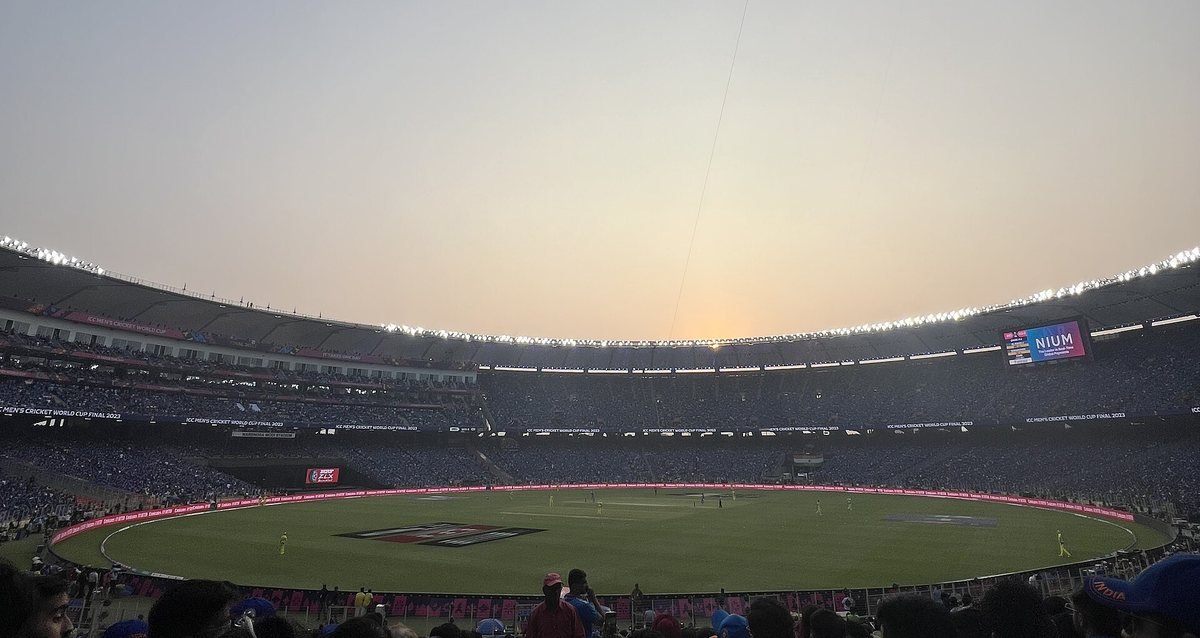
India arrived at the final unbeaten, having won all ten of their matches, in front of a crowd of more than 90,000 at the Narendra Modi Stadium. Pat Cummins chose to bowl, and India were held to 240, with KL Rahul 66 and Virat Kohli 54; Mitchell Starc took 3 for 55. Australia slipped to 47 for 3 before Travis Head made 137 off 120 balls and added 192 with Marnus Labuschagne (58 not out).
Why it matters: Australia lost their first two games of the tournament and still won it, taking their tally to six. Kohli was Player of the Tournament with a record 765 runs, but India’s wait for a third title went on.
England win the final that ended level twice Tied final
New Zealand made 241 for 8. England were also bowled out for 241 off the last ball, with Ben Stokes 84 not out; in the final over a throw deflected off his bat to the boundary for six runs. In the Super Over, England made 15 and New Zealand also made 15, Martin Guptill run out going for the second run that would have won it.
The decision: under the rules then in force, England won because they had hit more boundaries, 26 to 17. It was England’s first men’s World Cup at the fourth attempt in a final. In October 2019 the ICC scrapped the boundary count: tied Super Overs in knockouts are now repeated until there is a winner.
Australia’s fifth, at the MCG Title
A crowd of more than 93,000 saw Mitchell Starc bowl Brendon McCullum in the first over. New Zealand, playing their first final, recovered through Grant Elliott (83) but were all out for 183: James Faulkner took 3 for 36 and Mitchell Johnson 3 for 30. Michael Clarke made 74 in his last ODI, and Steve Smith finished unbeaten on 56.
Why it matters: Australia became the second co-host in a row to win the final at home, and a new generation, led by Starc as Player of the Tournament, took over from the 2000s side.
India win at home, 28 years after 1983 Title
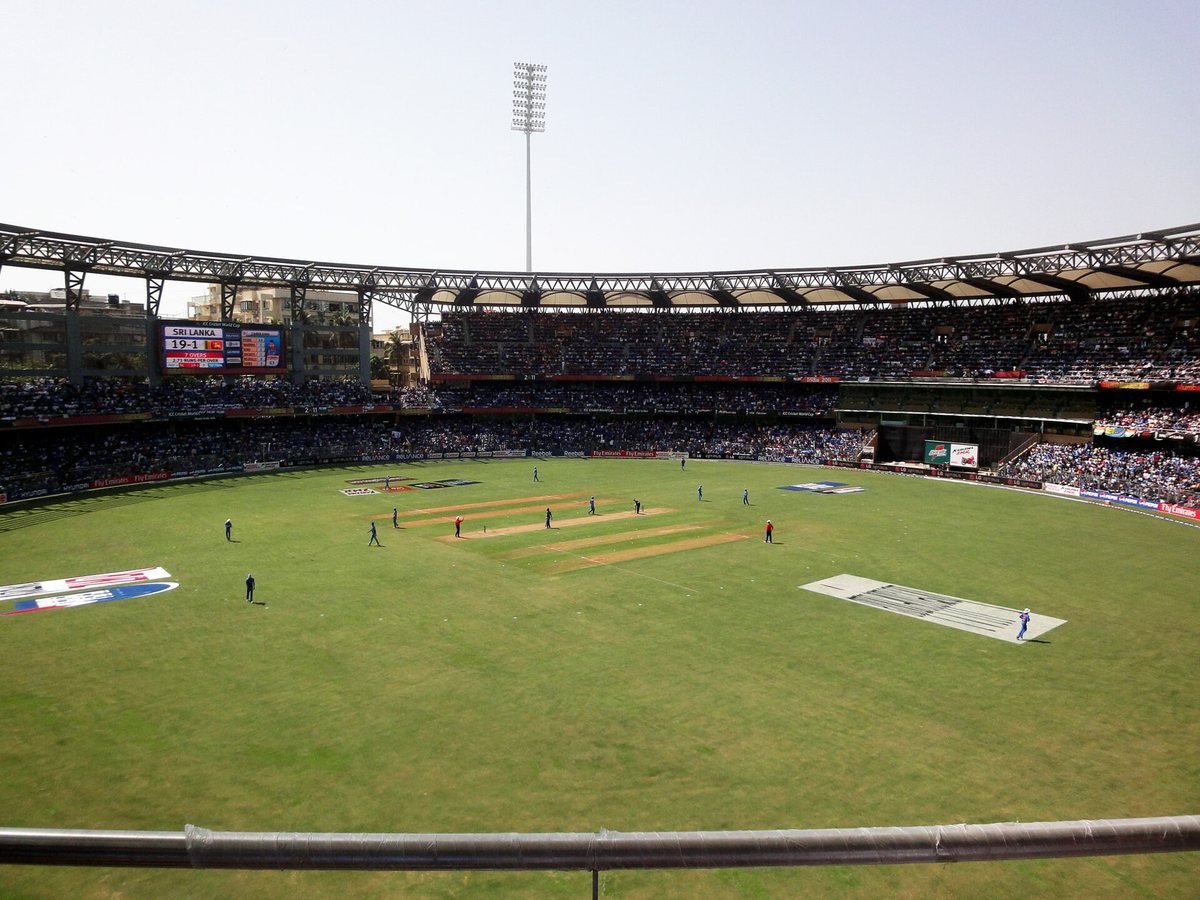
Mahela Jayawardene’s 103 not out carried Sri Lanka to 274 for 6. India lost Virender Sehwag second ball and Sachin Tendulkar for 18, to be 31 for 2. Gautam Gambhir made 97, and MS Dhoni, promoting himself above Yuvraj Singh, finished on 91 not out, ending the match with a six off Nuwan Kulasekara.
Why it matters: India became the first host nation to win a World Cup final on home soil, and Tendulkar, in his sixth World Cup, finally won it. Yuvraj was Player of the Tournament.
Australia’s hat-trick, finished in the dark Title
Rain cut the final to 38 overs a side. Adam Gilchrist hit 149 off 104 balls, still the highest score in a World Cup final, and Australia made 281 for 4. Sri Lanka were 215 for 8 when the match ended in near-darkness after confusion over whether it was complete; Australia won by 53 runs on the Duckworth-Lewis method.
Why it matters: it made Australia the only team to win three World Cups in a row, all without losing a match in 2003 and 2007. Glenn McGrath, in his last match, was Player of the Tournament with 26 wickets.
Ponting’s 140 overwhelms India Title
Sourav Ganguly put Australia in, and they made 359 for 2, the highest total in a final. Ricky Ponting hit 140 not out off 121 balls, with eight sixes, and Damien Martyn added 88 not out. India lost Tendulkar in the first over and were all out for 234, despite Sehwag’s 82.
Why it matters: Australia won all 11 of their matches. Tendulkar was Player of the Tournament with 673 runs, a record for a single World Cup until 2023.
Warne spins Pakistan out for 132 Title
Australia reached the final only after a tied semi-final with South Africa at Edgbaston, going through because they had finished higher in the Super Six. At Lord’s, Shane Warne took 4 for 33, and Pakistan were all out for 132, the lowest total in a World Cup final. Adam Gilchrist’s 54 helped finish the chase inside 21 overs.
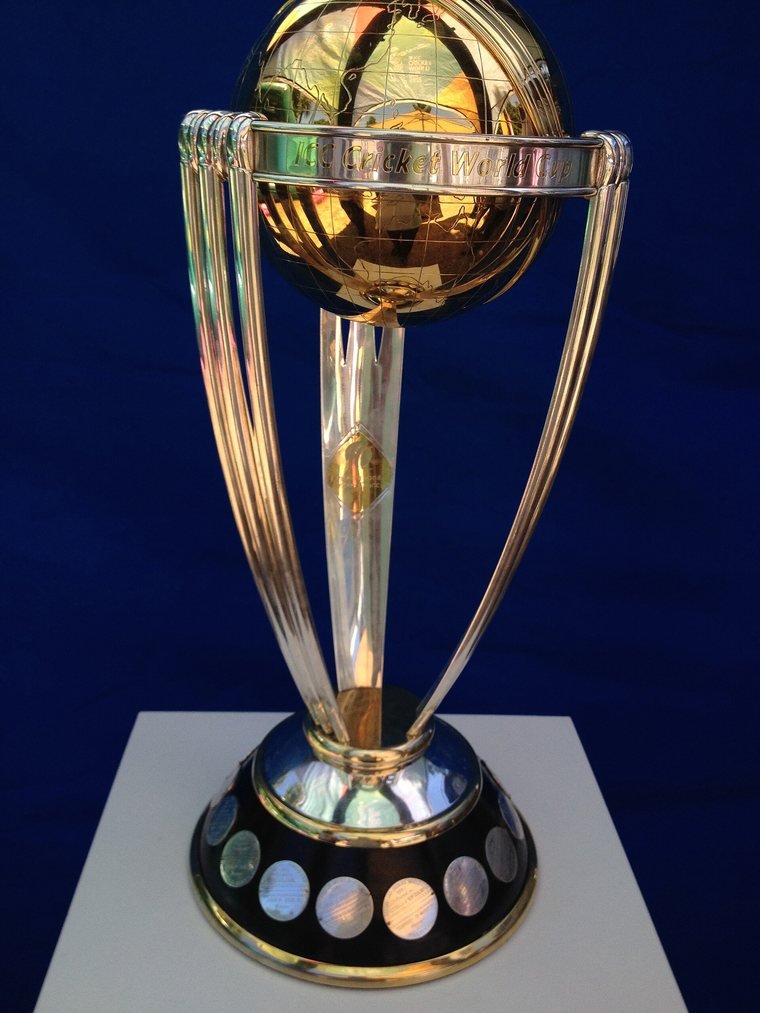
Why it matters: it began Australia’s run of three straight titles. The 1999 tournament also introduced the current gold-and-silver ICC trophy.
Sri Lanka’s first and only title First title
In the first World Cup final played under lights, Mark Taylor’s 74 helped Australia to 241 for 7. Aravinda de Silva took 3 for 42, then made 107 not out, sharing a century stand with Asanka Gurusinha (65) before Ranatunga (47 not out) saw Sri Lanka home.
Why it matters: Sri Lanka, co-hosts, became the first host country to win the World Cup, though the final was in Pakistan. Openers Sanath Jayasuriya and Romesh Kaluwitharana had attacked the fielding restrictions in the first 15 overs all tournament, an approach soon copied worldwide.
Pakistan’s comeback ends at the MCG First title
Pakistan won only one of their first five games and were bowled out for 74 by England in a rain-ruined match that gave them a vital point. They won their last three group games, then the semi-final against New Zealand. In the final, Imran Khan (72) and Javed Miandad (58) rebuilt from 24 for 2, and Pakistan reached 249 for 6.
The decisive spell: Wasim Akram bowled Allan Lamb and Chris Lewis with consecutive deliveries, and England were all out for 227. It was the first World Cup with coloured clothing, white balls and day-night matches, and South Africa’s first.
Australia’s first title, in Kolkata First title
The first World Cup outside England, and the first played over 50 overs a side. David Boon made 75 as Australia reached 253 for 5. England were well placed until captain Mike Gatting, on 41, was caught attempting a reverse sweep off the first ball bowled by Allan Border, and they finished on 246 for 8.
Why it matters: the seven-run win, at the time the closest final, was Australia’s first title, and the start of the most successful record in the tournament.
India’s upset at Lord’s Upset
The West Indies were chasing a third straight title and bowled India out for 183, Kris Srikkanth top-scoring with 38. Viv Richards raced to 33 before Kapil Dev ran back to take a famous catch. Madan Lal and Mohinder Amarnath each took three wickets, and the champions were all out for 140.
Why it matters: India had won only one World Cup match before 1983. The result transformed cricket in India and, over time, moved the sport’s financial centre towards the subcontinent.
The West Indies retain the Prudential Cup Title
Viv Richards made 138 not out and shared a stand of 139 with Collis King (86) after the West Indies had been 99 for 4. England’s openers Mike Brearley and Geoffrey Boycott added 129 but took 38 overs to do it. Joel Garner then took 5 for 38, including five wickets for four runs in 11 balls, and England lost their last eight wickets for 11 runs.
Why it matters: back-to-back titles confirmed the West Indies as the dominant team of the era.
The West Indies win the first World Cup First title
Eight teams played the first World Cup in England, in white clothing with a red ball. In the final, the West Indies were 50 for 3 when captain Clive Lloyd hit 102 off 85 balls. They made 291 for 8. Australia ran themselves into trouble: five batsmen were run out, three of them by Viv Richards, and the last pair, Jeff Thomson and Dennis Lillee, fell 17 runs short.
Why it matters: a full day of cricket on midsummer’s day, finishing at about 8.40pm, showed that a one-day international tournament could work.
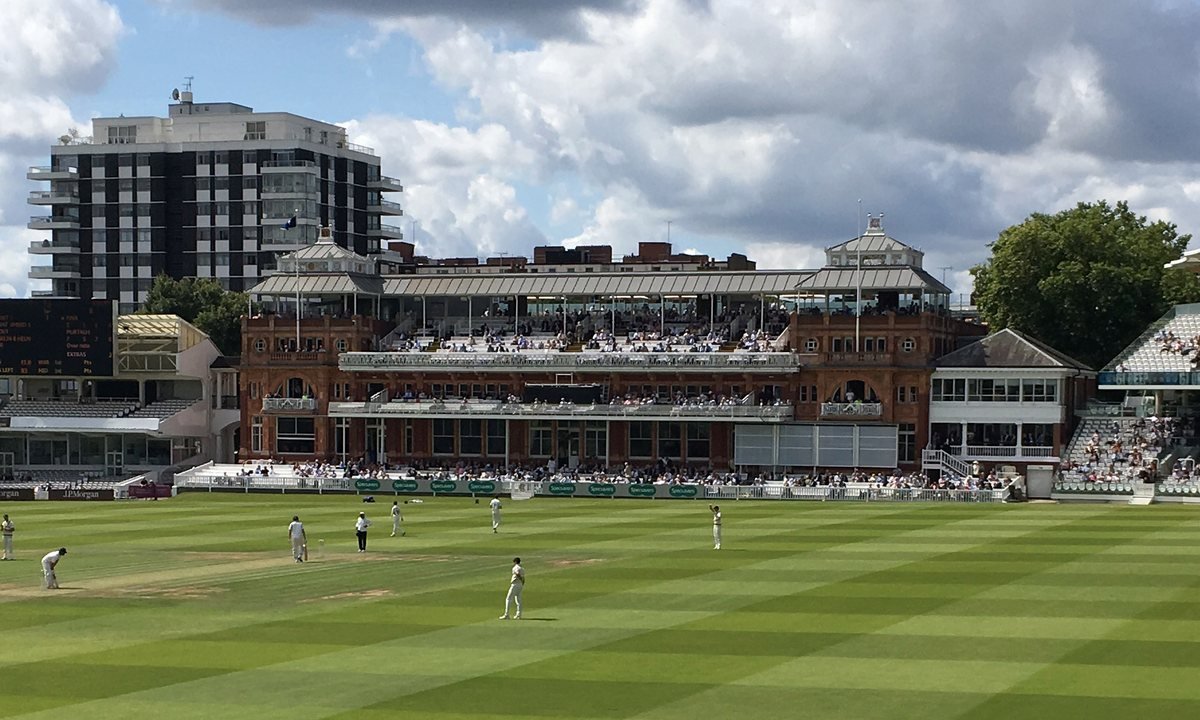
Every Cricket World Cup Champion Ranked by Titles
| Rank | Team | Titles | Finals | Championship years |
|---|---|---|---|---|
| 1 | Australia | 6 | 8 | 1987, 1999, 2003, 2007, 2015, 2023 |
| =2 | India | 2 | 4 | 1983, 2011 |
| =2 | West Indies | 2 | 3 | 1975, 1979 |
| =4 | Pakistan | 1 | 2 | 1992 |
| =4 | Sri Lanka | 1 | 3 | 1996 |
| =4 | England | 1 | 4 | 2019 |
| — | New Zealand | 0 | 2 | Runners-up 2015, 2019 |
Pick a team
Titles, finals lost and the years that defined each side.
The Two Dynasties: West Indies 1975–83 vs Australia 1999–2007
Final Scores: Batting First or Chasing?
Seven champions batted first and won; five chased; one final was tied.
| Year | Date | Scores | Champion batted |
|---|---|---|---|
| 1975 | 21 Jun 1975 | WI 291/8 (60) v AUS 274 (58.4) | First |
| 1979 | 23 Jun 1979 | WI 286/9 (60) v ENG 194 (51) | First |
| 1983 | 25 Jun 1983 | IND 183 (54.4) v WI 140 (52) | First |
| 1987 | 8 Nov 1987 | AUS 253/5 (50) v ENG 246/8 (50) | First |
| 1992 | 25 Mar 1992 | PAK 249/6 (50) v ENG 227 (49.2) | First |
| 1996 | 17 Mar 1996 | AUS 241/7 (50) v SL 245/3 (46.2) | Second |
| 1999 | 20 Jun 1999 | PAK 132 (39) v AUS 133/2 (20.1) | Second |
| 2003 | 23 Mar 2003 | AUS 359/2 (50) v IND 234 (39.2) | First |
| 2007 | 28 Apr 2007 | AUS 281/4 (38) v SL 215/8 (36) | First |
| 2011 | 2 Apr 2011 | SL 274/6 (50) v IND 277/4 (48.2) | Second |
| 2015 | 29 Mar 2015 | NZ 183 (45) v AUS 186/3 (33.1) | Second |
| 2019 | 14 Jul 2019 | NZ 241/8 (50) v ENG 241 (50); Super Over 15 each | Second (tie) |
| 2023 | 19 Nov 2023 | IND 240 (50) v AUS 241/4 (43) | Second |
The early finals belonged to teams batting first: every champion from 1975 to 1992 set a target and defended it. Since 1996 chasing has done better, with Sri Lanka, Australia (twice), India and England all winning in the second innings. With only 13 finals, though, the sample is too small to call it a rule.
Hosts and Champions
For nine tournaments no host won a final at home. Then three did in a row.
| Year | Hosts | Teams | Did a host win? |
|---|---|---|---|
| 1975 | England | 8 | No |
| 1979 | England | 8 | No |
| 1983 | England | 8 | No |
| 1987 | India, Pakistan | 8 | No |
| 1992 | Australia, New Zealand | 9 | No |
| 1996 | India, Pakistan, Sri Lanka | 12 | Yes, Sri Lanka (final in Lahore) |
| 1999 | England (with games in Scotland, Wales, Ireland, Netherlands) | 12 | No |
| 2003 | South Africa, Zimbabwe, Kenya | 14 | No |
| 2007 | West Indies | 16 | No |
| 2011 | India, Sri Lanka, Bangladesh | 14 | Yes, India, in Mumbai |
| 2015 | Australia, New Zealand | 14 | Yes, Australia, in Melbourne |
| 2019 | England, Wales | 10 | Yes, England, at Lord’s |
| 2023 | India | 10 | No, India lost the final |
| 2027 | South Africa, Zimbabwe, Namibia | 14 | To be decided |
How the Cricket World Cup Evolved
The Prudential Cups
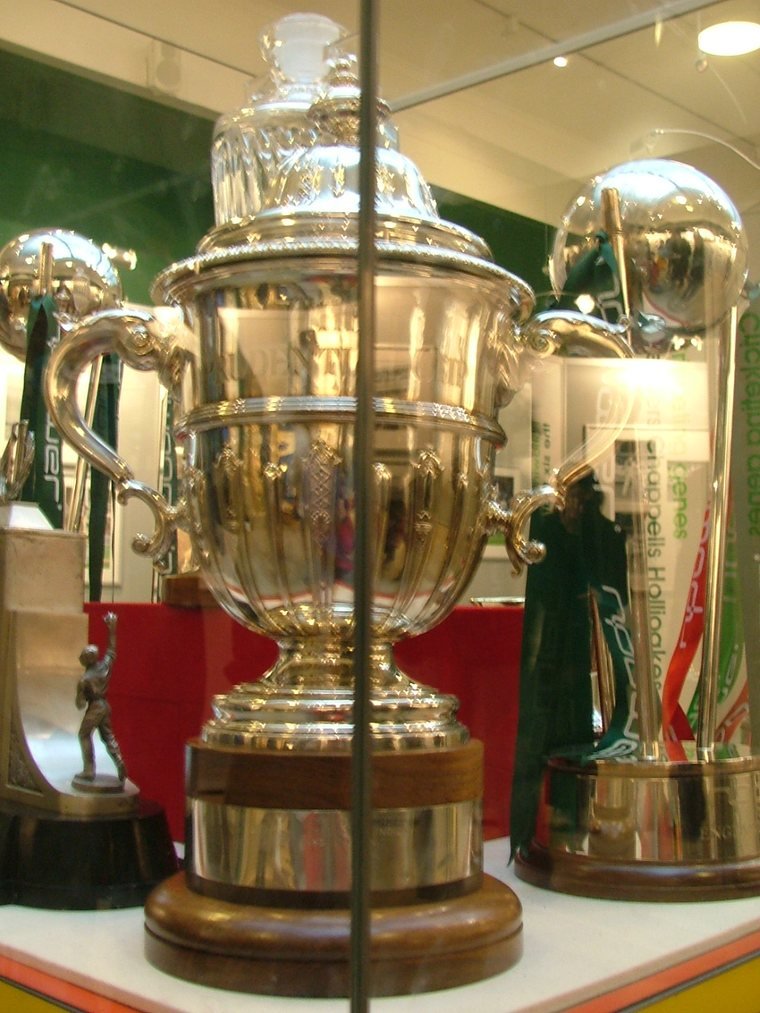
Eight teams, 60 overs a side, white clothing and a red ball, all in England. Sponsored by Prudential, whose trophy is still at Lord’s.
50 overs, new hosts
India and Pakistan host the first World Cup outside England, and the 50-over format becomes the standard.
Colour and lights
Coloured clothing, white balls, black sightscreens and day-night matches, plus South Africa’s return.
Attack from ball one
Sri Lanka’s openers exploit the fielding restrictions, changing how ODI innings start.
Bigger fields
The tournament grows from 12 teams to 16 in 2007, before shrinking to 14 and then 10.
Ten teams, round robin
Every team plays every other. After the 2019 tie, repeated Super Overs replace the boundary count.
Fourteen teams, Super 7
A Super Series, two groups of six and a seven-team second stage before the semi-finals.
The gold globe
The current ICC trophy, a gold globe held by three silver columns, has been presented since 1999.
Records From World Cup Finals
| Record in a final | Holder | Year |
|---|---|---|
| Highest total | Australia 359/2 v India | 2003 |
| Lowest total | Pakistan 132 v Australia | 1999 |
| Biggest win by runs | Australia, 125 runs v India | 2003 |
| Closest result | England v New Zealand, tied twice; boundary count | 2019 |
| Highest individual score | Adam Gilchrist, 149 | 2007 |
| Other centuries | Lloyd 102, Richards 138*, de Silva 107*, Ponting 140*, Jayawardene 103*, Head 137 | 1975–2023 |
| Best bowling | Joel Garner, 5 for 38 | 1979 |
| Most finals hosted | Lord’s, five (1975, 1979, 1983, 1999, 2019) | — |
The 2027 Cricket World Cup: What We Know
Schedule published by the ICC on 1 October 2026.
⏳ Countdown to the 2027 World Cup
The 2027 Men’s Cricket World Cup starts on 2 October 2027 in Windhoek, Namibia; the group stage opens with Australia v India in Cape Town on 7 October.
Where and when: 12 venues, eight in South Africa (Cape Town, Paarl, Johannesburg, Tshwane, Bloemfontein, Durban, KuGompo City, Gqeberha), three in Zimbabwe (Harare, Bulawayo and a new ground at Victoria Falls) and Windhoek in Namibia, from 2 October to 21 November 2027.
Who qualifies: hosts South Africa and Zimbabwe plus the top eight teams in the ODI rankings at 30 September 2026: Australia, India, Pakistan, New Zealand, England, Sri Lanka, Afghanistan and Bangladesh. Four places come from the World Cup Qualifier. The winner of the Qualifier goes straight to the group stage; the next three play a Super Series in Windhoek for one more place.
Format: two groups of six. The top three in each group, plus the better fourth-placed team, enter a Super 7 stage with no points carried forward, each playing six more matches from 25 October to 14 November. The top four reach the semi-finals on 17 and 18 November.
Fixtures to watch: Australia v India, Cape Town, 7 October; South Africa v New Zealand, Cape Town, 9 October; India v Pakistan, Johannesburg, 10 October. The West Indies, champions of 1975 and 1979, must win their way in through the Qualifier.
Not on This List: The Other Cricket World Cups
Separate tournaments, often confused with the men’s ODI World Cup.
| Tournament | First held | Most titles | Latest champion |
|---|---|---|---|
| Men’s ODI World Cup | 1975 | Australia, 6 | Australia, 2023 |
| Women’s ODI World Cup | 1973 | Australia, 7 | India, 2025 (first title) |
| Men’s T20 World Cup | 2007 | India, 3 | India, 2026 |
The Women’s Cricket World Cup is older than the men’s: England won the first in 1973. India won it for the first time on 2 November 2025, beating South Africa by 52 runs in Navi Mumbai. The men’s T20 World Cup began in 2007; India beat New Zealand by 96 runs in the 2026 final in Ahmedabad on 8 March 2026 to become the first team to retain the title and the first to win it at home.
Common Mix-ups About World Cup Winners
“India have won three World Cups”
In the men’s ODI World Cup, India have won two (1983, 2011). The third and fourth titles people mention are T20 World Cups.
“Sri Lanka won at home in 1996”
They were co-hosts, but the final was in Lahore. India in 2011 were the first to win a final on home soil.
“England won the Super Over”
The Super Over was tied too, at 15 runs each. The boundary count decided it.
“World Cups were always 50 overs”
The first three, 1975 to 1983, were 60 overs a side. 50 overs arrived in 1987.
Explore More Timelines
People Also Ask
Frequently Asked Questions
The Bottom Line
The Men’s Cricket World Cup has grown from an eight-team, 60-over experiment in 1975 into one of the sport’s biggest events. Its winners tell the story of the game: the West Indies’ early supremacy, India’s 1983 breakthrough, Pakistan’s 1992 revival, Sri Lanka’s 1996 innovation, England’s tied-final title in 2019 and Australia’s record six championships. The next chapter starts in southern Africa on 2 October 2027.
Related AiTimeline Stories
⚠️ Editorial Note
Results, scores, venues and Player of the Match awards come from the ICC’s tournament record and match scorecards, cross-checked with contemporary reports listed in the sources. This list covers the ICC Men’s ODI Cricket World Cup only; Women’s, T20 and Under-19 World Cups are separate tournaments. The 2027 details follow the ICC schedule published on 1 October 2026 and may change. Updated 12 October 2026.
Sources & further reading
Every dated entry above was checked against these references. Last reviewed 12 October 2026.
- ICC: ICC Men's Cricket World Cup - The story so far
- ICC: Awesome Australia beat India to win the ICC Men's Cricket World Cup (19 November 2023)
- ICC: Fixture schedule announced for ICC Men's Cricket World Cup 2027 (1 October 2026)
- Outlook India: West Indies miss automatic qualification for the 2027 World Cup
- Wikipedia: 2019 Cricket World Cup final (scorecard, boundary count)
- Wikipedia: 1983 Cricket World Cup final
- Wikipedia: 2023 Cricket World Cup final
- Wikipedia: Cricket World Cup (results of all editions)
- Al Jazeera: India's women defeat South Africa to seal first Cricket World Cup (2 November 2025)