Nuclear Power Timeline 1954–2026: Why the World Is Rethinking Reactors Again
A nuclear power timeline from 1954 to 2026: Three Mile Island, Chernobyl, Fukushima, SMRs, reactor restarts and the 2026 AI electricity boom.
Latest Story
For decades, nuclear power looked caught between two eras. It promised enormous amounts of low-carbon electricity, but its public image was shaped by Three Mile Island, Chernobyl and Fukushima, and older reactors were closing faster than new ones were being built. Then the electricity story changed. AI data centers, electrification, energy-security fears and climate targets have forced a harder question: if the world needs reliable power around the clock, can it afford to ignore nuclear energy? This nuclear power timeline follows commercial fission — not fusion — from the optimism of 1954 through the crises that slowed it down, to the 2026 question of whether this is a real revival or another false dawn.
Can Nuclear Power Feed the AI Boom?
🧠 Quick Answer
Nuclear power is getting renewed attention because AI data centers, electrification and climate goals are increasing demand for reliable, low-carbon electricity. Existing nuclear plants can provide steady power, while reactor restarts and small modular reactors are being explored as possible ways to add firm electricity. But high costs, long construction timelines, safety concerns, waste issues and regulatory approvals remain major challenges.
Nuclear Power: Key Questions
What this nuclear power timeline really shows
- This is a fission story, not a fusion story. Every plant, restart and reactor design here is commercial nuclear fission — splitting atoms, the technology that has generated grid electricity since 1954. Fusion remains experimental and is a separate technology track.
- AI is a major new demand driver, not the sole cause. Electrification, industrial power demand, climate policy and energy security were already reviving interest in nuclear power before AI data centers became a headline reason.
- Three accidents still shape every safety conversation. Three Mile Island (1979), Chernobyl (1986) and Fukushima (2011) each triggered new regulation, public distrust and, in some countries, outright phase-outs — and none of that history has been erased by 2026’s renewed interest.
- Restarting a closed plant is faster than building a new one, but it is not fast or guaranteed. Palisades and Duane Arnold are both years-long projects with real technical setbacks, not switches waiting to be flipped.
- SMRs are promising, not proven at commercial scale in the West. As of 2026, NuScale is still the only SMR design with full US regulatory certification, and no Western SMR has begun commercial operation, though China’s HTR-PM (2023) and Russia’s floating Akademik Lomonosov (2020) already run.
- Nuclear power is not renewable and is not emissions-free. It is low-carbon “firm” power that runs on mined fuel and carries a lifecycle footprint from mining, construction and waste management.
- Waste, cost and public trust remain unresolved. No country has opened a permanent high-level waste repository at commercial scale, large reactor projects routinely run over budget and behind schedule, and safety politics still decide whether a project gets built at all.
- Nuclear and renewables are not rivals in a winner-take-all sense. Solar and wind are cheap and fast to build but intermittent; nuclear is steady but slow and capital-intensive. Real grids increasingly need some mix of both, plus gas and storage, not a single answer.
Old Nuclear vs New Nuclear (SMRs)
A large reactor and a small modular reactor are both nuclear fission — but they carry very different risk profiles
Restart the Nuclear Plant? Fill a 1,000 MW Gap
Your city needs 1,000 megawatts of new electricity. Pick a source and see the real tradeoffs — there is no single right answer
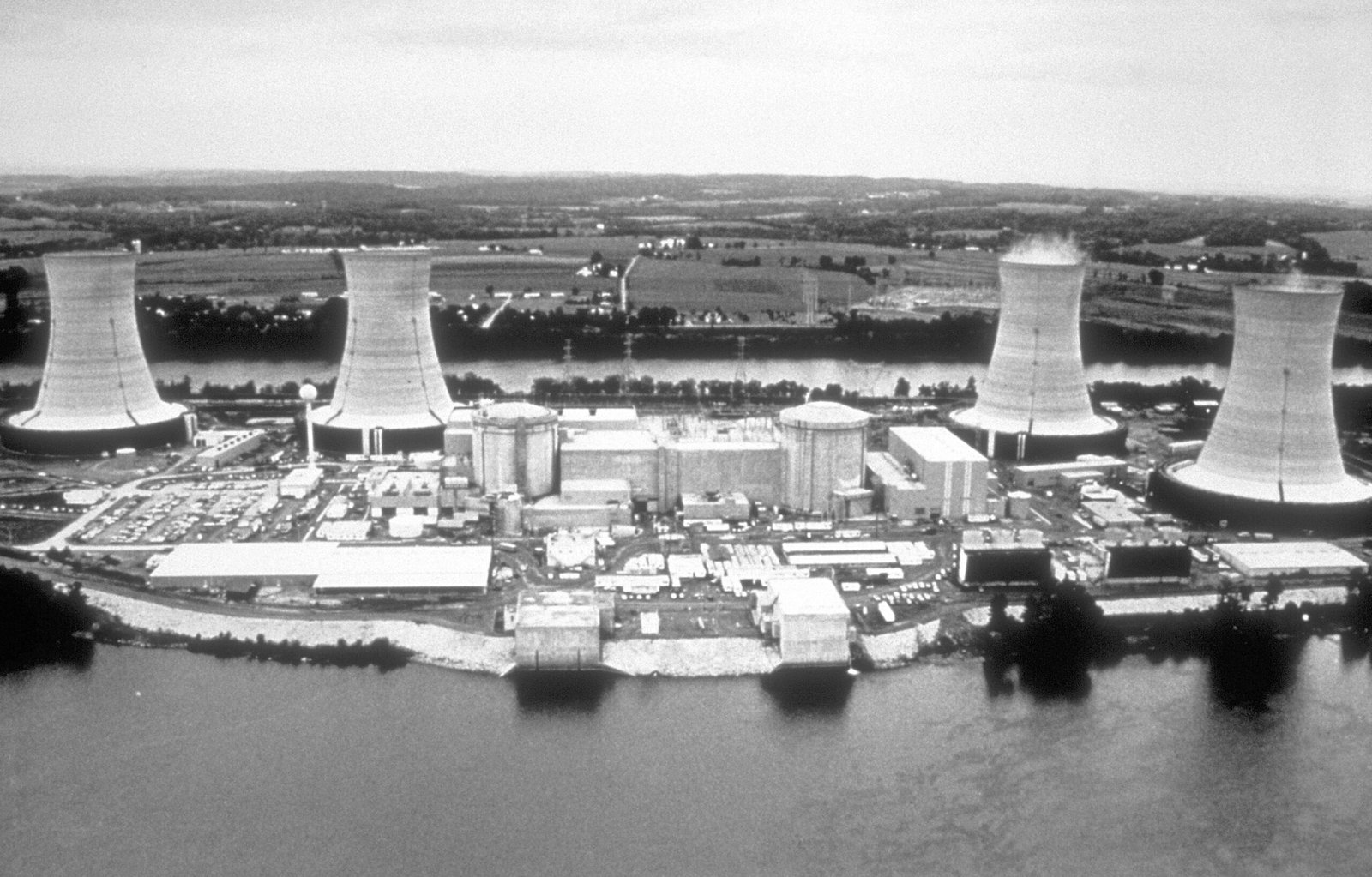
Three Mile Island, Pennsylvania — site of the 1979 partial meltdown that reshaped US nuclear regulation for a generation. Credit: CDC Public Health Image Library, public domain.
Timeline: Nuclear Power From Optimism to Comeback, 1954–2030
Newest developments first. Each entry marks the moment that changed the picture.
Nuclear power did not have one story — it had at least three: a decade of atomic optimism, three separate safety crises that each froze new construction for years, and now a fourth act driven by climate targets, energy security and AI electricity demand. Reading the sequence in order shows why 2026’s restart projects are a real development and not a simple return to the 1970s boom.
Revival or False Dawn?
What is at stake: The next decade will test whether nuclear power can overcome its old problems: high upfront costs, slow construction, waste storage, safety politics and uncertain SMR economics. As of 2026, no Western SMR has reached commercial operation, and large-reactor projects still routinely run years late and billions over budget.
Why it matters: The AI-driven demand story only becomes a genuine “comeback” if restarts and new builds actually deliver power on the timelines companies are now signing contracts around. Every project on this timeline’s 2026 entry is a bet that this time is different.
Reactor Restarts Become Serious Business
What happened: Holtec International has been working toward restarting the closed Palisades plant in Michigan, closing out major restart projects by mid-2026 and moving into inspection and testing, while also developing its own SMR designs. Restart dates have slipped repeatedly after a steam-generator tube inspection found cracked tubes needing repair and a regulatory violation over safety-equipment documentation; no confirmed restart date existed as of mid-2026, though Holtec’s CEO said he expected it before a March 2027 supply contract deadline. Separately, NextEra Energy is working toward restarting the shuttered Duane Arnold plant in Iowa, backed by a 25-year power-purchase agreement with Google and a $1.9 billion Department of Energy loan, with restart targeted around early 2029.
Why it matters: Neither project is finished, and neither restart date is guaranteed. That is the honest state of “nuclear’s comeback” in 2026: real money, real contracts and real engineering work underway, but still subject to approvals, inspections and execution risk — not reactors quietly waiting to be switched back on.
AI Changes the Electricity Conversation
What happened: Exploding electricity demand from AI data centers pushed technology companies to sign long-term deals for carbon-free, round-the-clock power. In September 2024, Constellation Energy agreed to restart Three Mile Island’s undamaged Unit 1 (rebranded the Crane Clean Energy Center) under a 20-year deal to sell power to Microsoft; the project has since secured a $1 billion federal loan and a FERC waiver, and is targeting restart in 2027 pending an NRC operating-license decision expected in May 2027. Amazon signed a deal to draw power from Talen Energy’s Susquehanna nuclear plant in Pennsylvania for a co-located data center. In 2025, Google signed the first corporate SMR power-purchase agreement, with Kairos Power’s Hermes 2 project in Tennessee.
Why it matters: This is the demand-side half of the comeback story: tech companies with enormous capital and 24/7 power needs are now the customers underwriting restarts and next-generation reactor projects that utilities alone were reluctant to fund after decades of cost overruns.
Climate and Energy Security Revive the Debate
What happened: Russia’s February 2022 invasion of Ukraine and the resulting European energy crunch pushed several governments to reconsider nuclear phase-outs on energy-security grounds; Belgium reversed course and extended the life of two reactors it had planned to close. In December 2023, more than 20 countries signed a declaration at the COP28 climate summit in Dubai pledging to work toward tripling global nuclear capacity by 2050, treating it as essential low-carbon firm power alongside renewables.
Why it matters: This was the policy pivot that made a nuclear “comeback” politically thinkable again in the West, years before AI data centers became the headline demand driver. Energy security and climate targets, not AI, reopened the door first.
Renewables and Cheap Gas Change the Market
What happened: Falling costs for solar, wind and natural gas — the latter driven by the shale boom — squeezed wholesale power prices, straining aging nuclear plants that were expensive to maintain. Several US reactors closed early for economic reasons rather than safety ones, including California’s San Onofre (closed 2013, after steam-generator problems made continued operation uneconomic) and Vermont Yankee (closed 2014).
Why it matters: This is the period that made nuclear power look like a declining technology in much of the West — not because of a new accident, but because it could no longer compete on price in deregulated markets. That economic weakness is exactly what today’s long-term AI power contracts are designed to fix.
Fukushima
What happened: A magnitude-9 offshore earthquake and the tsunami it triggered knocked out power and cooling at the Fukushima Daiichi plant, causing meltdowns in three reactors. Japan shut down its entire commercial reactor fleet for safety review. Germany announced an accelerated nuclear exit within months and completed it in April 2023, shutting its last three reactors.
Why it matters: Fukushima made “it can happen even in a technologically advanced, safety-conscious country” impossible to dismiss, and it directly produced one of the developed world’s most consequential nuclear phase-out decisions.
The First “Nuclear Renaissance”
What happened: As climate change rose on the policy agenda, nuclear power was reconsidered as a low-carbon electricity source. Finland ordered a new-generation EPR reactor, Olkiluoto 3, in 2005, intended as the flagship of this renaissance. The project ran roughly a decade behind schedule and billions of euros over budget, finally reaching full commercial operation in April 2023 — about 18 years after it was ordered.
Why it matters: Olkiluoto 3 became the cautionary tale that shaped how utilities, investors and governments thought about new large-reactor construction for the next two decades, and it is a big part of why restarting an existing plant looks far more attractive than building a new one from scratch.
The Slowdown
What happened: Across much of the West, new nuclear construction slowed sharply. Cost overruns, long approval timelines, lingering safety fears from Chernobyl and cheaper fossil-fuel alternatives made new nuclear projects hard to justify to investors and regulators alike.
Why it matters: This is the decade that turned nuclear power from a growth industry into a mostly stagnant one in much of the developed world, setting the baseline that the 2000s “renaissance” and 2020s comeback are both reacting against.
Chernobyl
What happened: A flawed reactor design combined with a mishandled safety test caused Reactor 4 at the Chernobyl plant to explode, releasing large amounts of radioactive material across Europe and forcing the permanent evacuation of the surrounding region. It remains the worst nuclear accident on record.
Why it matters: Chernobyl froze global nuclear investment for years and turned nuclear safety into an international political issue, not just a technical one, in a way that still colors public opinion four decades later.
Three Mile Island
What happened: A combination of mechanical failure and operator error caused a partial meltdown in Unit 2’s reactor core, releasing small amounts of radioactive gas. No one was confirmed to have died as a direct result, but the accident shattered public confidence in the US nuclear industry and triggered sweeping new regulatory oversight.
Why it matters: It remains the most serious commercial nuclear accident in US history, and it effectively halted new US reactor orders for decades — a freeze that AI-era restart deals are only now beginning to reverse at the very same site’s undamaged Unit 1.
The Reactor Construction Boom
What happened: Many countries built or approved large numbers of nuclear power plants as electricity demand rose and the 1970s oil shocks exposed the risks of relying on imported fossil fuels. Nuclear energy became a central pillar of national energy-security planning in several countries, most notably France.
Why it matters: This was nuclear power’s first real growth boom, and it is the fleet of reactors built in this era — now aging — that today’s restart and life-extension debates are mostly about.
Atomic-Energy Optimism
What happened: Governments promoted nuclear power as a symbol of modernity, scientific progress and energy abundance. The pitch was simple: reactors could generate huge amounts of electricity without burning coal or oil, at a moment when demand for electricity was rising fast.
Why it matters: This is the optimism the 2026 “comeback” language deliberately echoes — and the gap between that early promise and what actually got built is the whole reason the word “comeback” applies at all.
First Grid-Connected Nuclear Power Station
What happened: The Soviet Union connected the AM-1 reactor at Obninsk to the local electricity grid, generating about 5 megawatts of power. It was tiny by today’s standards, but it proved that controlled nuclear fission could generate usable electricity for civilian use, not just weapons.
Why it matters: Obninsk launched the civilian nuclear-power era and set off a wave of interest from Western industrialized nations eager to develop their own reactors.
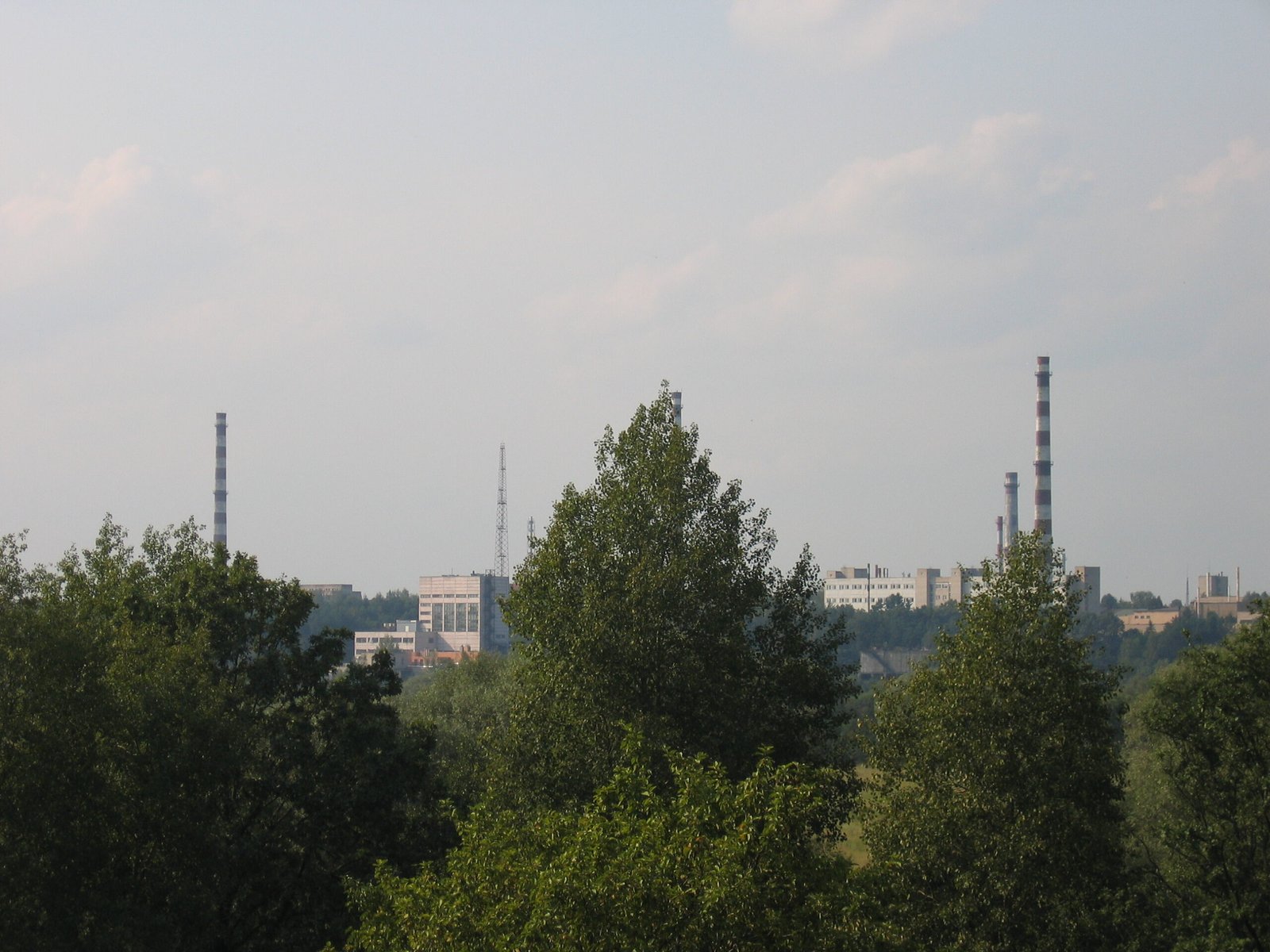
Obninsk, Russia — site of the world’s first grid-connected nuclear reactor. Credit: A.Savin, CC BY-SA 3.0, via Wikimedia Commons.
Palisades and Duane Arnold: The Two 2026 Restart Bets, Side by Side
Both are real projects with real money behind them — neither is finished
| Detail | Palisades, Michigan | Duane Arnold, Iowa |
|---|---|---|
| Operator | Holtec International | NextEra Energy |
| Shut down | 2022 | 2020 |
| Capacity | ~800 MW | ~610 MW |
| Anchor customer / backer | Wolverine Power / regional utilities under a 2027 supply contract | Google, via a 25-year power-purchase agreement |
| Federal support | DOE loan guarantee | $1.9 billion DOE loan |
| Restart status, mid-2026 | Major restart work closed out; testing and inspection ongoing; no confirmed restart date after repeated delays | Restart targeted around early 2029; NextEra moving toward 100% ownership |
| Recent setback | Cracked steam-generator tubes found on inspection; an NRC documentation violation | None publicly reported as of mid-2026; project still years from completion |
Facts Worth Knowing
- Nuclear power is not renewable — it runs on mined uranium, not an inexhaustible natural flow like sunlight or wind, which is why analysts classify it as low-carbon “firm” power rather than a renewable.
- Palisades and Duane Arnold would be the first two full restarts of previously shut-down US commercial reactors, a category distinct from simply extending an operating plant’s license.
- Three Mile Island’s Unit 1 — the reactor now being restarted as the Crane Clean Energy Center — never had an accident; the 1979 meltdown happened in the adjacent Unit 2, which never restarted and remains permanently shut.
- Finland’s Olkiluoto 3 reactor took about as long to build, start to finish, as the entire gap between Fukushima (2011) and the 2026 restart projects covered here.
- As of 2026, NuScale Power is still the only small modular reactor design with full US regulatory certification; none has begun commercial operation in the United States.
- Belgium, which had planned a full nuclear phase-out, instead extended the operating life of two reactors after Europe’s 2022 energy crunch — a direct example of energy security reopening a decision climate policy alone had not.
Explore More Timelines
People Also Ask
Frequently Asked Questions
Related AiTimeline Coverage
⚠️ Editorial & Sources Note
Author: The AI Timeline Editorial Team · Last updated: 8 September 2026. This article covers commercial nuclear fission — large reactors, restarts and small modular reactors — not nuclear fusion, which is a separate, still-experimental technology. It does not claim nuclear power is emissions-free or renewable, that any small modular reactor is already proven cheaper at commercial scale, that AI demand alone caused the nuclear comeback, or that any 2026 reactor restart is guaranteed on the dates reported. Restart status for Palisades and Duane Arnold, and the Crane Clean Energy Center/Three Mile Island Unit 1 timeline, follow reporting from World Nuclear News, Utility Dive, the NRC and company statements as of September 2026 and are subject to change. Historical accident details follow NRC and IAEA records. This is editorial coverage of energy technology and policy, not investment, engineering or safety advice.
Sources & further reading
Every dated entry above was checked against these references. Last reviewed 15 September 2026.
- NRC — Christopher M. Crane Clean Energy Center (Three Mile Island Unit 1) reactor profile
- World Nuclear News — Crane Clean Energy Centre on track for ahead-of-schedule restart
- World Nuclear News — Duane Arnold restart underpins NextEra Energy and Google collaboration
- NextEra Energy — NextEra Energy and Google Announce New Collaboration to Accelerate Nuclear Energy Deployment
- American Nuclear Society / Nuclear Newswire — Palisades: restart projects, Holtec IPO, lawsuit dismissal, but no restart date
- World Nuclear Association — Outline History of Nuclear Energy
- NRC — Three Mile Island Accident fact sheet
- US Department of Energy — Declaration to Triple Nuclear Energy Capacity by 2050 (COP28)