Kesari Newspaper History: How Tilak Weaponised the Marathi Press
Kesari newspaper history: how Tilak's 1881 Marathi weekly turned famine, plague and Shivaji into politics, and why it got him jailed in 1897 and 1908.
Latest Story
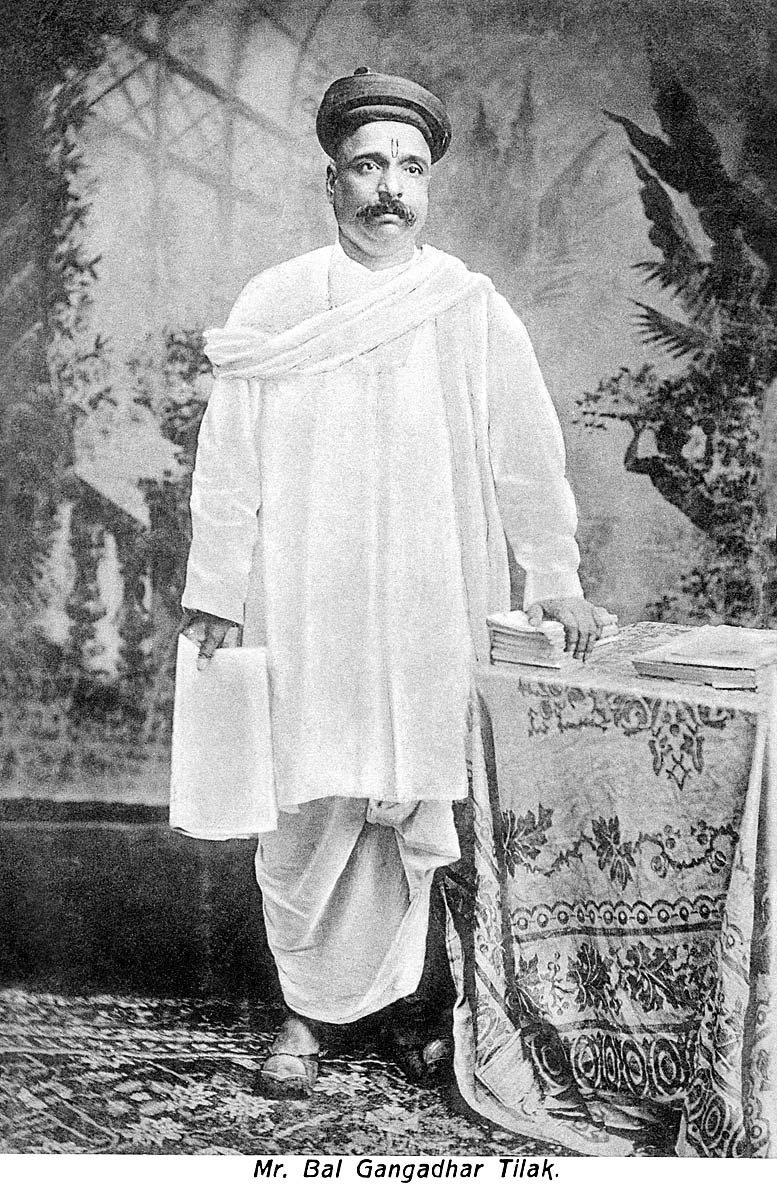
Kesari, Marathi for “lion”, first appeared in Pune on 4 January 1881, two days after its English-language partner The Mahratta. It was started by the young nationalists behind Pune’s New English School, among them Bal Gangadhar Tilak and Gopal Ganesh Agarkar. Agarkar edited it first. Under Tilak it became the paper that turned famine, plague and the memory of Shivaji into political arguments for Marathi readers. The British twice sent its editor to prison for what it printed: 18 months in 1897 and six years in Mandalay from 1908. This timeline follows how a Pune weekly built a mass political vocabulary, and why it still publishes 145 years later.
🧠 AI Overview Summary
Kesari is a Marathi newspaper founded in Pune on 4 January 1881 by Bal Gangadhar Tilak, Gopal Ganesh Agarkar and their colleagues. Agarkar was its first editor. After Agarkar left in 1887, Tilak made it a nationalist platform that linked famine, plague and Shivaji to self-rule. Articles in Kesari led to Tilak’s sedition convictions in 1897 (18 months) and 1908 (six years in Mandalay). The Kesari Maratha Trust, run by Tilak’s descendants, still publishes it as a daily.
Kesari: Key Questions
145 Years of Kesari in Ten Lines
- Two papers, two audiences: The Mahratta (English, 2 January 1881) for officials and the educated elite, and Kesari (Marathi, 4 January 1881) for everyone else.
- Agarkar edited it first, not Tilak: Agarkar ran Kesari for about six years while Tilak edited The Mahratta.
- Its first scandal ended in jail: forged letters about the Kolhapur regent led to four months in Bombay’s Dongri jail for Tilak and Agarkar in 1882.
- The founders split over reform: Agarkar wanted social reform first and left in 1887 to start Sudharak; Tilak put political freedom first.
- It made grievances political: it told famine-hit peasants in 1896–97 what relief the law allowed them and why revenue was unjust.
- History became a message: Ganeshotsav from 1893–94 and Shiv Jayanti from 1895–96 gave the paper public stages.
- 1897 redefined sedition: Justice Strachey held that “disaffection” meant the absence of affection, so no call to violence was needed.
- 1908 sent Tilak to Mandalay: six years’ transportation for two editorials, and Bombay’s mill workers struck in protest.
- Tilak’s courtroom words are in marble: his 1908 statement is inscribed outside the Chief Justice’s court in Mumbai.
- The paper outlived him and the law: Kesari went daily in 1962, and the offence it was prosecuted under was removed from the statute book in 2024 (a replacement clause was added).
1881: A Lion and a Mahratta
Two papers, two languages, one group of young teachers.
Kesari came out of a group, not one man. In January 1880, Vishnushastri Chiplunkar, Bal Gangadhar Tilak and Mahadev Ballal Namjoshi opened the New English School in Pune, and Gopal Ganesh Agarkar soon joined them. Their plan was that Indians should educate Indians. A year later the same group launched two weekly newspapers: The Mahratta in English on 2 January 1881 and Kesari in Marathi on 4 January 1881.
The split was deliberate. The Mahratta spoke to officials and English-educated Indians, the people who already read newspapers. Kesari spoke to Marathi readers in towns and villages who had never been addressed by a political paper in their own language. Agarkar edited Kesari; Tilak edited The Mahratta. This is often reversed in popular accounts, but Kelkar, Tilak’s own biographer and later Kesari editor, and the paper’s present owners both describe Agarkar as its first editor.
The timing mattered. The Vernacular Press Act of 1878 had given the government sweeping powers over Indian-language papers only, and it was repealed in 1882. Kesari was born into a legal climate that had just shown how much the Raj feared the vernacular press.
1882: The Kolhapur Letters and Dongri Jail
The paper’s first big story was wrong, and its editors went to prison for it.
In 1881–82, Kesari and The Mahratta took up the case of the young Raja Shivaji IV of Kolhapur, who had been declared insane and confined. The papers argued he was being mistreated and accused the British-appointed regent, Mahadeo Barve, of plotting against him. Their evidence was a set of letters that turned out to be forged.
Barve sued for defamation. On 16 July 1882 a jury found Tilak and Agarkar guilty, and they were sentenced to four months in Dongri jail in Bombay. They admitted in court how they had received the letters and that they had trusted them. Public sympathy went their way, and the case made both men well known. It was the first sign of a pattern: what Kesari printed could land its editors in prison.
1887: Agarkar Leaves, Tilak’s Kesari Begins
A split over what India needed first: social reform or political freedom.
Tilak and Agarkar disagreed more and more. Agarkar believed Indian society had to reform itself first, on caste, widow remarriage, child marriage and women’s education. Tilak believed political freedom came first and that reform imposed by or through the British would divide Indians. In 1887 Agarkar left Kesari and in 1888 started his own reformist paper, Sudharak (“The Reformer”). Tilak also left the Deccan Education Society in 1890 over similar arguments.
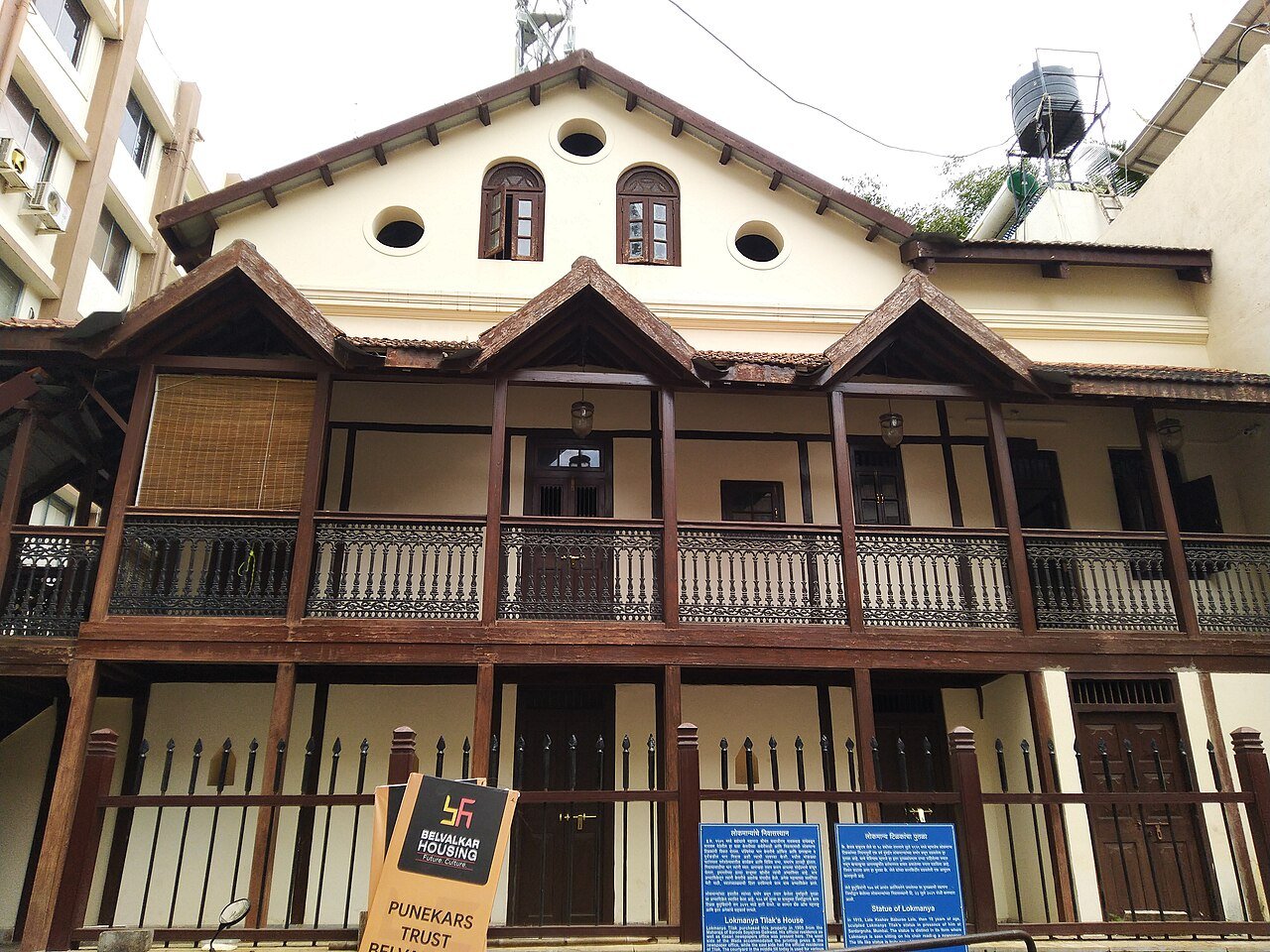
From then on Kesari was Tilak’s paper. It came out every Tuesday, and Tilak wrote many of its editorials himself. The two papers moved in 1905 to Gaikwad Wada in Narayan Peth, a building Tilak bought from the Maharaja of Baroda, now known as Kesari Wada. The paper is still published from there.
How Kesari Turned Grievances Into Politics
Not a gun or a bomb: a political vocabulary in print, in Marathi.
Kesari’s power was not that it reported news. It was that it told readers who was responsible. A failed harvest became a question about land revenue. A plague search became a question about who governed Pune and how. A 17th-century king became a question about whether Indians could rule themselves.
Tilak also built public stages for these ideas. He helped turn Ganesh worship from a household ritual into a public festival in 1893–94, and set up the Shivaji Fund Committee in 1895, which led to public Shiv Jayanti celebrations from 1896. Kesari reported and promoted both, so a reader could meet the same argument at home, in print, and in the street.
Historians note that these festivals had other organisers and roots, and that they also sharpened Hindu–Muslim divisions in 1890s Maharashtra. The formula was powerful, and it was not neutral.
1896–97: Famine as a Political Story
Telling peasants what the law already allowed them.
When famine hit the Deccan in 1896–97, Kesari did something simple and effective. It printed what the government’s own Famine Relief Code said about suspending and remitting land revenue, and told cultivators who could not pay that they did not have to sell their cattle or land to do it. Tilak’s Sarvajanik Sabha sent workers into the villages with the same message.
Officials called this a no-rent campaign. Kesari presented it as informing people of their rights. Either way, it turned the paper from a Pune publication into one that mattered in the countryside, and it put Tilak in direct conflict with the Bombay government months before the plague.
1897: Plague, Shivaji and the First Sedition Trial
A poem, a murder, and a new definition of “disaffection”.
Bubonic plague reached Pune in late 1896. In March 1897 the government set up a Special Plague Committee under W.C. Rand, with soldiers searching homes, removing the sick and burning belongings. Many Punekars, including Tilak, saw the searches as humiliating, and Kesari attacked how they were carried out.
On 15 June 1897 Kesari printed a report of the Shivaji festival and a poem, “Shivaji’s Utterances”, imagining Shivaji waking to see his land plundered by foreigners. On the night of 22 June 1897, the Diamond Jubilee of Queen Victoria, the Chapekar brothers shot Rand and Lieutenant Ayerst as they left a reception at Government House in Pune. Ayerst died on the spot; Rand died on 3 July.
Tilak was arrested in July and charged under Section 124A of the Indian Penal Code, but not with the murder. The trial ran at the Bombay High Court from 8 to 14 September 1897 before Justice Arthur Strachey and a jury of six Europeans and three Indians. The prosecution worked from English translations of Marathi text, and the meaning of the translations was argued over in court. The jury convicted 6–3, the three Indians voting to acquit. Tilak was sentenced to 18 months’ rigorous imprisonment. The Privy Council refused leave to appeal. He accepted conditional early release on 6 September 1898.
The lasting damage was legal. Strachey told the jury that “disaffection” meant simply the absence of affection and that no call to violence was needed. That reading of Section 124A was used against Indian journalists for decades.
1908: Two Editorials and Six Years in Mandalay
The same law, a harsher sentence, and a strike in Bombay.
On 30 April 1908, Khudiram Bose and Prafulla Chaki threw a bomb at a carriage in Muzaffarpur, Bihar, meant for magistrate Douglas Kingsford. It killed two English women instead. The government answered with arrests and new press controls.
Kesari replied in two editorials: “The Country’s Misfortune” (Deshache Durdaiva, 12 May 1908) and “These Remedies Are Not Lasting” (He Upay Tikau Nahit, 9 June 1908). Tilak said he regretted the violence but argued that repression produced it and that only Swaraj would stop it. He was arrested in Bombay on 24 June 1908 and charged under Sections 124A and 153A.
The trial ran from 13 to 22 July 1908 before Justice Dinshaw Davar, who had been Tilak’s own counsel in 1897. Tilak defended himself and spoke to the jury for hours. The jury convicted 7–2, the two Indian jurors dissenting. Late on 22 July, Davar sentenced him to six years’ transportation, served in Mandalay, Burma, and a fine of ₹1,000. Some accounts date the sentence to 23 July, Tilak’s 52nd birthday, because it was pronounced close to midnight.
Bombay’s textile workers went on strike for several days in protest, often cited as one of the first political strikes by Indian workers. In Mandalay, Tilak wrote his commentary on the Bhagavad Gita, Gita Rahasya. He was released on 16 June 1914.
His words after the verdict are now inscribed in marble outside the Chief Justice’s court in Mumbai: “All that I wish to say is that in spite of the verdict of the jury I still maintain that I am innocent. There are higher powers that rule the destinies of men and nations; and I think it may be the will of Providence that the cause which I represent may be benefited more by my suffering than by my pen and tongue.”
1897 vs 1908: Two Trials Compared
Same newspaper, same law, very different stakes.
Tilak’s Two Kesari Sedition Trials
| Detail | 1897 trial | 1908 trial |
|---|---|---|
| Kesari pieces | 15 June 1897 | 12 May and 9 June 1908 |
| Arrest | July 1897 | 24 June 1908 |
| Trial dates | 8–14 September 1897 | 13–22 July 1908 |
| Court | Bombay High Court | Bombay High Court |
| Defence | Counsel incl. Dinshaw Davar | Tilak himself |
| Jury | 6 European, 3 Indian | 7 European, 2 Indian |
| Verdict | Guilty, 6–3 | Guilty, 7–2 |
| Sentence | 18 months’ rigorous imprisonment | 6 years’ transportation + ₹1,000 |
| Legacy | “Disaffection” = absence of affection | Statement inscribed at Bombay HC |
N.C. Kelkar: The Editor Who Kept It Running
An institution, not just one man’s pen.
Each time Tilak went to prison, the paper kept coming out. Narasimha Chintaman Kelkar, a lawyer and writer, edited Kesari during both imprisonments, 1897–99 and 1908–14, and stayed with it after Tilak’s death. He wrote the first major biography of Tilak and later sat in the Central Legislative Assembly. Kelkar summed up the bond himself: it was impossible, he wrote, to think of Kesari without Tilak or Tilak without Kesari.
That continuity is Kesari’s quieter achievement. Many nationalist papers of the era closed when their editors were jailed, fined or ran out of money. Kesari survived because Tilak built an organisation around it.
1914–1920: Home Rule and “Swaraj Is My Birthright”
The last campaign, and a court win with Jinnah.
Back in Pune in June 1914, Tilak rejoined the Congress and in April 1916 founded the Indian Home Rule League at Belgaum, alongside Annie Besant’s separate league. Its membership grew from about 1,400 in 1916 to around 32,000 by 1917. Pamphlets went out in Marathi, English and other languages, and Kesari carried the argument. This is the period of the slogan “Swaraj is my birthright and I shall have it.”
The government tried again. Over speeches at Belgaum (1 May 1916) and Ahmednagar (31 May and 1 June 1916), the Poona magistrate ordered Tilak to post a security of ₹20,000 for good behaviour under Section 108 of the Criminal Procedure Code. M.A. Jinnah argued his appeal, and on 9 November 1916 the Bombay High Court set the order aside, holding that asking for self-government by lawful means was not sedition. It was the first time the courts sided with him.
Tilak died in Bombay on 1 August 1920, the day Gandhi launched the Non-Cooperation Movement.
1920–2026: The Paper After Tilak
From weekly to daily, and some pages its admirers skip.
After 1920, Kesari stayed with the Tilak camp and with Kelkar. Its format grew slowly: bi-weekly in 1929, tri-weekly in 1951 and daily in 1962, under Tilak’s grandson Jayantrao Tilak, who was also a Congress parliamentarian and chairman of the Maharashtra Legislative Council. He died in 2001.
The paper’s politics also shifted. Research by historian Marzia Casolari found that between the mid-1920s and mid-1930s Kesari ran many articles admiring Mussolini and Italian fascism, and by the 1940s it was close to the Hindu Mahasabha. This is part of the record and is rarely mentioned in centenary tributes.
Kesari marked its centenary in 1981. In 2009 the Kesari Maratha Trust launched the Lokmanya Tilak National Award for Excellence in Journalism; the first went to Vir Sanghvi. Tilak’s great-grandson Dipak Tilak, the trustee editor and a former vice-chancellor of Tilak Maharashtra Vidyapeeth, died in Pune on 16 July 2025 at 78. In 2026 Kesari is 145 years old, still published from Kesari Wada, and describes itself as the only Indian newspaper run by the same trust for its whole life.
| Year | Format / event | Who was in charge |
|---|---|---|
| 1881 | Weekly, every Tuesday | G.G. Agarkar (editor) |
| 1887 | Weekly, Tilak’s paper | B.G. Tilak |
| 1897–99 | Weekly, editor in jail | N.C. Kelkar |
| 1908–14 | Weekly, editor in Mandalay | N.C. Kelkar |
| 1929 | Bi-weekly | Tilak circle / Kelkar era |
| 1951 | Tri-weekly | Kesari Maratha Trust |
| 1962 | Daily | Jayantrao Tilak |
| 1981 | Centenary | Tilak family trust |
| 2025 | Trustee editor dies | Dipak Tilak (d. 16 July) |
A few hundred
The first issues sold in the hundreds; Tilak’s own 1902 review put early subscriptions at roughly 700–1,000.
~13,000
Copies per issue, with about 75,000 readers, by Tilak’s own count. Large for a Marathi weekly then.
~70,000
Daily circulation reported by Open magazine. Not an audited figure.
Why Kesari Still Matters: The Sedition Law
The law used on Tilak outlived the Raj by 77 years.
Section 124A, the law used against Kesari, survived independence. In Kedar Nath Singh (1962) the Supreme Court kept it but limited it to speech that incites violence or public disorder, rejecting Strachey’s “absence of affection” test. On 11 May 2022 the Court put all pending sedition cases on hold. The Bharatiya Nyaya Sanhita, in force from 1 July 2024, dropped the word “sedition”, but its Section 152, on acts endangering India’s sovereignty, unity and integrity, is criticised by some lawyers as broader than the old section.
That is why Kesari’s story is not only about 1897 or 1908. The questions its trials raised are still being argued: where criticism of government ends and incitement begins, who decides what a translated sentence really means, and whether jailing an editor silences an idea or spreads it.
Kesari: The Complete Timeline
Newest first.
Kesari Turns 145
Kesari completes 145 years, published daily by the Kesari Maratha Trust from Kesari Wada in Narayan Peth.
Dipak Tilak Dies
Kesari’s trustee editor and Tilak’s great-grandson dies at 78. He had also led the Tilak Smarak Trust and briefly served as vice-chancellor of Tilak Maharashtra Vidyapeeth.
Sedition Leaves the Statute Book
The Bharatiya Nyaya Sanhita replaces the Indian Penal Code. The offence of “sedition” under Section 124A, used against Kesari in 1897 and 1908, is gone, but Section 152 covers acts endangering sovereignty and unity.
Lokmanya Tilak Journalism Award
The Kesari Maratha Trust gives its first Lokmanya Tilak National Award for Excellence in Journalism, to Vir Sanghvi.
A Hundred Years in Print
Kesari completes a century after surviving two sedition trials, its founder’s imprisonment, Independence and the arrival of radio and television.
Kesari Becomes a Daily
Eighty-one years after its first weekly issue, Kesari begins daily publication under Tilak’s grandson.
Supreme Court Narrows Sedition
The Supreme Court upholds Section 124A but limits it to words that incite violence or public disorder, setting aside the “absence of affection” test from Tilak’s 1897 trial.
Pages on Mussolini
Historian Marzia Casolari documents Kesari articles and editorials admiring Italian fascism in this period. By the 1940s the paper was close to the Hindu Mahasabha.
Tilak Dies
Tilak dies the same day Gandhi launches Non-Cooperation. Kesari continues under Kelkar and the Tilak circle.
Home Rule League and a Win in Court
Tilak founds the Indian Home Rule League at Belgaum. When officials demand a ₹20,000 security over his speeches, Jinnah argues his case and the Bombay High Court cancels the order.
Released From Mandalay
Tilak returns to Pune after six years, with the manuscript of Gita Rahasya, his commentary on the Bhagavad Gita.
Second Sedition Trial
After the Muzaffarpur bombing, two Kesari editorials blame repression for the violence. Justice Davar’s jury convicts 7–2, and Tilak gets six years’ transportation to Mandalay and a ₹1,000 fine. Bombay mill workers strike in protest.
Swadeshi and a New Home
The Partition of Bengal sparks the Swadeshi and boycott movement, which Kesari carries to Marathi readers. Tilak buys Gaikwad Wada in Narayan Peth, which becomes Kesari Wada.
13,000 Copies
Writing in Kesari, Tilak puts circulation at about 13,000 copies and some 75,000 readers, up from roughly 700–1,000 subscriptions in the early years.
First Sedition Trial
Kesari prints “Shivaji’s Utterances” a week before the Chapekar brothers shoot Plague Commissioner Rand. Tilak is convicted 6–3 under Section 124A and gets 18 months’ rigorous imprisonment. He is released on 6 September 1898.
Famine Campaign
Kesari publishes the Famine Relief Code’s revenue provisions and urges cultivators who cannot pay not to sell land or cattle to do so.
Ganeshotsav and Shiv Jayanti
Tilak helps make Ganesh worship a public festival and sets up the Shivaji Fund Committee in 1895. Kesari promotes both as public stages for political ideas.
Agarkar Leaves
After about six years as editor, Agarkar leaves over the reform-versus-politics dispute and starts Sudharak. Kesari becomes Tilak’s paper.
Four Months in Dongri Jail
Convicted of defaming Kolhapur regent Mahadeo Barve on the strength of forged letters, Tilak and Agarkar serve four months. The Vernacular Press Act is repealed the same year.
Kesari and The Mahratta Launched
The New English School group launches an English weekly and a Marathi weekly. Agarkar edits Kesari; Tilak edits The Mahratta.
New English School Opens
Chiplunkar, Tilak and Namjoshi open a school run by Indians for Indians. The same group will start Kesari a year later.
💡 Things Most Kesari Histories Get Wrong
- Tilak did not edit the first Kesari. Agarkar did, until 1887.
- Tilak was never charged with Rand’s murder. The 1897 charge was sedition, over a poem and a festival report.
- The judge who sentenced Tilak in 1908 had been his defence lawyer in 1897.
- Kesari was a weekly for 48 years and did not go daily until 1962.
- Jinnah did win a case for Tilak, in 1916, over the Home Rule speeches.
Quiz: The Kesari Effect
Tap a question to reveal the answer.
You edit Kesari in 1897 during the Pune plague. What do you do?
What does “Kesari” mean?
Who was Kesari’s first editor?
What was the jury split in 1897?
Where did Tilak serve his 1908 sentence?
When did Kesari become a daily?
Which lawyer won Tilak’s 1916 case?
Explore More Timelines
People Also Ask
Frequently Asked Questions
Related AiTimeline Stories
⚠️ Editorial Note
Trial facts come from the Bombay High Court record as summarised by Arvind Datar (Bar & Bench), the 1908 and 1916 judgments on Indian Kanoon, and standard biographies. Format changes and 1902 circulation come from Open magazine’s history of the paper. Several popular claims were corrected here: Agarkar, not Tilak, was the first editor; the 1908 sentence was pronounced late on 22 July (some sources say 23 July); and an often-quoted figure of 20,000 copies by 1907 could not be verified and is not used. Present-day circulation is a press report, not an audited figure. This is editorial, AI-assisted content, not an official publication of Kesari or the Kesari Maratha Trust.
Sources & further reading
Every dated entry above was checked against these references. Last reviewed 26 September 2026.
- Daily Kesari: official site and history
- Arvind Datar, Bar and Bench: The Sedition Trials of Lokmanya Tilak
- Indian Kanoon: In re Bal Gangadhar Tilak (1908)
- Indian Kanoon: Emperor v. Bal Gangadhar Tilak, 9 November 1916
- Open magazine: Still Waking Up To Kesari
- Wikipedia: Kesari (Marathi newspaper)
- Wikipedia: Bal Gangadhar Tilak