Trump Mob Boss Analogy: Political Power & History Timeline
How the Trump mob boss analogy grew from Comey's 2017 loyalty dinner to the Georgia RICO case, Comey's own indictments and a 2026 fight over press access.
Latest Story
The Trump “mob boss” analogy is not a court finding and not an official description of anything. It is a comparison that other people made. Its best-known source is former FBI Director James Comey, a one-time Mafia prosecutor, who wrote in 2018 that dealing with Donald Trump gave him “flashbacks” to his cases against the Mob. Trump has always rejected it. This timeline follows the comparison from a January 2017 dinner to a September 2026 court order. It sets out what was said, by whom, and what courts and other institutions actually did in response. Some of the story’s turns are ones few people expected, including that the man who made the comparison has since been indicted twice.
💡 Short Answer
The “mob boss” comparison is a critics’ metaphor for Donald Trump’s leadership style, not a legal finding. James Comey made it prominent in his April 2018 memoir, citing Trump’s January 2017 request for “loyalty”, which Trump denies making. It resurfaced with Michael Cohen’s 2019 testimony, the 2020 election dispute and a 2023 Georgia racketeering case that was dismissed in 2025. In the second term the debate shifted to how courts check presidential power.
The Trump Mob-Boss Comparison: Key Questions
What the record shows
- It is attributed, not established: the comparison comes from Comey, commentators and former associates. Trump rejects it, and no court has made such a finding.
- Loyalty is the root word: Comey’s account of the 27 January 2017 dinner (“I need loyalty, I expect loyalty”) is where the analogy starts. Trump said in June 2017 he never asked for a loyalty pledge.
- Some mob language came from inside: Trump’s 2018 tweets about Manafort refusing to “break” and Cohen being a “Rat”, and Cohen’s 2019 “he speaks in a code” testimony, did as much as critics to fix the image.
- The framing predates Ukraine: the Washington Post’s “Here’s how Trump talks like a mob boss” ran on 28 February 2019, the day after Cohen’s testimony, months before the Ukraine call.
- RICO is not the metaphor: Georgia’s racketeering case was dismissed on 26 November 2025. The two federal cases were dropped after the 2024 election. Only the New York conviction stands, with no penalty imposed.
- “Retribution” predates the 2024 campaign: Trump’s “I am your retribution” line was said at CPAC on 4 March 2023.
- The second term moved the debate to institutions: four law firms won court rulings striking down executive orders aimed at them; the appeal was argued on 14 May 2026 and is undecided.
- The accuser became a defendant: Comey was indicted in September 2025 (dismissed in November) and again in April 2026 over an “8647” seashell post. He has pleaded not guilty and argues both are retaliation.
- Courts are the recurring brake: on 24 September 2026 Judge Timothy Kelly ordered press access restored for CNN, MS NOW and Politico, on due-process grounds, for 14 days.
Where the comparison began: one dinner, one word
January 2017 to April 2018
On 27 January 2017, a week after the inauguration, Trump invited FBI Director James Comey to a private dinner in the White House Green Room. In written testimony to the Senate Intelligence Committee on 8 June 2017, Comey said the president told him: “I need loyalty, I expect loyalty.” Comey wrote that he stayed silent, and that they later settled on the phrase “honest loyalty”, which he said the two of them understood differently.
Trump disputed that account the next day. At a Rose Garden press conference on 9 June 2017 he said he “hardly” knew Comey and added: “I’m not going to say, ‘I want you to pledge allegiance.’ Who would do that?” There is no recording of the dinner; the only accounts are Comey’s contemporaneous memos and Trump’s denial.
Trump fired Comey on 9 May 2017, while the FBI was investigating Russian interference in the 2016 election. Eight days later, Deputy Attorney General Rod Rosenstein appointed Robert Mueller as special counsel. The firing later became one of the episodes Mueller examined for possible obstruction of justice. His report, released in April 2019, did not conclude that Trump committed a crime and stated that it did not exonerate him.
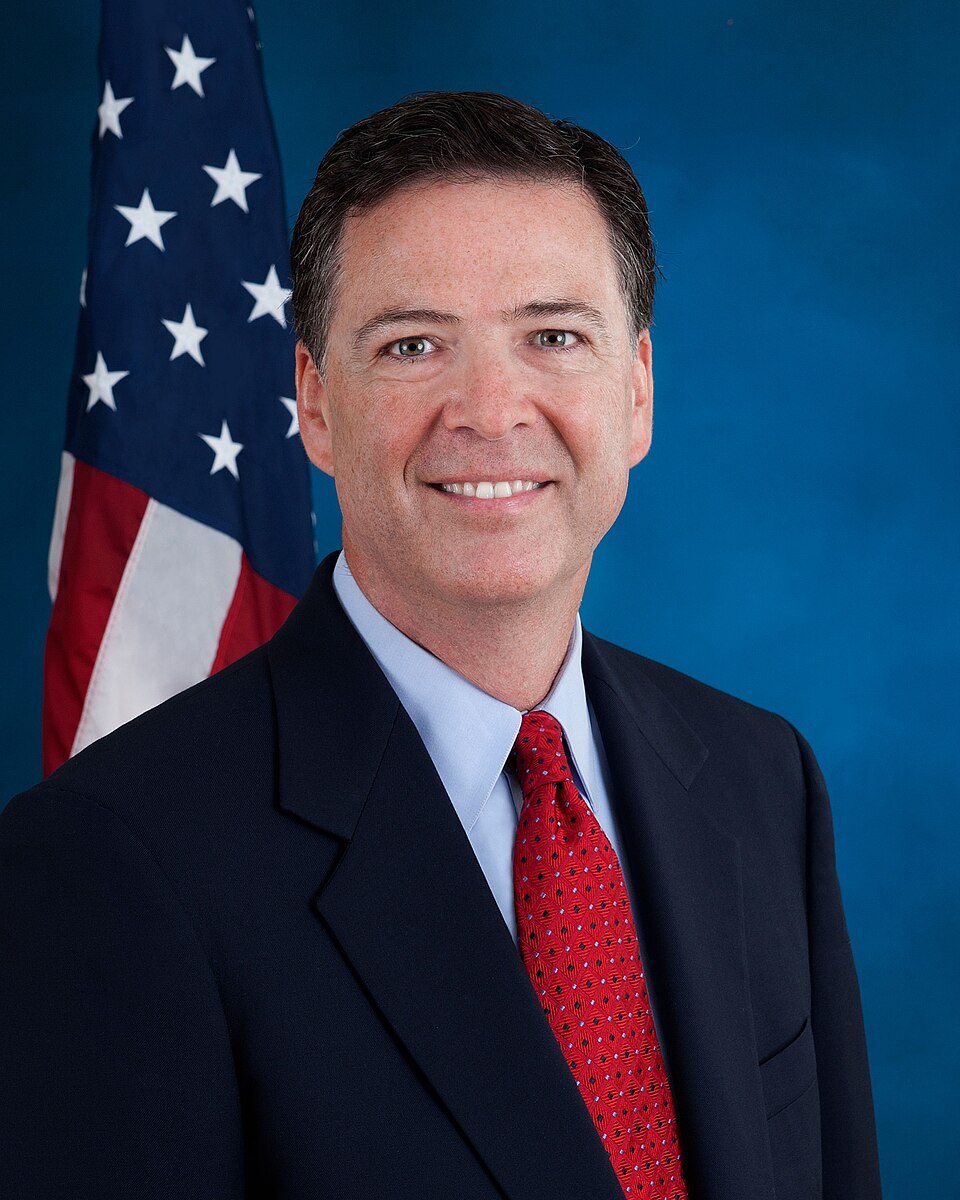
The comparison itself arrived in print on 17 April 2018, when Comey published A Higher Loyalty: Truth, Lies, and Leadership. Comey had worked on Mafia prosecutions as an assistant US attorney in Manhattan in the 1980s. He opened with that experience and drew the line directly:
“As I found myself thrust into the Trump orbit, I once again was having flashbacks to my earlier career as a prosecutor against the Mob. The silent circle of assent. The boss in complete control. The loyalty oaths. The us-versus-them world view. The lying about all things, large and small, in service to some code of loyalty that put the organization above morality and above the truth.”James Comey, A Higher Loyalty (Flatiron Books, 2018)
Note what the passage compares: a style of leadership built on personal loyalty, not criminal acts. Comey was careful about that distinction in interviews at the time. Trump’s response was to call him an “untruthful slime ball” on Twitter on 13 April 2018, four days before publication, and to describe the book as fiction.
Who actually used the mob vocabulary?
The image was built by critics, by a former fixer and by Trump himself
A common assumption is that “mob boss” is a label only Trump’s opponents apply. The record is more mixed. Some of the most-quoted mob-style language came from Trump’s own posts and from his former lawyer, Michael Cohen.
| Date | Speaker | Words used | Context |
|---|---|---|---|
| 23 Jan 2016 | Donald Trump | “I could stand in the middle of Fifth Avenue and shoot somebody and I wouldn’t lose any voters” | Campaign rally, Sioux Center, Iowa |
| 8 Jun 2017 | James Comey | “I need loyalty, I expect loyalty” (quoting Trump) | Written Senate testimony |
| 17 Apr 2018 | James Comey | “The boss in complete control. The loyalty oaths.” | A Higher Loyalty |
| 22 Aug 2018 | Donald Trump | Manafort “refused to ‘break’”, unlike Cohen | Tweet after Manafort’s conviction and Cohen’s plea |
| 16 Dec 2018 | Donald Trump | Cohen “only became a ‘Rat’” after the FBI raid | Tweet |
| 27 Feb 2019 | Michael Cohen | “He doesn’t give you questions, he doesn’t give you orders. He speaks in a code.” | House Oversight Committee testimony |
| 28 Feb 2019 | Washington Post | “Here’s how Trump talks like a mob boss” | Analysis on indirect instructions |
| 2023 onward | Donald Trump | Indicted more times than “Alphonse Capone” | Rally line; fact-checkers noted Capone was indicted several times |
The Cohen testimony matters most for how the analogy developed. Cohen said Trump never directly told him to lie to Congress: “That’s not how he operates.” That idea of instructions given without being spoken is what commentators then mapped onto the Mafia habit of never saying anything that could be used as evidence. Cohen had pleaded guilty to lying to Congress, among other charges, and Trump’s allies argued throughout that he was not a credible witness.
The Personal Power Test: five categories, documented events
No score. Open each category and judge the evidence yourself.
The analogy usually rests on five themes. Rather than rate Trump on them, the panels below list documented events under each theme, and mark which ones were checked by a court or other institution. Tap a category to open it.
1. Loyalty Is loyalty owed to the leader or to the office?
2. Appointments Loyalty or independence in key posts?
3. Opposition Rivals, or enemies?
4. Retaliation Political criticism, or state action?
5. Institutional checks Can courts and Congress still say no?
Two kinds of power, side by side
The metaphor describes the left column. The American system is built around the right one.
Personal power
Leader → loyalty → allies → opponents → executive action
- Loyalty request at the 2017 dinner (Comey’s account)
- Comey fired, May 2017
- Pressure on Georgia officials: “I just want to find 11,780 votes”, 2 January 2021 call
- Law-firm executive orders, March 2025
- Press ban on three outlets, September 2026
Institutional power
President ↔ Congress ↔ courts ↔ states ↔ press ↔ voters
- Special counsel appointed, May 2017
- Georgia’s secretary of state refuses to change the count, January 2021
- Congress certifies the result, 7 January 2021
- Law-firm orders struck down, May–June 2025
- Press access restored by court order, 24 September 2026
2020 and January 6: when loyalty met an election result
Joe Biden won the 3 November 2020 election with 306 electoral votes to Trump’s 232. Trump did not accept the result. His campaign and allies filed dozens of lawsuits, which courts rejected or dismissed. On a recorded call on 2 January 2021, Trump asked Georgia Secretary of State Brad Raffensperger to “find 11,780 votes”, one more than Biden’s margin in the state. Raffensperger, a Republican, refused.
After the recording was published, former acting Solicitor General Neal Katyal said Trump sounded like a mob boss. That is the moment the comparison shifted from personality to process. The question was no longer only whether Trump expected personal loyalty, but what happens when loyalty to a leader conflicts with an official result.
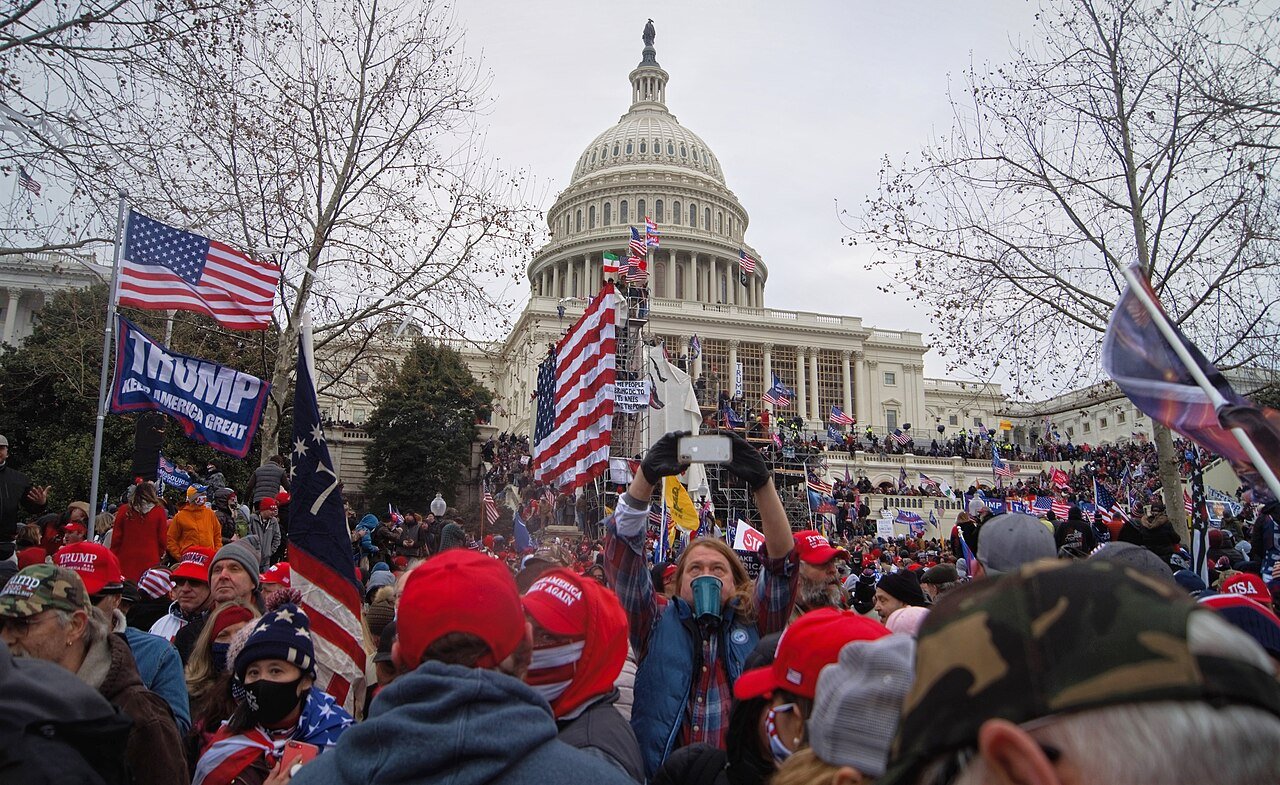
On 6 January 2021, a crowd broke into the Capitol and interrupted the count. Congress finished certifying Biden’s win in the early hours of 7 January. The House impeached Trump for “incitement of insurrection” on 13 January; the Senate voted 57–43 to convict on 13 February, short of the two-thirds needed, so he was acquitted.
Two later reports examined the pressure on institutions. The Senate Judiciary Committee’s majority staff report, Subverting Justice (October 2021), described efforts to use the Justice Department to back election-fraud claims. The House January 6 Committee’s final report (December 2022) concluded that Trump was told by advisers his fraud claims were false and kept making them. Trump and his supporters called the committee partisan; its findings are not a court ruling.
Metaphor vs RICO: what happened to the four criminal cases
The package this page began from listed the charges. It did not say how they ended.
In 2023 Trump became the first former US president charged with crimes. The Georgia case is the one that fused the metaphor with the law, because it used the state’s Racketeer Influenced and Corrupt Organizations (RICO) statute. RICO laws were written with organised crime in mind, but they cover any alleged “enterprise” engaged in a pattern of crimes. A RICO charge is not a finding that anyone is a mobster, and in this case there was never a trial.
| Case | Charged | Allegation | Outcome |
|---|---|---|---|
| New York (state) | 30 Mar 2023 | 34 counts of falsifying business records over a 2016 hush-money payment | Convicted on all counts, 30 May 2024; unconditional discharge (no penalty), 10 Jan 2025; appeal pending |
| Florida (federal) | 8 Jun 2023 | Retention of classified documents and obstruction | Dismissed by Judge Aileen Cannon, 15 Jul 2024; appeal dropped after the election |
| Washington, DC (federal) | 1 Aug 2023 | Conspiracy to obstruct the 2020 certification | Narrowed by the Supreme Court’s immunity ruling, 1 Jul 2024; dismissed at the special counsel’s request, 25 Nov 2024 |
| Georgia (state, RICO) | 14 Aug 2023 | Racketeering conspiracy to overturn Georgia’s result, with 18 co-defendants | DA Fani Willis disqualified, Dec 2024; case dismissed after new prosecutor Pete Skandalakis declined to proceed, 26 Nov 2025 |
Four Georgia co-defendants, including lawyers Sidney Powell and Kenneth Chesebro, pleaded guilty to lesser charges in 2023 before the case collapsed. In his dismissal filing, Skandalakis wrote that actions such as arranging phone calls and sending texts could not sustain a RICO case, and that a multi-state trial could not realistically happen before Trump’s term ends in 2029. Trump’s supporters saw the whole sequence as proof of politically driven “lawfare”; critics saw it as proof that the cases were overtaken by the election calendar.
Second term: from style to state power
January 2025 to 2026
Trump won the 5 November 2024 election and was inaugurated on 20 January 2025. That day he pardoned or commuted sentences for about 1,500 people charged over 6 January. For supporters of the analogy, that was loyalty rewarded; for Trump’s allies, it corrected what they called unfair prosecutions.
The debate then shifted to how executive power was being used. The clearest test was a series of executive orders aimed at large law firms that had employed Trump’s investigators or represented his opponents. The orders stripped security clearances, restricted access to federal buildings and threatened firms’ government-contractor clients.
| Firm | Order | Response | Result |
|---|---|---|---|
| Perkins Coie | 6 Mar 2025 | Sued | Struck down, 2 May 2025 (Judge Beryl Howell) |
| Paul, Weiss | 14 Mar 2025 | Settled; order rescinded | Agreed to $40m in pro bono work |
| Jenner & Block | 25 Mar 2025 | Sued | Struck down, 23 May 2025 (Judge John Bates) |
| WilmerHale | 27 Mar 2025 | Sued | Struck down, 27 May 2025 (Judge Richard Leon) |
| Susman Godfrey | 9 Apr 2025 | Sued | Struck down, 27 Jun 2025 (Judge Loren AliKhan) |
Paul Weiss and eight other firms reached deals with the White House, pledging a combined total of close to $940 million in pro bono work. The administration appealed the four losses. In March 2026 the Justice Department moved to drop the appeals and then reversed itself a day later. The DC Circuit heard argument on 14 May 2026 and had not ruled by late September. The administration has defended the orders on national-security and professional-conduct grounds.
Comey’s reversal: from accuser to defendant
The man who made the comparison has been charged twice
The most unexpected turn in the story concerns Comey himself. On 25 September 2025, a grand jury in Virginia indicted him on charges of lying to Congress and obstruction, over 2020 Senate testimony. The indictment was brought by Lindsey Halligan, a former White House aide appointed interim US attorney days earlier, replacing Erik Siebert, who left the post under White House pressure. Comey pleaded not guilty and argued the prosecution was vindictive.
On 24 November 2025, Judge Cameron McGowan Currie dismissed the case, ruling Halligan had been unlawfully appointed. The same ruling threw out an indictment of New York Attorney General Letitia James. The Justice Department appealed; the Fourth Circuit heard argument on 15 September 2026.
On 28 April 2026, a grand jury in the Eastern District of North Carolina indicted Comey again, this time for allegedly threatening the president. The charge rests on a May 2025 Instagram photo of seashells arranged to read “8647”, which prosecutors say meant “get rid of” the 47th president. Comey deleted the post at the time and said he had not realised some people associate the numbers with violence. In September 2026 Judge Louise Flanagan pushed the case into early 2027 while she weighs his motion to dismiss for vindictive prosecution.
Supporters of the prosecutions say Comey is being held to the same law as anyone else. Critics say that charging the man who coined the comparison is exactly what the comparison warned about. The courts have not yet ruled on that question.
September 2026: the White House press ban
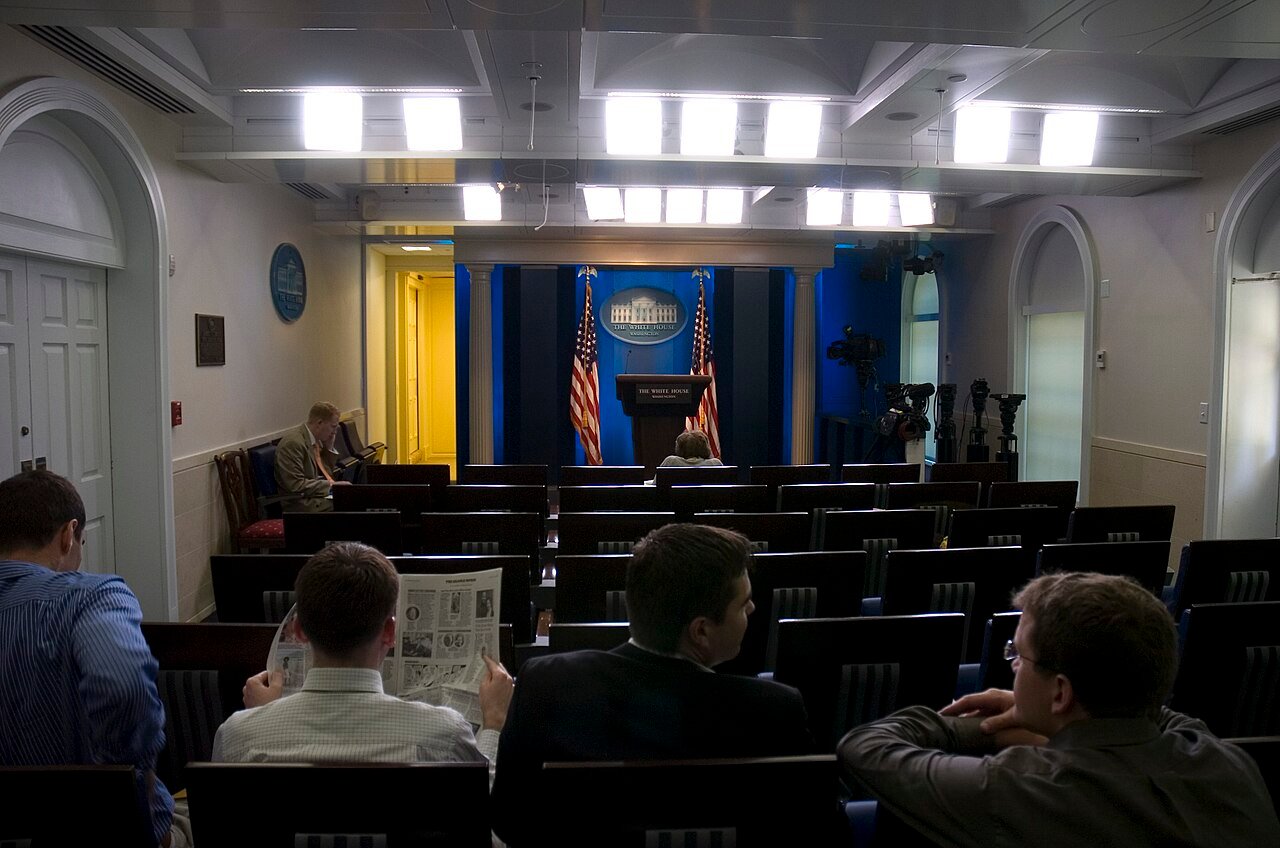
The latest episode has a precedent. In February 2025 the White House barred the Associated Press from the Oval Office and Air Force One after it kept using “Gulf of Mexico”. A district judge sided with the AP in April 2025; an appeals court panel later let the limits on the Oval Office and Air Force One stand while the case continued.
On Friday 18 September 2026, Trump announced that CNN, MS NOW and Politico were barred from the White House “effective immediately”, citing their “FAKE NEWS”. Reporters were turned away and their credentials taken the next morning. The administration later argued national security, saying the outlets had published sensitive information. The outlets sued on Monday 21 September.
Shortly after midnight on Thursday 24 September, US District Judge Timothy Kelly issued a 14-day temporary restraining order restoring their access. He found the outlets were likely to win because their credentials were revoked without “constitutionally adequate due process”, with no prior notice or chance to challenge the ban, and said the administration offered little evidence for its security claim. Reporters were back inside by midday. The Justice Department was expected to appeal.
Where the analogy breaks down
A mob boss answers to no one. A president answers to several institutions at once.
| Mob organisation | Constitutional presidency |
|---|---|
| Private criminal enterprise | Public office defined by the Constitution |
| Loyalty enforced outside the law | Authority limited by statute and courts |
| Leader chosen internally | Leader chosen by election, with a two-term limit |
| No outside review | Judicial review: law-firm orders and press ban both blocked |
| No free press | First Amendment protection for news organisations |
| Violence enforces decisions | Government force constrained by law |
Scholars who study personalised power tend to use other terms. The Hungarian sociologist Bálint Magyar coined “mafia state” in 2016 for post-communist Hungary, a system in which a political “family” captures the state. Most American analysts avoid applying that model to the US, because courts, states, a free press and elections keep ruling against the executive. That is also the strongest counter-argument to the analogy: in almost every episode above, another institution was able to say no.
Trump’s supporters make a different objection. They argue the comparison has been used to justify investigations that they regard as politically motivated from the start, and point to dismissed cases as evidence. Critics reply that dismissals on procedural grounds are not vindication. Both positions are part of the record.
The full timeline, newest first
Judge restores press access to three outlets
Judge Timothy Kelly issues a 14-day restraining order for CNN, MS NOW and Politico, six days after Trump’s ban, finding a likely due-process violation.
Law-firm appeal argued
Judges Srinivasan, Pillard and Rao hear the government’s appeal of the rulings for Perkins Coie, Jenner & Block, WilmerHale and Susman Godfrey. No decision by late September.
Comey indicted a second time
A grand jury charges Comey with threatening the president over a May 2025 “8647” seashell photo. He pleads not guilty and seeks dismissal.
Georgia RICO case and first Comey case both end
A federal judge dismisses Comey’s first indictment over Halligan’s unlawful appointment (24th). A Fulton County judge dismisses the Georgia election case after the new prosecutor drops it (26th).
Comey indicted in Virginia
Charges of false statements and obstruction over 2020 Senate testimony, brought days after Lindsey Halligan’s appointment.
Executive orders target law firms
Orders against Perkins Coie, Paul Weiss, Jenner & Block, WilmerHale and Susman Godfrey. Four sue and win; Paul Weiss and eight others settle.
Second presidency begins
Trump is inaugurated and grants clemency to about 1,500 January 6 defendants. Ten days earlier he received an unconditional discharge in the New York case.
Conviction, immunity ruling, election win
Convicted in New York on 30 May; Supreme Court grants official-acts immunity on 1 July; wins the election on 5 November; federal cases dropped afterwards.
“I am your retribution” and four indictments
The CPAC line on 4 March is followed by charges in New York, Florida, Washington and Georgia, the last under the RICO law.
January 6 Committee’s final report
After public hearings from June, the committee concludes Trump kept making fraud claims after advisers told him they were false, and refers him to the Justice Department.
“Subverting Justice” report
Majority staff describe efforts to press the Justice Department to back election-fraud claims in late 2020.
“Find 11,780 votes” and the Capitol attack
The Raffensperger call, the attack on the Capitol and a second impeachment. The Senate acquits on 13 February, 57–43.
“He speaks in a code”; first impeachment
Cohen testifies on 27 February; the Mueller report is released on 18 April; the Ukraine call on 25 July leads to impeachment on 18 December. Acquitted on 5 February 2020.
The comparison goes into print
A Higher Loyalty is published on 17 April. Trump’s “refused to break” (August) and “Rat” (December) tweets add mob vocabulary from his side.
“I need loyalty” and the firing
Dinner on 27 January; Comey fired on 9 May; Mueller appointed on 17 May; Comey testifies on 8 June; Trump denies the loyalty request on 9 June.
The Fifth Avenue remark
Campaign hyperbole about the loyalty of his supporters, later cited in almost every discussion of Trump’s relationship with his base.
Quiz: who said it?
Tap each quote to reveal the speaker
“He doesn’t give you questions, he doesn’t give you orders. He speaks in a code.”
“The silent circle of assent. The boss in complete control.”
“I am your warrior, I am your justice.”
“I just want to find 11,780 votes.”
Press credentials were revoked without “constitutionally adequate due process.”
Explore More Timelines
People also ask
Frequently asked questions
Related reading
⚠️ Editorial note
This page began from a submitted content package. We corrected several points against primary and news sources: the Washington Post’s “mob boss” analysis ran in February 2019, not during the Ukraine inquiry; “I am your retribution” was said in March 2023, not in the 2024 campaign; Judge Kelly’s order rests on due process; and we added the outcomes of all four criminal cases and both Comey prosecutions, which the package left out. Quotes are attributed to the people who said them. Pending cases are described as allegations. Last checked 28 September 2026.
Sources & further reading
Every dated entry above was checked against these references. Last reviewed 28 September 2026.
- James Comey, statement for the record, Senate Intelligence Committee (8 June 2017)
- ABA Journal: Comey book draws on his mob prosecution experience (2018)
- Washington Post: Here's how Trump talks like a mob boss (28 Feb 2019)
- Final Report of the House Select Committee on the January 6th Attack (GovInfo)
- NPR: Georgia election case against Trump dismissed (26 Nov 2025)
- US Department of Justice: grand jury indicts James Comey (April 2026)
- NPR: Journalists return to the White House on judge's order (24 Sept 2026)
- CBS News: Judge blocks Trump ban on CNN, MS NOW and Politico (24 Sept 2026)