GalaxEye: India’s Satellite Seeing Through Clouds & Its Impact
GalaxEye's path from IIT Madras to Drishti, the first camera-plus-radar OptoSAR satellite: its 2026 launch, loss of contact and Rs 63.84 crore next step.
Latest Story
In May 2026 an Indian start-up put a new kind of Earth-observation satellite into orbit, and two months later lost it. Bengaluru-based GalaxEye had tried to solve an old problem: optical satellites go blind under cloud and at night, and radar satellites see through both but produce pictures few people can read. Its answer, OptoSAR, put a camera and a synthetic aperture radar on the same 190 kg spacecraft, Mission Drishti. Drishti reached orbit on 3 May 2026. By 7 July it had gone silent, before its imaging demonstration was finished. Since then GalaxEye has bought a spacecraft maker, won a US patent, and on 24 September 2026 secured Rs 63.84 crore of government backing to build the next one. This is how it got here, what went wrong, and why it matters.
💡 Short Answer
GalaxEye is a Bengaluru space start-up founded by IIT Madras engineers in 2021. Its first satellite, Mission Drishti, launched on 3 May 2026 and was the first to carry both an optical imager and a synthetic aperture radar on one platform, so it could image through cloud and darkness. Contact was lost in July 2026, likely after solar-storm radiation damage, before imaging began. In September 2026 the government’s TDB committed Rs 63.84 crore to a sharper successor.
GalaxEye and Drishti: Key Questions
The GalaxEye Story in Eight Lines
- 2021: Five IIT Madras engineers from the Avishkar Hyperloop team found GalaxEye.
- 2022: Rail-mounted radar tests, a first SAR image, and a 3.5 million dollar seed round.
- 2024: Army trials, a stratospheric radar test, a 10 million dollar Series A, and a first payload on ISRO’s PSLV-C60.
- 3 May 2026: Drishti, about 190 kg, launches on a Falcon 9: the first optical-plus-radar satellite.
- 7 July 2026: Contact lost after a likely solar-storm radiation hit; imaging never completed.
- August 2026: GalaxEye buys spacecraft maker StarOps to control the whole satellite.
- September 2026: A US patent for sensor synchronisation, and a 30-satellite ambition.
- 24 September 2026: TDB commits Rs 63.84 crore to a sub-0.5-metre successor.
The Problem: What If the Satellite Cannot See?
Why cloud and darkness are Earth observation’s oldest limit.
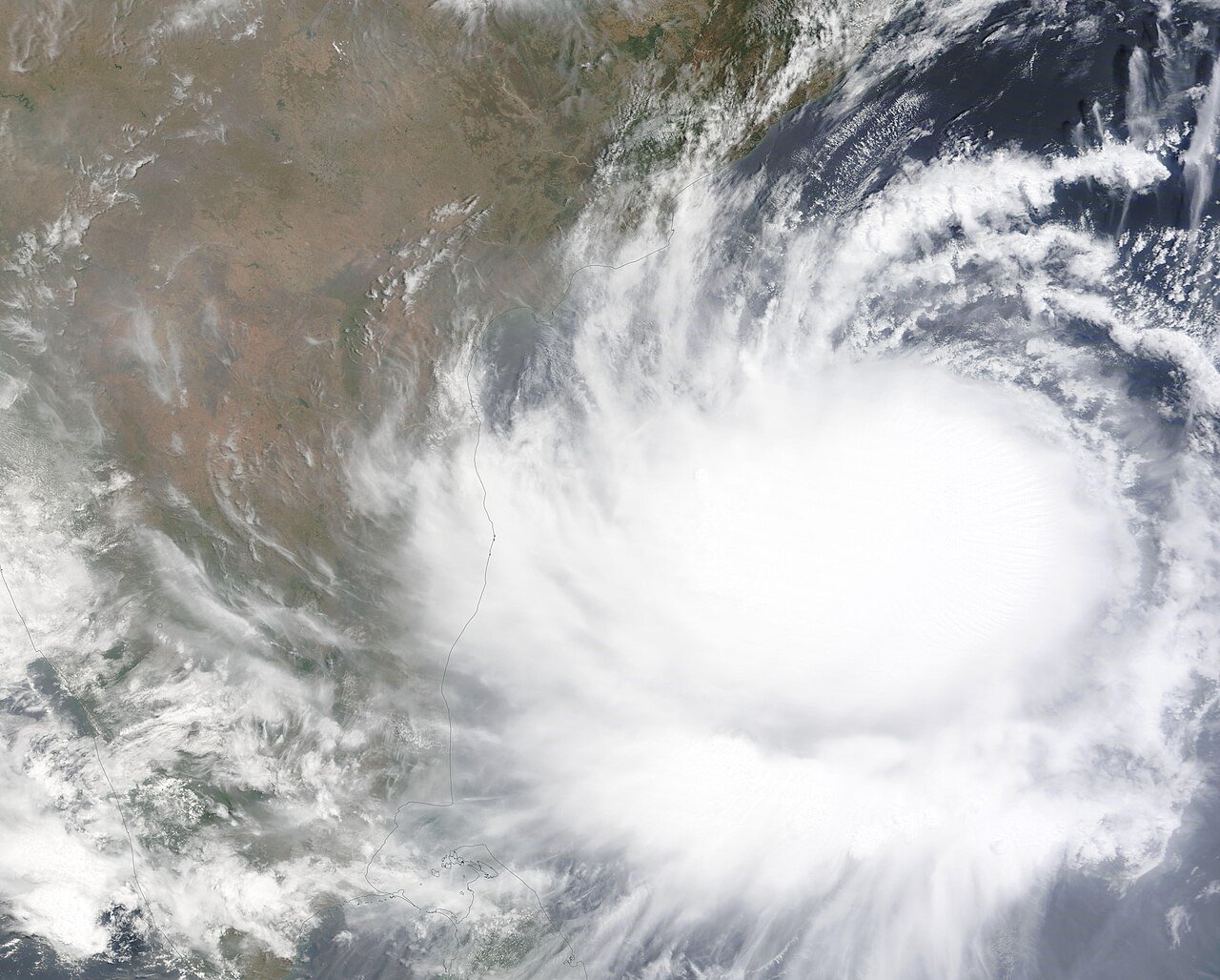
Ask a satellite to photograph a flooded district in Assam in July and you will often get a picture of cloud. Optical satellites work like cameras: they record sunlight bouncing off the ground. When a cyclone, a monsoon system or simply the night gets in the way, they have nothing to record. That is also, very often, exactly when someone needs the picture.
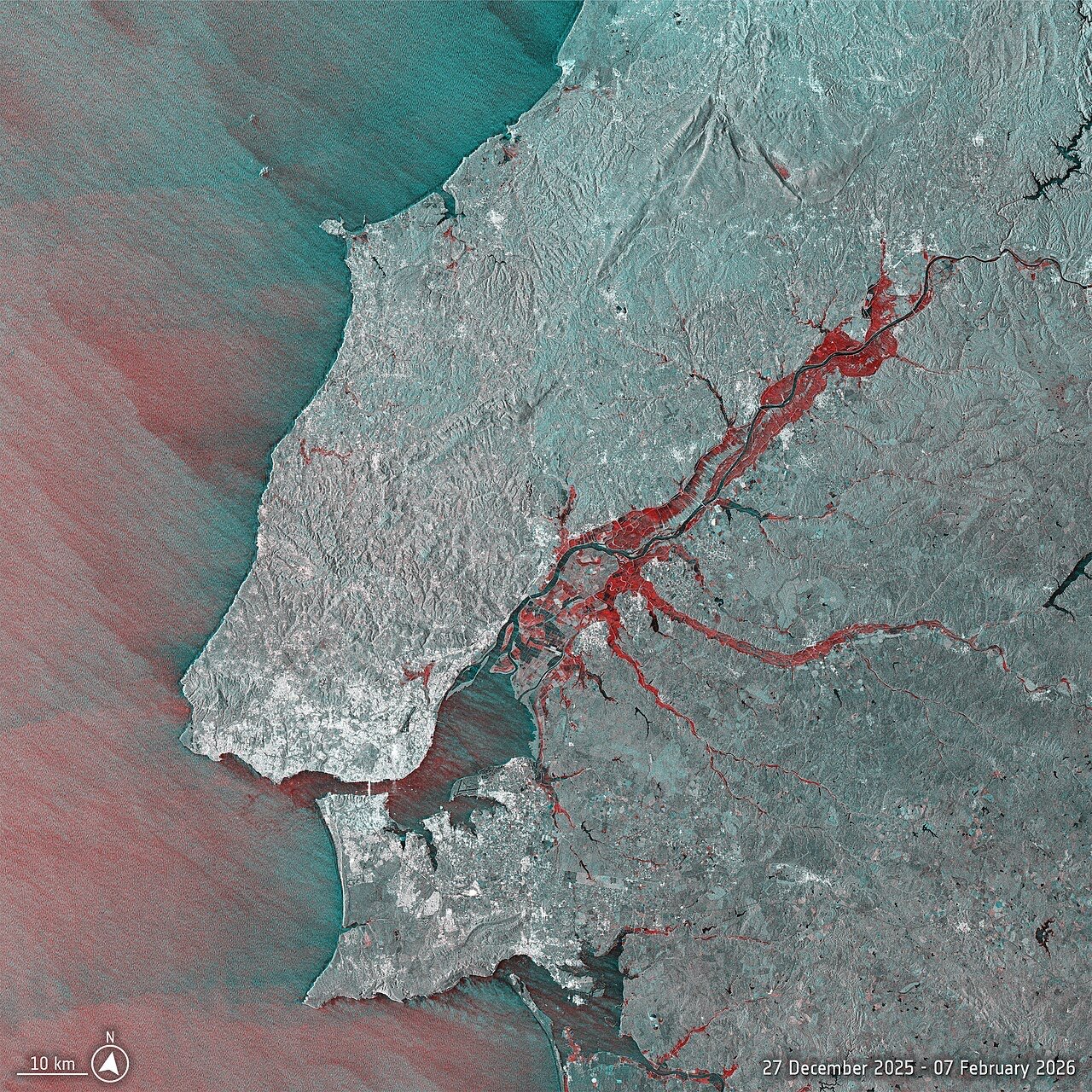
Synthetic aperture radar solves this differently. The satellite sends its own microwave pulses and times the echoes. Because it supplies its own illumination, it works at night, and because microwaves pass through cloud, it works in the monsoon. As the satellite moves, it combines echoes into what behaves like a very long antenna, which is where the word “synthetic aperture” comes from.
The catch is that radar pictures do not look like photographs. Calm water is black, buildings flare white, and fields show texture instead of colour. They take a trained analyst to read. So the trade-off has always been: optical is easier to understand; radar is more dependable. GalaxEye’s founders asked why you should have to choose.
Six situations. Which sensor gets the picture?
Tap a scenario. The grid shows what a camera, a radar and a combined OptoSAR satellite would each get.
What Is OptoSAR?
Two sensors, one satellite, one moment.
Combining optical and radar data is not new. Analysts have long merged images from different satellites. The problem is that two satellites pass over at different times and angles, so the pictures never quite match: a ship has moved, a cloud has drifted, the flood has risen. GalaxEye’s approach is to put both sensors on one spacecraft, point them at the same spot at the same moment, and align the data onboard. It calls the product OptoSAR and the alignment SyncFusion.
On Drishti that meant an X-band SAR with a 3.5-metre deployable antenna and a seven-band multispectral imager covering panchromatic, red, green, blue, near-infrared, coastal blue and red edge, with an NVIDIA Jetson Orin module for onboard processing. The company claimed the fused product would carry up to three times more usable information than a single-sensor image. In September 2026 it won a US patent for the synchronisation system.
GalaxEye Timeline: 2021 to 2026
Newest first. From a rail-mounted radar to government-backed next generation.
2026
The government backs the next satellite
The Technology Development Board (TDB), under the Department of Science and Technology, signs an agreement to provide Rs 63.84 crore from the Research Development and Innovation (RDI) Fund through optionally convertible debentures. The approved project costs Rs 247.69 crore in total. Its goal: a next-generation multisensor OptoSAR satellite that images finer than 0.5 metre, taking the technology from TRL 6 to TRL 9.
2026
A US patent for the core idea
GalaxEye says it has won a US patent for its system that synchronises optical and radar sensors to capture the same place at the same time. Reuters reports the company has raised about 21 million dollars and plans a constellation of about 30 satellites over five years, with customers in security, agriculture, insurance and disaster response.
2026
Buying the spacecraft maker
GalaxEye acquires StarOps, a Bengaluru spacecraft engineering firm founded in 2022. StarOps brings qualified satellite bus platforms in the 50, 150 and 250 kg classes, subsystem designs, test infrastructure and an engineering team, several of whom had worked on the TeamIndus lunar lander. GalaxEye says it aims to launch two new OptoSAR satellites within 24 months.
2026
Drishti goes silent
GalaxEye announces it has lost contact with Drishti. The satellite had completed a major part of its launch and early orbit phase (LEOP): communications, deployments, attitude control, onboard computing and mission operations. In the final LEOP stage an anomaly struck. Communication became intermittent, then stopped. The company’s initial root-cause analysis pointed to radiation effects from an extreme geomagnetic solar storm on a critical onboard system. Recovery chances were described as low.
2026
Drishti reaches orbit
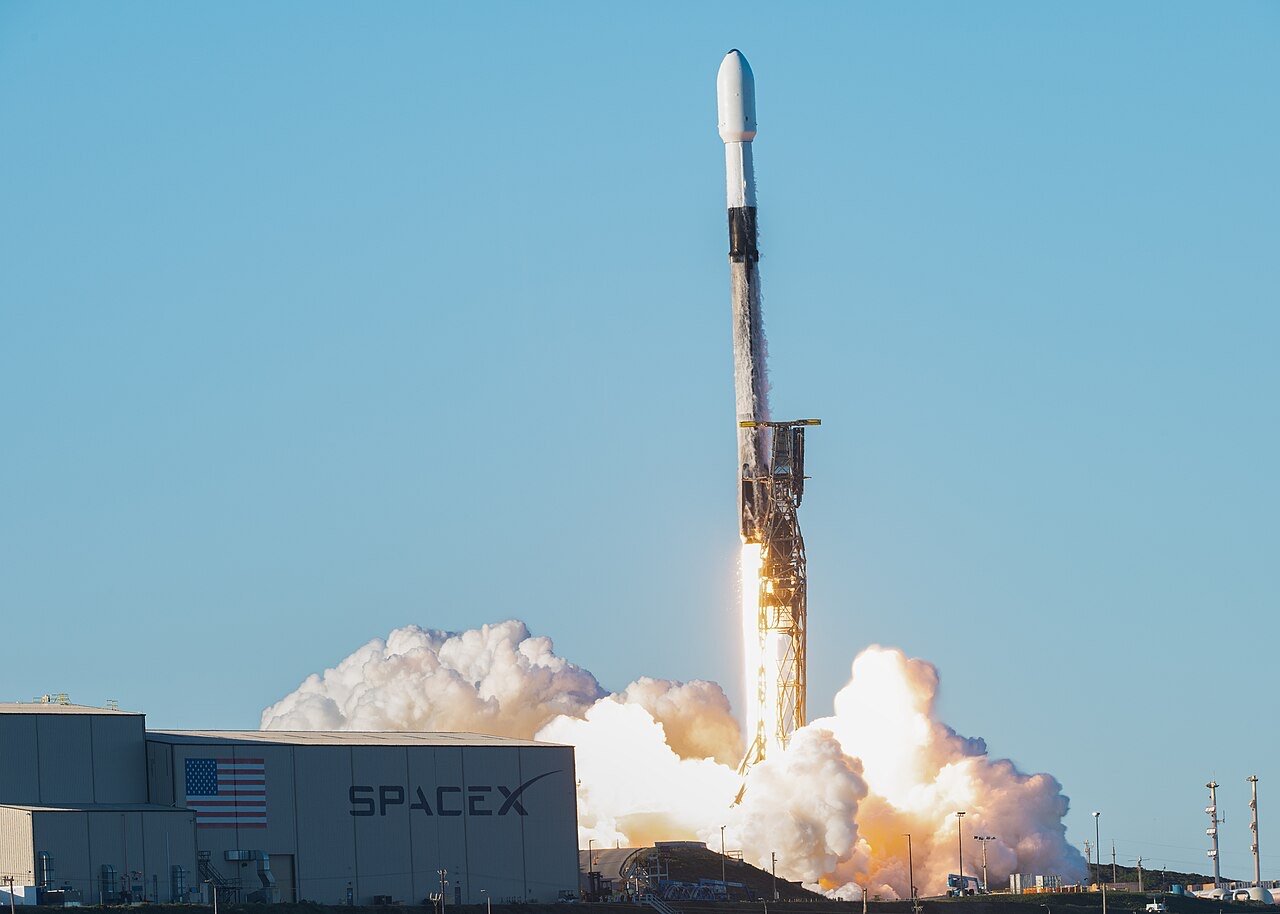
A SpaceX Falcon 9 lifts off from Space Launch Complex 4E carrying Mission Drishti, about 190 kg, the largest Earth-observation satellite built by an Indian private company. It carries an X-band SAR with a 3.5-metre deployable antenna, a seven-band multispectral imager, and an NVIDIA Jetson Orin computer for onboard processing. Prime Minister Narendra Modi calls it a testament to India’s private space sector. GalaxEye plans an eight-week commissioning before selling data.
Series A extension
Ahead of launch, GalaxEye raises about Rs 44 crore (around 4.8 million dollars) from existing investors as an extension of its Series A.
Longest drone SAR image in India
GalaxEye says it has captured the longest and most detailed SAR image taken by drone in India. Drone-mounted versions of the Drishti sensor also run commercial pilots, including a 30-day construction-monitoring trial the company says reached over 90% feature-detection accuracy.
First hardware in orbit on ISRO’s PSLV
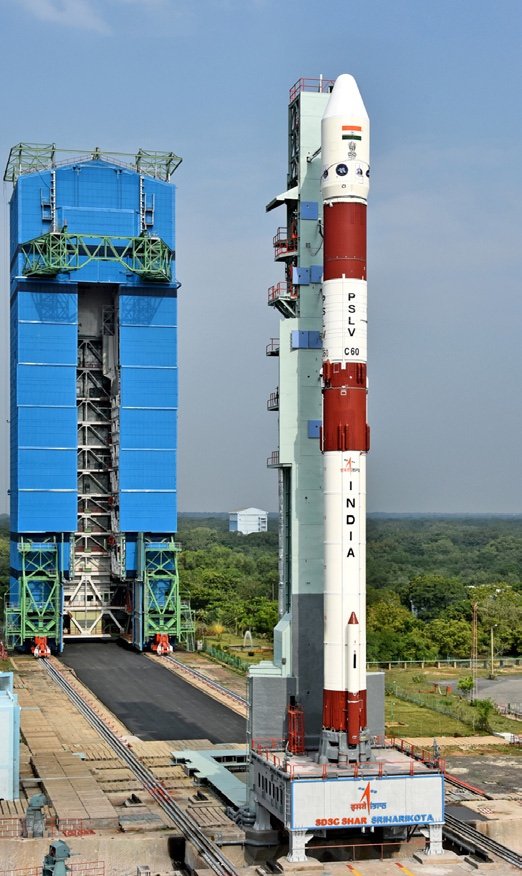
GalaxEye’s GLX-SQ payload flies on POEM-4, the reused upper stage of ISRO’s PSLV-C60 that launched the SpaDeX docking mission. It is the company’s first space demonstration. GalaxEye later says the payload tested its SyncFusion onboard processing, including over the radiation-heavy South Atlantic Anomaly in February 2025.
Series A closes at 10 million dollars
The Series A opens in July with 6.5 million dollars led by Mela Ventures and Speciale Invest, with ideaForge, Rainmatter and others. In September Infosys commits up to Rs 17 crore, its first space-tech investment. In November the round closes at 10 million dollars, led by MountTech Growth Fund-Kavachh, the critical-tech fund chaired by former defence secretary Ajay Kumar.
Army trials, a HAPS radar and iDEX
The Drishti sensor goes through user trials with the Indian Army’s Northern Command (February). In May GalaxEye flies what it calls the world’s first SAR sensor on a high-altitude pseudo-satellite, a solar aircraft that loiters in the stratosphere. In June it wins an iDEX-DIO defence innovation challenge for satellite edge computing.
Seed money and the first SAR image
GalaxEye raises a 3.5 million dollar seed round led by Speciale Invest, with Artha India Ventures, Veda VC, Anicut Capital and angel investors including Zerodha’s Nithin Kamath. The same month the team produces its first SAR image.
Radar on rails
An early proof-of-concept Drishti sensor is tested on a rail-mounted rig. Moving a radar along a track is the cheapest way to create the synthetic aperture that a satellite creates by flying.
Founded at IIT Madras
Suyash Singh, Denil Chawda, Kishan Thakkar, Pranit Mehta and Rakshit Bhatt, veterans of IIT Madras’s Avishkar Hyperloop team, a finalist in SpaceX’s 2019 pod competition, start GalaxEye. Speciale Invest leads a pre-seed round. The question they set out to answer: can radar and optical sensing work as one instrument?
Drishti at a Glance
Design specifications from GalaxEye and eoPortal. None were verified in orbit.
| Item | Mission Drishti |
|---|---|
| Operator | GalaxEye Space Solutions, Bengaluru |
| Launch | 3 May 2026, SpaceX Falcon 9, SLC-4E Vandenberg |
| Mass | About 190 kg |
| Orbit | Sun-synchronous, about 500 km |
| Radar | X-band SAR, VV polarisation, 3.5 m deployable antenna, about 30 km swath |
| SAR resolution | Up to 0.9 m (spotlight mode) |
| Optical | 7-band multispectral, about 3.6 m native at nadir, about 10 km swath |
| Fused OptoSAR product | About 1.8 m |
| Onboard computer | NVIDIA Jetson Orin |
| Planned revisit | About 4 days |
| Status | Contact lost; announced 7 July 2026 |
| Imaging demonstration | Not completed |
What Went Wrong in Orbit
What worked, what did not, and what is still unknown.
A new satellite does not start imaging the moment it separates from the rocket. First comes the launch and early orbit phase: establishing radio contact, unfolding antennas and solar panels, stabilising the spacecraft, checking every subsystem. GalaxEye had planned about eight weeks of commissioning and calibration before selling data. Drishti got through most of it. Then, in the final stage, an anomaly hit. Its signal became intermittent and then disappeared.
The company’s first explanation was space weather. An extreme geomagnetic storm, caused by a burst of solar activity, raised radiation levels, and GalaxEye said radiation effects likely damaged a critical onboard system. Radiation can flip bits in memory, latch up chips, or slowly degrade electronics; small satellites built partly from commercial parts are especially exposed. But this is the company’s preliminary finding. No independent investigation or detailed failure report has been published, and the exact mechanism is not public.
✔️ What Drishti did
- Reached its planned orbit
- Established communication
- Completed deployments and attitude control
- Ran onboard computing and communications
- Proved GalaxEye’s in-house mission operations
✖️ What it did not do
- Stay in contact beyond early orbit
- Complete the OptoSAR imaging demonstration
- Release any imagery
- Deliver a commercial dataset
- Show the fused 1.8 m product works in space
That makes Drishti neither a clean success nor a meaningless failure. It was a partial technical demonstration with a mission-ending fault. The spacecraft worked well enough to be tested; the payload never got its chance. For a first satellite from a start-up, that is a familiar outcome. The judgement that matters is whether the second one survives.
Four layers from pixels to a decision
Tap each layer to see what it adds, and what it still cannot do on its own.
After the Silence: StarOps, a Patent and a 30-Satellite Plan
GalaxEye’s response to losing Drishti was to take more of the satellite in-house. In July it said it would accelerate moving supply chain, manufacturing and satellite development under its own control. On 10 August 2026 it bought StarOps, a Bengaluru spacecraft engineering firm with qualified satellite buses in the 50, 150 and 250 kg classes and engineers who had worked on the TeamIndus lunar lander. The logic is simple: a better radar does not help if the spacecraft around it does not survive.
A month later came the US patent for its optical-radar synchronisation, and a Reuters report that GalaxEye, having raised about 21 million dollars, was planning roughly 30 satellites over five years. That is a big step up from the “two satellites within 24 months” it had set in August, and from the 8 to 12 satellites in earlier plans. None has a launch date yet.
The Rs 63.84 Crore Bet on the Next Generation
On 24 September 2026 the Technology Development Board signed on. Its support comes from the Research Development and Innovation Fund, the government’s vehicle for backing late-stage deep-tech development, as optionally convertible debentures rather than a grant. The target is ambitious: a multisensor satellite imaging finer than 0.5 metre, and a technology taken from TRL 6, a prototype shown in a relevant environment, to TRL 9, proven in actual operations.
Read closely, that TRL framing is also an official acknowledgement of Drishti’s outcome. The concept has been demonstrated in parts; it has not yet flown as a working system. The government is paying roughly a quarter of the cost of getting it there.
What Could an OptoSAR Constellation Be Used For?
Potential uses. None has been delivered from orbit yet.
| Sector | Question a customer asks | Why radar plus optical helps |
|---|---|---|
| Disaster response | Which villages are under water after the cyclone? | Radar maps floodwater through storm cloud; optical adds roads and buildings |
| Agriculture | How are kharif crops doing during the monsoon? | Optical reads plant health; radar keeps watching when clouds return |
| Insurance | Was this field really flooded on that date? | Weather-independent records that line up in time |
| Defence and borders | What changed overnight in remote terrain? | Night and all-weather coverage with readable context |
| Maritime | Which ships are near this port in a storm? | Hulls show brightly on radar; optical helps identify them |
| Infrastructure | Has this railway or site moved or grown since last month? | Radar detects surface change; optical shows what it is |
The real product is not the picture. A disaster agency does not want “SAR data”; it wants a list of cut-off roads. That is why GalaxEye pairs its sensors with onboard processing and AI, and why its pitch runs from image to data to insight to decision. It is also why one satellite is not enough: a single spacecraft passes over a given place only every few days. Useful monitoring needs a constellation.
Why GalaxEye Matters Beyond One Start-up
GalaxEye is a product of India’s space reforms. IN-SPACe was set up in 2020 to authorise private space activity, and the Indian Space Policy 2023 opened every stage of the value chain, from building satellites to selling their data, to private companies. The government told Parliament that 105 authorisations had been issued to non-government entities as of 14 July 2026, and that 187 million dollars of private investment had been reported during 2026 alone.
Earth observation is where that shift is most visible. On 21 January 2026 IN-SPACe signed India’s first public-private Earth-observation constellation with a Pixxel-led consortium (with Dhruva Space, PierSight and SatSure): 12 satellites, including two X-band SAR satellites, and more than Rs 1,200 crore of private money by 2029. GalaxEye is not in that consortium. It is building its own fleet, betting on a sensor combination nobody else flies.
How OptoSAR Compares
| Approach | Examples | Strength | Limit |
|---|---|---|---|
| Optical only | Planet, Maxar, Pixxel (hyperspectral) | Readable, colour, plant health | Blind under cloud and at night |
| SAR only | ICEYE, Capella, Umbra, ISRO’s EOS-04 | Any weather, day and night | Hard to interpret alone |
| Separate fleets, fused on the ground | Most analytics firms | Uses the best of each | Different times and angles |
| OptoSAR on one satellite | GalaxEye (Drishti, 2026) | Same moment, same geometry | Not yet proven in orbit |
What GalaxEye Has to Prove Next
🛰️ Engineering
- Survive space: radiation tolerance the first spacecraft lacked
- Image: real fused OptoSAR data from orbit, publicly shown
- Sharpen: from a 1.8 m design to finer than 0.5 m
📈 Business
- Revisit: enough satellites to watch a place daily
- Scale: repeatable manufacturing and testing
- Sell answers: maps and alerts, not raw pixels
🤔 Did You Know?
- GalaxEye’s first radar tests ran on rails: moving a radar along a track mimics the motion a satellite uses to build its synthetic aperture.
- Its founders first met building a Hyperloop pod for a SpaceX competition, not satellites.
- GalaxEye’s first hardware in space rode on a spent PSLV upper stage, which ISRO reuses as an orbital test platform called POEM.
- Drishti’s investors included drone-maker ideaForge and Infosys, whose Rs 17 crore was its first space investment.
The Bigger Question
GalaxEye’s first satellite was meant to answer one question: can a private Indian company put an OptoSAR satellite into orbit? It did. The mission then raised a harder one: can it build a camera-and-radar satellite that survives, images, and does so again and again?
That is now the test. The next satellite has to last. The one after has to deliver data customers pay for. The constellation after that has to deliver it daily. If it works, the payoff is not simply seeing through clouds. It is turning a monsoon that blinds most satellites into something India can still watch and act on.
Quiz: How Well Do You Know GalaxEye?
Tap a question to reveal the answer.
1. Where did GalaxEye start?
2. What two sensors does OptoSAR combine?
3. Why can SAR image through clouds?
4. When did Drishti launch?
5. What did GalaxEye’s early analysis blame for the loss of contact?
6. Which company did GalaxEye buy in August 2026?
7. How much is the TDB contributing to the next-generation project?
8. What resolution does that project target?
Explore More Timelines
People Also Ask
Frequently Asked Questions
Related AiTimeline Stories
⚠️ Editorial Note
Checked against GalaxEye’s own milestone and mission pages, eoPortal’s Drishti entry, the TDB-DST announcement of 24 September 2026, Reuters’ 8 September 2026 patent report, Business Standard and Business Today coverage of the July 2026 loss of contact, Inc42 and YourStory funding reports, and Press Information Bureau replies to Parliament. Corrections to circulating summaries: IN-SPACe authorisations were 105 as of 14 July 2026, not 108; the Series A opened at 6.5 million dollars in July 2024 and closed at 10 million in November 2024, led by MountTech Growth Fund-Kavachh; GalaxEye’s POEM payload launched on PSLV-C60 on 30 December 2024. Drishti’s resolutions are design specifications, never verified in orbit. The cause of Drishti’s failure is GalaxEye’s preliminary assessment, not an independent finding. AiTimeline has no commercial relationship with GalaxEye.
Sources & further reading
Every dated entry above was checked against these references. Last reviewed 29 September 2026.
- GalaxEye: company milestones
- TDB-DST agreement with GalaxEye, 24 Sep 2026 (Swarajya)
- Business Standard: GalaxEye loses contact with Drishti
- eoPortal: Drishti constellation
- SatNews: GalaxEye launches Mission Drishti
- Inc42: GalaxEye acquires StarOps
- GalaxEye wins US patent (Reuters via Bridge Chronicle)
- YourStory: GalaxEye 10M Series A