India’s Startup Boom: Unicorns, Funding Winter, Future
India's startup boom in numbers: $42B raised in 2021, the funding winter, 133 unicorns, 18 IPOs in 2025, and why AI and deep tech now lead the 2026 thaw.
Latest Story
India’s startup boom took the country from about four billion-dollar startups in 2014 to more than 120 today and over 2.2 lakh recognised startups. This page traces the whole arc: Flipkart’s 2007 start, the 2016 arrival of Jio, UPI and Startup India, the 2021 peak when startups raised about US$42 billion, the funding winter that followed, the 2025 IPO wave and the AI and deep-tech turn of 2026.
Two numbers tell the story. In 2021 Indian startups minted 45 unicorns, almost one a week. In 2023 they minted two. What happened in between, a global rate shock, collapsing valuations, the fall of BYJU’S, layoffs and shutdowns, changed what Indian founders build and how investors judge them. What came after is less dramatic but more durable: profitable listings, money for rockets and AI models, and a startup rulebook rewritten in February 2026.
💡 Short Answer
India’s startup boom was built on IT talent, cheap mobile data after Jio’s 2016 launch, UPI payments and global venture money. Funding peaked at about US$42 billion in 2021, with 45 new unicorns. Rate rises then triggered a funding winter: about US$10 billion and two unicorns in 2023. Since 2024 the market has thawed, with 18 startup IPOs in 2025 and US$10.3 billion raised in 2026 to September, increasingly for AI and deep tech.
India’s Startup Boom: Key Questions
India’s Startup Story in Ten Points
- Foundations: IT services built the talent; Flipkart (2007) built the consumer-internet template.
- 2016 was the hinge: Startup India, Jio’s free data, UPI and demonetisation arrived within ten months.
- First big exit: Walmart’s US$16 billion Flipkart deal in 2018 recycled money into new startups.
- Peak: about US$42 billion raised and 45 unicorns minted in 2021.
- Winter: funding fell about 76% by 2023; only two new unicorns that year.
- Casualties: BYJU’S went from US$22 billion to insolvency; 16 ex-unicorns are below US$1 billion.
- Exits returned: 18 startup IPOs in 2025, led by Groww, Lenskart, Meesho and PhysicsWallah.
- Policy shocks cut both ways: angel tax abolished (2024), real-money gaming banned (2025).
- New rules for deep tech: 20-year recognition and ₹300 crore limit from February 2026.
- Next engines: AI infrastructure, enterprise software, space and manufacturing.
The Money: From Boom to Winter to Thaw
Five years of Indian startup funding in one chart.
The boom was real, but it was also global. In 2021 interest rates were near zero, tech stocks were at records and funds such as Tiger Global and SoftBank wrote large cheques fast. Indian startups raised about US$42 billion that year, more than in the previous two years combined. When the US Federal Reserve began raising rates in March 2022, that money got expensive almost overnight.
The fall was steep: about US$25 billion in 2022, mostly in the first half, and just over US$10 billion in 2023, the lowest in seven years. Since then funding has been flat at US$10–12 billion a year. Analysts call 2026 a thaw, not a new boom: Tracxn counts US$10.3 billion to 21 September, up 7%, but spread across 38% fewer rounds.
The Unicorn Era, by the Numbers
A billion-dollar valuation is now harder to win, and easier to lose.
A unicorn is a private startup valued at US$1 billion or more. India had about four in 2014. Inc42 now counts 133 that have ever crossed the line, with ecommerce (31), fintech (26) and enterprise tech (20) the largest groups. But 16 have slipped back below US$1 billion, including BYJU’S, PharmEasy, Hike and Snapdeal. The 2026 class reached the mark on about US$101 million of funding each, according to Tracxn, a sign that efficient growth is now rewarded more than raw scale.
Pick a kind of startup to see what investors now look for, and where the money is.
A summary of 2025–26 funding patterns and public schemes from Tracxn, Inc42 and DPIIT. Not investment advice.
Choose a startup type above
Six Phases of India’s Startup Story
From IT services to AI.
India’s Startup Boom: The Full Timeline
Newest first, from the September 2026 funding data back to Flipkart’s first books.
A thaw, not a boom Reported
Tracxn counts US$10.3 billion raised by Indian tech startups between 1 January and 21 September 2026, up 7% on the same period of 2025. But the number of rounds fell 38% to 1,134, seed funding dropped 37% and first-time funded companies fell 30%. Early-stage money rose 27% to US$4.2 billion. AI infrastructure was the most funded theme.
Why it matters: fewer cheques, bigger cheques. Investors are backing companies they already know rather than spraying money at new ones.
2026
IPO giants wait for 2027 Reported
Quick-commerce company Zepto, which had SEBI approval since May, pauses its IPO in August and now targets early 2027, according to Inc42. PhonePe, which paused in March amid West Asia tensions, revives its plans in September and targets a listing by March 2027. Flipkart completed its move from Singapore to India in March and is preparing its papers.
Meanwhile smaller startups keep listing: 14 had gone public in 2026 by early October, including Shadowfax, Fractal, Shiprocket and Moneyview.
2026
Seven new unicorns, led by AI and space Reported
Juspay becomes 2026’s first unicorn in January. Sarvam AI, KreditBee, Skyroot Aerospace, Emergent and Square Yards follow in the first half, and Astrotalk joins in August. Inc42’s lifetime count reaches 133 unicorns, 117 still valued above US$1 billion.
The difference: Tracxn says 2026’s new unicorns needed about US$101 million of funding to get there, far less than the 2021 cohort.
2026
BYJU’S: jail term, bidding paused Reported
A Singapore court sentences founder Byju Raveendran to six months in jail for contempt in May for failing to comply with disclosure orders. The Supreme Court declines on 4 May to interfere with the restored creditors’ committee. In July the NCLT pauses bidding for the company while the founders challenge the ₹11,433 crore claim of US lenders.
New rules, new money for deep tech Official
A DPIIT notification of 4 February 2026 raises the startup turnover limit to ₹200 crore and creates a Deep Tech Startup category with a ₹300 crore limit and 20 years of recognition. The Cabinet then approves the ₹10,000 crore Startup India Fund of Funds 2.0, aimed at deep tech, tech-led manufacturing and early-growth startups.
2026
Startup India turns ten Official
The government marks a decade of Startup India: more than 2 lakh DPIIT-recognised startups by December 2025, about half from Tier-II and Tier-III cities, more than 45% with at least one woman director, and over 120 companies valued above US$1 billion, up from four in 2014. By 31 March 2026 recognitions pass 2.23 lakh.
The IPO year Reported
Inc42 counts 18 startup IPOs in 2025 raising about ₹41,248 crore, including Urban Company (September), Lenskart, Groww, Pine Labs and PhysicsWallah (November) and Meesho (December). Several had reverse-flipped their parent companies to India first. Private funding, by contrast, slipped to about US$10.5–11 billion.
Why it matters: public markets, not just VCs, became a reliable exit. That is what investors had lacked through the winter.
2025
Real-money gaming banned Official
The new law bans online games played for money while promoting e-sports and social games. Dream11, India’s first gaming unicorn and a former Indian cricket team sponsor, ends paid contests; MPL and others shut money games. Industry groups warn of job losses and users moving to offshore apps.
₹1 lakh crore for research and deep tech Official
The Cabinet approves the Research, Development and Innovation scheme with a ₹1 lakh crore corpus to give long-term, low- or zero-interest money to private R&D in strategic sectors. Under the ₹10,372 crore IndiaAI Mission (approved March 2024), Sarvam AI is picked in April 2025 to build an Indian foundation model.
2024
Angel tax goes; BYJU’S goes into insolvency Official
The Union Budget of 23 July 2024 abolishes the angel tax that had troubled founders since 2012. A week earlier the NCLT admits BYJU’S parent Think & Learn to insolvency over unpaid BCCI sponsorship dues. In August Ola Electric lists, and on 13 November Swiggy debuts after an ₹11,327 crore IPO, reopening the door for big startup listings.
The deepest point of the winter Reported
Funding falls to just over US$10 billion, a seven-year low and down about 76% from the 2021 peak, by Inc42’s count. Only Zepto (August, US$1.4 billion) and one other startup become unicorns. GoMechanic’s founders admit to “errors in judgement”, including in financial reporting, in January, and governance becomes a central investor question.
What changed: cost-cutting, layoffs, shutdowns and down rounds. Profitability became the new growth story.
2022
India’s first private rocket flies Official
Hyderabad’s Skyroot Aerospace launches Vikram-S from Sriharikota, the first rocket built by an Indian private company. It follows the 2020 opening of space to private firms through IN-SPACe. In 2026 Skyroot becomes a unicorn, a sign of where investors now see long-term value.
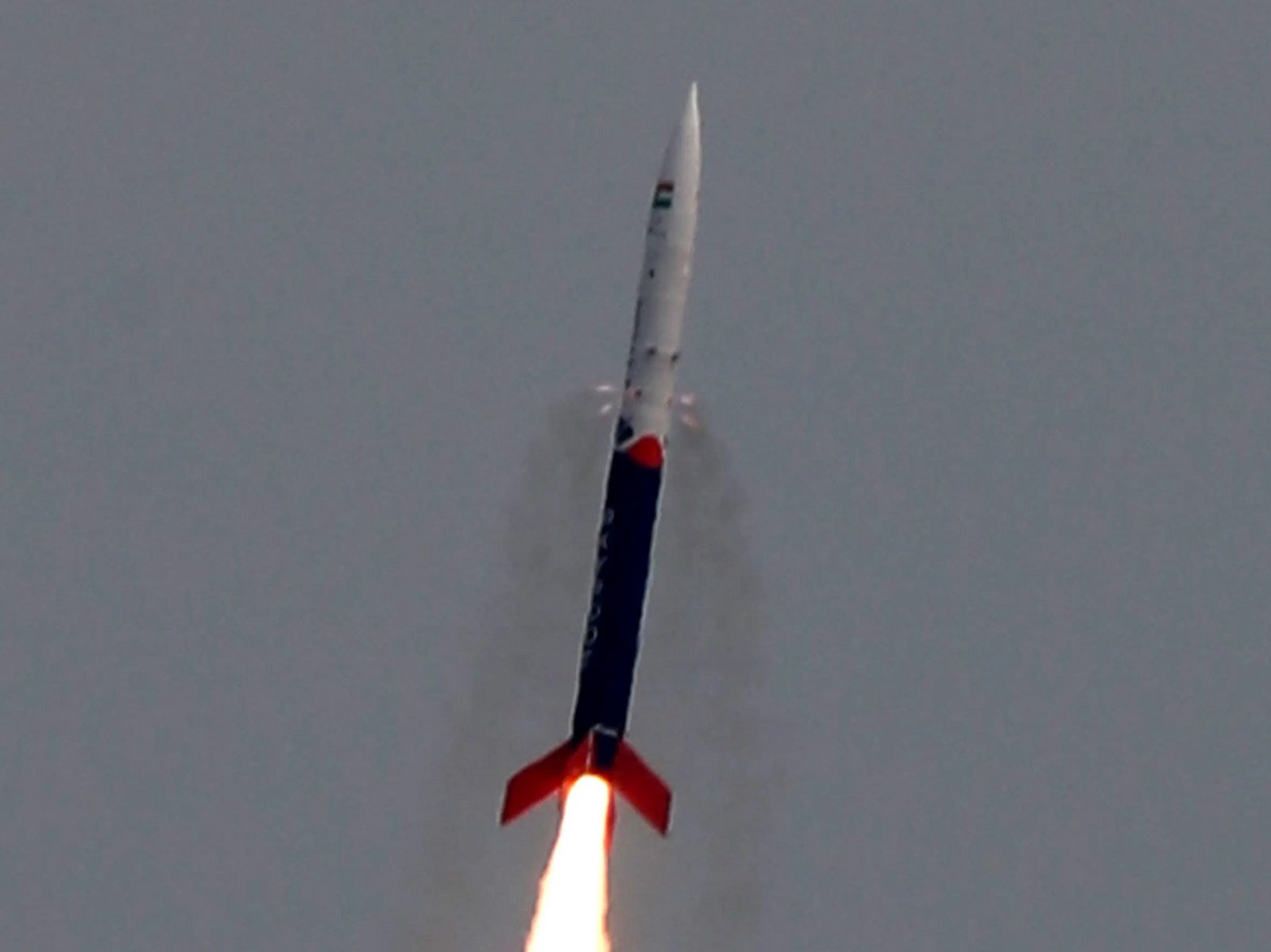
The funding winter begins Reported
The US Federal Reserve starts raising rates in March and the RBI in May. Tech stocks slide worldwide, and late-stage investors such as Tiger Global and SoftBank pull back. Indian startups still raise about US$25 billion, mostly in the first half, and 21–22 new unicorns are minted, but the second half freezes. BYJU’S hits a US$22 billion valuation even as its accounts are delayed.
The new question: not “how fast are you growing?” but “when will you make money?”
Peak boom: US$42 billion, 44+ unicorns Reported
With rates near zero and lockdowns pushing life online, Indian startups raise about US$42 billion and mint 44–45 unicorns, nearly one a week. Zomato lists on 23 July and jumps more than 50% on debut. Paytm’s ₹18,300 crore IPO, then India’s largest, lists on 18 November and falls about 27% on its first day.
Why it matters: Zomato showed startups could list in India; Paytm showed public investors would not pay any price.

COVID pushes India online
Lockdowns turn online classes, grocery delivery, telemedicine, digital payments and remote-work software into necessities. Edtech and e-commerce surge. In June the government creates IN-SPACe to let private companies build rockets and satellites, laying the groundwork for India’s space startups.
Walmart buys Flipkart Official
Walmart agrees to buy about 77% of Flipkart for roughly US$16 billion, valuing it near US$21 billion. It is the world’s largest e-commerce acquisition at the time and the first giant exit for Indian venture investors, who recycle the money into new funds and startups.
2016
Jio, UPI and demonetisation
Reliance Jio launches on 5 September with free data, forcing a collapse in mobile-data prices that brings hundreds of millions of people online. UPI, launched by NPCI in April, goes public in August. On 8 November demonetisation withdraws 86% of cash by value, and wallets such as Paytm boom overnight.
Why it matters: cheap data plus free, interoperable payments created the mass digital market that the 2020–21 boom was built on.
2016
Startup India launches Official
Prime Minister Narendra Modi launches the Startup India action plan: DPIIT recognition, self-certification for some labour and environment laws, faster patent processing, a tax holiday and a ₹10,000 crore Fund of Funds managed by SIDBI. Only a few hundred startups are recognised in the first year; a decade later there are more than two lakh.
The first unicorns
SoftBank’s US$200 million investment in mobile-ad firm InMobi in 2011 is widely cited as creating India’s first unicorn; some trackers list Flipkart in 2012 first. By 2014 India has about four. Smartphones are spreading, but mobile data and payments are still expensive and fragmented.
Flipkart starts selling books
Two former Amazon engineers start Flipkart as an online bookshop in Bengaluru. To win buyers who did not trust online payments, it popularises cash on delivery. A decade of IT-services growth, led by Infosys, TCS and Wipro, had already created the engineering talent pool founders would draw on.
Why it matters: Flipkart became the template for Indian consumer internet: adapt to Indian habits, then scale.

Boom vs Winter vs Thaw
How the rules of the game changed.
| Boom (2021) | Winter (2022–23) | Thaw (2026) | |
|---|---|---|---|
| Money | US$42 billion in 2021, nearly one unicorn a week | About US$10 billion in 2023, 2 unicorns | US$10.3 billion to Sep 2026, 7 unicorns, 38% fewer deals |
| Investor question | How fast are you growing? | When will you make money? | Can you make money and own a technology moat? |
| Hot sectors | Edtech, quick commerce, crypto, gaming, D2C | Little; fintech and SaaS held up | AI infrastructure, enterprise software, fintech, EVs, space |
| Exit route | IPOs at rich prices (Zomato, Paytm) | Down rounds, fire sales, shutdowns | Steady Indian IPOs; reverse flips to list at home |
| Typical founder story | Raise big, discount hard, grab users | Cut staff, close cities, chase margins | Smaller team, AI tools, global or deep-tech product |
Who Fell, and Why
The funding winter exposed weak economics and weak governance.
| Company | Sector | Peak | What happened |
|---|---|---|---|
| BYJU’S | Edtech | US$22B (2022) | Debt default dispute, insolvency since Jul 2024; founder jailed for contempt in Singapore (May 2026) |
| Paytm (One 97) | Fintech | IPO at ₹2,150 (2021) | Fell 27% on listing day; RBI action against Paytm Payments Bank in 2024 |
| GoMechanic | Car services | Raised from Sequoia, Tiger | Founders admitted financial-reporting “errors in judgement” (Jan 2023); assets sold |
| Dream11 and real-money gaming | Gaming | Dream11 unicorn since 2019 | Paid contests ended by the August 2025 law |
| 16 former unicorns | Mixed | US$1B+ at peak | Now below US$1B, including PharmEasy, Hike, Snapdeal and Gupshup, per Inc42 |
The common thread is not bad luck. It is rapid expansion + heavy acquisitions + high cash burn + weak financial controls, made survivable only by a constant supply of new money. When that supply stopped in 2022, investors started reading accounts more carefully: related-party deals, delayed audits, board oversight and debt. The governance questions that BYJU’S and GoMechanic raised are now standard due diligence. Regulation is the other risk: the 2025 gaming law erased a sector whose biggest company had been a unicorn for six years.
The Policy Timeline Behind the Boom
Public infrastructure and rules did as much as venture capital.
| Year | Policy | What it does |
|---|---|---|
| 2016 | Startup India + Fund of Funds | Recognition, tax holiday, ₹10,000 crore for VC funds |
| 2016 | UPI (NPCI) | Free, interoperable payments any startup can build on |
| 2020 | IN-SPACe | Private firms allowed to build rockets and satellites |
| 2024 | IndiaAI Mission | ₹10,372 crore for compute, models and datasets |
| 2024 | Angel tax abolished | Removed tax on share premiums from startup fundraising |
| 2025 | Online Gaming Act | Banned real-money online games |
| 2025 | RDI scheme | ₹1 lakh crore of long-term R&D finance |
| 2026 | New startup definition | ₹200 crore limit; Deep Tech category, 20 years, ₹300 crore |
| 2026 | Fund of Funds 2.0 | ₹10,000 crore aimed at deep tech and manufacturing |
India’s advantage is partly public plumbing. UPI meant no startup had to build its own payment network; Aadhaar-based e-KYC made onboarding customers cheap; open networks such as ONDC try to do the same for commerce. The newest policy layer is aimed at what venture capital funds badly: long, risky research. The 2026 startup definition, Fund of Funds 2.0 and the ₹1 lakh crore RDI scheme all point at deep tech.
What Comes Next: Five Engines
Artificial intelligence
AI infrastructure was 2026’s most funded theme. Sarvam AI, picked under the IndiaAI Mission to build an Indian model, became a unicorn. Small AI-first teams can now build what once took hundreds of engineers.
Deep tech
Rockets, chips, robotics, drones and biotech. Skyroot became a unicorn in 2026, and Tracxn lists 9,000+ deep-tech startups. They need patient capital, which public funds now aim to supply.
Global SaaS
Zoho, Freshworks and Postman proved Indian teams can sell software worldwide. Enterprise applications raised US$3.5 billion in 2026 to September, up 49%.
Digital public infrastructure
UPI, Aadhaar, account aggregators and ONDC lower the cost of building fintech, health and commerce products for hundreds of millions of users.
Manufacturing
EVs, batteries, electronics and semiconductors. EV startups raised US$583 million in Q3 2026 alone, per Entrackr, and the Fund of Funds 2.0 explicitly targets tech-led manufacturing.
Listing at home
Zepto, PhonePe and Flipkart all plan Indian IPOs around 2027. Their reception will show whether the market rewards scale, profits, or both.
How to Get DPIIT Startup Recognition
The entry point to most Startup India benefits, under the February 2026 rules.
- Incorporate the business. Register as a private limited company, LLP, registered partnership or, since 2026, a cooperative society.
- Check eligibility. The entity must be under 10 years old (20 for deep tech) with turnover below ₹200 crore (₹300 crore for deep tech) in every year.
- Show innovation. Describe how the product or process is new, improves on what exists, or can scale and create jobs.
- Apply on the Startup India portal. Create an account and submit the recognition form with the incorporation certificate and a short pitch.
- Use the benefits. Recognised startups can seek the Section 80-IAC tax holiday, faster patent processing and access to Fund of Funds-backed investors.
India’s Startup Ecosystem in Numbers
| Figure | What it is | Source / context |
|---|---|---|
| 2.23 lakh+ | DPIIT-recognised startups, 31 Mar 2026 | Portal now past 2.4 lakh |
| ~50% | Recognised startups from Tier-II/III cities | Government, Dec 2025 |
| 133 | Startups ever valued at US$1B+ | Inc42, Aug 2026; 117 still above |
| 4 → 120+ | US$1B+ startups, 2014 to 2026 | Government, Jan 2026 |
| US$42B | Funding at the 2021 peak | Inc42 |
| ~US$10B | Funding at the 2023 low | Inc42, seven-year low |
| US$10.3B | Funding, 1 Jan–21 Sep 2026 | Tracxn, +7% YoY |
| 18 | Startup IPOs in 2025 | ₹41,248 crore raised, Inc42 |
| US$16B | Walmart’s Flipkart deal, 2018 | About 77% stake |
| 45%+ | Recognised startups with a woman director or partner | Government, Dec 2025 |
Corrections to Claims Circulating Online
“Cheap mobile data arrived in 2010–14”
Smartphones spread then, but data stayed costly until Reliance Jio launched with free data in September 2016. That price crash, not the early 2010s, created the mass market.
“More than 100 unicorns”
Inc42 counts 133 ever and 117 still valued above US$1 billion (August 2026). The government says more than 120.
“Flipkart was India’s first unicorn”
InMobi (2011) is more often cited as the first. Some trackers list Flipkart (2012). We give both.
“The funding winter is ongoing”
Funding has been flat at about US$10–12 billion a year since 2023 and rose 7% in 2026 to September. Deal counts, especially at seed stage, are still falling.
A story that stopped in 2024
An earlier AI-generated draft of this page omitted the 2025 IPO wave, the gaming ban, the abolished angel tax and the 2026 startup rules. All are now included.
“200,000 startups by 2025”
Correct: India passed 2 lakh DPIIT-recognised startups in 2025 and reached 2.23 lakh by March 2026.
Did You Know?
- Cash on delivery: Flipkart popularised paying the courier because early buyers did not trust online payments.
- Unicorn origin: US investor Aileen Lee coined the term in 2013 because billion-dollar startups were then so rare.
- Women founders: more than 45% of recognised Indian startups have at least one woman director or partner.
- Small-town founders: about half of recognised startups now come from Tier-II and Tier-III cities.
- Coming home: Flipkart, incorporated in Singapore for most of its life, moved its base back to India in March 2026.
- Bengaluru’s share: the city took about 64% of all startup funding in Q3 2026.
Quick Quiz: India’s Startup Boom
1. How much did Indian startups raise at the 2021 peak?
2. What launch in September 2016 crashed mobile-data prices?
3. How many new unicorns did India mint in 2023?
4. Who bought a majority of Flipkart in 2018?
5. What did the August 2025 gaming law ban?
6. How long can a Deep Tech Startup keep DPIIT recognition under the 2026 rules?
Explore More Timelines
People Also Ask
Frequently Asked Questions
From Unicorns to Endurance
The first wave proved India could create unicorns. The funding winter proved that a valuation is not a business: capital can hide weak economics for years, and then stop. What survived is leaner and, for the most part, closer to profit. The next wave is being shaped by different forces, from AI that lets ten people do the work of a hundred, to public money willing to wait twenty years for a rocket or a chip, to an Indian stock market that now buys tech companies at home. Whether it produces enduring global companies, not just billion-dollar valuations, is the question for the rest of the decade.
Related AiTimeline Stories
⚠️ Editorial Note
Last updated 4 October 2026. Items marked Official rest on government records (PIB, DPIIT notifications, Cabinet decisions, Acts of Parliament); items marked Reported rely on trackers such as Tracxn and Inc42 or on news reports, and are attributed. Funding and unicorn counts differ between trackers; we name the source for each. This page is not investment advice. It replaces an earlier AI-generated draft; see the corrections section.
Sources & further reading
Every dated entry above was checked against these references. Last reviewed 4 October 2026.
- PIB: A Decade of Startup India, scaling innovation (15 January 2026)
- Tracxn: India Tech Annual Funding Report 2025
- People Matters: India creates six new unicorns in 2026 as tech funding rises 7% to $10.3 billion (Tracxn, 25 September 2026)
- Inc42: Indian Unicorn Tracker
- Inc42: Indian Startup IPO Tracker 2026
- Inc42: Indian startup funding declines 8% YoY to $11 Bn in 2025
- Inc42: 2022 in review, $25 Bn funding, 21 unicorns
- LKS: India's new startup and deep tech startup framework, the 2026 DPIIT notification
- Deccan Herald: Cabinet approves Startup India Fund of Funds 2.0 with Rs 10,000 cr corpus
- Business Standard: NCLT pauses Byju's insolvency bidding till Aug 31 (July 2026)
- TechCrunch: As India bans real-money games, Dream Sports and MPL start pulling the plug (21 August 2025)