FASTag Timeline: The Digital Revolution of Indian Highway Tolls
FASTag timeline from the 2014 RFID pilot and 2016 NETC launch to the 2021 mandate, the Annual Pass, cash-free tolls and barrier-free MLFF tolling in 2026.
Latest Story
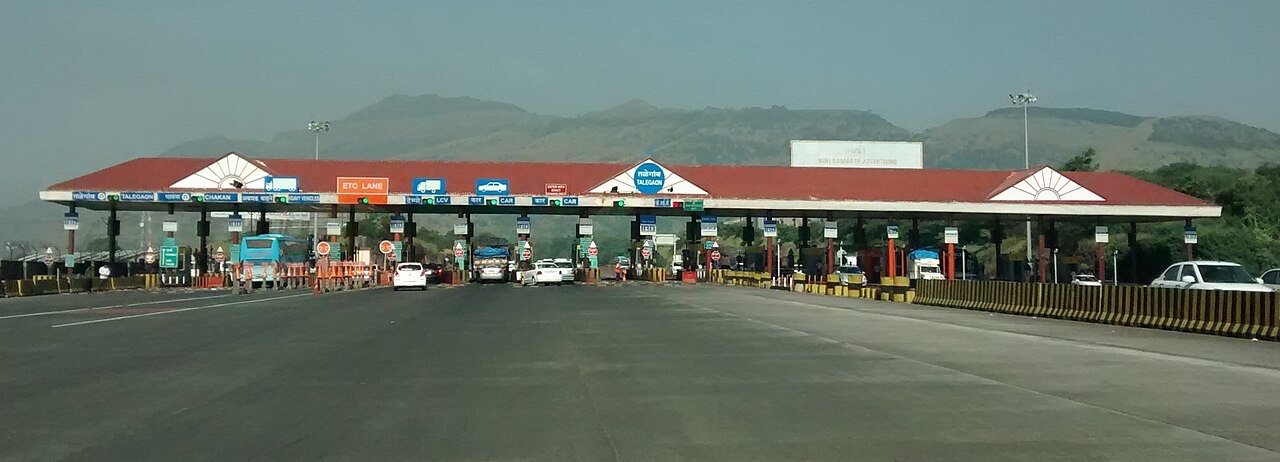
Imagine driving onto an Indian highway a decade ago. You reach a toll plaza, slow down, join a queue, find cash, hand it over, wait for change, take the receipt and move again. Today a reader picks up the RFID sticker on your windscreen, the toll is deducted, and the barrier lifts. At one plaza in Gujarat there is no barrier at all. FASTag didn’t just replace cash at toll booths. It turned the toll plaza from a payment counter into a connected digital transaction.
The change is still going. In 2025 India added the FASTag Annual Pass, which crossed one crore users in September 2026. In April 2026 cash ended at National Highway fee plazas, and in May the first Multi-Lane Free Flow (MLFF) toll let vehicles pass without stopping. More than 98% of National Highway toll is now paid by FASTag. This timeline follows how India got there, year by year, and corrects a few numbers that are often repeated wrongly.
💡 Short Answer
FASTag began as an NHAI RFID toll pilot in 2014 and became a national, interoperable system when NPCI launched NETC in December 2016. It became the norm at National Highway plazas in December 2019 and compulsory in every lane from 15 February 2021. By 2026 it carried more than 98% of National Highway toll, cash had ended at most plazas, the Annual Pass had one crore users and barrier-free MLFF tolling had begun in Gujarat.
FASTag History: Key Questions
FASTag in Ten Points
- The pilot: RFID tolling began on the Golden Quadrilateral in 2014.
- The breakthrough: NPCI’s NETC (December 2016) made one tag work at any member plaza.
- Built in: new four-wheel M and N vehicles come with a tag since 1 December 2017.
- The switch: FASTag lanes became the rule on 15 December 2019, every lane from 15 February 2021.
- The scale: 11.86 crore tags issued by December 2025, but only about 5.9 crore active.
- The share: more than 98% of National Highway toll is paid by FASTag.
- The subscription: the Annual Pass, launched 15 August 2025, hit one crore users in September 2026.
- The end of cash: digital-only tolling at NH plazas from 10 April 2026; no tag costs 1.25x by UPI.
- No barrier: MLFF at Choryasi, NH-48, from 1 May 2026, about 41,500 vehicles on day one.
- Still imperfect: low balances, blacklists, duplicate and loose tags keep causing disputes.
Before FASTag: The Era of the Toll Queue
Why electronic tolling was an infrastructure problem, not a gadget.
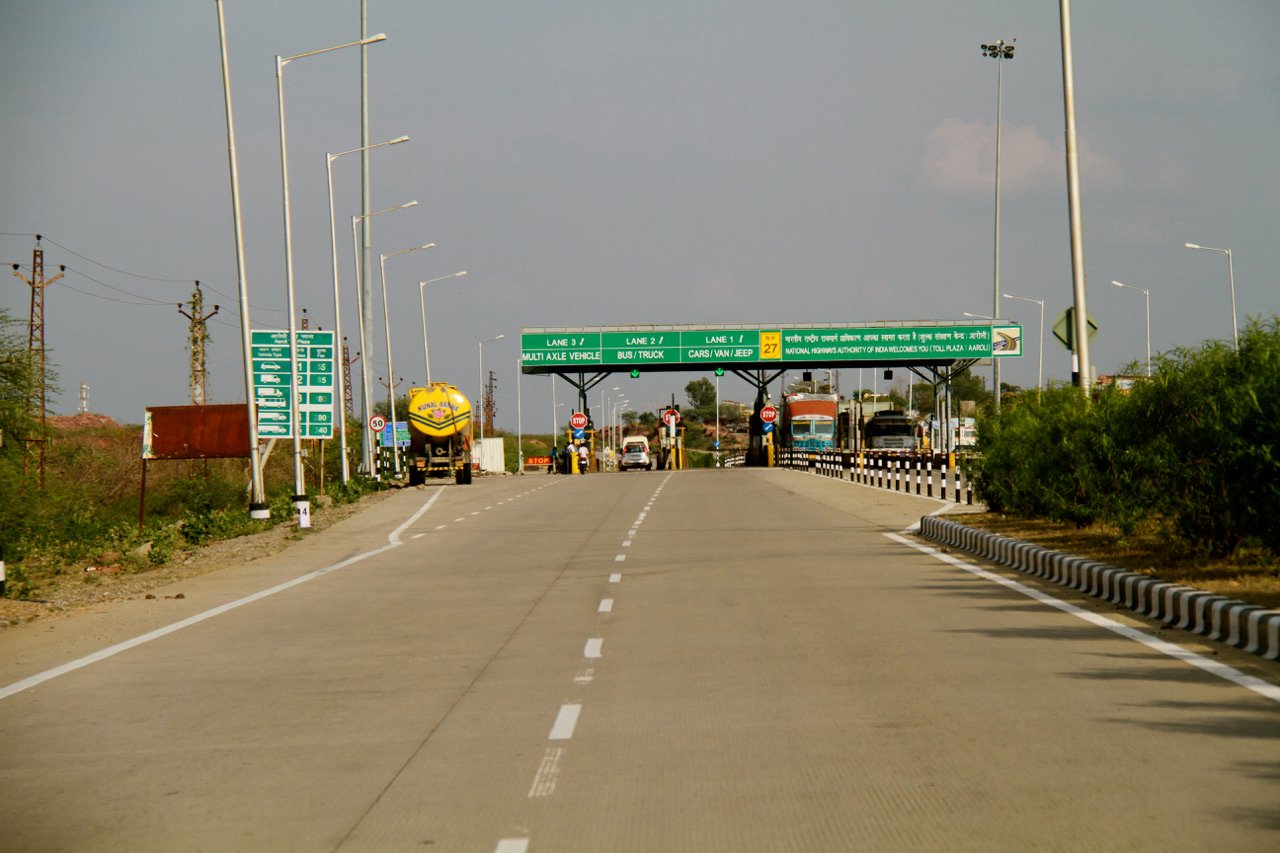
For decades toll collection was manual. Each vehicle stopped, paid, waited for change and a receipt, and moved on. As India’s National Highway network grew and traffic rose, the costs were obvious: queues at peak times, cash handling and reconciliation, fuel burned while idling, and room for disputes and leakage. Some expressways installed their own electronic tags, but a tag that worked on one operator’s road was useless on the next.
The real breakthrough was not electronic payment. It was interoperability: one tag, issued by any bank, accepted at any plaza, cleared through one central system. That is what NPCI’s NETC added in 2016, borrowing the same design that let UPI scale: common rules, many banks, one clearing house.
The Full FASTag Timeline, 2014 to 2026
Newest first. Entries tagged 2026 cover this year.
2026
Annual Pass reaches one crore2026
The road transport ministry says the FASTag Annual Pass has crossed one crore passes since its launch 13 and a half months earlier. It now costs ₹3,075 for one year or 200 crossings at about 1,150 National Highway and National Expressway plazas.
2026
OneTag: switch banks, keep the sticker2026
Road transport minister Nitin Gadkari launches OneTag, a FASTag portability service on NHAI’s Rajmargyatra app. A user can move a tag to a new issuer bank while the same physical tag stays on the windscreen; the old bank closes the wallet and refunds the balance. A ported tag must wait six months before it can move again.
77 lakh Annual Passes2026
The government tells Parliament that more than 77 lakh Annual Passes had been issued by June, with 63 crore transactions, and that pass trips made up about 33% of electronic toll transactions by cars, jeeps and vans.
2026
The first toll with no barrier2026
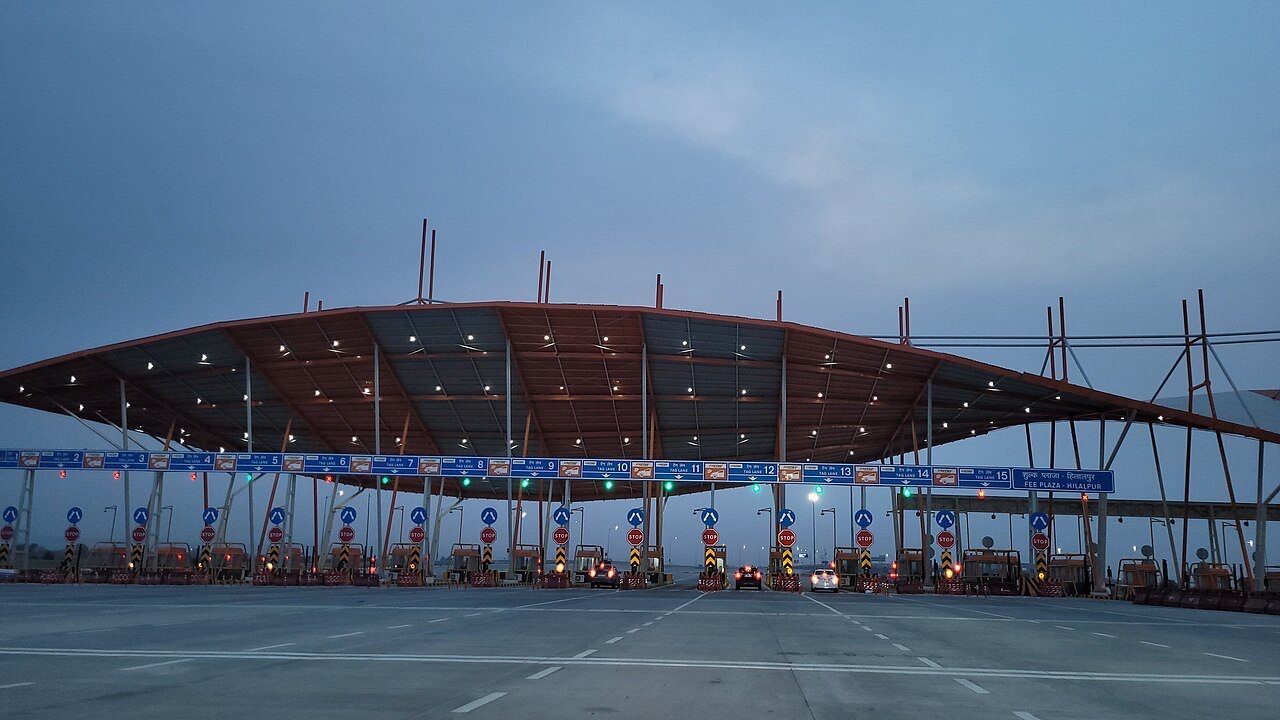
NHAI switches on India’s first Multi-Lane Free Flow (MLFF) tolling at the Choryasi toll plaza on the Surat–Bharuch section of NH-48 in Gujarat. Overhead RFID readers and ANPR cameras identify vehicles at normal speed, with no booth to stop at. About 41,500 vehicles pass on the first day.
2026
Cash ends at National Highway plazas2026
Toll at National Highway fee plazas becomes digital-only: FASTag, or UPI for a vehicle without a working tag. The change, announced in February for 1 April and started on 10 April, covers more than 1,100 plazas. It is deferred for now in Tamil Nadu, Kerala, Assam, West Bengal and Puducherry, where the election model code of conduct is in force.
2026
Annual Pass fee revised2026
The Annual Pass price rises to ₹3,075 for 2026–27 under the yearly fee revision. The 200-crossing, one-year structure is unchanged. In February the ministry had said the pass passed 50 lakh users and 26.55 crore transactions in its first six months, about 28% of car transactions on the network.
2026
KYV scrapped, Vahan check first2026
NHAI drops the post-issue Know Your Vehicle (KYV) step for new car tags, which had left many valid users stuck after activation. Instead, banks must verify vehicle details against the government’s Vahan database before a tag goes live. In a Rajya Sabha reply the same month, the government says 11.86 crore tags had been issued by December 2025, of which about 5.9 crore were active.
2025
No tag? UPI costs 1.25 times, cash twice
An amendment to the National Highways Fee Rules takes effect: a vehicle without a valid FASTag pays 1.25 times the fee by UPI instead of double in cash. On a ₹100 toll, that is ₹125 by UPI against ₹200 in cash. It sets up the end of cash five months later.
2025
FASTag Annual Pass launched
The Annual Pass goes live on Independence Day for non-commercial cars, jeeps and vans. One payment of ₹3,000 covers a year or 200 crossings, whichever comes first, at National Highway and National Expressway plazas. It is loaded onto the existing tag, so no new sticker is needed. FASTag has changed from a pay-per-toll tool into a prepaid access pass.
2025
Crackdown on “tag in hand”
NHAI tells toll agencies to report loose FASTags, tags held up to the reader or left on the dashboard instead of being fixed to the windscreen, so they can be blacklisted. NHAI says the practice slows lanes, causes false chargebacks and enables misuse on closed tolling systems.
“No GPS tolling from 1 May”
After reports that satellite (GNSS) tolling would replace FASTag nationwide from 1 May 2025, the road ministry says no such decision has been taken. It announces an ANPR–FASTag barrier-free pilot at selected plazas instead, the line of work that leads to MLFF a year later.
2025
The 70-minute blacklist window
New NPCI rules decline a toll if the tag has been blacklisted (for example for low balance or KYC) for more than 60 minutes before the read and stays so for 10 minutes after. The vehicle is then treated as having no valid tag. Last-second top-ups at the booth no longer work.
2024
10.30 crore tags, 98.5% of toll
The ministry’s year-end review reports more than 10.30 crore FASTags issued, average daily electronic toll collection of about ₹192 crore, and FASTag at about 98.5% of total fee collection. 1,051 National Highway fee plazas have electronic tolling in every lane.
Paytm shock and One Vehicle One FASTag
The Reserve Bank of India bars Paytm Payments Bank from accepting new deposits and top-ups after 15 March 2024, leaving its FASTag users unable to recharge; NHAI tells them to get a tag from another bank. NHAI also enforces One Vehicle One FASTag, deactivating duplicate tags and blocking new ones until the old tag is closed.
2021
Every lane becomes a FASTag lane
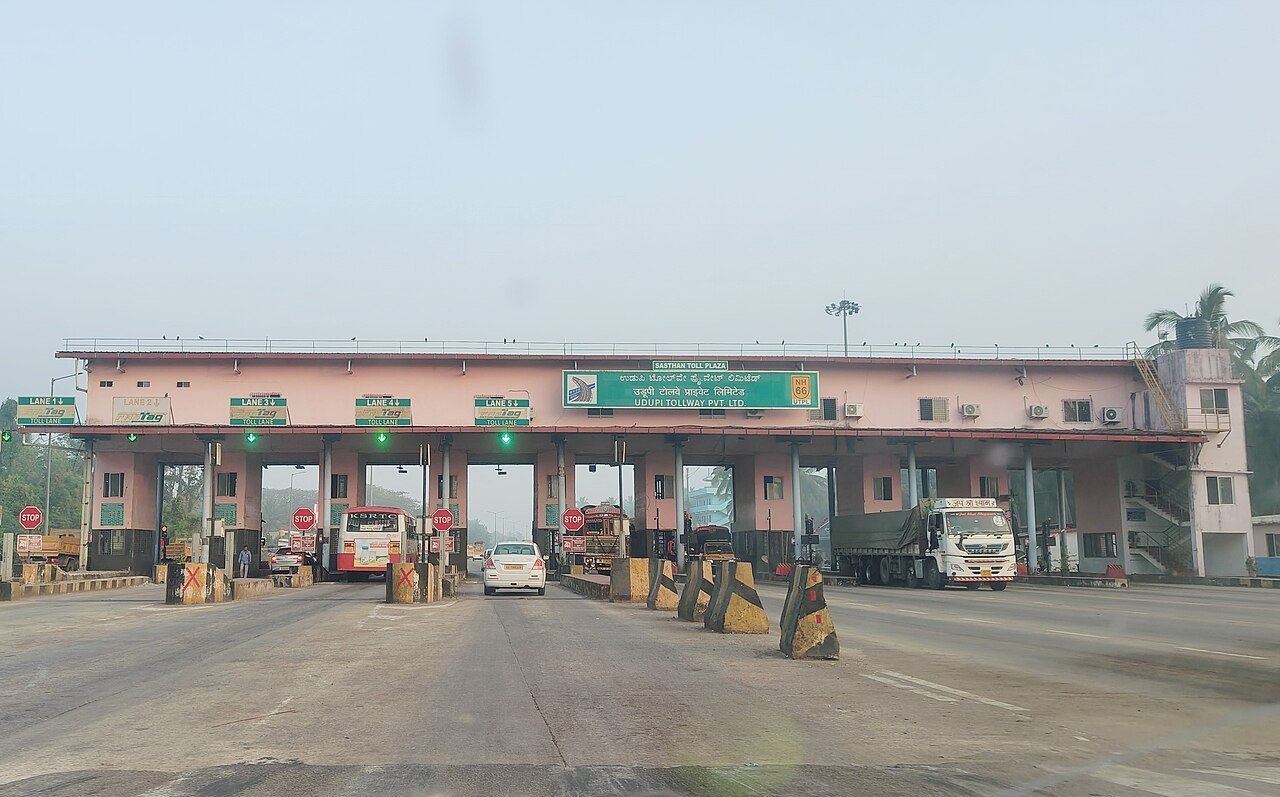
From midnight, every lane at National Highway fee plazas is declared a FASTag lane, ending the hybrid cash lanes kept since 2019. A vehicle without a valid tag pays twice the fee. The deadline had been moved from 1 January 2021. This is the point at which FASTag becomes the default way to pay on National Highways.
Contactless parking in the pandemic
During Covid-19, Hyderabad airport, which had opened India’s first NETC FASTag car park with NPCI in November 2019, makes its car parking fully contactless with ten issuer banks. On 14 July NPCI announces plans to take FASTag parking to Delhi, Mumbai, Chennai and Bengaluru. The tag starts to become a vehicle payment ID, not only a toll sticker.
2019
FASTag lanes become the rule
All lanes but one at National Highway fee plazas become FASTag lanes, two weeks later than the first plan of 1 December. Some plazas get temporary hybrid lanes to handle the rush. By 26 December, 1,11,70,811 FASTags have been issued, with more than a lakh sold a day, according to the ministry.
2017
New vehicles arrive with a tag
Under an amendment to the Central Motor Vehicles Rules, new four-wheel M and N category vehicles (cars, buses and goods vehicles) sold from 1 December 2017 must come with a FASTag fitted. Adoption no longer depends only on existing owners choosing to buy one.
2017
FASTag goes onto the phone
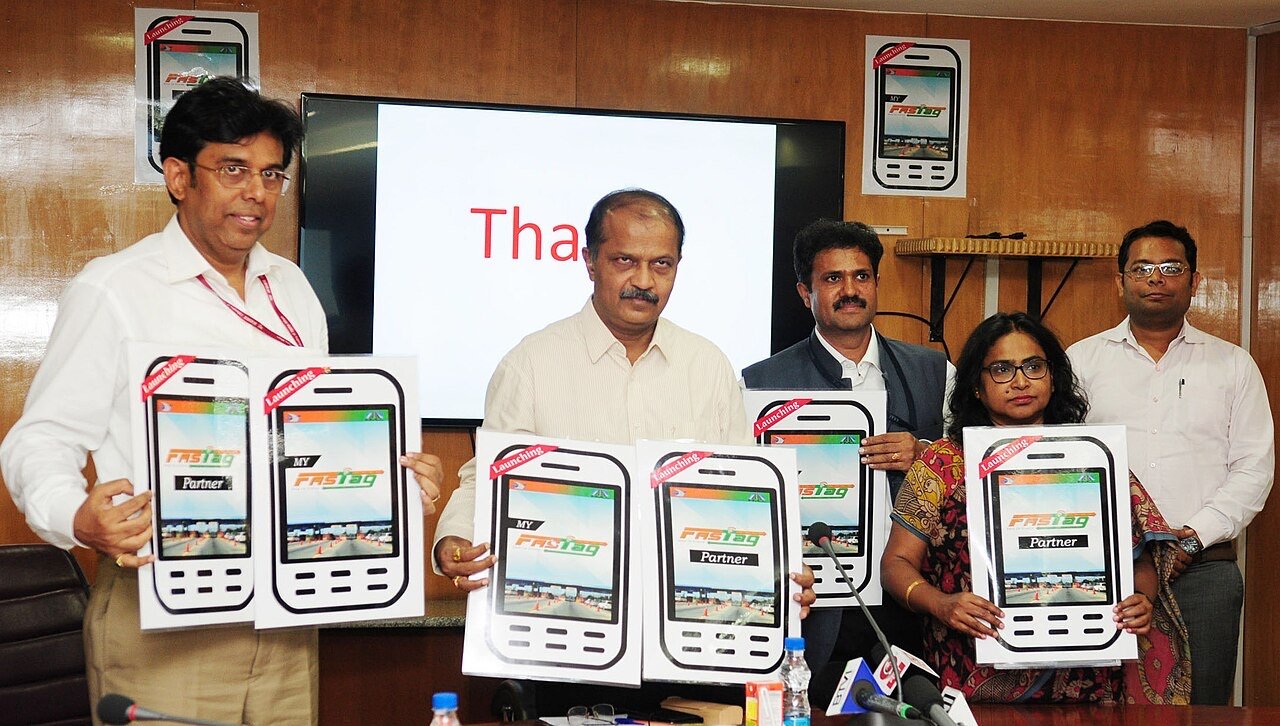
NHAI launches the My FASTag app for users to buy, recharge and track tags, and FASTag Partner for agents selling them. The government starts treating tag distribution as a retail problem, not just a technology one.
NPCI launches NETC
The National Payments Corporation of India launches the National Electronic Toll Collection (NETC) programme. Its central clearing house sits between the toll plaza’s acquiring bank and the tag’s issuing bank, so a tag from any member bank works at any member plaza. This is the version of FASTag still in use.
2014
The RFID pilot reaches Delhi–Mumbai
After a 2014 pilot on the Ahmedabad–Mumbai stretch of the Golden Quadrilateral, NHAI’s RFID electronic toll collection is extended to the Delhi–Mumbai arm. Plazas on the Chennai–Bengaluru stretch follow in July 2015. Usage is low: most drivers still pay cash.
2014
The toll queue era
Toll plazas take cash. Each vehicle stops, pays, waits for change and a receipt, and pulls away. Some expressways run their own electronic tags, but they work only on that operator’s road. As National Highway traffic grows, queues at busy plazas stretch for hundreds of metres at peak times.
FASTag in Numbers
Issued is not the same as active.
The headline figure of 11.86 crore FASTags is tags issued since the start. The government told the Rajya Sabha that only about 5.9 crore were active. Replacement tags, duplicates closed under One Vehicle One FASTag, Paytm tags abandoned in 2024 and scrapped vehicles all sit in the larger number. For share of toll, the steadier measure is value: about 98.5% of National Highway fee collection by the end of 2024, and FASTag toll of ₹20,682 crore in April–June 2025 alone, according to NETC data.
The Annual Pass grew faster than FASTag itself did in its early years, because it rode on tags already fitted to cars. By June 2026 about a third of electronic toll trips by cars, jeeps and vans were on a pass. In the busiest commuter plazas around Delhi, the ministry said in February, more than half of car crossings used one.
How FASTag Actually Works
Six steps, a few seconds, several organisations.
- The vehicle approaches. The FASTag is fixed to the inside of the windscreen, where the lane antenna expects it.
- The reader identifies the tag. The plaza reads the tag ID; at newer plazas an ANPR camera also reads the number plate.
- The fee is worked out. The toll system checks the vehicle class linked to the tag, and whether an Annual Pass applies.
- The transaction enters NETC. The plaza’s acquiring bank sends it to NPCI’s central clearing house.
- Your bank debits the wallet. The issuer bank checks the tag is valid and not blacklisted, and deducts the toll.
- The record is kept. You get an SMS, and the transaction is stored for settlement and any dispute.
Pick an era. See how a car paid its toll, and whether it had to stop.
From cash and change to “just keep driving” in about 12 years.
If the car can be identified and charged without stopping, what is the toll plaza for?
Tap through all six eras, then tap Reveal.
FASTag vs Annual Pass vs MLFF
The tag, a payment plan on the tag, and a toll point that uses the tag.
| FASTag | Annual Pass | MLFF | |
|---|---|---|---|
| What it is | RFID tag + linked wallet | Prepaid pass on the same tag | Barrier-free toll point |
| Who can use it | All vehicles above two-wheelers | Private cars, jeeps, vans | All vehicles at that plaza |
| How you pay | Per crossing | ₹3,075 for 1 year or 200 crossings | Per crossing, via FASTag |
| Do you stop? | Briefly at a barrier | Briefly at a barrier | No |
| Where | NETC network, NH and many state plazas | About 1,150 NH and NE plazas | Choryasi, NH-48, from May 2026 |
| Started | Dec 2016 (NETC) | 15 Aug 2025 | 1 May 2026 |
The distinction matters because the three are often blurred. FASTag is the RFID identity and payment layer. NETC is the interoperable framework that clears its transactions. The Annual Pass is a prepaid plan loaded onto the same tag. MLFF is a new kind of toll point that reads the same tag, adds a number-plate camera and removes the barrier.
Enter a typical toll on your route and how many National Highway plaza crossings you make a year.
The defaults are only an example. Check your own plaza’s fee in the Rajmargyatra app.
Assumes every crossing is at an eligible National Highway or National Expressway plaza and your car is a private car, jeep or van. On closed expressways, an entry and exit pair counts as one crossing. Fees change each April.
Every Rule That Changed How You Pay
FASTag spread through mandates and penalties as much as through convenience.
| From | Rule | Set by |
|---|---|---|
| 1 Dec 2017 | New four-wheel M and N vehicles come with a fitted FASTag | Central Motor Vehicles Rules |
| 15 Dec 2019 | All but one lane at NH plazas become FASTag lanes | MoRTH |
| 15–16 Feb 2021 | Every NH lane is a FASTag lane; no tag pays double | MoRTH |
| 2024 | One Vehicle One FASTag; Paytm Payments Bank top-ups end 15 Mar | NHAI, RBI |
| 17 Feb 2025 | Toll declined if tag blacklisted 60 min before read | NPCI |
| 11 Jul 2025 | Loose “tag in hand” FASTags reported and blacklisted | NHAI |
| 15 Aug 2025 | Annual Pass for private cars: ₹3,000, 1 year or 200 crossings | MoRTH, NHAI |
| 15 Nov 2025 | No tag: 1.25x by UPI, 2x in cash | NH Fee Rules amendment |
| 1 Feb 2026 | KYV dropped for new car tags; Vahan check before activation | NHAI |
| 1 Apr 2026 | Annual Pass fee ₹3,075 | NHAI |
| 10 Apr 2026 | Digital-only toll (FASTag or UPI) at NH plazas, some states deferred | MoRTH |
| 17 Sep 2026 | OneTag portability: change bank, keep the tag | NHAI |
FASTag Is Not Perfect
Digital does not automatically mean frictionless.
Low balance and blacklisting
A tag can be on the car and still fail. Since February 2025, a tag blacklisted for 60 minutes before the read is declined, and the driver is treated as having no tag.
Wrong vehicle details
A tag linked to the wrong class or vehicle causes wrong charges. Since February 2026, banks must check Vahan before activation instead of after.
Duplicate tags
Several active tags on one car caused double deductions. One Vehicle One FASTag closed duplicates; OneTag portability now lets users switch bank without buying a second tag.
Loose tags
Tags held in the hand slow lanes and enable misuse. Since July 2025 NHAI has them reported and blacklisted.
Issuer risk
When Paytm Payments Bank was barred from top-ups after 15 March 2024, millions of tags had to be replaced. Your tag is only as reliable as the bank behind it.
Disputed deductions
Complain to your issuer bank first, then the 1033 National Highway helpline or the Rajmargyatra app. Keep the SMS, plaza name and time.
Does FASTag Save Fuel?
There is an obvious reason it can: a car that does not stop, idle and accelerate away from a queue burns less fuel. But the size of the saving depends on traffic, queue length, vehicle type and plaza design, and there is no verified national figure. The fair conclusion is that FASTag cuts the stopping and queuing that manual tolling forced, and the benefit grows with the congestion it removes. MLFF, which removes the stop entirely, should save more than a FASTag lane with a barrier.
Myths and Corrections
“GPS tolling replaced FASTag in May 2025”
The ministry said in April 2025 that no such decision had been taken. FASTag remains the base of every new system, including MLFF.
“India has 11.86 crore FASTag users”
That is tags issued. About 5.9 crore were active in early 2026.
“FASTag launched in 2016”
The interoperable NETC version did. NHAI’s RFID tolling pilot started in 2014 on the Golden Quadrilateral.
“The Annual Pass works on every toll road”
Only at about 1,150 National Highway and National Expressway plazas, and only for private cars, jeeps and vans.
“FASTag parking began in June 2020”
Hyderabad airport opened the first NETC FASTag car park in November 2019 and went fully contactless in July 2020.
“Cash is gone from all toll plazas”
Digital-only applies to National Highway fee plazas, with temporary state exemptions at launch. State-run roads set their own rules.
What Comes Next
More MLFF. NHAI has said barrier-free tolling will expand beyond Choryasi. Camera plus tag. ANPR gives a second identifier, so unreadable tags, wrong vehicle classes and number-plate mismatches can be caught without a barrier. Enforcement. A toll point without a boom needs a reliable way to collect from vehicles that pass without paying; that, more than technology, is the open question. Toll zones, not toll plazas. The toll point no longer has to be a building. It can be a gantry over the road.
Did You Know?
- Same rail as UPI: NPCI runs both NETC FASTag and UPI, and since April 2026 UPI is the fallback at the toll booth.
- Two-wheelers: they pay no toll on National Highways and need no FASTag.
- Delhi’s commuters: at Bijwasan plaza, 57% of car crossings used the Annual Pass in early 2026, the highest share reported.
- Portability: since September 2026 you can switch FASTag bank the way you switch mobile operator.
- Day one of MLFF: about 41,500 vehicles passed Choryasi without stopping.
Test Yourself: FASTag Quiz
1. What technology does FASTag use?
2. Which body runs the NETC central clearing house?
3. When did every National Highway toll lane become a FASTag lane?
4. What does a car without a valid FASTag pay by UPI since 15 November 2025?
5. How much does the Annual Pass cost for 2026–27?
6. Where did India’s first barrier-free MLFF toll open?
7. About how many FASTags were active in early 2026?
Explore More Timelines
People Also Ask
Frequently Asked Questions
The Bigger Story
FASTag is easy to underestimate because there is almost nothing to see: no screen, no gadget, just a sticker. Behind it sits one of India’s largest digital payment systems. The path was a pilot, then interoperability, then mandates, then the end of cash, then a subscription, and now barrier-free tolling. The future toll road does not need to make you stop to prove you have paid. It can identify the vehicle, settle the charge and let the journey continue.
Related AiTimeline Stories
⚠️ Editorial Note
Dates and figures are from Press Information Bureau releases, road transport ministry replies to Parliament, NHAI and NPCI announcements, and Reserve Bank of India orders; collection data for April–June 2025 is NETC data as reported by PTI. Corrections to widely shared versions of this story: FASTag began as a 2014 NHAI pilot before the 2016 NETC launch; 11.86 crore is tags issued, not users (about 5.9 crore active); Hyderabad airport’s FASTag parking began in November 2019, not June 2020. Toll rates and pass fees change each April; check the Rajmargyatra app for your route.
Sources & further reading
Every dated entry above was checked against these references. Last reviewed 2 October 2026.
- PIB: Compulsory implementation of FASTag from 15 December 2019
- PIB: FASTag rollout picking up pace, daily usage increases (31 December 2019)
- PIB: Year End Review 2024, Ministry of Road Transport and Highways
- PIB: NHAI launches India's first Multi-Lane Free Flow tolling system in Gujarat (May 2026)
- PIB: NHAI Rajmargyatra app hosts OneTag FASTag portability service (September 2026)
- DD News: FASTag Annual Pass crosses one crore milestone (29 September 2026)
- NPCI: NETC, adding speed to India's highway network
- Business Standard: Around 5.9 crore FASTags active out of 11.86 crore issued (February 2026)
- News On AIR: Government revises National Highways fee rules, higher charges without valid FASTag (October 2025)
- News On AIR: KYV discontinued for cars on new FASTag issued after 1 February 2026