How Yahoo Lost the Internet: Every Missed Deal, from Google to Microsoft
Yahoo's decline, deal by deal: the $1M Google pass, the $44.6B Microsoft bid it rejected, Tumblr, the $4.48B Verizon sale and its 2026 AI comeback.
Latest Story
Yahoo’s decline is the story of a company that kept standing next to the future and not buying it. The web directory two Stanford students started in 1994 was worth about US$125 billion in January 2000. It passed on Google’s technology in 1998, failed to buy Google in 2002, lost Facebook in 2006, rejected Microsoft’s US$44.6 billion bid in 2008 and spent US$1.1 billion on Tumblr in 2013. In 2017 Verizon bought its operating business for about US$4.48 billion. Today Yahoo, owned by Apollo, is trying again with an AI answer engine.
The short version: Yahoo’s problem was never that it could not see what was coming. It saw Google, Facebook and Alibaba early. It bought only the one it would not have to run itself, and it tried to be everything on the web at a time when each new layer of the internet rewarded companies that did one thing better than anyone else.
💡 Short Answer
Yahoo, founded in 1994 by Jerry Yang and David Filo, was the web’s leading portal and worth about US$125 billion in 2000. It passed on or failed to buy Google (1998, 2002) and Facebook (2006), rejected Microsoft’s US$44.6 billion bid (2008), outsourced search to Bing (2009) and wrote off most of Tumblr. Verizon bought its operating business for about US$4.48 billion in 2017; Apollo has owned it since 2021.
Yahoo’s Decline: Key Questions
Yahoo in Ten Points
- The idea: a hand-built directory of the web, started at Stanford in 1994 by Jerry Yang and David Filo.
- The peak: about US$125 billion in market value on 3 January 2000.
- Google, twice: a reported US$1 million pass in 1998 and a reported US$3 billion vs US$5 billion standoff in 2002.
- The search irony: Google powered Yahoo’s search from 2000 to 2004.
- The good bet: US$1 billion plus Yahoo China for 40% of Alibaba in 2005, later worth tens of billions.
- Facebook: a reported US$1 billion offer in 2006 that Mark Zuckerberg refused.
- Microsoft: a US$44.6 billion bid rejected in 2008; a year later Yahoo handed its search to Bing anyway.
- Tumblr: about US$1.1 billion in 2013, mostly written off by 2016, sold by Verizon in 2019 for a reported under US$3 million.
- The breaches: 500 million accounts (2014 breach) and, ultimately, all 3 billion (2013 breach).
- The sales: Verizon about US$4.48 billion (2017), Apollo about US$5 billion with AOL (2021); AI Scout launched in 2026.
Yahoo’s Decline in Nine Deals
What Yahoo offered, bought, invested and finally sold for.
Put the deals side by side and the pattern is plain. The offers Yahoo walked away from or could not close, for Google and Facebook, were small. The companies it did buy, Overture and Tumblr, were meant to catch up with rivals rather than leap ahead of them. The one investment that worked, Alibaba, worked because Yahoo stayed out of its way. And the single biggest number on the chart is the offer Yahoo turned down.
From US$125 Billion to US$4.48 Billion
The value of Yahoo’s own business at each turning point.
The US$125 billion figure was a bubble price, and almost every internet company crashed after it. What sets Yahoo apart is what happened after the crash: in 2008 Microsoft still thought the business was worth US$44.6 billion. Eight years later, after the search deal, the Mayer turnaround and the slide in display advertising, the market price for the same operating business was below US$5 billion. Even an IPO at the US$20 billion analysts discussed in 2026 would recover less than half of what Yahoo turned down in 2008.
Pick one of Yahoo’s big decisions and see what it cost, and what it became.
Prices are the figures reported at the time; “what it became” uses the next public valuation, not today’s market value, to keep the comparison fair.
Choose a deal above
How Yahoo Lost the Internet: The Full Timeline
Newest first, from Yahoo’s 2026 AI comeback back to two students’ list of websites in 1994.
Yahoo doubles down on Finance and Sports Official
Yahoo spends September adding to the two properties that kept their audiences through every change of owner. Yahoo Finance launches a dedicated real-estate hub (15 September), a live daily AI-and-technology show (8 September) and a new programming line-up of live shows and original series (21 September). Yahoo Sports teams up with Apple TV on live alternate broadcasts of MLB and MLS games.
IPO talk returns, without a filing Reported
Chief executive Jim Lanzone has said since December 2025 that Yahoo is “ready financially” to return to the stock market, three decades after its 1996 IPO, citing a strong balance sheet and high profitability. Analysts quoted in February 2026 put a possible value at US$20 billion or more. Yahoo has not filed, and Apollo could still choose a sale instead.
Why it matters: it would be four times what Apollo paid in 2021, but still a sixth of Yahoo’s value in January 2000.
2026
Yahoo launches Scout, an AI answer engine Official
Yahoo releases Scout in beta on desktop, mobile web and the Yahoo Search app. Instead of ten blue links it writes direct answers with tables, images and inline citations, built on Anthropic’s Claude model, Microsoft Bing’s grounding service, Yahoo’s knowledge graph and data from Finance, Sports and News. Yahoo says it will steer users to publishers and to its own properties rather than keep them on an answer page.
Why it matters: it is the first time since the 2009 Microsoft deal that Yahoo has built its own search product rather than reselling someone else’s.
2026
AOL leaves the family Official
Yahoo completes the sale of AOL to Italy’s Bending Spoons, agreed on 29 October 2025 and backed by US$2.8 billion of debt financing. Bending Spoons says AOL still has about 8 million daily and 30 million monthly users, mainly for email. Lanzone says the sale lets Yahoo focus on its core brands. Earlier, in March 2025, Yahoo had sold TechCrunch to investment firm Regent, keeping a small stake.
Yahoo buys Artifact’s AI news engine Official
Yahoo announces on 2 April 2024 that it has acquired Artifact, the AI-driven news app built by Instagram co-founders Kevin Systrom and Mike Krieger and shut down months earlier. Artifact’s personalisation technology is rebuilt into a redesigned Yahoo News app. It is a small deal, but the first sign of Yahoo betting on AI-driven discovery.
2021
Apollo takes over, and Yahoo is “Yahoo” again Official
Apollo funds complete the purchase of Verizon Media, agreed on 3 May 2021 for about US$5 billion: US$4.25 billion in cash plus US$750 million of preferred interests, with Verizon keeping 10%. The business, including Yahoo and AOL, is renamed Yahoo. Jim Lanzone, previously chief executive of Tinder, becomes chief executive.
Why it matters: Yahoo and AOL, two portals that once defined the web, together fetched less than an eighth of Microsoft’s 2008 bid for Yahoo alone.
2021
Yahoo stops publishing news in India Official
Yahoo ends its news, sports, finance and entertainment content in India, citing rules that limit foreign ownership of digital news publishers to 26%. Yahoo Mail, Search and user accounts keep working for Indian users. For a generation of Indian internet users who started with Yahoo Mail and Yahoo Messenger, it ends Yahoo’s local presence.
Verizon writes off the dream Official
In December 2018 Verizon takes a charge of about US$4.6 billion, conceding that Oath, the Yahoo–AOL combination, is worth far less than it paid. Oath is renamed Verizon Media in January 2019. In August 2019 Verizon sells Tumblr to Automattic for an undisclosed price reported at under US$3 million. In April 2018 the SEC fines Altaba US$35 million over Yahoo’s two-year delay in disclosing the 2014 breach.
2017
Verizon completes the purchase; Yahoo Inc. becomes Altaba Official
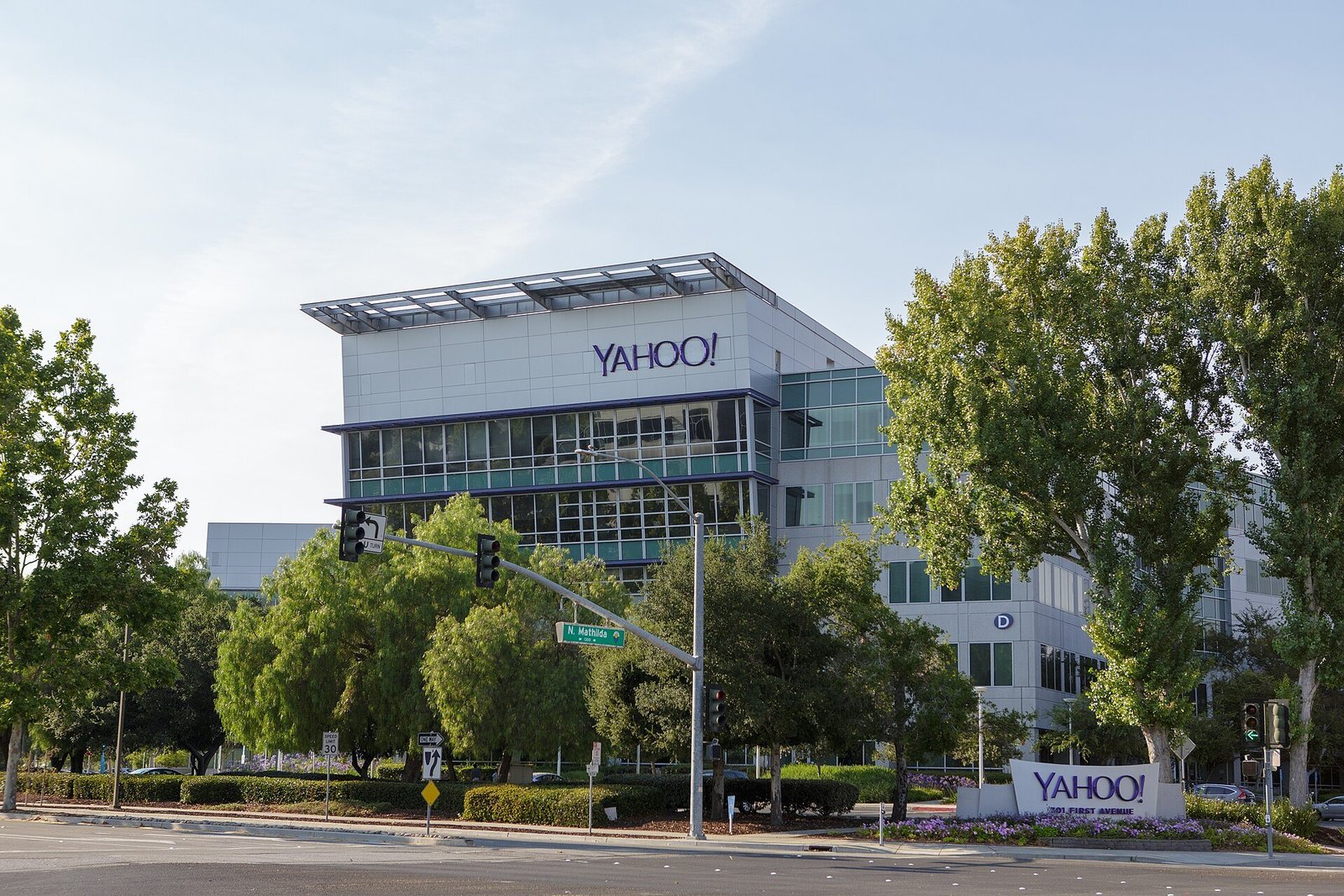
Verizon closes the deal, cut in February 2017 by US$350 million to about US$4.48 billion because of the breaches, and combines Yahoo with AOL in a new unit, Oath. Marissa Mayer leaves. The part of Yahoo Inc. that Verizon did not buy, mainly its Alibaba and Yahoo Japan stakes, becomes Altaba, an investment company that later sells its holdings and returns the cash to shareholders.
Why it matters: the stakes Yahoo bought in other companies ended up worth far more than the Yahoo businesses it ran itself.
2016
The breaches come out Official
Two months after agreeing the Verizon sale, Yahoo discloses that a 2014 intrusion, which it blames on a state-sponsored actor, took names, email addresses, phone numbers, birth dates and hashed passwords for at least 500 million accounts. In December it reveals a separate 2013 breach affecting more than 1 billion accounts. Investigators later find that some Yahoo staff knew of the 2014 intrusion in 2014.
2016
Yahoo agrees to sell itself to Verizon Official
After an auction pushed by activist investor Starboard Value, Yahoo agrees to sell its core internet business, including Mail, Finance, Sports, News and Tumblr, to Verizon for about US$4.83 billion in cash. The Alibaba and Yahoo Japan stakes, worth far more, are excluded. Earlier that year Yahoo had written down Tumblr by about US$230 million and then about US$482 million more.
Alibaba’s IPO pays Yahoo billions Reported
Alibaba lists in New York at US$68 a share in what was then the biggest IPO in history. Yahoo sells part of its remaining stake for roughly US$9.4 billion before tax, including the over-allotment, and still owns about 15% of Alibaba afterwards. The stake becomes so valuable that investors start valuing Yahoo’s own businesses at close to zero.
2013
Yahoo buys Tumblr for ~US$1.1 billion Official
Yahoo agrees to buy the blogging platform Tumblr, with a young, creative audience, for about US$1.1 billion in cash, promising to run it independently. Mayer tweets that Yahoo promises “not to screw it up”. Advertising on Tumblr never takes off at the scale needed, and within three years most of the price is written off.

2012
Marissa Mayer becomes chief executive Official
Yahoo hires Marissa Mayer, one of Google’s most prominent product executives, after a run of short tenures: Carol Bartz is fired in September 2011 and Scott Thompson leaves in May 2012 after a dispute over his CV. Mayer redesigns Mail and the homepage, pushes mobile apps and buys dozens of start-ups. In September 2012 Alibaba completes the buyback of half of Yahoo’s stake for about US$7.1 billion, giving her cash to spend.
2009
Yahoo hands its search engine to Microsoft Official
A year after rejecting Microsoft’s takeover, Yahoo signs a 10-year search partnership under which Microsoft’s Bing supplies Yahoo’s search results and takes over much of its search advertising technology. Yahoo keeps 88% of search revenue on its own sites for the first five years and sells premium search ads. The switchover runs through 2010.
Why it matters: Yahoo, which had spent about US$1.9 billion buying Inktomi and Overture to build its own engine, gave up competing on core search technology.

2008
Microsoft bids US$44.6 billion; Yahoo says no Official
Microsoft announces an unsolicited offer of US$31 a share in cash and stock, about US$44.6 billion and a 62% premium to Yahoo’s share price, to combine against Google in search advertising. Yahoo’s board, led by chief executive Jerry Yang, rejects it on 11 February as undervaluing the company. Microsoft raises the offer to US$33; Yahoo asks for US$37. On 3 May 2008 Steve Ballmer withdraws.
Why it matters: it was the last time anyone offered Yahoo a price close to its dot-com value.
2006
Yahoo offers about US$1 billion for Facebook Reported
Yahoo, under chief executive Terry Semel, reportedly offers about US$1 billion for Facebook, then a two-year-old network for college students. After Yahoo’s own share price falls on weak results, it reportedly lowers the offer to about US$850 million. Mark Zuckerberg, then 22, declines.
Why it matters: unlike Google, this was a deal Yahoo wanted and could not close. Facebook went public in 2012 at about US$104 billion.
2005
US$1 billion for 40% of Alibaba Official
Yahoo pays US$1 billion in cash and hands over its Yahoo China business in exchange for about 40% of Alibaba, then a young Chinese e-commerce company led by Jack Ma. The deal is Jerry Yang’s. It becomes the most valuable investment Yahoo ever makes.
Yahoo buys a search engine instead Official
Having failed to buy Google, Yahoo assembles its own search business. It buys Inktomi, the web-search company it had used before Google, for about US$235 million (completed March 2003) and Overture, the pioneer of pay-per-click search ads, for about US$1.63 billion (completed October 2003). In February 2004 Yahoo replaces Google’s results with its own engine.
Why it matters: Yahoo now owned the parts, but Google was improving its search and its AdWords auction faster than Yahoo could integrate them.
Yahoo tries to buy Google and balks at the price Reported
New chief executive Terry Semel, a former Warner Bros. co-chief, is reported to have pursued Google in 2002 and to have been willing to pay about US$3 billion, while Google’s founders asked for about US$5 billion. No deal is reached.
Why it matters: two years later Google’s IPO valued it at roughly US$23 billion.
2000
Google starts powering Yahoo search Official
Yahoo picks Google to supply the web results behind its search box. For Google, a two-year-old company, appearing on the internet’s busiest site is a huge boost to its reputation. Yahoo still treats search as one feature among many on its portal.
2000
The peak: about US$125 billion Official
Yahoo’s shares close at about US$118.75, valuing the company at roughly US$125 billion. Within 21 months the bubble bursts and the shares fall below US$10. Tim Koogle steps down as chief executive in 2001.
Page and Brin offer Yahoo their search technology Reported
Stanford students Larry Page and Sergey Brin, who want to sell their PageRank technology and return to their studies, approach portals including Yahoo. Yahoo passes; co-founder David Filo reportedly tells them to grow it into a company themselves. Google is incorporated in September 1998.
Why it matters: Yahoo saw search as a feature that kept users on its portal. Google saw it as the business.
1996
Yahoo goes public Official
Yahoo lists on Nasdaq at US$13 a share; the stock nearly triples on its first day. By now Yahoo is a portal, adding news, chat, finance and, after 1997, Yahoo Mail, built on its acquisition of Four11.
“Jerry and David’s Guide to the World Wide Web”
Electrical-engineering graduate students Jerry Yang and David Filo start a hand-sorted list of their favourite websites in early 1994 and soon rename it Yahoo!. Users browse categories rather than typing searches. The company is incorporated in March 1995 and raises about US$2 million from Sequoia Capital.
Why it matters: Yahoo’s founding idea, people organising the web, worked brilliantly when the web was small, and became its weakness as it grew.

Why Yahoo Lost the Internet
No single deal did it. These six patterns did.
The portal aged
Yahoo wanted people to start their day on its homepage. Search, social feeds and smartphone apps took them straight to what they wanted.
Search was treated as a feature
Google turned the search box into the most profitable advertising business ever built. Yahoo rented Google, bought Overture, then rented Bing.
Everything, everywhere
Mail, news, finance, sports, music, video, groups, auctions, games: breadth brought traffic but no single product that defined a new era.
Too many restarts
Seven chief executives, including two interims, between 2007 and 2012, each with a new strategy.
Buying growth, not building it
Overture, Tumblr and dozens of smaller acquisitions could not replace a product strategy of its own.
The breaches
Billions of accounts exposed, disclosed years late, cost Yahoo US$350 million off its sale price and a US$35 million SEC fine.
Eight CEOs, Eight Strategies
Who ran Yahoo, and the decision each is remembered for.
| Chief executive | Tenure | Defining decision |
|---|---|---|
| Tim Koogle | 1995–2001 | Built the portal; Google powers search (2000) |
| Terry Semel | 2001–2007 | Google talks fail; Inktomi, Overture, Alibaba, Facebook offer |
| Jerry Yang | 2007–Jan 2009 | Rejects Microsoft’s US$44.6B bid |
| Carol Bartz | Jan 2009–Sep 2011 | Hands search to Microsoft’s Bing; fired |
| Scott Thompson | Jan–May 2012 | Leaves after a dispute over his CV |
| Marissa Mayer | Jul 2012–Jun 2017 | Tumblr; breaches; sale to Verizon |
| Guru Gowrappan | 2018–2021 | Ran Verizon Media under Verizon |
| Jim Lanzone | 2021–present | Sells AOL and TechCrunch; launches Scout; IPO talk |
The Deal That Worked: Alibaba
Yahoo’s best bet was on a company it did not control.
In August 2005 Jerry Yang agreed to pay US$1 billion in cash and hand over Yahoo’s struggling China business in return for about 40% of Alibaba, then a young e-commerce company led by Jack Ma. It became one of the most profitable venture bets ever made. Alibaba bought back half of the stake for about US$7.1 billion in 2012, Yahoo sold more shares into Alibaba’s record 2014 New York IPO, and by 2015 the remaining Alibaba holding was worth more than all of Yahoo.
That created an odd company: investors valued Yahoo’s mail, news, sports and finance businesses at close to nothing, or less than nothing, once the Alibaba and Yahoo Japan stakes were subtracted. A plan to spin off the Alibaba shares tax-free was abandoned in December 2015, and the sale of the operating business to Verizon followed. The stakes went to Altaba, which sold them and returned the money to shareholders.
| Date | Alibaba event | Money to Yahoo |
|---|---|---|
| Aug 2005 | Yahoo buys about 40% | Paid US$1B cash + Yahoo China |
| Sep 2012 | Alibaba buys back half the stake | ~US$7.1B (cash and preferred stock) |
| Sep 2014 | Alibaba IPO in New York | ~US$9.4B before tax (reported) |
| 2017–19 | Remaining stake held by Altaba, then sold | Returned to Altaba shareholders |
Yahoo Today: Smaller, Profitable, and Back in Search
Under Apollo, Yahoo has sold its side businesses and is betting on AI.
Since Apollo bought it in 2021, Yahoo has been run by Jim Lanzone as a group of consumer brands rather than a portal. It has sold what it does not see as core: TechCrunch to Regent in March 2025 and AOL to Bending Spoons, completed on 2 January 2026. It has kept the businesses with loyal, logged-in audiences: Yahoo Mail, which Yahoo calls the world’s second-largest email service, Yahoo Finance, Yahoo Sports and fantasy sports, and Yahoo News, rebuilt with technology from Artifact.
The new bet is Yahoo Scout, launched in late January 2026. It writes answers rather than lists of links, using Anthropic’s Claude, Bing’s grounding service and Yahoo’s own data, and Yahoo says it reaches about 250 million US users across its products. Yahoo says it is “very profitable” but does not publish accounts. Talk of an IPO, with analysts’ estimates of US$20 billion or more, has not yet produced a filing.
Yahoo in 2000 vs Yahoo in 2026
Yahoo and India
For many Indian internet users in the 2000s, Yahoo Mail and Yahoo Messenger chat rooms were the internet. Yahoo built one of its largest engineering centres outside the United States in Bengaluru and ran Indian editions of its news, cricket and finance sites. That local presence ended on 26 August 2021, when Yahoo stopped publishing content in India, citing the rule capping foreign investment in digital news at 26%. Yahoo Mail and Search still work in India, but the brand that once rivalled Rediff and Sify as India’s front door to the web is now mostly an email address.
Corrections to Claims Circulating Online
“Microsoft announced its bid on 31 January 2008”
Steve Ballmer’s letter to Yahoo’s board was dated 31 January. Microsoft announced the US$44.6 billion proposal publicly on 1 February 2008.
“Yahoo introduced Scout in 2025”
Yahoo Scout launched in beta in late January 2026. Yahoo’s 2024 Artifact acquisition and 2025 AI features came before it.
“US$1 billion bought 40% of Alibaba”
Yahoo paid US$1 billion in cash and also contributed its Yahoo China business.
“Yahoo disclosed that 3 billion accounts were affected”
The 3 billion figure came in October 2017 from Oath, Verizon’s unit, after the sale. Yahoo itself disclosed 500 million (2014 breach) and more than 1 billion (2013 breach) in 2016.
“Peak value of ₹10,000 crore (US$140 billion)”
An earlier draft of this page mixed currencies. Yahoo’s peak market value was about US$125 billion in January 2000, many times ₹10,000 crore.
2024–2026
Accounts that end with Apollo’s 2021 purchase miss the Artifact deal, the TechCrunch and AOL sales, Scout and the IPO talk.
Did You Know?
- Trailer origins: Yang and Filo first ran Yahoo from a campus trailer at Stanford, on university computers.
- The name: the founders liked the dictionary meaning of “yahoo”, a crude, uncouth person; the exclamation mark came later.
- Yahoo Mail’s roots: it was built on Four11’s RocketMail, which Yahoo bought in 1997.
- GeoCities: Yahoo paid about US$3.6 billion in stock for the web-hosting site in 1999 and shut it in the US in 2009.
- Broadcast.com: Yahoo paid about US$5.7 billion for Mark Cuban’s streaming company in 1999; it faded within a few years.
- Yahoo Japan: a separate company, now part of SoftBank- and Naver-controlled LY Corporation, still licenses the Yahoo name.
Quick Quiz: Yahoo’s Decline
1. What was Yahoo first called?
2. Whose search results did Yahoo use from June 2000?
3. How much did Microsoft offer for Yahoo in 2008?
4. What did Yahoo give for 40% of Alibaba?
5. Who bought Tumblr from Verizon?
6. Which AI model powers Yahoo Scout?
Explore More Timelines
People Also Ask
Frequently Asked Questions
The Lesson: Seeing the Future Is Not Owning It
Yahoo had almost every advantage an internet company can have: the biggest audience on the web, a famous brand, early access to the founders of Google and Facebook, and a billion-dollar stake in what became China’s largest e-commerce company. What it never had for long was a clear answer to one question: what is Yahoo for? Directories gave way to search, portals to platforms, desktops to phones, and each time a more focused company took the new layer.
That is why the story matters again in 2026. Search is changing from links to AI answers, and the companies deciding whether to build, buy or partner face Yahoo’s old choices. Yahoo itself is now one of them, betting on Scout. Its history suggests the hard part is not spotting the next platform. It is paying for it before it becomes expensive, and then focusing on it.
Related AiTimeline Stories
⚠️ Editorial Note
Last updated 5 October 2026. Items marked Official rest on SEC filings, company announcements and regulators’ records; items marked Reported rely on news reports, books and interviews, including the Google and Facebook offer figures, which neither company disclosed. Values for Yahoo after 2017 cover its operating business only. This article is editorial and historical, not investment advice.
Sources & further reading
Every dated entry above was checked against these references. Last reviewed 5 October 2026.
- SEC filing: Microsoft proposes to acquire Yahoo! for $31 per share (1 Feb 2008)
- Seattle Times: Timeline of Microsoft and Yahoo talks (2008)
- SEC filing (Yahoo 8-K): Verizon to acquire Yahoo's operating business (25 Jul 2016)
- SEC: Altaba, formerly known as Yahoo!, charged with failing to disclose massive cybersecurity breach (24 Apr 2018)
- Apollo: Apollo funds complete acquisition of Yahoo (1 Sep 2021)
- Yahoo: Yahoo announces the acquisition of Artifact (Apr 2024)
- Business Wire: Bending Spoons to acquire AOL following $2.8B debt financing (29 Oct 2025)
- Axios: Yahoo launches AI answer engine, Scout (27 Jan 2026)
- Fortune: Yahoo CEO Jim Lanzone on 'the white whale of turnarounds' (Mar 2026)