Arab Spring Timeline: Country-by-Country Impact and Legacy
Explore the Arab Spring timeline country by country, from Tunisia's 2010 uprising to Syria's 2024 regime change, and discover its impact and legacy.
Latest Story
On 17 December 2010 a street vendor in a small Tunisian town set himself on fire. Within two months, rulers who had governed Tunisia and Egypt for a combined half-century were gone, and protests had reached Libya, Bahrain, Yemen, Syria and beyond. The Arab Spring, or Arab uprisings, promised dignity, jobs and an end to corruption. What followed was not one story but eleven: a democracy that rose and then reversed, a revolution reclaimed by the army, three civil wars, monarchies that bent but did not break, and, in December 2024, the fall of Bashar al-Assad. This timeline traces each country’s path from 2010 to October 2026.
💡 Short Answer
The Arab Spring was a wave of anti-government uprisings that began in Tunisia on 17 December 2010 and spread across the Arab world in 2011. It toppled Ben Ali (Tunisia), Mubarak (Egypt), Gaddafi (Libya) and Saleh (Yemen), and began the Syrian war that ended with Assad’s fall on 8 December 2024. Outcomes split sharply: Tunisia’s democracy reversed after 2021, Egypt returned to military-backed rule, Libya and Yemen fragmented, and Gulf monarchies survived.
The Arab Spring: Key Questions
The Arab Spring in Ten Points
- The spark: Mohamed Bouazizi’s self-immolation, 17 December 2010.
- Speed: Ben Ali fell in 28 days and Mubarak in 18.
- Armies decided: where they refused to shoot, rulers fell; where they stayed loyal, wars followed.
- Foreign hands: NATO in Libya, Gulf troops in Bahrain, Russia and Iran in Syria, a Saudi-led coalition in Yemen.
- Three wars: Libya, Yemen and Syria all fragmented into civil conflict.
- Egypt’s U-turn: its first elected president was removed by the army in July 2013.
- Tunisia’s exception: a 2014 constitution and 2015 Nobel, then reversal from July 2021.
- Monarchies survived: through reforms, spending or force; none fell.
- Second wave: Algeria’s Bouteflika and Sudan’s Bashir fell in 2019.
- Unfinished: Assad fell in December 2024; Syria, Libya and Yemen are still unsettled in 2026.
The Arab Spring at a Glance
Broad summaries, not a claim that every movement had the same goals. Scroll the table sideways on a phone.
| Country | Major turning point | Broad outcome (2026) |
|---|---|---|
| Tunisia | Ben Ali fled, 14 Jan 2011 | Democratic transition, then authoritarian reversal from 2021 |
| Egypt | Mubarak resigned, 11 Feb 2011 | Brief electoral opening, then military-backed rule from 2013 |
| Libya | Gaddafi killed, 20 Oct 2011 | Regime collapse, rival governments, elections promised within 24 months |
| Yemen | Saleh handed power to Hadi, Feb 2012 | Failed transition; war since 2014, reignited in 2026 |
| Syria | Protests from Mar 2011; Assad fell 8 Dec 2024 | Civil war, then a fragile transition under al-Sharaa |
| Bahrain | Pearl Roundabout cleared, 16 Mar 2011 | Monarchy intact; opposition banned |
| Morocco | New constitution, 1 Jul 2011 | Monarchy in control; reforms of limited reach |
| Jordan | Government changes and amendments, 2011 | Monarchy survived with selective concessions |
| Algeria | Protests 2011; Hirak ousted Bouteflika, Apr 2019 | Leader changed; army-backed system endured |
| Oman | Protests in Sohar, Feb 2011 | Jobs, benefits and modest Shura Council powers |
| Saudi Arabia | Protest ban and spending package, 2011 | Monarchy intact; social reform with tight political control |
The Timeline, Newest First
From Syria’s fragile transition in October 2026 back to Sidi Bouzid. Tags mark uprisings, rulers falling, transitions, crackdowns, wars and reversals.
Syria’s transition, ten months on 2026
Briefing the Security Council, the UN described a fragile transition: economic hardship fuelling unrest, sectarian tension in Sweida, and Israeli forces still holding territory in the south they entered in December 2024. About 5.5 million Syrians remain displaced, around 800,000 of them in camps. On the positive side, the OPCW verified the destruction of 42 Syrian chemical aerial bombs, the first such verification, and the UN and Damascus began talks on preparing future elections.
Interim President Ahmed al-Sharaa addressed the UN General Assembly for the second time on 23 September 2026, pitching Syria as open for reconstruction.
Yemen’s war reignites; Libya edges towards a vote War
In Yemen, the Houthis launched their biggest offensive in years along the Red Sea coast, towards the Bab al-Mandab strait, and struck targets inside Saudi Arabia. UN figures reported by Reuters on 22 September put the toll at nearly 700 dead and about 130,000 displaced. The fighting came eight months after the Saudi-backed government retook Aden from the UAE-backed Southern Transitional Council, which then said it had dissolved.
In Libya, rival institutions agreed on 30 August to reconstitute the High National Elections Commission and hold elections within 24 months. The eastern House of Representatives endorsed it on 14 September; the Tripoli-based High Council of State rejected it.
Tunisia marks five years of one-man rule Reversal
On the fifth anniversary of Kais Saied’s power grab, thousands of Tunisians marched through central Tunis chanting the 2011 slogan ‘the people want the fall of the regime’. Anger had been building over deadly summer blackouts, high prices and shortages, and the imprisonment of opponents: former speaker Rached Ghannouchi, now in his mid-80s, received a further heavy sentence in June 2026, and Abir Moussi and Ahmed Najib Chebbi are serving 12-year terms.
Syria’s government and the Kurdish-led SDF strike a deal Transition
After talks stalled, government forces attacked SDF-held districts of Aleppo and advanced east of the Euphrates. On 18 January President al-Sharaa signed a ceasefire and a 14-point integration agreement under which the SDF’s fighters and institutions are to be folded into the defence and interior ministries and Raqqa, Deir ez-Zor and Hasakah return to central control.
Morocco’s GenZ 212 echoes 2011 Uprising
A leaderless youth movement, GenZ 212, brought thousands onto Moroccan streets from late September 2025, angry that the state was spending on World Cup stadiums while hospitals and schools failed. Commentators compared it with the February 20 Movement of 2011, though its anonymous online organisation looked more like the Gen Z protests in Nepal and Madagascar.
Post-Assad Syria: sanctions lifted, violence persists Transition
Ahmed al-Sharaa, the former HTS commander, was named interim president and signed a five-year transitional constitution. The killing of well over a thousand people, mostly Alawite civilians, on the coast in March and deadly clashes in Druze-majority Sweida in July raised alarm about minority protection. In October about 6,000 electors chose most of a new People’s Assembly, with a third of its 210 seats appointed by the president. The US Congress repealed the Caesar Act sanctions in its defence bill in December.
2024
Assad’s government collapses Ruler falls
An offensive led by Hayat Tahrir al-Sham from Idlib took Aleppo within days, then Hama and Homs. With Russia distracted by Ukraine and Hezbollah weakened by its war with Israel, the Syrian army melted away. On 8 December rebels entered Damascus, opened the Sednaya prison and Assad flew to Moscow.
It ended the rule of a family that had held power since 1970, 13 years after protesters in Daraa first demanded reform.
Tunisia’s democratic reversal begins Reversal
Citing paralysis, corruption and a Covid-19 crisis, President Kais Saied dismissed the prime minister and froze parliament, then dissolved it in 2022 and wrote a new constitution concentrating power in the presidency. He dissolved the elected judicial council and re-shaped the electoral commission. Supporters called it a correction; critics, a coup.
A second wave: Algeria and Sudan Ruler falls
When the ailing Abdelaziz Bouteflika sought a fifth term, weekly marches known as the Hirak filled Algerian cities. The army chief told him to go, and he resigned on 2 April 2019 after 20 years. Nine days later Sudan’s army removed Omar al-Bashir after four months of protest. Iraq and Lebanon followed with mass anti-corruption protests that autumn.
Syria and Yemen become regional wars War
In Yemen, a Saudi-led coalition began air strikes after the Houthis drove President Hadi from Sanaa and Aden. In Syria, Russian air power reversed Assad’s losses, while the Islamic State, which had declared a ‘caliphate’ across Syria and Iraq in 2014, was fought by a US-led coalition and the Kurdish-led SDF.
At the peak, more than 13 million Syrians were displaced inside or outside the country, according to UNHCR, and the 2015 refugee crisis reached Europe.
Libya splits, Yemen’s capital falls, Tunisia gets a constitution Transition
Tunisia’s assembly adopted a consensus constitution in January, widely praised as the most democratic in the Arab world. The same year Libya split between rival governments in Tripoli and the east after disputed elections and Khalifa Haftar’s ‘Operation Dignity’, and in Yemen the Houthis, allied with ex-president Saleh, took Sanaa.
2013
Egypt’s army removes Morsi Reversal
After huge protests on 30 June against President Mohamed Morsi, defence minister Abdel Fattah el-Sisi announced his removal and suspended the constitution. On 14 August security forces broke up pro-Morsi sit-ins in Cairo; Human Rights Watch counted at least 817 dead at Rabaa alone. The Muslim Brotherhood was banned as a terrorist organisation.
Egypt elects Mohamed Morsi Transition
Egypt’s first competitive presidential election ended in a narrow win for the Muslim Brotherhood’s Mohamed Morsi over Mubarak’s last prime minister. His year in office was marked by a power struggle with the military and judiciary, a November 2012 decree shielding his decisions from courts, and a rushed constitution that deepened polarisation.
Feb 2012
Yemen’s Saleh hands over power Ruler falls
After a year of protests, the ‘Friday of Dignity’ killings of March 2011, army defections and a bomb attack that badly injured him, Ali Abdullah Saleh signed a Gulf Cooperation Council plan transferring power to his deputy, Abd-Rabbu Mansour Hadi, in exchange for immunity. Hadi was confirmed in a single-candidate election and sworn in on 25 February 2012.
Gaddafi killed; Tunisia votes Ruler falls
Rebels who had taken Tripoli in August found Muammar Gaddafi near his home town of Sirte and killed him, ending 42 years of rule. Three days later Tunisians voted freely for a constituent assembly; the Islamist Ennahda party won the most seats and formed a coalition with two secular parties.
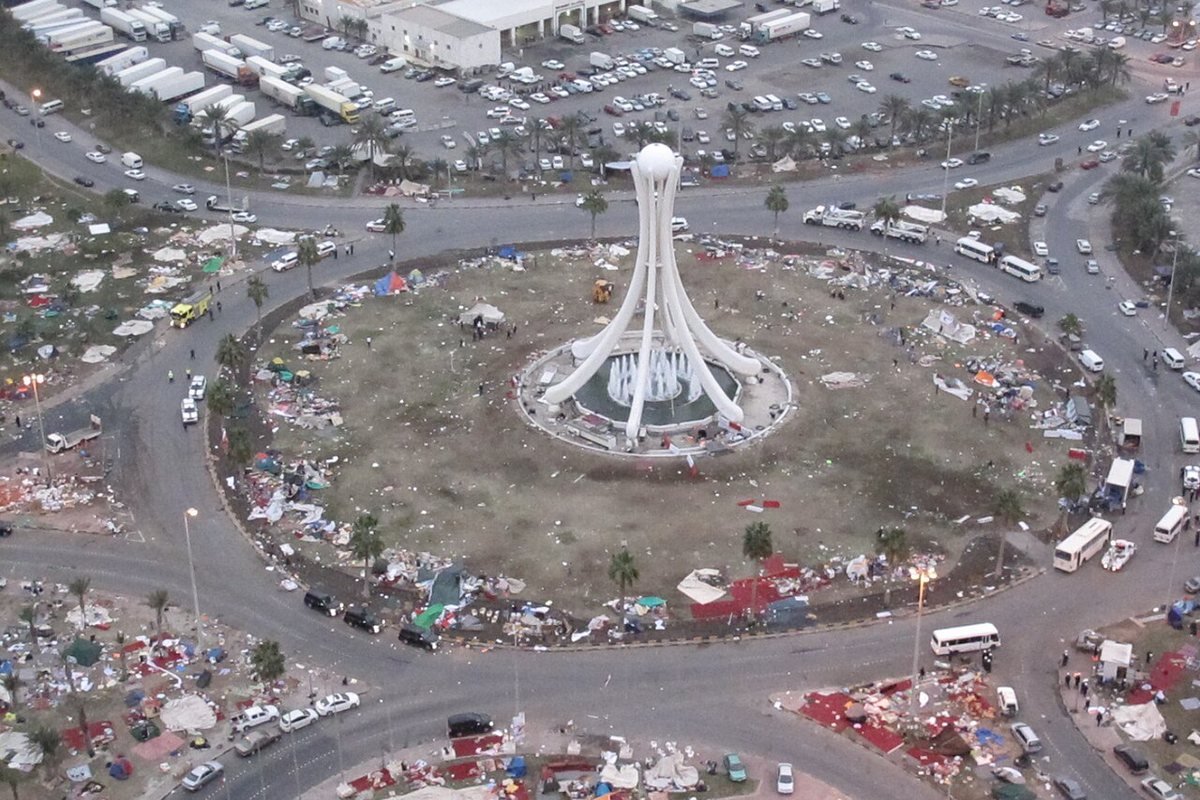
Bahrain crushed, Syria rises, Libya’s no-fly zone Crackdown
In Bahrain, Saudi and Emirati troops crossed the causeway at the government’s request; two days later the Pearl Roundabout camp was cleared and martial law imposed. In New York, the Security Council authorised force to protect Libyan civilians as Gaddafi’s troops approached Benghazi. In Syria, protests in Daraa over the arrest and abuse of teenagers accused of anti-regime graffiti were met with live fire.
The wave spreads: Libya, Bahrain, Yemen, Morocco Uprising
Inspired by Cairo, protests broke out across the region. In Libya, demonstrations in Benghazi turned into an armed uprising within days as parts of the army defected. Bahrainis occupied the Pearl Roundabout. Yemenis camped at ‘Change Square’ in Sanaa. Morocco’s February 20 Movement, Jordan’s street protests and Oman’s rallies in Sohar demanded reform rather than revolution.
2011
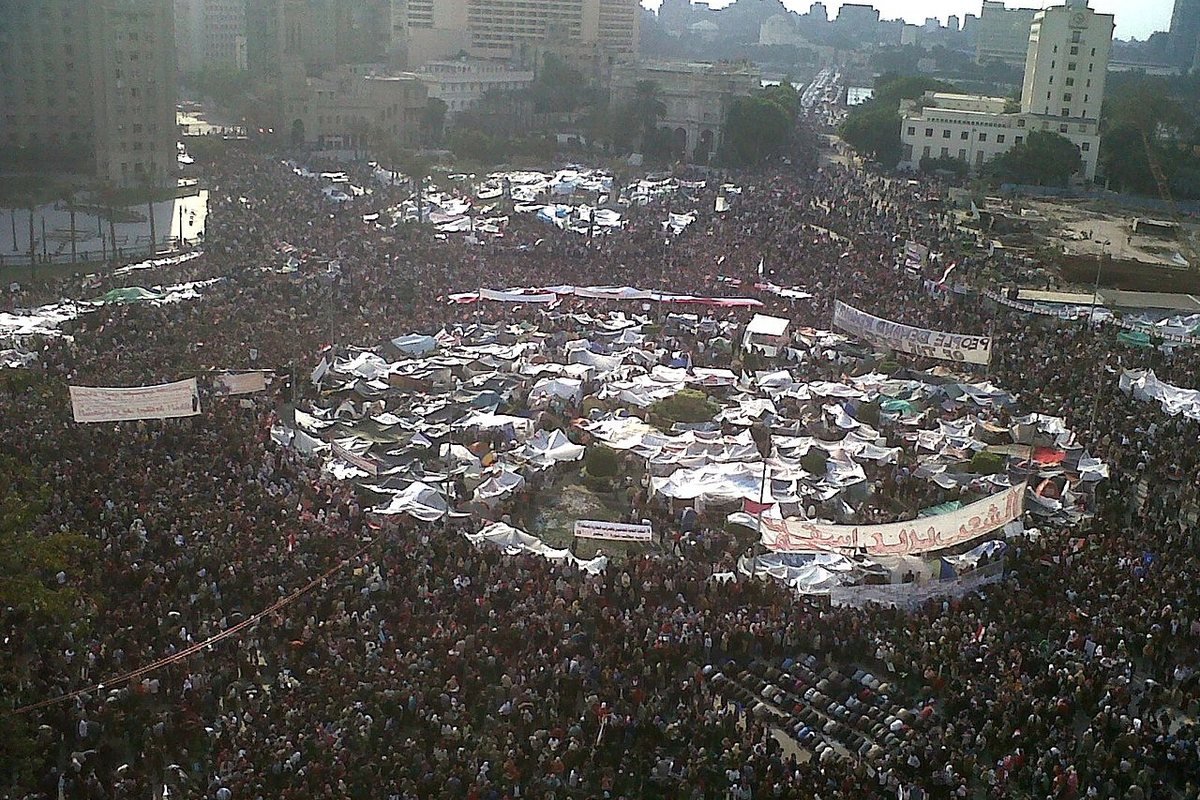
Mubarak resigns after 18 days Ruler falls
Egypt’s uprising began on National Police Day, 25 January, and quickly filled Tahrir Square. Internet shutdowns, the ‘Battle of the Camel’ on 2 February and hundreds of deaths failed to stop it. On 11 February Vice-President Omar Suleiman announced that Hosni Mubarak had stepped down and handed power to the Supreme Council of the Armed Forces.
2011
Ben Ali flees Tunisia Ruler falls
After four weeks of spreading protests and dozens of deaths, President Zine El Abidine Ben Ali, in power since 1987, fled to Jeddah. The army’s refusal to fire on crowds was decisive. His departure was the first time mass protest had removed an Arab leader in decades, and it was watched live across the region.
2010
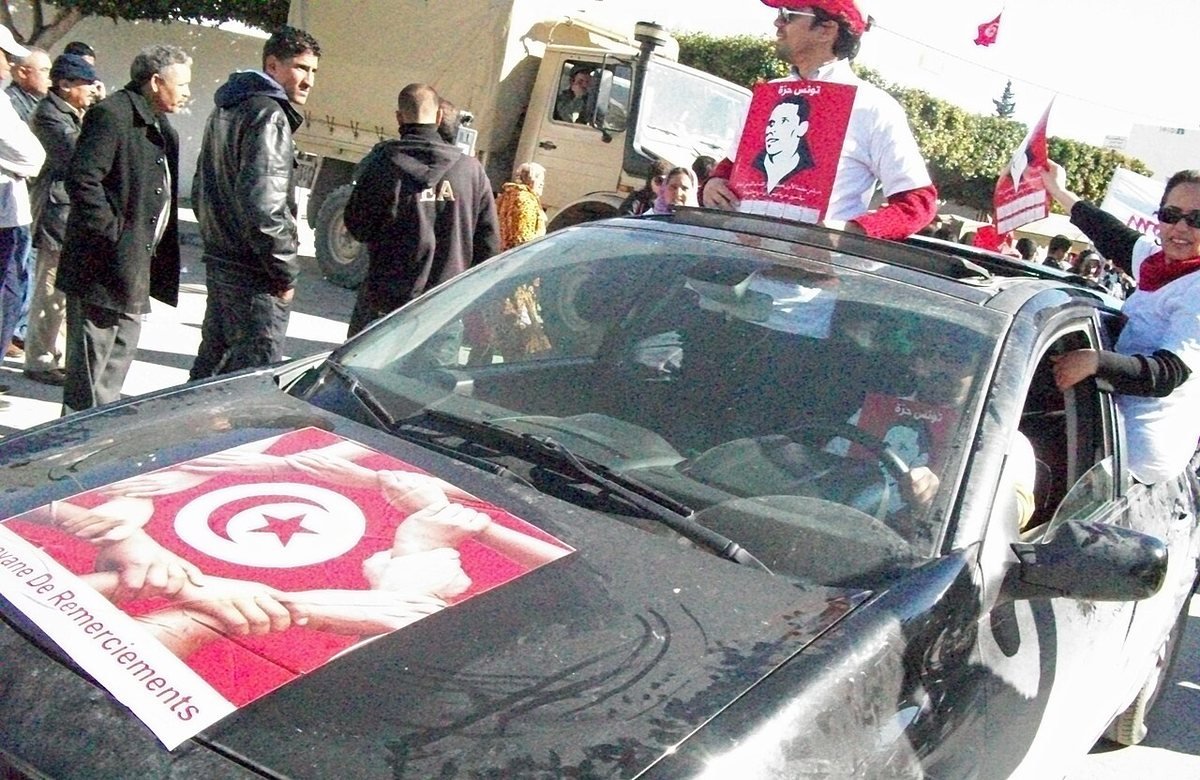
Mohamed Bouazizi’s act in Sidi Bouzid Uprising
After a municipal inspector confiscated his produce cart, Mohamed Bouazizi was refused a hearing at the governor’s office and set himself on fire outside it. Protests over police humiliation, unemployment and corruption spread from Sidi Bouzid across Tunisia, amplified by mobile-phone videos, Facebook and Al Jazeera.
How Much Did Each Country Change?
Same wave, very different results.
Pick a country. How much did the Arab Spring change it?
The meter runs from ‘system unchanged’ to ‘state collapse and war’. A fuller meter means more upheaval, not a better outcome. Status as of 13 October 2026.
Country by Country: Impact and Legacy
The turning point, what followed, and where each country stands in October 2026.
1. Tunisia: from democratic hope to authoritarian reversal
Turning point: Ben Ali fled on 14 January 2011. Tunisia then did what no other Arab Spring country managed: free elections in October 2011, a consensus constitution in January 2014 and peaceful changes of government. When political murders in 2013 brought it to the brink, the National Dialogue Quartet (the UGTT union, the employers’ federation, the human rights league and the bar association) brokered a deal and won the 2015 Nobel Peace Prize.
But democracy did not deliver jobs. Unemployment, regional inequality, terrorist attacks on tourists in 2015 and a fractious parliament eroded trust. Kais Saied, elected in 2019 as an outsider, seized wide powers on 25 July 2021 and rewrote the constitution in 2022.
Legacy: Tunisia proved negotiated democratic change was possible in the Arab world, and that it can be undone when institutions lose public trust. By 2026 its press freedom and civil liberties scores had fallen sharply and street protests had returned.
2. Egypt: a revolution that did not dislodge military power
Turning point: Mubarak resigned on 11 February 2011. The military council that replaced him oversaw elections that brought the Muslim Brotherhood’s Mohamed Morsi to power in June 2012, then removed him on 3 July 2013. Under Abdel Fattah el-Sisi, the government has restricted opposition, media and civil society; elections in November 2025 were so flawed that results in 47 districts were annulled. In September 2025 Sisi pardoned Alaa Abd el-Fattah, one of the best-known activists of 2011.
Legacy: replacing a president is not the same as changing a political system. The institutions that hold coercive power can outlast a mass uprising.
3. Libya: removing a regime without building a state
Turning point: Gaddafi was killed on 20 October 2011. His four decades of personal rule had left few institutions, and the militias that defeated him never disarmed. After disputed 2014 elections, Libya split between rival authorities in Tripoli and the east, the latter dominated by Khalifa Haftar. Haftar’s 2019–20 assault on Tripoli drew in Turkey, Russia’s Wagner group, the UAE and Egypt.
Legacy: oil wealth did not bring stability without a settled way of sharing it. In August 2026 negotiators agreed to rebuild the election commission and vote within 24 months, but the Tripoli-based High Council of State rejected the deal.
4. Yemen: a negotiated transition overwhelmed by war
Turning point: Saleh transferred power in February 2012. The Gulf deal changed the president but not the networks of power; Saleh allied with the Houthis, who took Sanaa in 2014, and a Saudi-led coalition intervened in 2015. A UN-brokered truce in 2022 reduced fighting, but in 2026 the anti-Houthi camp split violently in the south and the Houthis advanced on the Red Sea coast.
Legacy: a leadership transfer without a settlement among competing interests can leave a country open to far worse conflict. The original demands of 2011, accountability and jobs, were buried under hunger and displacement.
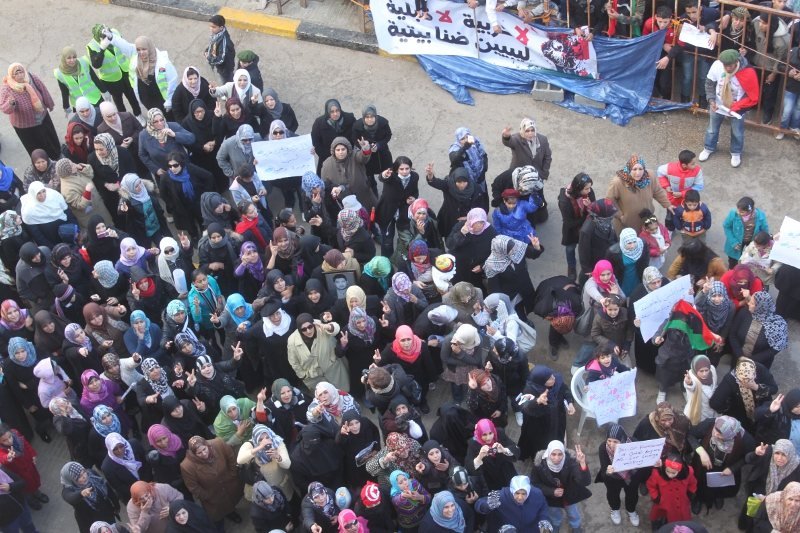
5. Syria: from peaceful protest to regime collapse
Turning point: protests began in March 2011; Assad’s government fell on 8 December 2024. The state’s violent response, the militarisation of the opposition, the rise of jihadist groups and intervention by Russia, Iran, Turkey and the US made Syria the Arab Spring’s greatest catastrophe, with hundreds of thousands killed and more than half the pre-war population displaced at the peak.
Legacy: the post-Assad transition will be judged on whether it delivers security, justice and inclusion for Alawites, Druze, Kurds, Christians and Sunni Arabs alike. Sanctions relief, the SDF deal and the OPCW’s first verified destruction of chemical munitions are progress; sectarian killings and Israeli occupation in the south are not.
6. Bahrain: a monarchy survives mass protest
Turning point: security forces cleared the Pearl Roundabout camp on 16 March 2011, two days after Gulf troops arrived. The government-commissioned Bahrain Independent Commission of Inquiry reported in November 2011 that detainees had been tortured. The main Shia opposition society, Al-Wefaq, was dissolved in 2016 and leaders such as Sheikh Ali Salman and Abdulhadi al-Khawaja remain in prison.
Legacy: regime survival can depend on powerful regional allies, but suppressing protest did not resolve the underlying questions of representation and trust.
7. Morocco: constitutional reform without a transfer of power
Turning point: after the February 20 Movement’s protests, King Mohammed VI announced reforms on 9 March 2011, and a new constitution passed by referendum on 1 July. The Islamist PJD won elections that November and led governments for a decade. The king kept decisive control over security, religion and foreign policy.
Legacy: a monarchy can absorb protest through controlled reform. The 2025 GenZ 212 protests showed the economic grievances of 2011 remain.
8. Jordan: selective concessions preserve the monarchy
Turning point: King Abdullah II dismissed Prime Minister Samir Rifai in February 2011 and approved constitutional amendments that year, including a constitutional court and an independent election commission. Protests over prices and corruption returned periodically, notably in 2018.
Legacy: changing governments can release pressure without redistributing power. In April 2025 Jordan banned the Muslim Brotherhood, whose political wing had won the most seats in the 2024 election.
9. Algeria: 2011 protests and the 2019 Hirak
Turning point: the Hirak forced Bouteflika to resign on 2 April 2019. In 2011, food-price riots led the government to cut prices and lift a state of emergency in force since 1992, and memories of the 1990s civil war kept protests small. The 2019 movement was much larger, but the army-backed system steered a December 2019 election won by Abdelmadjid Tebboune, re-elected in 2024.
Legacy: removing a leader is different from changing the institutions behind him, but mass mobilisation can return years later.
10. Oman: economic grievances bring limited concessions
Turning point: protests in Sohar and Muscat in February 2011 over jobs and corruption. Sultan Qaboos promised tens of thousands of public jobs, unemployment benefits and, in October 2011, more legislative and oversight powers for the elected Shura Council.
Legacy: spending and selective institutional change can absorb pressure while leaving the political structure intact.
11. Saudi Arabia: limited protest, selective reform, tighter control
Turning point: small protests, mostly in the Eastern Province, in 2011. The government banned demonstrations and announced spending packages worth about $130 billion on housing, jobs and wages.
Legacy: since 2017, under Crown Prince Mohammed bin Salman, the kingdom has let women drive (2018), opened entertainment and pursued Vision 2030, while jailing critics. Social modernisation can coexist with highly centralised power.
Why Did the Countries Follow Such Different Paths?
Who controlled the guns
Tunisia’s small army stayed out of politics; Egypt’s ran the transition; Syria’s and Bahrain’s stayed loyal to the ruling family; Libya’s and Yemen’s split.
Was there a state to inherit?
Tunisia had working ministries and unions; Gaddafi’s Libya had almost no national institutions outside his circle.
Could rivals share power?
Tunisia’s Islamists and secularists negotiated in 2013–14; in Egypt the same divide ended in a coup.
Outside help for one side
NATO in Libya, Gulf troops in Bahrain, Russia and Iran in Syria, and a Saudi-led coalition in Yemen tilted the balance.
Oil and spending
Gulf monarchies could buy calm with jobs and subsidies; poorer republics could not.
Sect, tribe and region
Sectarian, tribal and regional divides shaped how movements formed and how regimes responded. They did not make conflict inevitable.
The Rulers Who Fell
Decades to build, days to topple, or 14 years.
Pick a ruler. How long did they last, and how fast did they fall?
The bar shows years in power out of a 45-year scale; the text shows how long the protests took to remove them.
The Arab Spring’s Long-Term Legacy
Harder to build than to demand
Lasting democracy needs independent courts, trusted elections and civilian control of the security forces, and these can be dismantled.
Bread, jobs and dignity
Where new governments could not improve daily life, faith in democratic politics declined, as Tunisia showed.
Necessary, not sufficient
Unions, lawyers and journalists drove Tunisia’s success, but could not protect it once the presidency turned on them.
A regional and global shock
Syria’s war drove millions into Turkey, Lebanon, Jordan and Europe, reshaping politics far beyond the region.
Rulers learned too
Surviving governments tightened control of the internet, NGOs and protests to prevent a repeat of 2011.
The demands remain
Algeria and Sudan in 2019, Morocco in 2025 and Tunisia in 2026 show the 2011 demands keep returning.
Explore More Timelines
People Also Ask
Frequently Asked Questions
Conclusion: The Revolution That Changed the Region, but Not in One Direction
The Arab Spring shattered the assumption that the Arab world’s long-serving rulers were immune to mass pressure. Tunisia and Egypt showed how fast a ruler could fall; Libya and Yemen showed the danger of transitions without a political settlement; Bahrain showed the power of regional allies; and Syria showed what happens when a protest movement becomes a war. Assad’s fall in December 2024 added a new chapter, but it did not erase 13 years of devastation or guarantee a good outcome.
Fifteen years on, the lasting legacy is neither victory nor defeat. It is an unmet demand for dignity, accountable government and economic opportunity, and the hard lesson that toppling a leader is only the beginning of building a state that serves its people.
Related AiTimeline Stories
⚠️ Editorial Note
This timeline summarises complex, contested events. Dates come from contemporary reporting and institutional sources (UN Security Council, Nobel Committee, Human Rights Watch, CRS, CFR); 2025–2026 developments are current to 13 October 2026 and some, especially in Syria, Libya and Yemen, are still unfolding. Casualty and displacement figures are estimates from the UN and rights groups. The country outcomes are broad summaries; within each country views of these events differ sharply.
Sources & further reading
Every dated entry above was checked against these references. Last reviewed 13 October 2026.
- Council on Foreign Relations: The Arab Spring at Ten Years: What's the Legacy of the Uprisings?
- Al Jazeera: Timeline: How the Arab Spring unfolded (2021)
- Institute of Developing Economies: Trajectories and Outcomes of the Arab Spring (Tunisia, Egypt, Libya, Syria)
- Congressional Research Service: Tunisia: In Brief
- The Nobel Prize: Nobel Peace Prize 2015, National Dialogue Quartet
- UN News: Security Council on Syria's fragile transition (12 October 2026)
- Security Council Report: Libya, October 2026 Monthly Forecast
- TIMEP: Tunisia's Democratic Backsliding: Five Years Since Saied's Power Grab (July 2026)
- Al Jazeera: Tunisians mark fifth year of emergency rule with calls for Saied to go (26 July 2026)