Mandal Commission: Impact on India’s Reservation Policy
Mandal Commission explained: the 1980 report, 27% OBC order of 1990, 1992 Indra Sawhney verdict, creamy-layer rules and the Census 2027 caste count.
Latest Story
In August 1990 the Indian government announced a policy that would reshape debates about caste, government jobs and political representation for decades. It came from a report written ten years earlier. This timeline follows the Mandal Commission from its constitutional roots and its 1980 recommendation of 27% OBC reservation, through the 1990 protests and the 1992 Indra Sawhney judgment, to reservation in higher education, the creamy-layer rules and the caste count planned for Census 2027.
💡 Short Answer
The Mandal Commission, the Second Backward Classes Commission chaired by B. P. Mandal, was set up on 1 January 1979 and reported on 31 December 1980. It recommended 27% reservation for Other Backward Classes in central jobs. V. P. Singh’s government implemented it in August 1990, and the Supreme Court upheld it in Indra Sawhney on 16 November 1992, with the creamy layer excluded and a general 50% ceiling.
Mandal Commission: Key Questions
The Mandal Story in Ten Points
- Constitutional roots: Articles 16(4) and 340 allowed backward-class quotas and commissions from 1950.
- Second attempt: the 1955 Kalelkar report was shelved; Mandal was set up on 1 January 1979.
- The test: 11 social, educational and economic indicators, 22 points, a threshold of 11.
- The number: 27% for OBCs, keeping total reservation at 49.5%.
- Ten years waiting: reported in 1980, implemented in August 1990.
- Turmoil: student protests, self-immolations and a Supreme Court stay in 1990.
- The ruling: Indra Sawhney upheld the quota with a creamy layer and a 50% ceiling.
- Into education: 27% in central institutions from 2008 after the 93rd Amendment.
- New layers: NCBC made constitutional (2018), EWS quota (2019), state lists restored (2021).
- Still moving: salary-only creamy-layer test rejected in March 2026; caste to be counted in Census 2027.
Mandal Commission at a Glance
The essentials. Scroll the table sideways on a phone.
| Key question | Answer |
|---|---|
| What was it? | The Second Backward Classes Commission, under Article 340 |
| Set up | Announced 20 Dec 1978; constituted 1 Jan 1979 (Morarji Desai government) |
| Chairman | B. P. Mandal, former Chief Minister of Bihar |
| Report submitted | 31 Dec 1980; laid in Parliament 30 Apr 1982 |
| Castes identified | 3,743; OBCs estimated at 52% of the population |
| Core recommendation | 27% reservation for OBCs in central jobs and PSUs |
| Implementation announced | 7 Aug 1990 (V. P. Singh); office memorandum 13 Aug 1990 |
| Landmark judgment | Indra Sawhney v. Union of India, 16 Nov 1992 (6-3) |
| Key conditions | Creamy layer excluded; 50% ceiling; no OBC quota in promotions |
| Status in 2026 | 27% in central jobs and central institutions; creamy-layer limit ₹8 lakh; caste count in Census 2027 |
The Timeline, Newest First
From the 2026 caste-census notification back to the Constitution of 1950.
Census 2027 will count caste for the first time since 1931 2026
The Registrar General of India notified the 40 questions for the population-enumeration phase of Census 2027, including one on Scheduled Caste, Scheduled Tribe or caste. Enumerators will write down the caste a person declares in an open field rather than pick from a list. Snow-bound areas were scheduled for September 2026; the rest of India will be counted in February 2027.
OBC is not a separate tick box, so any OBC total will have to be built later by matching declared castes to central and state lists.
Supreme Court: salary alone cannot decide the creamy layer Court
Ruling on civil-service candidates who were denied OBC status because of their parents’ salaries, the Supreme Court held that creamy-layer status cannot be decided solely on income. A 2004 DoPT clarification could not override the 1993 memorandum, which excludes salary and farm income from the income test and looks at the parent’s post instead.
Counting salary for children of PSU and private-sector employees, but not for children of equivalent government employees, was hostile discrimination under Articles 14 and 16. The Centre was told to reconsider the candidates’ claims within six months.
Centre agrees to a caste count Policy
The Union government’s Cabinet Committee on Political Affairs decided that caste would be enumerated in the next census. Opposition parties had campaigned for a national caste census for years, citing Bihar’s 2023 survey; the decision set the stage for what commentators quickly called ‘Mandal 2.0’.
Sub-classification allowed within Scheduled Castes Court
A seven-judge bench held that states may sub-classify Scheduled Castes to give the most backward groups a fair share of the quota. The case was not about OBCs, but its reasoning, that a reserved category is not a uniform block, is the same idea behind the long-running plan to sub-categorise OBCs.
Bihar’s caste survey puts backward classes at 63% Policy
Bihar became the first state in decades to publish full caste figures. Its survey found Extremely Backward Classes at 36.01% and Backward Classes at 27.12% of the state’s population, together 63.13%. The state then raised its own reservation to 65%, a law the Patna High Court struck down in June 2024 for breaching the 50% ceiling.
Rohini Commission submits its report Policy
The commission on sub-categorisation of OBCs, chaired by retired Justice G. Rohini, gave its report to the President after almost six years. It was asked to check how evenly the 27% central quota was shared among more than 2,600 listed castes and to suggest sub-groups.
The government has not published the report. Data the commission examined in 2018 was widely reported to show that a small group of OBC castes had taken most central jobs and admissions, while hundreds of listed castes had received none.
EWS quota upheld, 3-2 Court
The Supreme Court upheld the 103rd Amendment, which created a 10% quota for Economically Weaker Sections. The majority held that reservation based on economic criteria alone does not violate the Constitution’s basic structure, and that the 50% ceiling from Indra Sawhney applies to caste-based reservation, not to this separate quota. The two dissenting judges objected to excluding poor SC, ST and OBC families.
States get back the power to make OBC lists Amendment
In the Maratha reservation case the Supreme Court struck down Maharashtra’s separate quota for Marathas, reaffirmed the 50% ceiling, and read the 2018 amendment as leaving only the Centre with power to identify backward classes. Parliament responded with the 105th Amendment, restoring the right of states and union territories to keep their own OBC lists.
A separate 10% quota for Economically Weaker Sections Amendment
Parliament passed the 103rd Amendment in January 2019, enabling up to 10% reservation for economically weaker people who are not covered by SC, ST or OBC quotas. It marked a new basis for reservation: income, not social backwardness.
NCBC becomes a constitutional body Amendment
The 102nd Amendment gave the National Commission for Backward Classes constitutional status, with powers similar to the SC and ST commissions to hear complaints and monitor safeguards. A new Article 342A said the President would notify the central list of socially and educationally backward classes.
₹8 lakh limit and an OBC sub-categorisation panel Policy
The government raised the creamy-layer income limit to ₹8 lakh a year from ₹6 lakh and, three weeks later, set up a commission to examine sub-categorisation of the 27% central OBC quota.
Supreme Court upholds OBC quota in central institutions Court
The Supreme Court upheld the 93rd Amendment and the 2006 Act giving 27% OBC reservation in central educational institutions, provided the creamy layer was excluded. Implementation began in the 2008-09 academic year and was phased in over three years as institutions expanded their intake.
2006
Reservation moves into higher education Amendment
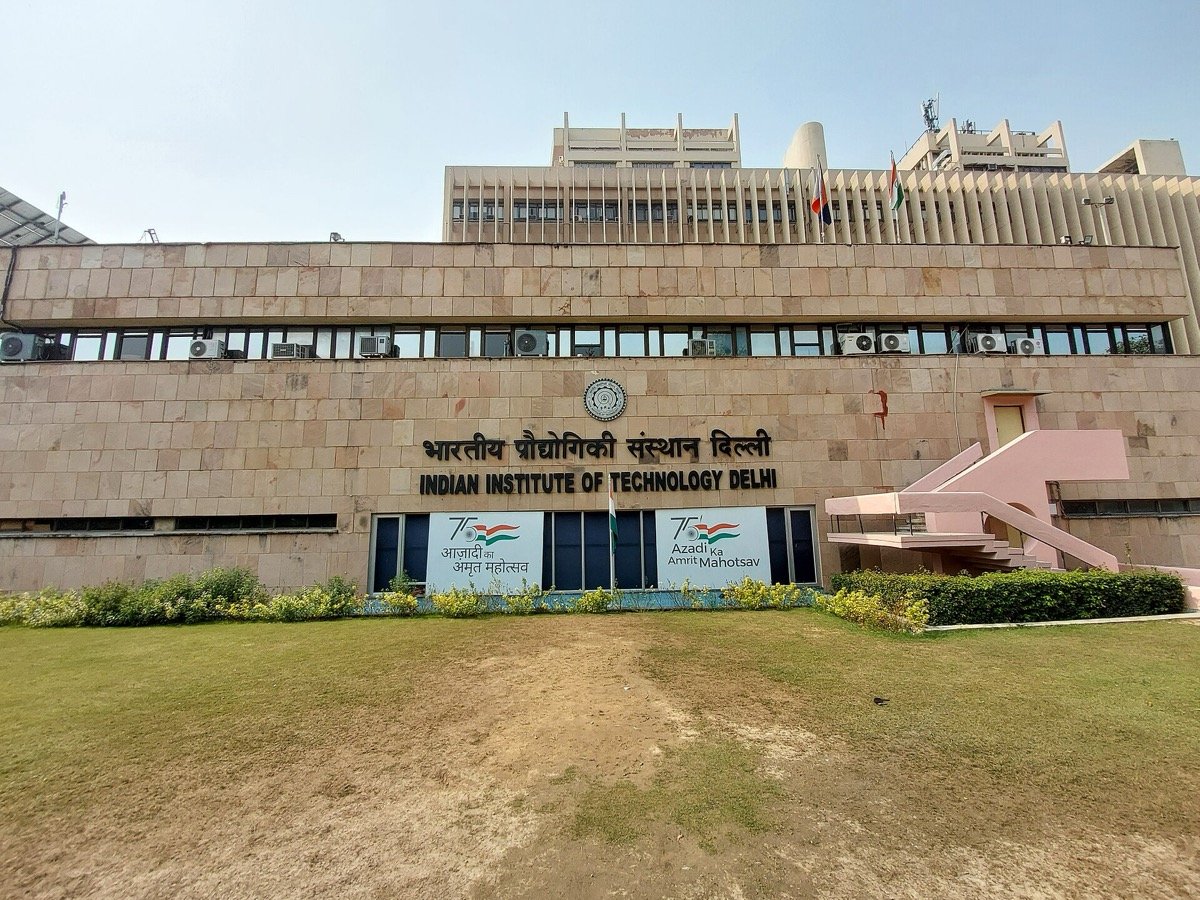
After a 2005 Supreme Court ruling restricted reservation in private, unaided colleges, Parliament inserted Article 15(5), allowing special provisions for backward classes, SCs and STs in admissions. In April 2006 Human Resource Development Minister Arjun Singh announced 27% OBC reservation in central institutions such as the IITs, IIMs and AIIMS.
Medical students and resident doctors protested and struck work in May 2006. Parliament passed the Central Educational Institutions (Reservation in Admission) Act, 2006, which received assent in January 2007.
Creamy-layer rules and a backward classes commission Policy
An expert committee headed by retired Justice R. N. Prasad recommended who should count as the creamy layer. On 8 September 1993 the Department of Personnel and Training issued the memorandum that still governs the test: children of people in constitutional posts, senior Group A and B officers, senior armed-forces officers, large landholders and families above an income limit, then ₹1 lakh a year, are excluded.
The National Commission for Backward Classes Act, 1993 set up a statutory body to advise on adding communities to the central list. With these in place, the Mandal quota finally took effect in central recruitment.
1992
Indra Sawhney: the Mandal judgment Court
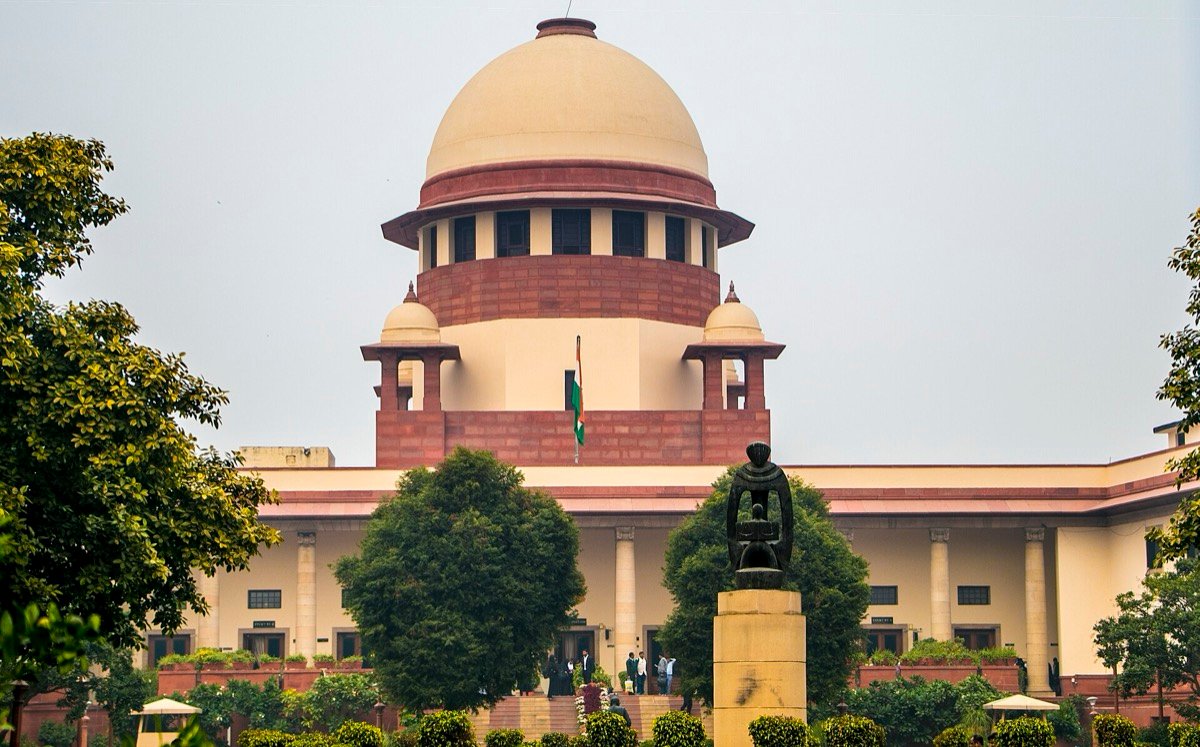
The Supreme Court upheld the 27% OBC reservation in central civil posts, with conditions that still shape Indian reservation law:
- Caste can be a basis: a caste can be a social class for identifying backwardness.
- Creamy layer: the advanced among OBCs must be excluded.
- 50% ceiling: reservations should ordinarily not exceed half of posts.
- No economic-only quota: the 10% quota of the 1991 memorandum was struck down.
- No reservation in promotions: allowed to continue for only five years.
- Permanent body: the Centre and states had to set up commissions to examine inclusion and exclusion.
1991
Narasimha Rao’s government amends the order Policy
The new Congress government of P. V. Narasimha Rao kept the 27% quota but added two changes: within it, poorer sections of OBCs would get preference, and a further 10% would be reserved for economically backward people not covered by any scheme.
1990
Protests, a court stay and a government’s fall Protest
Anti-reservation protests spread across north Indian campuses. On 19 September 1990 Delhi University student Rajiv Goswami set himself on fire in protest; he survived with severe burns, but dozens of young people attempted self-immolation in the weeks that followed and many died. Supporters of reservation organised counter-rallies.
On 1 October 1990 the Supreme Court stayed the memorandum pending a final decision. V. P. Singh’s government lost a confidence vote on 7 November 1990, after the BJP withdrew support in a separate dispute over L. K. Advani’s arrest during his Ayodhya rath yatra.
1990
V. P. Singh announces 27% for OBCs Policy
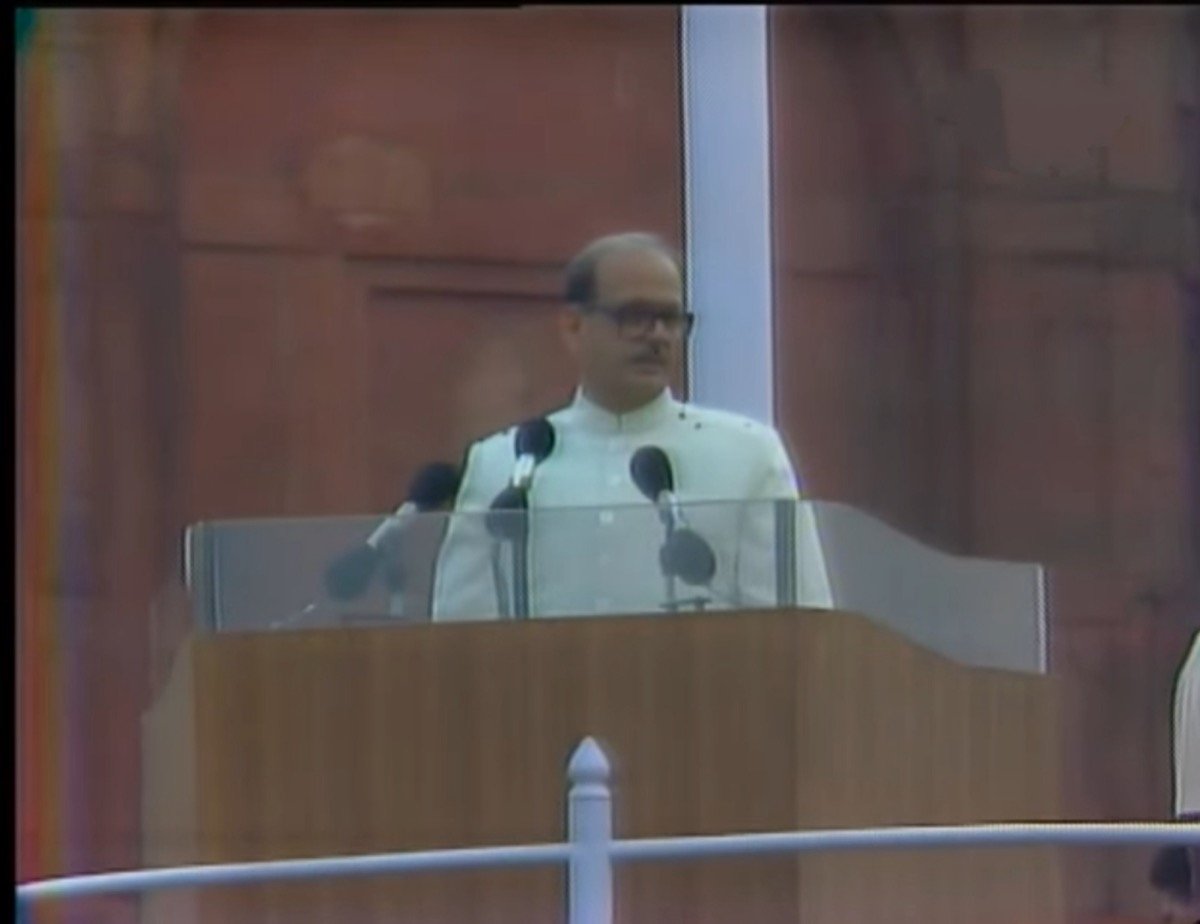
Prime Minister V. P. Singh told Parliament that his National Front government would implement the Mandal Commission’s recommendation of 27% reservation for socially and educationally backward classes in central government jobs. The office memorandum followed on 13 August 1990, using the castes common to both the Mandal list and the states’ lists in the first phase.
He returned to the theme of social justice in his Independence Day speech from the Red Fort on 15 August.
A decade on the shelf Policy
The report was laid before Parliament on 30 April 1982 during Indira Gandhi’s second term, but neither her government nor Rajiv Gandhi’s acted on the 27% recommendation. Many states, especially in the south, already ran backward-class quotas of their own.
1980
The Mandal report is submitted Policy
After surveys across the country, the commission submitted its report. Using 11 indicators of social, educational and economic backwardness, it identified 3,743 castes and communities as backward and estimated that OBCs made up about 52% of India’s population.
Because the Supreme Court had indicated that reservations should stay below 50%, it recommended 27%, not 52%, for OBCs in central services and public-sector undertakings. It also recommended reservation in promotions, in educational institutions and in bodies receiving government aid, plus land reform and other measures.
1979
The Second Backward Classes Commission is set up Policy
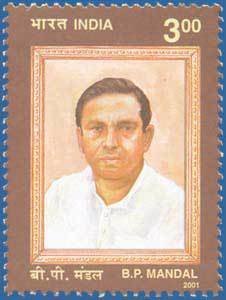
Prime Minister Morarji Desai’s Janata Party government, which had promised in its 1977 manifesto to reserve 25% to 33% of government jobs for backward classes, set up a five-member commission under former Bihar Chief Minister B. P. Mandal. It was asked to define criteria for socially and educationally backward classes and recommend steps for their advancement.
1955
The first Backward Classes Commission Policy
India’s first backward classes commission, chaired by Kaka Kalelkar, listed 2,399 backward castes and communities. Kalelkar himself distanced himself from using caste as the main test, and the government rejected the report, leaving the identification of OBCs to the states.
The constitutional foundation Policy
Article 16(4) allowed the state to reserve posts for any backward class not adequately represented in public services, and Article 340 allowed the President to appoint a commission to study the conditions of socially and educationally backward classes. Article 15(4), added by the First Amendment in 1951, extended special provisions to their advancement more widely.
How Mandal Measured Backwardness
Every caste was scored against the state average on 11 indicators.
| Group | Indicator (compared with the state average) | Points |
|---|---|---|
| Social | Castes considered socially backward by others | 3 |
| Social | Castes mainly dependent on manual labour | 3 |
| Social | Marriage below 17 at least 25% above the state average (women) or 10% (men) | 3 |
| Social | Women’s work participation at least 25% above the state average | 3 |
| Educational | Children aged 5-15 never in school at least 25% above average | 2 |
| Educational | Drop-out rate at least 25% above average | 2 |
| Educational | Matriculates at least 25% below average | 2 |
| Economic | Average family assets at least 25% below average | 1 |
| Economic | Families in kuccha houses at least 25% above average | 1 |
| Economic | Drinking water more than half a kilometre away for over 50% of households | 1 |
| Economic | Households with consumption loans at least 25% above average | 1 |
Score a community the way the Mandal Commission did
Tap the indicators that apply. Social indicators carry 3 points, educational 2 and economic 1. A score of 11 out of 22 or more counted as backward.
The weighting was deliberate. Social indicators counted three times as much as economic ones, because the commission saw caste-based social standing, not income alone, as the root of backwardness. That choice is exactly what critics questioned in 1990 and what the Supreme Court accepted in 1992, while adding the creamy layer to filter out families who had already moved ahead.
The 27% Arithmetic
Why the commission recommended 27%, not 52%.
The Creamy Layer, Year by Year
The income line that decides who among OBCs can use the quota.
Pick a year. Where was the income line?
Families with annual income above this limit (excluding salary and farm income) fall in the creamy layer and lose OBC reservation benefits.
How the Mandal Commission Changed India’s Reservation Policy
| Area | What changed |
|---|---|
| Central jobs | 27% OBC quota in direct recruitment to central posts and services |
| Higher education | 27% in IITs, IIMs, AIIMS and central universities from 2008-09 |
| Law | Creamy-layer exclusion, the 50% ceiling and no OBC quota in promotions |
| Institutions | NCBC set up in 1993, made constitutional in 2018 |
| Federalism | Separate central and state OBC lists, confirmed by the 105th Amendment |
| Politics | OBC representation became central to national and state elections |
| Data | Pressure for caste data led to Bihar’s 2023 survey and the Census 2027 caste count |
The effects have not been identical across states, institutions or communities. States run their own reservation laws, lists and percentages, and central OBC status does not automatically confer state OBC status. Tamil Nadu, for example, reserves 69% of state posts under a 1994 law placed in the Ninth Schedule, a different path from the central Mandal framework.
OBC vs EWS: Two Different Kinds of Quota
| Factor | OBC reservation | EWS reservation |
|---|---|---|
| Central share | 27% | 10% |
| Basis | Social and educational backwardness | Economic weakness |
| Origin | Mandal report (1980), order of 1990 | 103rd Amendment, January 2019 |
| Who is covered | Listed backward castes and communities, minus the creamy layer | People not in SC, ST or OBC groups, below income and asset limits |
| Income test | ₹8 lakh limit, excluding salary and farm income | ₹8 lakh limit on family income, plus asset limits |
| Upheld by | Indra Sawhney (1992); Ashoka Kumar Thakur (2008) | Janhit Abhiyan (2022), 3-2 |
The People and Institutions Involved
B. P. Mandal
Former Bihar Chief Minister and MP who led the Second Backward Classes Commission from 1979 to 1980. He died in 1982.
Morarji Desai
Janata Party Prime Minister whose government announced the commission in December 1978.
V. P. Singh
National Front Prime Minister who announced 27% OBC reservation on 7 August 1990.
P. V. Narasimha Rao
Prime Minister whose government added preference for poorer OBCs and a 10% economic quota in September 1991.
Indra Sawhney
Delhi lawyer whose writ petition against the 1990 order gave the landmark case its name.
L. R. Naik
The commission’s only Dalit member, who argued for separate shares for the most depressed backward classes.
The Main Debates Surrounding Mandal
Social justice
Supporters argue that caste-based exclusion limited access to education, jobs and authority, and that reservation corrects under-representation in public institutions.
Merit and equal opportunity
Opponents raised concerns about open competition and how eligible communities are defined. The debate turns on unequal starting points and the state’s role in widening access.
Caste or income?
Mandal centred caste-based social backwardness; critics wanted economic tests. The law now holds both, in separate quotas: OBC and EWS.
Who benefits within OBCs?
The creamy layer filters the advanced; sub-categorisation, studied by the Rohini Commission, would split the 27% so dominant OBC groups do not take most of it.
How many OBCs are there?
The 52% estimate rests on 1931 data. Census 2027’s caste count will give the first national answer in almost a century.
The 50% ceiling
States from Maharashtra to Bihar have tried to go above it; courts have mostly struck such laws down, while the EWS ruling treated that quota as outside the ceiling.
Common Misconceptions
“Every OBC gets the quota”
No. The creamy layer is excluded, and eligibility depends on the list and rules for that specific job or institution.
“Mandal gave OBCs 52%”
52% was the population estimate. The recommendation was 27%, to stay under the 50% limit.
“The 1990 order covered colleges”
It covered only central jobs. Education came through the 2005 amendment and the 2006 Act.
“OBC lists are the same everywhere”
Central and state lists differ, and the 105th Amendment confirmed states can keep their own.
Explore More Timelines
People Also Ask
Frequently Asked Questions
Conclusion: A Report That Reshaped Public Policy
The Mandal Commission began as a constitutional inquiry into the conditions of socially and educationally backward classes. Its 1980 report became a turning point when the Union government announced 27% OBC reservation in 1990. The protests and litigation that followed produced the Indra Sawhney judgment of 1992, which upheld the quota while setting the creamy layer and the 50% ceiling. Later changes carried reservation into central educational institutions, added a separate EWS quota and reworked how backward classes are identified at the Centre and in the states.
In 2026 the framework is still moving: the Supreme Court has narrowed how the creamy layer is calculated, and Census 2027 will count caste for the first time since 1931. Mandal’s legacy is an unfinished argument about how a constitutional democracy can address historical disadvantage while keeping the rules for public opportunity fair and workable.
Related AiTimeline Stories
⚠️ Editorial Note
Dates and figures come from the Supreme Court’s judgments in Indra Sawhney (1992), Ashoka Kumar Thakur (2008) and Rohith Nathan (2026); Press Information Bureau releases of the Ministries of Social Justice and Personnel; the Ministry of Social Justice and Empowerment’s annual report; and reporting on the August 2026 Census notification. Population shares for OBCs are estimates; no national caste count has been published since 1931. This article is for general information and is not legal advice on eligibility, which depends on the list and rules in force for each job or institution.
Sources & further reading
Every dated entry above was checked against these references. Last reviewed 13 October 2026.
- Supreme Court of India: Indra Sawhney v. Union of India, judgment of 16 November 1992 (Indian Kanoon)
- Press Information Bureau, Ministry of Social Justice and Empowerment: Reservation policy (15 March 2022)
- Press Information Bureau: Implementation of OBC reservation in central educational institutions after the Supreme Court's 10 April 2008 ruling
- Press Information Bureau: Creamy-layer criteria for OBCs, DoPT Office Memorandum of 8 September 1993 and later clarifications
- Ministry of Social Justice and Empowerment: Annual Report 2010-11 (backward classes chapter)
- SCC Online: Creamy layer status of OBC candidates cannot be decided on parental salary alone, Union of India v. Rohith Nathan (11 March 2026)
- The Tribune: Caste among 40 Census queries notified by government (August 2026)
- Business Standard: Rohini Commission decoded, understanding sub-categorisation of OBCs