Ceuta’s Dual Identity: Sebta, Spain, and Morocco’s Territorial Claim
Ceuta, or Sebta in Arabic, is a Spanish city on the African coast claimed by Morocco. The full record from 709 and the 1415 Portuguese conquest to the
Latest Story
Ceuta in Spanish, Sebta in Arabic: a city of about 84,000 people on the African side of the Strait of Gibraltar, governed by Spain for more than 350 years and claimed by Morocco since its independence in 1956. This is the full record of the Ceuta Spain Morocco dispute, from the Roman town of Septem and seven centuries of Muslim rule to the Portuguese conquest of 1415, the July 2026 border crisis and King Felipe VI’s visit on 13 October 2026, with each side’s argument set out and checked.
💡 Short Answer
Ceuta is a Spanish autonomous city on the North African coast; Sebta is its Arabic name. Portugal took it in 1415, it stayed with Spain when Portugal broke away in 1640, and the 1668 Treaty of Lisbon confirmed that. Morocco has claimed it since 1956 as a colonial remnant. Spain refuses to negotiate, the UN has never listed it as a colony, and no transfer has ever occurred.
Ceuta vs Sebta: Key Questions
The Ceuta Dispute in Ten Points
- Two names, one root: Ceuta and Sebta both come from the Latin Septem.
- Muslim era: about seven centuries, from c.709–711 to 1415, under several dynasties.
- Portugal: captured the city on 21 August 1415.
- Spain: Ceuta stayed with the Spanish crown in 1640; the 1668 Treaty of Lisbon confirmed it.
- Border: set broadly by the Treaty of Wad-Ras after the 1859–60 war.
- Not the protectorate: Ceuta was Spanish before 1912, so it did not pass to Morocco in 1956.
- The claim: Morocco has pressed it since 1956, including at the UN in 1975; the UN never listed Ceuta as a colony.
- Status: an autonomous city since 1995, in the EU but outside its customs union.
- 2026 crisis: tens of thousands crossed on 30–31 July; Morocco then proposed talks, and Spain refused.
- Now: King Felipe VI’s first visit as king, 13 October 2026.
Why Is Ceuta Called Sebta?
Same city, same Latin root.
The difference between Ceuta and Sebta starts with language, not politics. The Roman town was called Septem, short for Septem Fratres, the “Seven Brothers”, a line of hills along the coast. Arabic speakers turned Septem into Sabta, pronounced Sebta in Moroccan Arabic; Portuguese and Spanish produced Ceuta.
In Ceuta itself many Muslim residents use Sebta in everyday Darija while holding Spanish passports. In Moroccan official language the name often comes with the phrase “occupied Sebta”, which is where it becomes political. So the name alone does not tell you someone’s view on sovereignty; the words around it usually do.
The King goes to Ceuta and Melilla Watch
A day after presiding over the 12 October national day parade, King Felipe VI and Queen Letizia are due in Ceuta on 13 October 2026 and in Melilla on 14 October. In Ceuta the agenda starts at noon at the Palace of the Assembly, where the city gives the King its Golden Key, and ends with a meeting with representatives of Ceuta society at which he is expected to speak. Spanish media report it is the first time a head of state has spent the night in Ceuta since the return of democracy.
Why it matters: it is Felipe’s first visit to either city since he became king in June 2014, and it comes two months after the migration crisis he called “unacceptable”. The trip was agreed between the government and the Royal Household; Prime Minister Pedro Sánchez is not travelling, and a minister accompanies the royals as protocol requires. The last royal visit, in 2007, led Morocco to recall its ambassador.
Rabat asks for talks; Madrid says never Claim
In the first public Moroccan comment on the cities after the July crossings, Justice Minister Abdellatif Ouahbi said in television interviews, including on the public channel 2M, that the status of Ceuta and Melilla should be part of the dialogue between Spain and Morocco, and proposed a dedicated “dialogue commission”. He described Morocco’s claim in terms of historical and geographical rights, and said Rabat always raises the issue in negotiations.
Spain’s answer: the Foreign Ministry said Spain’s territorial integrity “has not been, and will never be, discussed with anyone”. Defence Minister Margarita Robles told reporters the cities were “not just Spanish; they’re super-Spanish and cannot be touched”. On 22 August the ministry said it had conveyed its “categorical rejection” through diplomatic channels, stressing that both cities are also EU territory.
The largest crossing in Ceuta’s history Crisis
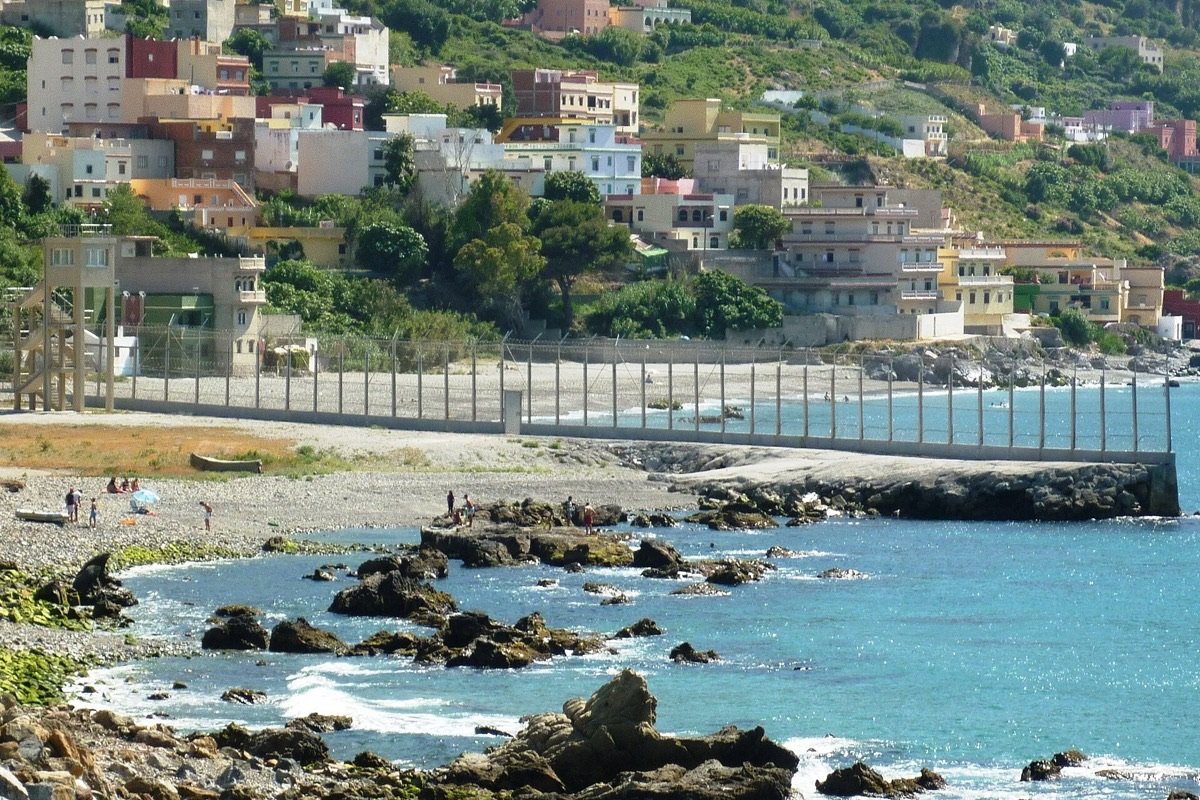
After weeks of social media posts in Morocco falsely claiming the border would be open, crowds gathered on the morning of 30 July 2026 and began entering Ceuta, mostly by swimming around the Tarajal and Benzú breakwaters, some with inflatable rings. Spain’s Interior Ministry put the number at about 49,000 in less than 24 hours; city president Juan Jesús Vivas said 60,000, and later reports gave higher totals. Most were young Moroccan men. Al Jazeera reported at least 72 deaths by 2 August, and later counts rose further.
Aftermath: Moroccan forces closed access routes on 31 July, and the Spanish government said around 70,000 people had gone back by 3 August. Pedro Sánchez called the entry an attack on Spain’s territorial integrity, EU interior ministers met in emergency session on 4 August, and Italy temporarily suspended Schengen arrangements with Spain. Several thousand people, including hundreds of unaccompanied minors, remained in the city into September. A Spanish Supreme Court ruling in early July, that summary “hot returns” cannot be applied to people arriving by sea, was widely cited as one factor.
A customs post opens at Tarajal Deal
Ceuta had never had a commercial customs office on its land border with Morocco. Goods crossed instead through the “atypical trade”, carried on the backs of porters, until Morocco shut it down in October 2019. After a failed first attempt on 8 January, the first lorry crossed through the new Tarajal commercial customs on 16 January 2025.
Why it matters: Spain treats the customs post as a sign of normal relations; critics in Ceuta called it an “agreement of minimums” because traffic has stayed tightly limited. A customs border also implies a recognised frontier, which is why it was watched closely in both capitals.
2022
The 2021 crisis and the 2022 reset Crisis
In April 2021 Spain admitted Brahim Ghali, leader of the Polisario Front that seeks independence for Western Sahara, to a hospital in Logroño. On 17 and 18 May 2021 Moroccan guards eased border controls and roughly 8,000 to 10,000 people, many of them teenagers, entered Ceuta. Spain sent the army to the beach, and the European Parliament later rejected Morocco’s use of minors to pressure Spain.
The reset: in March 2022 Sánchez wrote to King Mohammed VI calling Morocco’s autonomy plan for Western Sahara “the most serious, realistic and credible basis” for a settlement. A joint declaration on 7 April 2022 followed, and the land borders at Ceuta and Melilla, closed since March 2020, reopened on 17 May 2022. The declaration did not mention sovereignty over the cities.
Juan Carlos visits; Morocco recalls its ambassador Claim
King Juan Carlos I and Queen Sofía visited Ceuta on 5 November 2007 and Melilla the next day, the first visit by a reigning Spanish monarch to Ceuta since 1927. Morocco called the trip regrettable, recalled its ambassador from Madrid and saw protests at the border. The ambassador returned in January 2008.
Why it matters: it is the precedent everyone is watching in October 2026. It showed that a royal visit, while legally changing nothing, is read in Rabat as an assertion of sovereignty.
The Perejil Island stand-off Crisis
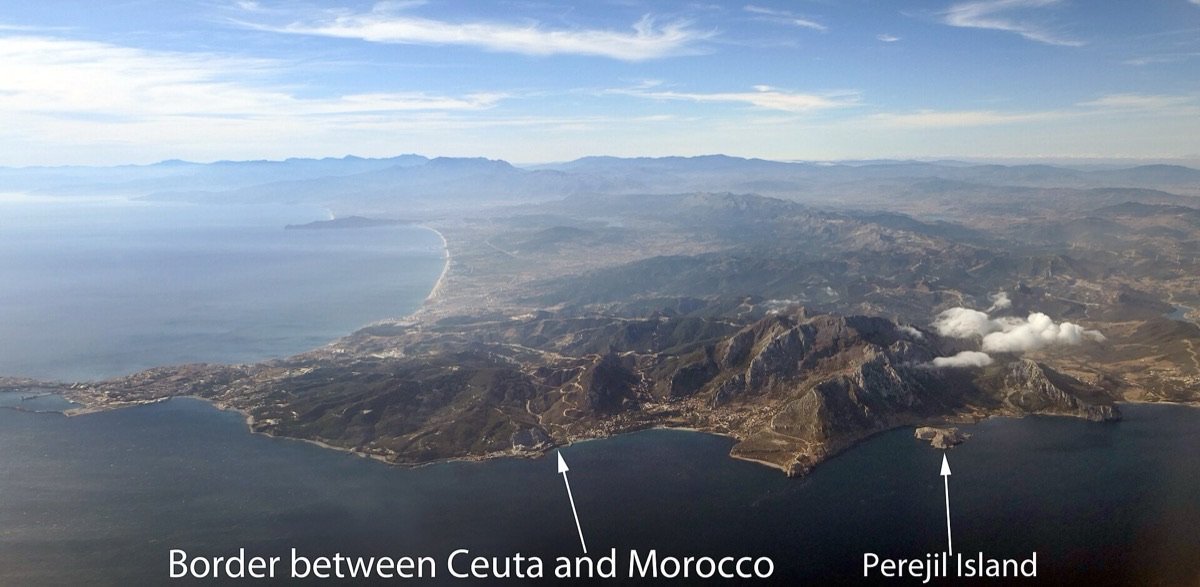
On 11 July 2002 a small group of Moroccan gendarmes set up camp on Perejil, an uninhabited rock a few hundred metres off the Moroccan coast west of Ceuta. Spain, which claims it, landed special forces on 17 July and removed them without a shot fired. US Secretary of State Colin Powell brokered a deal to return the islet to its previous, empty status.
Why it matters: it was the closest the two countries have come to armed confrontation over territory in modern times, and it showed how small symbols can escalate quickly.
Ceuta becomes an autonomous city Law
Spain’s 1978 constitution allowed Ceuta and Melilla to become autonomous communities, but they were given a tailored status instead. Organic Law 1/1995 of 13 March created the Statute of Autonomy of Ceuta. Its first article says Ceuta, “as an integral part of the Spanish nation and within its indissoluble unity”, enjoys autonomy to manage its own interests. A 25-member Assembly elects a president who is also the mayor; Juan Jesús Vivas has held the post since 2001.
Why it matters: before 1995 Ceuta had been run as a municipality attached to the province of Cádiz. The statute gave it its own institutions, while stopping short of the full powers of Spain’s regions, such as a legislature that can pass laws.
1991
Inside the EU, outside its customs union Law
When Spain joined the European Economic Community on 1 January 1986, Ceuta and Melilla became EU territory but were left outside the customs union and the common VAT system, keeping their own low-tax regime. When Spain signed up to Schengen in 1991, it negotiated special rules: residents of the neighbouring Moroccan provinces could make visa-free day visits, and passengers from the cities to the mainland would be checked.
Why it matters: it makes Ceuta the EU’s land border with Africa, which is why migration pressure there quickly becomes a European issue.
Morocco takes the claim to the UN Claim
On 30 January 1975 Morocco asked the UN Special Committee on Decolonisation to put Ceuta, Melilla and Spain’s small islands on its agenda as “the last vestiges of colonial occupation” on Africa’s Mediterranean coast, comparing them to Gibraltar. In February 1975 the Organisation of African Unity backed the claim.
Outcome: the UN never adopted that view, and Ceuta and Melilla are not on its list of Non-Self-Governing Territories. Morocco’s attention soon shifted to Western Sahara and the Green March of November 1975.
Morocco becomes independent; the claim begins Claim
Morocco regained its independence from France on 2 March 1956, and Spain recognised the end of its northern protectorate on 7 April. Spain later handed over Tarfaya (1958) and Ifni (1969) and left Western Sahara in 1976, but it kept Ceuta, Melilla and the small islands, which had never been part of the protectorate.
Why it matters: from independence, Moroccan governments have described the cities as unfinished business. Spain’s position is that territory that was Spanish before the protectorate was never Morocco’s to recover.
1936
A Spanish city next to a Spanish protectorate History
Under the Franco-Spanish treaty of 27 November 1912, Spain took a protectorate over a strip of northern Morocco, with its capital at Tetouan. Ceuta was not part of it: it remained an ordinary Spanish municipality attached to Cádiz. In July 1936 Ceuta was one of the first places taken by the military rising led by Francisco Franco, and troops crossed from there to the mainland at the start of the Civil War.
1860
War, and the Treaty of Wad-Ras Treaty
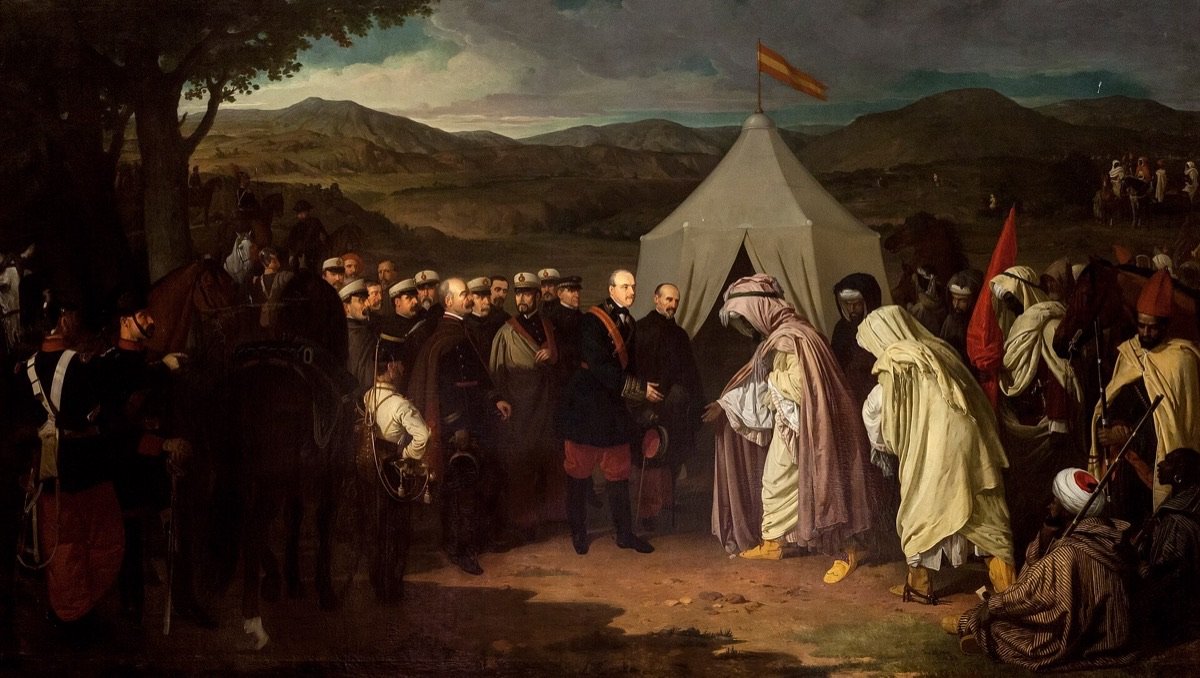
Attacks on Spanish fortification works outside Ceuta led Prime Minister Leopoldo O’Donnell to declare war on Morocco on 22 October 1859. Spanish troops took Tetouan in February 1860 and won at Wad-Ras in March. The Treaty of Wad-Ras, signed on 26 April 1860, enlarged Ceuta’s land perimeter to roughly today’s border, imposed a heavy indemnity and gave Spain the enclave that became Sidi Ifni.
Why it matters: Spain cites Wad-Ras and the agreements that followed as Moroccan recognition of Spanish Ceuta. Moroccan historians tend to see it as a treaty imposed after defeat.
1791
The longest siege, and another History
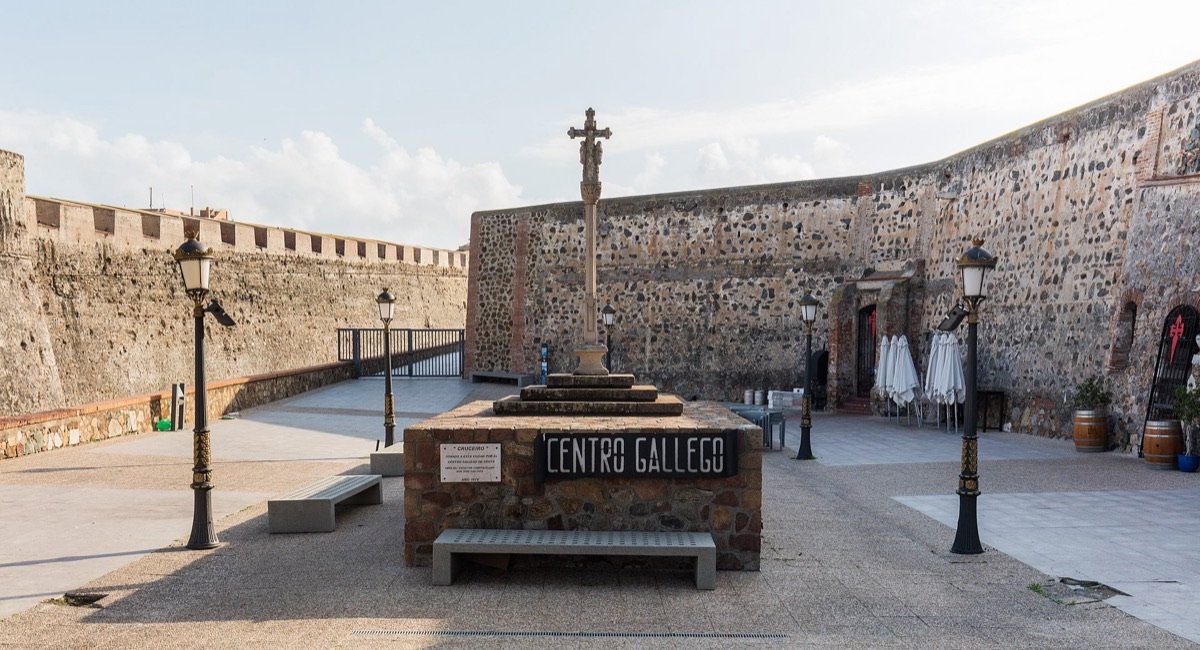
Sultan Moulay Ismail, who had already taken Spanish-held Larache and Mamora, besieged Ceuta from 1694 to 1727, on and off for 33 years, often called the longest siege in history. It failed, as did a second siege under Sultan Moulay Yazid in 1790–1791. The Royal Walls, begun by the Portuguese, were strengthened during these years and still cut across the peninsula.
1668
From Portuguese to Spanish Treaty
When Philip II of Spain inherited the Portuguese crown in 1580, Ceuta, still a Portuguese possession, came under the same Habsburg king. When Portugal rose against Madrid in 1640, Ceuta was the one Portuguese overseas territory that stayed loyal to Philip IV. The Treaty of Lisbon of 13 February 1668, which recognised Portugal’s independence, left Ceuta with Spain.
Why it matters: this is the core of Spain’s historical case. Ceuta has been Spanish for more than 350 years without interruption, longer than many parts of present-day Spain have been.
1415
Portugal captures Ceuta History
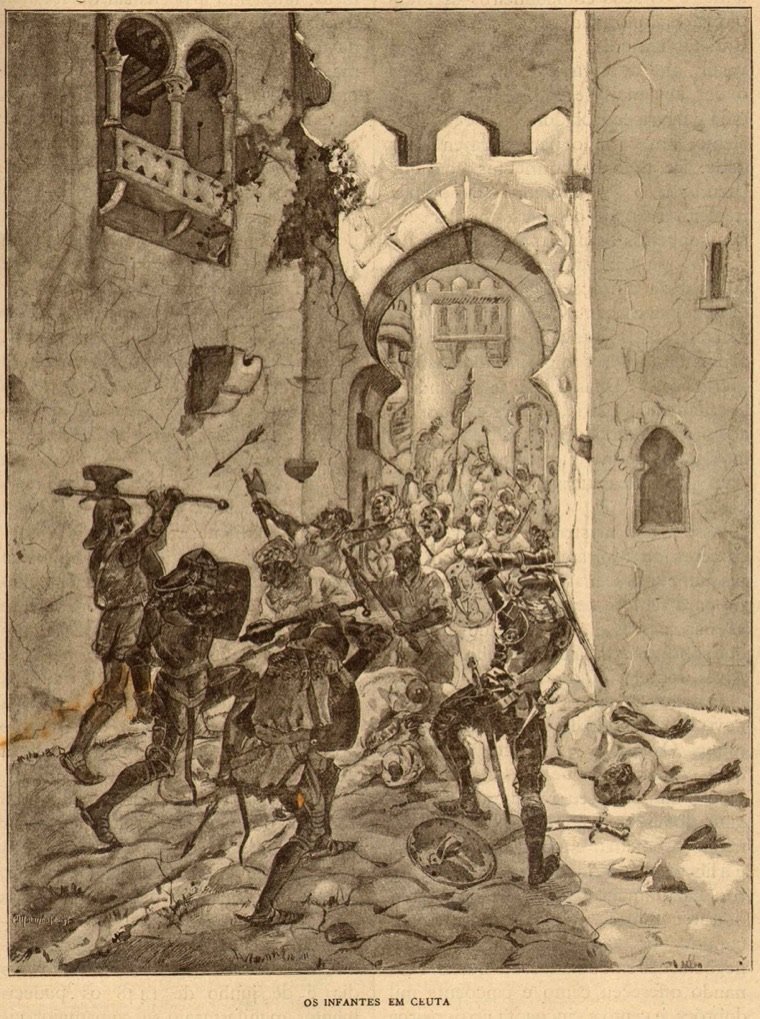
A Portuguese fleet under King John I, with his sons, including the future Henry the Navigator, attacked Ceuta on 21 August 1415 and took it within a day. Pedro de Meneses became the first governor and held off a Marinid counter-attack in 1419.
Why it matters: the conquest is often seen as the start of European overseas expansion. It ended about seven centuries of Muslim rule in the city.
1415
Seven centuries of Muslim rule History
Ceuta came under Muslim rule during the conquest of North Africa around 709–711; legend links it to Count Julian, its Christian governor, who is said to have helped the invasion of Spain. It was destroyed in the Berber revolt of 740 and refounded, taken by the Umayyads of Córdoba in 931, then ruled by the Almoravids and Almohads. After 1249 local Azafid rulers governed it, and the Marinids of Fez and, briefly, Granada’s Nasrids contested it in the fourteenth century.
Why it matters: this long Islamic and Maghrebi history underpins Morocco’s argument that Sebta belongs to it. Ceuta was also a centre of learning: the geographer al-Idrisi was born there around 1100.
Septem: the Roman and Byzantine town History
Phoenician traders used the La Almina peninsula. Under Rome the town was called Septem, after the seven hills known as Septem Fratres, and belonged to the province of Mauretania Tingitana. After the Vandal invasion, the Byzantine general Belisarius made it the westernmost outpost of the Eastern Roman Empire in the 530s.
Pick a question
See Spain’s position, Morocco’s position and what the record shows, side by side.
Two Thousand Years of Rulers
Each side stresses a different part of this ribbon.
Pick an era
Two thousand years of rulers, in nine steps.
Why Does Morocco Claim Ceuta?
Geography. Ceuta sits on the African mainland, and its only land border is with Morocco. For Rabat, a European city on African soil is an anomaly that only colonial history explains. Spain answers that location does not decide sovereignty, pointing to many islands and enclaves around the world.
History. For about seven centuries before 1415, Sebta was part of the Muslim world of the Maghreb and al-Andalus, ruled from Córdoba, Marrakesh and Fez at different times. Morocco reads that as its own history. Spain notes that the modern Moroccan state, under the Alaouite dynasty from the 1660s, came later than Spanish Ceuta.
Decolonisation. Morocco argues that independence in 1956 was incomplete while Spain kept Ceuta, Melilla and the small islands. It made that case to the UN in 1975 and has repeated it since, often at moments of tension, as in August 2026. Spain says Ceuta is not a colony but self-governing Spanish territory, and the UN has never listed it.
Morocco’s claim is real and long-standing, but it has never led to a transfer of sovereignty, and Rabat usually keeps it in the background of a relationship it values for trade, security and migration control.
Spain’s Position: Why Madrid Says Ceuta Is Spanish
Continuity. Ceuta has been governed from Lisbon or Madrid since 1415, and from Madrid alone since 1640, longer than many regions of today’s Spain have been Spanish.
Treaties. The 1668 Treaty of Lisbon left Ceuta with Spain, and the 1860 Treaty of Wad-Ras and later agreements with Morocco dealt with its borders as Spanish territory.
Law and democracy. Organic Law 1/1995 makes Ceuta an autonomous city with its own elected Assembly. Its residents vote in Spanish and European elections and are represented in the Cortes. Read the official text of the statute.
Diplomacy. Every Spanish government has refused to negotiate sovereignty. The 2022 reconciliation with Morocco, which shifted Spain’s position on Western Sahara, did not mention the cities, and in August 2026 Madrid restated that its territorial integrity “will never be discussed with anyone”.
Spain’s Case vs Morocco’s Case
Spain vs Morocco: The Arguments Side by Side
| Argument | Spain says | Morocco says |
|---|---|---|
| History | Spanish since 1640, before the modern Moroccan state | Part of the Muslim Maghreb for seven centuries |
| Treaties | 1668 Lisbon, 1860 Wad-Ras and later accords | Imposed or not binding on sovereignty |
| Geography | Location does not decide sovereignty | A European enclave on African soil |
| 1956 | Never part of the protectorate | Independence left decolonisation unfinished |
| UN | Not on the Non-Self-Governing list | Raised with the decolonisation committee, 1975 |
| Residents | Spanish citizens with elected institutions | Share Moroccan family and cultural ties |
| Way forward | No negotiation, ever | Dialogue, e.g. a joint commission |
Ceuta and Melilla: Similar Disputes, Different Histories
Often mentioned together, but they reached Spain by different routes.
| Feature | Ceuta | Melilla |
|---|---|---|
| Arabic name | Sebta / Sabta | Mliliya |
| Coast | Strait of Gibraltar | Eastern Mediterranean coast, near Nador |
| Became European | Portuguese conquest, 21 Aug 1415 | Taken for the Duke of Medina Sidonia, 17 Sep 1497 |
| Route to Spain | Stayed with Spain in 1640; Treaty of Lisbon 1668 | Castilian from the start; Crown control 1556 |
| Spanish without interruption since | 1640 (formally 1668) | 1497 |
| Status today | Autonomous city, Organic Law 1/1995 | Autonomous city, Organic Law 2/1995 |
| Population | About 84,000 (INE, 2026) | About 85,000 |
| Morocco’s position | Claims it as Sebta | Claims it as Mliliya |
| Royal visit, 2026 | 13 October | 14 October |
Who Lives in Ceuta?
About 84,000 people live in Ceuta, packed into 18.5 square kilometres. Spanish is the official language, and many Muslim residents also speak Darija. The city has large Christian and Muslim communities, a long-established Jewish community and a Hindu community descended largely from Sindhi traders. Since 2010 Eid al-Adha has been a local public holiday.
Three questions need to be kept apart. Who governs the city? Spain. What does Morocco claim? That it should be Moroccan. What do residents want? That varies and cannot be reduced to either government’s position. Family ties across the border do not determine anyone’s view on sovereignty, just as Spanish citizenship does not erase the city’s North African heritage.
Why Ceuta Matters Strategically
The Strait of Gibraltar
Ceuta overlooks the southern side of the strait linking the Mediterranean and the Atlantic, one of the busiest shipping lanes on earth, opposite Gibraltar.
The EU’s land border with Africa
With Melilla, Ceuta is the only place the EU touches Africa by land. A double fence, raised in stages since the 1990s, runs about 8 km from sea to sea.
Migration and diplomacy
Border control depends on Moroccan cooperation, which is why surges in 2021 and 2026 were read as political signals as well as humanitarian crises.
A NATO grey zone
Article 6 of the North Atlantic Treaty covers members’ territory in Europe and North America, so Ceuta and Melilla are not explicitly inside its defence area.
The July 2026 Crisis in Numbers
Estimates differ by source; all are labelled.
Spain’s Other North African Territories
The “places of sovereignty” that Morocco also claims.
| Territory | Spanish since | Population | Notes |
|---|---|---|---|
| Ceuta | 1640 / 1668 | ~84,000 | Autonomous city |
| Melilla | 1497 | ~85,000 | Autonomous city |
| Peñón de Vélez de la Gomera | 1564 | Garrison only | Joined to the coast by a sand isthmus since 1934 |
| Peñón de Alhucemas | 1673 | Garrison only | Off Al Hoceima |
| Chafarinas Islands | 1848 | Garrison only | Off Ras el Ma, near the Algerian border |
| Perejil Island | Disputed | Uninhabited | Left empty under the 2002 deal |
Common Mix-ups About Ceuta
Claims that circulate often, checked against the record.
“The Great Siege of 1779–83”
That was Gibraltar. Ceuta’s great siege was 1694–1727 under Moulay Ismail, followed by another in 1790–91.
“Spain got Ceuta in 1912”
No. Ceuta was Spanish centuries before the 1912–56 protectorate and was never part of it.
“The UN calls it a colony”
Morocco asked in 1975, but the UN never put Ceuta on its Non-Self-Governing Territories list.
“Ceuta is just like mainland Spain in the EU”
It is EU territory, but outside the customs union and VAT area, with special Schengen rules.
Ceuta in Numbers
| Figure | What it measures | Source |
|---|---|---|
| 84,435 | Ceuta population, 1 July 2026 | INE continuous population statistics |
| 83,595 | Registered residents, 1 January 2025 | INE municipal register |
| ~18.5 km² | Area of the city | Ciudad Autónoma de Ceuta |
| 611 years | Since the Portuguese conquest of 1415 | Calculated |
| 358 years | Since the Treaty of Lisbon, 1668 | Calculated |
| ~49,000 | People entering in under 24 hours, 30–31 July 2026 | Spanish Interior Ministry, via El Debate |
| ~70,000 | People who had returned to Morocco by 3 August 2026 | Spanish government |
| 25 | Seats in the Assembly of Ceuta | Organic Law 1/1995 |
Could Ceuta Ever Become Part of Morocco?
There is no sign of it. Spain has refused to discuss sovereignty under every government since 1956, Ceuta’s status is written into an organic law, and its residents are Spanish and EU citizens. A change would need Spain’s consent and a political shift far larger than a royal visit or a minister’s interview.
What can change is the temperature. Morocco raises the claim at moments of friction, as in 1975, 2007, 2021 and August 2026, and border cooperation can loosen or tighten. Watch three things after the royal visit: Morocco’s official reaction, whether border cooperation holds, and the fate of the people still in Ceuta after the July crossings.
Explore More Timelines
People Also Ask
Frequently Asked Questions
The Bottom Line
Ceuta’s two names reflect a city shaped by both shores of the strait. Spain rests its case on more than 350 years of rule, treaties and the democratic institutions of today’s autonomous city. Morocco rests its case on geography, seven centuries of Islamic history and an unfinished decolonisation. Neither the name Sebta nor the city’s location settles the question. In practice Spain governs, Morocco objects, and the October 2026 royal visit confirms that the border is clear on the map but still contested in politics.
Related AiTimeline Stories
⚠️ Editorial Note
This is a contested sovereignty dispute. We set out the Spanish and Moroccan positions as each government states them and separate them from the documented record. Dates come from the Spanish statute (BOE), UN records as reported, and contemporary reporting by Al Jazeera, Euronews, Infobae, El Debate and others listed in the sources. Figures for the July 2026 crossings and deaths varied between official and local sources and are labelled. Updated 12 October 2026, before the royal visit; check the latest news for later developments.
Sources & further reading
Every dated entry above was checked against these references. Last reviewed 12 October 2026.
- BOE: Organic Law 1/1995 of 13 March, Statute of Autonomy of Ceuta (consolidated text)
- Al Jazeera: Ceuta or Sebta? Why one city has two names and a disputed status (12 October 2026)
- Infobae: Los reyes viajarán a Ceuta y Melilla el 13 y 14 de octubre (1 October 2026)
- The Diplomat in Spain: Spanish government categorically rejects any questioning of Spanish sovereignty over Ceuta and Melilla (22 August 2026)
- Al Jazeera: Why has the EU called an emergency meeting on Spain migrant surge? (2 August 2026)
- El Debate: 49,000 people entered Ceuta in less than 24 hours (31 July 2026)
- El Debate: Morocco's failed 1975 UN claim over Ceuta and Melilla (6 August 2026)
- Euronews: The history of Ceuta and Melilla and why they are Spanish territory (15 September 2026)
- Elcano Royal Institute: New narratives for the Spanish cities of Ceuta and Melilla (ARI 24/2025)
- Infobae/EFE: Ceuta y Melilla, dos de los pocos lugares donde crece la poblacion nacida en Espana (INE, 6 August 2026)
- El Faro de Ceuta: Los Reyes ponen fecha a su visita a Ceuta y Melilla
- Wikipedia: History of Ceuta