Cybersecurity and Digital Privacy: The Full History, Explained
Cybersecurity and digital privacy history explained: major breaches, GDPR vs India's DPDP Act, ransomware, passkeys, zero-days -- every claim sourced.
Latest Story
On the night of November 2, 1988, a Cornell graduate student named Robert Tappan Morris released 99 lines of code onto the early internet to see, he said later, how big it had grown. Within hours it had disabled an estimated 6,000 of the roughly 60,000 computers then connected to the network — university mainframes, military research systems, hospital servers — not through malice in its design but through a bug in its own replication logic. That night is where most serious histories of cybersecurity begin, because it was the first time a piece of self-spreading code proved, publicly and expensively, that a connected computer’s safety could not be assumed. It is also where this timeline begins.
Thirty-eight years later, the fight looks different in scale but eerily similar in shape. Ransomware crews now run as franchised “-as-a-service” businesses with affiliate revenue splits, negotiating extortion payments over encrypted chat like debt collectors. Nation-states target power grids and hospital networks with tools once found only in intelligence agencies. And the newest complication is not a virus at all: generative AI can now write a convincing phishing email in a victim’s own writing style, clone a colleague’s voice from a few seconds of audio, or fabricate a live video of a CFO authorizing a wire transfer — the last of which cost the engineering firm Arup roughly $25 million in Hong Kong in a single, well-documented 2024 incident. Digital privacy has evolved alongside these threats, but as a distinct and separate problem: not “how do we stop the break-in” but “who gets to see what, and who decides.”
This guide tells both stories side by side, because they are related but not identical. Cybersecurity is about protecting systems, networks and data from unauthorized access, disruption or destruction. Digital privacy is about who collects personal information, what they do with it, and what control a person retains over it — questions a perfectly secure system can still get completely wrong. India sits at the center of both stories today: it is simultaneously the world’s most-targeted testbed for UPI and OTP fraud, the site of a landmark 2017 Supreme Court privacy ruling, and the jurisdiction now implementing the Digital Personal Data Protection Act, 2023, under rules notified in November 2025.
Latest Update — September 2026
Two dated developments this month illustrate the cybersecurity/privacy split this guide describes throughout. On the privacy side, CVS Health and digital-advertising firm Criteo agreed to a $20.5 million settlement, reported in September 2026, resolving claims that web-tracking technology embedded on CVS.com and the CVS mobile app disclosed users’ personal and health information to Criteo without adequate consent — a tracking-pixel case in the same legal category as earlier health-privacy tracker suits, not a breach. On the cybersecurity side, federal prosecutors filed a forfeiture order in September 2026 seeking roughly $17.6 million in cryptocurrency and other assets from Ahmed Hossam Eldin Elbadawy, a Texas member of the “Scattered Spider” hacking group who pleaded guilty to wire fraud conspiracy and aggravated identity theft over a 2021-2023 extortion spree against entertainment, telecom and technology companies. Neither development changes this guide’s historical timeline, but both are added here as the most recent verifiable, court-documented events in each track as of this update.
Every date, figure and attribution below is checked against a primary or authoritative source — CISA, NIST, MITRE, CERT-In, court records, official breach notifications, or established security-research organizations — and labeled by confidence: confirmed, reported, attributed by a specific government or company, or disputed. Where the record is genuinely uncertain, this guide says so rather than smoothing it over.
📋 Executive Summary
Cybersecurity and digital privacy are two related but distinct fields that have evolved together since the early 1970s. Cybersecurity’s history runs from experimental self-replicating programs (Creeper, 1971) through the Morris Worm (1988), the worm epidemics of 1999-2008, the nation-state era opened by Stuxnet (2010), a wave of mega-breaches (Target, Yahoo, Equifax, 2013-2017), destructive nation-state-attributed malware (WannaCry and NotPetya, 2017), supply-chain compromise (SolarWinds, 2020), and today’s ransomware-as-a-service and AI-assisted attack economy. Digital privacy’s history runs on a parallel but separate track: cookies and ad-tech in the 1990s, government surveillance debates after 2001 and 2013, the EU’s GDPR (2018) as the modern regulatory template, California’s CCPA/CPRA, India’s 2017 Puttaswamy judgment recognizing privacy as a fundamental right, and India’s own Digital Personal Data Protection Act, 2023 (rules notified November 2025). The two fields intersect constantly — a breach is a security failure with privacy consequences — but strong cybersecurity does not automatically deliver privacy, and privacy law does not replace the need for security engineering. As of August 2026, the most consequential live developments are AI’s simultaneous use by defenders (faster breach detection, per IBM’s 2025 research) and attackers (AI-personalized phishing, deepfake fraud), the continuing rise of ransomware-as-a-service, and early-stage migration to post-quantum cryptography years ahead of any quantum computer capable of breaking today’s encryption.
🧠 60-Second Overview
Cybersecurity protects systems, networks and data from unauthorized access, disruption or destruction; digital privacy governs how personal data is collected, used, shared and controlled — related but separate concerns. The field’s history runs from the 1988 Morris Worm through 2010’s Stuxnet (the first cyberweapon confirmed to cause physical damage), a 2013-2017 wave of mega-breaches (Target, Yahoo, Equifax) and nation-state-attributed attacks (WannaCry, NotPetya), to today’s ransomware-as-a-service economy and AI-assisted phishing and deepfake fraud. Privacy law developed on a parallel track: the EU’s GDPR (2018) set the modern global template, India’s Supreme Court recognized privacy as a fundamental right in 2017 (Justice K.S. Puttaswamy v. Union of India), and India’s Digital Personal Data Protection Act, 2023 began phased implementation under rules notified in November 2025. Verizon’s 2026 Data Breach Investigations Report found vulnerability exploitation overtook stolen credentials as the top breach cause for the first time in 19 years, while IBM’s 2025 research found organizations using AI and automation contained breaches 80 days faster on average — evidence that both attackers and defenders are actively adapting, not that either side has won.
⚠️ Editorial Note, Methodology and Scope
This guide separates confirmed events (verified against court records, official breach notifications, or primary government/standards sources), reported findings (attributed to a named security vendor or research organization’s own published analysis), government or company attribution (explicitly named as such, since attackers are rarely caught in the act), and disputed or unverified claims (labeled clearly, never presented as settled fact). Legal status for every law or regulation mentioned is stated as of August 2026 and marked proposed, passed, notified, in force, or under phased implementation, as applicable — laws change, and this is a living reference, not a permanent record. Nothing in this guide is legal, financial or security-compliance advice for a specific organization; for that, consult a licensed professional or the named regulator directly. No claim of expert credentials is made beyond what is factually true of AiTimeline’s editorial process: research compiled from named primary sources, not a personal investigation by the writer.
Who, What, Why, When, Where and How
One-Minute Summary
- Cybersecurity protects systems and data; digital privacy governs how personal data is collected, used and controlled — related, not identical.
- The Morris Worm (1988) is the field’s founding shock; Stuxnet (2010) opened the nation-state cyberweapon era.
- 2013-2017 brought mega-breaches (Target, Yahoo, Equifax) and government-attributed attacks (WannaCry, NotPetya).
- Ransomware evolved from a 1989 floppy-disk novelty into a franchised “-as-a-service” criminal industry with double- and triple-extortion tactics.
- GDPR (2018) set the template modern privacy law follows; India’s DPDP Act, 2023 is now in phased rollout under rules notified November 2025.
- Passwords are giving way to passkeys (FIDO2/WebAuthn) — the FIDO Alliance reported roughly 5 billion passkeys in active use by April 2026.
- AI is a tool for both defenders (faster detection) and attackers (personalized phishing, deepfakes) — Verizon’s 2026 DBIR found vulnerability exploitation overtook stolen credentials as the top breach cause for the first time in 19 years.
- No quantum computer today can break standard encryption, but NIST finalized post-quantum cryptography standards in August 2024 specifically to get ahead of that future risk.
- This is a living reference: laws, CVE counts, threat-actor names and statistics all change, and this guide is revised accordingly rather than frozen at one moment.
What the Record Actually Shows
- Cybersecurity and privacy are separate disciplines that constantly intersect: a breach is simultaneously a security failure and a privacy harm, but fixing one does not automatically fix the other.
- Attribution is usually probabilistic, not proven: most nation-state attack attributions (Stuxnet, WannaCry, NotPetya, SolarWinds) rest on government statements or vendor research, not courtroom-grade evidence — this guide labels each accordingly.
- Ransomware’s business model changed more than its code: the shift to ransomware-as-a-service, double extortion (encrypt plus leak) and increasingly pure data-theft extortion (skipping encryption entirely) matters more than any single strain’s technical sophistication.
- Patching is a human and organizational problem, not just a technical one: Equifax’s 2017 breach exploited a vulnerability patched months earlier; the median time to patch a known-exploited vulnerability rose to 43 days in Verizon’s 2026 DBIR, even as exploitation sped up.
- Supply-chain trust is now a primary attack surface: SolarWinds (2020), the MOVEit mass-exploitation (2023) and Verizon’s finding that third parties were involved in 48% of 2026-reported breaches all point the same direction.
- Privacy law and cybersecurity law are not the same category: GDPR and India’s DPDP Act govern how organizations handle personal data; CERT-In’s directions and breach-notification rules govern incident response; conflating the two produces bad compliance advice.
- India’s privacy framework rests on a specific 2017 court ruling, not just a 2023 statute: the Supreme Court’s Puttaswamy judgment established privacy as a fundamental right under Article 21 before Parliament passed the DPDP Act, 2023, whose rules only began phased notification in November 2025.
- AI cuts both ways, measurably: IBM’s 2025 research ties heavy AI/automation adoption to materially faster breach containment, while the same report found ungoverned “shadow AI” tools present in 20% of breaches and adding to their cost — it is a genuine tool, not a magic shield.
- Passkeys reduce phishing risk but are not invulnerable: device-bound and synced passkeys resist credential phishing by design, but account recovery after losing all trusted devices still often falls back to weaker methods.
- The single most consistent lesson across 38 years: attackers exploit whichever combination of unpatched software, weak credentials, human trust and organizational blind spots is cheapest to exploit that year — the specific tools change constantly; that incentive structure has not.
What Is Cybersecurity? The Principles Behind the Word
Eight terms every other section of this guide builds on.
Cybersecurity is the practice of protecting computers, networks, programs and data from unauthorized access, disruption, alteration or destruction. In practice, security professionals organize that broad goal around a small set of properties, most famously the CIA triad — confidentiality, integrity and availability — plus several supporting concepts that show up throughout this guide.
Confidentiality
Ensuring information is accessible only to those authorized to see it — the property encryption, access controls and least-privilege design primarily protect, and the one most directly violated by a data breach.
Integrity
Ensuring data is accurate and has not been improperly altered, whether by an attacker, a software bug or an unauthorized insider — protected through checksums, digital signatures, version control and audit logging.
Availability
Ensuring systems and data are accessible to legitimate users when needed — the property a DDoS attack or a ransomware encryption event directly attacks, distinct from confidentiality even though both are “security” failures.
Authentication
Verifying that someone is who they claim to be — passwords, biometrics, one-time codes and passkeys are all authentication mechanisms of varying phishing-resistance.
Authorization
Determining what an already-authenticated person or system is allowed to do — the basis of least-privilege access control, and a distinct failure mode from authentication (a legitimate user can still be over-privileged).
Non-repudiation
Ensuring an action cannot later be credibly denied by whoever performed it — digital signatures and tamper-evident logs provide this, which matters for legal accountability after an incident.
Privacy
How personal information is collected, used, shared, retained and controlled — a related but distinct goal from the CIA triad; a system can be perfectly secure and still collect far more personal data than a user would consent to.
Resilience
An organization’s ability to keep operating, or recover quickly, during and after an incident — the practical reason backups, incident-response plans and business-continuity planning matter as much as prevention.
Cybersecurity vs. Digital Privacy: Why They’re Not the Same Thing
Confusing these two produces bad compliance decisions — and bad journalism.
The two terms get used interchangeably in casual conversation, which causes real confusion. Cybersecurity is about protecting systems and data from unauthorized access, disruption or destruction — it is fundamentally a defensive engineering discipline. Digital privacy is about who gets to collect, use, share and retain personal information, and what control the person it describes retains over that — it is fundamentally a governance and rights question. A company can have excellent cybersecurity — encrypted databases, multi-factor authentication, a 24/7 security operations center — while still collecting far more personal data than any user would knowingly consent to, selling it to data brokers, and retaining it forever. That company has strong security and weak privacy practice, simultaneously and without contradiction.
| Dimension | Cybersecurity | Digital Privacy |
|---|---|---|
| Core question | Can unauthorized parties access, alter or disrupt this system or data? | Who collects this personal data, why, and does the person it belongs to have control over it? |
| Primary goal | Confidentiality, integrity, availability (the CIA triad) | Consent, transparency, minimal collection, user control |
| Typical tools | Encryption, firewalls, MFA, patching, monitoring, incident response | Privacy policies, consent management, data minimization, deletion rights |
| Governing frameworks | NIST Cybersecurity Framework, ISO 27001, CERT-In directions | GDPR, DPDP Act 2023, CCPA/CPRA, PIPL |
| Failure mode example | A ransomware gang encrypts a hospital’s patient records | A legitimately-secured app sells a user’s location history to a data broker without clear consent |
| Can one exist without the other? | Yes — a system can be secure yet still over-collect and misuse data | Yes, in theory — but in practice, weak security (a breach) is one of the most common ways privacy is actually violated |
💡 Why This Distinction Matters
Regulators treat these as separate legal categories for good reason. CERT-In’s breach-reporting directions are a cybersecurity/incident-response rule — they require notifying a government agency about an incident. India’s DPDP Act, 2023 is a data protection/privacy law — it governs how organizations may collect and use personal data in the first place, independent of whether any breach ever occurs. A company can violate one, both, or neither in a single incident, and the legal consequences differ accordingly.
A data center server room. Photo: Johan Fredriksson, CC BY-SA 3.0, via Wikimedia Commons.
The Complete Cybersecurity History Timeline (1971-2026)
Reverse-chronological. Each entry states what happened, the attribution status where relevant, and the primary source.
Ransomware-as-a-Service Fragments, AI Enters the Attack Chain
What happened: Law-enforcement takedowns of LockBit (Operation Cronos, Feb 2024) and ALPHV/BlackCat fragmented the ransomware-as-a-service market rather than ending it. Displaced affiliates migrated to newer operations — Qilin, Akira and Cl0p became the most active groups through 2025-2026, per multiple independently-corroborated threat-intelligence trackers. Verizon’s 2026 Data Breach Investigations Report, covering incidents from November 2024 to October 2025, found vulnerability exploitation overtook stolen credentials as the single largest breach cause for the first time in 19 years of the report’s history (31% vs. 13%), and that AI was used across a documented 15 different attack techniques by the median malicious actor.
Technology involved: Ransomware-as-a-service affiliate platforms, AI-assisted phishing and reconnaissance tools, infostealer malware feeding credential marketplaces.
Attack/security significance: Median time to patch known-exploited vulnerabilities rose to 43 days even as exploitation accelerated — defenders are losing the patching race, not the detection race.
Who was affected: Verizon’s dataset covers 22,000+ confirmed breaches across 145+ countries; no single organization defines this period.
Response: IBM’s 2025 Cost of a Data Breach research found organizations with heavy AI/security-automation adoption contained breaches 80 days faster and saved roughly $1.9 million on average — the clearest independently-surveyed evidence that AI-assisted defense is measurably working, alongside evidence that ungoverned “shadow AI” tools were present in 20% of breaches and added to their cost.
Feb
Change Healthcare Breach Becomes the Largest US Healthcare Data Breach on Record
What happened: The ALPHV/BlackCat ransomware group breached Change Healthcare, a UnitedHealth Group subsidiary that processes a large share of US medical claims, entering through a Citrix remote-access portal that lacked multi-factor authentication. UnitedHealth paid a reported $22 million ransom, but the affiliate responsible leaked or exit-scammed regardless.
Technology involved: Stolen VPN/remote-access credentials, no MFA on the entry point — a basic, well-understood control whose absence caused the entire incident.
Privacy significance: The US Department of Health and Human Services’ Office for Civil Rights breach portal lists approximately 192.7 million affected individuals — the largest healthcare breach in US history, exposing medical and payment records at national claims-processing scale.
Who was affected: An American Hospital Association survey found 74% of hospitals reported direct patient-care impact and 94% reported financial impact from the resulting outage.
Response: Paying the ransom did not prevent the data leak — a widely-cited cautionary example against assuming payment guarantees data deletion.
May
MOVEit Mass Exploitation Hits Thousands of Organizations Through One Vendor
What happened: The Cl0p extortion group exploited a zero-day SQL-injection flaw (CVE-2023-34362) in Progress Software’s MOVEit Transfer file-transfer tool, stealing data from any organization running the software rather than targeting victims individually.
Technology involved: A single vulnerable, widely-deployed enterprise file-transfer product — the textbook definition of supply-chain risk concentrated in one vendor.
Attack/security significance: Security-research firm Emsisoft counted 2,546 affected organizations as of October 2023; individual-victim estimates across different trackers range from roughly 64.5 million to more than 93 million people, a genuine discrepancy this guide reports as a range rather than a single misleadingly-precise figure.
Who was affected: Roughly 84% of known affected organizations were in the United States, concentrated in education, healthcare and financial/professional services.
Response: Progress Software patched the flaw once disclosed; the incident reinforced why a single popular vendor’s vulnerability can outscale attacks against any individual company.
Dec
Log4Shell Exposes the Internet’s Dependence on One Small Library
What happened: A researcher at Alibaba Cloud discovered a remote-code-execution flaw (CVE-2021-44228, “Log4Shell”) in Apache Log4j 2, a logging library embedded in an enormous number of Java applications worldwide, and reported it to Apache on November 24, 2021. Public disclosure followed on December 9, 2021.
Technology involved: Java Naming and Directory Interface (JNDI) lookups inside a ubiquitous open-source logging library — a dependency, not a headline product, which is exactly why it was so widespread.
Attack/security significance: The flaw received a maximum CVSS severity score of 10.0 — full remote code execution requiring minimal attacker skill — and was added to CISA’s Known Exploited Vulnerabilities catalog almost immediately after disclosure.
Who was affected: Effectively any organization running Java software with an affected Log4j version — one of the broadest single-vulnerability exposures on record precisely because so few people knew they were running it at all.
Response: Apache patched rapidly; the incident became a reference case for why software bills of materials (SBOMs) matter — organizations that didn’t know they used Log4j couldn’t know they were exposed.
May
Colonial Pipeline Ransomware Attack Shuts Down US Fuel Supply
What happened: The DarkSide ransomware group’s attack forced Colonial Pipeline, operator of the largest fuel pipeline in the United States, to proactively shut down its own operations as a precaution — causing regional fuel shortages and panic-buying, even though the ransomware itself infected billing systems, not the pipeline’s operational control systems.
Technology involved: A single compromised VPN account, reportedly using a password that had been reused elsewhere, with no multi-factor authentication protecting it.
Attack/security significance: The company paid approximately 75 bitcoin (about $4.4 million) in ransom. The US Department of Justice recovered 63.7 of those bitcoin (roughly 85% of the payment) on June 7, 2021, by tracing the ransom to a specific cryptocurrency wallet — a rare instance of a ransom payment being substantially clawed back.
Who was affected: Fuel supply across the southeastern United States for several days.
Response: The incident directly accelerated US federal cybersecurity policy for critical-infrastructure operators, including new pipeline-security directives from the Transportation Security Administration.
Dec
SolarWinds/Sunburst Reveals a Nation-State Supply-Chain Compromise
What happened: Attackers inserted malicious code (“Sunburst”) into a legitimate software update for SolarWinds’ Orion network-monitoring platform, distributed between March and June 2020 and discovered by security firm FireEye in December 2020. Roughly 18,000 Orion customers downloaded the compromised update, though a much smaller subset received deeper, hands-on-keyboard follow-on intrusion.
Technology involved: A trojanized software update signed with the vendor’s own legitimate code-signing certificate — the update mechanism itself was the attack vector.
Attack/security significance: CISA issued Emergency Directive 21-01, one of its most urgent-ever directives, ordering federal agencies to disconnect affected SolarWinds products immediately.
Attribution: In April 2021, the US and UK governments formally attributed the operation to Russia’s SVR foreign intelligence service, tracked as APT29 or “Cozy Bear” — a government attribution, not an independently-proven courtroom fact.
Response: The incident reshaped how the US government thinks about software supply-chain trust, directly influencing later executive orders on software security requirements for federal vendors.
Jun
NotPetya: Destructive Malware Disguised as Ransomware Causes Billions in Damage
What happened: Malware disguised as ransomware but actually designed to destroy data irreversibly spread from a compromised update to Ukrainian tax-filing software (M.E.Doc), then propagated using the same EternalBlue exploit that powered WannaCry a month earlier.
Technology involved: A trojanized software update as the initial vector, combined with a leaked NSA exploit for lateral movement — the same underlying vulnerability class as WannaCry, deployed differently.
Attack/security significance: Shipping giant Maersk reported $250-300 million in damages; pharmaceutical company Merck reported $870 million, including disruption to vaccine manufacturing — among the costliest single cyber incidents on record for named companies.
Attribution: In February 2018, the US, UK and seven other allied governments jointly attributed the attack to Russia’s GRU military intelligence unit, tracked as “Sandworm” — the highest-confidence multi-government attribution on this timeline.
Response: The incident became a landmark case for cyber-insurance coverage disputes, since some insurers initially argued state-attributed attacks fell under “act of war” exclusions.
May
WannaCry Ransomware Cripples the UK’s NHS and Spreads to 150+ Countries
What happened: Self-propagating ransomware exploited EternalBlue, an exploit for a Windows SMB vulnerability that had leaked from the NSA via a group called Shadow Brokers a month after Microsoft had already released a patch (MS17-010, March 14, 2017). Organizations that had not applied the patch were hit indiscriminately.
Technology involved: A worm-like self-propagation mechanism riding an unpatched Windows networking flaw — speed came from the exploit, not from social engineering.
Attack/security significance: More than 200,000 systems across 150+ countries were affected; the UK’s National Health Service was among the most visible victims, with some hospital trusts forced to cancel appointments and divert emergency patients.
Attribution: US, UK and allied security agencies formally attributed the attack to North Korea’s Lazarus Group — a government attribution some independent researchers have publicly questioned as potentially reflecting a loosely-directed rather than centrally-ordered operation.
Response: A researcher known as MalwareTech found and activated an accidental “kill switch” domain hardcoded in the malware, slowing its spread — a widely-documented example of a lucky defensive break.
Sep
Equifax Breach Exposes 147 Million People’s Most Sensitive Data
What happened: Attackers exploited CVE-2017-5638, a remote-code-execution flaw in Apache Struts, gaining network access from May 13, 2017, and going undetected for 76 days before discovery. Equifax publicly disclosed the breach on September 7, 2017.
Technology involved: A known, already-patched web-application-framework vulnerability — Apache had released the fix on March 7, 2017, more than two months before the intrusion began.
Privacy significance: 147 million people’s Social Security numbers, birth dates, addresses and, for some, driver’s license numbers were exposed — among the most sensitive categories of personal data any single breach has ever compromised at this scale.
Who was affected: Nearly half the US adult population, plus additional UK and Canadian residents.
Response: A 2019 settlement with the FTC, CFPB, 48 states, DC and Puerto Rico totaled up to $700 million, including a $300 million consumer restitution fund and up to $125 million more for documented out-of-pocket losses.
Yahoo’s Two Breaches Redefine the Scale of “Massive”
What happened: Yahoo suffered two separate breaches later disclosed years apart: one from August 2013 (disclosed December 2016, revised in October 2017 to cover all 3 billion Yahoo accounts) and one from late 2014 (disclosed September 2016, affecting at least 500 million accounts).
Technology involved: Forged cookies and stolen account-management tools allowing attackers to access accounts without needing passwords.
Privacy significance: The 3-billion-account figure remains one of the largest single breach disclosures in internet history, though the delayed disclosure — years after the actual intrusions — became as significant a story as the breach itself.
Attribution: The US Department of Justice indicted four men in March 2017 over the 2014 breach, identifying two as officers of Russia’s FSB intelligence service — a formally charged, court-filed attribution, stronger evidentially than most on this list.
Response: Verizon’s acquisition price for Yahoo’s core business was cut by $350 million following breach disclosures during the deal.
Dec
Target Breach Shows How a Third-Party Vendor Becomes the Weak Link
What happened: Attackers stole network credentials from a third-party HVAC vendor with remote access to Target’s systems, then installed point-of-sale malware across store registers during the peak holiday shopping season.
Technology involved: Point-of-sale malware capturing card data during the Nov. 27-Dec. 15, 2013 card-use window.
Privacy significance: 40 million card numbers were stolen, and a further 70 million customers’ names, addresses, emails or phone numbers were separately exposed — roughly 110 million individuals affected in total.
Who was affected: Target shoppers across the United States during the holiday shopping period.
Response: The breach became the reference case for third-party/vendor-access risk in retail, directly influencing the growth of vendor-risk-management practices industry-wide.
Stuxnet: The First Cyberweapon Confirmed to Cause Physical Damage
What happened: Malware discovered in 2010 targeted Siemens industrial control systems operating uranium-enrichment centrifuges at Iran’s Natanz facility, subtly speeding and slowing the centrifuges’ rotation while feeding operators false readings showing normal operation.
Technology involved: A sophisticated worm exploiting multiple Windows zero-day vulnerabilities to reach air-gapped industrial control systems, likely via infected removable media.
Attack/security significance: An estimated 1,000-2,000 of roughly 5,000 centrifuges at Natanz were damaged — widely regarded as the first cyberweapon confirmed to cause real physical destruction, opening what security researchers call the nation-state cyberweapon era.
Attribution: Widely reported by journalism citing anonymous US and Israeli officials as a joint operation codenamed “Olympic Games,” but never officially confirmed on record by either government — this remains reported, not confirmed, attribution.
Response: Directly accelerated global research into industrial-control-system security, a field that had previously received little dedicated attention.
Conficker Infects Millions of Windows Machines Worldwide
What happened: A worm exploiting a Windows RPC vulnerability, autorun-enabled removable media, and weak or default network passwords infected an estimated 9-15 million Windows systems, from Windows 2000 through Windows 7 beta.
Technology involved: Multiple simultaneous propagation methods, making it unusually resistant to any single containment measure.
Attack/security significance: Prompted an unusual industry-wide coalition (the “Conficker Working Group”) of security vendors, registrars and researchers cooperating to block the worm’s command-and-control domains.
SQL Slammer and Mydoom Set Worm-Speed Records
What happened: SQL Slammer (January 2003) exploited a Microsoft SQL Server buffer overflow and doubled its infected population roughly every 8.5 seconds — the fastest-spreading worm by doubling time ever recorded, disrupting 13,000 Bank of America ATMs and airline and emergency-dispatch systems. Mydoom (January 2004) became the fastest-spreading email worm on record, at its peak accounting for roughly 25% of all global email traffic.
Technology involved: A single UDP packet exploit (Slammer) and mass-mailing social engineering (Mydoom) — opposite propagation strategies, both extraordinarily effective.
Attack/security significance: Both incidents demonstrated how quickly a single unpatched, widely-deployed vulnerability class could saturate the internet’s available bandwidth.
Melissa and ILOVEYOU Prove Email Is a Weapon
What happened: The Melissa macro virus (1999) spread rapidly through infected Microsoft Word documents emailed to a victim’s own contacts. The ILOVEYOU worm (May 2000), written by Onel de Guzman in Manila, overwrote files and mass-mailed itself through Outlook contact lists, infecting more than 10 million machines with damage estimated around $10 billion.
Technology involved: Both exploited the same core weakness — users trusting an email attachment because it appeared to come from someone they knew.
Legal significance: Because the Philippines had no cybercrime law in force at the time, de Guzman was never prosecuted; the country’s constitutional ban on ex post facto laws meant a law passed afterward could not apply retroactively — a case frequently cited in arguments for advance cybercrime legislation.
The AIDS Trojan Becomes the First Documented Ransomware
What happened: Dr. Joseph Popp mailed roughly 20,000 floppy disks disguised as an AIDS-risk-assessment program to attendees of a World Health Organization AIDS conference. After 90 boot cycles, the program hid directory names and encrypted filenames, demanding a $189 payment to a Panama post-office box to restore access.
Technology involved: Simple symmetric encryption, weak enough that researchers reversed it without paying — primitive by modern standards but conceptually identical to today’s ransomware.
Legal significance: Popp was later ruled unfit to stand trial. This is the first widely documented case of what would become, decades later, one of cybercrime’s dominant business models.
The Morris Worm Becomes the Internet’s First Major Security Crisis
What happened: On November 2, 1988, Cornell graduate student Robert Tappan Morris released a self-replicating program intended to measure the internet’s size. A bug in its replication logic caused it to re-infect machines repeatedly, disabling an estimated 6,000 of the roughly 60,000 computers then connected to the early internet.
Technology involved: Exploited vulnerabilities in the sendmail and finger network services plus weak or guessable passwords — a combination of technical flaws and human error that remains a recognizable attack pattern today.
Attack/security significance: Directly prompted the creation of the first Computer Emergency Response Team (CERT/CC) at Carnegie Mellon University, the model CERT-In and every national CERT since has followed.
Legal significance: Morris was convicted in 1990 under the Computer Fraud and Abuse Act — the first felony conviction under that law — receiving three years’ probation, 400 hours of community service and a $10,050 fine.
Creeper: The Experiment That Started It All
What happened: Bob Thomas, a researcher at BBN Technologies, wrote Creeper for TENEX systems on the early ARPANET. It displayed the message “I’m the creeper, catch me if you can!” and moved between connected hosts printing a file, then removed itself from the previous host — an experiment, not an attack.
Technology involved: Self-relocating code on a research network years before “malware” was a term anyone used.
Attack/security significance: “Reaper,” the program written to remove Creeper, is often credited to Ray Tomlinson (inventor of network email) as the first antivirus-like response, though the historical record on exact authorship is thinner than popular retellings suggest — this guide reports it as commonly credited, not firmly documented.

An Enigma cipher machine — wartime codebreaking at Bletchley Park is a direct ancestor of modern cryptography. Photo: Daderot, CC0, via Wikimedia Commons.
The Digital Privacy Timeline: A Parallel, Separate History
Privacy law developed on its own track, shaped more by courts and legislatures than by any single hack.
Nov
India’s DPDP Rules Are Notified, Starting an 18-Month Phased Rollout
What happened: The Ministry of Electronics and Information Technology notified the Digital Personal Data Protection Rules, 2025 on November 13, 2025, alongside the constitution of the Data Protection Board of India, operationalizing the Digital Personal Data Protection Act that Parliament had passed and received presidential assent for in August 2023.
Legal status: Notified with a phased compliance timeline extending to full compliance by May 13, 2027 — covered in full detail in the India section below.
California’s CPRA Takes Effect, Expanding CCPA
What happened: The California Privacy Rights Act, passed by ballot initiative (Proposition 24) in 2020, took full effect January 1, 2023, expanding the 2018 California Consumer Privacy Act with new rights (correcting inaccurate data, limiting use of sensitive personal information, opting out of automated-decision profiling) and creating the California Privacy Protection Agency — the first dedicated US state privacy regulator.
Legal status: In force; the CPRA also removed the CCPA’s old 30-day compliance “cure period,” meaning violations can be enforced immediately.
Nov
China’s Personal Information Protection Law Takes Effect
What happened: China’s Personal Information Protection Law (PIPL) took effect November 1, 2021, alongside the country’s existing Cybersecurity Law and Data Security Law, creating a data-protection regime with notable extraterritorial reach and strict cross-border data-transfer requirements.
Legal status: In force. Enforcement sits with the Cyberspace Administration of China and sector regulators; penalties reach RMB 50 million or 5% of prior-year revenue for serious violations.
Sep
India’s Supreme Court Strikes Down Aadhaar’s Section 57
What happened: A five-judge bench of the Supreme Court of India, in a judgment delivered September 26, 2018, struck down Section 57 of the Aadhaar Act, which had allowed private companies and other non-state entities to demand a person’s Aadhaar biometric ID number as a condition of service — ruling this disproportionate and a violation of the fundamental right to privacy established the previous year.
Legal status: Section 57 was struck down; the Court left room for Parliament to pass narrower legislation permitting private Aadhaar use if it could pass the proportionality test the Court laid out.
May
GDPR Becomes the Modern Global Template for Privacy Law
What happened: The EU’s General Data Protection Regulation took effect May 25, 2018, after being adopted in 2016 — introducing extraterritorial reach (applying to any organization processing EU residents’ data regardless of where the organization is based), a 72-hour breach-notification requirement, and penalties up to €20 million or 4% of global annual turnover.
Legal status: In force. GDPR has become the reference model nearly every subsequent major privacy law, including India’s DPDP Act, has been partly benchmarked against.
Aug
India’s Supreme Court Declares Privacy a Fundamental Right
What happened: A nine-judge bench of the Supreme Court of India, led by then-Chief Justice J.S. Khehar, ruled unanimously on August 24, 2017 in Justice K.S. Puttaswamy (Retd.) v. Union of India that the right to privacy is a distinct, independent fundamental right protected under Articles 14, 19 and 21 of the Constitution, overruling two earlier judgments (M.P. Sharma and Kharak Singh) that had held otherwise.
Legal status: Binding constitutional precedent. The Court established that any government infringement on privacy must satisfy tests of legality, necessity and proportionality — a framework since applied in later Aadhaar and surveillance-related litigation.
Mar
India’s Supreme Court Strikes Down Section 66A of the IT Act
What happened: In Shreya Singhal v. Union of India, a bench of Justices J. Chelameswar and R.F. Nariman struck down Section 66A of the Information Technology Act, 2000 as unconstitutionally vague and overbroad. The provision had criminalized sending “grossly offensive” or “menacing” information online, and had been used to prosecute social-media posts and comments.
Legal status: Section 66A was declared void from the outset (“void ab initio”). The Supreme Court later had to separately direct state governments to stop prosecuting people under the struck-down provision, after reports that some police continued filing cases under it regardless.
Edward Snowden’s Disclosures Trigger a Global Surveillance Debate
What happened: Former NSA contractor Edward Snowden disclosed classified documents describing large-scale US and allied government surveillance programs, including bulk collection of telephone metadata and access to major technology companies’ data under programs like PRISM.
Privacy significance: The disclosures moved government surveillance from a specialist policy topic into mainstream public and legislative debate worldwide, and are widely credited as one of the direct political catalysts behind GDPR’s eventual scope and strength.
India Enacts the Information Technology Act, 2000
What happened: India’s foundational cyber-law statute, the IT Act, 2000, established legal recognition for electronic records and digital signatures, created cybercrime offenses, and later (via a 2008 amendment) established the legal basis for CERT-In under Section 70B.
Legal status: In force, substantially amended since (notably the 2008 IT Amendment Act, which introduced and later saw struck down the controversial Section 66A).
Cybersecurity and Digital Privacy in India
India runs one of the world’s largest digital-payments systems and is simultaneously building its first comprehensive data-protection law — two facts that shape each other.

The Supreme Court of India, New Delhi — where the 2017 Puttaswamy judgment established privacy as a fundamental right. Photo: Pinakpani, CC BY-SA 4.0, via Wikimedia Commons.
CERT-In (the Indian Computer Emergency Response Team) is India’s national nodal agency for cybersecurity incident response, established under Section 70B of the IT Act, 2000. Its most consequential recent action was the 2022 Cyber Security Directions, issued April 28, 2022 and effective from June 28, 2022, which impose one of the world’s strictest breach-reporting timelines: organizations must report a defined list of cyber incidents to CERT-In within six hours of becoming aware of them, alongside mandatory system-log retention (180 days, within India) and time-synchronization requirements. Non-compliance can carry imprisonment up to one year, a fine up to Rs 1,00,000, or both. These directions remain in effect as of August 2026.
Separately, Cyber Swachhta Kendra (the Botnet Cleaning and Malware Analysis Centre), run by CERT-In, provides free tools and detection support to help Indian citizens and organizations identify and remove botnet infections and malware from their systems — part of India’s broader Digital India cybersecurity infrastructure.
Information Technology Act, 2000
India’s foundational cyber-law statute. Enacted in 2000, substantially amended in 2008 (which added Section 70B establishing CERT-In’s legal mandate, and Section 66A, later struck down in 2015).
Puttaswamy v. Union of India (2017)
Nine-judge Supreme Court bench unanimously declared privacy a fundamental right under Article 21 on August 24, 2017 — the constitutional foundation underlying every privacy law India has passed since.
CERT-In Directions, 2022
Mandates 6-hour cyber-incident reporting, 180-day log retention within India, and NTP time synchronization for a defined list of service providers, intermediaries, data centres and government organizations. In force since June 28, 2022.
Digital Personal Data Protection Act, 2023
India’s first comprehensive data-protection statute. Passed by Parliament and received presidential assent in August 2023; its implementing Rules were notified November 13, 2025, alongside constitution of the Data Protection Board of India, with phased compliance through May 13, 2027.
| India Cybersecurity/Privacy Milestone | Status as of August 2026 |
|---|---|
| IT Act, 2000 | In force, amended (2008); Section 66A struck down by Supreme Court, 2015 |
| CERT-In (Sec. 70B mandate) | Operational; 2022 Directions (6-hour breach reporting) in force since June 28, 2022 |
| Puttaswamy privacy judgment | Binding Supreme Court precedent since August 24, 2017 |
| Aadhaar Act Section 57 | Struck down by Supreme Court, September 26, 2018 |
| Digital Personal Data Protection Act, 2023 | Assented August 2023; Rules notified November 13, 2025; phased rollout to full compliance by May 13, 2027 |
| Data Protection Board of India | Constituted November 14, 2025, seated in the National Capital Region |
| National Cyber Security Strategy | Draft (originally 2020) remains under review; not formally published as a final government strategy document as of August 2026 |
📊 India’s Fraud Numbers, in Context
India’s National Cyber Crime Reporting Portal and the Indian Cyber Crime Coordination Centre (I4C) recorded roughly ₹19,813 crore (about $2.3 billion) in reported financial-fraud losses in 2025 across more than 21.7 lakh (2.17 million) complaints, with investment scams — fake trading platforms, Ponzi schemes, cryptocurrency fraud — accounting for a majority of the losses; some industry estimates of total (not just reported) cyber-fraud losses run considerably higher. I4C’s citizen-financial-fraud reporting system has helped block or save an estimated ₹7,130 crore across roughly 2.3 million complaints since its 2021 launch. UPI transactions are protected by NPCI’s two-factor design (device binding plus a PIN), but SIM-swap fraud, OTP-sharing scams and phishing remain the dominant fraud vectors reported to CERT-In and the cybercrime portal — a human-trust problem more than a UPI-design flaw.
⚠️ Not Legal Advice
This section describes the current, publicly stated status of Indian cybersecurity and privacy law as of August 2026, for informational purposes. It is not legal advice for any specific organization’s compliance obligations. Laws, rules and enforcement timelines change — verify current requirements against MeitY, CERT-In and the Data Protection Board of India’s own official publications, or consult a licensed advocate, before making compliance decisions.
Global Data Protection Laws: A Comparison
Five major frameworks, side by side — scope, rights, penalties and enforcement.
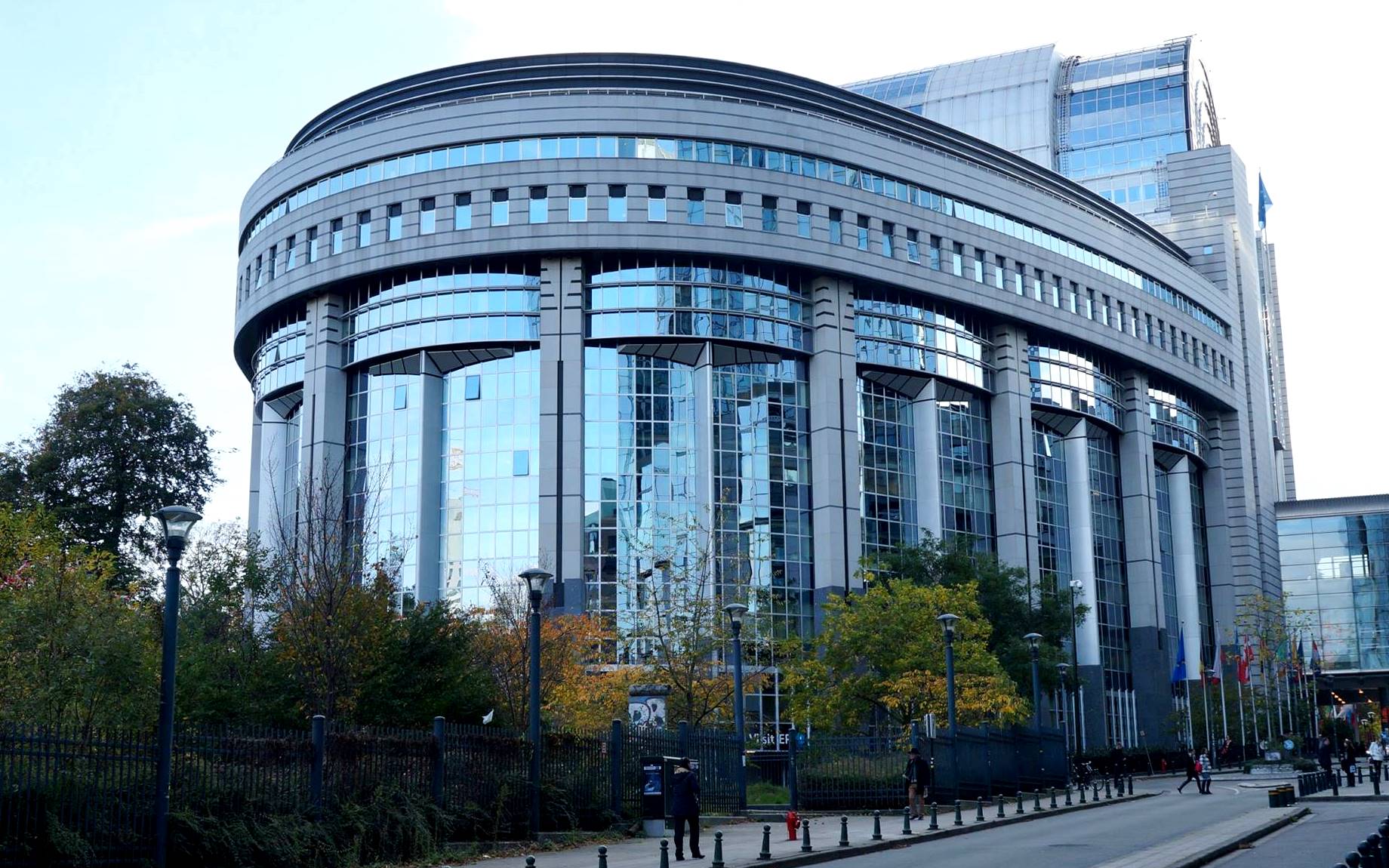
The European Parliament in Brussels — GDPR, adopted by the EU in 2016, became the modern global template for privacy law. Photo: Andrijko Z., CC BY-SA 4.0, via Wikimedia Commons.
| Law | Type | Territorial Reach | Max Penalty | Enforcement | Status |
|---|---|---|---|---|---|
| EU GDPR | Data protection regulation | Extraterritorial — any org processing EU residents’ data | €20M or 4% of global turnover | National Data Protection Authorities | In force since May 25, 2018 |
| California CCPA/CPRA | Consumer-protection-style privacy statute | California residents’ data; revenue/volume thresholds apply | Up to ~$7,988 per intentional violation (2026, inflation-adjusted) | California Privacy Protection Agency + state AG | CPRA provisions in force since Jan 1, 2023 |
| UK GDPR + DPA 2018 | Data protection regulation | UK residents’ data, extraterritorial where applicable | £17.5M or 4% of global turnover | Information Commissioner’s Office (ICO) | In force; reformed by the Data (Use and Access) Act 2025, core provisions commenced February 5, 2026 |
| China PIPL | Data protection law with national-security adjacency | Extraterritorial — processing PI of people in China for goods/services or behavioral analysis | RMB 50M or 5% of prior-year revenue | Cyberspace Administration of China | In force since November 1, 2021 |
| India DPDP Act, 2023 | Data protection statute | Processing of digital personal data within India, and processing outside India connected to offering goods/services to people in India | Up to ₹250 crore per instance of non-compliance | Data Protection Board of India | Assented Aug 2023; Rules notified Nov 13, 2025; phased compliance to May 13, 2027 |
💡 Four Categories, Often Confused
Privacy law (GDPR, DPDP Act) governs how organizations collect and use personal data. Cybersecurity/incident-response law (CERT-In’s directions) governs how organizations must detect, report and respond to security incidents — independent of whether personal data was involved. Consumer protection law (CCPA/CPRA’s roots) focuses on a consumer’s commercial rights, historically enforced through the same lens as unfair-trade-practice law. Surveillance law (the IT Act’s Section 69, the US’s FISA, the UK’s Investigatory Powers Act) governs government access to communications and data, a separate question from how private companies handle it. A single incident — a breach at a company holding government-mandated Aadhaar data, for instance — can touch all four categories at once, each with different rules and regulators.
Cyber Threat Categories, Explained
The vocabulary every other section of this guide relies on — definition, typical impact and basic defense for each.
Phishing
Fraudulent messages impersonating a trusted sender to trick someone into revealing credentials or installing malware. Impact: credential theft, account takeover, ransomware entry point. Defense: MFA, phishing-resistant authentication (passkeys), user training. Example on this timeline: ILOVEYOU (2000).
Ransomware
Malware that encrypts (or threatens to leak) data, demanding payment for restoration. Impact: operational shutdown, extortion, data exposure. Defense: offline backups, patching, MFA, network segmentation. Example: Colonial Pipeline (2021), Change Healthcare (2024).
Malware
Any software designed to damage, disrupt or gain unauthorized access to a system — the umbrella term covering viruses, worms, trojans, spyware and ransomware. Defense: endpoint detection, patching, least privilege.
Spyware
Software that covertly monitors activity — keystrokes, screen content, location — and exfiltrates it. Impact: surveillance, credential theft, stalking risk on personal devices. Defense: device updates, app-permission review, mobile threat detection.
Credential Stuffing
Automated attempts to log into accounts using credentials leaked from unrelated prior breaches, exploiting password reuse. Impact: account takeover at scale. Defense: unique passwords per site, a password manager, MFA.
Identity Theft
Using someone’s stolen personal information to commit fraud in their name — opening accounts, filing false tax returns, taking loans. Impact: financial and reputational harm to the victim, often for years. Defense: credit monitoring, freezing credit where available, prompt breach response.
Social Engineering
Manipulating a person, rather than a system, into taking an action that undermines security — the human layer beneath phishing, vishing and business email compromise alike. Defense: training, verification-callback procedures, a culture where questioning unusual requests is normal, not rude.
DDoS Attack
Distributed Denial of Service — flooding a system with traffic from many sources until it can’t serve legitimate users. Impact: availability loss, often used as a distraction or extortion lever. Defense: traffic-scrubbing services, rate limiting, CDN-level protection.
Supply-Chain Attack
Compromising a trusted vendor, software update, or open-source dependency to reach many downstream victims at once. Impact: broad, indirect exposure. Defense: SBOMs, vendor risk assessment, code-signing verification. Example: SolarWinds (2020), Log4Shell (2021).
Insider Threat
Harm caused by someone with legitimate access — an employee, contractor or partner — whether malicious or merely careless. Impact: data theft or exposure that bypasses perimeter defenses entirely. Defense: least privilege, activity logging, offboarding discipline.
SIM Swapping
Tricking or bribing a mobile carrier into transferring a victim’s phone number to an attacker-controlled SIM, intercepting SMS-based one-time codes. Impact: bypasses SMS-based MFA entirely. Defense: app-based or hardware MFA instead of SMS, carrier PIN/lock features.
Business Email Compromise
Impersonating an executive or vendor via a compromised or look-alike email account to redirect a real payment. Impact: direct financial loss, often large and unrecoverable. Defense: out-of-band verification for any payment or bank-detail change request.
Zero-Day Exploitation
Attacking a vulnerability before a patch exists. Impact: no defense window — detection and containment matter more than prevention. Defense: layered monitoring, network segmentation, rapid patch deployment once available. Example: MOVEit (2023).
Deepfake-Enabled Fraud
Using AI-generated audio or video impersonation to authorize a fraudulent action — a confirmed real-world case: a finance employee at engineering firm Arup wired roughly $25 million after a live video call where every other “participant” was a real-time deepfake, Hong Kong, January 2024. Defense: independent verification via a separate, pre-established channel for any unusual high-value request, regardless of how convincing the call looked.
Ransomware: How a Floppy-Disk Novelty Became an Industry
Ransomware evolved as a business model far more than as a technology.
Ransomware’s core mechanic hasn’t changed dramatically since the 1989 AIDS Trojan: encrypt a victim’s data, demand payment for the key. What changed is everything around it. Modern ransomware operates through Ransomware-as-a-Service (RaaS), where a core group develops the encryption tooling and infrastructure, then recruits “affiliates” who actually breach victims, splitting ransom proceeds (commonly an 80-85% affiliate share, per current threat-intelligence tracking of the dominant Qilin operation). This franchise model is why takedowns of one group — LockBit via the multinational Operation Cronos in February 2024, ALPHV/BlackCat separately in 2024 — fragment rather than end the ecosystem: displaced affiliates simply migrate to the next platform.
The tactics have also layered. Double extortion (standard since roughly 2019-2020, popularized by the Maze group) adds data theft to encryption — pay, or we leak your files publicly, even if you can restore from backup. Triple extortion adds a third lever: a DDoS attack on top, or direct contact with the victim’s own customers or patients, a tactic documented against healthcare and insurance targets specifically because it multiplies reputational pressure. Some groups, including Cl0p in its MOVEit campaign, have begun skipping encryption entirely — pure data theft and extortion, since encryption slows an attacker down and adds forensic evidence without adding much leverage that data theft alone doesn’t already provide.
Initial access brokers are a related specialization: criminals who breach an organization, then sell that access on dark-web forums to whichever ransomware affiliate pays first, rather than deploying ransomware themselves. This division of labor is a major reason ransomware attacks have scaled faster than any single group’s technical capability would suggest.
Offline, Tested Backups
Backups an attacker with full network access cannot also encrypt or delete — and that have actually been restored in a drill, not just taken.
Patch Known-Exploited Vulnerabilities Fast
Prioritize anything on CISA’s Known Exploited Vulnerabilities catalog over CVSS score alone — Verizon’s 2026 DBIR found median patch time rising to 43 days while exploitation sped up.
MFA on Every Remote-Access Point
Change Healthcare’s 2024 breach and Colonial Pipeline’s 2021 breach both trace to a single remote-access credential with no MFA.
Least Privilege and Network Segmentation
Limits how far an attacker who does get in can move laterally before hitting a wall.
A Written, Rehearsed Incident-Response Plan
Decided in advance: who calls law enforcement, who decides on ransom payment, who talks to customers — not improvised during the incident itself.
⚠️ On Ransom Payment
Paying a ransom does not guarantee data deletion or even reliable decryption — Change Healthcare’s 2024 case paid roughly $22 million and the data leaked anyway. Law enforcement (FBI, CERT-In, national equivalents) generally advises against paying and toward reporting instead; this guide does not offer payment advice for any specific incident, which depends on facts a general article cannot know.
Phishing: Still the Most Common Way In
The delivery channel keeps changing; the underlying trick — borrowed trust plus urgency — does not.
✉️ Common Channels
- Email phishing — the original and still most common form.
- Smishing (SMS phishing) — fake delivery, bank or OTP-request texts.
- Vishing (voice phishing) — a phone call impersonating a bank, tax authority or IT helpdesk.
- QR phishing (“quishing”) — a malicious QR code substituted for a legitimate one, e.g. on a parking meter or menu.
- Social media phishing — fake customer-support accounts or cloned profiles.
- Business email compromise — a targeted, researched version aimed at one specific payment.
👀 Recognition Signals
- Urgency or fear (“your account will be suspended in 24 hours”).
- A request to move to a different channel (email to WhatsApp, call to a “verification link”).
- A sender address or link domain that’s close to, but not exactly, the real one.
- Any request for an OTP, full card number or password “to verify” your identity — legitimate organizations do not ask for these.
- Verizon’s 2026 DBIR found mobile-targeted social-engineering success rates rose roughly 40% versus email — smaller screens make spoofed links harder to inspect.
🤖 AI-Generated Phishing
Generative AI has measurably improved phishing quality — better grammar, more natural tone, and personalization drawn from a target’s public social-media activity, per Verizon’s 2026 DBIR framing of AI use across documented attack techniques. This is a reported trend from aggregate incident data, not evidence that any single AI tool is “writing” attacks autonomously end-to-end; the skill AI removes is fluent writing, not the underlying social-engineering trick.
AI and Cybersecurity: Both Sides of the Same Tool
The honest framing is neither “AI will save security” nor “AI has broken security” — it is already doing measurable things for both attackers and defenders.
🛡️ AI Helping Defenders (Current, Deployed)
- Anomaly detection and SOC automation: Microsoft Security Copilot and CrowdStrike’s Charlotte AI are shipping products, not vaporware — genuinely deployed, though vendor performance claims should be read as vendor-reported.
- Faster breach containment: IBM’s 2025 research (survey of 1,000+ organizations) found heavy AI/automation adopters cut breach lifecycle by 80 days and saved roughly $1.9 million on average versus organizations with no AI/automation — independently surveyed, not a single vendor’s self-reported benchmark.
- Malware analysis and threat-intel triage: AI-assisted analysis helps security teams process a larger volume of alerts than manual review alone could handle.
⚠️ AI Helping Attackers (Reported/Confirmed)
- Deepfake fraud — confirmed: the Arup case (Hong Kong, January 2024, ~$25 million lost) is the best-documented real-world example, confirmed by the company itself and Hong Kong police.
- Faster exploit development — reported: Verizon’s 2026 DBIR describes AI compressing exploit-development windows “from months to hours” as an aggregate trend across its incident dataset, not a single attributable case.
- Personalized phishing — reported: covered above.
- Nation-state experimentation — reported by vendors: Microsoft and Google/Mandiant threat-intel teams have reported observing state-linked actors using LLMs for productivity tasks (debugging scripts, translating phishing content) — reported observation, not evidence of AI autonomously writing novel malware end-to-end, which remains undocumented as of this guide’s writing.
💡 A New Risk AI Introduces on Both Sides
IBM’s 2025 research also found ungoverned “shadow AI” tools — employees using unauthorized AI services with sensitive data — present in 20% of breaches, adding roughly $670,000 to average cost where governance was absent. AI is simultaneously a defensive accelerant and a new, ungoverned attack surface inside the same organization; treating it as purely one or the other misreads the evidence.
Zero-Days, CVEs, CVSS and MITRE ATT&CK: The Vocabulary of Vulnerability
Five terms that get used loosely in headlines but mean specific, distinct things.
Vulnerability
A flaw in software, hardware or configuration that could be exploited to violate confidentiality, integrity or availability — the raw weakness, before anyone necessarily knows about or exploits it.
Exploit
Code or a technique that actually takes advantage of a specific vulnerability to achieve some effect — a vulnerability is the door left unlocked; an exploit is the act of opening it.
CVE (Common Vulnerabilities and Exposures)
A unique public identifier for a known vulnerability, formatted CVE-YYYY-NNNNN, assigned by one of roughly 100+ CVE Numbering Authorities (major vendors and MITRE itself), coordinated by MITRE under CISA sponsorship.
NVD (National Vulnerability Database)
NIST’s enrichment layer on top of raw CVE records — adds CVSS severity scores, weakness-category (CWE) mapping and affected-product data. NVD doesn’t create CVE IDs; it annotates them.
CVSS (Common Vulnerability Scoring System)
A 0-10 severity score. Version 3.1 remains the dominant version in practical use as of 2026, even as NVD publishes v4.0 scores alongside it. Critically, a high CVSS score does not equal high real-world risk — a 9.8-severity flaw sitting unexploited in the wild is a lower practical priority than a 6.5 that CISA’s Known Exploited Vulnerabilities (KEV) catalog confirms is being actively used in attacks.
CWE (Common Weakness Enumeration)
Catalogs the underlying category of flaw (CWE-79 for cross-site scripting, CWE-89 for SQL injection). A CVE is one specific instance; a CWE is the pattern it belongs to.
MITRE ATT&CK
A living, continuously updated catalog of real-world adversary behavior, organized into 14 tactic categories: Reconnaissance, Resource Development, Initial Access, Execution, Persistence, Privilege Escalation, Defense Evasion, Credential Access, Discovery, Lateral Movement, Collection, Command and Control, Exfiltration, and Impact.
Responsible Disclosure
The norm where a researcher privately reports a vulnerability to the vendor, agrees a fix window (commonly around 90 days), and only publishes details after a patch ships — balancing users’ right to know against giving attackers a roadmap before a fix exists.
The Cyber Kill Chain vs. MITRE ATT&CK
Two ways of describing the same underlying reality, built a decade apart for different purposes.
Cyber Kill Chain vs. MITRE ATT&CK
The Cyber Kill Chain‘s seven stages — Reconnaissance, Weaponization, Delivery, Exploitation, Installation, Command & Control, and Actions on Objectives — borrow military “kill chain” logic: break the chain at any single link and the whole attack fails. It remains a useful teaching model precisely because of that simplicity. MITRE ATT&CK is generally described as its more granular, continuously updated successor: rather than a fixed sequence, it catalogs hundreds of specific, real-world-observed techniques (drawn from actual documented intrusions) mapped against its 14 tactic categories, which don’t have to occur in strict order. Most modern security tooling and threat-intelligence reporting references ATT&CK technique IDs directly; the Kill Chain survives mainly as an introductory conceptual frame.
Passwords, MFA and Passkeys: The Long Road Away From “Something You Type”
Why the industry is actively trying to retire the password, not just strengthen it.
Passwords fail predictably: people reuse them across sites, choose guessable ones, and can be tricked into typing them into a fake login page. Password managers fix the reuse problem by generating and storing a unique, strong password per site. Multi-factor authentication (MFA) adds a second proof of identity — something you have (a phone, a hardware key) or something you are (a fingerprint) — so a stolen password alone isn’t enough. But not all MFA is equally strong: SMS-based one-time codes remain vulnerable to SIM-swap fraud, which is exactly why security guidance increasingly favors app-based authenticators or hardware keys over SMS.
Credential stuffing — automated login attempts using username/password pairs leaked from unrelated past breaches — works specifically because of password reuse; it is one of the most common, cheapest attack techniques precisely because it requires no cleverness, only patience and a big enough leaked-credential list.
Passkeys: Passwordless Authentication, Explained
Built on FIDO2 and WebAuthn, passkeys are the most concrete, widely-adopted step away from passwords to date.
A passkey is a credential built on public-key cryptography rather than a shared secret. When you set one up, your device generates a mathematically linked key pair: a private key that never leaves your device (often protected by a hardware secure enclave) and a public key registered with the service you’re signing into. Logging in means your device signs a one-time challenge from the server using the private key — there is no password transmitted, stored on a server, or typeable into a fake site, which is what makes passkeys structurally phishing-resistant rather than just “more secure” in a vague sense. This is the WebAuthn/FIDO2 standard, developed by the W3C and the FIDO Alliance.
Passkeys come in two forms: device-bound (tied to one physical authenticator, the highest assurance level, with no cloud backup) and synced (backed up through a platform’s cloud, like Apple’s iCloud Keychain or Google Password Manager, more convenient but marginally weaker since the key can move between devices). Per the FIDO Alliance’s April 2026 “State of Passkeys” research (Sapio Research, 11,000 consumers across 10 countries), roughly 5 billion passkeys are in active use worldwide, 90% of consumers are aware of them, 75% have enabled one on at least one account, and 68% of organizations are deploying or have deployed them for employee sign-in.
✅ What Passkeys Actually Do
- Eliminate the shared-secret password a phishing site could capture.
- Resist credential-stuffing entirely — there’s no reusable secret to leak.
- Reduce reliance on SMS codes vulnerable to SIM swapping.
❌ What Passkeys Do Not Do
- Make an account “unhackable” — device theft, malware on the device itself, or a compromised account-recovery path remain real risks.
- Solve account recovery cleanly — losing every synced device and cloud access can still fall back to weaker recovery methods like email or SMS.
- Replace the need for a security-aware organization — they protect the login step, not every other part of an account’s lifecycle.
Encryption: Confidentiality’s Main Tool, Not a Complete Solution
Encryption protects data from being read by the wrong party — it does not protect against every other kind of security failure.
Symmetric Encryption
The same key encrypts and decrypts data — fast, used for bulk data (AES is the current standard), but requires securely sharing that one key with anyone who needs to decrypt.
Asymmetric Encryption
A public/private key pair — data encrypted with the public key can only be decrypted with the matching private key. Slower than symmetric encryption, but solves the key-sharing problem; underlies TLS, digital signatures and passkeys alike.
TLS (Transport Layer Security)
The protocol behind the padlock icon in a browser — encrypts data in transit between a device and a server, protecting it from interception on the network in between.
End-to-End Encryption
Data is encrypted on the sender’s device and only decrypted on the recipient’s — not even the service transmitting it (a messaging app’s own servers, for instance) can read the content in between.
Encryption at Rest
Protects stored data — on a disk, in a database — so that someone who steals the physical hardware or gains unauthorized file access still can’t read the contents without the key.
What Encryption Doesn’t Solve
Encryption protects confidentiality specifically. It does not stop phishing, does not patch a vulnerable application, does not prevent an authorized-but-malicious insider from reading data they’re allowed to access, and does not by itself satisfy privacy law’s separate requirements around consent and data minimization.
Digital Surveillance and Tracking: How Data Actually Gets Collected
Most tracking is commercial ad-tech infrastructure, not government surveillance — the two get conflated often.
Cookies are small files a website stores in your browser to remember you between visits — useful for staying logged in, but also the original mechanism third-party advertisers used to track browsing across unrelated sites. Tracking pixels are invisible 1×1 images embedded in emails or pages that report back when opened or viewed. Device and browser fingerprinting identify a device from a combination of technical signals — screen resolution, installed fonts, browser version — without needing a cookie at all, which is why “clear your cookies” doesn’t fully stop tracking on its own. Data brokers aggregate this information (plus public records, purchase history and app data) and sell profiles to advertisers, insurers and others, mostly legally, under whatever the applicable privacy law permits. Mobile app permissions govern what a specific app can access — location, contacts, microphone — and are the most direct, user-controllable lever most people have over what a given app collects.
Apps can collect location or device data depending on their permissions and stated privacy practices — what any specific app actually does with that access varies by app and by the privacy law that applies to it; this guide does not claim any specific app is “spying” without a documented, specific basis for that claim.
Social Media Privacy: Practical Trade-offs
Not a case for paranoia — a case for knowing what’s actually public.
Oversharing Location
Real-time location tags or recognizable background details in posts can reveal a home address or travel pattern to a wider audience than intended — review who can see location-tagged content, not just whether to post it.
Account Takeover
A reused or leaked password on a social account can cascade into impersonation of the real account holder — a passkey or app-based MFA meaningfully reduces this specific risk.
Impersonation and Cloned Profiles
Attackers copy public photos and posts to create a fake profile used for scams against a victim’s real contacts — reporting the fake profile to the platform is the direct remedy, not making the real profile private after the fact.
Deepfakes From Public Photos/Video
Publicly available photos and video can, in principle, be used to generate deepfake content — a real, documented risk category (see the Arup case above), though the practical odds for any specific individual vary widely by public profile and are not a reason to avoid all public presence.
Data Breaches: The Vocabulary, and What Actually Happens Next
“Breach,” “leak” and “exposure” get used interchangeably in headlines — they describe different things.
| Term | What It Means |
|---|---|
| Data Breach | Unauthorized access to a system resulting in confirmed data theft or exposure — the term implies both access and typically some data leaving the system’s control. |
| Data Exposure | Data was left accessible (e.g. an unsecured cloud storage bucket) but whether anyone unauthorized actually accessed it may be unknown or undetermined. |
| Data Leak | Data became publicly available, whether through a breach, an insider, or simple misconfiguration — the emphasis is on the data becoming public, regardless of mechanism. |
| Unauthorized Access | Someone without permission viewed or used a system or account — may or may not involve data being copied or stolen. |
| Ransomware-Related Exfiltration | Data copied out by attackers before (or instead of) encrypting it, specifically to enable double-extortion leverage. |
📊 Documented Breach Consequences
- Identity theft and financial fraud using stolen personal details.
- Account takeover via reused or leaked credentials (credential stuffing).
- Follow-on spam and targeted phishing using confirmed-real contact details.
- Regulatory action and fines under applicable privacy/data-protection law.
- Business disruption — Change Healthcare’s 2024 breach caused documented patient-care impact at 74% of surveyed hospitals, per the American Hospital Association.
⚠️ Don’t Overstate It
- Not every breach leads to identity theft for every affected person — impact depends heavily on exactly what data was exposed.
- Blackmail/extortion targeting individuals directly from a breach is real but far less common than credential-stuffing or spam as a downstream effect.
- A breach notification is a legal disclosure, not proof of maximum-severity harm — read what specific data was actually involved before assuming the worst.
Major Breach Case Studies at a Glance
Twelve incidents from this timeline, compared directly.
| Incident | Year | Attack Vector | Scale | Status |
|---|---|---|---|---|
| Morris Worm | 1988 | Sendmail/finger exploit + weak passwords | ~6,000 hosts | Confirmed; first CFAA felony conviction |
| ILOVEYOU | 2000 | Email social engineering | 10M+ machines, ~$10B damage | Confirmed; never prosecuted (no law existed) |
| Stuxnet | 2010 | Multiple Windows zero-days | 1,000-2,000 centrifuges damaged | Reported US/Israel operation, never officially confirmed |
| Target | 2013 | Stolen third-party vendor credentials | ~110M individuals | Confirmed |
| Yahoo (both breaches) | 2013-2014 | Forged cookies, stolen account tools | 3 billion + 500M+ accounts | Confirmed; DOJ indicted 4, incl. 2 FSB officers |
| Equifax | 2017 | Unpatched Apache Struts (CVE-2017-5638) | 147 million people | Confirmed; $700M settlement |
| WannaCry | 2017 | EternalBlue (unpatched SMB) | 200,000+ systems, 150+ countries | Attributed to North Korea by US/UK govts |
| NotPetya | 2017 | Trojanized update + EternalBlue | $250-300M (Maersk), $870M (Merck) | Attributed to Russia by 9 governments |
| SolarWinds/Sunburst | 2020 | Trojanized software update | ~18,000 customers downloaded it | Attributed to Russia’s SVR by US/UK govts |
| Colonial Pipeline | 2021 | Compromised VPN credential, no MFA | Regional US fuel shortage | Confirmed; ~85% of ransom recovered by DOJ |
| MOVEit | 2023 | Zero-day SQL injection (CVE-2023-34362) | 2,546+ orgs; 64.5M-93M+ people (range, disputed) | Confirmed; Cl0p group |
| Change Healthcare | 2024 | No-MFA remote-access portal | ~192.7 million individuals | Confirmed; largest US healthcare breach on record |
Cybersecurity for Individuals: 10 Things Worth Doing
No fear-based language needed — these are ordinary, low-effort habits with high payoff.
Use a Password Manager
Generates and stores a unique password per site, ending reuse — the single change that neutralizes credential stuffing.
Turn on MFA Everywhere It’s Offered
Prefer an authenticator app or hardware key over SMS where available, since SMS is vulnerable to SIM swapping.
Set Up a Passkey Where It’s Available
Removes the phishable password entirely for that account — growing fast across major platforms as of 2026.
Keep Devices and Apps Updated
Most exploited vulnerabilities target software versions a patch already exists for.
Enable Device Encryption
Standard by default on most modern phones — protects data if the device is lost or stolen.
Keep an Independent Backup
A copy of anything irreplaceable, disconnected from your main device, protects against ransomware and simple hardware failure alike.
Pause Before Clicking Under Urgency
The single most common phishing lever is manufactured urgency — a moment’s pause to verify through a separate channel defeats most attempts.
Review App Permissions Periodically
Revoke location, microphone or contact access an app doesn’t need for its core function.
Check Privacy Settings on New Accounts
Defaults are often more open than most users expect — a five-minute check at signup is cheaper than fixing it later.
Monitor Accounts and Credit Where Available
Early detection of unfamiliar activity limits how long fraud goes unnoticed — not a substitute for the other nine steps, a backstop for when they fail anyway.
Business Cybersecurity: What Organizations Should Prioritize
A practical checklist, not an offensive-security playbook.
Foundational Practices
- Asset inventory: you cannot patch or protect what you don’t know you have running.
- Patch management prioritized by CISA’s KEV catalog, not raw CVSS score alone.
- MFA on every remote-access and administrative point — the single most repeated root cause across this timeline’s biggest incidents.
- Least-privilege access and network segmentation to limit lateral movement after any single compromise.
- Tested, offline backups an attacker with full network access cannot also destroy.
- A written, rehearsed incident-response plan, not one improvised during a live incident.
- Centralized logging and monitoring — CERT-In’s directions require 180-day log retention in India specifically because after-the-fact investigation depends on it.
- Vendor/third-party risk assessment — Verizon’s 2026 DBIR found third parties involved in 48% of breaches, up 60% year over year.
- Ongoing security-awareness training, treated as a continuing program, not a once-a-year checkbox.
- Data minimization — collecting and retaining less personal data reduces both privacy risk and breach impact simultaneously.
- Business continuity planning covering how operations continue during, not just after, an incident.
Cybersecurity for Developers
The practices that prevent the next Log4Shell, not exploit code for the last one.
Secure Coding & Input Validation
Treat all external input as untrusted; validate and sanitize it before use, and encode output appropriately for its context (HTML, SQL, shell) to prevent injection-class flaws — the OWASP Top 10 catalogs the most common resulting vulnerability classes.
Dependency and SBOM Management
Maintain a Software Bill of Materials listing every dependency in use, so a disclosure like Log4Shell can be answered with “here’s exactly where we’re exposed” in minutes, not weeks.
Secret Management
API keys, database credentials and tokens belong in a dedicated secrets manager, never committed to source control — a routine source of accidental exposure.
Authentication and Authorization Design
Implement both correctly and separately — verifying identity is not the same as verifying what that identity is allowed to do, a distinction covered earlier in this guide’s CIA-triad section.
API Security
Authenticate and rate-limit every endpoint, and validate that a caller is authorized for the specific resource requested, not just logged in generally — broken object-level authorization is a persistent, common API flaw class.
SAST, DAST and Dependency Scanning
Static analysis (SAST) reviews source code for known-risky patterns; dynamic analysis (DAST) tests a running application; dependency scanning flags known-vulnerable library versions — complementary, not redundant, layers in a secure CI/CD pipeline.
Cloud Security, Supply-Chain Risk and Zero Trust
Three concepts that increasingly overlap in how modern infrastructure actually gets attacked.
Cloud security risk concentrates around a recurring short list: misconfigured storage (a cloud storage bucket left publicly readable), overly broad identity-and-access-management (IAM) permissions, exposed secrets, unsecured APIs, and container-security gaps. Because cloud infrastructure is shared and provisioned by config files rather than physical racks, a single misconfiguration can expose data at a scale a locked server room never could.
Supply-chain attacks exploit the trust an organization places in a vendor, a software update, or an open-source package — SolarWinds (a trojanized update) and Log4Shell (a vulnerable dependency almost nobody realized they were running) are this timeline’s clearest examples. Defenses include SBOMs, code-signing verification, and vendor risk assessment — treating “we trust this vendor” as a decision to actively verify, not a default assumption.
Zero trust is an architectural philosophy, not a product: “never trust, always verify.” Rather than assuming anything inside a network perimeter is safe, every request is authenticated, authorized and continuously verified regardless of where it originates — combining least-privilege access, device-posture checks and network segmentation into one continuous-verification model rather than a single perimeter firewall.
IoT and Mobile Security
The same core risks — default credentials, unpatched firmware, weak authentication — show up on both fronts.
📡 IoT (Smart Devices)
- Routers, cameras, smart TVs, wearables and even connected cars often ship with default or weak credentials many owners never change.
- Firmware updates are less consistently applied than phone/PC updates, leaving known vulnerabilities unpatched for years on some devices.
- Industrial and medical IoT devices carry higher stakes — a compromised infusion pump or grid sensor has consequences well beyond data theft.
- Basic defense: change default credentials immediately, keep firmware updated, and isolate IoT devices on a separate network segment from primary computers.
📱 Mobile Phones
- Malicious apps (sideloaded or occasionally slipping past app-store review) remain the primary mobile malware vector.
- SIM swapping bypasses SMS-based MFA specifically — app-based or hardware authenticators avoid this weakness.
- Unsecured public Wi-Fi exposes unencrypted traffic to anyone else on the same network — a VPN or sticking to HTTPS-only sites mitigates this.
- Basic defense: keep the OS updated, review app permissions, use encrypted backups, and set up account-recovery options before you need them, not after.
The Cybercrime Economy, Cyber Warfare and Geopolitics
Different actors, different motives, often confused in casual reporting.
| Category | Primary Motive | Typical Actor | Example From This Timeline |
|---|---|---|---|
| Cybercrime | Financial gain | Criminal groups, ransomware affiliates, fraud networks | Colonial Pipeline (DarkSide), Change Healthcare (ALPHV/BlackCat) |
| Cyber Espionage | Intelligence collection | State intelligence services | SolarWinds/Sunburst, attributed to Russia’s SVR |
| Cyber Warfare | Military/strategic disruption or destruction | State military or intelligence units | Stuxnet (reported US/Israel); NotPetya (attributed to Russia’s GRU) |
| Hacktivism | Political or ideological statement | Loosely organized activist groups | Not a focus of this guide’s verified timeline — attribution in hacktivist incidents is frequently unclear |
The cybercrime economy now runs as a specialized supply chain in its own right: initial access brokers sell network footholds, ransomware-as-a-service platforms provide the encryption tooling, and cryptocurrency provides a payment rail resistant to the traditional banking system’s fraud controls — each specialization lowering the skill bar for the next link in the chain.
Cyber incidents increasingly intersect with geopolitics through documented pressure on critical sectors: critical infrastructure (power, water, transport, healthcare, telecommunications, finance and government) carries distinct risk because an outage there causes direct physical or economic harm, not just data exposure — which is precisely why Colonial Pipeline’s 2021 ransomware attack triggered federal pipeline-security directives, and why WannaCry’s disruption of NHS hospital operations in 2017 drew a different level of government response than an ordinary corporate breach would have.
Quantum Computing and Cryptography: Preparing for a Risk That Isn’t Here Yet
The industry is migrating cryptography years ahead of any quantum computer that could actually justify it — deliberately.
Shor’s algorithm, published by mathematician Peter Shor in 1994, proves that a sufficiently large, fault-tolerant quantum computer could factor large numbers exponentially faster than any known classical method — the mathematical foundation underneath RSA and elliptic-curve encryption, which secure most of today’s internet traffic and banking transactions. As of August 2026, no quantum computer capable of doing this against real-world encryption exists; mainstream expert estimates cluster around the mid-2030s for when one might, though this is genuinely disputed research territory, not a settled date, and a handful of 2025-2026 papers claiming lower qubit requirements remain unreplicated at scale.
The real, present-day concern is “harvest now, decrypt later”: an adversary can capture and store today’s encrypted traffic now, intending to decrypt it years from now once a capable quantum computer exists — a real risk today for any data that needs to stay confidential for a decade or more, regardless of whether or when such a computer ever arrives. This is exactly why the US National Institute of Standards and Technology (NIST) finalized its first post-quantum cryptography standards on August 13, 2024: FIPS 203 (ML-KEM, for key exchange), FIPS 204 (ML-DSA, for digital signatures) and FIPS 205 (SLH-DSA, an alternative signature scheme), all built on mathematical foundations believed to resist both classical and quantum attack. Google, Microsoft, Apple and Cloudflare have all published or begun implementing migration plans.
⚠️ Keeping This Honest
No credible source has confirmed a quantum computer breaking real-world RSA or ECC encryption as of August 2026. A March 2026 claim of a dramatically more efficient factoring algorithm needing far fewer qubits drew scientific-community skepticism and remains disputed, not confirmed. NIST continues to treat RSA-2048 as adequate roughly through 2030. This guide does not state a specific break-year as certain, because the honest expert consensus doesn’t have one.
The Human Factor: Why Breaches Keep Happening Despite Better Technology
Every major incident on this timeline involves a human decision somewhere in the chain — not because people are careless, but because trust and urgency are exactly what security has to work against.
Verizon’s 2026 DBIR found a human element present in 62% of analyzed breaches. This is not a story about individual carelessness so much as about how attackers exploit universal, reasonable human instincts: trust (a message appears to come from a known colleague or bank), urgency (an artificial deadline discourages the pause needed to verify), fatigue (a security team facing thousands of daily alerts inevitably misses some), and poor defaults (a system shipped with a default password nobody changed, because changing it wasn’t the obvious next step). Equifax’s 2017 breach exploited a vulnerability a patch had existed for months before the intrusion — not because no one knew, but because patching at scale across a large organization is an operational and prioritization problem, not just a technical one. Colonial Pipeline and Change Healthcare both trace to a single credential without MFA — a control that existed, that the organization presumably knew mattered, and that simply hadn’t been applied everywhere yet.
Organizational culture matters as much as any individual’s judgment: a workplace where questioning an unusual payment request is normal and encouraged catches business-email-compromise attempts that a culture of not wanting to seem difficult or slow lets through. This is why security-awareness training is described throughout this guide as an ongoing program rather than a once-a-year compliance checkbox — the human factor doesn’t get “fixed,” it gets managed continuously, the same way patching or monitoring does.
10 Recurring Lessons From Cybersecurity History
Patterns that repeat across nearly four decades of incidents, from the Morris Worm to Change Healthcare.
- Patching matters more than almost anything else: Equifax, WannaCry and NotPetya were all preventable with a patch that already existed.
- Credentials matter, especially MFA: Colonial Pipeline and Change Healthcare both trace to one credential without it.
- Backups matter, and untested backups don’t count: ransomware’s entire business model depends on victims not having a clean, restorable copy.
- Supply chains matter as much as your own perimeter: SolarWinds and Log4Shell both entered through trusted third parties, not a direct attack on the victim.
- Privacy by design matters, separately from security: a secure system can still over-collect data in ways that create harm even without any breach.
- Human behavior matters, and can’t be trained away entirely: urgency and trust are being exploited more precisely as AI improves phishing quality.
- Security has to evolve continuously, not just once: the same vulnerability class (unpatched remote access without MFA) recurs across incidents a decade apart.
- Attackers adapt their business model, not just their code: ransomware-as-a-service and double/triple extortion changed the economics more than any single strain’s sophistication did.
- Visibility matters — you can’t respond to what you can’t see: CERT-In’s log-retention mandate and CISA’s KEV catalog both exist because detection lag is often the real damage multiplier.
- Incident response planning matters before, not during, an incident: the organizations that recover fastest decided who does what long before anything went wrong.
What Comes Next? A Cautious Look Ahead
Labeled by confidence — likely, possible, emerging or uncertain — because a forecast section is exactly where overclaiming is easiest and least accountable.
| Development | Confidence Label | Basis |
|---|---|---|
| Continued growth in AI-assisted phishing and reconnaissance | Likely | Already a documented 2025-2026 trend per Verizon’s DBIR, not a speculative leap |
| Wider organizational adoption of AI-assisted SOC/detection tools | Likely | IBM’s 2025 cost/speed data already shows measurable benefit driving adoption |
| Continued passkey adoption reducing password-based attacks | Likely | FIDO Alliance’s 2026 adoption figures show a clear existing trajectory |
| Ransomware-as-a-service market re-consolidating around fewer dominant groups | Possible | Historical pattern after prior takedowns, not guaranteed to repeat identically |
| AI tools autonomously generating novel, functional malware end-to-end | Emerging, unconfirmed | Vendor-reported experimentation exists; no confirmed case of full autonomous malware creation as of this writing |
| A cryptographically-relevant quantum computer breaking RSA/ECC | Uncertain | Mainstream estimates cluster mid-2030s at earliest; genuinely disputed among experts |
| India’s DPDP Act reaching full enforcement | Likely, on stated timeline | Official phased rollout already published, targeting May 2027 |
Explore More Timelines
People Also Ask
Frequently Asked Questions
Direct, answer-first responses to the questions readers actually search.
Related AiTimeline Guides
AI and Quantum Computing: History, Science and the Road Ahead
The Coldcard Firmware Flaw: A Real-World Vulnerability Case Study
Cryptocurrency History Timeline: From Bitcoin to Digital Money
The AI Military Complex: Companies, India and Defence Technology
Explore All AiTimeline Stories
Sources & Methodology
This guide is compiled from primary and authoritative sources, grouped here for transparency. Government and standards bodies: CISA (including its Known Exploited Vulnerabilities catalog), NIST and the NVD, MITRE/CVE.org and the MITRE ATT&CK framework, the FBI and US DOJ, CERT-In and MeitY (India), the Supreme Court of India, the UK’s ICO and NCSC, and the EU’s official GDPR text. Security research organizations: Verizon’s Data Breach Investigations Report (2026 edition), IBM/Ponemon’s Cost of a Data Breach Report (2025 edition), the FIDO Alliance’s State of Passkeys research, Krebs on Security, and threat-intelligence publishers including Mandiant, CrowdStrike and Emsisoft. Court and company records: DOJ indictments, HHS OCR’s breach portal, and official company breach notifications. Historical journalism: established outlets (BBC, Washington Post, Reuters) for context on events too old for a live primary source. Every major statistic in this guide is attributed to one of these sources by name; where sources disagree (for example, differing MOVEit victim-count estimates), this guide reports the range rather than picking one number to sound more precise than the evidence supports. This is a living document: security facts, legal status and statistics are re-checked and revised as new authoritative data is published, not frozen at first publication.
Sources & further reading
Every dated entry above was checked against these references. Last reviewed 20 September 2026.
- FBI: The Morris Worm, 30 Years Since the First Major Attack on the Internet
- CSO Online: Stuxnet Explained -- The First Known Cyberweapon
- Supreme Court Observer: Puttaswamy v. Union of India, Fundamental Right to Privacy
- Official GDPR Text, Article 83 (Penalties)
- PIB: Digital Personal Data Protection Rules, 2025 Notified
- CERT-In: Cyber Security Directions, 2022
- Verizon 2026 Data Breach Investigations Report