Why Are Adults Cutting Off Their Parents? The History of Family Estrangement
Why do adults cut off their parents? The history of family estrangement, from family duty to no contact, what research shows, and why most later reconnect.
Latest Story
For most of history, family was something you were born into and could rarely leave. Today some adults make a different choice. They stop calling. They stop visiting. Sometimes they block the number. Researchers call it family estrangement. The popular story is that adult children are suddenly cutting off their parents in record numbers. The research does not show that. What it shows is older, and more interesting: estrangement has existed for generations, it is usually a slow process rather than one argument, parents and children often explain it very differently, and many estranged relationships later recover. What has changed is the world around the family, from farms and factories to divorce, therapy language and the “Seen” receipt on a phone.
💡 Short Answer
Adults become estranged from parents for many overlapping reasons: long-running conflict, clashing values, how they experienced their parents’ behaviour, childhood events, a partner or in-law dispute, divorce, and money. There is no strong evidence that estrangement is rising worldwide. US data show about 6% of adults had a period of estrangement from their mother and 26% from their father, and most later reconnected. What has changed is that economic dependence on parents fell, and a vocabulary of boundaries and “no contact” made distance more visible and easier to name.
Family Estrangement: Key Questions
Family Estrangement in Ten Lines
- Not new: family cut-offs are old; what is new is the language, the visibility and the research.
- Not proven to be rising: no long-run data establish a worldwide surge in adults cutting off parents.
- Fathers more often than mothers: about 26% of US adults report a period of estrangement from fathers, about 6% from mothers.
- Often temporary: 81% reconnected with estranged mothers and 69% with estranged fathers in later US survey waves.
- Dependence fell first: factories, cities and migration made it possible to live away from parents, which lowered the cost of distance.
- Divorce changed the map: parental divorce is linked to weaker adult ties, especially with fathers.
- Named in 1975: psychiatrist Murray Bowen added “emotional cutoff” to his family systems theory.
- Two sides, two stories: in a 2015 study of 898 people, parents blamed outside factors; adult children blamed parental behaviour.
- Values matter: mothers who saw their child as holding different values were far more likely to report estrangement.
- 2026 view: researchers now treat estrangement as a family-system process, not a contest between a “bad parent” and a “difficult child”.
First, the Myth: Is Estrangement Really Rising?
The question “why now?” assumes something the data do not show.
Headlines often say that parents are being cut off “more than ever” or that a generation is “abandoning” its parents. No study has established that as a worldwide trend. The problem is simple: until recently, almost nobody measured estrangement the same way twice, so there is no long, comparable series going back decades to prove a rise.
The biggest US survey, run by Cornell sociologist Karl Pillemer and published with his book Fault Lines on 8 September 2020, found that 27% of Americans aged 18 and over had cut off contact with a family member. That figure covers every relative, including siblings and cousins. Estrangement specifically between parents and adult children was much lower, at roughly one in ten.
In an interview on 23 September 2026, Ohio State sociologist Rin Reczek, author of the new book Families We Lose, put it plainly: there is no strong evidence that estrangement is a growing social problem. What has grown is visibility. Social media groups, podcasts and therapy vocabulary make it easier to see and talk about. Reczek and her colleague Mieke Beth Thomeer are now studying different birth cohorts to test whether rates have actually changed; those results were not yet published at the time of writing.
So the better question is not “why are adults suddenly doing this?” It is “what changed around families that made distance easier to choose, name and keep?” That is a history question, and it starts long before smartphones.
Before 1800: Family as a Survival System
When leaving your parents meant leaving your livelihood.
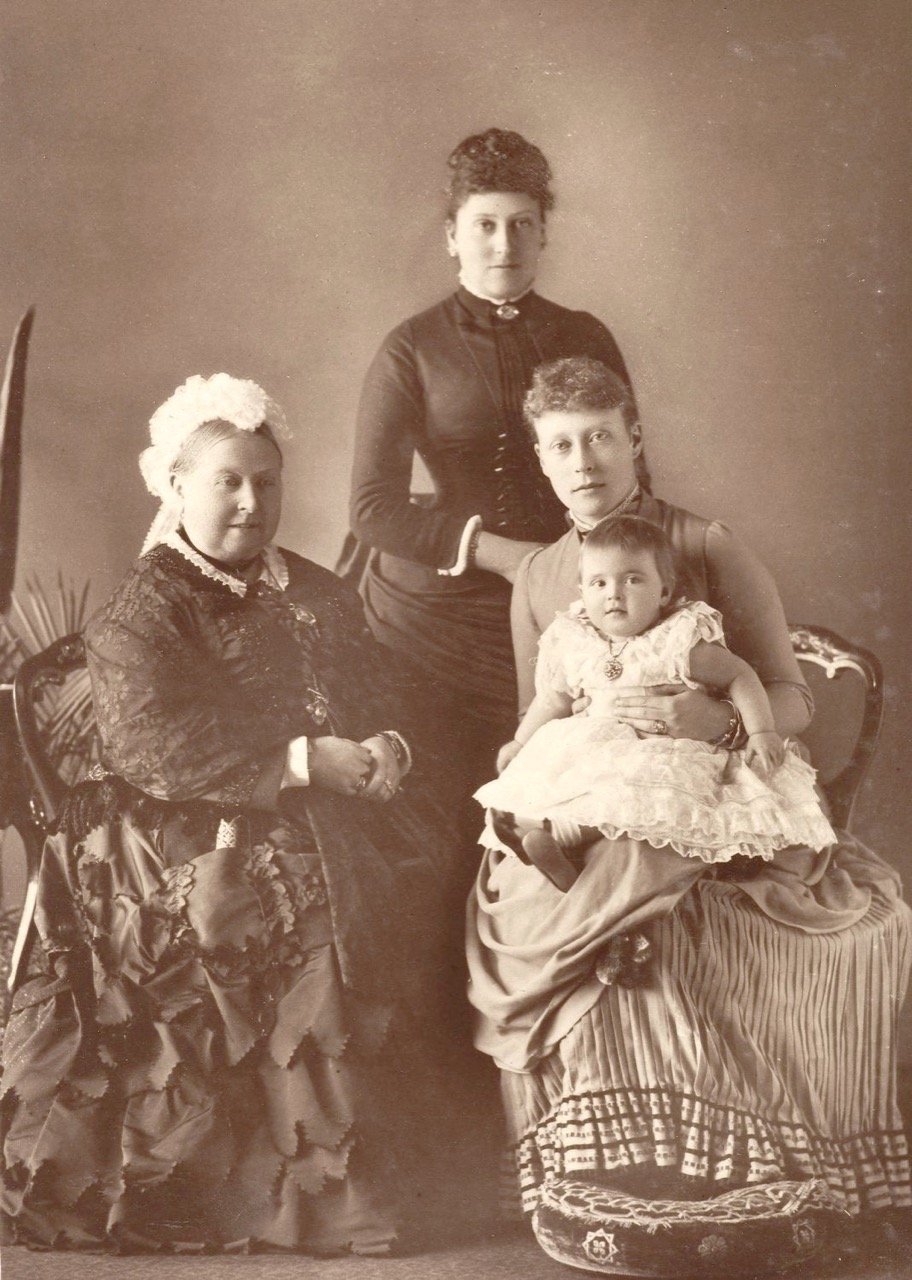
For most of human history, family was not only an emotional bond. It was an economic institution. The household provided food, shelter, work, childcare, care in old age, inheritance, protection and social identity. In farming societies, several generations often lived and worked on the same land or in the same trade.
That did not make families harmonious. Conflict, favouritism, disinheritance and feuds are as old as written records. But permanent separation was expensive. A son who walked away from his father might walk away from the land he would inherit. A daughter’s future depended on a marriage her family arranged. Parents depended on children to care for them in old age.
So a serious quarrel usually followed a different path: silence, tension, avoidance, and then some kind of working relationship, because the alternative was too costly. People could be emotionally distant and still eat at the same table.
1800s–1920s: Factories, Cities and Migration
Adulthood could now happen somewhere else.
Industrialisation changed the distance between generations. Young people moved to factories, cities and wage jobs. For the first time, large numbers of adults earned money that did not come from their parents’ land, shop or trade, and set up their own households.
Migration stretched families further. Tens of millions of people crossed oceans in the 19th and early 20th centuries; far more moved from villages to towns inside their own countries. A son could be a letter away for years. A daughter could marry into a household hundreds of kilometres from home.
Physical distance was not the same as estrangement. Most migrants sent letters and money home. But something important had shifted: you could now disagree with your parents and still have somewhere else to live and something else to live on. That sounds ordinary today. Historically, it was a new possibility.

1876 Onward: The Telephone Makes Contact a Choice
Easier to stay in touch. Also easier not to answer.
Alexander Graham Bell received his telephone patent in 1876. Over the following decades the phone moved from offices into homes, and family members separated by distance could talk in real time.
That created a quiet paradox. Technology made connection easier, but it also made not answering possible. Contact was no longer a by-product of living together. It became something people decided to do, or not to do. The modern idea of managing how much contact you have with a parent grows out of that shift.

1950s: The Nuclear-Family Ideal
Parents, children, one house, and lifelong loyalty.
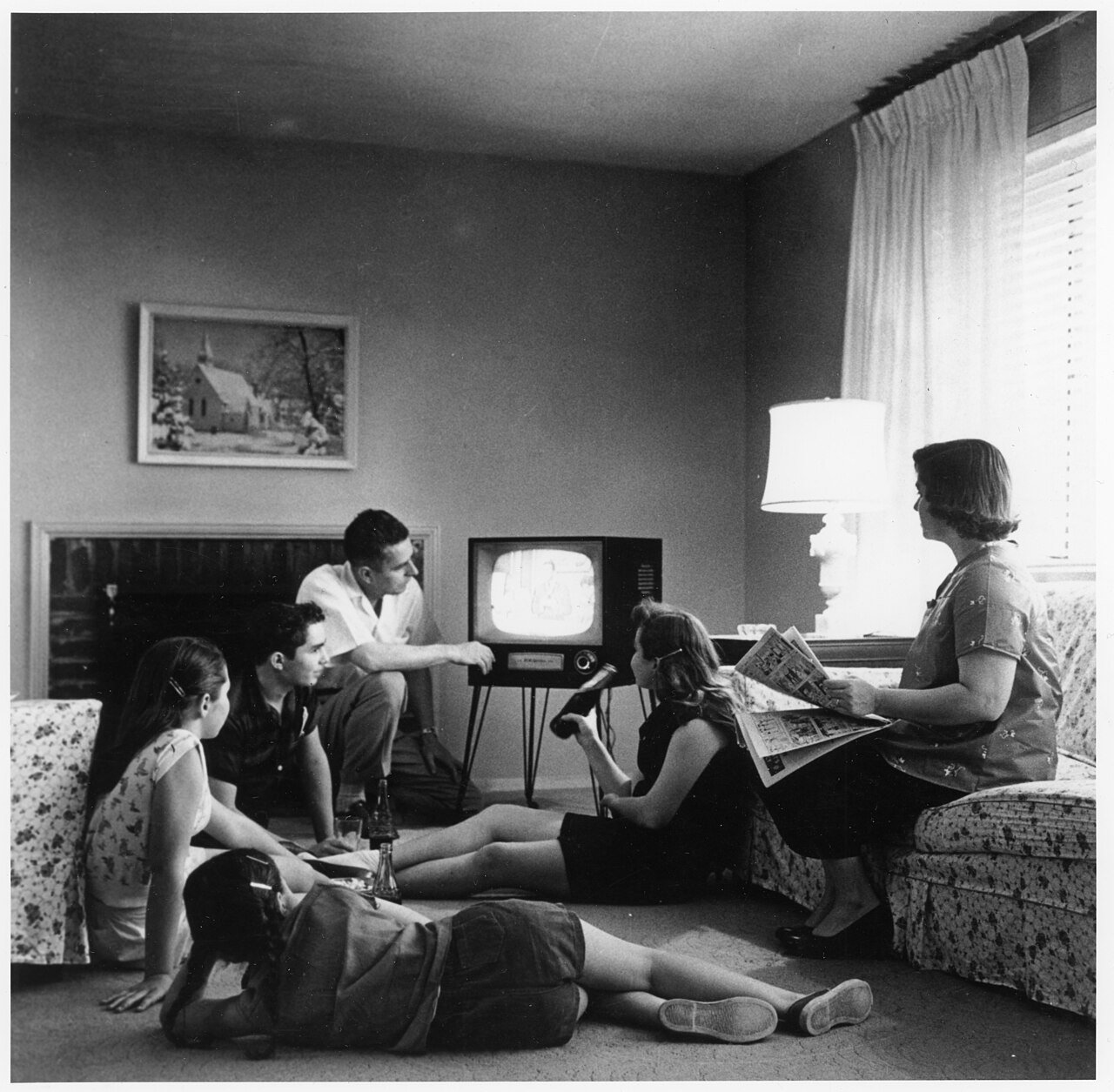
In the United States and much of Western Europe after the Second World War, the nuclear family (two parents and their children in one household) became a powerful cultural ideal, reinforced by suburbs, advertising and television.
The expectation was that adult children would leave home, marry and form their own households, but the bond with parents would remain lifelong. Parents provided; children respected. Cutting off a parent certainly happened, but it was usually treated as a private shame, not something with a shared name or a support group.
1960s–1990s: Autonomy, Divorce and New Family Shapes
The question shifted from “What does my family expect?” to “What life do I want?”
From the 1960s, ideas about marriage, gender roles, sexuality, religion, careers and personal identity changed quickly in many societies. Young adults questioned expectations their parents took for granted. Most families absorbed those changes. Some did not, and differences in values became a lasting source of distance.
Divorce became far more common in the same period, and it reshaped the parent-child map. A father might live in another household; a mother might remarry; children gained step-parents and half-siblings. In a 1996 prospective study in the Journal of Marriage and Family, sociologists Paul Amato and Alan Booth followed parents and their children into adulthood and found that parental divorce was linked to weaker relationships with fathers in particular, while earlier marital conflict also mattered.
That pattern still shows up today: in every large study, adults are far more likely to be estranged from fathers than mothers. Estrangement does not always start between the parent and the adult child. Sometimes the wider family system breaks first.
1975: Murray Bowen Names the “Emotional Cutoff”
Distance as a way of managing unresolved tension.
American psychiatrist Murray Bowen developed family systems theory, which treats a family as an emotional unit rather than a set of separate individuals. In 1975 he added two concepts to it; one was emotional cutoff.
Bowen used it to describe how people manage unresolved emotional intensity with their parents by reducing contact, moving away, or staying physically present while shutting down emotionally. His point was not “stop talking to your family”. It was that cutoff is often a response to tension that was never resolved, and that the tension can travel into the next generation.
That idea matters for the modern debate. “No contact” is often not the start of a conflict. It is the end point of one that has been running for years.
1996–2017: Estrangement Becomes a Research Subject
For decades family research studied closeness. Distance was a gap.
For a long time, research on adult children and parents concentrated on support, closeness and care. Estrangement received little attention. That began to change around the turn of the century.
2003, United States and Tamil Nadu: psychologists Lauren Ungar and Ramaswami Mahalingam published “We’re Not Speaking Any More”, a cross-cultural study of intergenerational cut-offs among people in the US and in Tamil Nadu, India, in the Journal of Cross-Cultural Gerontology. It showed that voluntary breaks in contact cannot be understood through a single Western model, and proposed a way to categorise the reasons people give.
2015, values: a study led by Megan Gilligan, J. Jill Suitor and Karl Pillemer used data on more than 2,000 mother-child pairs in 561 later-life families. About one in ten mothers reported being estranged from at least one child, and the strongest predictor was value dissimilarity: children whose mothers saw them as holding different values were much more likely to be estranged, even where childhood relationships had been relatively stable.
2015, two stories: a communication study by Kristen Carr and colleagues compared the reasons given by 898 estranged parents and adult children (not matched pairs). The two groups explained estrangement very differently (see below).
2017, the review: psychologist Lucy Blake reviewed the field in the Journal of Family Theory & Review. Definitions varied, she found, but most combined a negative relationship with a deliberate decision by at least one person to create and keep distance. Consequences included lower well-being, feelings of loss and stigma.
🔍 Why the numbers never agree
There is no single agreed definition of “estranged”. One study counts no contact. Another counts emotional distance. Another requires intentional, long-term separation. Some ask the parent, some ask the child. So prevalence figures from different studies should not be compared as if they measured the same thing.
How Common Is Estrangement From Parents?
The best national estimates, and what they do and do not show.
The most cited US figures come from Rin Reczek, Lawrence Stacey and Mieke Beth Thomeer, published in the Journal of Marriage and Family (online December 2022, issue 2023). They used the National Longitudinal Survey of Youth 1979 and its child and young adult survey, which follows the children of a nationally representative group of American women, and tracked 8,495 mother-child and 8,119 father-child relationships across repeated interviews.
| Study | Country / data | From mothers | From fathers | Note |
|---|---|---|---|---|
| Reczek, Stacey & Thomeer (2023) | US, NLSY79 children | About 6% | About 26% | First estrangement at average age 26 (mothers) and 23 (fathers) |
| Arránz Becker & Hank (2022) | Germany, pairfam, n = 10,228 | 9% | 20% | Any period of estrangement over ten survey waves |
| Korean study (2026) | Korea, KLoSA, 28,038 parent-child pairs | Lower than many Western estimates | Higher among low-income, low-education families | |
| Pillemer, Fault Lines (2020) | US national survey | About 1 in 10 (parent-child) | 27% cut off from any relative | |
| Gilligan et al. (2015) | US, 561 later-life families | About 1 in 10 mothers estranged from a child | Reported by mothers aged 65 to 75 | |
Two findings stand out. First, fathers are far more often the estranged parent, in both the US and Germany. Second, the US study found clear differences by group: daughters were less likely than sons to be estranged from mothers, while sons were less likely than daughters to be estranged from fathers; and gay, lesbian and bisexual respondents were more likely to be estranged from fathers.
These are figures for specific cohorts and countries. They should not be read as a current worldwide rate, or as proof that estrangement is rising or falling.
Why Do Adult Children Cut Off Their Parents?
Eight recurring reasons in the research. Most families have more than one.
Long-running conflict
Years of unresolved arguments accumulate until distance feels like the only way to stop them.
How a parent is experienced
Adult children often describe parents as controlling, critical, dismissive or unsupportive.
Different values
Religion, politics, sexuality, marriage, parenting and lifestyle; value dissimilarity is one of the strongest predictors.
Childhood experiences
Earlier events, including neglect or abuse in some cases, can shape the relationship decades later.
Partners and in-laws
Parents in particular often point to a child’s spouse or partner as the turning point.
Family restructuring
Parental divorce and remarriage can permanently change contact, especially with fathers.
Money and inheritance
Help with housing, weddings or loans can build closeness, or become a lever of control.
Autonomy and boundaries
An adult child wants more independence than the parent accepts, and requests are repeatedly ignored.
Abuse is not the only story
Abuse is part of some estrangements, but research shows many involve values, conflict and unmet expectations instead.
Parents and Children Tell Different Stories
One of the most consistent findings in the field.
898 estranged parents and adult children (Carr et al., 2015)
Parents most often traced estrangement to their child’s objectionable relationships (often a partner) or a sense of entitlement, and were significantly more likely to say they were unsure why it happened. Adult children most often pointed to their parents’ toxic behaviour or to feeling unsupported and unaccepted.
That does not prove either side right. It shows something else: the same family history can be remembered, and weighed, very differently by the people inside it. To an outsider, the break begins with a wedding row. To the adult child, it may be the last in a line of events going back fifteen years.
Estrangement Is a Process, Not a Moment
And a process can run in both directions.
In 2022, Gilligan, Suitor and Pillemer published a study in Research on Aging that interviewed 61 older mothers about 274 adult children at two points seven years apart. Some relationships stayed estranged, some became estranged, and some moved out of estrangement. The changes were usually gradual shifts in contact and closeness, not sudden breaks or dramatic reunions.
A typical path to “no contact” looks less like a single slammed door and more like a staircase:
The US national study backs this up with numbers. Among people who reported estrangement, 81% later reported being back in contact with their mother and 69% with their father in subsequent survey waves. Reczek’s team concluded that estrangement is often relatively impermanent, at least in the short term.
What Estranged Parents Experience
Loss on both sides of the silence.
Estrangement is usually discussed from the adult child’s side. Research on parents shows the other side of the loss. A 2025 Danish study by Andreas Nikolajsen and colleagues in the Journal of Social and Personal Relationships compared 75 parents aged 75 and over who were estranged from at least one child with 196 parents who were not. Estrangement was associated with poorer scores on all four measures they used: well-being, sense of purpose, depressive symptoms and loneliness. The design shows association, not proof that estrangement caused the difference.
A 2025 US study by Reczek and colleagues, again using NLSY79 data, found that mothers with estranged children had higher odds of fair or poor health. For adult children, estranged ties looked similar to ties that were still in contact but consistently negative. Positive relationships were by far the best for both generations’ health.
The story is therefore rarely “child as victim” or “parent as victim”. Different people in the same family can experience the same estrangement as different kinds of loss, and sometimes as relief.
2025–2026: From “Broken Family” to “Family System”
The newest research changes the question being asked.
Mixed feelings (2025): sociologist Andreea Nica interviewed 30 people who had exited family relationships (26 adult children and 4 parents) for Frontiers in Sociology. Participants reported positive feelings about leaving, but the effect on their overall well-being was mixed. They built new support networks and new norms for what family meant.
A systems issue (25 March 2026): an article by Whiting in Family Court Review, “Estrangement is a systems issue”, argued that estrangement comes from interactions, intergenerational patterns, unmet needs, unresolved conflict, individualism and outside influences, and called for approaches that address the whole family rather than assigning fault.
Redoing family (2026): Reczek’s study of 68 estranged adults in the Journal of Marriage and Family described a clash between “compulsory kinship” (you must stay because they are family) and “democratized kinship” (relationships must work for the people in them). Estranged adults rebuilt family through friends, housemates, supportive older mentors and other relatives. Her book on the subject, Families We Lose, was published by NYU Press in August 2026.
The shift is from asking “who is the bad person?” to asking “what happened to this relationship over time?” That is also the more useful historical question.
Is This Only a Western Phenomenon? India and Korea
Culture changes what estrangement means, and what it costs.
No. The 2003 Ungar and Mahalingam study compared the United States and Tamil Nadu precisely because cut-offs happen in both, but carry different meanings. Where family interdependence, co-residence and filial duty are strong expectations, as in much of India, cutting off a parent can bring heavy social judgement and may be expressed more as distance, silence or moving away than as a formal “no contact” declaration.
Korea offers a useful comparison. A 2026 study in Ageing & Society used eight rounds of the Korean Longitudinal Study of Ageing covering 28,038 parent-child pairs. It found estrangement lower overall than in some Western research, and suggested that the long tradition of hyo (filial piety) may buffer the effect of Korea’s rapid shift to nuclear families. But estrangement was clearly more likely in families with lower income and education.
In India, with joint families giving way to nuclear households in cities and millions of young adults moving for study and work, the same forces that reshaped Western families are at work, on a compressed timeline. Large Indian data on adult-child estrangement specifically are still scarce, so any claim about an “Indian estrangement rate” should be treated with caution.
Low Contact vs No Contact vs Estrangement
Related terms that are not interchangeable.
| Term | What it means | Example |
|---|---|---|
| Low contact | The relationship continues, but interaction is deliberately limited | Holiday visits only; short calls; some subjects avoided |
| No contact | Communication is deliberately stopped or reduced to almost nothing | Calls unanswered; number blocked; no visits |
| Emotional estrangement | People still meet or talk but feel emotionally disconnected | Polite family dinners with no real closeness |
| Physical estrangement | Living apart with little or no interaction | Moving cities and letting contact lapse |
| Emotional cutoff (Bowen) | Reducing emotional or physical contact to manage unresolved tension | Staying away to avoid old family conflicts |
The Family Distance Meter: 1900 to 2026
How the cost of distance from parents fell. The bar shows how practical it became to live independently of them.
The meter is an editorial illustration, not a measurement. The question it leaves is the interesting one: did technology make families closer, or simply make distance easier to manage? In 1900, no letter meant uncertainty. In 1950, no phone call meant distance. Today the silence is visible: “Seen.” “Online.” “Typing…” Then nothing.
What changed, in one list
- Adults became less economically dependent on parents for land, housing and work.
- Geographic mobility made living far away normal.
- Divorce and blended families created more complicated parent-child ties.
- Expectations of parenting changed, and so did adult children’s expectations of parents.
- Therapy vocabulary (“boundaries”, “no contact”) gave people words for private experiences.
- Online communities gave estranged children, and estranged parents, a peer group.
- Result: estrangement became more visible, more discussable and sometimes easier to maintain; it has not been shown to be more common.
Family Estrangement Timeline
Newest first.
“No strong evidence” of a rise
The Ohio State sociologist says estrangement is more visible, not proven to be more common, and that cohort research testing any change is still under way.
Families We Lose published
Reczek’s book argues estrangement reflects a clash between “compulsory” and “democratized” kinship.
Korea: 28,038 parent-child pairs
Estrangement is lower than in many Western estimates, but concentrated among lower-income and less-educated families.
“Estrangement is a systems issue”
A family-systems article calls for approaches that address the whole family, not a fault-based story.
Estranged older parents and mental health
Estrangement is associated with lower well-being and purpose and higher depression and loneliness. A separate study of 30 “family exiters” finds relief alongside mixed well-being.
First US national estimates
About 6% ever estranged from mothers and 26% from fathers; 81% and 69% later reconnected.
Germany and “in and out” of estrangement
German panel data put estrangement at 9% (mothers) and 20% (fathers). A US study following mothers for seven years shows ties moving into and out of estrangement.
Fault Lines: 27% cut off a relative
The first large US survey on estrangement across all relatives.
The literature review
Estrangement is defined as negative relationship quality plus intentional distance; definitions still vary.
Values and two stories
Value dissimilarity predicts mother-child estrangement; 898 parents and children explain estrangement very differently.
Boundaries enter everyday language
“Boundaries”, “toxic” and “gaslighting” move from therapy rooms into ordinary conversation, making estrangement more visible and easier to name.
US and Tamil Nadu compared
“We’re Not Speaking Any More” shows cut-offs occur in both cultures, with different meanings.
Divorce and adult ties
Parental divorce is linked to weaker adult relationships, especially with fathers.
“Emotional cutoff” named
Bowen adds emotional cutoff to his theory: reducing contact to manage unresolved tension.
Autonomy and changing roles
Rapid change in values; divorce rises and families take new shapes.
The nuclear-family ideal
Separate households, lifelong loyalty expected; cut-offs rarely named in public.
The telephone
Distance becomes bridgeable, and contact becomes something people choose.
Factories, cities, migration
Adults can earn and live away from their parents’ land and trade.
Family as survival system
Family provides land, work, care and inheritance; permanent separation is costly.
Quiz: What Do You Know About Family Estrangement?
Tap a question to reveal the answer.
1. Is family estrangement a new phenomenon?
2. Which parent are US adults more often estranged from?
3. Is estrangement usually permanent?
4. Who named “emotional cutoff”?
5. Do parents and adult children usually give the same reasons?
6. Does “low contact” mean the same as “no contact”?
7. Has research proven estrangement is rising worldwide?
Explore More Timelines
People Also Ask
Frequently Asked Questions
Related AiTimeline Stories
⚠️ Editorial Note
This article avoids claiming that estrangement is rising or that any generation is “abandoning” parents, because current research does not establish that. Prevalence figures come from specific cohorts and countries and are not global rates. Figures were checked against the published studies: Reczek, Stacey and Thomeer (Journal of Marriage and Family, 2023), Arránz Becker and Hank (JMF, 2022), Gilligan, Suitor and Pillemer (JMF 2015; Research on Aging 2022), Carr et al. (Journal of Family Communication, 2015), Blake (JFTR, 2017), Ungar and Mahalingam (Journal of Cross-Cultural Gerontology, 2003), Amato and Booth (1996), Nikolajsen et al. (2025), Nica (Frontiers in Sociology, 2025), Whiting (Family Court Review, 2026) and the 2026 Korean KLoSA study (Ageing & Society). The US figure for mothers is given as “about 6%”, as reported by the authors. This is editorial, AI-assisted content and is not psychological or legal advice.
Sources & further reading
Every dated entry above was checked against these references. Last reviewed 27 September 2026.
- Reczek, Stacey and Thomeer: Parent-adult child estrangement in the United States (Journal of Marriage and Family, 2023)
- Arranz Becker and Hank: Adult children's estrangement from parents in Germany (Journal of Marriage and Family, 2022)
- Gilligan, Suitor and Pillemer: Estrangement between mothers and adult children, the role of norms and values (JMF, 2015)
- Gilligan, Suitor and Pillemer: Patterns and processes of intergenerational estrangement (Research on Aging, 2022)
- Carr et al.: Comparing reasons of estranged parents and adult children in a nonmatched sample (2015)
- Blake: Parents and children who are estranged in adulthood, a review (Journal of Family Theory and Review, 2017)
- Ungar and Mahalingam: We're Not Speaking Any More, a cross-cultural study of intergenerational cut-offs (2003)
- Nikolajsen et al.: Estrangement between older parents and adult children, associations with mental health (2025)
- Nica: From family estrangement to empowered exits (Frontiers in Sociology, 2025)
- Whiting: Estrangement is a systems issue (Family Court Review, 2026)
- Estrangement between parents and adult children in Korea (Ageing and Society, 2026)
- Cornell Chronicle: Pillemer, family estrangement a problem hiding in plain sight (2020)