The Indian Express Blank Editorial: How an Empty Page Became a Protest
The Indian Express's 1975 blank editorial protested Emergency press censorship. Explore Ramnath Goenka's role and the full timeline through 1977.
Latest Story
On 28 June 1975, readers of The Indian Express opened the paper to find its editorial page empty — a large blank space where an argument, a defence or a criticism would normally sit. Two days earlier, India had entered a 21-month Emergency, and newspapers had been placed under government pre-censorship. Rather than publish a government-cleared substitute, the paper’s editors, under proprietor Ramnath Goenka, left the space empty — turning the one thing a censor could not easily rewrite, the absence of words, into one of the most remembered images in Indian press history.
🧠 AI Overview Summary
On 28 June 1975 — three days after Prime Minister Indira Gandhi’s government imposed a national Emergency and press pre-censorship — The Indian Express left a large section of its editorial page blank rather than submit government-approved copy. Proprietor Ramnath Goenka backed the protest; editor Kuldip Nayar later said it was two columns left blank, not the whole page. The Emergency lasted from 25 June 1975 to 21 March 1977 (21 months), during which the Press Council of India was abolished, four news agencies were merged into one government-aligned service called Samachar, and journalists including Nayar were arrested. The blank editorial became a lasting symbol of press resistance; The Indian Express itself describes it as a protest against censorship, not a claim that the government literally ordered a blank page.
The Blank Editorial: Key Questions
The Blank Page, in Nine Lines
- The Emergency was proclaimed late on 25 June 1975, after President Fakhruddin Ali Ahmed signed the order under Article 352, citing “internal disturbance.”
- Newspaper offices on Delhi’s Bahadur Shah Zafar Marg lost electricity the same night, disrupting printing before pre-censorship was even formally announced.
- Pre-censorship was imposed on newspapers from 26 June 1975, requiring government clearance before publication.
- The Indian Express did not publish normally for the first couple of days after the Emergency was declared.
- On 28 June 1975, the paper resumed — and left its editorial space blank rather than run censor-cleared copy, a protest proprietor Ramnath Goenka backed.
- Censors later closed the loophole, ruling that blank spaces and celebrity quotations could not be used in editorials either.
- The Press Council of India was abolished during the Emergency and only re-established under the Press Council Act, 1978.
- Four news agencies were merged into one government-aligned service, Samachar, in February 1976.
- The 44th Constitutional Amendment Act, 1978 later replaced “internal disturbance” with the narrower “armed rebellion” as an Emergency ground, a direct response to how loosely the 1975 term had been used.
Before the Blank Page: 1974–75
Student unrest, the JP Movement, and a court judgment that put a Prime Minister’s seat in question.
India entered 1974 under real political and economic strain. Student protests in Gujarat and Bihar fed into a wider opposition movement led by the veteran socialist Jayaprakash Narayan, widely known as JP. His call for what became known as the JP Movement drew in opposition parties, students and civil-society groups challenging the government of Prime Minister Indira Gandhi. For newspapers, the story was no longer only about policy — it was increasingly about the relationship between political power, public protest and the press itself. The Indian Express, under proprietor Ramnath Goenka, was already known for confronting governments over press freedom, a stance that would become central once censorship arrived the following year.
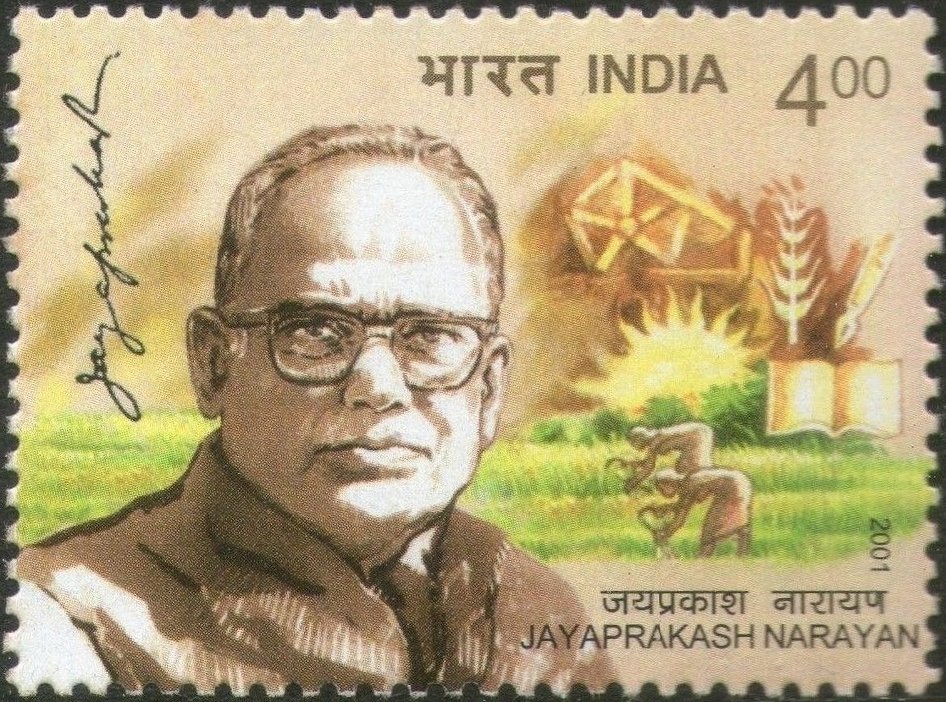
A 2001 Indian postage stamp commemorating Jayaprakash Narayan, the socialist leader whose JP Movement mobilised opposition parties, students and civil society against the government in 1974–75. Credit: India Post / Wikimedia Commons, Government Open Data License – India.
The crisis sharpened on 12 June 1975, when the Allahabad High Court found Indira Gandhi guilty of electoral malpractice connected to her 1971 Lok Sabha election, creating real uncertainty around her position as Prime Minister. She appealed to the Supreme Court, which on 24 June 1975 granted a conditional stay allowing her to remain Prime Minister while the appeal was heard, though the order restricted some of her parliamentary privileges. The following evening, thousands gathered in Delhi at a major opposition rally led by Jayaprakash Narayan. Within hours, the country would enter a fundamentally different political and media environment.
The Blank Editorial Timeline
Newest first — from the 44th Amendment’s safeguards back to the night the presses went dark.
Constitutional Aftermath: 44th Amendment & a New Press Council
Change: The post-Emergency government enacted the 44th Constitutional Amendment Act, 1978, replacing “internal disturbance” with the narrower “armed rebellion” as a ground for a national Emergency under Article 352, and adding further safeguards on Emergency powers.
Institution restored: The Press Council of India, abolished during the Emergency, was re-established under the Press Council Act, 1978, with its first term under the new Act beginning in February 1979.
Emergency Withdrawn; Janata Party Takes Power
Outcome: General elections held 16–20 March 1977 saw the Congress party suffer major defeats in northern India; the Janata Party won a Lok Sabha majority, and Morarji Desai became Prime Minister on 24 March — the first non-Congress government at the Centre. The Emergency was formally withdrawn on 21 March 1977, after 21 months.
Indira Gandhi Announces Elections
Turn: Indira Gandhi unexpectedly announced that Lok Sabha elections would be held in March 1977. Political prisoners began to be released and opposition parties started to reorganise, signalling that the Emergency-era political order was moving toward a real electoral test.
News Agencies Merged; Constitution Rewritten
Consolidation: In February 1976, the four major news agencies — PTI, UNI, Samachar Bharati and Hindustan Samachar — were merged into a single government-aligned agency called Samachar, narrowing the sources feeding every newspaper in the country.
Constitutional change: The 42nd Constitutional Amendment Act, 1976 expanded Parliament’s amending power and altered the balance between Union, State and constitutional institutions — making the Emergency a story about the Constitution itself, not only about newspapers.
Censors Close the Blank-Space Loophole
Response: After The Indian Express and other papers signalled censorship through blank spaces, censors moved to shut the tactic down — ruling that newspapers could not leave editorial spaces blank or substitute quotations from famous personalities either. Detentions under the Maintenance of Internal Security Act (MISA) continued through this period.
The Indian Express Publishes the Blank Editorial
Protest: The paper resumed publication and reported on the arrests and events around the Emergency — but its editorial page carried a large blank space where the day’s editorial should have been. Ramnath Goenka backed the decision; the empty space signalled that something had been prevented from being written or published, without saying what.
Caveat: Editor Kuldip Nayar later clarified the paper did not run a blank front page — two columns on the edit page were left blank, and few other papers did the same at the time. Some Indian Express archive captions instead date this edition 27 June; this timeline uses 28 June as the primary date.
Newspapers Struggle to Publish
Disruption: Major newspapers, including The Indian Express, did not publish normally for the first couple of days after the Emergency was proclaimed. Opposition figures including Jayaprakash Narayan, Morarji Desai, Atal Bihari Vajpayee and L.K. Advani were detained, many under the Maintenance of Internal Security Act (MISA).
Pre-Censorship Imposed on the Press
Rule change: Pre-censorship was imposed on newspapers from 26 June 1975, requiring editors to submit material for government clearance before publication. The ordinary chain of Reporter → Editor → Printer → Reader now ran through an added link: Reporter → Editor → Censor → Clearance → Printer → Reader.
Power Cut to Delhi’s Newspaper Offices
Disruption: Late on the night of 25 June, electricity to newspaper offices on Bahadur Shah Zafar Marg — the Delhi street housing several major papers — was cut, disrupting printing before pre-censorship was even formally announced the next day.
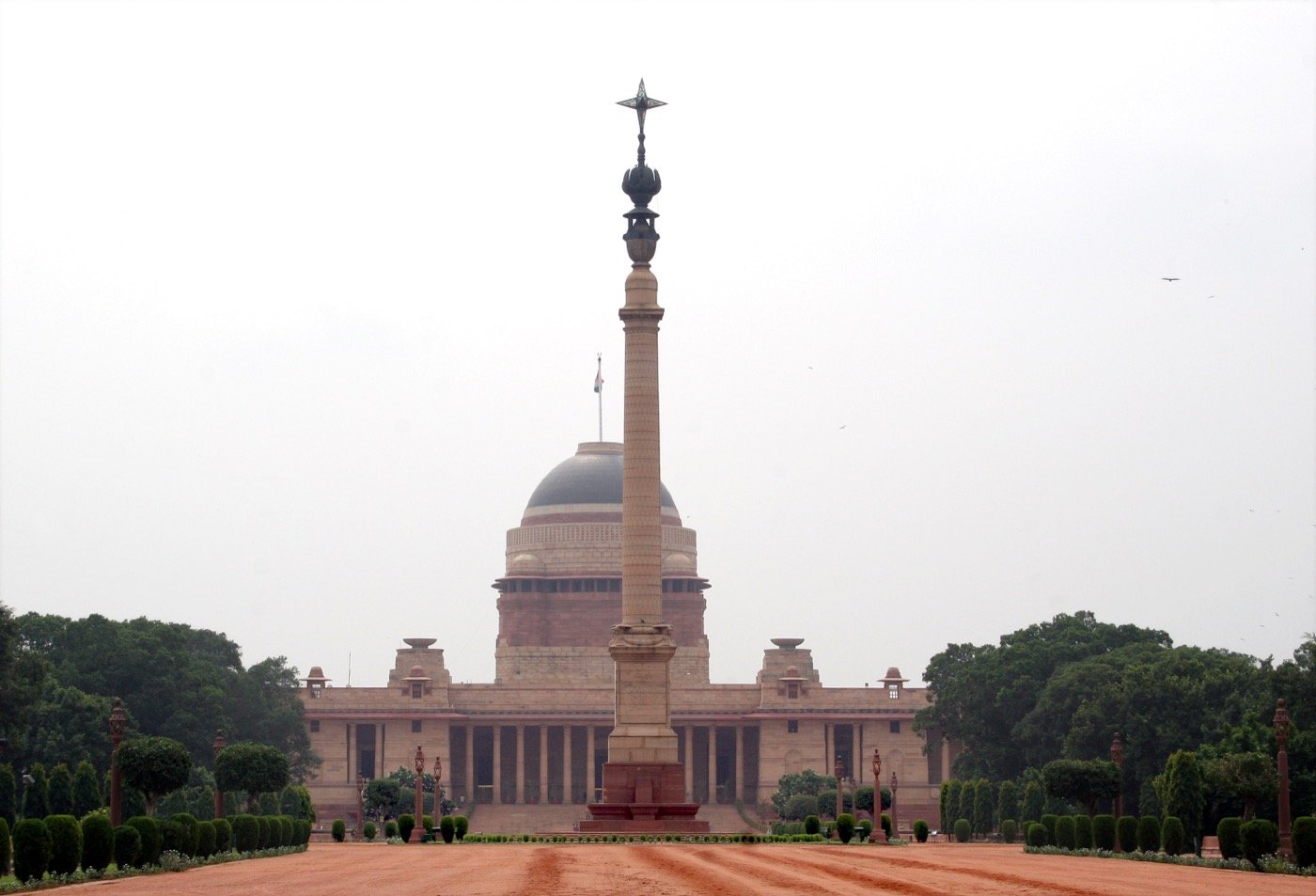
Rashtrapati Bhavan, New Delhi — the seat of the Indian presidency, where President Fakhruddin Ali Ahmed signed the Emergency proclamation late on 25 June 1975. Credit: David Castor / Wikimedia Commons, public domain.
Emergency Proclaimed Under Article 352
Event: Late on 25 June 1975, President Fakhruddin Ali Ahmed signed the Proclamation of Emergency under Article 352, on the advice of the government, citing “internal disturbance” — wording later replaced by the 44th Amendment. The Emergency would last 21 months, ending 21 March 1977.
Supreme Court Grants a Conditional Stay
Ruling: The Supreme Court granted a conditional stay allowing Indira Gandhi to remain Prime Minister while her appeal against the Allahabad High Court judgment was heard, though the order restricted some of her parliamentary privileges. The following evening, a major opposition rally gathered in Delhi.
Allahabad High Court Judgment
Judgment: The Allahabad High Court found Indira Gandhi guilty of electoral malpractice connected to her 1971 Lok Sabha election, creating direct uncertainty around her position as Prime Minister and prompting her appeal to the Supreme Court.
The JP Movement Expands
Build-up: Student movements in Gujarat and Bihar fed into a broader opposition campaign led by Jayaprakash Narayan, drawing in opposition parties, students and civil-society groups against the Indira Gandhi government. The Indian Express, under Ramnath Goenka, became increasingly associated with coverage critical of the government.
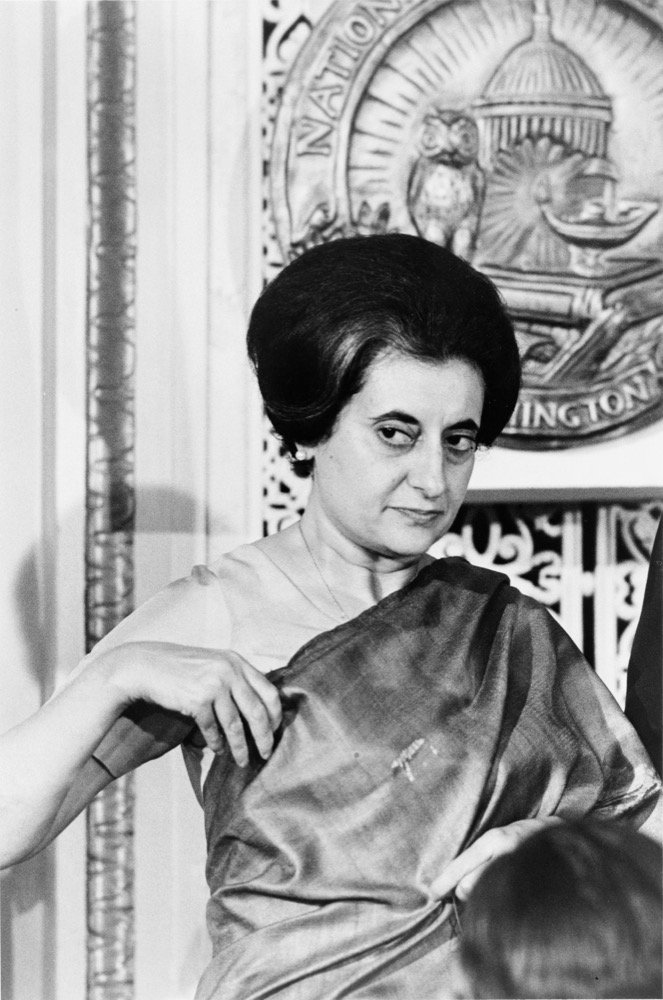
Indira Gandhi, photographed in Washington, D.C. in March 1966, nine years before her government proclaimed the Emergency. Credit: Warren K. Leffler / U.S. News & World Report collection, Library of Congress, public domain.
The Censorship Machine
The blank editorial was one visible moment inside a much wider system of press control.
Pre-Censorship
Newspapers had to submit material to national and regional censors for clearance before publication, from 26 June 1975 onward.
Press Council Abolished
The Press Council of India, set up in 1966, was abolished during the Emergency and only re-established under the Press Council Act, 1978.
Samachar News Agency
Four independent agencies — PTI, UNI, Samachar Bharati and Hindustan Samachar — were merged into one government-aligned agency in February 1976.
Journalists Detained
Journalists, including The Indian Express’s own Kuldip Nayar, were among those arrested during the Emergency, often under MISA.
Foreign Correspondents
Foreign journalists also faced restrictions, including limits on reporting and on communicating with editors abroad.
Not a Single Reaction
Some papers used blank spaces or cartoons; others complied fully. The historical record is not simply “the press resisted” or “the press surrendered.”
Ramnath Goenka and The Indian Express
A proprietor who had already built a reputation for confronting governments over press freedom.
Ramnath Goenka, founder of the Indian Express Group, was already known before 1975 for challenging governments and defending editorial independence. During the Emergency, that reputation placed the paper under direct pressure — from advertising and newsprint supply to the threat of prosecution — while it continued reporting on arrests and government actions that other papers, working under the same censorship regime, chose not to pursue. Later accounts describe Goenka as standing firm despite that pressure, and as the proprietor who directed his editors to carry the blank editorial rather than run cleared copy.
This was not simply a disagreement between an editor and a politician. It combined government power, press regulation, ownership, journalistic independence, economic pressure and the public’s access to information — all compressed into the decision over what, if anything, to print in a single editorial slot.
Abu Abraham’s Wordless Cartoons
When direct political language was risky, a cartoon without words became its own kind of statement.
The Indian Express was also home to cartoonist Abu Abraham, whose Emergency-era work used irony and, at points, wordless or blank cartoon panels to signal censorship without stating it outright. Original drafts submitted for pre-censorship were sometimes stamped “NOT TO BE PUBLISHED” and survive today as a direct physical record of what censors rejected. Alongside the blank editorial, Abu’s cartoons form a second, parallel language of protest developed under the same restrictions — proof that the blank page was one method among several, not a single isolated gesture.
Did You Know?
- The Indian Express’s own historical accounts describe the blank editorial as a protest against censorship — not a claim that the government literally ordered a blank page.
- Kuldip Nayar, editor at the time, later said only two columns on the edit page were left blank, and that few other papers did the same at that point.
- Once the tactic was noticed, censors moved to ban blank editorial spaces and quotations from famous personalities in editorials, closing the loophole.
- The Press Council of India’s own gap — abolished in 1975, not restored until 1979 — is longer than the 21-month Emergency itself.
- The 44th Amendment’s replacement of “internal disturbance” with “armed rebellion” is a direct constitutional response to how the 1975 proclamation’s own wording was used.
The Full Chronology at a Glance
Chronological order, for reference alongside the reverse-chronological timeline above.
| Date | What Happened |
|---|---|
| 1974 | Student and political unrest intensifies in Gujarat and Bihar |
| 1974–75 | Jayaprakash Narayan’s JP Movement expands against the Indira Gandhi government |
| 12 Jun 1975 | Allahabad High Court finds Indira Gandhi guilty of electoral malpractice |
| 24 Jun 1975 | Supreme Court grants a conditional stay pending appeal |
| 25 Jun 1975 | Emergency proclaimed under Article 352, citing “internal disturbance” |
| 25–26 Jun 1975 | Electricity to Delhi newspaper offices on Bahadur Shah Zafar Marg cut |
| 26 Jun 1975 | Pre-censorship formally imposed on newspapers |
| 26–27 Jun 1975 | Newspapers, including The Indian Express, struggle to publish normally |
| 28 Jun 1975 | The Indian Express publishes its blank editorial (some archives cite 27 June) |
| Jul 1975 onward | Censors ban blank editorial spaces and celebrity quotations; MISA detentions continue |
| Feb 1976 | Four news agencies merged into the government-aligned Samachar |
| 1976 | 42nd Constitutional Amendment Act enacted |
| 18 Jan 1977 | Indira Gandhi announces Lok Sabha elections; prisoners begin release |
| 16–20 Mar 1977 | General elections held; Congress suffers major defeats in the north |
| 21 Mar 1977 | Emergency formally withdrawn after 21 months |
| 24 Mar 1977 | Morarji Desai sworn in as Prime Minister; first non-Congress government |
| 1978–79 | 44th Amendment Act enacted; Press Council of India re-established (Feb 1979) |
Explore More Timelines
People Also Ask
Frequently Asked Questions
Related AiTimeline Stories
⚠️ Editorial Note
This timeline compiles publicly available reporting and institutional records on the 1975–77 Emergency and The Indian Express’s blank editorial. It follows the newspaper’s own framing — a protest against censorship, not a claim that the government literally ordered a blank page — and notes the genuine 27/28 June date discrepancy in the paper’s own archive material rather than resolving it artificially. It is editorial and AI-assisted content, not an official statement from The Indian Express, the Press Council of India or any government body; figures and dates are provided for reference and may contain inaccuracies despite verification efforts.
Sources & further reading
Every dated entry above was checked against these references. Last reviewed 25 September 2026.
- Indian Kanoon -- 44th Constitutional Amendment Act, 1978 (Full Text)
- Press Information Bureau -- Factsheet on the Emergency
- Press Council of India -- Institutional History
- The Emergency (India) -- Overview
- The Better India -- Ramnath Goenka's Fight for Press Freedom
- Newslaundry -- Abu Abraham's Emergency-Era Cartoons
- ThePrint -- Abu Abraham's Censored Drafts