Export Education: Empowering Indian Students for Global Trade
Explore India's export-education timeline from IIFT and Niryat Bandhu to digital learning, e-commerce exports and NEP 2020's global education push.
Latest Story
Export education in India began with a small group of specialists. In 1963 the government created the Indian Institute of Foreign Trade to professionalise foreign-trade management. Today India exports a record US$863 billion of goods and services a year, almost half of it services, and the people who need trade skills include students, startup founders, artisans and freelancers. How did learning about trade turn into learning how to take part in it?
This timeline follows that shift from IIFT and the 1991 reforms through the Niryat Bandhu handholding scheme, online export-import courses, the e-commerce provisions of Foreign Trade Policy 2023 and the internationalisation push of NEP 2020, to the 2025 Export Promotion Mission and the idea of education itself as an export. It also corrects several dates that circulate online.
💡 Short Answer
Export education is the training that teaches people how to sell goods and services abroad: market research, HS classification, pricing, Incoterms, documentation, payments, logistics and risk. In India it grew from IIFT (1963) to DGFT’s Niryat Bandhu scheme, announced in 2011, which has trained more than 1,15,000 people since 2013–14. Courses went online in 2015, and FTP 2023 added e-commerce exports.
Export Education in India: Key Questions
Export Education in Ten Points
- 1963: IIFT was created to professionalise India’s foreign-trade management.
- 1991 and 1995: liberalisation and the WTO widened the audience and made trade rules-based.
- 2002: IIFT became a deemed university; international business became a full discipline.
- 2011: Niryat Bandhu was announced for first-generation exporters; money followed in 2013–15.
- Scale: more than 1,15,000 people trained under Niryat Bandhu since 2013–14.
- Online: the first web course launched on 9 September 2015; a self-paced MOOC followed in 2019.
- E-commerce: FTP 2023 added skills for online exports and 1,013 post-office export desks by 2024.
- 2025: the Rs 25,060 crore Export Promotion Mission funds capacity building through Niryat Disha.
- Services: almost half of India’s record US$863 billion exports in FY26 were services.
- Two-way: India now also exports education, from foreign student recruitment to IIFT Dubai.
What “Export Education” Covers
Export promotion tries to raise exports. Export education tries to raise the number of people able to do it.
International marketing
Market research with trade data, buyer discovery, pricing, branding and trade fairs.
Rules and agreements
DGFT procedures, IEC and RCMC, FTAs, tariffs, non-tariff barriers, standards and WTO rules.
Getting paid
Letters of credit, export finance, FEMA, currency risk and ECGC credit insurance.
Moving the goods
Incoterms, documentation, customs, freight, insurance and packaging for export.
Digital trade
Cross-border e-commerce, online catalogues, marketplaces and services delivered remotely.
Scaling up
Moving from one foreign customer to a repeatable export business.
Export Education in India: The Full Timeline
Newest first, back to IIFT’s founding in 1963.
2026
Record exports: services almost catch up with goods
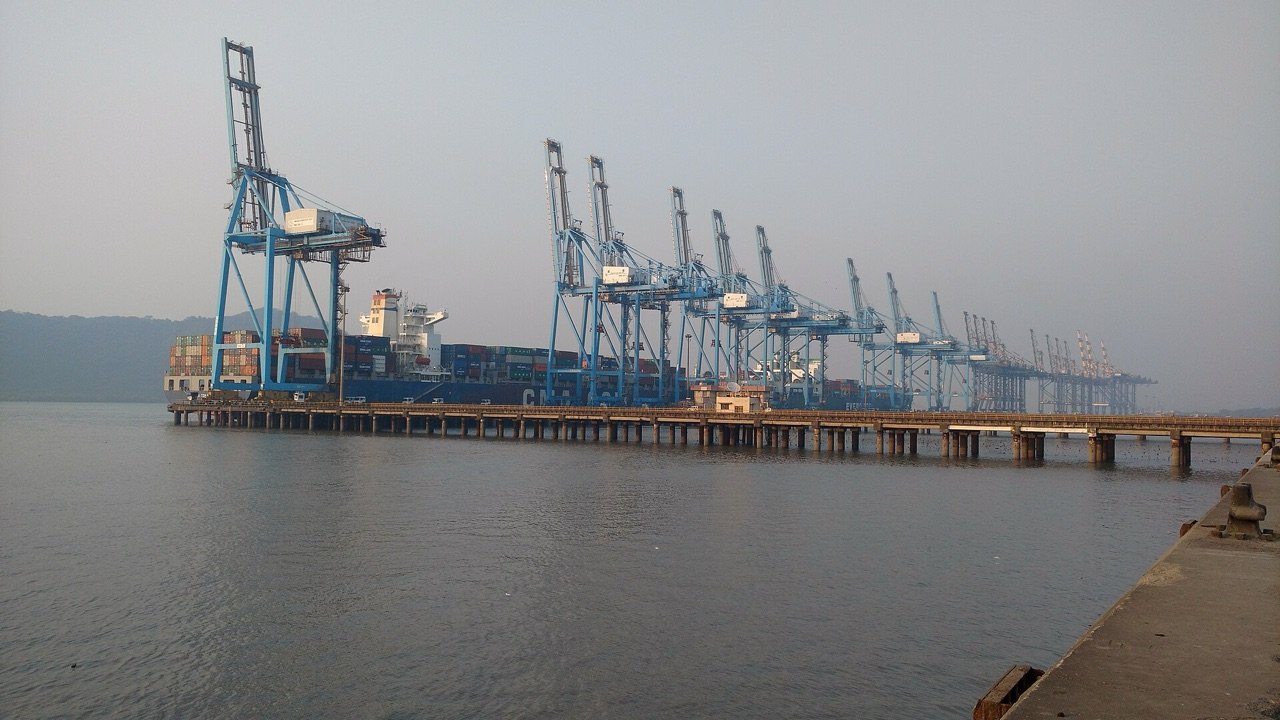
The Commerce Ministry puts India’s FY 2025–26 exports of goods and services at a record US$863.11 billion, up 4.6% from US$825.26 billion. Merchandise exports were US$441.78 billion; services were revised up to US$421.32 billion, from a first estimate of US$418.31 billion in April (when the total stood at US$860.09 billion).
Why it matters for students: almost half of what India sells abroad is now services such as software, consulting, engineering and design. Many future exporters will never ship a container.
2026
“Education as a service” joins the export story
Commerce and Industry Minister Piyush Goyal says education as a service has significant potential to add to India’s export earnings, and that the Commerce Ministry and IIFT are exploring it. He notes that about 28 Indian students go abroad for every international student who comes to India.
2025
Export Promotion Mission approved
The Union Cabinet approves a six-year Export Promotion Mission worth Rs 25,060 crore, announced in the 2025–26 Budget. It has two arms: Niryat Protsahan (Rs 10,401 crore) for trade finance, and Niryat Disha (Rs 14,659 crore) for non-financial support, including export quality and compliance, branding, trade fairs, logistics, trade intelligence and capacity building. MSMEs and first-time exporters are named priorities.
IIFT approved to open in Dubai
The Indian government approves IIFT’s first campus abroad, at the former India Pavilion in Expo City Dubai, after an MoU signed on 3 October 2024. IIFT says the campus will start with short and medium-term programmes and research before launching its MBA in International Business, aimed at the Indian diaspora and learners from the Gulf, Africa and South Asia.
1,013 post offices become export desks
The government reports 1,013 Dak Ghar Niryat Kendras operating across India. They help small sellers file postal bills of export, clear customs electronically, pack and book parcels and get guidance. Postal tariffs for exports were later cut by up to 49% from 1 April 2025.

2024
Trade Connect ePlatform goes live
The Commerce Ministry launches the Trade Connect ePlatform, a single online window that gives new and aspiring exporters information on regulations, trade agreements, tariffs and events, and connects them with Indian missions abroad, export promotion councils, banks and officials to answer questions.
Foreign universities allowed to open in India
The University Grants Commission notifies rules allowing foreign higher-education institutions to set up campuses in India. In 2025 the University of Southampton opened in Gurugram as the first under these rules. Internationalisation now runs in both directions.
2023
FTP 2023 puts e-commerce exports in the curriculum
The new Foreign Trade Policy takes effect with a dedicated focus on cross-border e-commerce. Under its Niryat Bandhu component, DGFT can run outreach and workshops with Customs, the Department of Posts, industry and knowledge partners, including capacity building and skill development for e-commerce exports. It backs Dak Ghar Niryat Kendras so artisans, weavers, craftsmen and MSMEs in hinterland and landlocked districts can reach foreign buyers.
2021
UGC guidelines on internationalisation
The UGC publishes Guidelines for Internationalisation of Higher Education: internationally relevant curricula, an Office for International Affairs on campus, credit recognition, collaboration and twinning with foreign universities, and more international students. The same year, the Commerce Department’s revised Market Access Initiative guidelines add capacity building on standards, export packaging and export-oriented skill development.
2020
NEP 2020 makes “global” an education goal
The Union Cabinet approves the National Education Policy 2020. Its internationalisation agenda calls for global standards, student and faculty exchanges, credit transfer and foreign partnerships. It does not create an export course, but it treats global readiness as a core outcome of higher education. The pandemic, meanwhile, made online learning and online selling routine.
An anytime-anywhere export MOOC
DGFT adds a self-paced Massive Open Online Course under Niryat Bandhu, so potential exporters can learn the basics of export-import business without attending live sessions. Modules come with reading material, review questions, case studies and an online assessment. The syllabus runs from HS classification and Trade Map research to Incoterms, letters of credit, FEMA, currency risk and ECGC cover.
2015
Niryat Bandhu @ Your Desktop
The Commerce Secretary launches Niryat Bandhu @ Your Desktop, an online certificate programme in export-import business developed by DGFT and IIFT. Modules are transmitted live to participants’ desktops, and a certificate requires passing online tests. For the first time a would-be exporter in a small town can take the course without travelling to Delhi or Kolkata.
2015
From token budget to national training
A token Rs 2 lakh is sanctioned for Niryat Bandhu in the last quarter of 2013–14; in 2014–15 the scheme receives Rs 2 crore for the first time. That year more than 18,000 people attend orientation sessions on export-import business, including holders of new Importer Exporter Codes. By the Department of Commerce’s 2023–24 annual report, more than 1,15,000 individuals had been trained since 2013–14, in person and online.
2013
IIFT turns 50
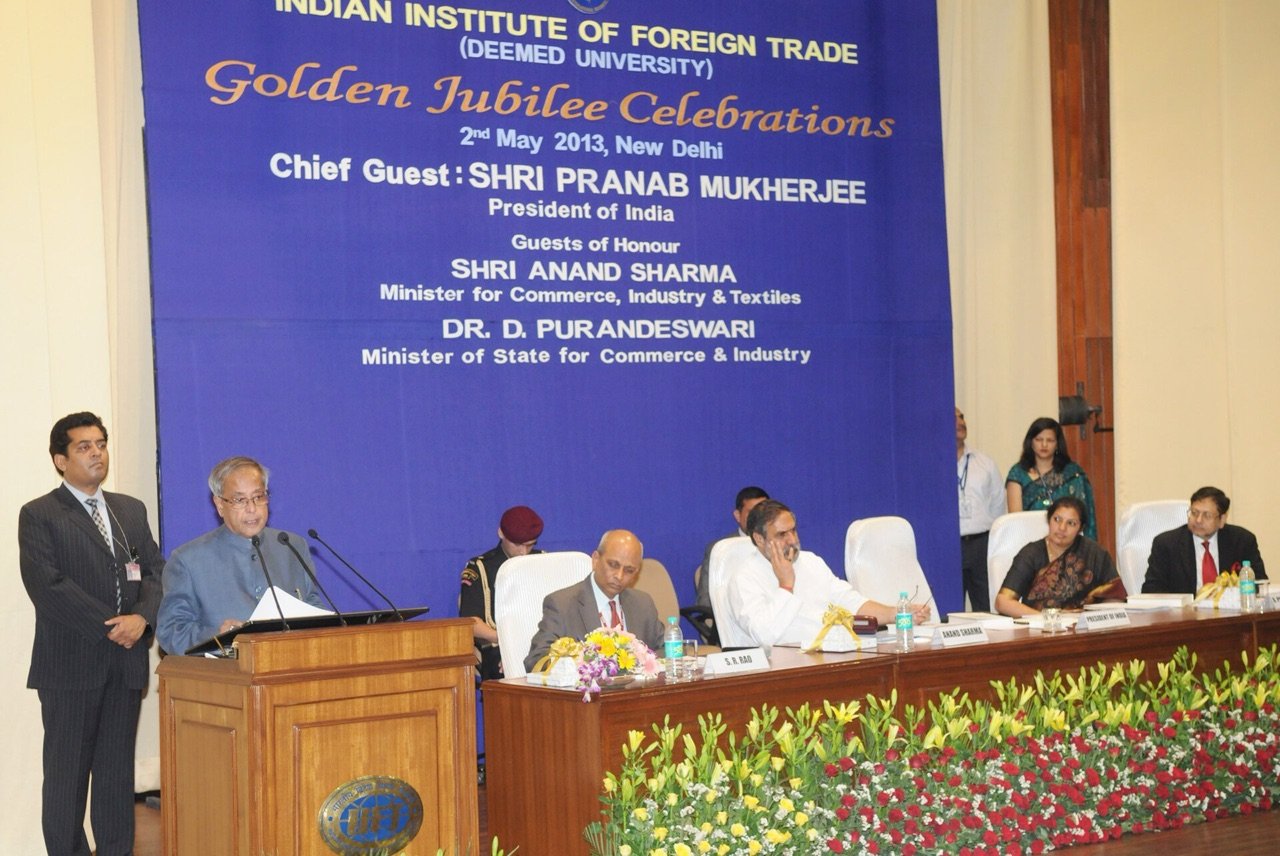
President Pranab Mukherjee marks IIFT’s golden jubilee with Commerce Minister Anand Sharma. Fifty years after its founding, the institute has grown from a training body for trade officials into one of India’s best-known business schools for international business.
2011
Niryat Bandhu is announced
The Commerce Ministry announces the Niryat Bandhu scheme as part of Foreign Trade Policy 2009–14, to mentor first-generation entrepreneurs in international trade through counselling, training and outreach, and to connect that outreach with academia and research. The question shifts from “how do we train established exporters?” to “how do we bring more people into exporting?”
IIFT becomes a deemed university
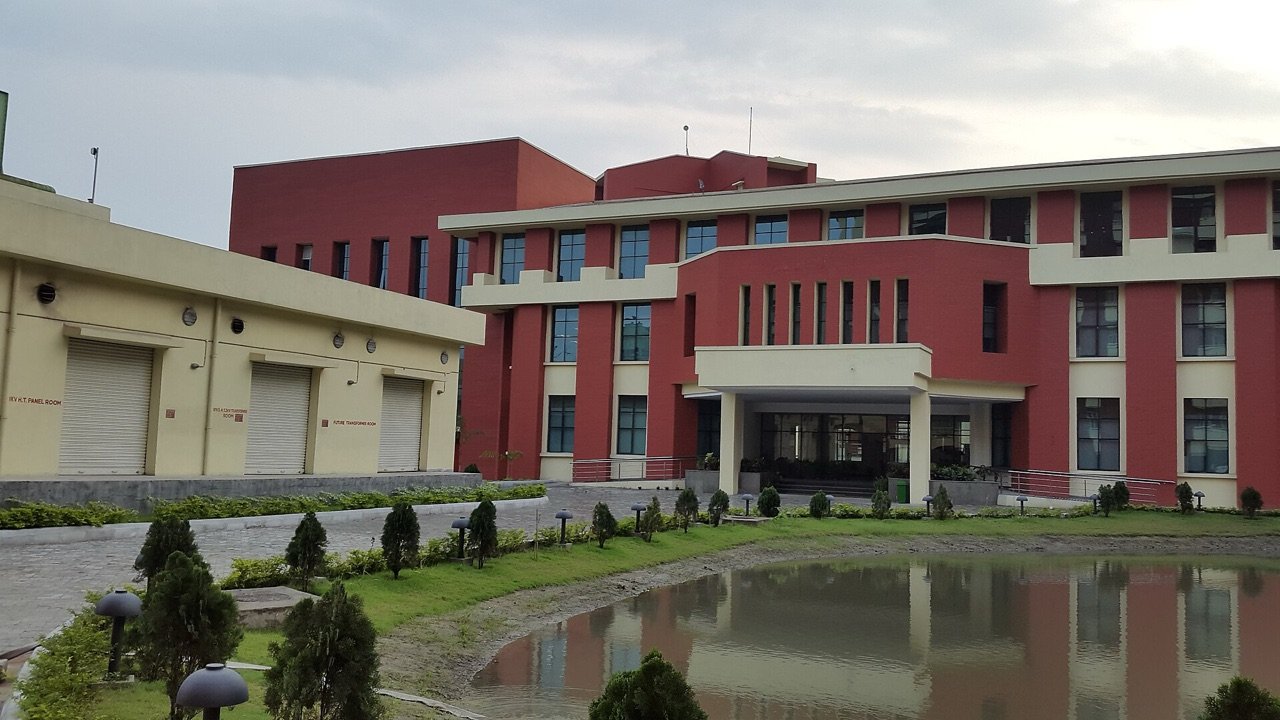
The University Grants Commission grants IIFT deemed-to-be-university status, and in June 2018 grades it Category I. International trade is now taught as a full academic discipline, combining research, training and degree programmes, with campuses later added in Kolkata and Kakinada.
1995
The WTO begins
The World Trade Organization starts work, replacing GATT. Rules on tariffs, services, intellectual property, standards, sanitary measures and disputes now shape world trade. Export training has to add market access, technical standards and non-tariff measures to the old diet of documentation.
Liberalisation widens the classroom
India’s economic reforms devalue the rupee, scrap most industrial licensing and begin cutting tariffs and import controls. Indian firms are pushed to compete abroad, and the audience for trade skills widens from officials and large trading houses to MSMEs, managers, consultants and logistics and finance professionals.
1963
IIFT is founded
The Government of India sets up the Indian Institute of Foreign Trade to professionalise the management of India’s foreign trade through training and research, develop human resources and analyse trade data. It is the country’s first dedicated institution for foreign-trade skills.
Why It Matters Now: Services Nearly Match Goods
The future exporter may never fill a container.
You make a hand-knotted carpet in India. It costs you US$450 to produce and pack. Can you sell it abroad at a profit?
Pick a market, transport, Incoterm and payment term, then set your price. The simulator shows who pays for each stage, what your buyer really pays, and which risks you are carrying.
All costs are round, illustrative numbers for teaching, not quotes. Real freight, insurance, bank charges and duties vary by product, route, weight and date, and the duty basis differs by country (the US values imports on the price before international freight; the EU, UK and UAE generally use a value including freight and insurance). Check actual tariffs and rules with the destination’s customs authority before you price a deal.
The Export Skill Stack: Seven Layers
Can it compete?
Quality, cost and consistency against suppliers already selling in that market.
Where is demand?
Import data, competitors and price points, country by country.
What rules apply?
HS code, tariffs, standards, labelling, certifications and Indian export procedures.
How is it priced and paid?
Incoterm pricing, payment terms, export credit and currency risk.
How will it move?
Mode, route, packaging, insurance, clearance and transit time.
How will buyers find it?
Marketplaces, websites, digital catalogues and remote service delivery.
How will it scale?
From the first order to repeat buyers, new markets and a brand.
Connect all seven
Most first-time export losses come from weak pricing and payment terms, not from the product.
A 14-Step Export Simulation for Students
A classroom exercise that turns trade theory into a deal.
- Choose an Indian product. Something you can describe, cost and source reliably.
- Shortlist three markets. Use trade data such as ITC Trade Map to see who imports it.
- Compare demand and competition. Who already supplies that market, and at what price?
- Find the HS code. The classification drives tariffs and paperwork.
- Research tariffs and non-tariff rules. Duties, standards, labelling, certifications.
- Build an export price. Cost, packing, margin, then each Incoterm stage.
- Select an Incoterm. Decide where your cost and risk end.
- Draft a commercial invoice and packing list. The core documents behind every shipment.
- Choose a payment term. Advance, letter of credit or open account, and the risk of each.
- Cost the logistics. Freight, insurance, clearance and transit time.
- Find potential buyers. Trade fairs, export promotion councils, Trade Connect, marketplaces.
- Make a digital export catalogue. Photos, specs, prices and terms in the buyer’s language.
- Simulate the shipment. Walk through every document and hand-off.
- Calculate profit after all costs. If it does not make money on paper, it will not in practice.
Three Generations of India’s Export Learner
The specialist learned foreign trade to run it for the state or a large firm. The entrepreneur of the 1990s and 2000s learned it to survive open competition. The digital exporter asks a simpler question: can I reach a global customer from India? E-commerce, remote services and post-office export desks have made that question practical for people far from Mumbai, Delhi or Bengaluru.
Export Education vs Education Exports
Two ideas that sound alike and are both now policy.
| Export education | Education exports |
|---|---|
| Teaching Indians how international trade works | Selling Indian education to the world |
| Export-import management | Recruiting international students |
| Trade documentation and Incoterms | Transnational and online programmes |
| Global supply chains and logistics | Campuses abroad, such as IIFT Dubai |
| Market research and trade data | Joint and dual degrees |
| E-commerce exports | Foreign university partnerships |
| Export entrepreneurship | Student and faculty exchanges |
“Education as a service has significant potential to contribute to India’s export earnings.”
Commerce and Industry Minister Piyush Goyal, 6 March 2026, as reported
Export Education in Numbers
| When | Number or milestone | What it shows |
|---|---|---|
| 2 May 1963 | IIFT founded | First dedicated foreign-trade institute |
| May 2002 | IIFT deemed university | Trade becomes an academic discipline |
| 13 Oct 2011 | Niryat Bandhu announced | Mentoring first-generation exporters |
| 2014–15 | Rs 2 crore; 18,000+ oriented | First full year of funding |
| 9 Sep 2015 | Online certificate launched | Niryat Bandhu @ Your Desktop |
| Since 2013–14 | 1,15,000+ trained | Department of Commerce, Annual Report 2023–24 |
| Dec 2024 | 1,013 Dak Ghar Niryat Kendras | Post offices as export desks |
| 12 Nov 2025 | Rs 25,060 crore Export Promotion Mission | Niryat Disha includes capacity building |
| FY 2025–26 | US$863.11 bn exports | Goods 441.78; services 421.32 |
| 2026 | 28 : 1 | Indian students abroad per foreign student in India (Goyal) |
Corrections to Claims Circulating Online
“Export learning went online in 2019”
DGFT and IIFT launched the online Niryat Bandhu @ Your Desktop certificate on 9 September 2015. February 2019 added the self-paced anytime-anywhere MOOC.
“Niryat Bandhu started in 2013”
Both dates are used. It was announced on 13 October 2011; the Commerce Department lists it as commencing in 2013, when a token budget arrived. Full funding came in 2014–15.
“2025: export-oriented skill development”
That language comes from the Market Access Initiative guidelines of 2021, described in the 2023–24 annual report. The 2025 milestone is the Export Promotion Mission.
“US$860 billion” vs “US$863 billion”
Both are official. April’s first estimate was US$860.09 billion; revised services data on 6 May 2026 raised it to US$863.11 billion.
Did You Know?
- Friend of exports: “Niryat Bandhu” translates roughly as friend of exports.
- Same day, 50 years apart: IIFT was founded on 2 May 1963 and celebrated its golden jubilee on 2 May 2013.
- Sea-only terms: FOB and CIF, the two best-known Incoterms, are meant for sea and inland-waterway shipments; air cargo should use FCA or CIP.
- Post offices as ports: more than a thousand post offices now handle export paperwork for small sellers.
- The 28 to 1 gap: for every international student in India, about 28 Indians study abroad, according to Goyal.
Quick Quiz: How Export-Ready Are You?
1. When was the Indian Institute of Foreign Trade set up?
2. Niryat Bandhu was announced in 2011. When did it get real money?
3. Which Incoterm is meant only for sea transport?
4. Roughly how much of India’s FY 2025–26 exports were services?
5. What is a Dak Ghar Niryat Kendra?
6. Where is IIFT’s first overseas campus planned?
Explore More Timelines
People Also Ask
Frequently Asked Questions
The Bigger Picture
India’s export story used to be told in tonnes, containers and shipments. The next phase may also be measured in skills: how many students understand global markets, how many MSMEs can meet foreign standards, how many entrepreneurs can complete an export transaction without losing money on the first order. The aim is not to make every student an exporter. It is to make more of them capable of thinking globally, and to recognise that their export may be software, design, engineering, education or an AI-enabled service. The next Indian export may begin not in a factory but on a student’s laptop.
Related AiTimeline Stories
⚠️ Editorial Note
Last updated 3 October 2026. Export figures come from the Ministry of Commerce and Industry (first estimate April 2026, revised 6 May 2026). Niryat Bandhu training numbers and the scheme’s 2013 commencement come from the Department of Commerce Annual Report 2023–24; the 2011 announcement, 2014–15 funding and 2015 online launch come from PIB releases and contemporaneous reporting. The simulator uses illustrative costs, not quotes, and is not trade, tax or legal advice.
Sources & further reading
Every dated entry above was checked against these references. Last reviewed 3 October 2026.
- PIB, Ministry of Commerce and Industry: India's foreign trade, March 2026 and FY 2025-26 (first estimate US$860.09 bn)
- Department of Commerce: Annual Report 2023-24 (Niryat Bandhu, 1,15,000+ trained since 2013-14; IIFT; MAI scheme)
- PIB: DGFT launches Niryat Bandhu @ Your Desktop online certificate programme (9 September 2015)
- IIFT and DGFT: Niryat Bandhu MOOC on skills for export and import management
- PIB: Cabinet approves Export Promotion Mission with an outlay of Rs 25,060 crore (12 November 2025)
- PIB: Postal export centres, 1,013 Dak Ghar Niryat Kendras (December 2024)
- PIB: IIFT expands global footprint with first overseas campus in Dubai (May 2025)
- The Tribune: Education has significant potential to boost India's export earnings, says Piyush Goyal (6 March 2026)