Navbharat Times Was Born With Independent India. Here’s How It Became a Digital News Giant
Navbharat Times history: founded 1946, first Delhi issue in 1947, Rajendra Mathur, the heartland retreat, the 2013 Lucknow return and the move to digital.
Latest Story
The first issue of Navbharat Times came off the press in Delhi on 3 April 1947, four months before independence, from a company that had just changed hands. Eighty years after its founding, NBT prints in Delhi, Mumbai and Lucknow and publishes all day on its website and apps. This is the history of Navbharat Times: a Hindi daily that grew up with the republic, tried and failed to conquer the Hindi heartland, found its voice under Rajendra Mathur, and survived by changing how it reached readers more than once.
💡 Short Answer
Navbharat Times is the Hindi daily of Bennett, Coleman and Co. (the Times Group). It was founded in 1946, after Ramkrishna Dalmia bought the company, and its first issue is dated 3 April 1947 in Delhi. Mumbai followed on 29 June 1950. Akshay Kumar Jain edited it for 31 years and Rajendra Mathur (1982-1991) reshaped its Hindi. Heartland editions opened in the 1980s and closed; NBT returned to Lucknow in 2013 and now publishes in print, on the web and in apps.
Navbharat Times History: Key Questions
Eighty Years of NBT in Ten Points
- Born with the republic: founded in 1946; first issue dated 3 April 1947 in Delhi.
- Two constants: Delhi and Mumbai (from 29 June 1950) have printed without a break.
- One founding editor for 31 years: Akshay Kumar Jain, 1946-1977.
- Ownership drama: Dalmia’s 1946 takeover led to a 1955 Parliament inquiry and Sahu Jain family control.
- The Mathur effect: 1982-1991, a more professional, conversational Hindi.
- Heartland retreat: Lucknow, Patna (1986), Jaipur and Kolkata editions closed by the 1990s.
- Local again: NCR satellite editions in 2007, Lucknow relaunch on 4 August 2013.
- Online: Times Internet from 1999; IAMAI best Indian-language website twice by 2015.
- Numbers with care: 769,146 audited copies a day in 2015; ‘No.1’ claims are city-level company claims.
- 2026: its 80th year, and a new resident editor in Mumbai from 31 August.
The Navbharat Times Timeline, 1946–2026
Newest first. Tags mark editions, platform changes and turning points. Where sources conflict, we say so.
An 80th year, and a new editor in Mumbai Turning point
On Monday 31 August 2026 Lalit Verma, deputy resident editor of the Mumbai edition for the previous two years and a Times Group journalist for more than two decades, took over as resident editor of NBT Mumbai. He succeeded Captain Sunder Chand Thakur, who retired. The change came in the paper’s 80th year: the Times Group counts NBT from 1946, and marked ‘78 years’ in 2024.
A former NBT journalist dies Turning point
Madhusudan Anand, who began his journalism at Navbharat Times and later served as its executive editor, died in February 2026. His career shows how NBT seeded Hindi journalism elsewhere: he went on to Deutsche Welle in Germany, edited the literary magazine Naya Gyanodaya and was editor of Dainik Jagran’s Delhi edition.
The Navbharat name goes on air Platform
The Times Group launched Times Now Navbharat, a Hindi TV news channel, on 1 August 2021, adding a standard-definition feed on 1 January 2022. It is a separate operation from the newspaper, but it put the Navbharat name in front of television audiences for the first time and gave the group a Hindi brand across print, web and TV.
2020
Kanpur, then a pandemic Edition
NBT’s Uttar Pradesh presence extended to Kanpur, which Wikipedia lists among its distribution cities. The source material for this page cites a 2019 newspaper registration for Kanpur Nagar printed at Lucknow; we could not open the register to confirm it. Then the 2020 lockdown cut print distribution across India and pushed readers to phones for case counts, containment zones and travel rules, and news sites became a round-the-clock information service.
Best Indian-language website, twice Platform
NavbharatTimes.com won the Internet and Mobile Association of India’s award for best Indian-language website for the second consecutive year, reported in January 2015. By then NBT also ran apps for Android and Windows phones. The website was no longer the printed paper put online: it was publishing all day, with photo galleries, video and live updates.
Back to Lucknow Edition
After an absence that trade reports put at 28 years, NBT relaunched in Lucknow on 4 August 2013 with an initial print run of one lakh copies, 16-20 main pages and a 4-6 page Lucknow Times. Resident editor Sudhir Mishra came from Hindustan Times and Dainik Jagran. It covered the city and Greater Lucknow only, not rural districts, and introduced reader-contribution and careers sections called Pehle Aap and Future Now. Its brand team said it aimed to overtake Dainik Jagran’s circulation; it entered a city also served by Hindustan and Amar Ujala.
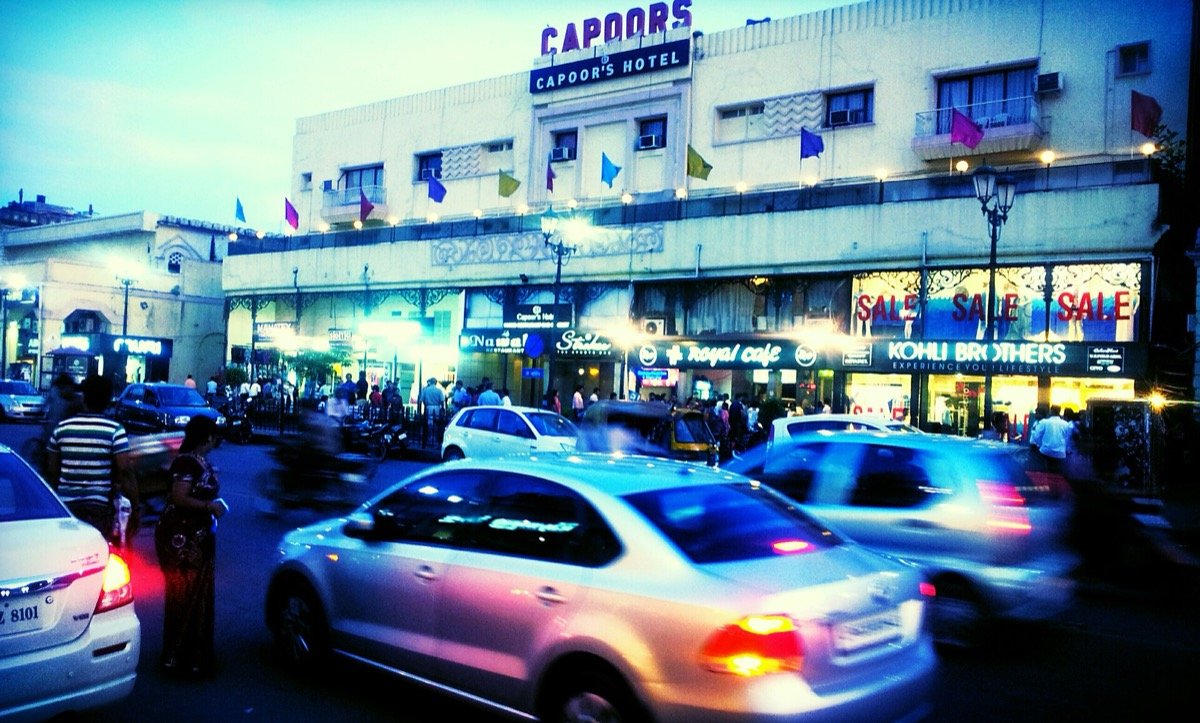
Mumbai edition turns 60 Turning point
The Mumbai edition celebrated its 60th anniversary with actor Vidya Balan as guest editor of the anniversary issue, and NBT presented ‘Udaan’ awards to nine Hindi-speaking achievers in the city. Two years earlier the paper had made politician Milind Deora guest editor for its 58th anniversary. The format suited a paper whose Mumbai identity rested on the city’s large Hindi-speaking migrant population.
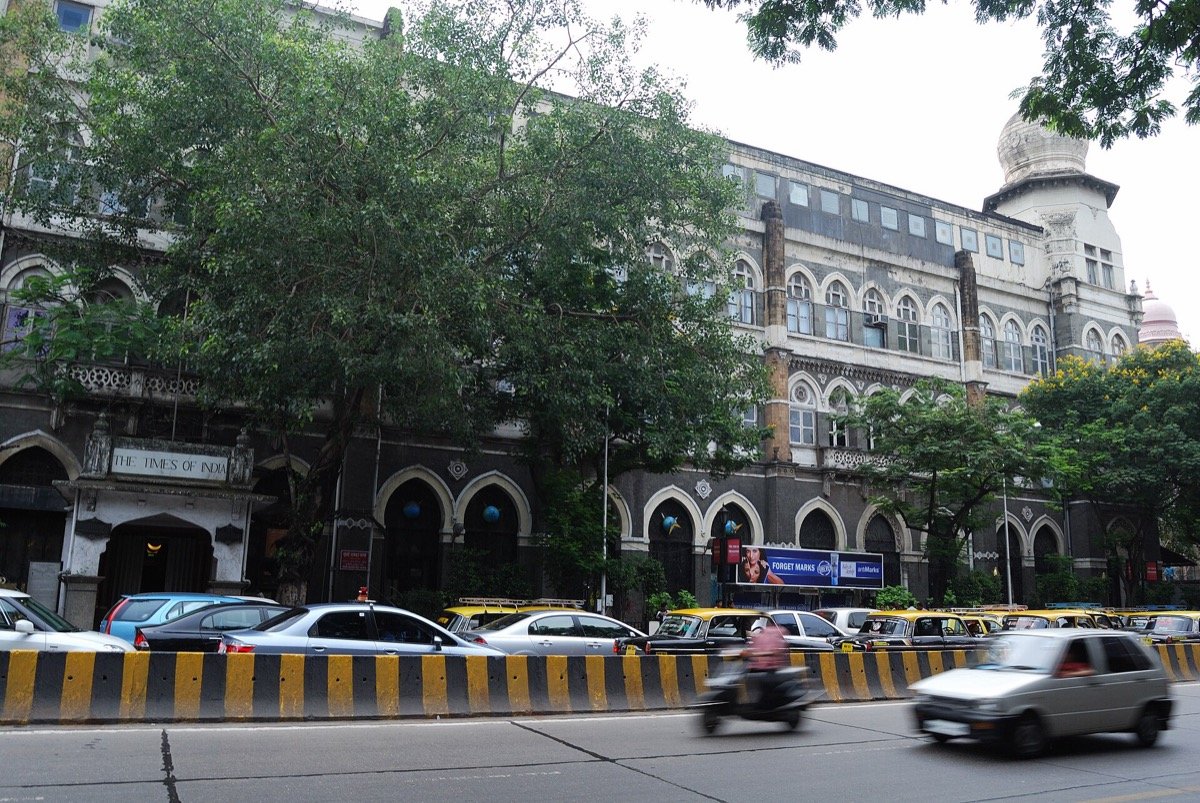
Going hyperlocal in the NCR Edition
NBT launched local editions for Faridabad and Ghaziabad, with Noida and Gurgaon due within a month, each carrying an exclusive eight-page supplement of local news. Its brand director said the satellite cities were being ‘grossly ignored by most publications’. It was the heartland lesson applied closer to home: readers buy local news.
The Times Group goes online Platform
The Times Group created Times Internet in 1999 to run the online versions of its publications, including Navbharat Times. Early news sites largely republished the print edition; the shift to continuous web publishing, photos and video came over the next decade. The exact launch date of the NBT website is not documented in the sources we found.
Mathur dies; the paper narrows Turning point
Rajendra Mathur died in office in 1991. The Times management appointed Vidya Niwas Mishra, a Sanskrit scholar and essayist, as editor-in-chief. Around the same time NBT pulled back from the heartland: by the 1990s the editions in Lucknow, Patna, Jaipur and Kolkata had gone, leaving Delhi and Mumbai. Economic reform in 1991 and satellite television from 1991-92 changed the market it would compete in.
Patna Edition
Bennett, Coleman launched The Times of India and Navbharat Times together in Patna in May 1986 through a new entity, the Bennett Coleman Patna Establishment. A former TOI Patna journalist has written that the launch also helped the owners redeploy staff from their troubled industrial units in Bihar. The Patna edition did not survive the early 1990s.
The first Lucknow edition shuts Turning point
NBT’s first Lucknow edition closed. When the paper returned in 2013, BCCL-era trade reports said it had shut in 1985 and was coming back ‘after 28 years’. Other histories of Hindi journalism describe an extended shutdown in 1989 and closure around 1990. Either way, by the start of the 1990s Lucknow, the capital of India’s most populous state, had no NBT, while Dainik Jagran, Amar Ujala and later Hindustan built their UP networks.
The Rajendra Mathur era begins Turning point
Rajendra Mathur, an English lecturer turned editor of Indore’s Nai Duniya, took charge of Navbharat Times. The Editors Guild of India says he brought ‘a mini-revolution’ to Hindi journalism with a new professionalism and ‘a more accessible and colloquial Hindi’, and that he inspired a generation of young Hindi journalists who went on to lead newsrooms. Surendra Pratap Singh, later the face of Aaj Tak, worked alongside him in Delhi.
The founding editor retires Turning point
Akshay Kumar Jain retired as Editor-in-Chief after 31 years, the whole of NBT’s first era. Months earlier, the Emergency had ended. From late June 1975 to March 1977 every Indian newspaper, NBT included, worked under pre-censorship, with political copy cleared by censors. The press emerged into the 1977 election and the first non-Congress government.
1967
An editor at the top of his profession Turning point
Akshay Kumar Jain presided over the All-India Newspaper Editors’ Conference in 1964 and 1967, served two terms on the Press Council of India and received the Padma Bhushan in 1967. Under him NBT combined national news from Delhi with a strong literary bent, typical of Hindi papers whose editors were often writers.
The owner in the dock Turning point
The MP Feroze Gandhi told Parliament that Ramkrishna Dalmia had financed his purchase of Bennett, Coleman with money moved from a bank and an insurance company he chaired. The Vivian Bose Commission investigated and Dalmia was sentenced to jail. His son-in-law Sahu Shanti Prasad Jain, who ran the company in his absence, kept control; the Jain family has run the Times Group, and NBT, ever since.
Mumbai Edition
Three years after Delhi, NBT launched in Bombay on 29 June 1950 It gave the Hindi paper a second home in India’s commercial capital, serving migrants from the north. Delhi and Mumbai would remain NBT’s only two constant editions for the next six decades.
The first issue Turning point
Hindi reference works date the first issue of Navbharat Times to 3 April 1947, about four months before independence. India was heading into Partition, mass migration, the integration of princely states and the writing of a constitution, and NBT’s archive grew with the republic’s. Its own About page says it ‘came before readers along with the country’s independence’.
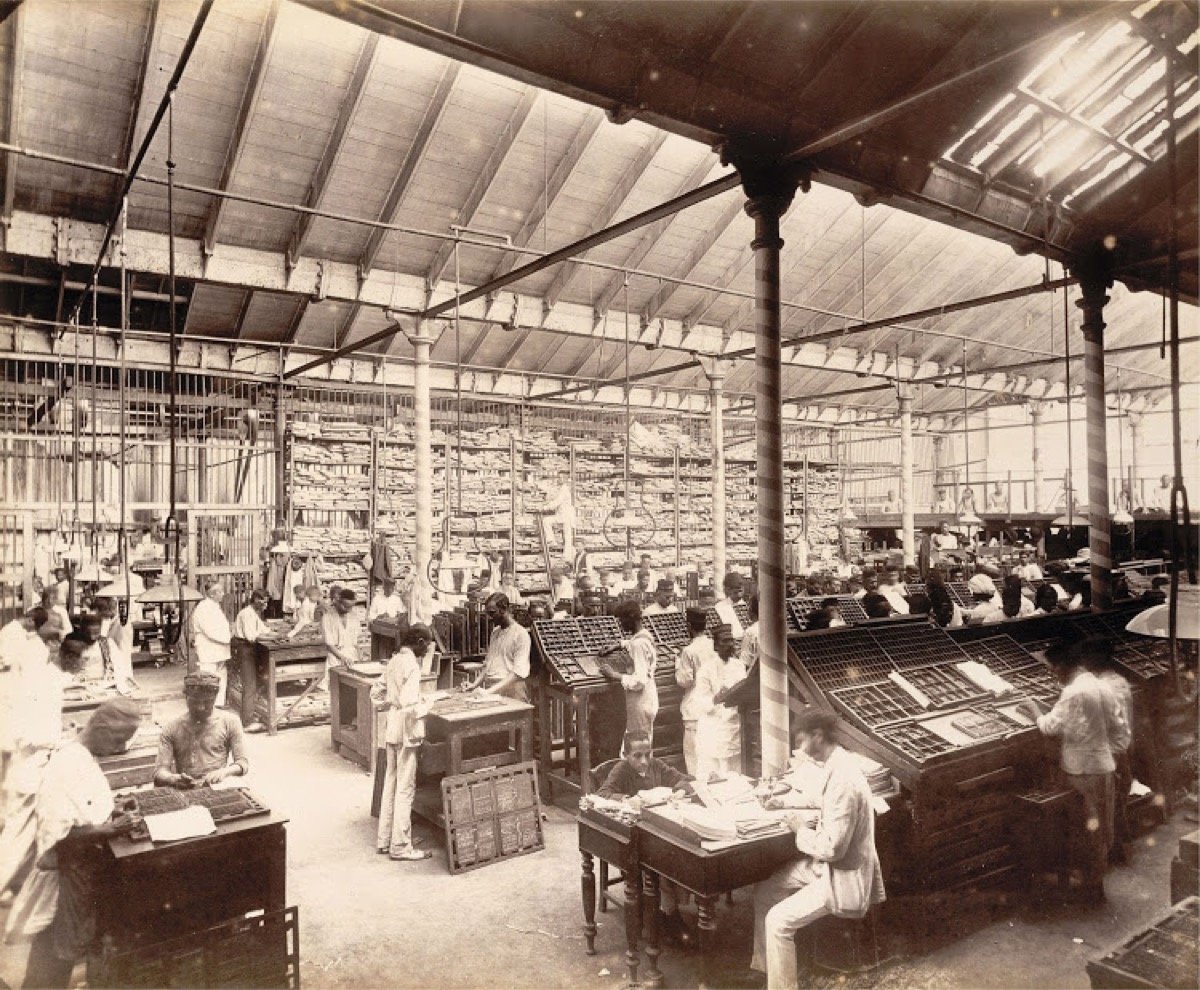
A new owner and a new Hindi daily Turning point
Industrialist Ramkrishna Dalmia took over Bennett, Coleman and Co., publisher of The Times of India, from its British owners. Navbharat Times was founded the same year as the company’s Hindi daily, and Akshay Kumar Jain, a journalist who had worked on Vir and the news agency Hindusthan Samachar, joined at its founding. Some accounts trace the title to an earlier Delhi paper; we could not verify that link (see Corrections).
The Edition Map: Retreat and Return
Where NBT printed, decade by decade.
How did the news reach an NBT reader?
Drag the year. The explorer shows where NBT was printing, how a reader could get it, who was editing it and what it was competing with. Dashed chips mark editions whose dates are not fully documented.
The Editors Who Shaped It
Not a complete list: the record between 1977 and 1982, and after the early 1990s, is thin in public sources.
| Editor | Role at NBT | Years | Known for |
|---|---|---|---|
| Akshay Kumar Jain | Founding editor, Editor-in-Chief | 1946-1977 | Padma Bhushan 1967; AINEC president |
| Rajendra Mathur | Editor | 1982-1991 | Colloquial, accessible Hindi; Editors Guild lecture in his name |
| Surendra Pratap Singh | Senior editor in Delhi under Mathur | 1980s | Later founding anchor of Aaj Tak |
| Vidya Niwas Mishra | Editor-in-Chief | From 1991 | Sanskrit scholar; Padma Bhushan |
| Madhusudan Anand | Journalist, later executive editor | Career began at NBT | Deutsche Welle, Naya Gyanodaya; died Feb 2026 |
| Sudhir Mishra | Resident editor, Lucknow | From Aug 2013 | Led the Lucknow relaunch |
| Capt. Sunder Chand Thakur | Resident editor, Mumbai | Until Aug 2026 | Retired August 2026 |
| Lalit Verma | Resident editor, Mumbai | From 31 Aug 2026 | Previously deputy resident editor |
The Rajendra Mathur Effect
Hindi newspapers of the 1950s and 1960s were often edited by writers, and their prose showed it: formal, Sanskritised and literary. Rajendra Mathur came from outside that tradition. He taught English in Indore, wrote for Nai Duniya and ended up its editor, his first job in journalism. When he took over Navbharat Times in 1982 he pushed for Hindi that sounded like the way educated readers actually spoke, and for reporting with the rigour of the English press.
The Editors Guild of India, which holds an annual Rajendra Mathur Memorial Lecture, describes his tenure as ‘a mini-revolution in the world of Hindi journalism’ and says he ‘inspired a generation of young Hindi journalists who have gone on to take leadership positions’. Surendra Pratap Singh, who later made Aaj Tak the template for Hindi TV news, worked alongside him. That may be NBT’s largest legacy: the people it trained, as much as the copies it sold.
Why NBT Lost, Then Rebuilt, the Heartland
A national Hindi paper
NBT tried to be a Hindi Times of India, with editions in Lucknow, Patna, Jaipur and Kolkata run largely from Delhi.
Local beats national
Dainik Jagran, Amar Ujala, Dainik Bhaskar and Hindustan printed dozens of district editions. A Delhi-centric paper could not match their local pages.
Retreat
The Lucknow edition shut (1985 per trade reports, c.1990 per others), and Patna, Jaipur and Kolkata followed, leaving Delhi and Mumbai.
City by city
The comeback was hyperlocal: NCR satellite editions in 2007, Lucknow city in 2013 and Kanpur later, each paired with a website reaching far beyond the print area.
Circulation and Readership, Read Carefully
Copies, print runs and readers are different measures. Here they are kept apart, with dates.
| Figure | What it measures | Source and date | How to read it |
|---|---|---|---|
| 769,146 a day | Certified average copies sold | Audit Bureau of Circulations, late 2015 (via Wikipedia) | Latest public audited figure we found |
| 1 lakh | Initial print run, Lucknow | afaqs and adgully, Aug 2013 | Copies printed, not sold |
| 26 lakh+ readers | Readership, Delhi and Mumbai combined | NBT About page, undated | Company claim; readership counts people, not copies |
| 4.23 lakh / 19.7 lakh | Delhi circulation / readers | Hindi Wikipedia, undated | Unsourced and undated; indicative only |
| 1.3 lakh / 4.7 lakh | Mumbai circulation / readers | Hindi Wikipedia, undated | Unsourced and undated; indicative only |
You will often see Navbharat Times described as ‘India’s biggest’ or ‘No.1’ Hindi paper. We do not repeat that. National Hindi readership has long been led by Dainik Jagran and Dainik Bhaskar, and the last public audited figure we could find for NBT dates from 2015. NBT’s own claim is narrower and city-level: the most-read Hindi daily in Delhi and Mumbai. Digital reach, measured in monthly users, should never be added to print figures.
1947 vs 2026: What Actually Changed
| Dimension | 1947 | 2026 |
|---|---|---|
| Language | Formal, literary Hindi; editors were often writers | Conversational Hindi, a style Mathur pushed from 1982 |
| Geography | One city, Delhi | Delhi-NCR, Mumbai, Lucknow, Kanpur, plus readers anywhere online |
| Speed | One edition a day | Continuous: publish, update, add video, notify |
| Format | Text and photographs | Text, photos, video, graphics, live blogs, e-paper, apps |
| Revenue | Copies sold plus print advertising | Print plus digital ads, video, search and social traffic |
| Competition | Other Hindi dailies and radio | Regional Hindi chains, TV, YouTube, social feeds, AI summaries |
Corrections and Clarifications
Claims in the earlier draft of this page and in the material it was built from, checked against Wikipedia, Hindi reference works, trade press and the Editors Guild.
“Launched 4 April 1946 in Mumbai and Delhi simultaneously”
The earlier draft’s claim. NBT was founded in 1946; its first issue is dated 3 April 1947 in Delhi, and Mumbai began on 29 June 1950.
Lineage from National Call and Navyug
The claim that NBT was the renamed Hindi companion of a Delhi paper, National Call, after a 1946 sale. A National Call daily did exist from 1944, but we found no source we could open that links it to NBT, so we left it out of the timeline.
When Lucknow first closed
The source material says an extended 1989 shutdown and closure in 1990. Trade reports on the 2013 relaunch say NBT shut Lucknow in 1985 and returned ‘after 28 years’. We show both.
“All editions except Delhi and Bombay closed in 1991-92”
The direction is right: 2013 reports confirm NBT had left Lucknow, Patna, Jaipur and Kolkata. We could not confirm the specific 1991-92 decision date.
“First-day print run above 100,000” in Lucknow
Launch reports give an initial print run of one lakh copies, on 4 August 2013. A print run counts copies printed, not sold.
“NBT went online in 1999”
1999 is when the Times Group formed Times Internet to run its sites. We found no dated record of the NBT website’s own launch.
1957 Delhi and 2019 Kanpur registrations
The source material cites both from the Press Registrar General’s database. We could not open the register, so we mention Kanpur as a distribution city (per Wikipedia) and flag the registration.
“India’s biggest Hindi newspaper”
Unsupported nationally. NBT’s own, undated claim is ‘most read in Delhi and Mumbai’. The earlier draft’s ‘largest selling daily in Delhi by the mid-80s’ had no source and was dropped.
What the source material skipped
Akshay Kumar Jain’s 31 years, the 1950 Mumbai launch, the Dalmia inquiry, Patna 1986, the 2007 NCR editions, Times Now Navbharat (2021) and the 2026 editor change. We added them.
What Comes After 80?
NBT’s problem in 1947 was reach: getting a Hindi paper to readers in a city where English and Urdu papers had a head start. Its problem in 2026 is the opposite. Hindi news is everywhere, free and instant, on YouTube, WhatsApp, TV and increasingly in AI-generated summaries. What an 80-year-old title can offer that a feed cannot is a dated archive, reporters on the ground in Delhi, Mumbai and Lucknow, and a name that readers and regulators can hold to account.
Its history suggests NBT will keep changing the delivery rather than the promise. It has already gone from two cities to six and back to two, from print to website to app, and lent its name to a TV channel. The constant has been a Hindi reader who wants to know what happened today.
Explore More Timelines
People Also Ask
Frequently Asked Questions
The Bottom Line
Navbharat Times was founded in 1946 by a company that had just changed owners, and printed its first issue in Delhi in April 1947 as India prepared for independence. It added Mumbai in 1950, spent 31 years under one editor, found a new Hindi voice under Rajendra Mathur, lost its heartland editions to stronger regional rivals, and rebuilt city by city while moving online. In 2026, its 80th year, it is a print-and-digital Hindi brand in Delhi, Mumbai and Lucknow. It is not the biggest Hindi newspaper in India, but it is one of the oldest.
Related AiTimeline Stories
⚠️ Editorial Note
Last updated 7 October 2026. Founding and editor details are from Wikipedia’s entries on Navbharat Times, Akshay Kumar Jain and the Times Group, and from Bharat Discovery (first-issue date); Rajendra Mathur’s tenure from the Editors Guild of India; edition launches from afaqs, adgully, exchange4media and Radiance Weekly; the 2026 editor change from exchange4media. Where sources conflict, both versions are given. AiTimeline has no commercial relationship with Navbharat Times or the Times Group.
Sources & further reading
Every dated entry above was checked against these references. Last reviewed 7 October 2026.
- Wikipedia: Navbharat Times
- Wikipedia: Akshay Kumar Jain, founding editor of Navbharat Times (1946-1977)
- Editors Guild of India: Rajendra Mathur Memorial Lecture
- Bharat Discovery: Navbharat Times (first issue, 3 April 1947, Hindi)
- afaqs: NBT launches edition from Lucknow (8 August 2013)
- adgully: Navbharat Times Lucknow, BCCL explains the rationale (August 2013)
- afaqs: Navbharat Times gets hyper local with four NCR editions (22 November 2007)
- exchange4media: Lalit Verma appointed Resident Editor of NBT Mumbai; Captain Sunder Chand Thakur retires (2026)