Big Bang 1986: How London Remade Its Financial City
London Big Bang 1986 timeline: how 27 October ended fixed commissions and floor trading, opened the City to global banks and still shapes London in 2026.
Latest Story
On 27 October 1986 the London Stock Exchange tore up its own rule book. Fixed commissions ended, brokers and jobbers could merge, foreign banks bought the old partnerships, and trading moved from the floor to screens almost overnight. London’s Big Bang turned a clubby domestic market into a global financial centre, and it still shapes the City’s debates 40 years later. This timeline dates every step, from the 1979 end of exchange controls to the 2026 listings drought and the Budget the day after the anniversary.
💡 Short Answer
The Big Bang was the deregulation of the London Stock Exchange on 27 October 1986. It abolished fixed commissions and the split between brokers and jobbers, let banks and foreign firms own member firms outright, and replaced floor trading with screen-based quotes on SEAQ. It followed a July 1983 deal between the Thatcher government and the Exchange. Costs fell, foreign banks bought most British firms, and London became a global financial hub.
London’s Big Bang: Key Questions
The Big Bang in Ten Points
- The date: Monday 27 October 1986, 40 years ago this month.
- The roots: the end of exchange controls in October 1979 and an OFT court challenge to the Exchange’s rule book.
- The deal: the July 1983 Parkinson–Goodison agreement traded the court case for an end to fixed commissions.
- Ownership: from 1 March 1986 outsiders could own 100% of member firms, up from 29.9%.
- The rules: negotiable commissions and dual capacity replaced fixed scales and the broker–jobber split.
- The screens: SEAQ crashed on the first morning, yet about 95% of business had left the floor by December.
- The costs: institutional commission fell from about 0.4% to 0.2%, and stamp duty from 1% to 0.5%.
- The buyers: Barclays, Warburg, Citicorp, UBS and others bought most of the famous old firms.
- The rules for the new City: the Financial Services Act 1986 created a statutory regulatory framework.
- 2026: the anniversary comes amid a listings drought, a stamp duty debate and a Budget on 28 October.
The Timeline: From Exchange Controls to the 40th Anniversary
Newest first. Tags mark rule changes, markets, regulation and the 2025–26 chapter.
2026
Healey’s first Budget, a day after the 40th anniversary 2025–26
Healey became Chancellor on 20 July 2026, when Andy Burnham succeeded Keir Starmer and Rachel Reeves left the Treasury. Fintech group Innovate Finance, whose members include Revolut and Monzo, has urged the government to abolish stamp duty on UK shares entirely, arguing it puts London at a disadvantage. The tax raised about £4.3 billion in 2024–25.
2026
London’s listings drought deepens 2025–26
Proceeds were still up 204% on the same period of 2025, which had been one of the weakest years on record. EY blamed conflict in the Middle East and a sell-off in AI and technology shares, and said a strong pipeline was waiting for steadier markets. Forty years after the Big Bang, the question in the City is whether London needs another one.
2026
Paper share certificates set to go; T+1 confirmed Regulation
The taskforce set out how to move all UK shares into digital form, ending paper certificates. Settlement one day after a trade, already used in the US since May 2024, will replace the two-day cycle. Like 1986, these are changes to the plumbing of the market rather than to its headline rules.
2025
Stamp duty holiday for new listings Rule change
Chancellor Rachel Reeves introduced the relief to tempt companies to list in London after high-profile departures such as Flutter and Wise moved their main listings to New York. The London Stock Exchange welcomed it; brokers argued that only full abolition of the tax would make a real difference.
2025
Listing rules rewritten and a private share market created Regulation
The FCA scrapped the old premium and standard listing segments, making it easier for founders with special voting shares to list. PISCES lets private companies’ shares trade in occasional, regulated auctions. Together with the 2022 Edinburgh Reforms they were often described as a ‘Big Bang 2.0’.
2022
The Edinburgh Reforms: ‘Big Bang 2.0’ Regulation
After Brexit and the 2008 crisis, ministers presented the package as a chance to cut post-crisis rules and help the City compete. Critics warned against repeating the mistakes of light-touch regulation that preceded 2008.
The global financial crisis tests the post-Big Bang City Markets
The large universal banks that grew out of the 1980s mergers were at the centre of the crisis. Many commentators traced the City’s risk-taking culture back to the Big Bang; others argued the real failures lay in bank capital rules and supervision decades later. The Financial Services Authority was abolished and replaced by the FCA and PRA on 1 April 2013.
2001
The Exchange becomes a listed company Markets
The Exchange had been owned by its members since 1801. Becoming a company opened it to takeover bids and, eventually, its transformation into LSEG, a data and markets group. The FSA replaced the self-regulating structure built by the 1986 Act.
1997
SETS: computers start matching orders Markets
The Big Bang had put prices on screens, but deals were still done by telephone with market makers. SETS matched buy and sell orders automatically, the next step towards today’s fully electronic market. In the same year the new Labour government made the Bank of England independent and announced a single financial regulator.
Foreign banks complete the takeover of the City Markets
Within a decade most of the British firms formed at the Big Bang had been sold to larger foreign groups. Commentators called it the ‘Wimbledon effect’: London hosted the world’s best players, but few of them were British.
Canary Wharf rises in Docklands Markets
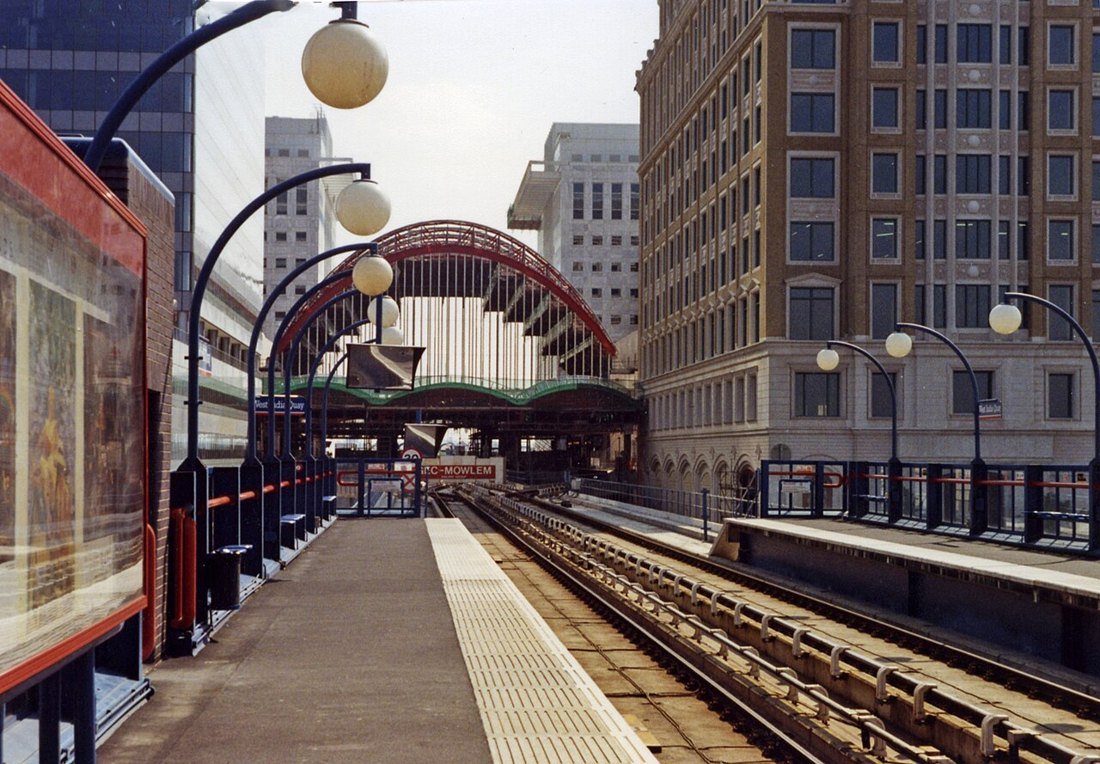
Post-Big Bang banks wanted huge dealing floors that the old Square Mile could not easily provide. The Docklands development struggled at first, but by the 2000s it housed many of the world’s biggest banks.
1987
Black Monday hits the new market Markets
The crash began on Wall Street and spread worldwide, so it was not caused by the Big Bang. But it was the first real test of London’s new market makers, who took heavy losses, and it showed that faster screen-based markets did not remove the risk of panic.
1987
A third-tier market opens, and the Bank gives its verdict Markets
The Bank found that commission on institutional deals of £100,000 to £1 million had fallen from about 0.4% to 0.2%, that 31 firms were making markets in shares compared with 13 jobbers before, and that membership of the Exchange had grown to about 360.
The floor empties, and the Guinness affair breaks Regulation
The Guinness scandal, over an illegal share-support operation during its 1986 takeover of Distillers, became the first big test of City conduct after deregulation and led to criminal trials. It reinforced the case for the new statutory regulators.
The Financial Services Act becomes law Regulation
The Act made investment business without authorisation a criminal offence and created a framework of ‘self-regulation within a statutory framework’. In the same month Stock Exchange members voted to form a new company with the International Securities Regulatory Organisation, which represented international banks in London.
1986
Big Bang day Rule change
At 8 a.m. the systems came up; by 8.25 the TOPIC price-display network was near full capacity, and SEAQ went down at 8.29. It was switched off from 9 to 10 a.m. while dealers fell back on the floor and the telephone. By the close it was stable. Thirty-one firms began making markets in 62 ‘alpha’ shares and hundreds more, and within weeks about three-quarters of business had left the floor.
The Stock Exchange agrees to merge with ISRO Rule change
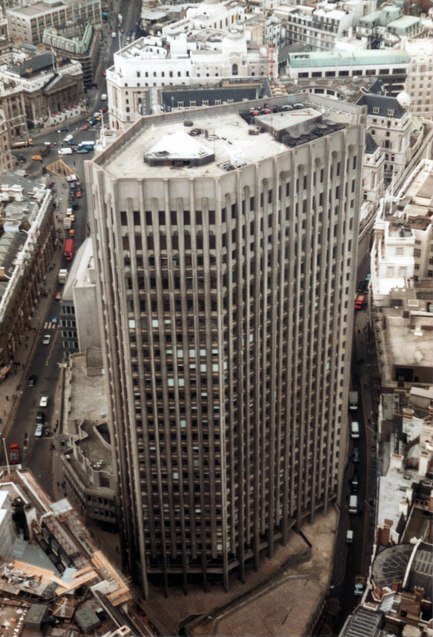
The deal brought the big international banks trading eurobonds and foreign shares in London inside the Exchange, creating one regulated market for domestic and international securities.
1986
Outsiders may own Stock Exchange firms outright Rule change
Banks that had taken stakes since 1983 completed their purchases. Barclays combined de Zoete & Bevan and Wedd Durlacher, Warburg merged Rowe & Pitman, Akroyd & Smithers and Mullens, and Citicorp, Security Pacific, UBS and others bought leading names. More than half of about 200 original member firms joined larger groups.
1986
The Governor warns of new risks Regulation
The Governor predicted that Big Bang would ‘leave a greater mark on the landscape than did Mayday 1975 in New York’, but warned that ‘both the risks and the scope for conflicts of interest will increase’. He backed a regulatory system based on statute but run largely by practitioners.
1985
Investor protection is redesigned Regulation
Professor Jim Gower’s review argued that the old patchwork of rules could not protect investors in a market of large, multi-function firms. His work shaped the Financial Services Act. Meanwhile the 1984 Budget cut stamp duty on shares from 2% to 1%.
The Parkinson–Goodison agreement Rule change
The Office of Fair Trading had taken the Exchange’s rule book to the Restrictive Practices Court. Instead of fighting a long case, the Exchange agreed to scrap fixed commissions and admit lay members to its council. Once commissions were negotiable, single capacity could not survive, and the rest of the Big Bang followed.

1979
Exchange controls abolished Rule change
British investors and pension funds could now buy foreign shares freely. Much of that business went through foreign brokers, exposing how small and under-capitalised London’s firms were. The pressure to modernise grew from there.
1975
Mayday in New York sets the precedent Markets
American brokers learned to compete on price and capital. A decade later London faced the same choice, and both the government and the Bank of England pointed to New York’s Mayday as the model to follow, and to outdo.
Enter the size of a share purchase to compare commission plus stamp duty before and after 27 October 1986.
Rates are those reported by the Bank of England in February 1987. The investor type is picked from the deal size; spreads and minimum charges are not included.
–
What Exactly Changed on Big Bang Day?
The old London market and the new one, side by side.
| Before the Big Bang | After 27 October 1986 | |
|---|---|---|
| Commissions | Fixed minimum scale | Negotiated; many institutions deal net |
| Roles | Single capacity: brokers act for clients, jobbers make prices | Dual capacity: firms can broker and make markets |
| Ownership | Outsiders limited to 29.9%; partnerships dominant | Up to 100% outside ownership from 1 March 1986; corporate members |
| Market making | 13 equity jobbers, most of them small | 31 equity market makers on day one |
| Trading | Face to face on the Exchange floor | Telephone and screens, with SEAQ quotes |
| Stamp duty | 1% (2% before 1984) | 0.5% |
| Regulation | Exchange rules and non-statutory self-regulation | Financial Services Act 1986: SIB and self-regulating organisations |
| Gilts | A few jobbers and the Government Broker | Bank of England-approved gilt-edged market makers |
The single change that unlocked everything was the end of fixed commissions. Once brokers had to compete on price, they needed capital, research and their own dealing books to survive, and single capacity could no longer be defended. That in turn made outside ownership essential: only banks had the balance sheets to support market making on the new scale.
The technology was the most visible part. SEAQ did not match orders automatically; it displayed market makers’ competing prices, and deals were then agreed by telephone. But once every dealer could see the best prices on a screen, there was no reason to stand on the floor, and the Bank of England admitted that ‘the speed with which the floor has declined in importance was unexpected’.
The Big Bang in Five Numbers
How SEAQ Sorted London’s Shares
Market makers’ obligations depended on how actively a share traded.
| SEAQ category | Number on 27 Oct 1986 | End-December 1986 | Rules |
|---|---|---|---|
| Alpha | 62 | 76 | Most active shares; at least ten market makers at launch; firm prices and trades published at once |
| Beta | 427 | 534 | Firm continuous quotes; trades published next day |
| Gamma | 1,240 | 1,296 | Indicative prices, firm on request |
| Delta | 244 | 244 | Least liquid; no quotes on screen |
| Total | 1,973 | 2,150 | – |
The Buying Spree: Banks Move Into the City
Between July 1983 and the start of 1986, UK and foreign banks took stakes in Stock Exchange firms in anticipation of the rule change; after 1 March 1986 most of the deals were completed. The Bank of England counted 65 outside entities with stakes in original member firms, more than half of them commercial or investment banks, mainly from the US, the UK and the rest of Europe. About 100 smaller, mostly provincial firms stayed independent.
Pick a famous old City firm to see who bought it around 1986, and what happened next.
Was the Big Bang a Success?
Cheaper, deeper markets
Commissions and spreads fell, more firms quoted firm prices in large size, and trading volumes rose many times over in the following decade.
A global hub
London became a leading centre for international equities, bonds and foreign exchange, helped by its time zone between Asia and New York.
Jobs and investment
Foreign banks brought capital, technology and many thousands of jobs, and Canary Wharf grew out of their demand for space.
The ‘Wimbledon effect’
Within a decade almost all the big British broking and investment banking firms had been sold to foreign groups.
Conflicts and scandal
Combining broking, dealing and corporate advice created conflicts of interest, and the Guinness affair erupted within weeks.
A riskier culture
Critics trace the bonus-driven, risk-taking City of the 2000s, and the scale of the 2008 bank rescues, back to the post-1986 model.

2026: The 40th Anniversary and the Next Big Bang Debate
The anniversary arrives at an awkward moment for London’s share market. EY counted just one UK listing in the third quarter of 2026, the quietest quarter since the end of 2023, and eight in the first nine months, raising £606.9 million. Large companies have moved their main listings to New York, and planned floats have been delayed by war in the Middle East and a sell-off in technology shares.
The response has been a string of smaller reforms rather than one big one: new listing rules in 2024, the PISCES private market, a three-year stamp duty holiday for new listings from November 2025, digital share registers and one-day settlement from 11 October 2027. The new Chancellor, John Healey, presents his first Budget on 28 October 2026, the day after the anniversary, with the City pressing for stamp duty on shares to be abolished altogether.
| Then | Now (2026) |
|---|---|
| Stock Exchange owned by its members | LSEG, a listed data and markets group |
| SEAQ quotes and telephone dealing | Fully electronic order books since SETS in 1997 |
| Settlement in fortnightly accounts | Two days after a trade; one day from 11 October 2027 |
| Stamp duty 0.5% from 1986 | Still 0.5%, except three years’ relief for new listings since November 2025 |
| Financial Services Act 1986 and SIB | FCA and PRA since 2013 |
| About 200 member firms, mostly British partnerships | Global banks; very few British-owned investment banks of scale |
Lessons From the Big Bang
- One rule can unravel a system: ending fixed commissions made the rest of the reforms inevitable.
- Technology moves faster than plans: the floor was expected to survive; it emptied in weeks.
- Openness attracts capital, and buyers: London won the business but lost most of its home-grown firms.
- Deregulation needs regulation: the Financial Services Act was passed in the same month as the Big Bang.
- Efficiency is not safety: Black Monday came less than a year later.
- Reform is never finished: 40 years on, London is still rewriting its market rules to compete.
Explore More Timelines
People Also Ask
Frequently Asked Questions
Conclusion: The Day the City Went Global
The Big Bang began as a settlement of a competition case and ended as a revolution. In a single day London scrapped fixed commissions and single capacity, opened its firms to the world’s banks and moved its market onto screens. It made dealing cheaper and London far bigger, at the cost of British ownership and, critics say, a more reckless culture.
Forty years later the lesson still holds: financial centres are shaped by the rules on who can take part, how markets work and how risk is controlled. London changed all three in 1986, and in 2026 it is again asking whether it needs to change them once more.
Related AiTimeline Stories
⚠️ Editorial Note
This timeline draws mainly on the Bank of England’s Quarterly Bulletins of March 1986 and February 1987, HMRC’s background on the Big Bang, contemporary accounts of Big Bang day, EY’s UK IPO reports, the Institute for Government and City AM. Figures for commissions and market structure are those reported by the Bank of England at the time. Later events, including the 2026 Budget, are described as known on 18 October 2026. This article is general information, not investment advice. AiTimeline has no commercial relationship with any firm named.
Sources & further reading
Every dated entry above was checked against these references. Last reviewed 18 October 2026.
- Bank of England Quarterly Bulletin (February 1987): Change in the Stock Exchange and regulation of the City
- Bank of England Quarterly Bulletin (March 1986): City regulation after Big Bang, Governor's speech of 21 January 1986
- HMRC Stamp Taxes on Shares Manual STSM121020: Financial markets background, Big Bang
- Margaret Thatcher Foundation: Geoffrey Howe announces the end of exchange controls, 23 October 1979
- Goldman Sachs: 'Big Bang' deregulation bolsters London's position as global finance center
- Goldman Sachs: Entry into London's evolving financial market (1986)
- Ranald Michie, The London Stock Exchange: A History, chapter 12 'Big Bang' (Oxford University Press)
- EY: UK IPO listings fall to lowest level since 2023 as pipeline builds (October 2026)
- Institute for Government: Budget 2026 (28 October 2026)
- City AM: Autumn Budget, Reeves launches stamp duty holiday for new listings (26 November 2025)
- City AM: 40 years on, the next Big Bang is happening behind the scenes (October 2026)
- City AM: Inside Big Bang, the chaotic October morning that created the modern City
- FCA: Final report of the Accelerated Settlement Taskforce and the UK move to T+1