Delimitation Freeze: India’s Lok Sabha Seat Allocation History
India delimitation freeze explained: why Lok Sabha seats per state still rest on the 1971 Census, the 84th and 87th Amendments and the failed 2026 bill.
Latest Story
India’s population has more than doubled since 1971, yet the number of Lok Sabha seats each state holds is still based on that year’s count. The India delimitation freeze, introduced in 1976 and extended in 2001, was meant to protect states that slowed their population growth. It has kept the federal balance steady, but at the cost of unequal constituencies. This timeline explains how the freeze began, what it does and does not cover, and why a 2026 attempt to end it failed in Parliament.
💡 Short Answer
The number of Lok Sabha seats each state gets has been frozen on the 1971 Census since the 42nd Amendment of 1976. The 84th Amendment of 2001 extended the freeze until the first census after 2026, but allowed constituency boundaries inside states to be redrawn; that was done on 2001 figures and took effect in 2008. A 2026 bill to enlarge the Lok Sabha to 850 seats on 2011 figures was defeated on 17 April 2026, so the freeze still stands.
The Delimitation Freeze: Key Questions
The Freeze in Ten Points
- The original rule: the Constitution of 1950 said seats should follow population and be readjusted after every census.
- Three reallocations: commissions of 1952, 1963 and 1973 redistributed seats on the 1951, 1961 and 1971 censuses.
- The freeze: the 42nd Amendment of 1976 locked seat totals on the 1971 Census.
- The extension: the 84th Amendment, signed on 21 February 2002, pushed the freeze to the first census after 2026.
- Boundaries still moved: the 87th Amendment let the 2002 commission redraw constituencies on 2001 figures.
- New map, same totals: the redrawn constituencies took effect on 19 February 2008 and have been used in every Lok Sabha election since 2009.
- The gap: on 2011 figures an MP from Rajasthan represents about 27 lakh people, one from Kerala about 17 lakh.
- The link to women’s reservation: the 106th Amendment of 2023 made the one-third quota wait for a post-census delimitation.
- The 2026 attempt: an 850-seat Lok Sabha on 2011 figures fell short in the Lok Sabha on 17 April 2026.
- Now: Census 2027 is under way and a fresh bill is being discussed, but nothing new has been enacted.
Two Kinds of Delimitation
The single most misunderstood point in this debate: the freeze covers one of these, not both.
How many seats each state gets
The inter-state allocation of Lok Sabha seats, and the total size of each state assembly. Still based on the 1971 Census: Uttar Pradesh 80, Maharashtra 48, Tamil Nadu 39, Kerala 20.
Where each constituency’s lines fall
The boundaries of constituencies inside each state, and which seats are reserved for SC and ST candidates. Redrawn on the 2001 Census by the commission chaired by Justice Kuldip Singh.
The Timeline: From the 1950 Constitution to the 2026 Vote
Newest first. Tags mark constitutional changes, commissions, elections, the political debate and the 2025–26 chapter.
2026
Talk of a special session to try again 2025–26
Business Today and Outlook reported on 16 October 2026 that the Centre was weighing a special sitting of Parliament before the BRICS Parliamentary Forum on 26–27 October to bring back delimitation and women’s reservation legislation. A constitutional amendment needs about two-thirds of members voting, roughly 360 in a full House, far more than the 298 the April bill received. At a party meeting on 18 October, DMK president M.K. Stalin reportedly told his MPs the party would state its position on the floor of the House. Until a bill is introduced, the April defeat leaves the 1971 freeze in place.
2026
The 131st Amendment Bill is defeated Constitution
It was the first constitutional amendment brought by the Modi government to fail in the Lok Sabha. Opposition parties, led by Congress, the DMK and others, argued that a delimitation on 2011 Census figures would shrink the share of southern and north-eastern states while a fresh census was already under way, and that women’s reservation should be implemented without being tied to delimitation. Parliamentary Affairs Minister Kiren Rijiju then withdrew the two linked bills.
2026
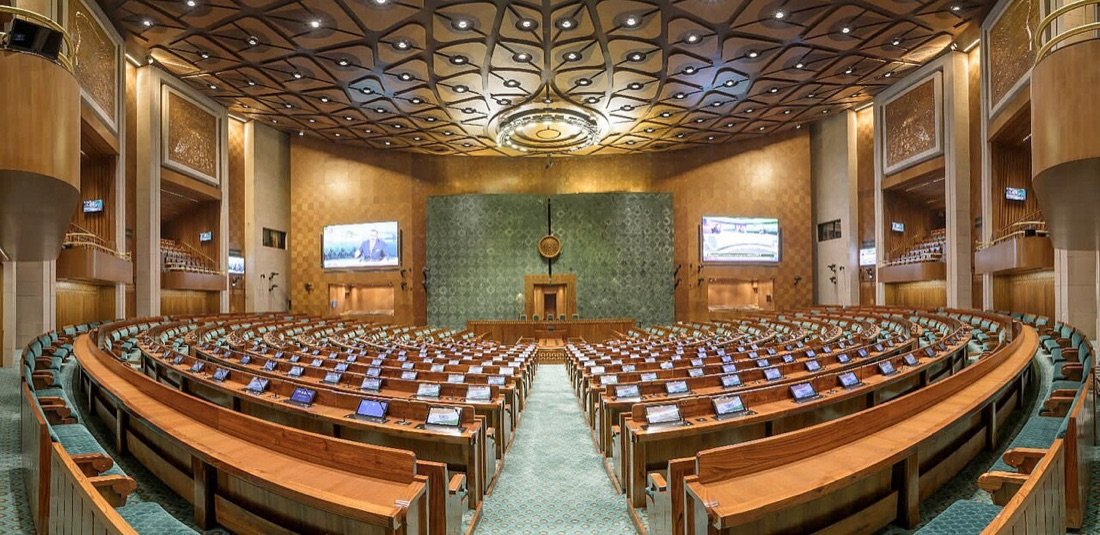
A plan for an 850-seat Lok Sabha Constitution
The Constitution (131st Amendment) Bill, 2026 would have restored the rule that seats follow population, let Parliament choose by law which census to use and when to delimit, and dropped the requirement that women’s reservation wait for a post-2023 census. The Delimitation Bill, 2026 specified the latest published census, which in practice meant 2011. PRS Legislative Research calculated that at the current House size Tamil Nadu would fall from 39 seats to 32 and Kerala from 20 to 15, while Uttar Pradesh would rise from 80 to 89. PRS also pointed out that the bills left the timing of future delimitations to a simple majority in Parliament.
2026
Census 2027 gets under way 2025–26
Snow-bound areas of Ladakh, Jammu and Kashmir, Himachal Pradesh and Uttarakhand use an earlier reference date of 1 October 2026. Census 2027 is the first census taken after 2026, so once its relevant figures are published, Article 82 as it stands allows the freeze on seat allocation to end. It is also the first census after the women’s reservation law came into force, which links the two issues.
Southern states form a Joint Action Committee Debate
Chief Minister M.K. Stalin argued that if the House is enlarged, each state’s share should stay at its 1971 ratio. Union Home Minister Amit Shah had said in late February 2025 that southern states would not lose a single seat and that any increase would be on a pro rata basis, but no formula was put in writing until the April 2026 bills, which used population instead.
Another general election on the 2008 map Election
It was the fourth Lok Sabha election fought on constituencies drawn from 2001 Census figures. By then some constituencies, such as Malkajgiri in Telangana, held several times as many voters as the smallest ones, a sign of how much populations had shifted within states as well as between them.
2023
Assam’s constituencies redrawn Commission
Assam had been left out of the 2008 exercise because of security concerns and objections. The Election Commission carried out the delimitation under the Representation of the People Act, changing boundaries and reserved seats but not the state’s totals, which remain frozen.
2023
Women’s reservation tied to delimitation Constitution
The Act reserves one-third of seats in the Lok Sabha and state assemblies for women, including within seats reserved for Scheduled Castes and Scheduled Tribes. But Article 334A says the reservation starts only after a delimitation based on the first census taken after the Act comes into force. That clause joined two separate debates, women’s representation and the electoral map, into one.
2022
Jammu and Kashmir’s new map Commission
After the 2019 reorganisation of the state into two union territories, a separate commission redrew J&K’s constituencies on 2011 Census figures. Its decisions, including more assembly seats for Jammu, were contested politically, but the 2024 assembly election was held on the new map.
2021
Census 2021 is postponed Debate
The delay meant the 2011 Census remained the latest available count for a decade longer than planned. It also pushed back any census that could end the freeze, which the 84th Amendment had tied to the first census after 2026.
First Lok Sabha election on the new boundaries Election
Hundreds of constituencies changed shape, some disappeared and new ones were created, but every state kept exactly the same number of MPs. Seats reserved for Scheduled Castes and Scheduled Tribes were recalculated on 2001 figures, rising from 79 and 41.
2008
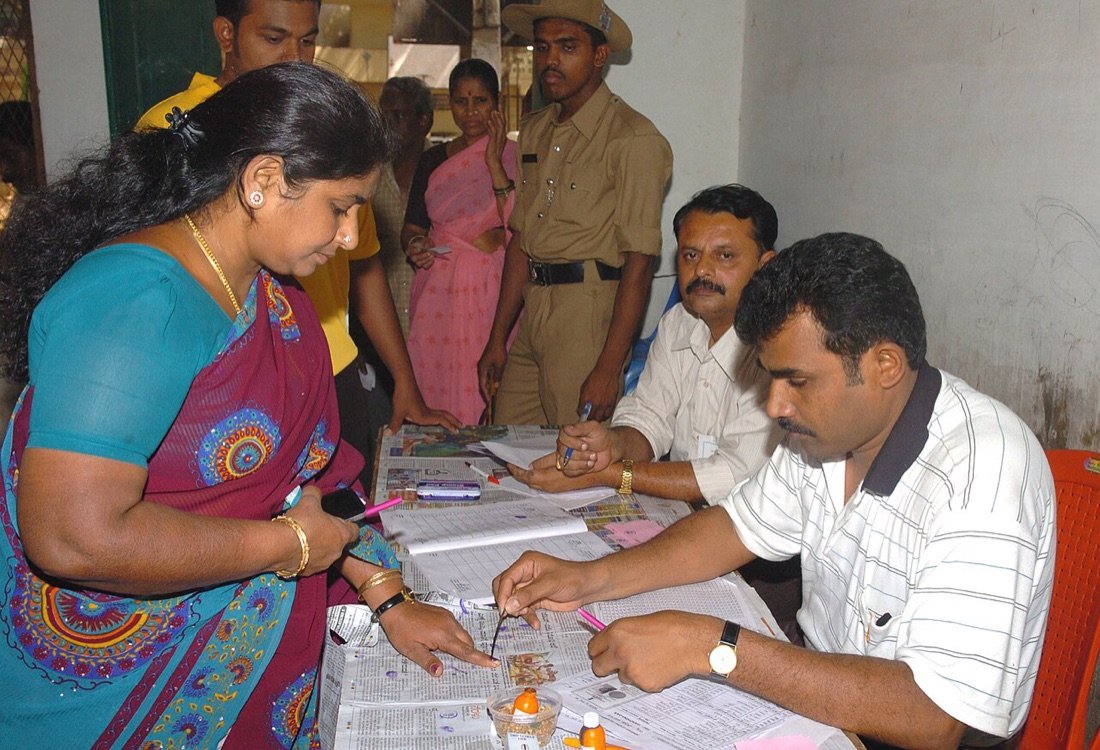
The 2002 commission’s map takes effect Commission
Karnataka’s assembly election in May 2008 was the first held on the new map. The commission had worked for more than five years, holding public hearings in each state, and its orders could not be challenged in court.
The 87th Amendment switches to 2001 figures Constitution
By the time the commission was ready to start, provisional figures from the 2001 Census were available, and drawing boundaries on a decade-old count made little sense. The amendment changed only the census used for boundaries, not the rule protecting each state’s total.
2002
The fourth Delimitation Commission is set up Commission
Its brief was limited. It could redraw constituencies and recalculate reserved seats inside each state, but it could not change how many seats any state had in the Lok Sabha or its assembly.
2002
The 84th Amendment extends the freeze to 2026 Constitution
The original freeze was due to expire with the 2001 Census. The government of Atal Bihari Vajpayee chose to extend it by 25 years, saying the measure would help states pursue population stabilisation in line with the National Population Policy of 2000. The same amendment kept the 1971 Census as the basis for the value of votes in presidential elections.
1976
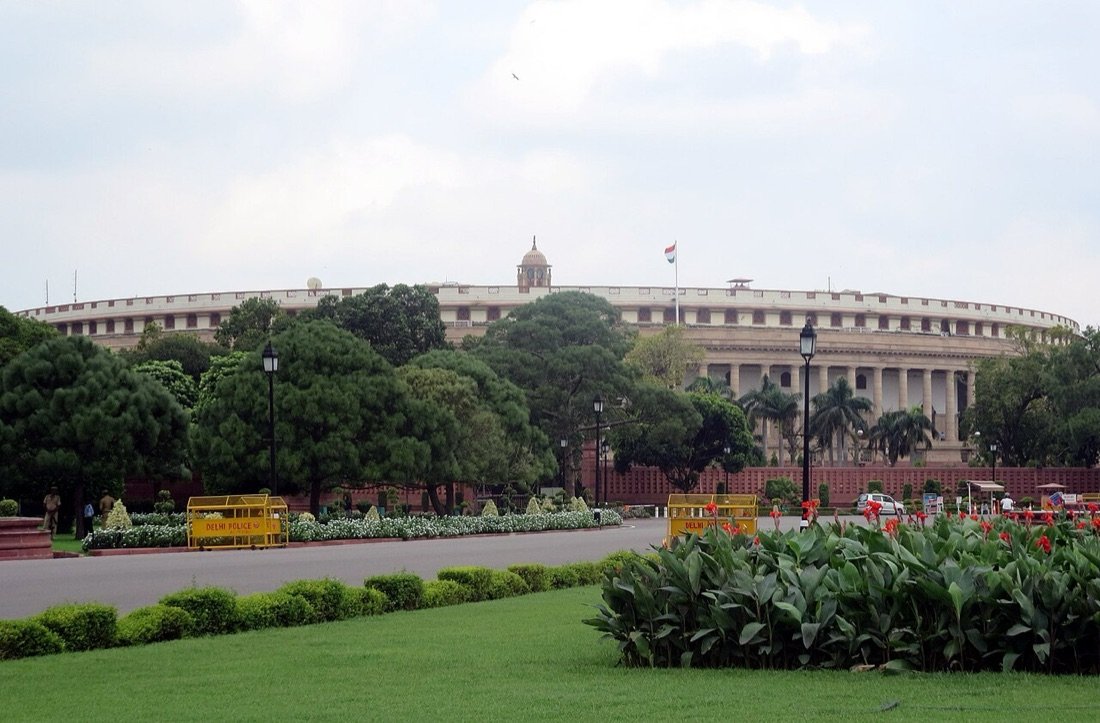
The 42nd Amendment freezes seat shares Constitution
The amendment changed Articles 55, 81, 82, 170, 330 and 332. It came months after the government’s National Population Policy statement of April 1976, and its rationale was that states succeeding in family planning should not be punished with fewer seats. The 543-seat House drawn from the 1971 Census was used for the first time in the March 1977 election.
1976
Third delimitation, on the 1971 Census Commission
This was the last exercise to reallocate seats among states according to population. Its numbers, such as 80 seats for undivided Uttar Pradesh and 39 for Tamil Nadu, are the ones still in force, carried over to new states such as Uttarakhand, Jharkhand, Chhattisgarh and Telangana when they were created.
1966
Second delimitation, on the 1961 Census Commission
Seats were reallocated among states and new constituencies drawn as the population grew from about 36 crore in 1951 to 44 crore in 1961.
1957
First Delimitation Commission Commission
The first general election of 1951–52 had used constituencies set out by presidential order. The commission put the process on a statutory footing and established the principle, written into Articles 81 and 82, that seats would be readjusted after every census.
1952
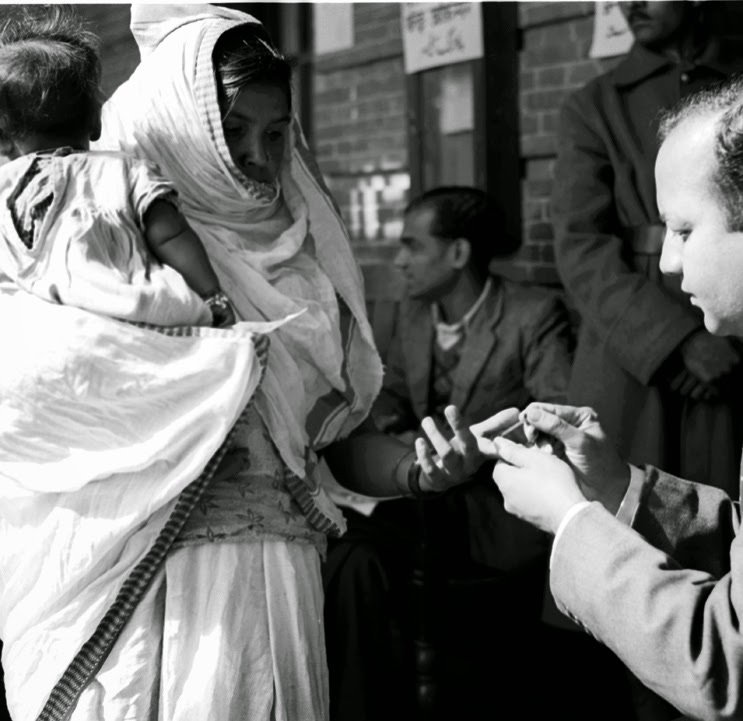
India’s first general election Election
Two-member constituencies elected one general and one Scheduled Caste or Scheduled Tribe member. The Constitution required that each state’s seats be in proportion to its population and that the ratio of population to seats be, as far as practicable, the same for every state.
1950
The Constitution sets the rule Constitution
The framers chose population as the measure of representation in the Lok Sabha, with the Rajya Sabha as the house of the states. Readjustment after each census was meant to be routine, which is why the 1976 freeze was such a break from the original design.
What a Population-Based Allocation Would Mean
PRS Legislative Research ran the 2026 bills’ formula on 2011 Census figures. Pick a state.
Choose a state to see its seats today and what a 2011 Census-based delimitation would mean.
–
Projections by PRS Legislative Research, April 2026. They are arithmetic, not enacted law; Census 2027 figures would change them.
How Many People Each MP Represents
2011 Census population divided by today’s seats, for the largest states. The national average is 22.3 lakh.
| State | Seats | Population (2011) | People per MP |
|---|---|---|---|
| Rajasthan | 25 | 6.85 crore | 27.4 lakh |
| Bihar | 40 | 10.41 crore | 26.0 lakh |
| Haryana | 10 | 2.54 crore | 25.4 lakh |
| Madhya Pradesh | 29 | 7.26 crore | 25.0 lakh |
| Uttar Pradesh | 80 | 19.98 crore | 25.0 lakh |
| Jharkhand | 14 | 3.30 crore | 23.6 lakh |
| Maharashtra | 48 | 11.24 crore | 23.4 lakh |
| Gujarat | 26 | 6.04 crore | 23.2 lakh |
| Assam | 14 | 3.12 crore | 22.3 lakh |
| Karnataka | 28 | 6.11 crore | 21.8 lakh |
| West Bengal | 42 | 9.13 crore | 21.7 lakh |
| Punjab | 13 | 2.77 crore | 21.3 lakh |
| Uttarakhand | 5 | 1.01 crore | 20.2 lakh |
| Andhra Pradesh + Telangana | 42 | 8.46 crore | 20.1 lakh |
| Odisha | 21 | 4.20 crore | 20.0 lakh |
| Tamil Nadu | 39 | 7.21 crore | 18.5 lakh |
| Himachal Pradesh | 4 | 0.69 crore | 17.2 lakh |
| Kerala | 20 | 3.34 crore | 16.7 lakh |
In 1971, the average constituency held about 10 lakh people. On 2011 figures it holds about 22 lakh, and by Census 2027 it will be larger still. The spread between states is the core of the problem: a vote in Kerala carries roughly 1.6 times the weight of a vote in Rajasthan in deciding the make-up of the Lok Sabha.
Which Census Counts for What?
India’s electoral map runs on three different census years. Pick a rule to see which one applies.
Every Delimitation Exercise at a Glance
| Commission | Law | Census used | What it could change |
|---|---|---|---|
| 1952 | Delimitation Commission Act, 1952 | 1951 | Seats per state and boundaries |
| 1963 | Delimitation Commission Act, 1962 | 1961 | Seats per state and boundaries |
| 1973 | Delimitation Act, 1972 | 1971 | Seats per state and boundaries (the last full reallocation) |
| 2002 | Delimitation Act, 2002 | 2001 (after the 87th Amendment) | Boundaries and reserved seats only; state totals frozen |
| J&K, 2020–22 | J&K Reorganisation Act, 2019 and Delimitation Act, 2002 | 2011 | Boundaries and assembly size (90 seats) |
| Assam, 2023 (ECI) | Representation of the People Act, 1950, s. 8A | 2001 | Boundaries and reserved seats only |
How the Lok Sabha Has Grown
| Election | Lok Sabha seats | Based on |
|---|---|---|
| 1951–52 | 489 | Presidential order, 1951 Census |
| 1957, 1962 | 494 | 1952 commission, 1951 Census |
| 1967, 1971 | 520 | 1963 commission, 1961 Census |
| 1977 to 2004 | 543 | 1973 commission, 1971 Census |
| 2009 to 2024 | 543 | Seats per state on 1971; boundaries on 2001 |
| Proposed 2026 (failed) | Up to 850 | 2011 Census |
The Constitution currently caps the House at 550 elected members. The 543 figure has not changed since the 1977 election.
The Debate: Equal Votes or Federal Balance?
One person, one vote
Citizens in populous states are under-represented. The Constitution intended seats to follow population, and a half-century freeze has left constituencies of very different sizes. A larger House could add seats without cutting any state’s numbers.
Don’t punish success
States that cut fertility, often by investing in health and education, would lose relative influence. Southern states also argue that they pay more in taxes than they receive and fear losing a say over national policy.
Grow the House, keep the shares
Increase every state’s seats by the same percentage, as the DMK has demanded and the government was reported in October 2026 to be offering. This shrinks constituencies but does nothing for unequal vote weight between states.
Which census, and when?
The 2026 bill chose 2011 figures while Census 2027 was under way, and would have let a simple majority decide future timing. Critics, including PRS, flagged that loss of constitutional certainty.
What Comes Next
Two clocks are running. The first is the census: once Census 2027’s relevant figures are published, the constitutional freeze on seat allocation can lapse, though only an Act of Parliament and a new Delimitation Commission can actually redraw the map. The second is political: the government wants delimitation and women’s reservation in place before the 2029 general election, which PRS judged unlikely on the Census 2027 route.
That is why a fresh constitutional amendment is being discussed. Any version will need roughly two-thirds of the members voting, which means support from at least some opposition parties. The likely bargain, a bigger House with each state’s share protected, would settle the federal question but leave the equal-vote question for later.
| Question | Where it stands (19 October 2026) |
|---|---|
| Seat allocation among states | Frozen on the 1971 Census until the first census after 2026 is published |
| 131st Amendment Bill | Defeated in the Lok Sabha on 17 April 2026, 298–230 |
| Delimitation Bill, 2026 | Withdrawn on 17 April 2026 |
| Special session | Reported as under consideration for late October; not notified |
| Census 2027 | House listing done in 2026; population count 9–28 February 2027 |
| Women’s reservation | Law in force since 16 April 2026; no seat reserved until a post-census delimitation |
Explore More Timelines
People Also Ask
Frequently Asked Questions
Conclusion: A Temporary Freeze That Became Permanent
The delimitation freeze was meant to last 25 years. It has now lasted 50, outliving the population policy that justified it, and it has quietly become one of the pillars of India’s federal balance. Constituency boundaries have been redrawn, but the share of power between states has not moved since 1971.
The defeat of the 131st Amendment Bill in April 2026 showed that the freeze cannot be undone by a simple majority. Whatever replaces it will have to reconcile equal votes, regional fairness, the size of Parliament and women’s representation in a single bargain.
Related AiTimeline Stories
⚠️ Editorial Note
This timeline separates two things that are often confused: the freeze on how many seats each state gets, which still rests on the 1971 Census, and the redrawing of constituency boundaries inside states, which was done on 2001 figures in 2008. Proposals discussed in 2026 are described as proposals; none has become law. Seat projections are PRS Legislative Research’s arithmetic on 2011 Census figures, not official allocations. Sources include the Election Commission of India, PRS, the Constitution and reporting by LiveLaw, Business Today and others. Events after 19 October 2026 are not covered.
Sources & further reading
Every dated entry above was checked against these references. Last reviewed 19 October 2026.
- Election Commission of India: FAQs on parliamentary constituencies and delimitation
- Election Commission of India: Delimitation Commission, 2002
- PRS Legislative Research: Constitution (131st Amendment) Bill, 2026, bill summary
- PRS Legislative Research: Issues for Consideration, Delimitation Bills of 2026 (16 April 2026, with state-wise projections)
- LiveLaw: Lok Sabha rejects Constitution (131st) Amendment Bill 2026; Centre withdraws Delimitation Bill (17 April 2026)
- Associated Press: India's Parliament blocks Modi's bid to redraw voting boundaries alongside women's seat quota
- Business Today: Centre likely to convene special session of Parliament later this month; delimitation, Women's Reservation Bill on agenda (16 October 2026)
- Outlook: Special Parliament session likely this month to pass women's quota, delimitation bills
- Press Information Bureau: Census 2027 document (May 2026)
- Carnegie Endowment: India's Emerging Crisis of Representation (Milan Vaishnav and Jamie Hintson, 2019)
- Onmanorama: Delimitation hanging like sword of Damocles, says Pinarayi at DMK's JAC meet (22 March 2025)