Spectrum Auctions in India: From the 2G Row to 5G
India spectrum auctions timeline: the 2G licence row, 3G and 4G bids, the record 2022 5G sale, the thin 2024 round and why the next auction is on hold.
Latest Story
Every mobile call and video stream in India rides on radio spectrum the government sells to telecom companies. India’s spectrum auctions grew out of the 2G allocation scandal: after the Supreme Court cancelled 122 licences in 2012, open bidding became the rule. Since then auctions have raised roughly ₹5.9 lakh crore, peaking with the 5G sale of 2022. This timeline dates every round, from the 1994 telecom policy to TRAI’s 2026 recommendations and the government’s decision to wait.
💡 Short Answer
India sells mobile spectrum through online auctions run by the Department of Telecommunications on TRAI’s advice. The system became the rule after the Supreme Court cancelled 122 licences from the 2008 2G allocation in February 2012. The 3G auction of 2010 raised ₹67,719 crore, and the 5G auction of July–August 2022 a record ₹1,50,173 crore. The June 2024 round raised only ₹11,341 crore, and no auction has been held since.
India’s Spectrum Auctions: Key Questions
India’s Spectrum Story in Ten Points
- The start: the 1994 telecom policy opened mobile services to private companies; the first call was made in Kolkata on 31 July 1995.
- The rescue: NTP 1999 replaced fixed licence fees with revenue sharing, the root of later AGR disputes.
- The scandal: 2G licences issued on 10 January 2008 at 2001 prices led to the CAG’s ₹1.76 lakh crore estimate.
- The first big auction: 3G and BWA raised about ₹1.06 lakh crore in 2010.
- The court: 122 licences were cancelled on 2 February 2012 and auctions became the rule.
- The acquittals: a CBI court acquitted all accused in December 2017; the CBI’s appeal is pending.
- The disruptor: Jio, built on BWA spectrum won in 2010, launched in September 2016.
- The peak: the 2022 5G auction drew ₹1,50,173 crore, and 5G reached 779 districts in two years.
- The slump: the 2024 auction raised ₹11,341 crore and none has been held since.
- 2026: TRAI’s plan for a nine-band auction waits, while satellite spectrum is set to be assigned without bidding.
The Timeline: From the 1994 Policy to the 2026 Pause
Newest first. Tags mark auctions, policy, courts, market and the 2025–26 chapter.
2026
No auction this year, reports say 2025–26
Reports on 15 October 2026 said the government had decided not to hold a spectrum auction this year because operators are not ready to spend more. Asked on 9 October, Communications Minister Jyotiraditya Scindia said a ‘fairly reasonable amount’ of spectrum had already been distributed and that an auction would follow as the industry moves to 5G Standalone and 6G and demand appears. TRAI’s February recommendations therefore remain on the table, not in a notice.
2026
Satellite spectrum framework clears the DCC 2025–26
Satellite broadband operators Starlink, Eutelsat OneWeb and Jio’s satellite venture hold licences but cannot launch commercially without spectrum. Under the Telecommunications Act 2023, satellite spectrum is assigned administratively, not auctioned, a point Reliance Jio and Bharti Airtel had contested. Draft rules for administrative assignment were published in June 2026. Cabinet approval and Home Ministry security clearances were still pending in October.
2026
TRAI recommends the next auction Policy
The Department of Telecommunications had asked for the recommendations on 15 May 2025, and TRAI consulted from 30 September 2025. Its proposals include a second try at the 600 MHz band with a 24-year term, a four-year payment holiday and only 5% upfront; a discount of up to 10% of the price for operators that build sites in coverage gaps; spectrum caps of 35% per operator; and taking back spectrum held by companies in insolvency so it can be resold.
Satcom pricing proposed; Vodafone Idea’s dues become equity 2025–26
No auction was held in 2025. The two biggest spectrum stories were about how to price satellite spectrum without an auction and how to keep a third private operator alive. The conversion left the government as Vodafone Idea’s largest shareholder, an unusual outcome for a sector that had been opened to private companies three decades earlier.
2024
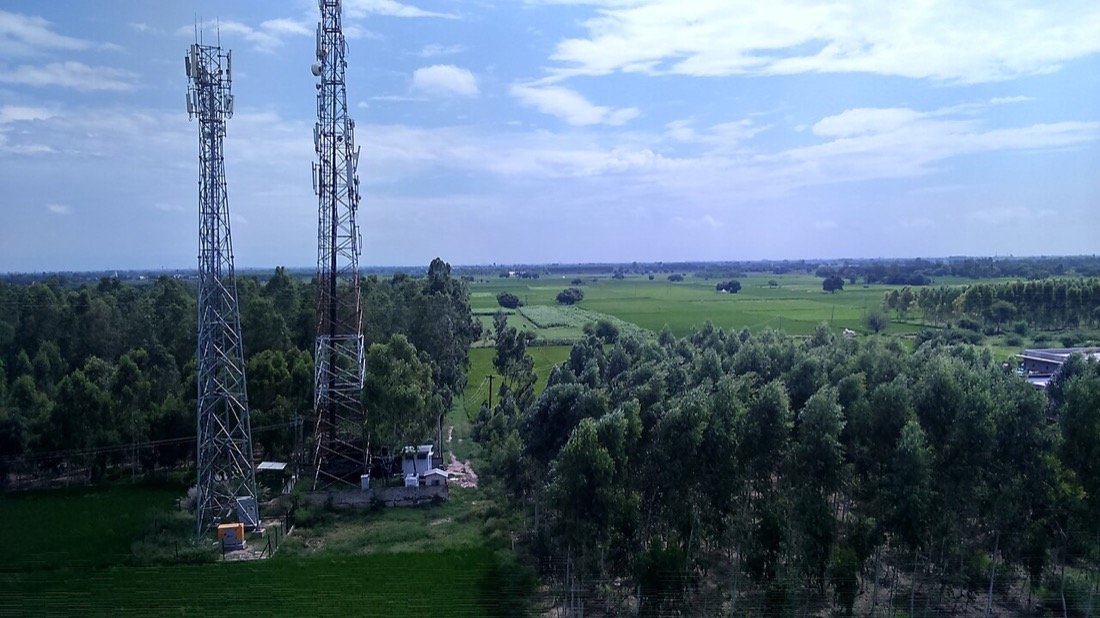
5G reaches 779 of 783 districts Market
District-level availability does not mean every village or building has a strong 5G signal, but the speed of the rollout, roughly two years from launch, was among the fastest anywhere. It rested on the mid-band 3300 MHz and the 700 MHz spectrum bought in 2022.
2024
A two-day, ₹11,341 crore auction Auction
Bharti Airtel spent ₹6,856.76 crore, Vodafone Idea ₹3,510.40 crore and Reliance Jio ₹973.62 crore, mostly to renew 900 MHz and 1800 MHz spectrum whose terms were ending. Only 87.2 MHz, worth ₹6,164.88 crore, was new capacity. The government said unsold spectrum would be offered again in the next auction.
2023
The Telecommunications Act 2023 Policy
The Act wrote the post-2012 principle into law: spectrum for mobile networks is auctioned. But it also listed exceptions, from defence and railways to satellite services, where an auction would make little sense. That schedule is why Starlink and others get spectrum by assignment, not by bidding.
2022
5G services launch Market
Jio built a standalone 5G network on 700 MHz and 3300 MHz; Airtel used a non-standalone network on its 4G core. Both bundled unlimited 5G data into most plans at no extra charge, which helped adoption but delayed the return on the 2022 spending, one reason demand in later auctions was weak.
1 Aug 2022
The 5G auction: ₹1,50,173 crore Auction
Jio bid about ₹88,078 crore, Airtel about ₹43,084 crore, Vodafone Idea about ₹18,799 crore and Adani Data Networks about ₹212 crore for 26 GHz spectrum for private networks. It was the highest revenue ever from a single Indian auction, helped by the 2021 reforms: no spectrum usage charge, no mandatory upfront payment, 20 annual instalments and the right to surrender spectrum after 10 years. The 700 MHz band, unsold in 2016 and 2021, finally found a buyer in Jio.
2021
A rescue package for the telecom sector Policy
The package came after the AGR ruling had pushed Vodafone Idea to the edge. It allowed operators to convert interest on deferred dues into government equity, an option Vodafone Idea used, and reset the economics of buying spectrum before the 5G sale.
2021
A quick auction for 4G spectrum Auction
Reliance Jio was the largest buyer, committing about ₹57,100 crore, as it bought spectrum across 22 circles to extend its 4G network. The auction was over in two days, a sign that operators were buying only what they needed.
2019
The AGR judgment Courts
Licence fees and spectrum usage charges are calculated as a share of adjusted gross revenue. Including non-telecom income in that figure, as the court allowed, created dues stretching back to the early 2000s. It weakened the industry’s ability to bid in auctions for years.
2017
All accused acquitted in the 2G criminal case Courts
The judge said the prosecution had failed to prove any of the charges. The verdict did not reverse the Supreme Court’s 2012 finding that the allocation process was arbitrary; that case was about the legality of the process, this one about criminal guilt. The CBI’s appeal was still pending in the Delhi High Court in October 2026.
2016
A huge offer, modest demand Auction
The government put more than ₹5 lakh crore worth of spectrum on sale at reserve prices but sold only about 41% of it. One month earlier, on 5 September 2016, Reliance Jio launched its 4G service with free calls and data, starting a price war that pushed rivals into mergers and losses and changed how they would bid in later auctions.
2015
₹1.10 lakh crore for 2G, 3G and 4G airwaves Auction
Many operators had to win back 900 MHz spectrum whose original licences were expiring, which pushed prices up. It was the first auction to raise more than ₹1 lakh crore on its own.
2014
Expiring licences go to auction Auction
Airtel and Vodafone had to bid to keep spectrum in their oldest circles as 20-year licences from the 1990s ran out. Spectrum sold at auction since 2012 is ‘liberalised’: it can be used for any technology, 2G, 3G or 4G.
2012
The court-ordered auction flops Auction
Reserve prices set after the 2G case were too high for an industry already crowded with operators. In a separate opinion in September 2012 the Supreme Court said auction is not a constitutional requirement for every natural resource, though it remained the rule for spectrum.
2012
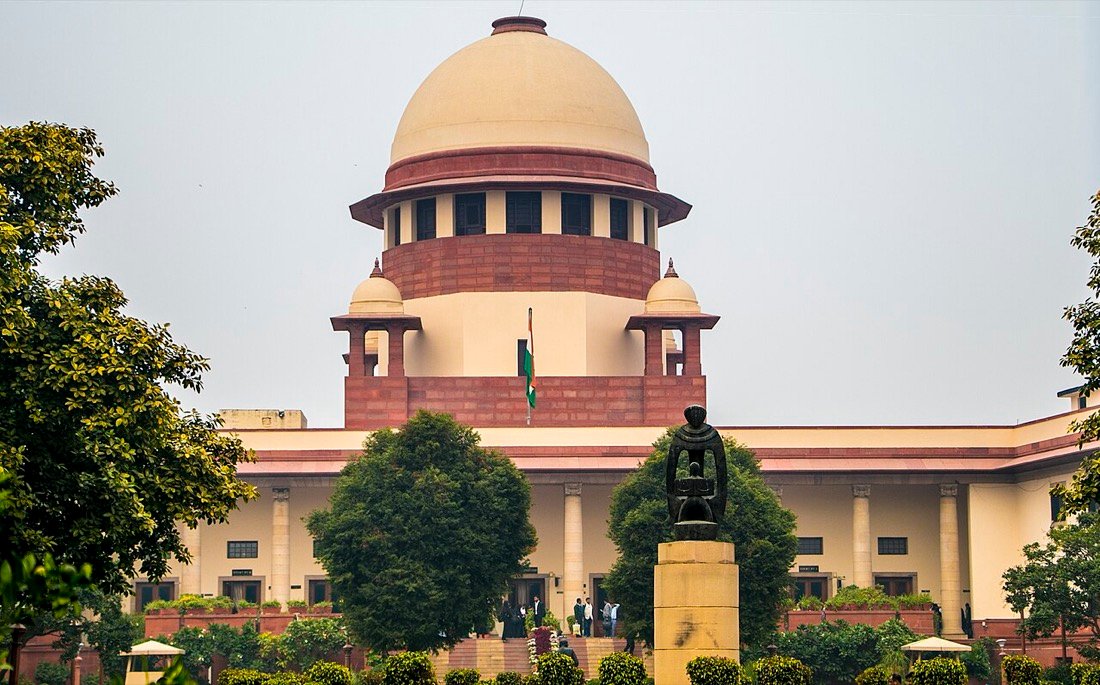
Supreme Court cancels 122 licences Courts
The court called the first-come, first-served method ‘fundamentally flawed’ and the 2008 grant arbitrary. Some companies that had paid for licences lost them, and several foreign investors wrote off their Indian ventures. The judgment made competitive auctions the standard way to assign mobile spectrum in India.
The CAG report and Raja’s resignation Courts
The auditor compared the 2008 prices with those paid in the 2010 3G auction, among other benchmarks. The figure dominated politics for years, though it was an estimate of revenue foregone, not money taken. Raja was arrested on 2 February 2011.
2010
The 3G and BWA auctions: about ₹1.06 lakh crore Auction
No company won 3G spectrum in every circle, so operators later signed roaming pacts that themselves became a legal dispute. Reliance Industries bought Infotel Broadband right after the BWA auction; renamed Reliance Jio, it used the 2300 MHz spectrum for its 4G launch six years later.
2008
The 2G licences are issued Policy
Applicants were told to collect letters of intent and submit payments at short notice the same afternoon, and priority went to those who complied first. With mobile subscriptions exploding, the fee set in 2001 was far below the market value of the spectrum, which later became the core of the case.
2007
Mobile goes mass market Market
Receiving calls became free and new licences let fixed-line players offer mobile services. Subscriptions grew by millions a month, and spectrum, still handed out with licences and linked to subscriber numbers, turned into the most valuable asset in the industry.
Fourth mobile licences sold by auction Auction
The prices discovered in 2001 became the entry fee charged for new licences for the rest of the decade, including in 2008, long after the market had grown many times over.
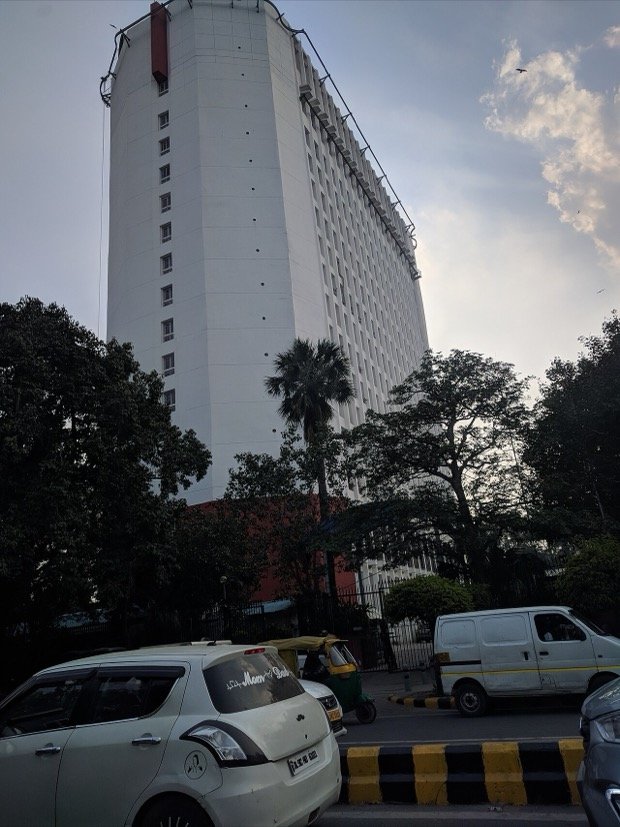
New Telecom Policy 1999 Policy
Many early operators had bid licence fees they could not pay. The revenue-share model made the business viable but also created the adjusted gross revenue formula that would lead to the 2019 AGR judgment.
1995
India’s first mobile call Market
Licences for the four metros had been awarded in 1994 and for other circles in 1995 through bidding. Handsets cost tens of thousands of rupees, and coverage was limited to city centres.
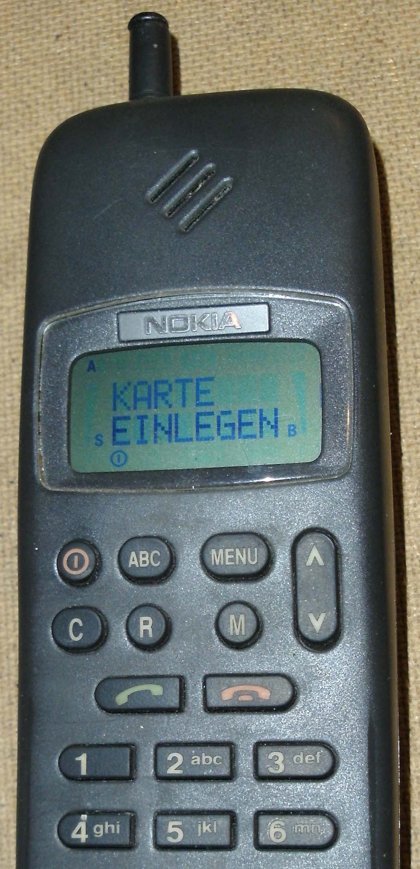
National Telecom Policy 1994 Policy
The policy ended the state monopoly and created the circle system still used for licences and auctions today.
Choose a year to see how much India’s spectrum auction raised, what was sold and what stood out.
How Much Each Auction Raised
Every Major Auction at a Glance
Bids received, as reported by the Department of Telecommunications and PIB.
| Auction | Bands | Rounds | Sold | Bids (₹ crore) |
|---|---|---|---|---|
| Apr–May 2010 (3G) | 2100 MHz | 183 | 71 blocks in 22 circles | 67,719 |
| May–Jun 2010 (BWA) | 2300 MHz | 117 | Two blocks per circle | 38,543 |
| Nov 2012 | 1800, 800 MHz | – | Part of offer; four circles unsold in 1800 | 9,408 |
| Feb 2014 | 900, 1800 MHz | 68 | 399.2 MHz | 61,162 |
| Mar 2015 | 800, 900, 1800, 2100 MHz | 115 | – | 1,09,874 |
| Oct 2016 | 700–2500 MHz (7 bands) | 31 | 965 MHz of ~2,355 MHz | 65,789 |
| Mar 2021 | 700–2500 MHz (7 bands) | 6 | 855.6 MHz of 2,308.8 MHz | 77,815 |
| Jul–Aug 2022 | 600 MHz–26 GHz (10 bands) | 40 | 51,236 MHz of 72,098 MHz | 1,50,173 |
| Jun 2024 | 800 MHz–26 GHz (8 bands) | 7 | 141.4 MHz | 11,341 |
The pattern is clear: auctions raise big sums when operators have to buy, because licences are expiring or a new technology is arriving, and little when they don’t. The 2015 round was driven by expiring 900 MHz licences, 2022 by 5G. In 2012, 2016 and 2024, high reserve prices or weak need left much of the spectrum on the table.
Which Band Does What?
Pick a frequency band to see what it is used for and how it has fared at auction.
2G, 3G, 4G and 5G: How Each Generation Got Its Spectrum
| Generation | What changed for users | Main spectrum | Policy story |
|---|---|---|---|
| 2G | Digital voice, SMS, basic data | 900 and 1800 MHz | Licences with bundled spectrum; the 2008 allocation and the 2012 cancellation |
| 3G | Faster data, video calls | 2100 MHz | The 2010 auction set a market price for spectrum |
| 4G | Mobile broadband, video, UPI-era apps | 800, 1800, 2300 MHz and others | Liberalised spectrum from 2014; Jio’s 2016 launch |
| 5G | More capacity, lower latency, private networks | 3300 MHz, 26 GHz, 700 MHz | The record 2022 auction; weak demand since |
Generations overlap. Operators run several technologies at once and move spectrum between them; a new generation does not make older spectrum worthless.
The 2G Case: Two Different Questions
Was the allocation lawful?
No. The court found the 2008 process arbitrary, quashed 122 licences and ordered auctions. This is settled law.
Did anyone commit a crime?
Not proved. All accused were acquitted for lack of evidence. The CBI’s appeal was admitted by the Delhi High Court in 2024 and is pending.
How much was lost?
Up to ₹1.76 lakh crore on its highest estimate, a presumptive figure based on later prices, not a measured loss.
What changed?
Auctions became the default for mobile spectrum, later written into the Telecommunications Act 2023.
How Spectrum Auctions Affect India
- Government revenue: auctions have brought in about ₹5.9 lakh crore in bids since 2010, though most is paid in instalments.
- Competition: high prices and AGR dues helped shrink the market from about a dozen operators to three private ones plus state-owned BSNL and MTNL.
- Prices for users: spectrum is one cost among many; Indian mobile data stayed among the world’s cheapest even after the record 2022 auction.
- Coverage: low-band spectrum such as 700 MHz reaches rural areas; TRAI’s 2026 plan offers a discount for building in coverage gaps.
- Public trust: open bidding replaced the discretion that produced the 2G case.
What Comes Next
The government holds TRAI’s blueprint for a nine-band auction, but the buyers are not in a hurry. Jio and Airtel are still earning a return on their 2022 spectrum and have focused on raising revenue per user rather than buying more, while Vodafone Idea, now almost half owned by the government, has limited money for bidding. The likely triggers for the next sale are a shift to 5G Standalone networks, a decision on the 6 GHz band after the World Radiocommunication Conference in 2027 and the renewal of spectrum bought in earlier rounds.
Meanwhile, the most watched spectrum decision is one that involves no auction: the Cabinet’s approval of charges for satellite broadband, which will decide when Starlink, OneWeb and Jio’s satellite service can start selling in India.
| Question | Where it stands (October 2026) |
|---|---|
| Next mobile spectrum auction | TRAI recommendations of 24 February 2026 with DoT; reports say no auction this year |
| 600 MHz band | Unsold in 2022; easier payment terms proposed |
| Upper 6 GHz band | Reserved for mobile; auction to be reconsidered after WRC-27 |
| Satellite spectrum | Administrative assignment; DCC approved 5% of AGR on 3 September 2026; Cabinet decision pending |
| 2G criminal appeal | CBI appeal against 2017 acquittals pending in the Delhi High Court |
| Vodafone Idea | Government holds about 48.99% after converting spectrum dues |
Explore More Timelines
People Also Ask
Frequently Asked Questions
Conclusion: From Scandal to Market, and a Pause
India’s spectrum policy moved from licences handed out with spectrum to a market in which every megahertz is bid for. The shift was forced by the 2G case, and it has raised large sums, supported one of the fastest 5G rollouts anywhere and made the allocation of a public resource far more transparent.
But the 2024 slump and the 2026 pause show the limits of the model: an auction can only sell what operators need and can afford. The test now is whether the next round, whenever it comes, is designed for coverage and competition as much as for revenue.
Related AiTimeline Stories
⚠️ Editorial Note
This timeline draws on Department of Telecommunications and PIB auction results, TRAI’s recommendations of 24 February 2026, the Supreme Court’s 2012 judgment as reported in Parliament, the 2017 CBI court verdict and the 2024 Delhi High Court order, and reporting by MediaNama and others. Auction figures are bids as announced, not cash received. The CAG’s figure is a presumptive estimate. Events after 19 October 2026 are not covered. This article is general information, not investment advice.
Sources & further reading
Every dated entry above was checked against these references. Last reviewed 19 October 2026.
- PIB: Year End Review 2022, Department of Telecommunications (5G auction results and 5G launch)
- PIB: DoT issues Notice Inviting Applications for auction of spectrum for IMT/5G (15 June 2022)
- PIB: Spectrum Auction 2023-24 concludes (26 June 2024)
- PIB: Comprehensive plan for the nationwide rollout of 5G (12 December 2024)
- TRAI Press Release No. 25/2026: Recommendations on the auction of spectrum in bands identified for IMT (24 February 2026)
- Rajya Sabha debates, 30 March 2012: government response on the cancellation of 2G licences
- Indian Express: 2G spectrum case, CBI court acquits all accused (21 December 2017)
- Business Today: Delhi HC admits CBI's appeal challenging acquittal of A Raja, others in 2G case (22 March 2024)
- DoT: Auction of spectrum, February 2014 (900 MHz and 1800 MHz bands)
- MediaNama: India's 2G auction ends, results (November 2012)
- MediaNama: India's 2015 spectrum auction ends
- MediaNama: Starlink, OneWeb, Jio await Cabinet nod after DCC spectrum approval (September 2026)
- Nagaland Post: Satcom ops only after security clearance from MHA, says Scindia (October 2026)