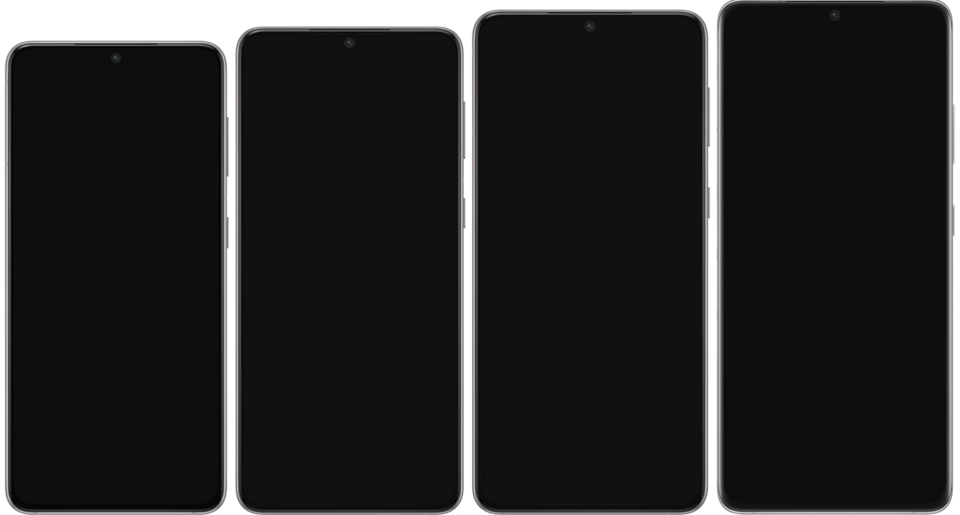
Apple iPhone Ultra History Timeline: Evolution, Rumors, Pro Models & Future Flagship Strategy (2007–2026)
Apple iPhone Ultra history timeline: confirmed iPhone history vs rumors. Is the iPhone Ultra real? Foldable specs, release date and price explained.
Latest Story
The Apple iPhone Ultra history timeline is really two stories running side by side: the well-documented evolution of Apple’s real flagship iPhones, and the long-running rumor of an even higher “Ultra” tier that Apple has never officially announced. As of September 2026, Apple has still never used the name “iPhone Ultra” for any product — on 9 September 2026 it unveiled its first foldable iPhone under the name iPhone Duo instead, starting at $1,999. This reverse-chronological guide keeps the two firmly apart: confirmed Apple products are labelled as facts, and every rumor is flagged as an expectation, leak or projection — never as an Apple announcement.
Latest Update — October 2026
Pre-orders for the iPhone Duo — the foldable Apple unveiled on 9 September 2026 under new CEO John Ternus instead of an “iPhone Ultra” — opened at 5 a.m. PT on 16 October 2026, in Star White and Night Sky at $1,999 (256GB), $2,199 (512GB), $2,599 (1TB) and $3,199 (2TB). Within about 30 minutes, Apple’s U.S. online store was quoting a 25 January 2027 ship date for every configuration, and Apple Store pickup for pre-orders was disabled until 24 October; Bloomberg’s Mark Gurman had reported that supply would be limited. Launch-day deliveries begin 23 October 2026 in the U.S. and more than 70 other countries, with 28 more following on 30 October. The iPhone 18 Pro, iPhone 18 Pro Max and Apple Watch Ultra 4 have been on sale since 18 September 2026. Source: Apple Newsroom, 9 September and October 2026; MacRumors, 15–16 October 2026.
🧠 iPhone Ultra in 60 Seconds — AI Overview
The iPhone Ultra is a name Apple has never officially used on any iPhone. It first surfaced around 2022 as a possible replacement for “Pro Max,” was shelved in 2023, and re-emerged in 2025–2026 tied to Apple’s foldable iPhone project. On 9 September 2026, Apple unveiled that foldable — a book-style fold with a 7.6-inch inner display and 5.4-inch outer display, priced from $1,999 — but named it the iPhone Duo, extending the pattern of Apple choosing a different name than the rumored “Ultra” at the last moment. Apple still uses “Ultra” only for the Apple Watch Ultra and M-series Ultra chips.
iPhone Ultra: Key Questions Answered
What to Know About the iPhone Ultra
- Not real yet: Apple has never announced an iPhone Ultra. As of October 2026 the name remains a rumor, not a product — the foldable shipped as the iPhone Duo.
- The name has history: “iPhone Ultra” first appeared in 2022 reports as a possible replacement for “Pro Max,” then was shelved in 2023.
- Apple already owns the Ultra brand: Apple Watch Ultra (2022) and the M1/M2/M3 Ultra chips show Apple reserves “Ultra” for its highest tier.
- 2026 resolution: Apple’s foldable iPhone, unveiled 9 September 2026, shipped as the iPhone Duo — not “Ultra” — continuing the pattern of the rumored name never sticking.
- Foldable, confirmed: The iPhone Duo has a book-style fold, a 7.6-inch inner display, a 5.4-inch outer display, titanium build and an A20 Pro chip — specs that are now official, not rumored.
- Price, confirmed: The iPhone Duo starts at $1,999 (256GB, up to 2TB), Apple’s most expensive iPhone ever.
- Confirmed evolution matters: The Pro line (2019), Titanium (2023) and Dynamic Island (2022) are the real milestones the Ultra rumor builds on.
- 2025 reality check: Apple’s newest tier launched as the iPhone Air, not an Ultra — a reminder that rumored names often change.
- Read the labels: This article separates Confirmed Apple Products from Analyst Expectations, Supply-Chain Reports, Media Rumors and Speculative Projections.
Six Defining iPhone Milestones (Confirmed)
The real, Apple-announced moments the “Ultra” rumor builds on — all verified product history.
Confirmed
Confirmed
Confirmed
Confirmed
Confirmed
Confirmed
Confirmed iPhone Pro vs Rumored iPhone Ultra
Left column is confirmed fact; right column is rumor. Do not read the right column as an Apple specification.
iPhone 17 Pro (Confirmed) vs iPhone Duo (Confirmed, Sept 2026)
iPhone Ultra & iPhone Flagship Timeline (Reverse Chronological)
Newest developments first. Each entry is tagged as confirmed fact or as a rumor/expectation with its source type.
iPhone Duo — Apple’s first foldable iPhone (confirmed)
Confirmed or rumor: Confirmed. Announced by Apple at its “Surprise and shine” keynote on 9 September 2026 — new CEO John Ternus’s first product event.
Technology significance: Apple’s first foldable iPhone shipped as the iPhone Duo, not “Ultra.” It has a book-style design with a 7.6-inch inner display (nano-texture option) and a 5.4-inch outer display covering 90% of the iPhone 18 Pro’s screen area, a titanium build with a precision hinge, and the A20 Pro chip on a 2nm process.
Impact on iPhone strategy: It launches a new super-premium tier above the Pro Max, starting at $1,999 (256GB, up to 2TB) — Apple’s most expensive iPhone ever — alongside the iPhone 18 Pro, Pro Max, Apple Watch Series 12, Apple Watch Ultra 4 and AirPods 5.
Why it matters today: It confirms, once again, that the widely rumored “Ultra” name has never been used on an iPhone — Apple chose “Duo” here, just as it chose “Air” in 2025 and kept “Pro Max” in 2023.
Ultra rumors intensify — a “super-premium” tier
Confirmed or rumor: Rumor. These are journalist and analyst claims, not Apple statements.
Technology significance: In 2026, Bloomberg’s Mark Gurman described a broader shift toward a higher “Ultra” layer that could span a foldable iPhone and even a MacBook Ultra, sitting above the Pro line.
Impact on iPhone strategy: It signals Apple may be building a clearer premium ladder — standard, Air, Pro, and a rumored Ultra halo tier — to lift average selling prices.
Why it matters today: Design and color leaks (via outlets like Forbes and MacRumors) gave the rumor momentum, but none originated from Apple.
iPhone 17 lineup — and the iPhone Air (not Ultra)
Confirmed or rumor: Confirmed. Announced at Apple’s “Awe Dropping” event on 9 September 2025.
Technology significance: Apple introduced the iPhone 17, the all-new ultra-thin iPhone Air (5.6mm, the slimmest iPhone ever), and the iPhone 17 Pro and Pro Max, powered by A19-series chips. ProMotion and Always-On displays expanded across the line.
Impact on iPhone strategy: The Air replaced the Plus — and, crucially, Apple chose the name “Air,” not “Ultra,” for its new tier.
Why it matters today: It is the clearest evidence that rumored names are not product names: the “Ultra” slot people expected went to a thin phone called Air instead.
“Apple is gearing up for an iPhone Ultra”
Confirmed or rumor: Rumor. Media analysis, not an Apple announcement.
Technology significance: After going quiet during the iPhone 16 cycle, the Ultra rumor resurfaced — this time tied to the foldable project rather than a conventional flagship.
Impact on iPhone strategy: It marked the pivot point where “Ultra” stopped meaning “bigger Pro Max” and started meaning “foldable halo device.”
Why it matters today: Most 2026 reporting traces back to this 2025 reframing of what an iPhone Ultra could be.
iPhone 16 — Camera Control and Apple Intelligence
Confirmed or rumor: Confirmed. The iPhone 16 and 16 Pro shipped in September 2024.
Technology significance: Apple added the Camera Control button, A18 and A18 Pro chips, and launched Apple Intelligence — its on-device and cloud AI platform.
Impact on iPhone strategy: AI became the headline feature, shifting the story from hardware tiers to intelligence — and there was no Ultra model.
Why it matters today: Apple Intelligence set up the AI expectations now attached to any future “Ultra” flagship.
iPhone 15 Pro — titanium arrives, but it’s still “Pro Max”
Confirmed or rumor: Confirmed product; the “Ultra” naming was a rumor that Apple did not adopt.
Technology significance: The iPhone 15 Pro introduced Apple’s first titanium frame, the switch to USB-C, the 3nm A17 Pro chip and the customizable Action button.
Impact on iPhone strategy: Despite widespread “iPhone 15 Ultra” speculation, Bloomberg reported in September 2023 that Apple would keep the “Pro Max” name — and it did.
Why it matters today: This is the clearest case of the Ultra rumor being wrong on naming, even when the premium upgrades (titanium, new chip) arrived.
Dynamic Island — and the “Ultra” brand is born (elsewhere)
Confirmed or rumor: Confirmed products (iPhone 14 Pro, Apple Watch Ultra, M1 Ultra); the iPhone Ultra idea began as a rumor here.
Technology significance: The iPhone 14 Pro brought the Dynamic Island, a 48MP main camera and the A16 Bionic. Separately, Apple launched the M1 Ultra chip (March) and the rugged Apple Watch Ultra (September).
Impact on iPhone strategy: With “Ultra” now attached to Apple’s priciest watch and Mac silicon, reporters like Mark Gurman began suggesting an iPhone Ultra could sit above the Pro Max.
Why it matters today: 2022 is the true origin point of the iPhone Ultra rumor — born from Apple’s own use of the Ultra name on other products.
iPhone 12 & 13 — 5G, flat edges and ProMotion
Confirmed or rumor: Confirmed. iPhone 12 shipped 2020; iPhone 13 in 2021.
Technology significance: The iPhone 12 added 5G, flat-edge design, MagSafe and Ceramic Shield; the iPhone 13 Pro brought ProMotion 120Hz displays to iPhone for the first time.
Impact on iPhone strategy: These cycles deepened the Pro/non-Pro divide with display and camera features reserved for Pro models.
Why it matters today: ProMotion, later extended across the 2025 line, is a feature the rumored Ultra is simply expected to include.
iPhone 11 Pro — the “Pro” era begins
Confirmed or rumor: Confirmed. Announced September 2019.
Technology significance: Apple used the “Pro” name on an iPhone for the first time, with the iPhone 11 Pro and 11 Pro Max introducing a triple-camera system and a matte-textured glass back.
Impact on iPhone strategy: “Pro” created the premium ladder that every later tier — Pro Max, Air, and the rumored Ultra — sits on.
Why it matters today: An “Ultra” only makes sense as a step above “Pro,” so this is the branding foundation for the whole rumor.
iPhone X — Face ID, OLED and the modern design
Confirmed or rumor: Confirmed. Released November 2017.
Technology significance: The iPhone X introduced Face ID, an edge-to-edge OLED display, the notch and gesture navigation, retiring the Home button on flagships.
Impact on iPhone strategy: Its $999 launch price normalized four-figure iPhones — the pricing headroom a rumored Ultra would push even higher.
Why it matters today: Face ID and OLED are now baseline expectations for any premium iPhone.
iPhone 6 Plus — the first big-screen tier
Confirmed or rumor: Confirmed. Released September 2014.
Technology significance: The iPhone 6 Plus introduced the “Plus” large-screen model, giving buyers a bigger, pricier flagship option for the first time.
Impact on iPhone strategy: “Plus” was the original premium-size tier that later evolved into Pro Max — and, arguably, the conceptual seed of an Ultra.
Why it matters today: The idea of paying more for the biggest, best iPhone starts here.
iPhone 4 to 5s — Retina, Siri and Touch ID
Confirmed or rumor: Confirmed.
Technology significance: The iPhone 4 (2010) brought the Retina display; the 4S (2011) added Siri; the 5s (2013) introduced Touch ID and the first 64-bit smartphone chip, the A7.
Impact on iPhone strategy: These years established biometric security and custom Apple silicon — two pillars of every premium iPhone since.
Why it matters today: Apple’s chip lead, which began with the A7, underpins the performance expectations for any Ultra.
Original iPhone & iPhone 3G — where it all began
Confirmed or rumor: Confirmed. Original iPhone announced 9 January 2007, shipped 29 June 2007; iPhone 3G in 2008.
Technology significance: The original iPhone combined a phone, iPod and internet communicator with multi-touch. The iPhone 3G added 3G data and the App Store, launching the modern app economy.
Impact on iPhone strategy: Every tier that followed — Plus, Pro, Pro Max, Air and the rumored Ultra — descends from this single device.
Why it matters today: The iPhone’s whole premium ladder exists because the original redefined what a phone could be.
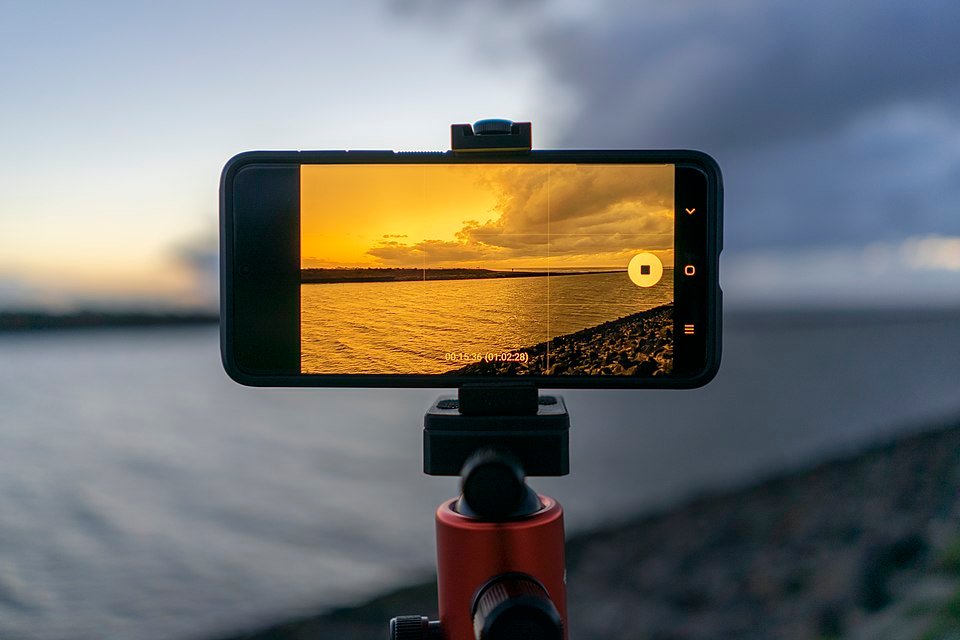
Camera and video capability has become a core battleground for premium iPhones — and a headline expectation for any rumored Ultra.
Key Entities: Apple, iPhone & the Ultra Brand
The people, products and technologies that define this story.
Apple Inc.
The Cupertino, California company that makes the iPhone. Apple controls the entire stack — hardware, chips (Apple silicon), iOS and services — and reserves “Ultra” branding for its highest-end products.
iPhone
Apple’s flagship smartphone since 2007. The line now spans the standard iPhone, the thin iPhone Air, and the Pro and Pro Max models — with a rumored Ultra tier positioned above them.
iPhone 15 Pro Max
The 2023 flagship that introduced Apple’s first titanium frame, USB-C and the A17 Pro chip. Notably, Apple kept the “Pro Max” name here despite years of “iPhone 15 Ultra” rumors.
Apple Watch Ultra
Launched in 2022, this rugged, titanium, premium-priced smartwatch is the clearest proof that Apple will build and sell an “Ultra” halo device — the template an iPhone Ultra would follow.
A17 Pro
Apple’s first 3-nanometer iPhone chip, launched in the iPhone 15 Pro in 2023. It advanced GPU performance and ray tracing, continuing the silicon lead that began with the 64-bit A7 in 2013.
Face ID
Apple’s facial-recognition system, introduced with the iPhone X in 2017. It replaced Touch ID on flagship iPhones and remains a core feature expected on any premium or Ultra model.
iPhone Flagship Evolution (Confirmed History)
Verified milestones, oldest to newest — the factual backbone of the timeline.
| Year | Model | Landmark Feature | Status |
|---|---|---|---|
| 2007 | Original iPhone | Multi-touch, no keyboard | Confirmed |
| 2008 | iPhone 3G | 3G data, App Store | Confirmed |
| 2010 | iPhone 4 | Retina display | Confirmed |
| 2011 | iPhone 4S | Siri | Confirmed |
| 2013 | iPhone 5s | Touch ID, 64-bit A7 | Confirmed |
| 2014 | iPhone 6 Plus | First “Plus” big-screen tier | Confirmed |
| 2017 | iPhone X | Face ID, OLED, no Home button | Confirmed |
| 2019 | iPhone 11 Pro | First “Pro” branding, triple camera | Confirmed |
| 2020 | iPhone 12 | 5G, flat edges, MagSafe | Confirmed |
| 2021 | iPhone 13 Pro | ProMotion 120Hz | Confirmed |
| 2022 | iPhone 14 Pro | Dynamic Island, 48MP, A16 | Confirmed |
| 2023 | iPhone 15 Pro | Titanium, USB-C, A17 Pro | Confirmed |
| 2024 | iPhone 16 / 16 Pro | Camera Control, Apple Intelligence | Confirmed |
| 2025 | iPhone 17 / Air / Pro | iPhone Air (5.6mm), A19 chips | Confirmed |
| 2026 | iPhone Duo (foldable) | Book-style fold, 7.6" display, from $1,999 | Confirmed |
Apple’s “Ultra” Products (Confirmed)
Where Apple has actually used the Ultra name — none of them an iPhone.
| Product | Category | Debut | Role of “Ultra” |
|---|---|---|---|
| Apple Watch Ultra | Smartwatch | 2022 | Rugged, premium halo model above Series |
| Apple Watch Ultra 2 | Smartwatch | 2023 | Second-gen top-tier watch |
| M1 Ultra | Mac chip | 2022 | Most powerful desktop Apple silicon |
| M2 Ultra | Mac chip | 2023 | Top chip for Mac Studio / Mac Pro |
| M3 Ultra | Mac chip | 2025 | Highest-end desktop silicon |
| iPhone Ultra | Smartphone | — | Still never released — foldable shipped as “Duo” (Sept 2026) instead |
iPhone Duo — Confirmed Specs (formerly “Rumored iPhone Ultra”)
Apple confirmed these specifications at its 9 September 2026 keynote. The device shipped as the iPhone Duo, not the previously rumored “iPhone Ultra.”
| Aspect | Reported / Expected | Source Type | Status |
|---|---|---|---|
| Form factor | Book-style foldable, named iPhone Duo | Apple Newsroom | Confirmed |
| Inner display | 7.6", optional nano-texture finish | Apple Newsroom | Confirmed |
| Outer display | 5.4" (90% of iPhone 18 Pro screen area) | Apple Newsroom | Confirmed |
| Chip | A20 Pro, 2nm | Apple Newsroom | Confirmed |
| Build | Titanium chassis, precision hinge, titanium base plate | Apple Newsroom | Confirmed |
| Thickness | Apple’s thinnest iPhone ever (exact mm not disclosed) | Apple Newsroom | Confirmed (design), unspecified (mm) |
| Price | From $1,999 (256GB), up to 2TB | Apple Newsroom | Confirmed |
| Launch | Unveiled 9 Sept 2026; ships 23 Oct 2026 | Apple Newsroom | Confirmed |
Case Studies: How the Ultra Idea Took Shape
Five real developments that explain why an iPhone Ultra is plausible — and why it isn’t confirmed.
1. The Apple Watch Ultra proved the playbook
When Apple launched the Apple Watch Ultra in 2022 — a rugged, titanium, higher-priced watch above the standard Series — it demonstrated that a premium “Ultra” halo product can succeed. That success is exactly why analysts believe an iPhone Ultra makes commercial sense: a small, high-margin tier that lifts the average selling price without cannibalizing the mainstream lineup.
2. From “Plus” to “Pro Max” — a decade of premium tiers
Apple has steadily added higher tiers: the iPhone 6 Plus (2014) created the big-screen option, the iPhone 11 Pro (2019) added “Pro,” and “Pro Max” became the ceiling. An “Ultra” would be the logical next rung. But 2025’s iPhone Air shows Apple can just as easily add a tier with a different name — a reminder that the ladder keeps changing.
3. Titanium showed Apple will chase premium materials
The iPhone 15 Pro (2023) introduced a titanium frame, proving Apple will invest in exotic materials for its flagships. Rumors that a foldable Ultra would use a titanium chassis and a liquid-metal hinge build directly on this precedent — though, as with all Ultra claims, the materials remain unconfirmed.
4. Apple’s Ultra branding strategy is deliberate
Apple uses “Ultra” sparingly and only at the top: the Watch Ultra and the M-series Ultra chips. This consistency is why the branding feels ready-made for an iPhone. In 2026, Bloomberg’s Mark Gurman described a broader “Ultra” push potentially spanning a foldable iPhone and a MacBook Ultra — but again, this is reporting, not an Apple announcement.
5. The AI and foldable future reframed the Ultra — then resolved it
By 2025–2026, the Ultra rumor stopped being about a bigger slab phone and became about a foldable flagship packed with Apple Intelligence. Apple confirmed that foldable on 9 September 2026 — the biggest iPhone form-factor change since the iPhone X — but named it the iPhone Duo, not “Ultra,” closing out the rumor exactly as the case studies above would predict.
💡 iPhone Ultra — Fast Facts & Discover Notes
- No iPhone has ever officially carried the “Ultra” name — Apple’s Sept 2026 foldable shipped as “Duo” instead.
- The “iPhone Ultra” rumor is older than most think, dating to 2022 reports about replacing “Pro Max.”
- Apple’s biggest design changes — Retina (2010), Face ID (2017), titanium (2023) — all arrived without an Ultra badge.
- The camera has driven premium iPhone sales since the 2019 Pro, and is central to Ultra expectations.
- The iPhone Duo starts at $1,999, Apple’s priciest iPhone yet, above the $1,199 iPhone 17 Pro Max (now discontinued).
- Apple Intelligence (2024) means any future Ultra is expected to be an “AI-first” flagship.
Explore More Timelines
People Also Ask
iPhone Ultra FAQ
Detailed answers to the most-searched iPhone Ultra and iPhone history questions.
⚠️ Editorial & E-E-A-T Note
This article separates five kinds of information: Confirmed Apple Products (announced or shipping devices), Analyst Expectations, Supply-Chain Reports, Media Rumors / Leaks and Speculative Projections. Anything described as “iPhone Ultra” falls into the last four categories: Apple has not announced such a device. Confirmed history is drawn from Apple’s own announcements; rumors are attributed to their reporting type. This is an independent editorial timeline, is not affiliated with or endorsed by Apple, and is not purchasing advice. Details may change — always verify against Apple’s official channels.
Explore More Timelines
Sources & further reading
Every dated entry above was checked against these references. Last reviewed 18 October 2026.