:root{–acc:#6366f1;–acc2:#a5b4fc;–acc3:#3730a3;–dark:#070814;–card:#10122a;–card2:#161936;–border:#262a52;–txt:#cdd2ec;–txt2:#959bc6;–head:#f2f4ff}html,body,.site,.page,.site-content,.entry-content,.post-content,#page,#content{background:#070814!important}html,body{overflow-x:hidden;max-width:100%}.ste-tophome{position:fixed;top:16px;right:16px;z-index:9999;display:inline-flex;align-items:center;gap:.4rem;font-size:.8rem;font-weight:600;color:var(–acc2);text-decoration:none;padding:.5rem 1rem;border:1px solid var(–border);border-radius:24px;background:rgba(16,18,42,.92);-webkit-backdrop-filter:blur(8px);backdrop-filter:blur(8px);box-shadow:0 4px 16px rgba(0,0,0,.45);opacity:0;visibility:hidden;transform:translateY(-14px);transition:opacity .25s ease,transform .25s ease,visibility .25s,border-color .18s}.ste-tophome.ste-tophome-show{opacity:1;visibility:visible;transform:translateY(0)}.ste-tophome:hover{border-color:var(–acc)}@media(max-width:600px){.ste-tophome{top:10px;right:10px;font-size:.74rem;padding:.42rem .85rem}}.ste-footer{margin-top:2.5rem;padding-top:1.5rem;border-top:1px solid var(–border);text-align:center}.ste-footer p{font-size:.78rem;color:var(–txt2);line-height:1.65;margin:0}.ste-footer a{color:var(–acc2);text-decoration:none;font-weight:600}.ste-footer a:hover{text-decoration:underline}.ste-outer{background:var(–dark);color:var(–txt);font-family:’Outfit’,system-ui,sans-serif;max-width:880px;margin:0 auto;padding:0 1rem 3rem;overflow-x:hidden}.ste-table,.ste-tentry-body,.ste-aeo-a,.ste-faq-a,.ste-rcard-row-val{overflow-wrap:break-word;word-break:break-word}.ste-hero{position:relative;border-radius:14px;overflow:hidden;margin-bottom:2rem}.ste-hero img{width:100%;height:360px;object-fit:cover;display:block}.ste-hero-cap{position:absolute;inset:0;background:linear-gradient(to top,rgba(7,8,20,.96) 28%,rgba(7,8,20,.35));display:flex;flex-direction:column;justify-content:flex-end;padding:2rem}.ste-hero-badge{display:inline-block;background:var(–acc);color:#fff;font-size:.65rem;font-weight:800;letter-spacing:.1em;text-transform:uppercase;padding:.22rem .75rem;border-radius:20px;margin-bottom:.8rem;width:fit-content}.ste-hero h1{font-family:’Playfair Display’,Georgia,serif;font-size:clamp(1.5rem,4vw,2.3rem);font-weight:700;color:#fff;line-height:1.22;margin:0 0 .6rem}.ste-hero-meta{font-size:.78rem;color:#aab0d8;display:flex;gap:1rem;flex-wrap:wrap}.ste-intro{font-size:1rem;line-height:1.75;color:var(–txt);margin:0 0 1.5rem}.ste-intro strong{color:var(–head)}.ste-qf{background:linear-gradient(135deg,#12152e,#0e1024);border:1px solid var(–acc);border-radius:12px;padding:1.3rem 1.5rem;margin:1.5rem 0}.ste-qf-label{font-size:.62rem;font-weight:800;letter-spacing:.1em;text-transform:uppercase;color:var(–acc2);margin-bottom:.8rem}.ste-qf-grid{display:grid;grid-template-columns:1fr 1fr;gap:.8rem}.ste-qf-item{display:flex;flex-direction:column;gap:.15rem}.ste-qf-k{font-size:.66rem;color:var(–txt2);text-transform:uppercase;letter-spacing:.05em;font-weight:600}.ste-qf-v{font-size:.9rem;color:var(–head);font-weight:700}.ste-aeo{background:var(–card);border:1px solid var(–acc);border-radius:12px;padding:1.4rem 1.6rem;margin:1.5rem 0}.ste-aeo-label{font-size:.62rem;font-weight:800;letter-spacing:.1em;text-transform:uppercase;color:var(–acc2);margin-bottom:.7rem}.ste-aeo h2{font-family:’Playfair Display’,Georgia,serif;font-size:1.25rem;color:var(–head);margin:0 0 1rem}.ste-aeo-grid{display:grid;grid-template-columns:1fr 1fr;gap:.9rem}.ste-aeo-item{background:rgba(99,102,241,.08);border:1px solid rgba(99,102,241,.2);border-radius:8px;padding:.8rem 1rem}.ste-aeo-q{font-size:.74rem;font-weight:700;color:var(–acc2);margin-bottom:.3rem}.ste-aeo-a{font-size:.88rem;color:var(–txt);line-height:1.55}.ste-kt{background:var(–card2);border-left:4px solid var(–acc);border-radius:0 10px 10px 0;padding:1.2rem 1.5rem;margin:1.5rem 0}.ste-kt-label{font-size:.62rem;font-weight:800;letter-spacing:.1em;text-transform:uppercase;color:var(–acc2);margin-bottom:.7rem}.ste-kt h2{font-family:’Playfair Display’,Georgia,serif;font-size:1.1rem;color:var(–head);margin:0 0 .8rem}.ste-kt-list{list-style:none;margin:0;padding:0;display:flex;flex-direction:column;gap:.5rem}.ste-kt-list li{display:flex;align-items:flex-start;gap:.6rem;font-size:.9rem;line-height:1.5}.ste-kt-list li::before{content:’25B8′;color:var(–acc);flex-shrink:0;margin-top:.1em}.ste-section{margin:2.5rem 0 1.2rem}.ste-section h2{font-family:’Playfair Display’,Georgia,serif;font-size:1.5rem;color:var(–head);border-bottom:2px solid var(–acc);padding-bottom:.5rem;margin:0}.ste-section-sub{font-size:.85rem;color:var(–txt2);margin:.5rem 0 0}.ste-records-grid{display:grid;grid-template-columns:1fr 1fr;gap:1rem;margin:1.2rem 0}.ste-rcard{background:var(–card);border:1px solid var(–border);border-radius:12px;overflow:hidden;position:relative;transition:transform .2s,box-shadow .2s}.ste-rcard:hover{transform:translateY(-3px);box-shadow:0 8px 24px rgba(99,102,241,.18)}.ste-rcard.gold{border-color:rgba(99,102,241,.5);background:linear-gradient(135deg,#16183a,#101228)}.ste-rcard.silver{border-color:rgba(150,160,200,.35);background:linear-gradient(135deg,#13152e,#101228)}.ste-rcard.bronze{border-color:rgba(180,120,40,.35);background:linear-gradient(135deg,#1a160f,#101228)}.ste-rcard-rank{position:absolute;top:.8rem;right:.9rem;font-size:1.4rem;font-weight:900;opacity:.25;font-family:’Playfair Display’,serif}.ste-rcard-header{padding:.9rem 1.1rem .5rem}.ste-rcard-balls{display:inline-flex;align-items:baseline;gap:.25rem;margin-bottom:.4rem}.ste-rcard-num{font-size:1.45rem;font-weight:900;color:var(–acc2);line-height:1.05;font-family:’Playfair Display’,serif}.ste-rcard-unit{font-size:.64rem;font-weight:700;color:var(–acc2);text-transform:uppercase;letter-spacing:.05em}.ste-rcard-player{font-size:1rem;font-weight:700;color:var(–head);margin:0 0 .1rem}.ste-rcard-score{font-size:.82rem;color:var(–acc2);font-weight:600}.ste-rcard-body{padding:.5rem 1.1rem 1rem;border-top:1px solid var(–border)}.ste-rcard-row{display:flex;justify-content:space-between;align-items:flex-start;font-size:.78rem;margin:.3rem 0}.ste-rcard-row-label{color:var(–txt2);flex-shrink:0;margin-right:.5rem}.ste-rcard-row-val{color:var(–txt);text-align:right;font-weight:500}.ste-rcard-country{display:inline-block;font-size:.62rem;font-weight:800;letter-spacing:.08em;text-transform:uppercase;padding:.18rem .6rem;border-radius:20px;background:rgba(99,102,241,.15);color:var(–acc2);margin-top:.5rem}.ste-timeline{position:relative;margin:1.2rem 0}.ste-timeline::before{content:”;position:absolute;left:18px;top:0;bottom:0;width:2px;background:linear-gradient(to bottom,var(–acc),rgba(99,102,241,.1))}.ste-tentry{display:flex;gap:1.2rem;margin-bottom:1.4rem;position:relative}.ste-tentry-dot{width:38px;height:38px;border-radius:50%;background:var(–card);border:2px solid var(–acc);display:flex;align-items:center;justify-content:center;flex-shrink:0;font-size:.56rem;font-weight:800;color:var(–acc2);z-index:1;text-align:center;line-height:1.05}.ste-tentry-body{background:var(–card);border:1px solid var(–border);border-radius:10px;padding:1rem 1.2rem;flex:1}.ste-tentry-body h3{font-size:1.02rem;font-weight:700;color:var(–head);margin:0 0 .3rem}.ste-tentry-meta{font-size:.75rem;color:var(–txt2);margin-bottom:.5rem;display:flex;gap:.6rem;flex-wrap:wrap}.ste-tentry-body p{font-size:.87rem;line-height:1.65;margin:0 0 .5rem;color:var(–txt)}.ste-tentry-body p:last-child{margin-bottom:0}.ste-tentry-body p strong{color:var(–acc2)}.ste-tentry-fact{font-size:.8rem;font-style:italic;color:var(–txt2);background:rgba(99,102,241,.06);border-radius:6px;padding:.45rem .7rem;margin-top:.5rem}.ste-tentry-stats{display:flex;gap:.6rem;flex-wrap:wrap;margin-top:.6rem}.ste-stat-chip{background:rgba(99,102,241,.1);border:1px solid rgba(99,102,241,.2);border-radius:6px;padding:.25rem .6rem;font-size:.73rem;color:var(–acc2);font-weight:600}.ste-prose p{font-size:.9rem;line-height:1.75;color:var(–txt);margin:0 0 1rem}.ste-prose h3{font-size:1.05rem;color:var(–head);margin:1.4rem 0 .5rem;font-weight:700}.ste-prose h3 span{color:var(–acc2);font-size:.8rem;font-weight:600;margin-left:.4rem}.ste-prose strong{color:var(–acc2)}.ste-howto{counter-reset:step;list-style:none;margin:1rem 0;padding:0}.ste-howto li{position:relative;padding:.7rem 0 .7rem 2.6rem;border-bottom:1px solid var(–border);font-size:.88rem;line-height:1.6;color:var(–txt)}.ste-howto li:last-child{border-bottom:none}.ste-howto li::before{counter-increment:step;content:counter(step);position:absolute;left:0;top:.7rem;width:1.7rem;height:1.7rem;border-radius:50%;background:var(–acc3);color:#fff;font-weight:800;font-size:.8rem;display:flex;align-items:center;justify-content:center}.ste-howto li strong{color:var(–acc2)}.ste-table-wrap{overflow-x:auto;margin:1.2rem 0}.ste-table{width:100%;border-collapse:collapse;font-size:.83rem}.ste-table th{background:rgba(99,102,241,.15);color:var(–acc2);font-weight:700;font-size:.72rem;text-transform:uppercase;letter-spacing:.06em;padding:.6rem .9rem;text-align:left;border-bottom:2px solid rgba(99,102,241,.3)}.ste-table td{padding:.55rem .9rem;border-bottom:1px solid var(–border);color:var(–txt);vertical-align:top}.ste-table tr:hover td{background:rgba(99,102,241,.05)}.ste-highlight{color:var(–acc2);font-weight:700}.ste-img-feature{width:100%;border-radius:12px;margin:1.2rem 0;display:block;border:1px solid var(–border)}.ste-faq{margin:1.2rem 0}.ste-faq-item{border:1px solid var(–border);border-radius:10px;margin-bottom:.6rem;overflow:hidden}.ste-faq-q{background:var(–card2);padding:.9rem 1.1rem;font-weight:600;font-size:.9rem;color:var(–head)}.ste-faq-q::before{content:’25B6020′;color:var(–acc);font-size:.75rem}.ste-faq-a{background:var(–card);padding:.85rem 1.1rem;font-size:.87rem;color:var(–txt);line-height:1.65}.ste-kf{background:var(–card2);border-radius:10px;padding:1.1rem 1.4rem;margin:1.2rem 0}.ste-kf h3{font-size:.9rem;font-weight:700;color:var(–acc2);margin:0 0 .7rem;text-transform:uppercase;letter-spacing:.06em}.ste-kf ul{list-style:none;margin:0;padding:0;display:flex;flex-direction:column;gap:.4rem}.ste-kf li{display:flex;align-items:flex-start;gap:.6rem;font-size:.87rem;line-height:1.5}.ste-kf li::before{content:’2022′;color:var(–acc);flex-shrink:0}.ste-entity-grid{display:grid;grid-template-columns:1fr 1fr;gap:1rem;margin:1.2rem 0}.ste-entity{background:var(–card);border:1px solid var(–border);border-left:3px solid var(–acc);border-radius:0 10px 10px 0;padding:1rem 1.1rem}.ste-entity-type{font-size:.62rem;font-weight:800;letter-spacing:.08em;text-transform:uppercase;color:var(–acc2);margin-bottom:.3rem}.ste-entity h3{font-size:.95rem;font-weight:700;color:var(–head);margin:0 0 .4rem}.ste-entity p{font-size:.82rem;color:var(–txt);line-height:1.55;margin:0}.ste-links{display:grid;grid-template-columns:1fr 1fr;gap:.6rem;margin:1.2rem 0}.ste-link{display:flex;align-items:center;gap:.5rem;background:var(–card);border:1px solid var(–border);border-radius:8px;padding:.7rem .9rem;font-size:.85rem;color:var(–acc2);text-decoration:none;font-weight:600;transition:border-color .18s,transform .15s}.ste-link:hover{border-color:var(–acc);transform:translateX(3px)}.ste-link::before{content:’2192′;color:var(–acc)}.ste-info{background:var(–card2);border:1px dashed rgba(99,102,241,.35);border-radius:10px;padding:1rem 1.2rem;margin:1rem 0}.ste-info h4{font-size:.78rem;font-weight:800;text-transform:uppercase;letter-spacing:.06em;color:var(–acc2);margin:0 0 .5rem}.ste-info p{font-size:.84rem;color:var(–txt);line-height:1.6;margin:0}@media(max-width:600px){.ste-aeo-grid,.ste-records-grid,.ste-entity-grid,.ste-links,.ste-qf-grid{grid-template-columns:1fr}.ste-hero img{height:230px}}
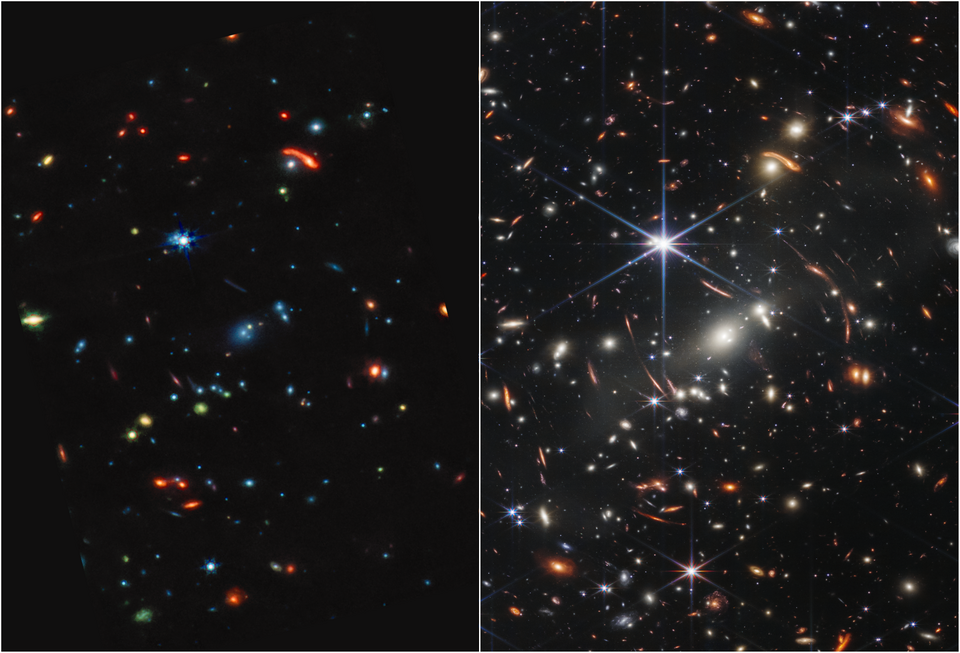
Space Exploration History Timeline: Humanity’s Journey from Earth to the Stars
Space exploration history timeline: from Sputnik and Apollo to the Space Shuttle, ISS, Mars rovers, SpaceX and Artemis - humanity's journey to the stars.
Latest Story
In a single lifetime, humanity went from launching its first beeping satellite to landing rovers on Mars and helicopters in its skies. This Space Exploration History Timeline charts that journey — from ancient sky-watchers and the Scientific Revolution, through Sputnik, Yuri Gagarin and Apollo 11, to reusable rockets, the Artemis Moon program and the dawn of commercial spaceflight. Read newest first, with milestones, science and the people who reached for the stars.
🤩 Space Exploration in 60 Seconds
Space exploration is the use of rockets, satellites and spacecraft to study and travel beyond Earth. It began in earnest in 1957, when the Soviet Union launched Sputnik 1, the first artificial satellite, igniting the Space Race. In 1961 Yuri Gagarin became the first human in space, and in 1969 Apollo 11 landed the first people on the Moon. Today, agencies and private companies like SpaceX are building reusable rockets, returning to the Moon through Artemis, and preparing for human missions to Mars.
Space Exploration: Key Questions
The Story of Space Exploration
- The space age began in 1957 with the Soviet launch of Sputnik 1.
- Yuri Gagarin became the first human in space in 1961; Apollo 11 landed on the Moon in 1969.
- The Space Race between the USSR and USA drove rapid 1950s–60s breakthroughs.
- Space stations — Salyut, Mir and the ISS — enabled long-term human presence in orbit.
- Robotic probes like Voyager, Hubble and Mars rovers transformed our knowledge of the universe.
- Reusable rockets, pioneered by SpaceX’s Falcon 9, dramatically cut the cost of reaching space.
- NASA’s Artemis program aims to return humans to the Moon and prepare for Mars.
- India’s Chandrayaan-3 made the first landing near the Moon’s south pole in 2023.
Top 10 Most Important Space Missions
The missions that defined humanity’s journey beyond Earth.
Moon landing
The first
Pioneer
Deep space
Observatory
Orbital lab
Red Planet
Commercial
Deep cosmos
New era
Space Exploration Timeline (Reverse Chronological)
From today’s Artemis and Starship era back to humanity’s first glances at the night sky.
26
Artemis, Starship & the Commercial Space Boom
Scientific achievement: NASA’s Artemis program advances toward returning humans to the Moon, while companies develop private space stations to succeed the ISS.
Technology breakthrough: SpaceX’s Starship — the most powerful rocket ever built — progresses through testing as a fully reusable system for the Moon and Mars.
Global impact: Space tourism, commercial lunar landers and international Moon ambitions are turning spaceflight into a broad, multi-player industry.
24
Moon Resurgence, Commercial Crew & New Telescopes
Scientific achievement: The James Webb Space Telescope (launched 2021) began revealing the earliest galaxies, while rovers and landers returned to the Moon and Mars.
Technology breakthrough: SpaceX’s Crew Dragon restored US human launch capability in 2020, and India’s Chandrayaan-3 landed near the lunar south pole in 2023.
Global impact: Space tourism flights and all-civilian orbital missions like Inspiration4 (2021) opened spaceflight beyond professional astronauts.
19
Reusable Rockets & the Mars Rover Era
Scientific achievement: NASA’s Curiosity rover (2012) confirmed Mars once had habitable conditions, and New Horizons flew by Pluto in 2015.
Technology breakthrough: In 2015–16, SpaceX landed and reused Falcon 9 boosters, slashing launch costs and reshaping the industry.
Global impact: India’s Mangalyaan (2014) reached Mars on its first attempt, a landmark for low-cost space exploration.
09
ISS Expansion & the Private Space Industry
Scientific achievement: The ISS grew into a permanently crewed laboratory (continuously inhabited since 2000), enabling long-duration research.
Technology breakthrough: SpaceShipOne won the Ansari X Prize in 2004 as the first privately built crewed spacecraft, sparking the commercial space age.
Global impact: China launched its first astronaut in 2003, becoming the third nation to independently send humans to space.
99
The Hubble Era & International Cooperation
Scientific achievement: The Hubble Space Telescope (1990) delivered unprecedented images, helping refine the age and expansion of the universe.
Technology breakthrough: A 1993 servicing mission corrected Hubble’s flawed mirror, proving in-orbit repair was possible.
Global impact: Former Cold War rivals cooperated, with US astronauts visiting Russia’s Mir and planning the ISS together.
89
The Space Shuttle & Mir Station
Scientific achievement: The Space Shuttle (first flight 1981) introduced a partly reusable crewed spacecraft that launched satellites, probes and lab modules.
Technology breakthrough: The Soviet Mir station (1986) became the first modular space station, hosting record-long human stays.
Global impact: The 1986 Challenger disaster, killing seven astronauts, was a sobering reminder of spaceflight’s risks.
79
Viking on Mars & the Apollo–Soyuz Handshake
Scientific achievement: NASA’s Viking 1 and 2 (1976) became the first spacecraft to successfully land on Mars and send back images and data.
Technology breakthrough: Salyut 1 (1971) was the first space station, and Voyager (1977) began its grand tour of the outer planets.
Global impact: The 1975 Apollo–Soyuz Test Project saw US and Soviet spacecraft dock in orbit, easing Cold War tensions.
Apollo 11 — Humans Land on the Moon
Scientific achievement: Apollo 11 landed Neil Armstrong and Buzz Aldrin on the Moon, the first humans to walk on another world, while Michael Collins orbited above.
Technology breakthrough: The Saturn V rocket and the lunar module achieved a feat once thought impossible, watched live by an estimated 600 million people.
Global impact: The landing fulfilled President Kennedy’s 1961 goal and marked the United States’ decisive moment in the Space Race.
Yuri Gagarin — First Human in Space
Scientific achievement: On April 12, 1961, Soviet cosmonaut Yuri Gagarin orbited Earth aboard Vostok 1, becoming the first human to travel into space.
Technology breakthrough: The flight proved humans could survive launch, weightlessness and re-entry, opening the era of crewed spaceflight.
Global impact: Gagarin’s flight was a major Soviet triumph that pushed the US to commit to landing on the Moon.
Sputnik 1 — The Space Age Begins
Scientific achievement: The Soviet Union launched Sputnik 1, the first artificial satellite, which orbited Earth emitting a now-famous radio beep.
Technology breakthrough: Sputnik proved rockets could place objects into orbit, launching the modern space age overnight.
Global impact: The launch shocked the United States, triggering the Space Race and leading to the creation of NASA in 1958.
50s
Rocket Development & V-2 Origins
Scientific achievement: Germany’s V-2, developed by a team led by Wernher von Braun, became the first human-made object to reach the edge of space in the 1940s.
Technology breakthrough: Liquid-fuelled rocket technology, pioneered earlier by Robert Goddard and Konstantin Tsiolkovsky’s theories, made spaceflight feasible.
Global impact: After WWII, both the US and USSR recruited German rocket scientists, accelerating their space programs.
1900
The Scientific Revolution & Foundations of Astronomy
Scientific achievement: Copernicus, Galileo, Kepler and Newton overturned the geocentric model, explaining how planets orbit the Sun under gravity.
Technology breakthrough: Galileo’s use of the telescope (from 1609) revealed moons, craters and a vastly larger universe than imagined.
Global impact: These discoveries created the scientific framework that would, centuries later, make spaceflight possible.
Early Observations of the Night Sky
Scientific achievement: Ancient Babylonian, Greek, Indian, Chinese and Mayan astronomers tracked the Sun, Moon, planets and stars, building the first models of the heavens.
Technology breakthrough: Naked-eye observatories and mathematical astronomy enabled accurate calendars and eclipse predictions.
Global impact: Humanity’s oldest science, astronomy, planted the curiosity that would eventually carry us beyond Earth.
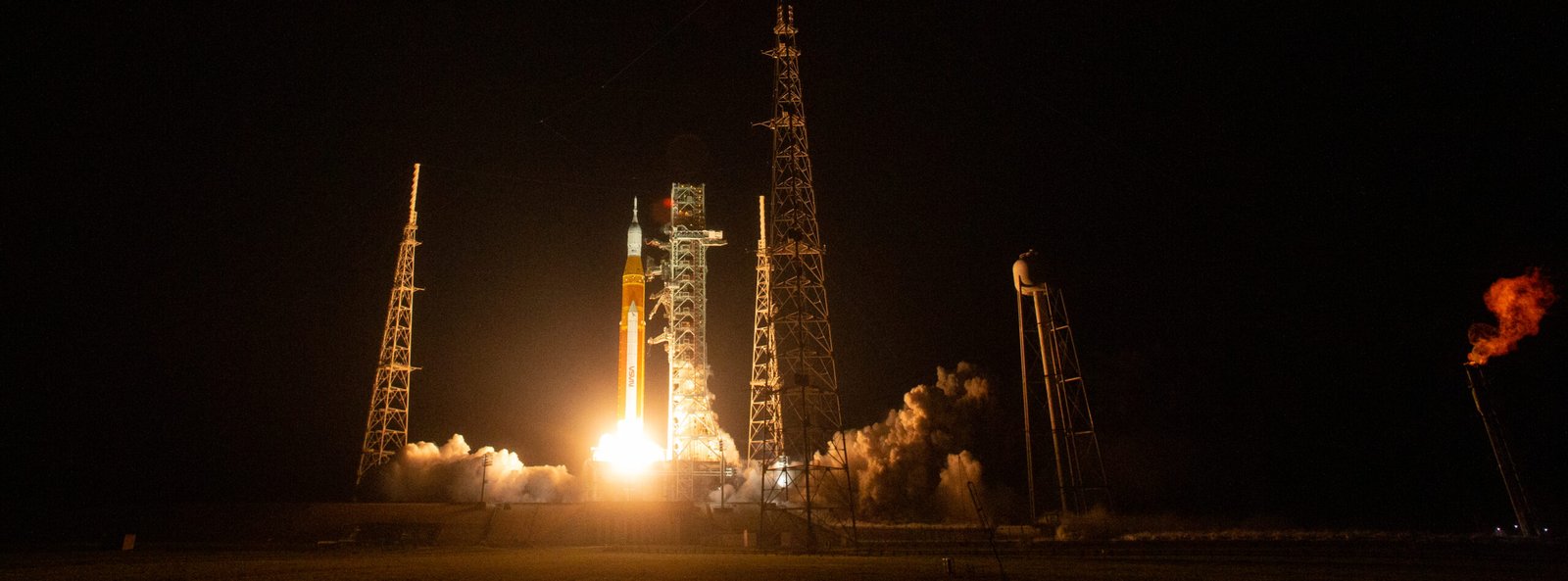
How Rockets Work
The basic principle that lets a machine escape Earth’s gravity.
Rockets work on a simple but powerful idea: Newton’s third law — for every action, there is an equal and opposite reaction. By violently expelling gas out of the back, a rocket is pushed forward. Here is the process, step by step:
- Carry fuel and oxidiser: Because there is no air in space, a rocket carries both fuel and an oxidiser so combustion can happen anywhere.
- Burn propellant: Fuel and oxidiser are mixed and ignited in the combustion chamber, creating extremely hot, high-pressure gas.
- Expel gas through the nozzle: The gas rushes out of the engine nozzle at very high speed, producing thrust in the opposite direction.
- Overcome gravity and drag: When thrust exceeds the rocket’s weight and air resistance, the rocket accelerates upward.
- Stage the rocket: Multi-stage rockets drop empty fuel tanks to shed weight, making it easier to keep accelerating.
- Reach orbit or escape velocity: To orbit Earth a rocket must reach about 28,000 km/h; to leave Earth entirely it needs roughly 40,000 km/h (escape velocity).
The Space Race Explained
The Space Race was the Cold War competition between the United States and the Soviet Union to achieve spaceflight milestones first. It began when the USSR launched Sputnik 1 in 1957 and intensified as the Soviets achieved the first satellite, the first human in space (Gagarin, 1961) and the first spacewalk (Leonov, 1965).
The United States responded by creating NASA in 1958 and committing to land humans on the Moon. That goal was achieved with Apollo 11 in 1969, widely seen as the moment the US “won” the Space Race. The rivalry drove extraordinarily rapid technological progress and eventually gave way to cooperation, symbolised by the 1975 Apollo–Soyuz mission.
The World’s Major Space Agencies
NASA
Founded in 1958, NASA is the world’s largest space agency by budget. It achieved the Apollo Moon landings, built the Space Shuttle and Hubble, leads the ISS and runs the Artemis Moon program.
European Space Agency (ESA)
A 22-member collaboration, ESA develops launch vehicles (Ariane), science missions and ISS modules, and partners on major projects like the James Webb Space Telescope.
Roscosmos
Successor to the Soviet space program that launched Sputnik and Gagarin, Roscosmos operates Soyuz spacecraft, a cornerstone of human access to the ISS for decades.
ISRO
The Indian Space Research Organisation is celebrated for low-cost missions, including Mangalyaan to Mars (2014) and Chandrayaan-3’s historic lunar south-pole landing (2023).
CNSA
The China National Space Administration has rapidly advanced, landing rovers on the Moon and Mars and building its own Tiangong space station in Earth orbit.
JAXA
The Japan Aerospace Exploration Agency is known for asteroid sample-return missions like Hayabusa, advanced science satellites and contributions to the ISS.
Pioneers of Space Exploration
Yuri Gagarin
The Soviet cosmonaut who became the first human in space aboard Vostok 1 on April 12, 1961, instantly becoming a global icon of the space age.
Neil Armstrong
NASA astronaut and commander of Apollo 11, the first person to walk on the Moon in 1969, whose first words there became one of history’s most famous quotes.
Buzz Aldrin
The Apollo 11 lunar module pilot and second person to walk on the Moon, who described its stark beauty as “magnificent desolation.”
Valentina Tereshkova
The Soviet cosmonaut who became the first woman in space in 1963 aboard Vostok 6, remaining the only woman to have flown a solo space mission.
Wernher von Braun
The rocket engineer who led development of Germany’s V-2 and later NASA’s Saturn V, the launch vehicle that carried astronauts to the Moon.
Konstantin Tsiolkovsky
The Russian schoolteacher and visionary whose early-20th-century equations laid the theoretical foundations of rocketry and spaceflight.
Case Studies
Case Study 1 — Sputnik & the Space Race
Background: Cold War rivalry over technological supremacy. Challenges: building reliable orbital rockets. Achievements: Sputnik 1 (1957) became the first satellite. Long-term impact: it launched the space age and the creation of NASA.
Case Study 2 — Apollo 11 Moon Landing
Background: Kennedy’s 1961 pledge to land on the Moon. Challenges: developing the Saturn V and lunar module from scratch. Achievements: the first crewed Moon landing in 1969. Long-term impact: a defining moment of human achievement and US space leadership.
Case Study 3 — The International Space Station
Background: post-Cold War cooperation. Challenges: assembling a station in orbit from many nations’ modules. Achievements: continuous human presence since 2000. Long-term impact: a model for international collaboration and microgravity research.
Case Study 4 — Mars Rover Exploration
Background: the search for past life and water on Mars. Challenges: landing and operating robots millions of kilometres away. Achievements: rovers from Sojourner to Perseverance. Long-term impact: proof Mars was once habitable, guiding future human missions.
Case Study 5 — Reusable Rockets & Commercial Spaceflight
Background: high launch costs limited access to space. Challenges: landing and reflying rocket boosters. Achievements: SpaceX’s Falcon 9 reuse and crewed Dragon flights. Long-term impact: a dramatic fall in launch costs and a booming private space industry.
Data Tables
| Year | Mission / Event | Significance |
|---|---|---|
| 1957 | Sputnik 1 | First artificial satellite |
| 1961 | Vostok 1 (Gagarin) | First human in space |
| 1965 | Voskhod 2 (Leonov) | First spacewalk |
| 1969 | Apollo 11 | First Moon landing |
| 1971 | Salyut 1 | First space station |
| 1977 | Voyager 1 & 2 | Outer planets & interstellar |
| 1990 | Hubble Telescope | Space observatory |
| 1998 | ISS first module | International station |
| 2012 | Curiosity rover | Modern Mars science |
| 2021 | James Webb Telescope | Deep-cosmos observatory |
| 2023 | Chandrayaan-3 | Lunar south-pole landing |
| Human Spaceflight Milestone | Year | Who |
|---|---|---|
| First human in space | 1961 | Yuri Gagarin (USSR) |
| First American in space | 1961 | Alan Shepard (USA) |
| First woman in space | 1963 | Valentina Tereshkova (USSR) |
| First spacewalk | 1965 | Alexei Leonov (USSR) |
| First Moon walk | 1969 | Neil Armstrong (USA) |
| First all-civilian orbital crew | 2021 | Inspiration4 (SpaceX) |
| Moon Mission | Year | Achievement |
|---|---|---|
| Luna 2 (USSR) | 1959 | First impact on the Moon |
| Luna 9 (USSR) | 1966 | First soft landing |
| Apollo 11 (USA) | 1969 | First crewed landing |
| Chandrayaan-1 (India) | 2008 | Confirmed water on the Moon |
| Chandrayaan-3 (India) | 2023 | First near the south pole |
| Artemis (USA) | 2020s | Returning humans to the Moon |
| Mars Mission | Year | Achievement |
|---|---|---|
| Mariner 4 (USA) | 1965 | First Mars flyby images |
| Viking 1 & 2 (USA) | 1976 | First successful landers |
| Sojourner (USA) | 1997 | First Mars rover |
| Mangalyaan (India) | 2014 | Mars on the first attempt |
| Perseverance + Ingenuity (USA) | 2021 | Sample caching; first flight |
| Agency | Country/Region | Founded | Known For |
|---|---|---|---|
| NASA | United States | 1958 | Apollo, ISS, Artemis |
| Roscosmos | Russia | 1992 (Soviet 1955) | Sputnik, Gagarin, Soyuz |
| ESA | Europe | 1975 | Ariane, science missions |
| ISRO | India | 1969 | Mangalyaan, Chandrayaan |
| CNSA | China | 1993 | Tiangong, lunar/Mars landers |
| JAXA | Japan | 2003 | Hayabusa sample returns |
The Evolution of Space Technology
Rocket Technology
From Tsiolkovsky’s theories and the V-2 to the mighty Saturn V and today’s Starship, rockets have grown more powerful, reliable and, crucially, reusable.
Satellites
Beginning with Sputnik, satellites now power communications, navigation (GPS), weather forecasting and Earth observation, becoming part of everyday life.
Space Stations
Salyut, Skylab, Mir and the ISS turned orbit into a permanent human workplace, with China’s Tiangong and commercial stations extending the idea.
Reusable Rockets
SpaceX proved boosters could land and refly, slashing costs and making frequent launches economically viable for the first time.
Deep-Space Probes
Voyager, Cassini, New Horizons and others explored the outer planets and beyond, with Voyager now in interstellar space.
Planetary Rovers
From Sojourner to Perseverance and China’s rovers, robotic explorers study Mars and the Moon in detail ahead of human arrival.
AI & Future Missions
Artificial intelligence now aids navigation, image analysis and autonomous operations, and will be vital for future lunar bases and crewed Mars missions.
Famous Missions, Failures & Discoveries
Notable Moments in Space History
- Most famous mission: Apollo 11 (1969), the first crewed Moon landing, watched by an estimated 600 million people.
- Tragic failures: the Challenger (1986) and Columbia (2003) Space Shuttle disasters, and Apollo 1 (1967), reshaped spaceflight safety.
- Greatest discovery: Hubble and later telescopes refined the age and expansion of the universe and revealed countless galaxies.
- Farthest reach: Voyager 1, launched in 1977, is the most distant human-made object, now in interstellar space.
- Low-cost triumph: India’s Mangalyaan reached Mars on its first attempt at a remarkably low cost.
- Most ambitious future plan: crewed missions to Mars, targeted by NASA and SpaceX for the coming decades.
Explore More Timelines
People Also Ask
Frequently Asked Questions
Explore More Timelines
⚠️ Sources & E-E-A-T Note
This article separates established historical facts and scientific consensus from agency announcements and future projections. Mission dates and data are drawn from authoritative sources including NASA, ESA, ISRO and Roscosmos. Some figures are approximate and forward-looking statements about future missions are subject to change. This is educational information.
Sources & further reading
Every dated entry above was checked against these references. Last reviewed 15 September 2026.
(function(){var y=document.getElementById(‘ait-year’);if(y){y.textContent=new Date().getFullYear();}var btn=document.querySelector(‘.ste-tophome’);if(btn){var onScroll=function(){var st=window.pageYOffset||document.documentElement.scrollTop||0;var dist=document.documentElement.scrollHeight-window.innerHeight;var pct=dist>0?st/dist:0;if(pct>0.15&&pct<0.9){btn.classList.add('ste-tophome-show');}else{btn.classList.remove('ste-tophome-show');}};window.addEventListener('scroll',onScroll,{passive:true});window.addEventListener('resize',onScroll);onScroll();}})();{“@context”:”https://schema.org”,”@type”:”BreadcrumbList”,”itemListElement”:[{“@type”:”ListItem”,”position”:1,”name”:”Home”,”item”:”https://aitimeline.in/”},{“@type”:”ListItem”,”position”:2,”name”:”Science”,”item”:”https://aitimeline.in/category/science/”},{“@type”:”ListItem”,”position”:3,”name”:”Space Exploration History Timeline”,”item”:”https://aitimeline.in/space-exploration-history-timeline-812/”}]}{“@context”:”https://schema.org”,”@type”:”Article”,”headline”:”Space Exploration History Timeline: Humanity’s Journey from Earth to the Stars”,”description”:”Explore the complete history of space exploration, from ancient astronomy and Sputnik to Moon landings, Mars missions, reusable rockets and humanity’s future in space.”,”image”:{“@type”:”ImageObject”,”url”:”https://aitimeline.in/wp-content/uploads/2026/06/space-exploration-history-timeline-ev9.png”,”width”:960,”height”:653},”datePublished”:”2026-06-24″,”dateModified”:”2026-06-25″,”author”:{“@type”:”Person”,”name”:”Adnan”},”publisher”:{“@type”:”Organization”,”name”:”AiTimeline”,”url”:”https://aitimeline.in/”,”logo”:{“@type”:”ImageObject”,”url”:”https://aitimeline.in/wp-content/uploads/2026/02/favicon-512×512-1.png”}},”mainEntityOfPage”:{“@type”:”WebPage”,”@id”:”https://aitimeline.in/space-exploration-history-timeline-812/”}}{“@context”:”https://schema.org”,”@type”:”Organization”,”name”:”AiTimeline”,”url”:”https://aitimeline.in/”,”logo”:{“@type”:”ImageObject”,”url”:”https://aitimeline.in/wp-content/uploads/2026/02/favicon-512×512-1.png”},”description”:”AiTimeline publishes in-depth, fact-first timeline articles on science, space, technology, automotive history, sport and culture.”}{“@context”:”https://schema.org”,”@type”:”ImageObject”,”contentUrl”:”https://aitimeline.in/wp-content/uploads/2026/06/space-exploration-history-timeline-ev9.png”,”url”:”https://aitimeline.in/wp-content/uploads/2026/06/space-exploration-history-timeline-ev9.png”,”caption”:”Space Exploration History Timeline: From Sputnik to Mars”,”width”:960,”height”:653,”creditText”:”AiTimeline”}{“@context”:”https://schema.org”,”@type”:”HowTo”,”name”:”How Rockets Work”,”description”:”The basic steps by which a rocket generates thrust and reaches space, using Newton’s third law of motion.”,”step”:[{“@type”:”HowToStep”,”position”:1,”name”:”Carry fuel and oxidiser”,”text”:”Because there is no air in space, a rocket carries both fuel and an oxidiser so combustion can happen anywhere.”},{“@type”:”HowToStep”,”position”:2,”name”:”Burn propellant”,”text”:”Fuel and oxidiser are mixed and ignited in the combustion chamber, creating extremely hot, high-pressure gas.”},{“@type”:”HowToStep”,”position”:3,”name”:”Expel gas through the nozzle”,”text”:”The gas rushes out of the engine nozzle at very high speed, producing thrust in the opposite direction.”},{“@type”:”HowToStep”,”position”:4,”name”:”Overcome gravity and drag”,”text”:”When thrust exceeds the rocket’s weight and air resistance, the rocket accelerates upward.”},{“@type”:”HowToStep”,”position”:5,”name”:”Stage the rocket”,”text”:”Multi-stage rockets drop empty fuel tanks to shed weight, making it easier to keep accelerating.”},{“@type”:”HowToStep”,”position”:6,”name”:”Reach orbit or escape velocity”,”text”:”To orbit Earth a rocket must reach about 28,000 km/h; to leave Earth entirely it needs roughly 40,000 km/h.”}]}{“@context”:”https://schema.org”,”@type”:”FAQPage”,”mainEntity”:[{“@type”:”Question”,”name”:”What is the history of space exploration?”,”acceptedAnswer”:{“@type”:”Answer”,”text”:”Space exploration began in 1957 when the Soviet Union launched Sputnik 1, the first satellite. Yuri Gagarin became the first human in space in 1961, and Apollo 11 landed on the Moon in 1969. Since then, space stations, probes, telescopes and reusable rockets have continued humanity’s expansion into space.”}},{“@type”:”Question”,”name”:”What was the first satellite?”,”acceptedAnswer”:{“@type”:”Answer”,”text”:”The first artificial satellite was Sputnik 1, launched by the Soviet Union on October 4, 1957. About the size of a beach ball, it orbited Earth emitting radio beeps and launched the space age.”}},{“@type”:”Question”,”name”:”Who first landed on the Moon?”,”acceptedAnswer”:{“@type”:”Answer”,”text”:”Neil Armstrong and Buzz Aldrin were the first humans to land on the Moon, on July 20, 1969, during NASA’s Apollo 11 mission, while Michael Collins orbited in the command module.”}},{“@type”:”Question”,”name”:”Who was the first human in space?”,”acceptedAnswer”:{“@type”:”Answer”,”text”:”Soviet cosmonaut Yuri Gagarin was the first human in space, orbiting Earth aboard Vostok 1 on April 12, 1961. His 108-minute flight was a major milestone in the Space Race.”}},{“@type”:”Question”,”name”:”Who was the first woman in space?”,”acceptedAnswer”:{“@type”:”Answer”,”text”:”Soviet cosmonaut Valentina Tereshkova became the first woman in space on June 16, 1963, aboard Vostok 6, and remains the only woman to have completed a solo spaceflight.”}},{“@type”:”Question”,”name”:”What is the future of space exploration?”,”acceptedAnswer”:{“@type”:”Answer”,”text”:”The future includes returning humans to the Moon through Artemis, building lunar bases, crewed missions to Mars, private space stations and expanding space tourism, enabled by reusable rockets and AI.”}},{“@type”:”Question”,”name”:”What was Apollo 11?”,”acceptedAnswer”:{“@type”:”Answer”,”text”:”Apollo 11 was NASA’s 1969 mission that first landed humans on the Moon. Neil Armstrong and Buzz Aldrin walked on the surface while Michael Collins orbited above.”}},{“@type”:”Question”,”name”:”What is the International Space Station?”,”acceptedAnswer”:{“@type”:”Answer”,”text”:”The ISS is a large habitable satellite in low Earth orbit operated by NASA, Roscosmos, ESA, JAXA and CSA. Continuously crewed since 2000, it is a microgravity laboratory and symbol of cooperation.”}},{“@type”:”Question”,”name”:”What is NASA?”,”acceptedAnswer”:{“@type”:”Answer”,”text”:”NASA, the National Aeronautics and Space Administration, is the United States’ space agency founded in 1958. It led the Apollo Moon landings, operates the ISS and runs the Artemis program.”}},{“@type”:”Question”,”name”:”What is ISRO known for?”,”acceptedAnswer”:{“@type”:”Answer”,”text”:”ISRO is known for cost-effective missions, including Mangalyaan, which reached Mars on its first attempt in 2014, and Chandrayaan-3, which landed near the Moon’s south pole in 2023.”}},{“@type”:”Question”,”name”:”What was the first space station?”,”acceptedAnswer”:{“@type”:”Answer”,”text”:”The first space station was the Soviet Salyut 1, launched in 1971, which demonstrated that humans could live and work in orbit.”}},{“@type”:”Question”,”name”:”How do rockets work?”,”acceptedAnswer”:{“@type”:”Answer”,”text”:”Rockets work using Newton’s third law: they expel hot gas at high speed from their engines, producing thrust that pushes them in the opposite direction. They carry fuel and oxidiser to burn in the vacuum of space.”}},{“@type”:”Question”,”name”:”What is escape velocity?”,”acceptedAnswer”:{“@type”:”Answer”,”text”:”Escape velocity is the minimum speed needed to break free of a planet’s gravity. For Earth it is about 40,000 km/h, while reaching orbit requires around 28,000 km/h.”}},{“@type”:”Question”,”name”:”What is the most powerful rocket?”,”acceptedAnswer”:{“@type”:”Answer”,”text”:”SpaceX’s Starship is the most powerful rocket ever built by thrust, designed to be fully reusable. NASA’s SLS and the historic Saturn V are also among the most powerful rockets.”}},{“@type”:”Question”,”name”:”What is the James Webb Space Telescope?”,”acceptedAnswer”:{“@type”:”Answer”,”text”:”Launched in December 2021, the James Webb Space Telescope is the most powerful space observatory ever built. Operating in infrared, it can see the earliest galaxies and study exoplanet atmospheres.”}},{“@type”:”Question”,”name”:”What is Chandrayaan-3?”,”acceptedAnswer”:{“@type”:”Answer”,”text”:”Chandrayaan-3 is India’s lunar mission that made the first successful landing near the Moon’s south pole on August 23, 2023, making India the fourth country to soft-land on the Moon.”}},{“@type”:”Question”,”name”:”Who won the Space Race?”,”acceptedAnswer”:{“@type”:”Answer”,”text”:”The United States is generally considered to have won the Space Race by landing humans on the Moon in 1969, though the Soviet Union achieved many firsts, including the first satellite and first human in space.”}},{“@type”:”Question”,”name”:”Will humans go to Mars?”,”acceptedAnswer”:{“@type”:”Answer”,”text”:”Space agencies and companies aim to send humans to Mars in the coming decades. NASA targets the 2030s or 2040s and SpaceX hopes to go sooner, though radiation, the long journey and landing remain major challenges.”}},{“@type”:”Question”,”name”:”What is the Artemis Program?”,”acceptedAnswer”:{“@type”:”Answer”,”text”:”Artemis is NASA’s program to return humans to the Moon and establish a sustainable presence as a stepping stone to Mars, using the SLS rocket and Orion spacecraft with international and commercial partners.”}},{“@type”:”Question”,”name”:”Why do we explore space?”,”acceptedAnswer”:{“@type”:”Answer”,”text”:”We explore space to advance science, search for life, understand Earth and the universe, develop technology and inspire humanity, while driving innovations that benefit everyday life on Earth.”}}]}{“@context”:”https://schema.org”,”@type”:”Dataset”,”name”:”Space Exploration History Dataset”,”description”:”Timeline and data on space exploration from ancient astronomy to 2026, including major missions, human spaceflight milestones, Moon and Mars missions, and space agency comparisons.”,”url”:”https://aitimeline.in/space-exploration-history-timeline-812/”,”creator”:{“@type”:”Organization”,”name”:”AiTimeline”},”temporalCoverage”:”1957/2026″,”keywords”:[“space exploration history”,”space race timeline”,”NASA history”,”moon landing”,”Mars missions”,”human spaceflight”,”Sputnik”,”Apollo 11″]}{“@context”:”https://schema.org”,”@type”:”WebPage”,”speakable”:{“@type”:”SpeakableSpecification”,”cssSelector”:[“#quick-answers”,”#key-takeaways”]},”url”:”https://aitimeline.in/space-exploration-history-timeline-812/”}