
AI Investment in Travel Tech Timeline: How Artificial Intelligence Is Reshaping the Global Travel Industry
⚡ Quick Answer — AI Overview Ready
AI investment in travel technology has accelerated since 2023 as airlines, hotels, online travel agencies and startups adopt generative AI, predictive analytics, dynamic pricing and autonomous travel assistants to improve customer experiences and operational efficiency. Leaders include Booking Holdings, Expedia, Airbnb and well-funded startups such as Hopper, Navan and Perk (formerly TravelPerk).
Track AI investment in travel tech from 1995 to 2026: startup funding, generative AI assistants, hotel innovation, airline automation and trip planning.
Latest Story
From the first online booking sites to today’s generative-AI trip planners, artificial intelligence has become the engine of travel innovation. This AI Investment in Travel Tech Timeline traces three decades of money and technology — OTAs, dynamic pricing, chatbots, demand forecasting and the funding boom now flowing into AI travel startups — explaining how AI reshapes airlines, hotels and how we plan trips. All funding and market figures are clearly labelled as reported, estimated or forecast.
🤩 AI in Travel Explained (60-Second Summary)
AI in travel technology is the use of machine learning and generative AI to automate and personalise the travel journey — planning, booking, pricing, customer support and operations. Airlines use it for dynamic pricing and demand forecasting; hotels for personalisation and revenue management; online travel agencies for recommendations; and a new wave of startups for AI trip-planning assistants. Investment has surged since 2023 as generative AI made conversational, end-to-end travel planning possible.
⚠️ About These Figures
Funding amounts are reported from public announcements; market sizes are analyst estimates that vary widely by source and definition; 2026 and later numbers are forecasts. Treat all dollar figures as approximate. This is editorial analysis, not investment advice.
AI in Travel: Key Questions
AI Is Reshaping Travel
- AI now spans the whole travel journey: planning, booking, pricing, support and operations.
- Generative AI (since 2023) sparked a wave of conversational trip-planning startups.
- Airlines and hotels were early adopters of AI for pricing and demand forecasting.
- The pandemic (2020–22) accelerated digital and contactless travel technology.
- OTAs like Booking, Expedia and Tripadvisor are embedding AI assistants.
- Hopper is among the best-funded AI-first travel startups, with reported funding over $700M.
- Investment surged post-2023, though figures and market sizes vary by source.
- The next frontier is autonomous booking agents that plan and book end-to-end.
Latest Update — October 2026
div>
How AI Is Changing Travel
Artificial intelligence is helping travel companies automate customer service, personalise trip recommendations, optimise pricing, forecast demand, improve hotel operations, and enhance airline efficiency. AI is increasingly used across booking, planning, operations, and traveller support — turning a fragmented journey into a more seamless, personalised experience.
Where AI Money Is Going in Travel
The segments attracting the most AI investment and innovation.
Hot segment
AI unicorn
Incumbents
Operations
Hospitality
Frontier
AI Investment in Travel Tech Timeline (Reverse Chronological)
From the generative-AI era back to the birth of online booking. Funding figures are reported; market sizes are estimates.
26
Generative AI Planning & Autonomous Booking Agents Forecast
Industry significance: Travel is shifting from search-and-filter to conversational, agentic AI that plans and books entire trips. OTAs, startups and airlines race to own the AI assistant layer.
Market impact: AI moves from a feature to the interface; “travel super-apps” bundle planning, booking, payments and support around an AI agent.
Why it matters: Whoever owns the trusted AI travel assistant could control how billions of trips are discovered and booked.
24
The AI Investment Surge & ChatGPT Travel Integrations Reported
Company / event: Expedia and Kayak launched ChatGPT integrations in 2023; Booking.com rolled out an AI Trip Planner; startups like Mindtrip and Layla raised funding.
Industry significance: Generative AI made conversational, end-to-end trip planning viable, triggering a wave of investment into AI-first travel startups.
Market impact: Incumbents embedded AI assistants while VCs backed new entrants, intensifying competition for the AI travel interface.
22
Pandemic Digital Transformation & Contactless Travel Historical
Industry significance: COVID-19 forced rapid digitisation — contactless check-in, mobile keys, AI demand forecasting and automated customer service to handle disruption.
Market impact: Travel firms invested in resilience and automation; AI price-prediction apps like Hopper grew as travellers sought flexibility and deals.
Why it matters: The crisis permanently accelerated AI and automation adoption across hotels, airlines and OTAs.
19
Machine Learning, Dynamic Pricing & Chatbots Historical
Industry significance: Machine learning powered dynamic pricing, personalised recommendations and the first travel chatbots, making AI a competitive necessity.
Market impact: Hopper’s price-prediction app gained traction, and airlines and hotels expanded data-driven revenue management.
Why it matters: This era built the ML foundations that generative AI would later supercharge.
14
OTA Innovation, Metasearch & Data Analytics Historical
Industry significance: Metasearch (Kayak, Skyscanner), recommendation engines and the rise of Airbnb (2008) reshaped how people discover and book travel.
Market impact: Data-driven analytics and personalisation became core to OTAs, setting up the machine-learning era that followed.
Why it matters: The platforms and data infrastructure built here enabled later AI breakthroughs.
2004
The Online Booking Revolution Historical
Company / event: Expedia, Travelocity and Booking.com launched in 1996, Priceline in 1997 and Orbitz in 2001, moving travel booking online.
Industry significance: The internet disintermediated travel agents and created the online travel agency model that AI would later transform.
Market impact: Digital booking generated the data and platforms that decades later made AI-driven travel possible.
AI Across Travel Segments
Airlines operations & pricing
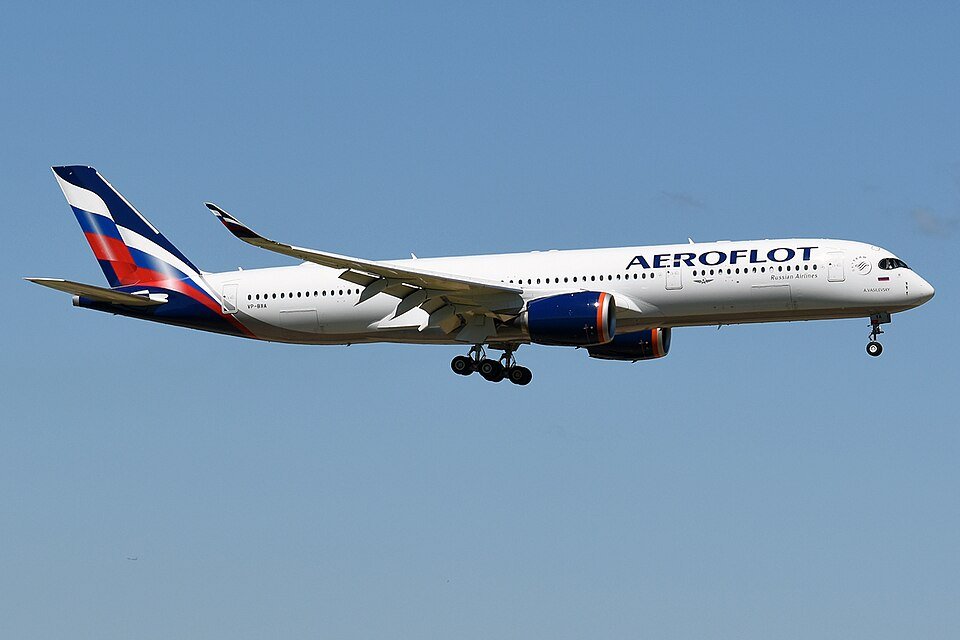
Airlines use AI for dynamic pricing and revenue optimisation, demand forecasting, predictive aircraft maintenance, crew and route scheduling, and chatbots, cutting costs and reducing delays.
Hotels guest experience
Hotels apply AI to personalised offers, AI revenue management, virtual concierges, energy and staffing optimisation, and faster service, improving occupancy and satisfaction.
Online Travel Agencies discovery
OTAs like Booking, Expedia and Tripadvisor use AI for recommendations, search, fraud detection and now conversational AI trip-planning assistants.
Corporate Travel efficiency
Business-travel platforms use AI to automate booking, enforce policy, manage expenses and optimise spend, with assistants handling itinerary changes.
Vacation Rentals matching
Airbnb and Vrbo use AI for pricing suggestions, search ranking, matching guests to listings, trust and safety, and increasingly AI-assisted trip planning.
Airports & Cruise flow & service
Airports use AI for security, passenger flow and predictive operations, while cruise lines apply it to onboard personalisation, logistics and demand planning.

Key Companies Driving AI Travel
Booking Holdings
Parent of Booking.com, Priceline and Kayak, and among the most valuable travel-tech companies. It has embedded AI across search, recommendations and an AI Trip Planner.
Expedia Group
Operator of Expedia, Hotels.com and Vrbo. It launched ChatGPT integration and an AI assistant (“Romie”) to make planning and booking conversational.
Airbnb
The vacation-rental pioneer uses AI for pricing, search ranking, matching and trust & safety, and has signalled ambitions to build an AI-powered travel concierge.
Hopper
A mobile-first travel app famous for AI flight-price prediction. With reported funding over $700 million, it also licenses its technology to partners via “Hopper Technology Solutions.”
Tripadvisor
The travel-review giant applies AI to recommendations and trip planning, and has launched AI-powered itinerary tools to help travellers build trips from its data.
OpenAI & ChatGPT
Generative-AI providers whose models power many travel assistants. ChatGPT’s 2023 travel plugins helped trigger the current wave of AI travel investment.
Trip.com Group
The Chinese-headquartered travel giant (Ctrip, Skyscanner, Trip.com) uses AI across search, customer service and its “TripGenie” assistant, and is a major force in the fast-growing Asian travel-tech market.
Amadeus IT Group
A leading global distribution and travel-technology provider powering airlines, hotels and agencies. Amadeus invests heavily in AI for pricing, retailing, disruption management and demand forecasting behind the scenes.
Navan (ex-TripActions)
An AI-first corporate travel and expense platform. It has raised roughly $2.3 billion in reported funding and listed on the Nasdaq in 2025, using AI agents to automate booking, policy and expenses.
AI Travel Investment & Funding Rounds
Reported funding from public announcements. Totals are approximate and may have changed since publication; this is not investment advice.
| Company | Focus | Reported Funding | Key Investors / Notes |
|---|---|---|---|
| Navan (ex-TripActions) | Corporate travel + AI | ~$2.3B total raised | IPO’d on Nasdaq in 2025; ~$9.2B prior valuation |
| Hopper | AI price prediction | ~$740M total raised | ~$5B valuation (2022); reported IPO ambitions |
| Perk (formerly TravelPerk) | Business travel | ~$731M total raised | Rebranded Nov 2025; revenue nearing $400M (Aug 2026); banks reportedly hired Sep 2025, but "no plan for the moment" to IPO (Aug 2026) |
| Mindtrip | AI trip planning | ~$19M total raised | $12M round (2024) after $7M seed (2023) |
| Layla | AI trip planning (acquired) | ~$3M seed + later round pre-acquisition | Acquired by Expedia Group, July 2026; prior backers incl. United Airlines Ventures, Baidu Capital, M13 |
Figures are reported amounts compiled from public sources (Skift, PhocusWire, TechCrunch, company announcements) and are approximate.
AI Travel Market Size (Analyst Estimates)
Market-size figures are analyst estimates that vary widely by how “AI in travel/tourism” is defined. Treat them as broad ranges, not exact numbers.
| Research Firm / Scope | Recent Value | Forecast | CAGR (est.) |
|---|---|---|---|
| MarketsandMarkets — AI in Tourism | ~$2.9B (2024) | ~$13.4B by 2030 | ~28.7% |
| Grand View Research — AI in Tourism | ~$3.4B (2024) | ~$13.9B by 2030 | ~26.7% |
| Market.us — AI in Travel (broad) | ~$131.7B (2023) | Grows through 2033 | ~36.2% |
The wide gap between estimates (single-digit billions vs. $100B+) reflects different market definitions — narrow “AI tourism solutions” versus the entire AI-enabled travel economy. All are forecasts and estimates.
Case Studies
Illustrative examples; funding figures are reported and approximate.
Case Study 1 — AI-Powered Travel Planning Assistants
Background: Generative AI enabled conversational trip planning. Investment: startups like Mindtrip and Layla raised venture funding; OTAs built their own. Future: autonomous agents that plan and book end-to-end.
Case Study 2 — Airline Revenue Optimisation
Background: Airlines have long used algorithms for pricing. Investment: continued spend on AI revenue-management and forecasting systems. Results: better load factors and yields; future: real-time, personalised pricing.
Case Study 3 — Hotel Personalisation Systems
Background: Hotels compete on experience. Investment: in AI personalisation and revenue tools. Results: higher direct bookings and guest satisfaction; future: AI concierges across the stay.
Case Study 4 — AI Chatbots in Customer Service
Background: Travel generates huge support volumes. Investment: in conversational AI to deflect and resolve queries. Results: faster service and lower costs; future: agents that rebook disrupted trips automatically.
Case Study 5 — Predictive Pricing & Demand Forecasting
Background: Pricing and demand are core to travel margins. Investment: Hopper and others built price-prediction at scale. Results: consumer savings tools and B2B forecasting; future: ever-more-accurate, personalised forecasts.
Market Data Tables
Figures are approximate estimates and reported amounts; sources and methods vary.
| Era | Dominant Travel Tech | AI Role |
|---|---|---|
| 1995–2004 | Online booking / OTAs | None (digital booking) |
| 2005–2014 | Metasearch & analytics | Recommendation engines |
| 2015–2019 | Mobile apps | Machine learning, chatbots |
| 2020–2022 | Contactless & automation | Forecasting, automation |
| 2023–2024 | Generative AI assistants | LLM trip planning |
| 2025–2026 | AI agents / super-apps | Autonomous booking |
| Notable AI Travel Player | Focus | Funding / Scale (reported, approx.) |
|---|---|---|
| Hopper | AI price prediction | ~$700M+ raised |
| Booking Holdings | OTA + AI Trip Planner | Large public company |
| Expedia Group | OTA + “Romie” assistant | Large public company |
| Mindtrip | AI trip planning | Venture-funded startup |
| Layla | AI travel assistant | Venture-funded startup |
| Travel Segment | AI Adoption | Primary Use |
|---|---|---|
| Airlines | High | Pricing, forecasting, maintenance |
| OTAs | High | Recommendations, AI assistants |
| Hotels | Growing | Personalisation, revenue mgmt |
| Vacation rentals | Growing | Pricing, matching, ranking |
| Corporate travel | Growing | Automation, policy, expenses |
| Cruise / airports | Emerging | Operations, flow, service |
| Outlook | Expectation (forecast) |
|---|---|
| AI-in-travel market | Multi-billion and growing rapidly |
| Generative AI planning | Fastest-growing segment |
| Autonomous booking agents | Emerging, high-potential |
| Personalisation | Becomes the default |
Market-size figures vary widely between research firms; treat them as broad estimates.
The AI Travel Investment Landscape
Where the Money Comes From
- Venture capital: backing AI-first trip-planning and automation startups, especially since 2023.
- Corporate investment: OTAs, airlines and hotel groups building or buying AI capabilities.
- Strategic acquisitions: incumbents acquiring AI talent and startups to stay competitive.
- Funding rounds: from small seed rounds for new entrants to large rounds for leaders like Hopper.
- Travel AI “unicorns”: a handful of high-valuation companies anchoring the sector.
- Emerging hubs: the US and Europe lead, with growing activity in Asia and the Middle East.
Explore More Timelines
People Also Ask
Frequently Asked Questions
Explore More Timelines
⚠️ Sources & E-E-A-T Note
This article separates reported funding (from public announcements), market estimates (from analyst research, which varies widely by source and definition) and forecasts/future projections (clearly labelled). Company strategies reflect public information at the time of writing and may change. Dollar figures are approximate. This is editorial analysis for general information, not investment advice; do your own research before any financial decision.
Sources & further reading
Every dated entry above was checked against these references. Last reviewed 18 October 2026.