Bhagalpur Blindings Case Timeline: Court Verdicts, Convictions and Legacy
Bhagalpur blindings case timeline: the Khatri legal-aid ruling, Supreme Court orders, 1987 and 2011 police convictions and the open compensation fight.
Latest Story
The Bhagalpur blindings case concerns undertrial prisoners in Bihar who were blinded in 1979–80, allegedly by police. Their petitions led the Supreme Court to rule on free legal aid and on the State’s duty to its prisoners, while separate criminal courts convicted particular police personnel. This timeline runs newest first and keeps constitutional orders apart from criminal verdicts, because they answer different questions.
💡 Short Answer
Between October 1979 and July 1980, undertrial prisoners at Bhagalpur were blinded, allegedly by police; counts range from 18 to 33 depending on the source. Ten of them petitioned the Supreme Court on 9 October 1980. Khatri (19 December 1980) tied free legal aid to Article 21; criminal courts convicted three police personnel in 1987 in the Yugal Beldar case, and the Patna High Court restored two convictions in a related case in 2011. The Court deferred the State-liability question in 1980–82, while Rs 15,000 from the Prime Minister and Rs 15,000 from Bihar were deposited for each victim.
Bhagalpur Blindings: Key Questions
The Case in Ten Points
- Victims: 18 blinded per the 1982 order; sources give 24 to 33.
- First complaint: July 1980 petitions to a district judge led to no action.
- Supreme Court: ten prisoners petitioned on 9 October 1980.
- Evidence: Court officers recorded 17 statements; 15 named police.
- Legal aid: Khatri, 19 December 1980, tied it to Article 21.
- Reports: on 10 March 1981 police reports were ordered produced.
- Relief: Rs 15,000 each from the Prime Minister and from Bihar; State liability deferred through 25 November 1982.
- Convictions: three police personnel on 8 April 1987; Gupta jailed in 2004.
- 2011: High Court restored two convictions and acquitted one accused.
- Open questions: the survivors’ December 2020 petition and later appeals have no located outcome.
Bhagalpur Blindings Timeline, Latest First
Each entry is tagged by theme and ends with why it matters. Use the filter to isolate a theme.
Supreme Court orders, criminal prosecutions or the events themselves? Filter the Bhagalpur blindings timeline by theme.
–
Status check: what is still not located Supreme Court
A second round of checks on 21 October 2026 confirmed the Rajya Sabha debate, the Washington Post article and the pension reports (see the entries below). It did not locate the Supreme Court case number or any order on the survivors’ December 2020 petition, any report that the monthly payment resumed or was revised, or any appeal or revision after Gupta’s 2004 jail term or the 2011 Patna High Court order. “Not located” means the sources searched did not show it; it does not mean none was filed. Court case-status portals were not searchable for this page, so readers should check the Supreme Court and Patna High Court records directly.
2020
Survivors’ advocate petitions the Supreme Court after the monthly payment stops Events & aftermath
NewsClick reported on 11 December 2020 that 18 surviving victims had received no payment since November 2019 and that their advocate, Ram Kumar Mishra, had filed a petition in the Supreme Court “early this week” seeking revision of the compensation paid after the Khatri case. Mishra said the payment was the interest on a Rs 30,000 fixed deposit in each victim’s name at the State Bank of India under a Supreme Court order, that it began at Rs 500 and was raised to Rs 750 a month, and that banks had stopped it over missing documents such as annual life certificates. In July 2020 he had said he would ask for a tenfold rise to Rs 7,500. These are the advocate’s statements as reported; the case number, any hearing and any order were not located.
A documentary and a film keep the case in public memory Events & aftermath
The 2017 documentary The Eyes of Darkness by Bhagalpur-born former journalist Amitabh Parashar revisits the blinding of 33 undertrials and convicts and links the case to later acid attacks in Bihar. Scroll’s review said survivor Bhola Chaudhary received Rs 750 a month in compensation and that victims struggled for years to push for prosecution; it does not report any final convictions. The Hindi film Gangaajal (2003) is described as loosely based on the incident.
2011
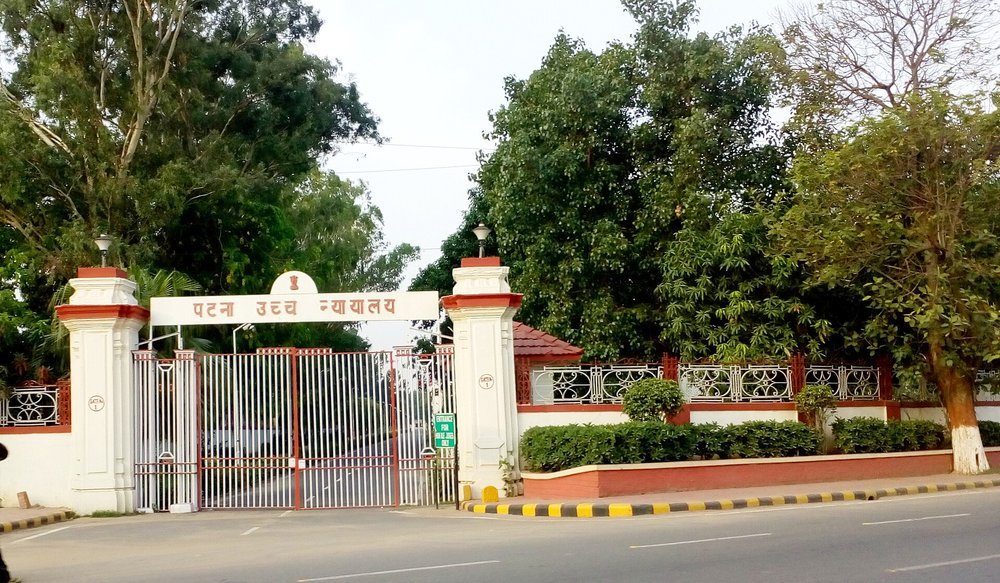
Patna High Court restores two convictions in a Bhagalpur blinding case Prosecutions
A single-judge bench of the Patna High Court upheld the order of the CBI special magistrate, Patna, convicting Mohammed Wasimuddin and Binda Prasad, but acquitted Mankeshwar Singh, who had also been convicted by that court. The Times of India reported that all three had appealed to the XIV additional district and sessions judge, Patna, who acquitted them, and that the CBI challenged that acquittal in the High Court. The report names neither the victim nor the sentences.
2004
Former Amarpur police-station head jailed after the Supreme Court dismisses his appeal Prosecutions
Gupta, a convict in the Amarpur police-station blinding case, surrendered before the special judicial magistrate in Patna and was sent to jail. The Supreme Court had dismissed his appeal on 10 March 2004 and ordered his bail cancelled. He was sent to serve two years’ rigorous imprisonment and deposited the Rs 2,000 fine under the trial court’s order. The Times of India gives his name as Shankar Prasad Gupta and as Sheo Shankar Gupta in the same report, so the spelling varies.
1987
Special court convicts three police personnel for blinding Yugal Beldar Prosecutions
The court convicted the officer-in-charge, Gupta, assistant sub-inspector Nand Kishore Prasad Verma and havildar Dalchand Ram of blinding Yugal Beldar, an accused arrested by Amarpur police, on the police-station premises. The case had been referred to the CBI, whose Lucknow branch investigated. The Times of India report gives Gupta’s sentence (two years’ rigorous imprisonment and a Rs 2,000 fine) but not the other two sentences, and it does not say what happened to other accused persons.
1983
Rudul Sah: the Supreme Court awards compensation for unlawful detention Supreme Court
Not a Bhagalpur case, but it answers the question the Bhagalpur Court had postponed. The Supreme Court ordered Bihar to pay Rs 30,000 as an interim measure, on top of Rs 5,000 already paid, to a man held for years after his acquittal, and called compensation “some palliative” for unlawful acts of State instrumentalities. Some accounts describe Bhagalpur as the first compensation case, but the Khatri orders read for this page awarded none; the first monetary award on record is this one.
1982
Supreme Court wants a fair, speedy trial and defers the compensation hearing Supreme Court
The Court noted a CBI chart of cases pending before a special judicial magistrate in Patna and said prosecutions in Bihar had often been delayed. It said it was not concerned with the outcome of trials, only with a speedy and proper trial. It refused counsel’s requests to disclose the CBI investigation report and to fix an early hearing on whether the State must pay compensation to the blinded prisoners, saying observations could prejudice the accused. It also directed that Rs 15,000 granted by the State to petitioner Pawan Kumar for a business be released to him, with interest, once he filed an affidavit. The order says: “The trial must go on fairly and speedily and in accordance with law.”
1982
Anil Yadav: the Court rejects the jail superintendent’s challenge to his suspension Supreme Court
Bachcho Lal Das, Superintendent of Bhagalpur Central Jail, was suspended on 1 December 1980 and argued the suspension was mala fide, meant to stop him filing the affidavit the Court had ordered. The Court dismissed his petitions: it found no proof the suspension was a counter-blast, or that a report recommending it was backdated, and noted he did file the affidavit after being suspended. He was free to challenge the suspension in proper proceedings, and the Court urged the State not to penalise him for approaching it. The order also recites that six prisoners were blinded between October 1979 and May 1980 and twelve between 11 June and 25 July 1980.
1982
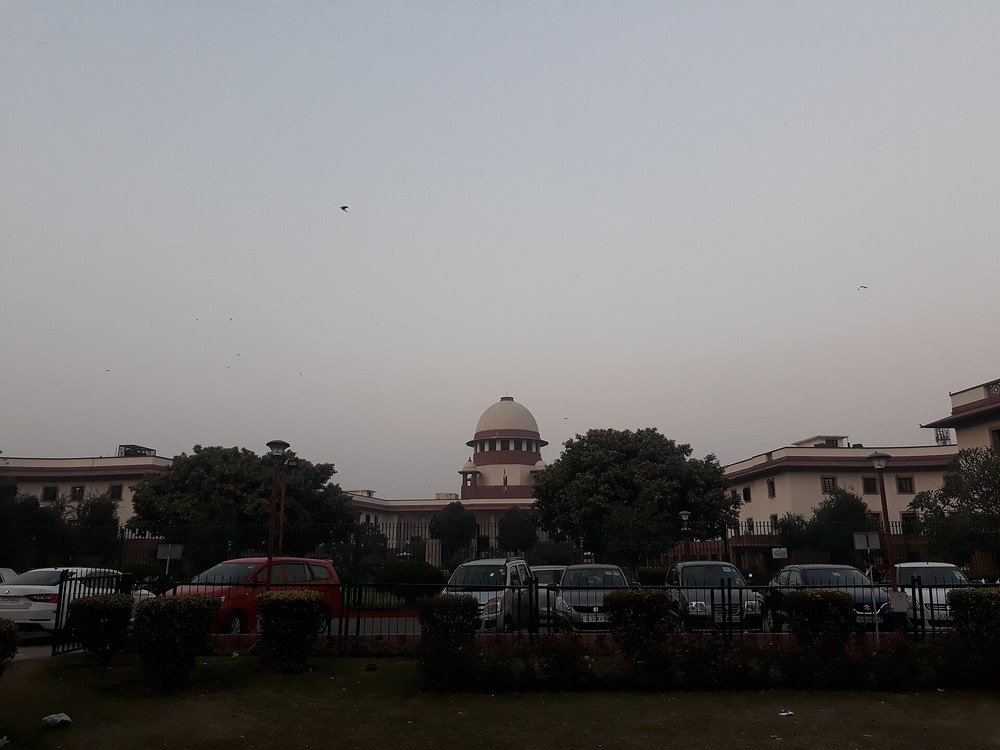
Khatri: training scheme for 33 blinded prisoners and two Rs 15,000 deposits Supreme Court
The order records a scheme to train 33 blinded undertrial prisoners at the National Institute of Visually Handicapped, Dehra Dun, and then rehabilitate them. It says Rs 15,000 from the Prime Minister’s Fund was deposited in each prisoner’s name, yielding Rs 125 interest, and that the State of Bihar had deposited another Rs 15,000 in each name, which the Court directed be held in a one-year fixed deposit with interest paid the same way. Together these match the Rs 30,000 per victim later described by the survivors’ advocate. This copy of the order is from a legal database, not the Supreme Court’s own site, and the Court did not here decide State liability.
1981
Khatri: police investigation reports can be produced in a fundamental-rights case Supreme Court
Bihar resisted producing CID reports prepared by L.V. Singh, DIG (Anti-Dacoity), citing Sections 162 and 172 of the Code of Criminal Procedure. The Court held that Section 162 is a limited bar that does not apply to an Article 32 petition, that the reports were relevant as entries by a public servant, and ordered them produced. It said a pending criminal case is no bar to the writ inquiry, which asks whether Article 21 was violated, not whether anyone is criminally guilty. Petitioners also sought compensation; the Court did not decide it, saying the blinding must first be established.
1981
Khatri: hostel, training and medical examination of the blinded prisoners Supreme Court
The Court ordered the State to pay the cost of lodging the blinded prisoners at Christ Church Hostel and, later, vocational training at the Blind Relief Association institution in New Delhi. It asked that investigation be completed and any charge-sheet filed, as far as possible, within three months, kept the stay on trial, and ordered Dr. Madan Mohan to examine eighteen prisoners in Delhi to assess how they were blinded. Ten of fifteen prisoners at the hostel had received Rs 300 and the State was to pay the other five.
1980
Khatri: free legal aid becomes part of Article 21 Supreme Court
The Court held that the right to free legal services is implicit in the reasonable, fair and just procedure guaranteed by Article 21. The State must provide a lawyer to an indigent accused where the needs of justice require it, unless the accused objects, and cannot plead financial or administrative inability. The duty applies at trial, at first production before a magistrate and at each remand, and magistrates and sessions judges must tell unrepresented accused persons of it. On the blinded prisoners, it ordered that those discharged be housed at the State’s expense in a Delhi home run by the Blind Relief Association, asked the State to report what it did after July 1980 complaints and whether the October 1980 blindings could have been prevented, and deferred the compensation question as one of great constitutional importance.
1980
Supreme Court orders eye examinations and takes the prisoners’ statements Supreme Court
On 1 December the Court noted that eight of the ten petitioners had lost their eyesight totally or partially, ordered the prisoners brought to Delhi for examination at the Dr. Rajendra Prasad ophthalmic institute, and directed the jail superintendent to file an affidavit naming the affected prisoners, the police and jail staff in charge and the doctors involved. Two Court officers visited Bhagalpur Central Jail and on 3 and 4 December recorded statements from 17 blinded prisoners: 15 said police blinded them and two said members of the public did.
1980
Rajya Sabha debates the blindings; the government announces Rs 15,000 each Events & aftermath
Minister of State Yogendra Makwana told the House the government was “shocked at the inhuman and barbaric acts” and said the Prime Minister had sanctioned an ex-gratia payment of Rs 15,000 for each blinded undertrial. He said 14 criminal cases had been registered against police officials, one deputy superintendent, one inspector and 12 sub-inspectors had been suspended and transferred, and the Bhagalpur Superintendent of Police had been transferred to headquarters. Of 29 blinded undertrials who complained (31 by the State’s latest report), 22 had been examined by the DIG, CID: 20 blamed police and two blamed villagers. The first petition to the District Judge was on 6 July 1980, ten more followed on 30 July, and 15 undertrials had petitioned the Supreme Court (Writ Petitions 5352 and 567 of 1980). A committee of seven legislators was to visit Bhagalpur on 4 December. Members pressed for a judicial inquiry and the SP’s arrest. An earlier reference on 24 November 1980 (member Shiva Chandra Jha) is also in the Rajya Sabha record.
1980
The Indian Express story reaches the international press Events & aftermath
The Washington Post reported that India’s Supreme Court would hear petitions on Monday from 15 men who said police had blinded them, and that newspapers had reported at least 29 and perhaps up to 40 incidents in Bhagalpur. It credited Indian Express correspondent Arun Sinha with the article that brought the practice to light, followed by the Times of India, and said the allegations might not have surfaced had jail authorities not asked the Bihar government for more staff to look after the blind prisoners. It also said petitions to local courts since July had produced no action. Newspaper accounts cited there placed the start in February 1980, while the Supreme Court’s later order recites incidents from October 1979, so start dates differ. TIME ran “Blinding Justice” on 15 December 1980, per Wikipedia.
1980
Ten blinded prisoners petition the Supreme Court Supreme Court
Ten blinded undertrial prisoners filed a habeas corpus petition on 9 October 1980; on 10 October the Court ordered the jail doctor to examine them and report within four weeks. Five more filed Writ Petition 567 of 1980, so 15 prisoners were before the Court by the time of the 1 December debate. Earlier, in July 1980, Umesh Yadav and others had petitioned the District and Sessions Judge alleging that a Superintendent of Police blinded them; the petitions were passed along but no action followed, and the Court later said no jail inspection took place in 1980 and magistrates did not ask about the prisoners’ injuries.
1980
Prisoners at Bhagalpur are blinded Events & aftermath
The Court’s 1982 order recites that six prisoners were blinded between October 1979 and May 1980 and twelve between 11 June and 25 July 1980. The 10 March 1981 order refers to 24 under-trial prisoners; the government told the Rajya Sabha on 1 December 1980 that 29 had complained and the State’s latest count was 31; the Court’s 2 February 1982 order records 33 for training; the Washington Post cited newspaper reports of 29 to 40 incidents; NewsClick says 32. Reports describe needles or sharp objects pushed into the eyes and acid poured in. Fifteen of 17 prisoners who gave statements to Court officers said police were responsible, and no court in this record has found that every incident was proved.
How Many Were Blinded?
How Long Accountability Took
The Case at a Glance
Dates and figures as reported; constitutional orders are separate from criminal verdicts.
| Date | Event | Detail |
|---|---|---|
| Oct 1979 – Jul 1980 | Blindings | Six, then twelve, per the 1982 order; other sources give 24 to 33 |
| Jul 1980 | Complaints to a judge | Passed along; no action, per the Court |
| 9-10 Oct 1980 | Habeas petition | Ten blinded prisoners; first Supreme Court order |
| 28 Nov 1980 | Press reports | Washington Post; Indian Express (Arun Sinha) credited |
| 1 Dec 1980 | Rajya Sabha debate | Rs 15,000 ex-gratia announced; 14 cases against police |
| 3-4 Dec 1980 | Statements recorded | 17 prisoners; 15 named police, 2 the public |
| 19 Dec 1980 | Khatri (legal aid) | Article 21 right to free legal services |
| 14 Jan 1981 | Khatri order | Hostel, training, medical examination of 18 prisoners |
| 10 Mar 1981 | Khatri (reports) | CID reports ordered produced |
| 23 Mar 1982 | Anil Yadav order | Jail superintendent petitions dismissed |
| 2 Feb 1982 | Khatri order | Training scheme for 33; two Rs 15,000 deposits each |
| 25 Nov 1982 | Khatri order | Fair, speedy trial; compensation hearing declined |
| 1 Aug 1983 | Rudul Sah | Rs 30,000 interim award, a different case |
| 8 Apr 1987 | Trial court | Three police personnel convicted, Yugal Beldar case |
| 10 Mar / 6 Apr 2004 | Gupta | Appeal dismissed; jailed two years |
| 2 May 2011 | Patna High Court | Two convictions restored, one accused acquitted |
| 11 Dec 2020 | Pension petition | Reported filed in the Supreme Court; disposal not located |
Reading the Legal Terms
| Term | Meaning | Why it matters here |
|---|---|---|
| Article 32 | Right to approach the Supreme Court for fundamental rights | The blinded prisoners petitioned under it |
| Article 21 | Protection of life and personal liberty | Basis for the legal-aid ruling and the compensation argument |
| Habeas corpus | A petition about unlawful detention or treatment in custody | The 9 Oct 1980 petition |
| Undertrial | A prisoner whose guilt has not been decided | Most victims had not been convicted |
| Legal aid | A lawyer at State cost for an accused who cannot pay | Khatri, 19 Dec 1980 |
| Remand | A magistrate’s order to keep an accused in custody | Court said to inform poor accused at each remand |
| Sections 162 and 172 CrPC | Limits on use of police statements and case diaries | State cited them to withhold reports; Court said no bar in a writ |
| Special judicial magistrate (CBI) | Court that tried CBI cases in Patna | Convicted in 1987 and, in the 2011 case, at first instance |
Why Did Accountability Take So Long?
Early inaction. In July 1980 prisoners petitioned the District and Sessions Judge; the petitions were passed along but nothing followed, and the Court later noted that no jail inspection took place that year.
Two tracks. The Supreme Court examined Article 21 in writ petitions while the CBI investigated and special courts in Patna tried individual accused. On 25 November 1982 the Court said it wanted a fair and speedy trial and would not pre-judge guilt.
Appeals. A conviction of 8 April 1987 ended in jail only after the Supreme Court dismissed an appeal on 10 March 2004; another case was decided at the High Court in May 2011 after a sessions judge had acquitted the accused.
Standard of proof. Criminal guilt must be proved person by person, which is why the 2011 ruling restored two convictions and acquitted a third.
Who Is Who in the Record
Roles in the court record, as reported. Convicted persons are named as in the cited reports.
Fifteen blinded prisoners
Ten filed the habeas petition on 9 Oct 1980 and five filed another; Umesh Yadav and others had complained in July 1980.
Bhagwati, Sen, Chandrachud benches
Heard Khatri and Anil Yadav between Oct 1980 and Nov 1982.
Bachcho Lal Das
Bhagalpur Central Jail superintendent; suspended 1 Dec 1980; petitions dismissed 23 Mar 1982.
CBI, Lucknow branch
Investigated the Amarpur case; CBI also challenged an acquittal in 2011.
Gupta, Verma, Dalchand Ram
Police personnel convicted for blinding Yugal Beldar; Gupta’s appeal dismissed in 2004.
Wasimuddin, Binda Prasad
Convictions restored by the Patna High Court; Mankeshwar Singh acquitted.
Pension petitioners
Eighteen survivors (14 of 32 victims had died) were reported in 2020 to have gone without the Rs 750 monthly payment.
Ram Kumar Mishra
President of the Free Legal Aid Committee, Bhagalpur; reported to have filed the pension petition in Dec 2020.
The Legacy of Bhagalpur
Custody does not end rights. The Court’s inquiry rested on Article 21 and the idea that State officials answer for what happens to people in their custody.
Legal aid became a duty. Khatri held that a poor accused must be told of the right to a State-funded lawyer at first production and at each remand, and that the State cannot plead lack of money.
Compensation followed in another case. Relief reached the blinded prisoners as Rs 15,000 deposits from the Prime Minister and from Bihar, but the Court deferred the Bhagalpur compensation hearing in 1982, but Rudul Sah on 1 August 1983 awarded an interim sum, helping establish that the Court can order monetary relief for rights violations.
Accountability stayed partial. Convictions were secured in particular cases, decades after the events, and survivors were still seeking a revised monthly payment in December 2020.
The Popular Story vs the Record
Short versions of the story blur several details.
| Popular version | What the record shows |
|---|---|
| The Supreme Court convicted the police | It heard constitutional petitions; criminal courts convicted, and the Court only dismissed Gupta’s appeal on 10 Mar 2004 |
| Anil Yadav (1982) held the police guilty | The order of 23 Mar 1982 dismissed the jail superintendent’s petitions; it is a procedural ruling |
| Everyone accused was convicted | The High Court acquitted Mankeshwar Singh in 2011, and a sessions judge had earlier acquitted all three accused in that case |
| Every victim got court-ordered compensation | The orders read here deferred State liability; each victim got Rs 15,000 from the Prime Minister and Rs 15,000 from Bihar as relief, and a monthly payment was later paid from interest |
| Exactly 31 people were blinded | Sources give 18, 24, 29-31, 32 or 33 and may count different incidents |
| Free legal aid was decided in 1982 | It was decided in Khatri on 19 Dec 1980 |
The Case in Numbers
| Measure | Figure | Source and caveat |
|---|---|---|
| Blinded per 1982 order | 18 | 6 (Oct 1979-May 1980) + 12 (Jun-Jul 1980) |
| Petitioners, 9 Oct 1980 | 10 | Eight had lost sight totally or partially by 1 Dec |
| Statements recorded | 17 | 15 named police, 2 the public |
| Other counts | 24, 29-31, 33 | Khatri 1981, Rajya Sabha 1980, Khatri 1982 (NewsClick says 32) |
| Time to first conviction | 7 years | 8 Apr 1987 |
| Gupta sentence | 2 years RI + Rs 2,000 | Times of India, 7 Apr 2004 |
| Ex-gratia per victim | Rs 15,000 | Prime Minister, announced 1 Dec 1980 (Rajya Sabha) |
| State deposit per victim | Rs 15,000 | Bihar, per the 2 Feb 1982 order |
| Monthly payment to survivors | Rs 750 | Interest-based, per advocate; Scroll 2017, NewsClick 2020 |
| Reported demand | Rs 7,500 | Tenfold rise the advocate said he would seek (Jul 2020) |
| Rudul Sah interim award | Rs 30,000 | 1 Aug 1983, different case |
Explore More Timelines
People Also Ask
Frequently Asked Questions
Related AiTimeline Stories
⚠️ Editorial Note
This page separates Supreme Court constitutional orders from criminal verdicts against individual police personnel, and states case status as of 21 October 2026 from the cited records. A second verification pass that day read the Rajya Sabha record of 1 December 1980 (pages 171 to 213), the Washington Post article of 28 November 1980 and three NewsClick reports of 2020, and found a legal-database copy of the Supreme Court’s 2 February 1982 order. As a result: the Rajya Sabha date is 1 December 1980 and the Rs 15,000 ex-gratia is stated in the record; the Washington Post article is dated 28 November 1980, by Stuart Auerbach, and credits Arun Sinha of the Indian Express; the monthly payment is described by the survivors’ advocate as interest on a Rs 30,000 deposit, which matches the two Rs 15,000 deposits in the 1982 order; the pension petition was reported on 11 December 2020. Earlier corrections: the 23 March 1982 Anil Yadav order is a ruling on the jail superintendent’s petitions; the 25 November 1982 order declined to disclose the CBI report and to fix an early compensation hearing; the 2011 High Court ruling restored convictions after a sessions judge had acquitted three accused; the brief’s March 1998 High Court entry could not be sourced and was left out. Still not located: the Supreme Court case number and any order on the 2020 petition, whether payments resumed, and case numbers and later appeals for the 1987 and 2011 cases; “not located” does not mean none exist. The Times of India gives Gupta’s name in two spellings. The 1982 order was read from a legal-database copy, and the other Court orders from Indian Kanoon, not certified copies.
Sources & further reading
Every dated entry above was checked against these references. Last reviewed 21 October 2026.
- Anil Yadav and Others v. State of Bihar and Another, Supreme Court order of 23 March 1982
- Khatri and Others v. State of Bihar, judgment of 19 December 1980 (legal aid), (1981) 1 SCC 627
- Khatri and Others v. State of Bihar, judgment of 10 March 1981 (production of reports), (1981) 2 SCC 493
- Khatri and Others v. State of Bihar, order of 25 November 1982, (1983) 2 SCC 266
- Rudul Sah v. State of Bihar (1983) 4 SCC 141, decided 1 August 1983
- Blinding case accused jailed (7 April 2004)
- Bhagalpur blinding case: HC upholds conviction of two accused (3 May 2011)
- Rajya Sabha debates, calling attention on the blinding of under-trial prisoners at Bhagalpur Jail, 1 December 1980 (pp. 171-213)
- Indians Claim Police Blinded Them With Needles, by Stuart Auerbach (28 November 1980)
- Pension Stopped for a Year, Bhagalpur Blindings Victims Approach SC for Justice (11 December 2020)
- The Eyes of Darkness: a documentary on the Bhagalpur blindings (15 January 2017)
- 1980 Bhagalpur blindings
- No Pension for Victims of Bhagalpur Blindings Amid Pandemic (7 July 2020)
- Bhagalpur Blindings: Victims' Wait in Darkness as Pension Pending Since 4 Months (14 February 2020)
- Khatri and Others v. State of Bihar, order of 2 February 1982 (database copy)
- Khatri and Others v. State of Bihar, order of 14 January 1981