James Webb Space Telescope Delays: The Cost of Building Humanity’s Eye on the Universe
James Webb Space Telescope delays explained: from a 2007 concept to a 2021 launch, with cost baselines, GAO findings and reviews. Updated Oct 2026.
Latest Story
The James Webb Space Telescope delays turned a concept imagined for a 2007 launch into a 25 December 2021 liftoff, with NASA’s lifecycle cost estimate rising from about $1 billion in the concept studies to $9.66 billion in 2018. This timeline runs newest first, separates early estimates, the 2009 baseline, development cost and total lifecycle cost, and shows why independent reviews blamed budgeting and management rather than the technology.
💡 Short Answer
Webb was first imagined for a 2007 launch at about $1 billion. After repeated replans it launched on 25 December 2021 with a NASA lifecycle estimate of $9.66 billion, of which $8.8 billion was development. Independent reviews blamed an understated baseline, thin reserves, integration problems and human errors, not the pandemic or the technology. COVID-19 added about three months in 2020.
James Webb Space Telescope Delays: Key Questions
The Webb Cost and Delay Story in Ten Points
- Concept stage: 1999 studies assumed a 2007 launch and about $1 billion.
- First formal baseline: $4.964 billion lifecycle and June 2014, set in 2009.
- Cause: the 2010 panel found budgeting and management problems, not technical performance.
- Congress: a House committee proposed cancelling Webb in July 2011; instead an $8 billion development cap was set.
- 2018 replan: March 2021 launch, $8.8 billion development and $9.66 billion lifecycle.
- GAO, January 2020: costs up about 95% from the 2009 baseline and only a 12% chance of the March 2021 date.
- COVID-19: added about three months, not the original cause.
- Launch: 25 December 2021 after a clamp-band incident, a communications issue and weather slips.
- Science: first images on 11-12 July 2022; four years of operations marked in July 2026.
- Today: operations budget pressure in 2025 and a quicker Roman launch on 30 August 2026 sharpen the lessons.
James Webb Space Telescope Timeline, Latest First
Each entry is tagged and ends with why it matters. Use the filter to isolate the overrun years.
Concept, overrun, launch or today? Filter the James Webb Space Telescope delays timeline by phase.
–
2026
Roman Space Telescope launches, a contrast case Today
NASA’s Nancy Grace Roman Space Telescope launched on a SpaceX Falcon Heavy from Launch Complex 39A on 30 August 2026. NASA described the mission as ahead of schedule and under cost; it had been committed to a launch-readiness date of May 2027. Roman’s own budget baseline was revised after the pandemic, so “under budget” refers to the replanned figure. It is a useful comparison for Webb, though the two missions differ greatly in complexity, with Webb needing a folded mirror and a deployable sunshield.
Webb marks four years of science Today
ESA and NASA marked four years of Webb science in July 2026 with new images of the galaxy Centaurus A, showing its dust-obscured centre in near- and mid-infrared light. ESA’s accompanying videos covered results from Webb’s fourth year, including an early black hole, Uranus’s auroras and the earliest known supernova. The two agencies’ anniversary dates differ slightly because NASA counts from the 12 July 2022 release of the first science images.
Congress funds NASA science; Webb’s line is unclear Today
Congress passed full-year FY2026 NASA funding in January 2026, keeping the agency near its FY2025 level of about $24.4 billion and well above the administration’s request, with Science at $7.25 billion. The White House request had proposed $140 million for Webb operations. Committee reports in 2025 had marked $187 million (House) and $208 million (Senate); this page could not confirm the final enacted Webb operations figure, because the Congressional Research Service table shows no separate line for FY2026.
Operations squeeze: planning for 20-35% cuts Today
In early 2025 the Space Telescope Science Institute (STScI), which runs Webb’s science operations, said it was asked to plan for roughly a 20% reduction. At a June 2025 town hall, STScI’s Neill Reid described a likely reduction of 25 to 35 percent in science operations, citing inflation, flat budgets and the FY2026 request, and saying that operations estimates made in 2011 included “a certain amount of optimism”. Possible effects listed included lower observing efficiency, slower anomaly response and fewer supported instrument modes.
2022
First images and the start of science operations Launch
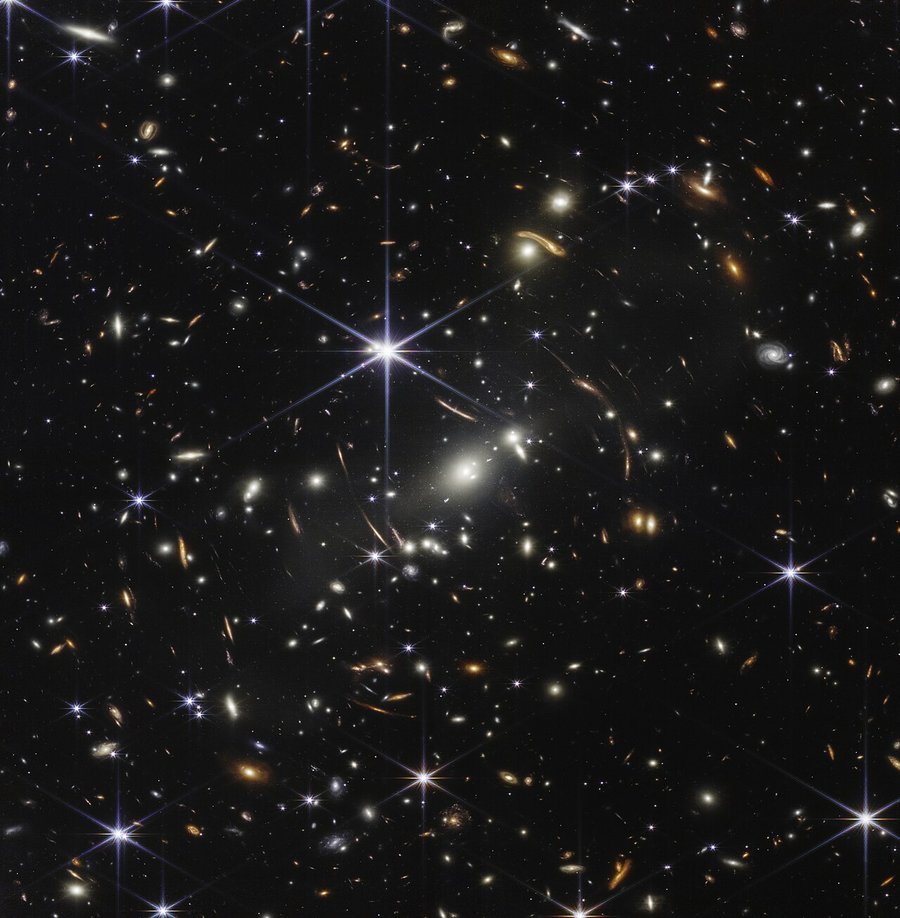
NASA unveiled Webb’s first full-colour image, a deep field of galaxy cluster SMACS 0723, on 11 July 2022, with four more targets released the next day as science operations began. The images followed commissioning in which mirror segments were aligned and instruments calibrated. The release showed what the delayed telescope could do, but did not alter the earlier cost record.
Arrival at L2: the fuel surprise Launch
Webb reached its operating orbit around the Sun-Earth Lagrange point L2 in January 2022, after a month-long journey during which its sunshield and mirrors deployed. Because the Ariane 5 launch and the first midcourse correction were so precise, NASA officials said much less propellant was used than budgeted, and project manager Bill Ochs said it was “around 20 years of propellant”. That is an early-2022 projection, not a current fuel measurement.
2021
Launch: 7:20 a.m. EST, Christmas Day Launch
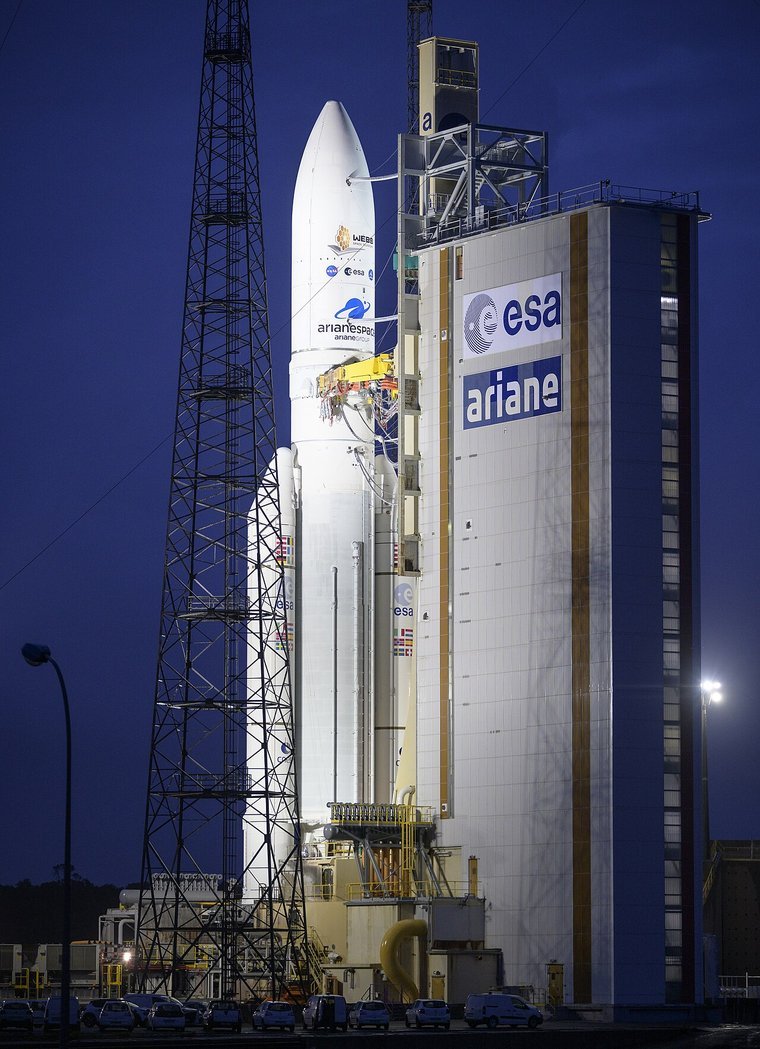
Webb launched at 7:20 a.m. EST on 25 December 2021 from Europe’s Spaceport in French Guiana. Telemetry was received about five minutes after liftoff, the rocket released the observatory about 27 minutes after launch and its solar array unfolded about 30 minutes in. Many of the deployments that followed had no repair option, which is why the programme spent years on testing.
Clamp band, communications and weather add last-minute slips Launch
On 9 November 2021 a clamp band securing Webb to its launch-vehicle adapter released suddenly during processing, sending vibration through the observatory; NASA disclosed it on 22 November. The incident moved launch from 18 December to no earlier than 22 December, then a communications issue between the observatory and the launch vehicle moved it to 24 December. After the Launch Readiness Review on 21 December, adverse weather, with upper-level winds a concern, postponed liftoff to 25 December.
Final obstacles: Ariane 5 anomalies and shipping Overrun
GAO reported in 2021 that Webb’s estimate was about $9.7 billion, nearly double the 2009 baseline, with launch slipped by over seven years. It noted the project managed 39 risks and had developed 207 contingency plans for launch, commissioning and operations, and that NASA reported in March 2021 that launch-vehicle anomalies were likely to cause another delay. Webb shipped by sea through the Panama Canal and arrived in French Guiana on 12 October 2021.
2020
Pandemic: launch moves to 31 October 2021 Overrun
In July 2020 NASA moved Webb’s launch from 30 March 2021 to 31 October 2021. It attributed about three months of the slip to social distancing and other coronavirus precautions, with the rest reflecting remaining technical work. The delay came after GAO had already warned that the March 2021 date had only a 12 percent chance of being met.
GAO: costs up 95%, reserves nearly gone Overrun
GAO’s January 2020 report found costs up about 95 percent since the 2009 baseline, to about $9.7 billion, and launch delayed by more than 6.5 years. It said the project had used about 76 percent of its schedule reserve as of October 2019 and estimated only a 12 percent chance of launching on 30 March 2021. Problems in 2019 with certain spacecraft components ruled out a November 2020 goal, and April 2019 issues with two components used to transmit science data consumed much of the remaining reserve. Keeping the contractor workforce employed longer than planned could add costs.
2018
Replan: March 2021 and $9.66 billion Overrun
On 27 June 2018 NASA announced the results of its Independent Review Board, chaired by Tom Young, and committed to a launch no earlier than 30 March 2021. It set development cost at $8.8 billion ($8.803 billion in later reporting) and lifecycle cost at $9.66 billion, with the difference reflecting five years of operations. The board found that technical issues, including human errors, had greatly affected the schedule, and NASA cited environmental testing and Northrop Grumman’s work performance on the sunshield and propulsion system. The $8 billion development cap Congress set in 2011 was now exceeded and Congress raised it.
Mar 2018
Two slips in six months: October 2018 to May 2020 Overrun
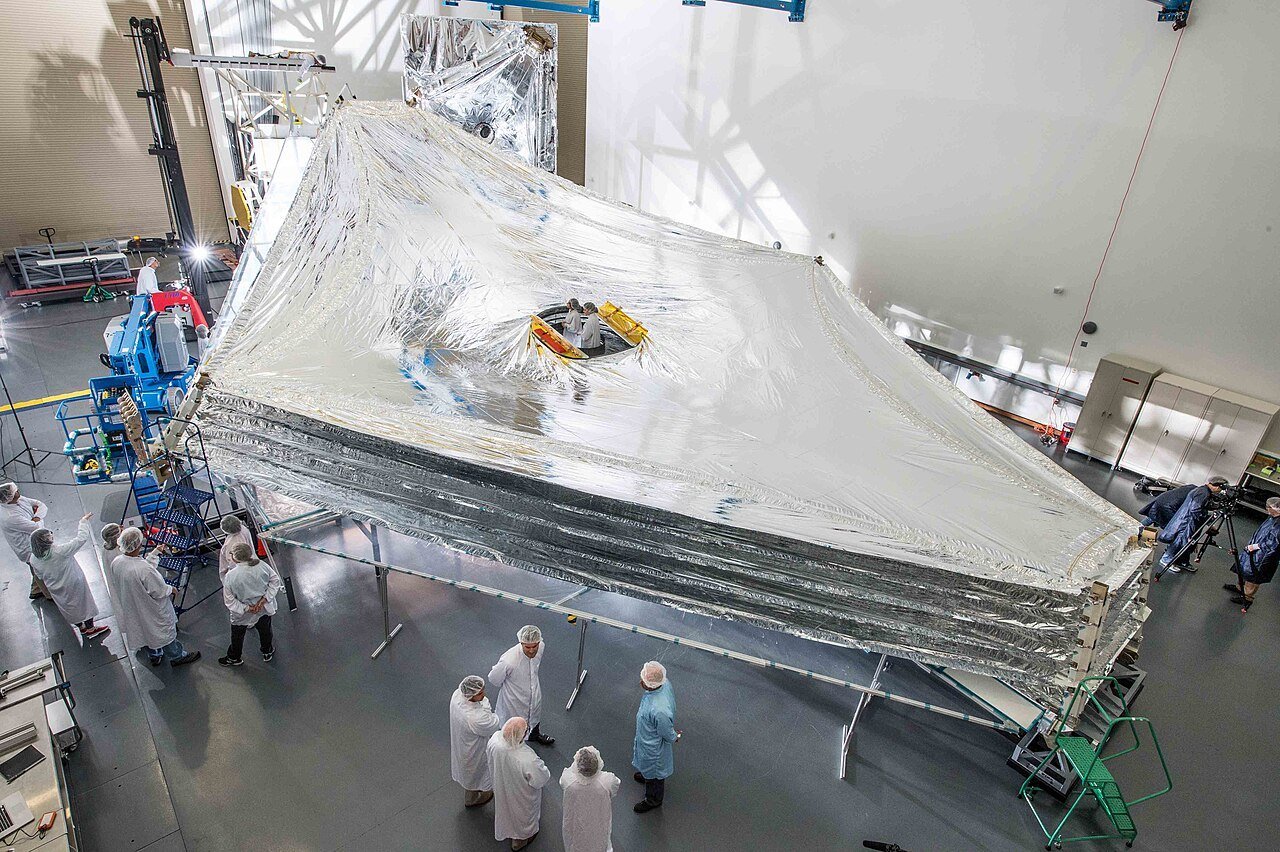
In September 2017 NASA moved launch from October 2018 to a March-June 2019 window after assessing remaining integration and test work, with Thomas Zurbuchen saying it did not reflect hardware performance concerns. On 27 March 2018 it said the spring 2019 window was no longer possible and moved to no earlier than May 2020. Acting Administrator Robert Lightfoot said the tasks were “taking longer to complete than we expected”; reports tied the slip to integration problems with the sunshield and propulsion work and noted a possible breach of Congress’s $8 billion development cap.
Mirror complete, cryogenic testing passed Overrun
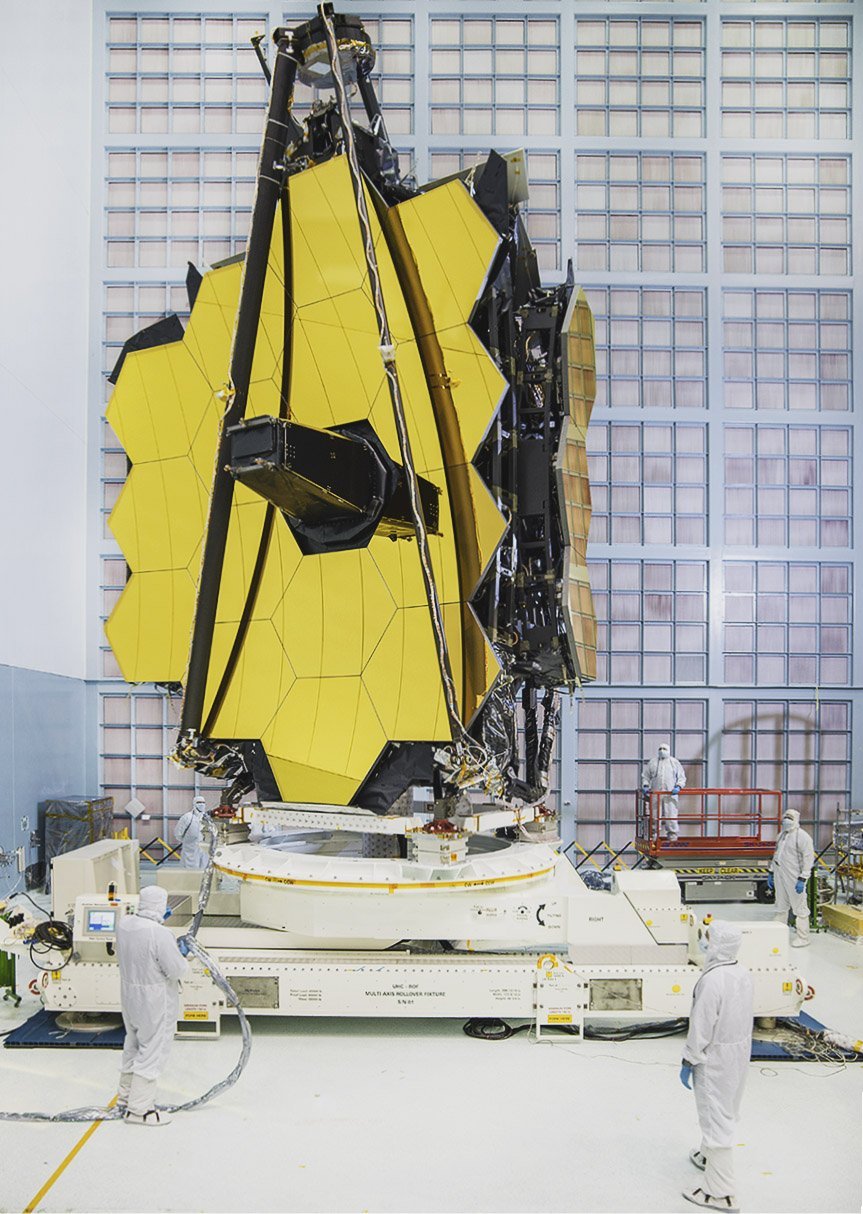
NASA revealed the completed primary mirror to press and officials at Goddard on 2 November 2016, a major milestone for hardware that had been under construction since 2004. In 2017 the optical telescope element passed cryogenic testing at Johnson Space Center, and Webb withstood Hurricane Harvey in late August without a schedule delay according to NASA. Individual components were largely working; the unfinished work was integration of the full observatory.
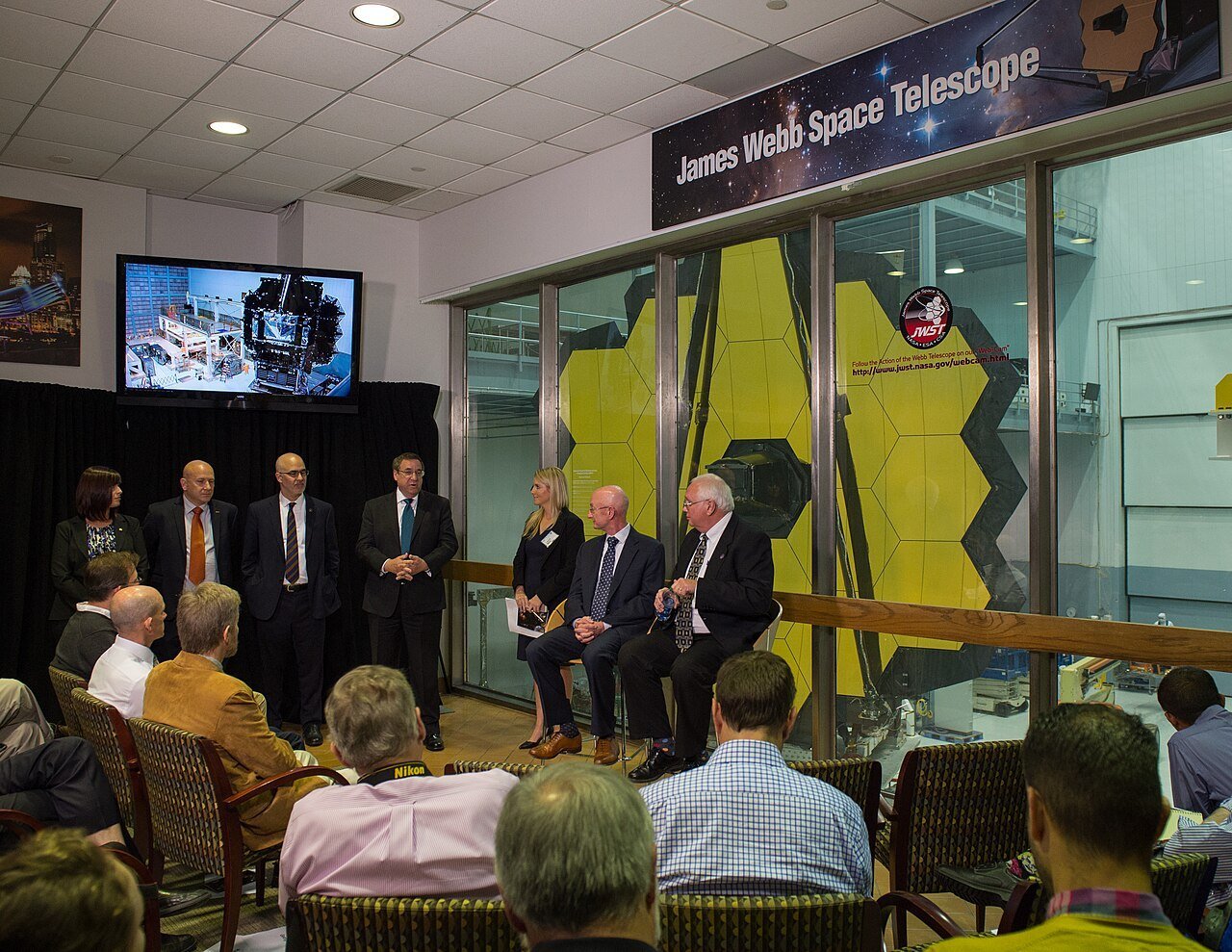
Congress sets an $8 billion cap and keeps Webb alive Overrun
After the 2010 review, NASA developed a revised plan with a lifecycle cost of about $8.7 billion and a launch date of October 2018, reported as $8.835 billion lifecycle in later congressional summaries. In July 2011 the House Appropriations Committee recommended cancelling the project. Congress instead continued funding in the FY2012 conference agreement of November 2011, subject to a cap of $8 billion on formulation and development costs, which NASA said it could meet by launching in 2018.
Independent panel: budget and management, not technology Overrun
The Independent Comprehensive Review Panel, chaired by John Casani of the Jet Propulsion Laboratory, concluded that cost growth and delay were associated with budgeting and program management, not technical performance. It found the baseline accepted at confirmation was not based on a current bottoms-up estimate, did not include known threats and carried reserves that were too low, under 20 percent in the two highest expenditure years against a Goddard standard of 25 percent. NASA management had thought there was a 70 percent probability of launching in June 2014 for nearly $5 billion; the panel said the project “had no chance of meeting either the schedule or the budget profile”.
Formal baseline: $4.964 billion, June 2014 Overrun
In FY2009 NASA committed to Webb’s first formal baseline: a lifecycle cost of $4.964 billion, made up of $4.381 billion for formulation and development and $582 million for operations, with launch in June 2014. Before approval management had moved the baseline launch date from June 2013 to June 2014 to add reserves. The Congressional Research Service notes the estimate had already risen about $1.5 billion from the $3.5 billion of early 2005 by the time the baseline was set. GAO later used this baseline as the reference for its measures of cost growth.
Replan to $4.5 billion and an independent review Overrun
An early 2005 estimate stood at $3.5 billion lifecycle. The 2005 replan, which included a significant redesign, put it at about $4.5 billion, comprising roughly $3.5 billion for design, development, launch and commissioning and about $1.0 billion for ten years of operations. The project was independently reviewed in April 2006, and NASA designated Webb a development project that year. The 2010 panel later said the reserve problem “was recognized as a problem at the time”.
The telescope is renamed for James Webb Concept
In 2002 NASA renamed the Next Generation Space Telescope after James E. Webb, the NASA administrator during much of the Apollo programme. The same year it selected the TRW/Ball design for Phase B, and Northrop Grumman acquired TRW, becoming the prime contractor. The design set the demanding features that defined later problems: a segmented mirror, infrared instruments and a deployable sunshield.
Concept studies assume 2007 and about $1 billion Concept
In 1999 NASA commissioned concept studies from Lockheed Martin, Ball Aerospace and TRW for a potential launch in 2007 on a budget of about $1 billion. The 2001 National Academies decadal survey endorsed the project with a total cost estimate of $1 billion. That figure covered an early concept, not the later flight design, and is the origin of the often-quoted “$1 billion to $10 billion” comparison.
An infrared telescope larger than Hubble is recommended Concept
In 1996 an 18-member committee led by Alan Dressler recommended a space telescope with a mirror larger than four metres to observe in the infrared, a successor to Hubble that could see through dust and capture light from distant objects stretched into the infrared. In 1997 NASA selected Goddard, TRW and Ball Aerospace to refine technical and financial requirements.
A workshop at STScI starts the conversation Concept
In September 1989 the Space Telescope Science Institute and NASA held a Next Generation Space Telescope workshop of more than 130 attendees, an early milestone in the idea that became Webb. Hubble had itself been launched only in 1990.
The Cost Estimates in One Picture
The Launch Date That Kept Moving
| Plan made | Target launch | What changed |
|---|---|---|
| 1999 | 2007 | Concept studies, about $1B budget |
| 2005 replan | June 2013 | Baseline date, before the move to 2014 for added reserves |
| 2009 baseline | June 2014 | First formal baseline; $4.964B lifecycle |
| Late 2010 | September 2015 (panel estimate) | Casani panel: earliest possible, needing ~$1.4B more |
| 2011 replan | October 2018 | Post-review plan; $8B development cap |
| Sep 2017 | March-June 2019 | Integration and test work longer than planned |
| 27 Mar 2018 | No earlier than May 2020 | Spring 2019 window lost |
| 27 Jun 2018 | 30 March 2021 | Independent Review Board replan |
| 16 Jul 2020 | 31 October 2021 | Pandemic precautions, ~3 of the ~7 months |
| Nov-Dec 2021 | 18, 22, 24, then 25 Dec | Clamp band, communications issue, weather |
| Actual | 25 December 2021, 7:20 am EST | Ariane 5 from Kourou |
Which Webb Cost Figure Is Which?
Early estimates, the 2009 baseline, development costs and lifecycle costs measure different things.
| Baseline | Figure | What it covers | Source |
|---|---|---|---|
| 1999-2001 concept | ~$1.0B | Early concept budget endorsed in the 2001 decadal survey | CRS; Wikipedia |
| Jan 2005 | $3.5B lifecycle | Estimate before the 2005 replan | CRS |
| 2005 replan | $4.5B lifecycle | ~$3.5B development, launch, commissioning + ~$1.0B for 10 years of operations | Wikipedia |
| 2009 baseline | $4.964B lifecycle | $4.381B formulation and development + $582M operations; launch Jun 2014 | CRS |
| 2011 replan | ~$8.7B lifecycle | Replan for Oct 2018 launch; later summaries cite $8.835B | NASA; CRS |
| 2011 Congress cap | $8.0B | Formulation and development only | CRS |
| Jun 2018 replan | $8.8B development; $9.66B lifecycle | Launch 30 Mar 2021; lifecycle adds five years of operations | NASA |
| 2020-21 | ~$9.7B | GAO total; ~95% above the 2009 baseline | GAO-20-224; GAO-21-406 |
Development vs lifecycle. Development covers designing, building, testing and launching the observatory. Lifecycle adds operations and science support. NASA’s $9.66 billion lifecycle figure in 2018 included five years of operations; the $8.8 billion development figure did not.
Why the $1 billion comparison misleads. The $1 billion figure was an early concept budget. Comparing it with $9.7 billion says something true about the growth in ambition and cost, but not how far a formal baseline was missed. The measured overrun against the 2009 baseline is about 95 percent.
Where this page is cautious. Some early figures come from secondary summaries of NASA and congressional material; the table names the source. The enacted FY2026 Webb operations figure could not be confirmed.
Why Did Webb Cost So Much?
An understated baseline. The 2010 panel found the budget accepted at confirmation was not a bottoms-up estimate and did not include known threats.
Thin reserves. Reserves were under 20 percent in the two highest-spend years, and many were allocated to later years when problems hit earlier.
Engineering complexity. A folded mirror, a five-layer sunshield and cryogenic infrared instruments had to unfold and work 1.5 million kilometres away with no servicing.
Integration and workmanship. NASA’s 2018 review board found technical issues including human errors, and cited environmental testing and Northrop Grumman’s work performance on the sunshield and propulsion system.
Time costs money. Specialist teams, contractors and facilities stayed on payroll longer, and GAO noted the contractor workforce was needed longer than planned.
Six Lessons for Future Mega-Projects
1. Build a credible baseline. The 2010 panel found the confirmation budget was not a bottoms-up estimate and left out known threats, so the project was not executable within its budget.
2. Protect reserves. Reserves were under 20 percent in the two highest-spend years against a 25 percent standard, and by October 2019 about 76 percent of schedule reserve had been used.
3. Test the whole system early. Components passed individually, but integration, sunshield work and human errors consumed the schedule, according to NASA’s 2018 board.
4. Treat schedule risk as financial risk. GAO noted that keeping the contractor workforce employed longer than planned could add costs, so each delay was also a spending decision.
5. Compare costs honestly. Concept, development and lifecycle figures use different scopes. Quoting $1 billion against $9.7 billion without saying so overstates the overrun, and ignoring the overrun understates it.
6. Measure success on both axes. Webb launched, deployed and has operated for four years. That success does not erase the cost record, and the cost record does not erase the success.
Was Webb Worth the Cost?
Webb has returned infrared observations of early galaxies, star-forming regions and exoplanet atmospheres, and its science operations began on 12 July 2022. Its propellant may allow about 20 years of operation, double the design assumption.
The cost is also real. Billions of dollars and years of delay affected public budgets and the scheduling of other missions, and in 2025 the operations budget itself came under strain. Both statements can be true: Webb delivered extraordinary capability, and its development exposed weaknesses in cost estimation, risk management and oversight.
The Popular Story vs the Record
Short versions of the Webb story are useful, but several blur the details.
| Popular version | What the record shows |
|---|---|
| Webb cost ten times its original budget | The $1B figure was a concept-stage target; the first formal baseline was $4.964B lifecycle. Scopes differ |
| Webb was supposed to launch in 2007 | 2007 was a 1999 concept target; formal baselines were June 2013 (2005 replan) and June 2014 (2009) |
| COVID-19 delayed Webb by years | NASA attributed about three of a seven-month slip in 2020 to the pandemic; delays began in 2008-10 |
| Webb struggled with failing technology | The 2010 panel found budgeting and management problems, not technical performance, and the 2021 launch succeeded |
| Congress cancelled then revived the project | A House committee recommended cancellation in July 2011; Congress kept it with an $8B development cap |
| $8.8B and $9.66B are conflicting figures | They are development and lifecycle totals for the same 2018 plan |
Webb in Numbers
| Measure | Figure | Source and caveat |
|---|---|---|
| Primary mirror | 6.5 m, 18 gold-coated hexagonal segments | NASA |
| Years from 2007 target to launch | 14 | 2007 concept date to 25 Dec 2021 |
| Years from 2009 baseline to launch | About 7.5 | Jun 2014 to 25 Dec 2021 |
| Cost growth since 2009 baseline | About 95% | GAO-20-224 |
| Schedule reserve used by Oct 2019 | About 76% | GAO-20-224 |
| GAO odds of launching 30 Mar 2021 | 12% | GAO, Jan 2020 |
| Risks managed / contingency plans | 39 / 207 | GAO-21-406 |
| Lifecycle cost, 2018 commitment | $9.66B | NASA; five years of operations |
| Webb operations request, FY2026 | $140M vs $187M planned | Budget request; enacted figure not confirmed here |
Who Shaped the Webb Story
Roles as described in public sources.
John Casani and the ICRP
The 2010 Independent Comprehensive Review Panel found the baseline flawed and reserves too low, and set out a minimum cost to launch.
Tom Young and the IRB
The 2018 Independent Review Board found technical issues, including human errors, greatly affected the schedule and set a March 2021 earliest launch.
US Government Accountability Office
Tracked Webb through annual reports, measuring cost growth, schedule reserves and launch probability.
NASA Goddard Space Flight Center
Manages the Webb project and hosted much of its integration and testing.
Northrop Grumman
Acquired TRW in 2002 and built the sunshield and spacecraft bus; its work performance was cited in NASA’s 2018 review.
Space Telescope Science Institute
Runs Webb’s science operations, now facing a squeezed operations budget.
ESA and the Canadian Space Agency
ESA provided the Ariane 5 launch and instruments; CSA supplied the Fine Guidance Sensor and NIRISS.
US Congress
Set the $8 billion development cap in 2011 and later raised it.
Explore More Timelines
People Also Ask
Frequently Asked Questions
Related AiTimeline Stories
⚠️ Editorial Note
This page is a dated, sourced record drawn from NASA, the Government Accountability Office, the Congressional Research Service and the 2010 Independent Comprehensive Review Panel report. Cost figures carry the scope of their baseline and should not be compared without it. Several details in the original brief were refined: the 2007 date and $1 billion figure are concept-stage targets, with formal baselines of June 2013 (2005 replan) and June 2014 (2009); the independent review that found a flawed baseline and low reserves was the 2010 Casani panel, so this page does not attribute those findings to a 2006 review; the 2018 replan was preceded by delays announced in September 2017 and March 2018; and the final December 2021 slips included a clamp-band incident and a communications issue before the weather delay. The enacted FY2026 Webb operations figure and the Roman telescope’s detailed cost position could not be confirmed and are described cautiously.
Sources & further reading
Every dated entry above was checked against these references. Last reviewed 21 October 2026.
- NASA Webb mission timeline
- NASA completes Webb telescope review, commits to launch in early 2021 (27 Jun 2018)
- JWST Independent Comprehensive Review Panel final report (2010)
- James Webb Space Telescope: technical challenges have caused schedule strain and may increase costs (GAO-20-224)
- James Webb Space Telescope: project nearing completion (GAO-21-406)
- The James Webb Space Telescope (CRS IF10940)
- Launch of Webb telescope delayed to Christmas morning
- NASA sets launch date for Roman Space Telescope
- James Webb Space Telescope