Electoral Bonds: History, Controversy, and Supreme Court Ruling
Electoral bonds explained: how India's 2018 scheme worked, why the Supreme Court struck it down in 2024, what the donor data showed and what came next.
Latest Story
Between March 2018 and January 2024, donors bought about ₹16,518 crore of electoral bonds from the State Bank of India and handed them to political parties without the public knowing who had given what. Announced by Arun Jaitley in the 2017 Budget as a way to clean up cash funding, the scheme became India’s biggest channel of political donations, with half the money going to the governing BJP. On 15 February 2024 a five-judge Supreme Court bench struck it down unanimously, and within five weeks the names of buyers and recipients were public. This timeline follows the scheme from Budget speech to verdict, the disclosure fight with SBI, what the data showed, and how party funding has moved to electoral trusts since.
💡 Short Answer
Electoral bonds were anonymous political-donation instruments sold by SBI from March 2018 to January 2024, worth about ₹16,518 crore in all. The Supreme Court declared the scheme unconstitutional on 15 February 2024 in ADR v. Union of India, holding that it violated voters’ right to information and that unlimited company donations were arbitrary. SBI’s data, published in March 2024, showed the BJP received about half of all bond money.
Electoral Bonds: Key Questions
Electoral Bonds in Ten Points
- Origin: announced in the Budget on 1 February 2017, made law by the Finance Act, 2017, and notified on 2 January 2018.
- First sale: 1 to 10 March 2018, not January as planned; 30 sale rounds followed over six years.
- Scale: 28,030 bonds worth about ₹16,518 crore; more than 94% were ₹1 crore bonds.
- Anonymity: parties did not report bond donors, and companies no longer named the parties they funded.
- No cap: the 7.5%-of-profit limit on company donations was removed in 2017.
- Warnings: the Election Commission and the RBI objected; a hidden serial number was exposed in 2018.
- Verdict: struck down 5–0 on 15 February 2024 under Articles 19(1)(a) and 14.
- Disclosure: after SBI’s request for delay was refused, matchable data was public by 21 March 2024.
- Findings: the BJP received 50.6% of bond money; companies supplied about 97%.
- Since then: no probe ordered, no money confiscated, and electoral trusts have become the main channel.
How Electoral Bonds Worked
Four steps from bank counter to party account.
Buy from SBI
During a sale window, a citizen or company bought bonds at an authorised SBI branch, completing KYC checks and paying by cheque, draft or bank transfer.
Hand to a party
The buyer gave the bond to an eligible party. Nothing on its face named the buyer, though a hidden serial number linked it to SBI’s records.
Encash within 15 days
The party deposited the bond in its designated SBI account. Lapsed bonds went to the Prime Minister’s National Relief Fund.
Report only the total
The party declared its total bond income in audited accounts but did not name donors. The company’s accounts showed only a total, not the party.
| Feature | Rule under the scheme |
|---|---|
| Issuer | State Bank of India only, at authorised branches |
| Buyers | Indian citizens and bodies incorporated or established in India; KYC checks; no cash |
| Denominations | ₹1,000 / ₹10,000 / ₹1 lakh / ₹10 lakh / ₹1 crore |
| Sale windows | 10 days in January, April, July and October; +30 days in Lok Sabha election years; +15 days in assembly election years (from 2022) |
| Validity | 15 days; lapsed bonds went to the PM’s National Relief Fund |
| Eligible parties | Registered under Section 29A, with at least 1% of votes in the last Lok Sabha or assembly election |
| Interest | None; not a tradeable investment |
| Public disclosure | Parties reported only total bond income in audited accounts |
The Timeline: From the 2017 Budget to 2026
Newest first. Tags mark changes in the law, court rulings, disclosure milestones, official warnings and 2025–26 developments.
2026
ADR’s full accounting of the bond years 2025–26
The Association for Democratic Reforms, the lead petitioner in the case, published a report on political financing that set out the scheme’s totals from SBI and Election Commission data: 28,030 bonds sold from March 2018 to January 2024 and 27,811 redeemed. The 219 bonds that lapsed, worth about ₹25.6 crore, went to the Prime Minister’s relief fund. In the period with named donors, companies accounted for 96.91% of purchases. Twenty of the 30 sale rounds coincided with election periods.
2026
Electoral trusts become the main channel 2025–26
A day before the verdict’s second anniversary, ADR’s analysis of electoral-trust filings showed payouts in 2024-25 roughly triple those of the previous year. The BJP received ₹3,157.6 crore, the Congress ₹298.7 crore (7.8%) and the Trinamool Congress ₹102 crore (2.6%). Companies gave ₹3,636.8 crore and individuals ₹187.6 crore; the top 10 donors supplied almost half.
Party donation filings for the first post-bond year 2025–26
Contribution reports filed with the Election Commission for 2024-25, the first full financial year without bonds, showed the BJP’s declared donations rising by about half. According to reporting on the filings, ₹3,744 crore of the party’s total came through electoral trusts. Big direct corporate donors included Serum Institute of India (₹100 crore) and Vedanta (₹67 crore).
2025
No review of the refusal to confiscate Court
The Supreme Court dismissed a petition asking it to reconsider its August 2024 refusal to order the seizure of ₹16,518 crore received by parties through bonds. The petitioner had argued that striking the scheme down should apply retrospectively. The bench found ‘no good ground and reason’ to review its order.
2024
Karnataka High Court quashes the ‘extortion’ FIR Court
A Bengaluru magistrate had ordered police to register a case on a private complaint alleging that about ₹8,000 crore in bond donations had been extracted from companies under threat of Enforcement Directorate raids. Police registered it at Tilak Nagar station in September 2024; the High Court stayed the investigation and then quashed the FIR on a petition by BJP leader Nalin Kumar Kateel.
2024
Review petitions against the verdict dismissed Court
Petitioners led by advocate Mathews J. Nedumpara argued that political funding was a matter for Parliament and the government, not the courts. The Constitution Bench considered the petitions in chambers, refused an open-court hearing and dismissed them, making the February judgment final.
2024
No court-monitored probe Court
Petitioners asked for a special investigation team led by a retired judge to examine alleged quid pro quo between donations, government contracts and investigations by central agencies. The Court said it could not order a roving inquiry while ordinary legal remedies, such as complaints to the police, remained available. It also rejected requests to confiscate the money parties had received.
2024
The bond numbers are released Disclosure
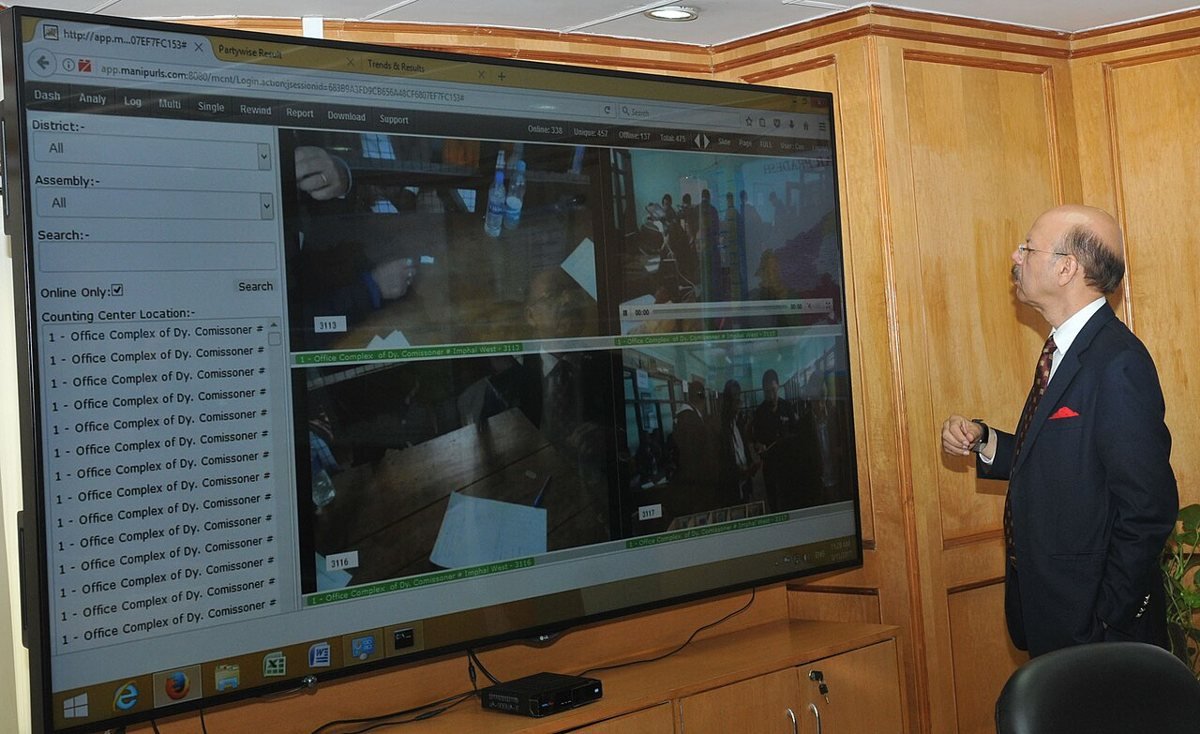
On 18 March the Court told SBI it must disclose ‘all details’ without being selective, including each bond’s hidden number, and file an affidavit from its chairman by 21 March. SBI complied, and the Election Commission published the data the same day. For the first time, journalists and researchers could link a specific purchase to a specific party’s redemption.
2024
The Election Commission publishes the lists Disclosure
A day ahead of the Court’s 15 March deadline, the Commission uploaded two separate lists: who bought bonds and when, and which parties encashed them and when. Without bond numbers they could not be linked. On 15 March the Court issued notice to SBI over the missing numbers, and on 17 March the Commission published the data parties had filed in sealed covers since 2019.
2024
SBI’s request for more time is rejected Court
The bank argued that ‘decoding’ the data would be time-consuming because buyer details and redemption details were held separately. The Court said it had asked only for the information SBI already held, not for any matching, and warned of contempt proceedings if the bank missed the new deadline. SBI handed over the data on 12 March.
2024
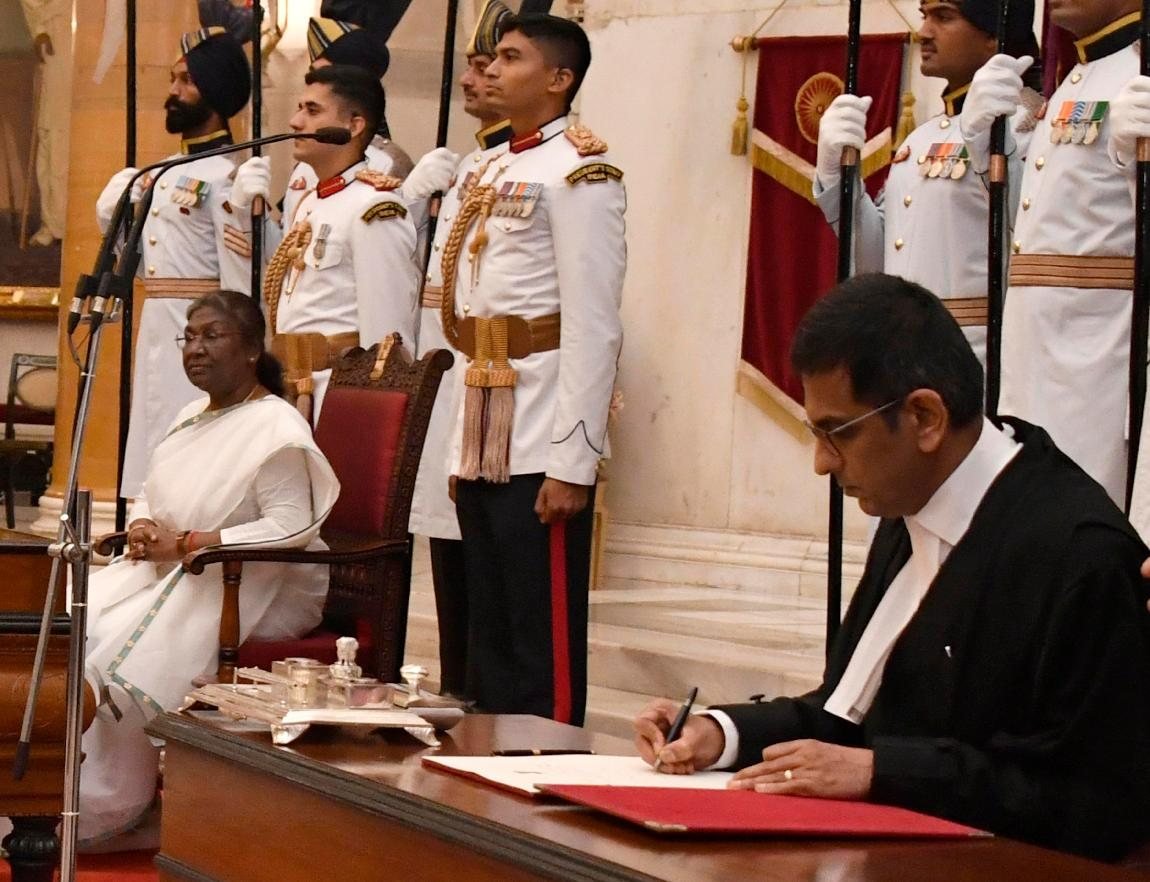
The Supreme Court strikes the scheme down Court
The Court held that information about funding of political parties is essential for voters to make an informed choice, and that the scheme’s anonymity was not the least restrictive way to curb black money: electoral trusts, for example, already offered a more transparent option. It added that financial contributions could lead to quid pro quo arrangements, and that the 2017 changes allowed loss-making and shell companies to donate without limit.
2023
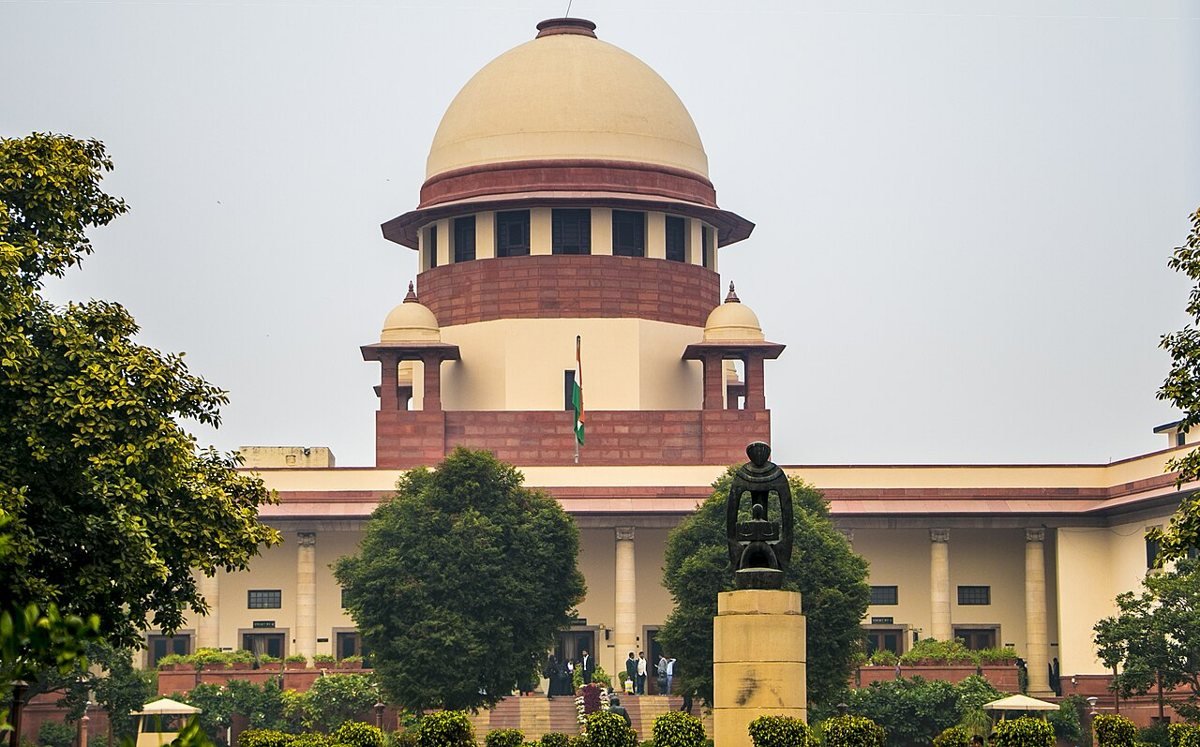
Three days of hearings before a Constitution Bench Court
The government, represented by the Attorney General and the Solicitor General, argued that citizens have no general right to know the source of every party’s funds, that donors needed protection from victimisation, and that bonds moved money into the banking system. The petitioners argued that secrecy applied only to voters, since SBI and through it the government could trace donors. The bench asked the Election Commission for updated figures.
2022
Extra sale days in state election years Law
The amendment, issued as Gujarat and Himachal Pradesh headed to the polls, added a further 15 days of sales whenever general elections to a state or union-territory legislature were held. ADR later counted about ₹1,451 crore redeemed around those two elections.
2019
Interim order: donor details in sealed covers Court
With the 2019 general election under way, the Court declined to halt sales but ordered every party that had received bonds to give the Election Commission sealed covers with each donor’s identity, the amount and the date of credit. The date matters: the disclosures ordered in 2024 began from 12 April 2019, so earlier donors were not identified in the main SBI lists.
The Election Commission objects in court Warning
The Commission told the Court that it had warned the government that the changes would have serious repercussions for transparency in political funding, calling the exemption from reporting bond donations a ‘retrograde step’. Documents later released under the Right to Information Act showed that the Reserve Bank of India had also objected in 2017 to bearer bonds being issued for political funding.
The hidden serial number Warning
Laboratory tests commissioned by journalist Poonam Agarwal found a hidden number on each bond. The Finance Ministry said it was a security feature to prevent forgery and that SBI did not share it with anyone. Critics said it showed bonds were traceable to those with access to bank records. Six years later the same numbers made the 2024 matching possible.
2018
The first bonds go on sale Law
The scheme had been notified for sales starting in January, but the first window opened in March. Later rounds were sold through 29 authorised SBI branches. Over six years there would be 30 sale rounds, each normally lasting 10 days.
2018
The Electoral Bond Scheme is notified Law
The notification set the rules: bonds in five denominations, sale windows in January, April, July and October, KYC-verified buyers, and redemption only into a party’s designated SBI account. Jaitley defended it as an improvement on cash donations, arguing that donors who feared retaliation would otherwise keep giving in cash.
Jan 2018
The legal challenge begins Court
The petitioners challenged the Finance Acts of 2016 and 2017, which also changed the law on foreign contributions so that Indian subsidiaries of foreign companies could fund parties. The case would wait more than six years for a final ruling.
2017
The Finance Act, 2017, becomes law Law
The Act let the government authorise banks to issue electoral bonds, exempted parties from reporting bond donations to the Election Commission, removed the cap limiting company donations to 7.5% of average net profit over three years, and ended the requirement for companies to name the parties they funded in their accounts. Because it was a Money Bill, the Rajya Sabha could not block it.
2017
Jaitley announces electoral bonds in the Budget Law
Presenting the Budget, Finance Minister Arun Jaitley said political funding remained largely in cash and anonymous, and proposed bonds that donors could buy from a notified bank by cheque or digital payment. He cut the limit for anonymous cash donations from ₹20,000 to ₹2,000.
The Four Laws the Scheme Changed
What the Finance Act, 2017, altered and what the Supreme Court restored.
| Law | Before 2017 | After the Finance Act, 2017 | After 15 Feb 2024 |
|---|---|---|---|
| Representation of the People Act, s.29C | Parties report donations above ₹20,000 with donor names | Bond donations exempt from the report | Exemption struck down |
| Companies Act, s.182(1) | Donations capped at 7.5% of average 3-year net profit | Cap removed | Removal struck down; cap back |
| Companies Act, s.182(3) | Accounts name each party and amount | Only the total amount disclosed | Struck down |
| Income Tax Act, s.13A(b) | Parties keep records of donations above ₹20,000 | Bonds exempt from the record | Exemption struck down |
| RBI Act, s.31 | Only the RBI may issue bearer instruments | Government may authorise banks to issue electoral bonds | Scheme invalid; no bonds issued |
Pick a participant to see what they could know about an electoral bond donation under the scheme, and after the 2024 judgment.
The scheme’s critics called this asymmetry its central flaw: anonymity applied to voters, not to the bank.
What the Supreme Court Ruled
The government defended the scheme on two grounds: it moved political money from cash into the banking system, and it protected donors from retaliation by parties they had not funded. The Court accepted that curbing black money was a legitimate aim, but held that secrecy from voters was not necessary to achieve it. Information about funding, it said, is essential for informed voting, because money can buy access and influence policy, and a party in power is in a position to return favours.
The Court also recognised that donors have a right to privacy in their political affiliation, but held that this did not extend to large contributions that could be made to influence policy. Electoral trusts and capped, disclosed donations were less restrictive options already available. On company funding, it found that removing the 7.5% cap let loss-making and shell companies donate without limit and treated political contributions by companies the same as those by individuals, which was manifestly arbitrary.
What the judgment did not do also matters. It did not declare any donation corrupt, it did not order donations returned, and it left the Money Bill question to a larger bench.
The Five-Week Fight Over Disclosure
How the data went from SBI’s sealed covers to the Election Commission’s website.
| Date (2024) | Step |
|---|---|
| 15 Feb | Judgment; SBI to send data by 6 March, Election Commission to publish by 13 March |
| 4 Mar | SBI asks for time until 30 June |
| 11 Mar | Request rejected; data due by close of business on 12 March |
| 12 Mar | SBI hands two data sets to the Election Commission |
| 14 Mar | Commission publishes purchaser and redemption lists |
| 15 Mar | Court issues notice to SBI over missing bond numbers |
| 17 Mar | Commission publishes sealed-cover data filed by parties |
| 18 Mar | Court orders ‘all details’, including bond numbers, by 21 March |
| 21 Mar | SBI complies with a chairman’s affidavit; Commission publishes the same day |
What the Electoral Bond Data Revealed
The scheme in numbers. Figures come from SBI’s disclosures and ADR’s analysis of Election Commission filings.
| Measure | Figure | Period |
|---|---|---|
| Bonds sold | 28,030 worth about ₹16,518 crore | Mar 2018 to Jan 2024 (30 rounds) |
| Bonds redeemed | 27,811 worth about ₹16,492 crore | Mar 2018 to Jan 2024 |
| Bonds lapsed | 219 worth about ₹25.6 crore | Sent to the PM’s relief fund |
| Bonds bought, named donors | 22,217 (22,030 redeemed) | 1 Apr 2019 to 15 Feb 2024, per SBI |
| Share bought by companies | 96.91% | 12 Apr 2019 to 15 Feb 2024 |
| Share in ₹1 crore bonds | Over 94% by number | Whole scheme |
| Largest buyer | Future Gaming and Hotel Services, about ₹1,368 crore | From April 2019 |
| Largest recipient | BJP, about ₹8,252 crore (50.6%) | FY2017-18 to 2023-24 |
The matched data let reporters line up purchases with company histories. Investigations by outlets including The Indian Express, The Hindu, Newslaundry, Scroll and The Reporters’ Collective found companies that bought bonds after raids by the Enforcement Directorate or income-tax authorities, others that bought bonds around the time they won large government contracts or approvals, pharmaceutical firms that had failed drug-quality tests, and at least 16 of the top 200 buyers that had made losses in each of the three previous years.
These are patterns, not proof. A purchase followed by a contract does not establish that one caused the other, and donations went to opposition parties governing states as well as to the BJP. The Supreme Court declined to order a special investigation, and the one criminal case that was registered, in Bengaluru, was quashed by the Karnataka High Court in December 2024.
Electoral Bonds vs Electoral Trusts
The abolished route vs the main route today
Political Funding in 2026: What Changed and What Did Not
More than two and a half years after the verdict, the government has not proposed a replacement for electoral bonds, and the main reforms petitioners asked for, such as real-time disclosure, limits on corporate giving and public funding of elections, have not been adopted. Money has instead moved to routes that already existed. In 2024-25, electoral trusts paid out ₹3,826 crore, roughly three times the previous year, and the BJP’s declared donations rose to ₹6,088 crore.
Transparency is better than in the bond years: trusts and parties must name donors who give more than ₹20,000. But a voter still cannot see which company’s money a trust passed to which party, and small and cash donations remain anonymous. ADR’s March 2026 report argues that the concentration of funding in a single party, under bonds and trusts alike, narrows the field of parties that can compete.
Choose a route for a political donation to see whether it is still allowed, what limits apply and what the public gets to know.
A simplified guide to the main rules under the Representation of the People Act, the Income Tax Act and the Companies Act. It is not legal advice.
Why the Electoral Bonds Case Matters
- Voters’ right to know: the Court tied political-funding information to the right to vote with knowledge.
- Anonymity was one-sided: the bank, and potentially the government, could trace donors; the public could not.
- Design matters more than aims: a goal like curbing black money did not save a design that hid information.
- Corporate limits returned: companies are again capped and must name the parties they fund.
- Disclosure is not proof: the data shows who paid whom, not why.
- The money moved, not stopped: trusts and direct donations filled the gap, with similar concentration.
Explore More Timelines
People Also Ask
Frequently Asked Questions
Conclusion: From Anonymity to an Open Record
The Electoral Bond Scheme promised cleaner political money and delivered six years in which the largest donations in India’s history were made without voters knowing their source. The Supreme Court’s judgment did not end corporate funding or settle claims of quid pro quo, but it established that the public’s interest in knowing who funds parties outweighs secrecy for big donors.
The bond years are now an open record on the Election Commission’s website. Whether India builds a funding system that is both transparent and fair to smaller parties is the question the verdict left for Parliament.
Related AiTimeline Stories
⚠️ Editorial Note
This timeline draws on the Supreme Court’s judgment in Association for Democratic Reforms v. Union of India (15 February 2024) and its later orders, the Election Commission’s electoral bond disclosures, the Electoral Bond Scheme, 2018, the Finance Act, 2017, the Association for Democratic Reforms’ March 2026 report on political financing and February 2026 analysis of electoral trusts, and contemporary reporting. Figures differ between sources because SBI’s data covers 12 April 2019 to 15 February 2024 while party filings cover whole financial years. A donation recorded in the data is not, by itself, evidence of wrongdoing. This article is for information and is not legal advice.
Sources & further reading
Every dated entry above was checked against these references. Last reviewed 18 October 2026.
- Association for Democratic Reforms v. Union of India (Electoral Bonds): case background, hearings and judgment
- Disclosure of Electoral Bonds (SBI data published March 2024)
- Budget Speech 2017-18 (electoral bonds announcement, paragraph on political funding)
- Political Financing in India (March 2026 report)
- ADR's petition challenging Finance Act, 2017; Electoral Bonds and removal of company's limit to donate: W.P.(C) 880/2017
- Electoral bonds become reality from March 1
- Electoral bonds: Megha Engineering, Future Gaming top chart of donors
- Supreme Court rejects review petition against judgment striking down Electoral Bonds
- Karnataka High Court quashes electoral bonds 'extortion' FIR against BJP leader Nalin Kumar Kateel
- Electoral bonds: SC junks petition seeking review of its order against confiscation of donations
- BJP received more than 82% of funds disbursed by electoral trusts in 2024-25: Report