UN Food Aid Cuts in Gaza: A Timeline of the Funding Crisis
UN food aid cuts in Gaza: WFP drops 500,000 people and halves rations in October 2026. Timeline of funding cuts, blockades, famine and recovery.
Latest Story
On 19 October 2026 the World Food Programme said it would cut UN food aid in Gaza: about 500,000 people lose monthly assistance, recipients fall from 1.6 million to 1.1 million, rations are halved and daily hot meals drop from 250,000 to 150,000. This timeline runs newest first, from that announcement back through the February 2026 ration cut, the IPC famine finding of August 2025, the March 2025 blockade, the 2024 UNRWA funding suspensions and a May 2023 warning that predates the war. It separates cuts caused by money from those caused by closed crossings and insecurity.
💡 Short Answer
WFP is cutting Gaza food aid because of a funding shortfall: it received less than half as much for Palestine in 2026 as in earlier years and needs US$450 million for October 2026 to March 2027 across Gaza and the West Bank. About 500,000 people lose monthly assistance and rations are halved. About 1.4 million people (67%) are projected to be in Crisis or worse through December 2026.
Gaza Food Aid Cuts: Key Questions
Gaza Food Aid in Ten Points
- 19 Oct 2026: WFP cuts recipients by about 500,000 and halves rations.
- Cash not withdrawn: the value of cash assistance is reduced for 75,000 families.
- US$450 million: the six-month need covers Gaza and the West Bank, not Gaza alone.
- Half a household’s needs: a parcel plus 25 kg flour covered about half of minimum calories even before the cut (OCHA).
- Heavy dependence: about 90% of Gazans rely on humanitarian food assistance.
- Not famine: famine was confirmed on 22 Aug 2025 and ended by the IPC on 19 Dec 2025.
- Funding vs access: 2023, 2024 and 2026 cuts were money-led; 2024-25 and Feb 2026 cuts were supply-led.
- Ceasefire gains: WFP reached a record 1.6 million in January 2026.
- West Bank too: recipients were halved to 200,000 in September 2026.
- Fragile: WFP and the IPC both call the improvement modest and fragile.
UN Food Aid Cuts in Gaza: Timeline, Latest First
Each entry is tagged by cause and ends with why it matters. Use the filter to separate funding cuts from access problems.
Is it money, access or safety? Filter the timeline by what disrupted food aid at each point.
–
2026
WFP announces its deepest Gaza cuts since the ceasefire Funding cut
WFP said it received less than half as much funding for Palestine in 2026 as in previous years. Families in hard-to-reach areas, including near the ‘yellow line’ of Israeli military control, will get a hot meal every other day instead of daily. WFP will keep supporting bakeries that supply about one-third of Gaza’s bread, nutrition help for 300,000 women and children and snacks for 200,000 schoolchildren. It describes the improvement in food security as ‘modest and fragile’. About 1.4 million people (67%) face Crisis or worse; WFP puts unemployment at 80%.
Note: the cash cut is a reduction in value for 75,000 families, not a withdrawal; and the US$450 million covers Gaza and the West Bank together.
2026
UN: cooked-meal output falls 12% in two weeks Access & supplies
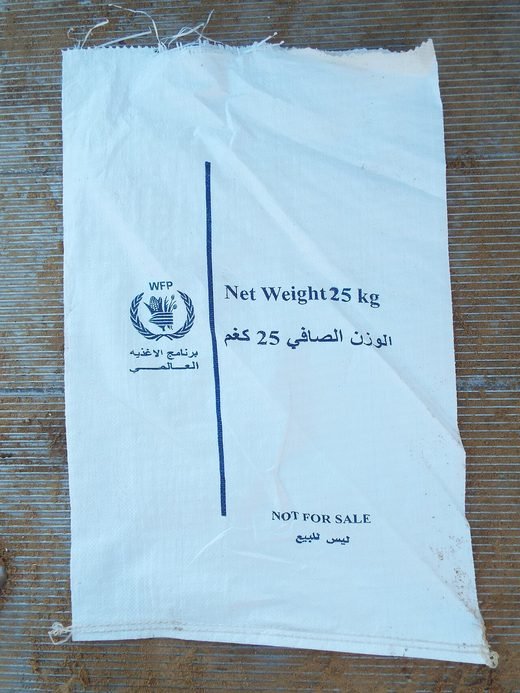
OCHA’s situation report says funding constraints and supply shortages disrupted operations. Between 29 September and 12 October, 937 aid trucks were manifested and 807 offloaded, via Ashdod (373), Egypt (206), Jordan (198), Israel (18) and the West Bank (12). More than 2,800 children were admitted for malnutrition treatment in September, including over 360 severe cases. The Gaza health ministry counts 1,493 deaths and 5,299 injuries since the October 2025 ceasefire, through 12 October.
2026
WFP halves its West Bank programme Funding cut
WFP’s representative in the Palestinian Territories, Shaun Hughes, said food needs had more than doubled in two years while resources fell. The warning that Gaza could be next came seven weeks before the 19 October announcement. Earlier, in July, WFP had already reduced the value of cash assistance for about 375,000 people.
2026
IPC: gains are real but ‘highly fragile’ Recovery
The IPC said the October 2025 ceasefire let assistance scale up, shifting food consumption from Emergency to Crisis levels since its December 2025 analysis. But declining aid since February 2026 ‘could quickly reverse progress’. Without humanitarian food assistance, about 1.9 million people (90%) would face high acute food insecurity. Acute malnutrition among children reached ‘Acceptable’ (Phase 1) in April–June and was projected to return to ‘Alert’ (Phase 2) from July.
Supplies falter and rations fall to 50% Access & supplies
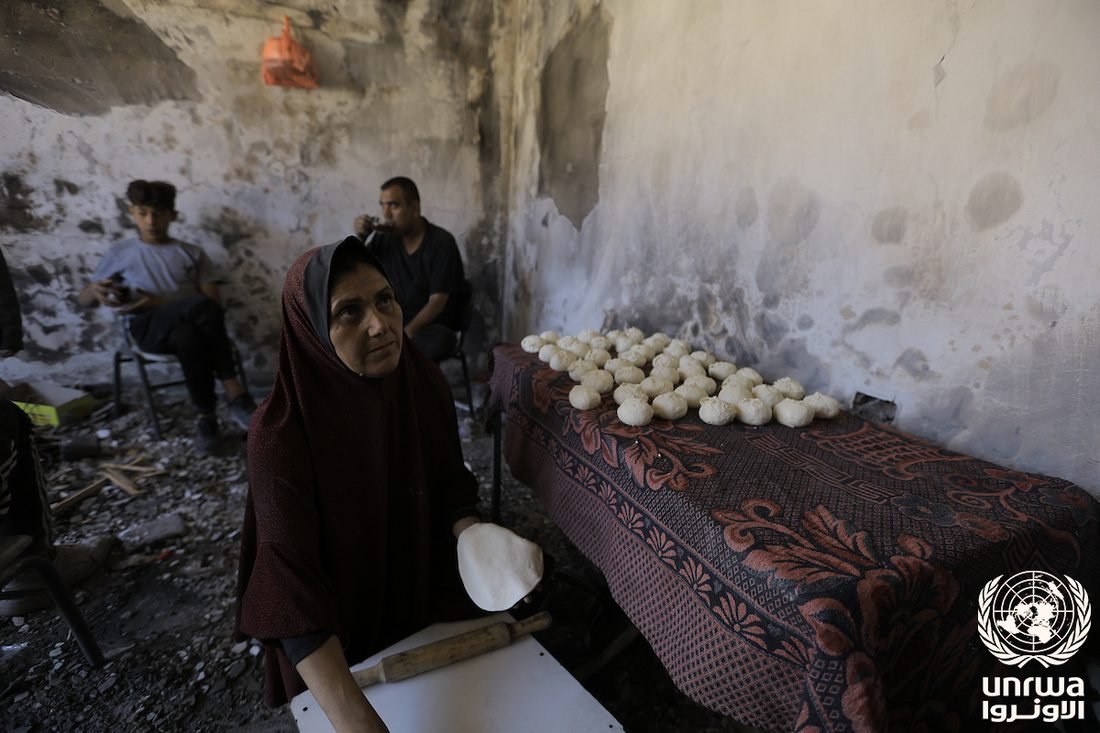
WFP said reduced and inconsistent arrivals through the Egypt and Jordan corridors, along with delays in transport and customs processing, caused pipeline breaks. Israel’s de-registration of 37 international NGOs and limits on ‘dual-use’ items such as spare parts and shelter materials also strained operations, WFP’s January report said. This was a supply shortage, not a donor cut, an important difference from October 2026.
2025
IPC: no famine, but ‘critical’ Recovery
The IPC concluded famine was no longer occurring after the ceasefire and a boost in aid, but said the situation remained highly fragile and the whole Strip would be at risk of famine if hostilities resumed and aid stopped. COGAT called the report ‘distorted, biased and unfounded’.
2025
Ceasefire opens the gates Recovery
Over the following months WFP and partners scaled up parcels, hot meals, bread, cash and nutrition services. By May 2026 in-kind food reached about 1.49 million people and cash about 700,000, according to the IPC. Prices fell below pre-ceasefire levels but remained above pre-war levels.
2025
Famine confirmed in Gaza Governorate Access & supplies
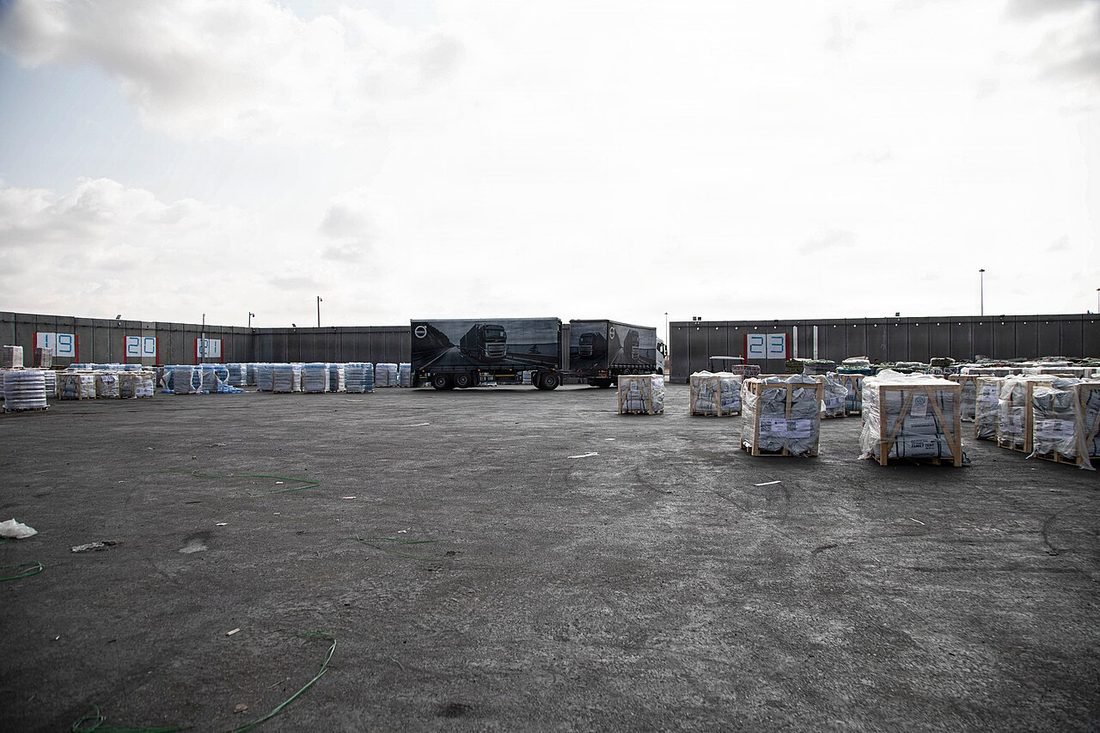
The IPC said famine thresholds had been met since 15 August and projected it would spread to Deir al-Balah and Khan Yunis by the end of September. Israel disputed the findings. Mass displacement and the destruction of farmland and bakeries compounded the aid shortage.
2025
A militarised aid system begins operating Insecurity
UNRWA reported serious dangers to civilians trying to reach distribution points. Israel and the foundation said the system was meant to stop Hamas from diverting aid.
25 Apr 2025
Supplies blocked; WFP stocks run out Access & supplies
WFP said no humanitarian or commercial supplies had entered for more than seven weeks by late April, the longest closure of the Strip. Hot-meal kitchens, reaching about half the population with a quarter of daily needs, had been the only consistent source of food for weeks.
2024
Food convoy looted near Kerem Shalom Insecurity
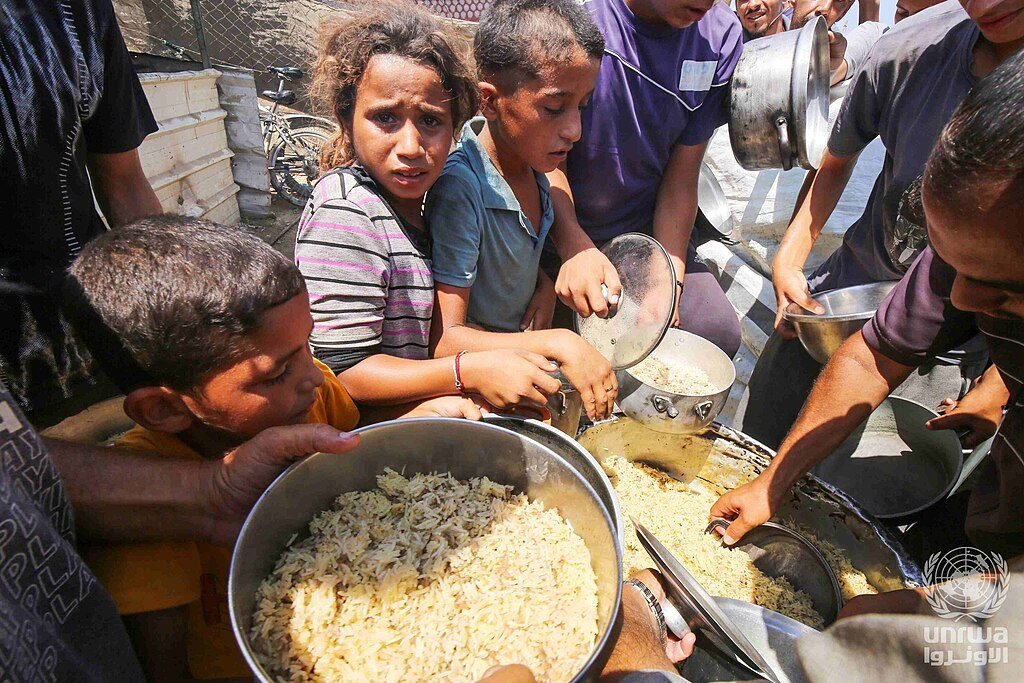
The convoy carried food from UNRWA and WFP. The incident showed how insecurity and unpredictable routes can waste food that donors have already paid for.
WFP cannot distribute parcels Access & supplies
One year into the war, WFP said aid entering Gaza was at its lowest and evacuation orders in the north were cutting off distribution. It warned about one million vulnerable people could lose essential food support if supplies did not resume.
2024
Donors suspend UNRWA funding Funding cut
UNRWA terminated the contracts of the accused staff and called for an investigation. The agency was then the biggest provider of relief in Gaza. Some governments later resumed funding; others kept suspending it.
UN agencies scale up emergency food Access & supplies
The UN Secretary-General’s May 2024 report described emergency food assistance planned for the entire population. Crossings were limited, and demand rose faster than supply from the first weeks.
2023
WFP warns of cuts before the war Funding cut
WFP representative Samer Abdeljaber said ‘desperate times call for desperate measures’. At the time 1.84 million Palestinians (35%) were food-insecure and Gaza unemployment was 45.3%. The warning shows funding gaps pre-date the war.
Who Receives Aid and Who Needs It
What the Latest Numbers Tell Us
Figures come from different dates and agencies, so they are not all measured on the same day.
| Indicator | Reported figure | Source and date |
|---|---|---|
| People losing monthly WFP food assistance | About 500,000 | WFP, 19 Oct 2026 |
| Monthly recipients before / after | 1.6 million / 1.1 million | WFP, 19 Oct 2026 |
| Food rations | Cut by 50% (one parcel instead of two) | WFP, 19 Oct 2026 |
| Families with reduced cash value | 75,000 | WFP, 19 Oct 2026 |
| Daily hot meals (WFP) | 250,000 to 150,000 | WFP, 19 Oct 2026 |
| Funding needed, Oct 2026-Mar 2027 | US$450 million (Gaza + West Bank) | WFP, 19 Oct 2026 |
| People in IPC Phase 3 or worse, Jul-Dec 2026 | About 1.4 million (67%), 212,000 in Phase 4 | IPC, 23 Jul 2026 |
| Reliant on humanitarian food assistance | About 90% of the population | OCHA, 15 Oct 2026 |
| Daily cooked meals, all providers | 614,000 (down from 695,000) | OCHA, 15 Oct 2026 |
| Households with no income source | 83% | IPC, 23 Jul 2026 |
Why Is UN Food Aid Being Cut in Gaza?
Funding gaps and access problems have caused different cuts at different times.
| Date | Main trigger | Type | Effect on food aid |
|---|---|---|---|
| May 2023 | WFP funding shortfall | Funding | 200,000 to lose aid (warning) |
| Feb 2024 | Donor suspensions to UNRWA | Funding | Over US$440 million paused |
| Oct 2024 | Supply shortage, north Gaza evacuations | Access | No WFP parcels in October |
| Mar-Apr 2025 | Entry of aid blocked | Access | Bakeries closed; stocks exhausted |
| Aug 2025 | Months of restricted food | Access | Famine confirmed in Gaza Governorate |
| Feb 2026 | Pipeline breaks via corridors | Access | Rations cut to 50% |
| Sep 2026 | Funding shortage | Funding | West Bank recipients halved |
| Oct 2026 | Funding shortage | Funding | Gaza recipients 1.6M to 1.1M; rations halved |
Funding shortfalls
Agencies lack confirmed funding to keep assistance at scale. WFP’s 2026 funding is less than half of earlier years.
Crossings and supplies
Closures, inspection delays and limits on dual-use items can stop food entering, however much money exists.
Insecurity
Looting, displacement and unsafe distribution sites complicate storage, transport and queuing for food.
No income to replace aid
83% of households report no income. Cutting parcels leaves little to fall back on.
What Happens If Funding Does Not Improve?
Further reductions in rations, fewer distributions and cuts to nutrition programmes become more likely if the US$450 million is not found, WFP’s own announcement implies. Families would rely on smaller parcels, irregular community meals and markets they often cannot afford. Children, pregnant and breastfeeding women, older people and people with disabilities face the highest risk. The IPC projects 74,200 children will need treatment for acute malnutrition through April 2027 and warned that falling aid could ‘quickly reverse progress’.
The path is not set by funding alone. It also depends on crossings, security, commercial food, market prices and whether livelihoods recover. This page avoids describing any risk as a declared famine unless the IPC says so.
What to watch: new OCHA and WFP situation reports, any IPC update, donor responses to the US$450 million appeal, and winter shelter and supply conditions.
Explore More Timelines
People Also Ask
Frequently Asked Questions
Conclusion: Food Aid Needs Funding and Safe Access
The timeline shows a repeating cycle: agencies expand assistance when crossings open and money arrives, then cut it when supplies stall or funding falls short. The 19 October 2026 announcement is the latest turn, arriving after the best food-security numbers of the war.
For families already living with displacement and no income, the difference between a funded and a reduced programme can be the difference between a dependable meal and going hungry. Preventing a reversal needs sufficient and predictable funding, open and reliable routes for humanitarian and commercial food, and safe access for civilians.
Related AiTimeline Stories
⚠️ Editorial Note
This timeline separates funding-related cuts from restrictions on aid access and other delivery problems. Figures reflect reports published at different dates in 2026 and are not all measured on the same day. The US$450 million request covers WFP’s critical operations in Gaza and the West Bank, not Gaza alone. Risks are not described as famine unless the IPC classification says so. Contested claims, such as those about the 2025 famine finding and aid volumes, are attributed to their sources. Figures are as of 19 October 2026 and will be updated when WFP or OCHA publish new reports.
Sources & further reading
Every dated entry above was checked against these references. Last reviewed 19 October 2026.
- Funding cuts force WFP to drastically reduce lifesaving assistance in Gaza (19 October 2026)
- Gaza: Funding cuts leave half a million without food assistance (19 October 2026)
- WFP cuts aid to 500,000 Palestinians in Gaza amid funding shortages (19 October 2026)
- Humanitarian Situation Report, 15 October 2026
- Gaza Strip: Humanitarian assistance drives food security and nutrition gains, but conditions remain highly fragile (IPC Special Snapshot, 23 July 2026)
- WFP will halve West Bank food assistance as it faces possible new cuts in Gaza (1 September 2026)
- WFP Palestine Emergency Response External Situation Report #83 (February 2026)
- Spread of famine in Gaza Strip averted but situation remains critical (IPC, 19 December 2025)
- Famine confirmed in northern Gaza, global hunger monitor says (22 August 2025)
- WFP runs out of food stocks in Gaza as border crossings remain closed (25 April 2025)
- Hunger looms again in Gaza as WFP food stocks begin to run out (27 March 2025)
- Nearly 100 food aid trucks violently looted in Gaza, UN agencies say (November 2024)
- WFP operations in Palestine risk suspension due to funding shortfall (11 May 2023)
- WFP Palestine emergency response