Ebola in DR Congo: The 1976–2026 Outbreak History and Timeline
DR Congo's 2026 Ebola outbreak is caused by Bundibugyo virus, not Zaire virus. See 50 years of outbreaks, cases, deaths and vaccine status, updated Aug 19.
Latest Story
In eastern Congo, stopping Ebola has never been only a race between a virus and a laboratory. It is also a race against distance, against roads that armed groups control, against a health worker’s ability to reach a village before a funeral does, and against the time it takes a frightened family to trust a stranger in a protective suit. That race is now in its seventeenth running. On 15 May 2026, the Democratic Republic of the Congo and Uganda jointly declared an Ebola outbreak in Ituri Province, and two days later the World Health Organization declared it a public health emergency of international concern. The virus behind it, Bundibugyo virus, is not the one that built most of the world’s Ebola playbook. By August 2026, the outbreak it caused had become the deadliest in Congo’s history — a bigger and faster crisis than the famous 2018–2020 Kivu epidemic, tearing through a region already emptied by conflict, and doing it with none of the vaccine arsenal the world built after 2014. This is the story of how that happened, and of the fifty years of outbreaks, discoveries and hard-won lessons that came before it.
🧠 AI Overview Summary
DR Congo’s 2026 Ebola outbreak, declared 15 May 2026 in Ituri Province and confirmed as a WHO public health emergency of international concern on 17 May, is caused by Bundibugyo virus (Orthoebolavirus bundibugyoense) — not the Zaire ebolavirus behind Congo’s earlier outbreaks and the 2014-2016 West African epidemic. As of the most recent WHO-linked reporting (16 August 2026, WHO situation report published 18 August), DRC had recorded 5,021 confirmed cases and 2,378 deaths, making it the country’s largest and deadliest Ebola outbreak since the virus was first identified at Yambuku in 1976, though still smaller than the 2014-2016 West African epidemic’s roughly 28,600 cases. No licensed vaccine or specific therapeutic exists for Bundibugyo virus; Ervebo, the vaccine that helped end the 2018-2020 Kivu outbreak, is licensed only against Zaire ebolavirus and is being tested, not deployed as proven, against this one.
⚠️ Every number below is timestamped
This is a fast-moving, still-active outbreak. The World Health Organization’s most recent published Disease Outbreak News update (14 August 2026) put DRC’s confirmed cases at 4,665 and deaths at 2,184 (CFR 46.8%). The WHO Regional Office for Africa’s Weekly External Situation Report 14 (data as of 16 August 2026, published 18 August) put the total higher, at 5,021 confirmed cases, 2,378 deaths, 751 hospitalised in isolation and 1,061 recovered. Case counts have been rising by roughly 500–600 confirmed cases a week; by the time you are reading this, the true total is almost certainly higher than either figure above. Always check the date attached to any Ebola case count, in this article or anywhere else.
DR Congo’s Ebola Outbreak: Key Questions
What to Know About Ebola in DR Congo
- Ebola was first identified in 1976 near the Ebola River in what was then Zaire, after an outbreak at Yambuku Mission Hospital killed 280 of 318 people infected — an 88% case-fatality rate, spread largely by reused, unsterilized needles.
- The 2026 outbreak is caused by Bundibugyo virus, not the Zaire ebolavirus species behind DRC’s 1976, 1995, 2014, 2018-2020, 2020, 2021, and 2025 outbreaks and the 2014-2016 West African epidemic.
- There is no licensed vaccine or specific therapeutic for Bundibugyo virus. Ervebo, deployed successfully from 2018 onward, is licensed only against Zaire ebolavirus.
- The outbreak began in a high-traffic artisanal gold-mining area, Mongbwalu Health Zone in Ituri Province, where population movement has made contact tracing especially difficult.
- Armed conflict has actively obstructed the response. Groups including the ADF, CODECO and M23 control parts of Ituri and North Kivu, restricting surveillance teams’ movement in a province with over 270,000 displaced people.
- By mid-August 2026, the outbreak had killed more people than DRC’s 2018-2020 Kivu epidemic (previously the country’s largest), while remaining smaller in total cases than the 2014-2016 West African epidemic.
- At least 45 health workers had died and 155 been infected as of the World Health Organization’s 14 August 2026 update — a case-fatality rate among health workers of about 29%.
- Uganda’s outbreak, seeded by cases imported from DRC, was over by mid-July 2026, with 20 confirmed cases and 2 deaths and no further local transmission recorded.
- Every prior Bundibugyo virus outbreak has been small — 149 cases in Uganda in 2007-2008, 62 in DRC in 2012 — which is part of why the world had never built dedicated vaccines or treatments for it before 2026.
- The response has drawn in WHO, Africa CDC, the DRC and Uganda health ministries, MSF, UNICEF, the U.S. CDC, CEPI, Gavi, the World Bank and UN peacekeepers, testing whether five decades of Ebola-response lessons can work without the specific tools built for the last big outbreak.
Why the 2026 Outbreak Is Different
A familiar disease, an unfamiliar virus, and a response built for the wrong species
Every large Ebola response since 2018 has leaned on one tool above all others: ring vaccination with Ervebo, the rVSV-ZEBOV vaccine that helped bring the 2018-2020 Kivu epidemic under control. That tool does not exist for this outbreak. Bundibugyo virus is a genetically distinct Ebola species from Zaire ebolavirus, and while both cause the same underlying disease — Ebola virus disease — a vaccine built around one species’ surface proteins cannot be assumed to protect against another’s. CEPI, the vaccine-development coalition now funding Bundibugyo-specific candidates, has been explicit on this point: there are no licensed vaccines for Bundibugyo virus, only candidates in preclinical or early clinical testing.
That gap arrived at the worst possible moment. The outbreak began in Mongbwalu, a health zone in Ituri Province known for high-traffic artisanal gold mining, in a corner of the country where the ADF, CODECO and other armed groups already restrict movement and where over 270,000 people were displaced before a single Ebola case was confirmed. Contact tracing — the tool that had made the 2022 one-case North Kivu outbreak a two-month success story — struggled from the outset: WHO’s own 21 May 2026 update recorded only a 21% contact follow-up rate in Ituri, and the International Rescue Committee warned by early June that only about one in five contacts were being located at all.
The result was not a slower version of 2018-2020. It was faster. Médecins Sans Frontières described it in mid-July as “the third largest, and fastest growing, Ebola disease outbreak on record.” By early August, WHO was calling it the second-largest Ebola outbreak in history, behind only the 2014-2016 West African epidemic. By mid-August, it had killed more people than any Ebola outbreak DRC had ever recorded.
Fifty Years of Outbreaks, at a Glance
Every confirmed case count and death toll below carries a WHO, CDC or Africa CDC source
| Year | Location | Virus | Cases | Deaths | Major lesson |
|---|---|---|---|---|---|
| 2026 | Ituri & 5 other DRC provinces; Uganda; France | Bundibugyo virus | 5,021+ (DRC) | 2,378+ (DRC) | No vaccine arsenal exists for every Ebola species |
| 2025 | Bulape, Kasai Province | Zaire ebolavirus | 64 (53 confirmed, 11 probable) | 45 | Surveillance can still catch outbreaks fast, even in remote areas |
| 2022 | Beni, North Kivu | Zaire ebolavirus | 1 | 1 | Rapid detection can end an outbreak in five weeks |
| 2022 | Equateur Province | Zaire ebolavirus (new spillover) | Small, early cases fatal | 2+ (early count) | New animal-to-human spillovers keep happening |
| 2021 | North Kivu (12th DRC outbreak) | Zaire ebolavirus | 12 | 6 | Survivors can silently re-seed an outbreak years later |
| 2020 | Equateur Province | Zaire ebolavirus | 130 | 55 | Two unrelated outbreaks can run in one country at once |
| 2018–2020 | North Kivu & Ituri (10th DRC outbreak) | Zaire ebolavirus | 3,470–3,481 | 2,287–2,299 | Ring vaccination can work even inside an active conflict zone |
| 2018 | Equateur Province (Mbandaka) | Zaire ebolavirus | 54 | 33 | A river-city outbreak needs urban-specific containment |
| 2014 | Guinea, Liberia, Sierra Leone | Zaire ebolavirus | ≈28,600 | ≈11,325 | Weak health systems can turn a local outbreak into a global emergency |
| 2014 | Boende, Equateur Province | Zaire ebolavirus (unrelated spillover) | 66 (38 confirmed, 28 probable) | 49 | Two same-year, same-species outbreaks can still be epidemiologically unrelated |
| 2012 | Isiro, Orientale Province | Bundibugyo virus | 62 (36 confirmed, 21 probable, 5 suspect) | 34 | Bundibugyo virus can strike DRC too, not only Uganda |
| 2007–2008 | Bundibugyo District, Uganda | Bundibugyo virus (newly identified) | 149 (56 lab-confirmed) | 37 | A new Ebola species can hide behind a known disease’s symptoms |
| 1995 | Kikwit, Bandundu Region | Zaire ebolavirus | 315 | 250 | Hospital infection control can stop nosocomial spread |
| 1976 | Yambuku, Equateur Region | Zaire ebolavirus (virus discovered) | 318 | 280 | Unsterilized needles can turn a hospital into an outbreak engine |
Figures compiled from WHO Disease Outbreak News, CDC’s Ebola outbreak history and Africa CDC reporting; 2026 figures are provisional and rising. Small variances between WHO and CDC totals for 2018-2020 reflect different reporting cutoff dates, not a factual dispute.
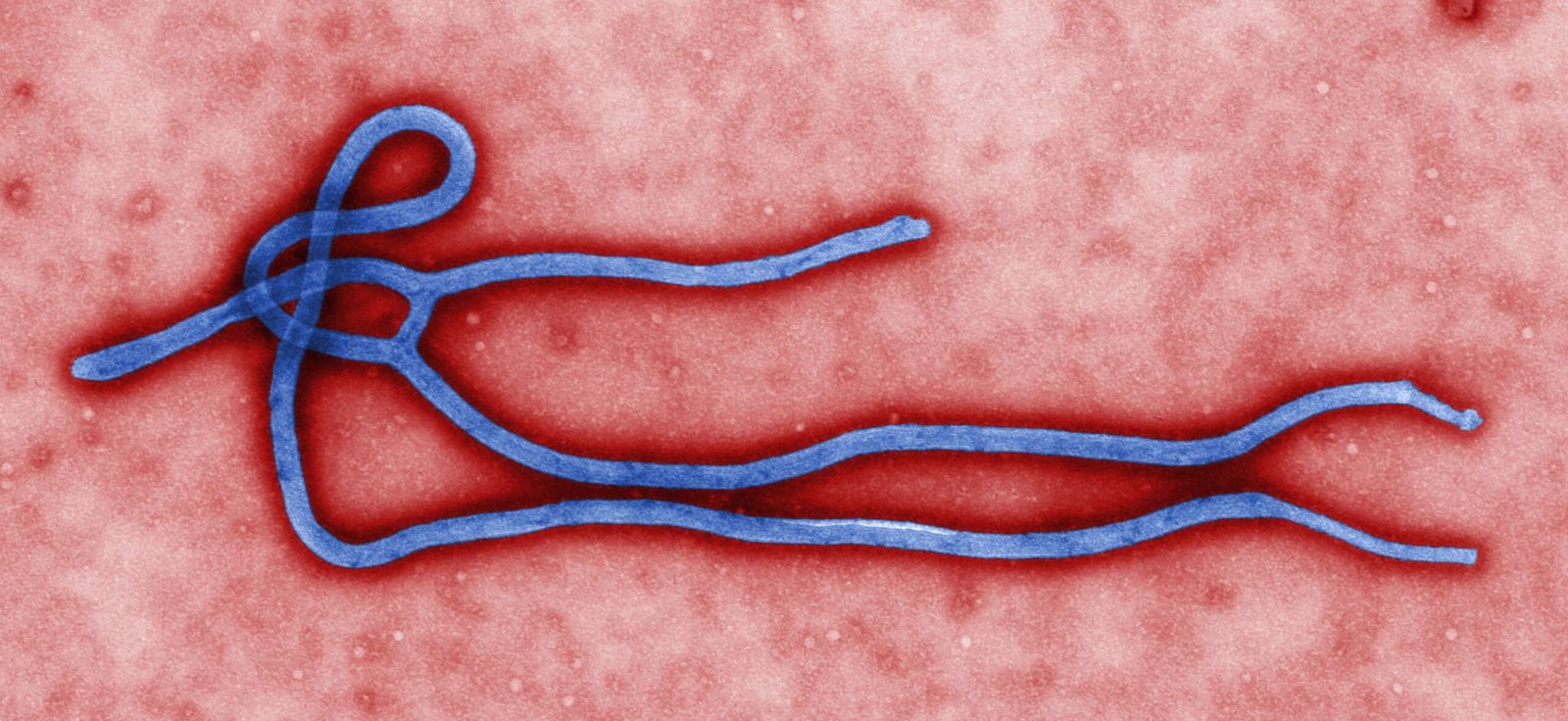
A colorized electron micrograph of a Zaire ebolavirus virion. All Ebola species, including Bundibugyo virus, share this filamentous, thread-like structure. Photo: Cynthia Goldsmith / CDC Public Health Image Library, public domain.
What Is Ebola? What Is Bundibugyo Virus?
One disease, six known virus species, and why the difference matters in 2026
Ebola virus disease is a severe, often fatal illness caused by viruses in the genus Orthoebolavirus. Scientists currently recognize six species: Zaire ebolavirus (the species behind most historical outbreaks, including 1976, 1995, 2014-2016 and 2018-2020), Sudan ebolavirus, Bundibugyo virus, Tai Forest virus, Reston virus (which has not been shown to cause human disease) and Bombali virus. All cause a broadly similar clinical picture and all spread the same way — through direct contact with the blood, body fluids or contaminated materials of an infected person or animal, not through the air. But they are genetically distinct enough that immunity, vaccines and some treatments built for one species cannot be assumed to protect against another.
Bundibugyo virus (formally Orthoebolavirus bundibugyoense) was unknown to science until November 2007, when an unusual hemorrhagic-fever outbreak in Uganda’s Bundibugyo District turned out to be caused by a virus roughly 32% genetically divergent from Zaire ebolavirus — different enough to be classified as a new species entirely. In its two confirmed outbreaks before 2026 — Uganda in 2007-2008 and DRC’s Isiro in 2012 — Bundibugyo virus showed a historical case-fatality rate in the range of roughly 25-50%, comparable to Zaire ebolavirus’s own range across different outbreaks. It is not a milder virus. It is simply a far less studied one, with a far thinner research and countermeasure base behind it, because both of its prior outbreaks were small.
The Familiar Species
Behind 1976, 1995, 2014 DRC, 2014-2016 West Africa, 2018-2020 Kivu, 2020, 2021 and 2025 outbreaks. Ervebo (rVSV-ZEBOV) is licensed specifically against it.
The 2026 Outbreak’s Cause
Identified 2007. Behind 2007-2008 Uganda, 2012 DRC Isiro, and the 2026 DRC/Uganda outbreak. No licensed vaccine exists for it.
The Ebola Response DNA
The ten-part chain every Ebola response depends on — and where each generation of outbreaks changed it
⚖️ From First Symptom to Recovery
- Detection — recognizing an unusual cluster of illness or deaths as a possible Ebola event, ideally within days, not weeks.
- Isolation — separating confirmed and suspected patients from the community to break transmission chains.
- Contact tracing — identifying and monitoring everyone exposed to a confirmed case for 21 days.
- Community trust — ensuring the response is seen as protective, not punitive, by the people living through it.
- Safe, supportive care — fluids, electrolyte and oxygen support, and treatment of secondary infections, delivered without exposing caregivers.
- Safe and dignified burial — managing the highly infectious remains of the dead without erasing a family’s ability to grieve.
- Vaccination — where a validated vaccine exists, protecting contacts and health workers before they are exposed.
- Surveillance — watching for new cases and silent chains of transmission after the visible wave subsides.
- Cross-border cooperation — sharing case data and coordinating screening across national lines in real time.
- Recovery — restoring routine health services and rebuilding trust once transmission ends.
Each generation of Congo’s Ebola outbreaks has strengthened, or exposed a weakness in, a different link in that chain. 1976 taught the world about isolation and infection control. 1995 proved field epidemiology and barrier nursing could stop hospital-driven spread. 2007 forced virus identification itself to expand beyond a single known species. 2014-2016 turned a regional health crisis into a genuinely global one, and built the vaccine the world now depends on. 2018-2020 proved that vaccination and contact tracing could work even inside an active war zone. 2022’s one-case outbreak showed what near-perfect detection and containment look like. 2025’s Bulape outbreak proved that surveillance built since 2018 could still catch a new spillover fast, in one of the country’s more remote provinces. 2026 is testing the two links the chain has always depended on most and prepared for least: whether community trust and cross-border cooperation can hold up when the vaccination link is missing entirely.
Master Timeline: Ebola in DR Congo, 1976–2026
Newest first — every entry sourced to WHO, CDC, Africa CDC or DRC/Uganda health ministries
Outbreak Becomes DRC’s Deadliest Ever
What happened: By 2 August, WHO called the outbreak the second-largest Ebola outbreak in history, after 2014-2016 West Africa. By mid-August, DRC’s death toll (2,378 as of 16-17 August) had surpassed the 2018-2020 Kivu outbreak’s roughly 2,287-2,299 deaths, making it the country’s deadliest outbreak since 1976. Cases had reached 55 health zones across Ituri, North Kivu, South Kivu, Haut-Uélé, Tshopo and Bas-Uélé provinces. At least 45 health workers had died and 155 been infected.
Vaccine Trials Begin, Uganda’s Outbreak Ends
What happened: On 12 July, WHO-sponsored PARTNERS trial protocols began enrolling patients in DRC for remdesivir and monoclonal antibody treatments. On 16 July, Uganda discharged its last Ebola patient with no confirmed active cases remaining, ending its outbreak at 20 confirmed cases and 2 deaths. On 24 July, Oxford University began a Phase 1 trial of a new Bundibugyo-specific vaccine candidate, and WHO’s Technical Advisory Group authorized a Phase 3 trial of Ervebo in DRC — to test cross-protection, not to deploy it as a proven vaccine. The outbreak passed 3,000 confirmed cases and, by month’s end, had become DRC’s largest ever by case count.
Cases Spread to New Provinces; International Cases Confirmed
What happened: Confirmed cases reached Haut-Uélé province by 29 June. On 24 June, France confirmed its first case, a doctor returning from a humanitarian mission in DRC, who later recovered. MSF had three Ebola treatment centers running by 16 June. CEPI announced funding for three Bundibugyo-specific vaccine candidates — from IAVI, Moderna and Oxford — on 1 June. Confirmed cases passed 1,000 on 20 June.
Outbreak Declared; WHO PHEIC; Border Closures
What happened: WHO was alerted on 5 May to a high-mortality unknown illness in Mongbwalu Health Zone, including health-worker deaths. Laboratory testing confirmed Bundibugyo virus on 15 May, the same day DRC and Uganda jointly declared an outbreak. WHO’s Director-General declared a public health emergency of international concern on 17 May — only DRC’s second PHEIC declaration since the category was created. By 21 May, WHO recorded 83 confirmed and 746 suspected cases in DRC and 2 confirmed cases in Uganda (imported, no confirmed local transmission). Uganda closed its DRC border for four weeks from 27 May. On 28 May, WHO advised against deploying Ervebo as a standalone preventive measure, citing insufficient evidence of cross-protection against Bundibugyo virus, and recommended remdesivir and monoclonal antibodies for clinical-trial use instead.
Bulape Outbreak: DRC’s 16th, Contained in Under Three Months
What happened: DRC declared its 16th Ebola outbreak since 1976 on 4 September 2025, caused by Zaire ebolavirus, in the remote Bulape Health Zone of Kasai Province. The last confirmed patient was discharged 19 October, and the outbreak was declared over on 1 December 2025 after two full incubation periods with no new cases: 64 total cases (53 confirmed, 11 probable) and 45 deaths, a case-fatality rate of 70.3%. There is no confirmed genetic or epidemiological link between this Zaire ebolavirus outbreak and the Bundibugyo virus outbreak that began in Ituri eight months later.
North Kivu’s One-Case Outbreak
What happened: A single fatal case, confirmed 22 August 2022 in Beni — one of the epicenters of the 2018-2020 outbreak — was declared DRC’s outbreak on the same day. It was declared over on 27 September 2022, 42 days after the patient’s burial, with no further transmission recorded. CDC counts this as DRC’s 14th recorded Ebola outbreak.
A New Animal Spillover in Equateur
What happened: DRC declared an outbreak on 23 April 2022 after two confirmed cases, both fatal, in Equateur Province. Full genome sequencing indicated the virus represented a fresh spillover from an animal reservoir, not a continuation of any earlier human outbreak — a reminder that Ebola’s animal reservoir keeps producing new introductions independent of human case chains.
A Survivor-Linked Flare-Up, DRC’s 12th Outbreak
What happened: A 42-year-old woman fell ill in Biena on 1 February 2021; DRC declared its 12th outbreak on 7 February. Genomic sequencing linked the case to the 2018-2020 outbreak, consistent with a rare instance of viral persistence in a survivor re-emerging years later. The outbreak was declared over on 3 May 2021: 12 cases, 6 deaths, a 50% case-fatality rate.
A Second, Unrelated Outbreak in Equateur
What happened: Declared DRC’s 11th outbreak in late May 2020, while the Kivu outbreak’s final chains were still being stamped out in the east. Genetically and geographically distinct from the Kivu epidemic. Declared over 18 November 2020: 130 cases, 55 deaths.
The Kivu Epidemic: DRC’s 10th Outbreak, Fought Inside a War Zone
What happened: DRC’s second-largest Ebola outbreak ever until 2026, and the first ever fought inside an active conflict zone with attacks on treatment centers and health workers. Ring vaccination with the then-newly available Ervebo, deployed at unprecedented scale, along with expanded contact tracing and community-engagement programs, eventually brought it under control. WHO’s final count: 3,481 cases (confirmed and probable), 2,299 deaths; CDC’s chronology cites 3,470 cases and 2,287 deaths, a small variance reflecting different reporting cutoffs.
An Earlier 2018 Outbreak, in a Different Province
What happened: Months before the Kivu epidemic began, a separate, smaller outbreak struck Mbandaka, a river port city in Equateur Province — DRC’s first Ebola outbreak to reach a large urban center with river-transport links. Contained by 24 July 2018: 54 cases (38 confirmed, 16 probable), 33 deaths.
The West African Epidemic: A Separate, Global Emergency
What happened: Not a DRC outbreak. A Zaire ebolavirus epidemic that began in Guinea in December 2013, spread into Liberia and Sierra Leone, and became the largest Ebola outbreak in history: roughly 28,600 cases and 11,325 deaths by WHO’s final count. Declared a PHEIC on 8 August 2014 and declared over in June 2016. It overwhelmed three national health systems, triggered global travel restrictions, and directly funded the accelerated development of Ervebo, the vaccine that shaped every DRC response since 2018.
A Separate, Unrelated DRC Outbreak in Equateur
What happened: Began 24 August 2014, entirely independent of the concurrent West African epidemic — genetically distinct, a separate spillover from DRC’s own animal reservoir. 66 cases (38 confirmed, 28 probable), 49 deaths.
Bundibugyo Virus Reaches DRC
What happened: The first confirmed Bundibugyo virus outbreak on DRC soil, five years after the species was identified in Uganda. Declared over 26 November 2012: 62 cases (36 confirmed, 21 probable, 5 suspect), 34 deaths, including three health workers.
Bundibugyo Virus Is Identified
What happened: An unusual hemorrhagic-fever cluster in western Uganda turned out to be caused by a virus roughly 32% genetically divergent from Zaire ebolavirus — a new Ebola species, later named Bundibugyo virus after the district where it was found. Declared over 20 February 2008: 149 total cases (56 laboratory-confirmed), 37 deaths. This outbreak is the direct scientific ancestor of the 2026 crisis: the same species, still without a dedicated vaccine nearly two decades later.
Kikwit: The Outbreak That Rewrote Hospital Infection Control
What happened: Nineteen years after Yambuku, Ebola returned. An index case, a charcoal worker and farmer, fell ill in January 1995; the virus was confirmed on 9 May after nosocomial spread inside Kikwit General Hospital had already infected numerous staff and patients. International teams introduced strict barrier nursing — protective equipment, dedicated isolation wards, safe injection practices — that halted hospital-driven transmission and became a template for every later response. Final toll: 315 cases, 250 deaths, an 81% case-fatality rate.
Yambuku: The Virus Is Discovered
What happened: Between 1 September and 24 October 1976, a mysterious hemorrhagic fever swept through villages within roughly 70 km of Yambuku Mission Hospital. Nosocomial transmission, driven largely by a small stock of syringes reused without sterilization between patients, drove much of the spread. International investigators, including scientists later credited with helping identify the virus, traced it to a filovirus never seen before, and named it after the nearby Ebola River rather than the village itself — a deliberate choice to avoid permanently stigmatizing Yambuku. Final toll: 318 cases, 280 deaths, an 88% case-fatality rate, one of the highest ever recorded for the disease.
The 1976 Lesson: What Yambuku Taught Medicine
Infection control, not a cure, ended the first outbreak
No treatment stopped the 1976 outbreak. What stopped it was infection control: isolating patients, sterilizing or discarding needles instead of reusing them, and international field epidemiologists working alongside Zairian health workers to trace every chain of transmission by hand. That lesson — that a hospital can be an outbreak’s engine if basic barrier practices fail, and its brake if they hold — is the oldest link in the Ebola Response DNA framework above, and it is still being relearned today: four of the 2026 outbreak’s earliest deaths were health workers infected at Mongbwalu General Referral Hospital.
2018 vs. 2026: What Changed
Same country, different virus, and a very different set of tools available
| Factor | 2018–2020 Kivu Outbreak | 2026 Outbreak |
|---|---|---|
| Virus | Zaire ebolavirus | Bundibugyo virus |
| Licensed vaccine available | Yes — Ervebo, deployed via ring vaccination from the outset | No — Ervebo not proven effective; candidates only reached early trials in 2026 |
| Approved therapeutics | Two monoclonal antibody treatments gained approval for Zaire ebolavirus during the response | None approved; remdesivir and monoclonal antibodies in trial use only from July 2026 |
| Geography | North Kivu & Ituri, dense urban centers including Goma | Ituri, spreading to North Kivu, South Kivu, Haut-Uélé, Tshopo, Bas-Uélé |
| Security context | Active conflict, first Ebola response fought inside a war zone | Active conflict (ADF, CODECO, M23-affected areas) plus a major mining-driven population-movement problem |
| Final/current scale | 3,470–3,481 cases, 2,287–2,299 deaths (final) | 5,021+ cases, 2,378+ deaths (as of 16-17 Aug 2026, still rising) |
| International spread | Contained to DRC and a brief scare in Uganda/Rwanda border areas | Confirmed cases in Uganda and France; medical evacuations to Germany |
The two outbreaks are not the same crisis wearing a different date. 2026 is larger, faster and missing the single tool that ended 2018-2020.
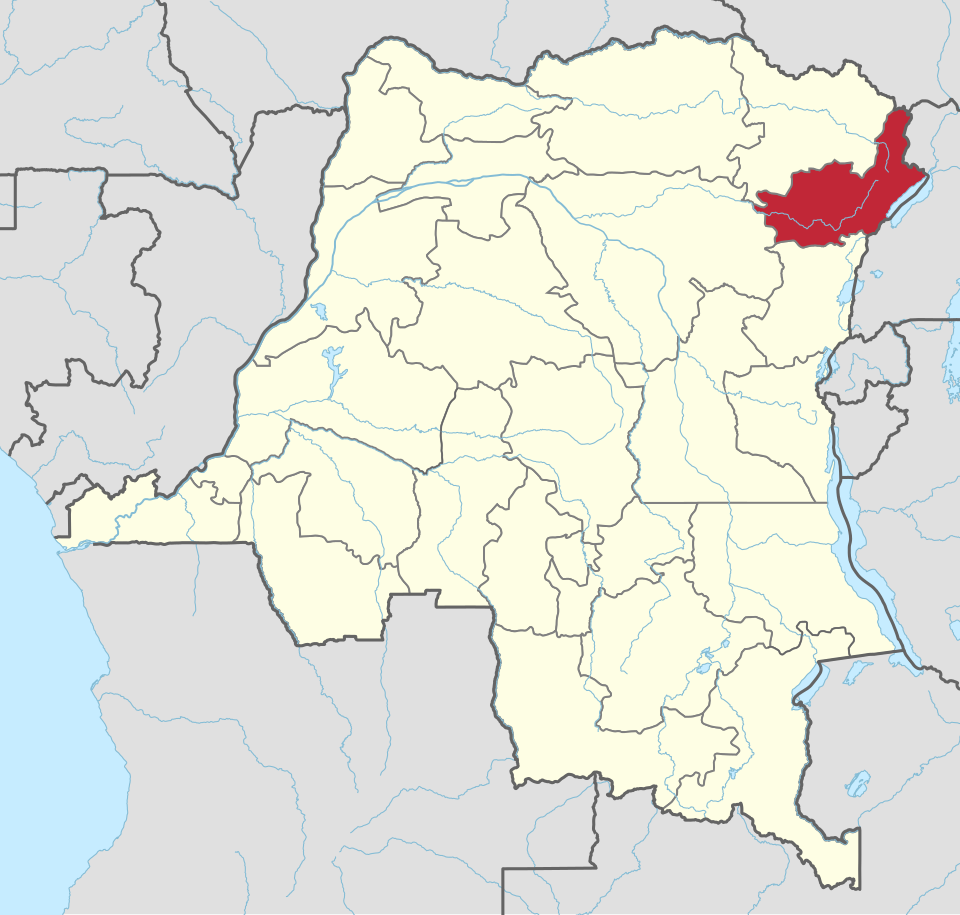
Ituri Province, highlighted, is the outbreak’s epicenter and accounted for 85% of confirmed cases as of WHO’s 14 August 2026 update. Map: NordNordWest / Profoss, CC BY-SA 3.0, via Wikimedia Commons.
Why Ituri Has Become the Epicentre
Geography, conflict and mining collided in one province
Ituri sits in DRC’s northeast corner, bordering Uganda, threaded by roads that are often impassable in the rainy season and, in several territories, controlled or contested by armed groups rather than the state. It is also home to significant artisanal gold, tin, tungsten and tantalum mining, which draws a constantly shifting population of workers between mine sites and home villages. According to WHO’s 21 May 2026 update, Ituri had 273,403 internally displaced people and 1.9 million people in humanitarian need even before the outbreak began — a population already stretched thin on health access, clean water and food security. By WHO’s 14 August 2026 report, Ituri still accounted for 85% of all confirmed cases (3,979 of 4,665) and 79% of deaths (1,726 of 2,184), even as the outbreak had spread to five other provinces. None of that makes the people of Ituri responsible for the outbreak’s scale; it explains why an outbreak that might have been contained in a stable, accessible region instead found a landscape almost perfectly suited to outrunning the response built to stop it.
How Gold Mining Complicates Ebola Control
Not a cause of the outbreak — a multiplier of its spread
The outbreak’s first confirmed cluster emerged in Mongbwalu, which WHO’s own outbreak report describes as “a high-traffic mining area.” Mining activity itself did not cause the outbreak — Ebola’s animal reservoir, not human industry, is the source of every spillover event. But artisanal mining sites concentrate large numbers of workers from many different villages in close quarters, often with limited sanitation, and those workers move frequently between mine sites and home communities. That mobility can complicate containment by making contact tracing harder: a contact identified in one village may already have traveled to a mine site in another health zone, or a different province entirely, by the time a tracing team arrives. It is one part of the explanation, alongside conflict and weak baseline health infrastructure, for why the outbreak spread to 55 health zones across six provinces rather than staying contained near its point of origin.
When a Health Crisis Meets an Armed Conflict
Ebola response depends on access. Conflict removes it.
Every link in the Ebola Response DNA chain — detection, contact tracing, safe burial, vaccination, surveillance — depends on response teams physically reaching the people who need them. In parts of Ituri and North Kivu affected by this outbreak, armed groups including the ADF and CODECO, and the wider M23-linked conflict active in the region since 2022, have restricted that access directly. WHO’s 21 May 2026 update cited “ongoing conflict in Ituri province restricting the movement of surveillance teams” as a direct factor in the outbreak’s early spread. This is not a new problem for DRC’s Ebola responses: the 2018-2020 Kivu outbreak was the first ever fought inside an active conflict zone, and attacks on health facilities and workers during that response are well documented. What is different in 2026 is that this conflict-driven access problem is compounding a second, simultaneous handicap — the absence of a proven vaccine — that the 2018-2020 response did not have to face.
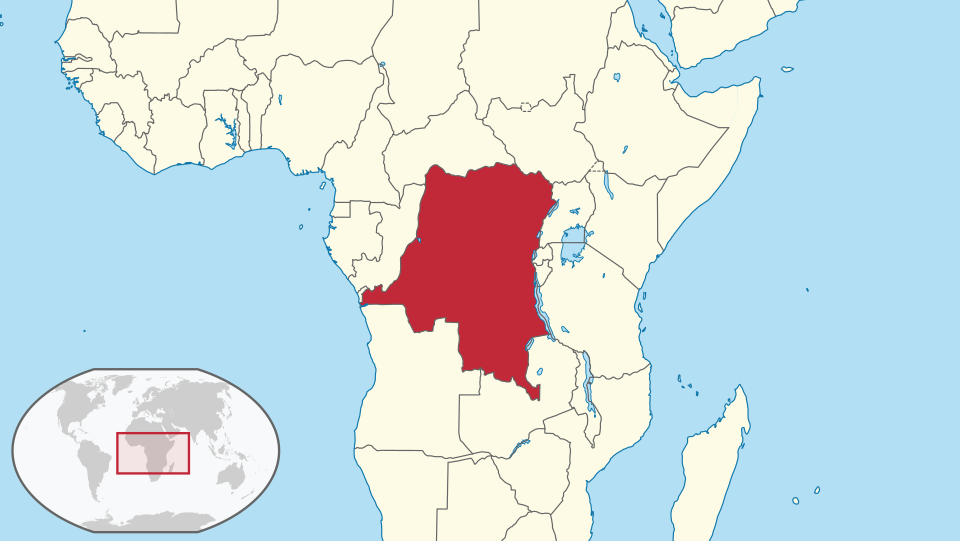
DR Congo and its neighbors, including Uganda to the east, where imported cases triggered a parallel national outbreak declaration in May 2026. Map: TUBS, CC BY-SA 3.0, via Wikimedia Commons.
The Uganda Connection
A border, a shared declaration, and an outbreak that ended in ten weeks
Uganda declared its own outbreak on the same day as DRC, 15 May 2026, after confirming cases linked to the DRC cluster. WHO’s early reporting described Uganda’s cases as imported from DRC, with no confirmed local transmission chain established inside Uganda itself; by the time of that reporting, two confirmed cases and one death had been recorded in Kampala. Uganda closed its border with DRC for four weeks starting 27 May and required a 21-day isolation period for arrivals from affected areas, alongside contact-monitoring of 127 identified contacts. The Uganda outbreak proved short-lived by outbreak standards: its last patient was discharged from care on 16 July 2026, with no confirmed active cases remaining, closing out a national outbreak of 20 confirmed cases and 2 deaths — a striking contrast to the outbreak’s trajectory across the border in DRC.
The Global Health Response
Who is actually involved, and what each organization is doing
World Health Organization
Declared the PHEIC on 17 May 2026; leads technical guidance, laboratory support, risk assessment and an Incident Management Support Team co-run with Africa CDC.
Africa CDC
Declared the outbreak a Public Health Emergency of Continental Security on 10 August 2026, empowering continent-wide coordination, and jointly runs incident management with WHO.
Médecins Sans Frontières (MSF)
Operating three dedicated Ebola treatment centers as of mid-June 2026, providing direct patient care in some of the hardest-to-reach affected areas.
UNICEF
Coordinating vaccine-candidate delivery logistics alongside WHO and Africa CDC, and supporting risk-communication and community-engagement work.
Gavi
Pledged up to $40 million to accelerate vaccine access and a further $10 million for outbreak response and continuity of routine immunization.
CEPI
Funding three Bundibugyo-specific vaccine candidates in early development, from IAVI, Moderna and the University of Oxford.
U.S. CDC
Providing technical support and situational reporting; the U.S. State Department announced $112 million in outbreak-related funding on 28 May 2026.
World Bank
Announced a rapid-response funding package on 27 May 2026 to help contain spread, protect frontline health workers and preserve essential health services.
Health Workers: The Response’s Human Front Line
Contact tracing, testing, isolation, vaccination and burial teams, working inside the outbreak itself
Every number in this article’s timeline exists because a health worker collected it, often at real personal risk. WHO’s 14 August 2026 update recorded at least 155 confirmed Ebola cases and 45 deaths among health workers — a case-fatality rate of roughly 29%, and the earliest of those deaths, four in total, occurred at Mongbwalu General Referral Hospital within a four-day span in May, before the outbreak had even been declared. Contact tracers, laboratory technicians, ambulance drivers, burial teams and vaccination staff have continued working through an active conflict zone, in a province with hundreds of thousands of displaced people, often in health zones with only partial contact-tracing coverage. Their work is the least visible part of the Ebola Response DNA framework and, historically, the part every successful outbreak response has depended on most.
The Human Cost
Behind every case count is a family, a caregiver, a community
As of the WHO Regional Office for Africa’s 16 August 2026 situation report, 751 people were in isolation or hospital care and 1,061 had recovered, alongside 2,378 deaths. Each of those figures represents a household disrupted: a caregiver who may themselves now be a contact under monitoring, children who have lost one or both parents, and survivors who face weeks of recovery and, in some cases, lingering health effects and social stigma after discharge. The International Rescue Committee warned in early June 2026 that the outbreak’s true scale was “likely far worse” than official figures, citing contact-tracing coverage of only about 20% in the hardest-hit areas — a reminder that official counts, however carefully sourced, are very likely an undercount of the true human toll in a conflict-affected, high-mobility region.
Why People May Delay Seeking Care
Distance, fear and mistrust are rational responses to a hard situation, not ignorance
Health facilities in parts of Ituri and North Kivu are hours away over poor or conflict-affected roads. Treatment centers, however well run, mean separation from family at a moment of acute fear, and a documented history — both in this outbreak and in 2018-2020 — of misinformation and, at times, violence directed at health facilities and workers. WHO itself has cited “distrust of medical authorities” as a factor slowing this outbreak’s response, and more than 150 patients are reported to have left treatment facilities against medical advice since late May 2026, in some cases citing food shortages at the centers themselves. None of this reflects a community failing to understand the disease; it reflects a set of real, often reasonable, competing pressures — economic survival, family obligation, fear of an unfamiliar and frightening treatment setting — that every Ebola response has to work with, not against.
Community Trust: The Part of the Response No Laboratory Can Deliver
Local leaders, survivors and community health workers carry the response the last mile
A confirmed diagnosis, a validated vaccine and a fully staffed treatment center accomplish little if the people who need them do not trust the system offering them. Every successful Ebola response since 1995 has depended on local religious and community leaders, Ebola survivors speaking to their own communities, and community health workers who live in the areas they serve, translating both the science and the reasons behind unfamiliar and frightening procedures — isolation, burial teams in protective suits, contact monitoring — into terms a frightened community can accept. That work cannot be replaced by a laboratory result or a vaccine dose; it is negotiated, person to person, and it is the layer of the Ebola Response DNA framework most directly damaged when conflict, displacement and misinformation are all present at once, as they are in Ituri in 2026.
Ebola and Funerals
Why traditional burial practices matter, and how safe burial programs adapt rather than replace them
A person who has died of Ebola remains highly infectious, and traditional burial practices in many Congolese communities involve washing, dressing and directly touching the body — precisely the contact that can transmit the virus. That is a scientific fact about transmission risk, not a judgment on the practices themselves, which carry deep cultural and religious meaning around grief and dignity. The response DRC and its partners have built over successive outbreaks is “safe and dignified burial”: trained teams who manage the infection-control aspects of burial while working to preserve as much of a family’s ability to participate in a meaningful send-off as safely possible, rather than simply prohibiting traditional rites outright. Programs that skip the “dignified” half of that phrase, and treat burial purely as a biohazard-containment problem, have historically driven more resistance and hidden, unsafe burials — the opposite of what the response needs.
How Ebola Spreads
Direct contact, not the air
Ebola spreads through direct contact with the blood or body fluids of a person who is sick with or has died from the disease, through contact with contaminated objects such as needles or bedding, and through contact with infected animals, particularly certain species of fruit bats believed to be the natural reservoir. It can also spread through certain body fluids of male survivors for a period after recovery, which is why survivor-monitoring and safe-sex counseling remain part of the response even after a patient is declared virus-free in blood. Ebola viruses are not respiratory viruses and do not spread through casual airborne contact — you cannot catch Ebola by sitting near someone on a bus or being in the same room as someone incubating the virus who has no symptoms.
Symptoms, Diagnosis and Treatment
What Ebola looks like, and what medicine can currently do about it
Early Ebola symptoms — fever, fatigue, muscle pain, headache and sore throat — overlap heavily with malaria, typhoid and many other common illnesses in Central Africa, which is part of why early detection is so difficult. Later symptoms can include vomiting, diarrhea, rash, impaired kidney and liver function, and, in some cases, bleeding, though not every patient develops hemorrhagic symptoms and their absence does not rule out Ebola. Diagnosis requires a laboratory test (typically RT-PCR) on a blood sample; symptoms alone cannot confirm or rule out the disease. Treatment centers on early, aggressive supportive care: intravenous fluids and electrolyte correction, oxygen and blood-pressure support, and treatment of secondary infections, all of which meaningfully improve survival odds when started early. For Zaire ebolavirus specifically, two monoclonal antibody treatments (Inmazeb and Ebanga) have regulatory approval; neither has been shown effective against Bundibugyo virus, which is why the 2026 response is instead trialing remdesivir and different monoclonal antibody candidates (including MBP-134 and maftivimab) under WHO-sponsored research protocols rather than deploying an approved standard of care.
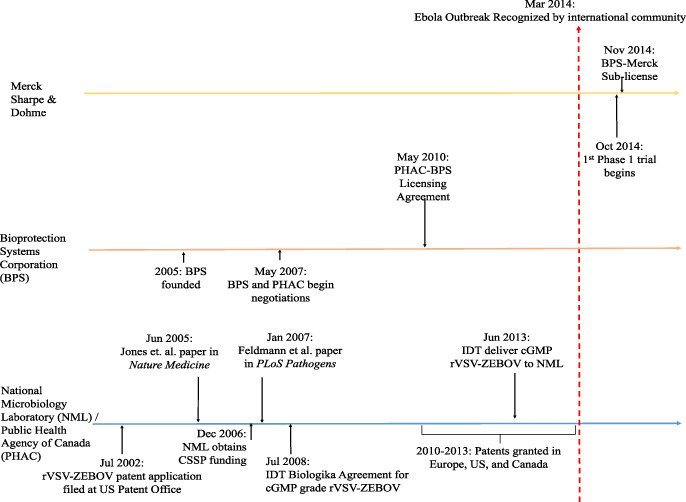
Ervebo (rVSV-ZEBOV), the vaccine that helped end the 2018-2020 Kivu outbreak, is licensed only against Zaire ebolavirus. Image: Herder M, Graham JE, Gold R., CC BY 4.0, via Wikimedia Commons.
The Vaccine That Changed the Ebola Response — and Its Limits
Ervebo transformed outbreaks after 2018. It cannot transform this one alone.
Ervebo (rVSV-ZEBOV) was developed and clinically tested at accelerated pace during and after the 2014-2016 West African epidemic, using a ring-vaccination trial design in Guinea that showed strong efficacy against Zaire ebolavirus. It received its first regulatory approvals in 2019 and was deployed at large scale during DRC’s 2018-2020 Kivu outbreak, protecting contacts and contacts-of-contacts and, by most expert assessments, playing a central role in eventually ending that epidemic. That success is precisely why its absence matters so much in 2026: Ervebo’s efficacy is specific to Zaire ebolavirus’s surface proteins, and there is not yet sufficient evidence that it cross-protects against Bundibugyo virus. WHO’s guidance since May 2026 has treated it as a research candidate for this outbreak, not a proven preventive tool, which is why the emphasis of the 2026 vaccine response has shifted to accelerating entirely new, Bundibugyo-specific candidates instead.
✅ What Ebola Medicine Can Do (2026)
- Deliver supportive care that measurably improves survival when started early
- Diagnose confirmed cases within hours using RT-PCR testing
- Deploy Ervebo and approved monoclonal antibodies effectively against Zaire ebolavirus outbreaks
- Trial remdesivir and new monoclonal antibodies against Bundibugyo virus under research protocols
- Contain small, early-detected outbreaks in weeks, as shown in 2022
❌ What Ebola Medicine Cannot Do (2026)
- Offer a licensed vaccine proven to prevent Bundibugyo virus infection
- Offer an approved specific therapeutic for Bundibugyo virus
- Guarantee cross-protection from Zaire ebolavirus tools against other Ebola species
- Substitute for community trust, safe access and functioning contact tracing
- Cure Ebola disease outright — supportive care and any future approved therapeutics improve survival odds, they do not guarantee it
The Ebola Legacy Ladder
Nine rungs, fifty years, one still-unfinished climb
Discovery
The virus is identified for the first time at Yambuku; infection control becomes the first defense.
Kikwit
Field epidemiology and barrier nursing prove hospital-driven spread can be stopped.
Bundibugyo
A second Ebola species is identified, expanding the disease’s known genetic diversity.
Global Crisis
West Africa’s epidemic forces a global emergency response and accelerates vaccine development.
Vaccine Era
Ervebo is deployed at scale for the first time, inside DRC’s Kivu outbreak.
Response Maturation
DRC runs two concurrent, unrelated outbreaks and contains both without either becoming a national crisis.
Rapid Containment
A one-case outbreak is detected and ended within six weeks — the system working as designed.
Re-Emergence
Bulape proves surveillance can still catch a new, remote spillover fast.
The Fastest Crisis
Community trust, cross-border coordination and speed are tested without the vaccine safety net of 2018.
Follow the Patient
Where a single Ebola case moves through the response system — and where that system can succeed or fail
- Symptom onset: Fever and fatigue begin, indistinguishable at first from malaria or typhoid — the earliest and hardest point to detect Ebola specifically.
- Family: A household decides whether to seek care immediately, or to wait, weighing distance, cost, fear of a treatment center and the illness’s ambiguous early symptoms.
- Health facility: If reached, a clinic or hospital must recognize the possibility of Ebola, isolate the patient, and notify surveillance authorities — a step that can fail if the facility is remote, under-resourced, or the patient never arrives at all.
- Laboratory: A blood sample must reach a lab capable of RT-PCR testing, often requiring transport across difficult or insecure terrain, to confirm the diagnosis.
- Contact tracing: Every person the patient had contact with while infectious must be identified and monitored for 21 days — the step WHO recorded at only 21% coverage in Ituri in May 2026.
- Community: Neighbors, local leaders and community health workers determine whether the response is trusted or resisted, shaping whether contacts come forward voluntarily.
- Border: If the patient or a contact has crossed into another country, cross-border health authorities must coordinate screening and data-sharing in real time.
- Surveillance: Even after a patient recovers or dies, the system must keep watching for weeks, since survivors, funerals and hidden contacts can all silently restart transmission.
Every one of the outbreak’s headline numbers — 5,021 confirmed cases, a 21% contact follow-up rate, 55 affected health zones — is the sum of thousands of individual patients moving through some version of that eight-step path, succeeding or stalling at a different point each time.
The Ebola Response Test
Ten questions every outbreak response has to answer — scored against the 2026 outbreak’s current evidence
| Question | 2026 outbreak, current evidence |
|---|---|
| How quickly was the first case detected? | WHO alerted 5 May 2026; lab confirmation followed 10 days later, after health-worker deaths had already occurred |
| Can contacts be identified? | Only about 21% contact follow-up recorded in Ituri as of 21 May 2026, per WHO |
| Can patients safely reach care? | Difficult in conflict-affected, mining-heavy, remote parts of Ituri and North Kivu |
| Can health workers safely work? | At least 45 health-worker deaths and 155 infections recorded by mid-August 2026 |
| Will communities trust responders? | Mixed; WHO cites distrust of medical authorities and over 150 reported treatment-center departures since late May |
| Can laboratories confirm cases quickly? | Confirmed in days once samples reach a lab, but transport across insecure terrain remains a bottleneck |
| Can borders coordinate? | Yes for Uganda — a joint declaration, border controls and a contained, ten-week outbreak resulted |
| Are vaccines appropriate for this virus? | No licensed vaccine exists for Bundibugyo virus; candidates remain in early-stage trials |
| Is funding available? | Substantial and growing: UK, US, EU, Gavi, World Bank and OCHA commitments made by August 2026 |
| Can response teams reach remote areas? | Inconsistently; conflict and displacement actively restrict surveillance-team movement in parts of Ituri |
Explore More Timelines
Claim vs. Fact
Correcting the misconceptions that spread fastest online
| Claim | Fact | Why it matters |
|---|---|---|
| Ebola is airborne | It spreads through direct contact with infected body fluids or contaminated materials, not through casual airborne contact | Misunderstanding transmission drives both unnecessary panic and, separately, unsafe underestimation of real contact risks |
| All Ebola outbreaks have a vaccine | Only outbreaks caused by Zaire ebolavirus currently have a licensed vaccine (Ervebo); Bundibugyo virus does not | Directly explains why the 2026 outbreak has spread faster than 2018-2020 |
| Ervebo protects against every Ebola virus | Ervebo is licensed specifically against Zaire ebolavirus; cross-protection against Bundibugyo virus is unproven | Prevents false reassurance about a vaccine’s scope |
| 2026 is the first Ebola outbreak in Congo | It is DRC’s 17th recorded outbreak since 1976 | Context for how the country’s response systems evolved before this crisis |
| 2026 is the same virus as 2018 | 2018-2020 was Zaire ebolavirus; 2026 is Bundibugyo virus, a genetically distinct species | The single most important fact distinguishing this outbreak from prior ones |
| Every fever in eastern DRC is Ebola | Early Ebola symptoms overlap with malaria, typhoid and other common illnesses; only a lab test confirms it | Explains real diagnostic difficulty without encouraging self-diagnosis |
| People with Ebola always bleed | Hemorrhagic symptoms occur in some, not all, confirmed cases | Corrects a dated, overly narrow clinical picture of the disease |
| Survivors cannot transmit Ebola | The virus can persist in certain body fluids of male survivors for a period after recovery | Basis for continued survivor monitoring and safe-sex counseling after discharge |
| DRC eliminated Ebola permanently after past outbreaks | DRC has recorded 17 separate outbreaks since 1976, driven by an ongoing animal reservoir | Explains why “eliminated” is the wrong frame; “contained, outbreak by outbreak” is the accurate one |
| The 2026 outbreak is only a DRC problem | Confirmed cases have reached Uganda and France, with medical evacuations to Germany | Underscores why WHO classified it a public health emergency of international concern |
💡 Facts Worth Knowing
- The name “Ebola” comes from the Ebola River, chosen deliberately over the outbreak village’s own name to avoid stigmatizing Yambuku.
- DRC’s 2022 North Kivu outbreak went from declaration to being declared over in just 36 days — among the fastest-contained Ebola outbreaks on record.
- Bundibugyo virus is roughly 32% genetically divergent from Zaire ebolavirus, more than enough to be classified as an entirely separate species.
- Uganda’s 2026 outbreak, seeded entirely by cases from DRC, ended in about ten weeks with zero confirmed local transmission chains.
- The 2014-2016 West African epidemic remains the largest Ebola outbreak in history by total case count, even after the scale of DRC’s 2026 outbreak.
- Ervebo, the vaccine central to ending the 2018-2020 outbreak, took roughly four years from accelerated trials to first regulatory approval.
Frequently Asked Questions
Direct answers, sourced to WHO, CDC, Africa CDC and DRC/Uganda health authorities
Explore More on AiTimeline
⚠️ How AiTimeline Built This Timeline
This article draws on World Health Organization Disease Outbreak News reports, WHO African Region situation updates, CDC’s Ebola outbreak history and FAQ pages, Africa CDC statements, DRC and Uganda Ministry of Health declarations, CEPI’s Bundibugyo virus briefing, and wire-service and UN reporting current through 17 August 2026, cross-checked against the most recent official figures available at the time of writing. The 2026 outbreak was still active and case counts still rising at time of publication; figures will be revised as newer official updates are published. This content is editorial and AI-assisted, compiled from publicly available sources rather than an independent medical review, and readers should treat it as a sourced starting point, not a substitute for checking WHO or DRC Ministry of Health updates directly for the latest confirmed figures.
Sources & further reading
Every dated entry above was checked against these references. Last reviewed 15 September 2026.
- WHO Disease Outbreak News - Ebola disease caused by Bundibugyo virus, DRC & Uganda (17 May 2026 PHEIC)
- WHO Disease Outbreak News - Ebola disease caused by Bundibugyo virus, DRC (14 August 2026 update)
- WHO Regional Office for Africa - Ebola Bundibugyo Virus Disease Outbreak Weekly Situation Report 14 (data as of 16 August 2026)
- WHO - Ebola virus disease, Democratic Republic of the Congo, 2025 (Bulape outbreak)
- CEPI - Bundibugyo Virus: What It Is and What It Is Not
- Africa CDC - Support for DRC Government response to the 2026 Bundibugyo Ebola emergency
- CDC - History of Ebola Outbreaks
- UN News - Ebola outbreak becomes deadliest in DR Congo's history (17 August 2026)
- World Bank - Response to Ebola Outbreak in DRC and Uganda