Global Geopolitical Conflicts and Shifting Alliances: The Complete Timeline (1648–2026)
Global geopolitics timeline, 1648 to 2026: wars, treaties, alliances from NATO to BRICS, and the trade, energy and technology rivalries shaping today.
Latest Story
It is a little after six in the morning at a large international airport, and the departure board is doing something it was never designed to do: telling the story of world politics. Three flights to one region are marked Cancelled because a stretch of airspace closed overnight. A long-haul service to Europe is delayed ninety minutes; the aircraft is routing around a closed corridor and needs extra fuel, which means fewer passengers and a heavier bill. A cargo hub two thousand kilometres away has re-timed its whole schedule because ships are going the long way round a chokepoint instead of through it. Nobody in the terminal has fired a shot or signed a treaty. They are simply living inside the consequences of decisions taken elsewhere — and that is the plainest available definition of geopolitics: the study of how power, geography, economics and diplomacy interact, and how the results reach ordinary life. This is the complete, sourced timeline of global geopolitical conflicts and shifting alliances, from the Peace of Westphalia in 1648 to the officially confirmed developments of 2026.
📌 Global Geopolitics in One Minute
Geopolitics is the interaction of geography, power, economics and diplomacy between states. Alliances are formal, treaty-based commitments — often including a mutual-defence clause, as in NATO’s Article 5. Partnerships are looser: dialogues, summits and working groups with no automatic obligation to fight. Countries build both to deter threats, secure trade routes and energy, gain technology, and win a seat at the table where rules are written.
The modern system began with the sovereign-state principle of Westphalia (1648), was reorganised at the Congress of Vienna (1815), collapsed into two world wars, and was rebuilt around the United Nations (1945). The Cold War split it into two blocs — NATO (1949) and the Warsaw Pact (1955) — until the fall of the Berlin Wall in 1989 and the end of the Soviet Union in 1991. What followed was not a single new order but a widening field: EU enlargement, the rise of China and India, the War on Terror, the 2008 financial crisis, the pandemic, war returning to Europe in 2022, and conflict in the Middle East from 2023. By 2026, competition runs as much through semiconductors, artificial intelligence, critical minerals, sanctions and shipping lanes as through armies, and most states hedge across several partnerships at once rather than choosing a bloc.
The Essentials
What This Timeline Shows
- The sovereign-state system dates from the Peace of Westphalia in 1648; almost every later crisis is an argument about sovereignty, security or trade within that framework.
- Alliances have never been permanent. Coalitions of 1815, 1914, 1939 and 1949 formed around specific threats and reorganised when those threats changed.
- The United Nations (1945) created the first near-universal forum with binding Security Council powers, but the veto held by its five permanent members shapes what it can and cannot do.
- NATO (1949) and the Warsaw Pact (1955) turned Europe into a two-bloc system; the Pact dissolved in 1991, while NATO grew to 32 members.
- The Cuban Missile Crisis (1962) and the US–China opening (1971) show that rivalry and diplomacy usually run in parallel, not in sequence.
- After 1991, integration and competition advanced together: EU enlargement and the WTO alongside the War on Terror, the Iraq War and renewed great-power rivalry.
- Since 2022, sanctions, energy re-routing and defence spending have moved to the centre of European policy; NATO allies agreed a 5%-of-GDP spending framework at The Hague in 2025.
- Technology is now a first-order security issue: export controls on advanced chips, rare-earth restrictions and artificial-intelligence governance are all handled at head-of-government level.
- BRICS, the SCO, ASEAN, the African Union, the Quad and AUKUS are not equivalents. They differ in legal status, membership and purpose, and most members belong to several at once.
- The pattern of 2026 is hedging: India chairs BRICS while deepening ties with the EU and the UK; Gulf states trade with every camp; ASEAN keeps its own centrality.
The Vocabulary of Geopolitics
Precise words matter here. These are the terms used consistently throughout this timeline.
Sovereignty
The principle that a state has supreme legal authority within its territory and is not subject to another state’s command. Codified in practice after 1648 and written into Article 2 of the UN Charter.
Collective defence
A treaty promise that an attack on one member is treated as an attack on all. NATO’s Article 5 is the best-known example; it has been invoked once, after the 11 September 2001 attacks.
Strategic autonomy
A state’s or bloc’s capacity to act on its core interests without depending on another power for critical capabilities — defence industry, energy, semiconductors, payments or data infrastructure.
Sanctions
Restrictions on trade, finance, travel or technology imposed to change behaviour. They may be multilateral, adopted by the UN Security Council, or autonomous, adopted by a state or bloc such as the EU.
Export controls
Licensing rules that restrict who may buy sensitive goods and technologies, notably advanced semiconductors, chipmaking tools and processed critical minerals. Increasingly used as an instrument of statecraft.
Chokepoint
A narrow maritime or land passage through which a large share of trade must pass — Hormuz, Malacca, Suez, Bab el-Mandeb, Panama. Disruption there raises freight, insurance and energy costs globally.
Minilateralism
Cooperation among a small group of states on specific issues, outside large formal institutions. The Quad, AUKUS and the G7 are examples; they move faster than universal bodies but bind fewer countries.
Hedging
A strategy of keeping working relationships with competing powers rather than choosing one camp. Widely used by middle powers in Asia, Africa, Latin America and the Gulf, and a defining feature of the 2020s.
Confirmed Record vs Ongoing Situations
The distinction this page holds throughout: settled history and formal decisions on one side, unresolved conflicts and negotiations on the other.
✅ Confirmed and on the official record
- UN Security Council Resolution 2803 was adopted on 17 November 2025 by 13 votes to none, with China and Russia abstaining.
- NATO allies agreed at The Hague in June 2025 to a 5%-of-GDP framework by 2035: 3.5% core defence plus 1.5% defence-related.
- The India–UK Comprehensive Economic and Trade Agreement entered into force on 15 July 2026.
- The EU and India concluded free-trade negotiations on 27 January 2026; signature and ratification follow.
- The United States’ withdrawal from the Paris Agreement took effect on 27 January 2026.
- The US Supreme Court ruled on 20 February 2026 that IEEPA does not authorise the tariffs imposed under it.
⚠️ Ongoing, contested or not yet decided
- The war in Ukraine continues; talks on a wider ceasefire have not produced an agreement.
- Implementation of the Gaza framework, including the stabilisation force and reconstruction, is incomplete and disputed.
- Iran’s nuclear file remains unresolved, with limited IAEA visibility since mid-2025.
- The US–China truce on rare-earth controls is partial; the suspension is time-limited and both sides have taken further measures.
- Rules for advanced-chip exports have changed repeatedly and remain under legal and political review.
- Membership counts and accession rules for BRICS and its partner tier are still evolving.
The Complete Timeline: 1648 to 2026
Newest first. Each entry gives the background, the states involved, the strategic and economic stakes, and where the matter stands today. Use the filters to follow wars, peace agreements, military alliances, trade and partnerships, technology competition, energy security or summit diplomacy.
NATO meets in Ankara as Europe rebuilds its defence base
Background: NATO leaders met in Ankara on 7–8 July 2026, the first summit Türkiye has hosted, one year after allies committed at The Hague to spend 5% of GDP on defence and security by 2035 — 3.5% core defence plus 1.5% related areas. NATO reports European allies and Canada have added more than USD 139 billion in core defence investment since that pledge.
Why it matters: the Hague framework was the largest revision of allied spending expectations since the Cold War, and Ankara was the first delivery checkpoint. Analysts at CSIS and elsewhere note that agreeing budgets is easier than agreeing which threat comes first. Economically, the build-up pulls skilled labour, steel and electronics into military production and reshapes industrial policy through the EU’s Readiness 2030 plan and its €150 billion SAFE lending instrument.
Trade realignment: India–UK deal in force, EU–India concluded, US tariff powers curbed
Background: the India–UK Comprehensive Economic and Trade Agreement, signed in London on 24 July 2025, entered into force on 15 July 2026 with a social-security Double Contribution Convention. On 27 January 2026 in New Delhi, the European Commission and India concluded free-trade negotiations after two decades; legal scrubbing, signature and ratification follow. On 20 February 2026 the US Supreme Court ruled 6–3 that the International Emergency Economic Powers Act does not authorise tariffs, invalidating the levies imposed under it while leaving Section 301, Section 232 and anti-dumping duties untouched.
Why it matters: together these shifted trade policy from emergency executive action toward negotiated treaties and statutory channels, and gave India two of the largest market-access deals in its history.
Critical minerals, AI chips and the first UN Global Dialogue on AI Governance
Background: after talks in October 2025, China suspended part of its rare-earth export-control regime for one year, to 10 November 2026. Leaders met again in Beijing in May 2026, but on 22 June 2026 China added two US rare-earth producers to its export-control list, and reported May 2026 trade data showed heavy rare-earth exports still far below pre-control levels. China holds roughly 90% of global refining capacity. In January 2026 Washington moved to case-by-case licensing for advanced AI accelerators bound for approved Chinese customers, and in June clarified that the rules cover overseas subsidiaries of Chinese-headquartered firms.
Governance: the first session of the UN Global Dialogue on AI Governance met in Geneva on 6–7 July 2026, receiving the first report of the Independent International Scientific Panel on AI, co-chaired by Yoshua Bengio and Maria Ressa.
Gaza: a ceasefire framework, Resolution 2803 and a contested transition
Background: the war that began with the Hamas-led attacks of 7 October 2023 moved into a ceasefire framework agreed in October 2025. A Civil-Military Coordination Centre involving some 50 partner nations and organisations was established on 17 October 2025, and on 17 November 2025 the Security Council adopted Resolution 2803 by 13 votes to none, with China and Russia abstaining, welcoming a transitional Board of Peace, authorising an International Stabilization Force and endorsing a Palestinian technocratic committee.
Where it stands: the Board of Peace reported to the Council through 2026. In May 2026 sessions, speakers described the ceasefire as holding but “far from perfect”, citing delayed implementation and an unresolved humanitarian situation. Economically, attacks on Red Sea shipping from late 2023 pushed carriers around the Cape of Good Hope, raising freight and insurance costs worldwide.
Ukraine: a fourth year of war, sanctions at package 21, talks without a settlement
Background: Russia’s full-scale invasion of February 2022 continues. In 2026 the parties observed two short humanitarian truces — a 32-hour Orthodox Easter pause in April and a three-day pause around 9–11 May — both described as temporary rather than a settlement. In July 2026, reports of US–Ukraine discussions on halting aerial attacks drew the response from Moscow that comment was premature.
Sanctions and economics: the EU adopted its 20th package on 23 April 2026 and its 21st on 23 July 2026, the largest by number of designations since 2022, hitting energy, financial services, crypto-asset services and the military-industrial base. The war rewired energy flows — European pipeline gas replaced largely by seaborne LNG, discounted Russian crude moving to Asia — and left a lasting premium on shipping, insurance, fertiliser and grain.
A year of summits: The Hague, Tianjin, Rio and the Iran snapback
Background: NATO’s Hague summit in June agreed the 5%-of-GDP framework. The Shanghai Cooperation Organisation met in Tianjin in September, with Kyrgyzstan taking the rotating chair. BRICS held its 17th summit in Brazil. In the Iran file, France, Germany and the United Kingdom triggered the JCPOA snapback on 28 August 2025, and previously terminated UN sanctions were reimposed on 27 September 2025.
Why it matters: twelve months produced a hardening of Western defence commitments, a display of non-Western convening power, and the collapse of the last operative element of the 2015 nuclear agreement — read by analysts as evidence of parallel orders rather than one order replacing another. The IAEA has reported limited visibility over Iran’s enriched-uranium stockpile since inspectors withdrew in June 2025.
BRICS expansion takes effect and Sweden completes NATO’s northern enlargement
Background: following the 2023 Johannesburg decision, BRICS admitted Egypt, Ethiopia, Iran and the United Arab Emirates from January 2024; Saudi Arabia was invited and its status has been described differently by different parties. Indonesia joined as a full member on 6 January 2025, the first Southeast Asian member, and a partner tier was created for states including Belarus, Bolivia, Cuba, Kazakhstan, Malaysia, Nigeria, Thailand, Uganda, Uzbekistan and Vietnam. In parallel, Sweden joined NATO on 7 March 2024, a year after Finland.
Why it matters: two enlargements ran in opposite directions from the same cause. War in Europe pushed Nordic states into formal collective defence, while energy exporters and large developing economies sought forums outside Western-led institutions — though most keep trading heavily with G7 economies and settling in dollars.
7 October, the Gaza war, Red Sea disruption and Finland in NATO
Background: the Hamas-led attacks of 7 October 2023 and Israel’s military response opened the most consequential Middle East conflict in decades, drawing in regional actors and prompting sustained UN and ICJ proceedings. From late 2023, attacks on merchant shipping in the Red Sea led major carriers to avoid the Suez route. Separately, Finland joined NATO on 4 April 2023, adding some 1,340 km to the alliance’s border with Russia.
Economic consequences: sailing around the Cape of Good Hope added roughly ten to fourteen days per Asia–Europe voyage plus fuel and war-risk insurance, lifting container rates. Suez Canal traffic and revenue fell sharply, a direct fiscal hit to Egypt. The October 2025 framework and Resolution 2803 govern the current phase; the underlying political questions are unresolved.
Russia invades Ukraine: war returns to Europe, sanctions go global
Background: on 24 February 2022 Russia launched a full-scale invasion of Ukraine. The UN General Assembly deplored the aggression by 141 votes to 5 in March 2022. Partners imposed successive sanctions packages, froze central-bank assets, capped the price of seaborne Russian crude and cut major banks from SWIFT messaging. Germany announced a defence Zeitenwende; Finland and Sweden abandoned decades of non-alignment; the EU treated energy dependence as a security problem for the first time.
Economic consequences: European gas prices hit records in 2022, food and fertiliser markets tightened, and inflation across advanced economies reached multi-decade highs before easing. Trade re-routed rather than stopped, and shipping, insurance and payments became instruments of policy.
AUKUS is announced and Western forces leave Afghanistan
Background: on 15 September 2021 Australia, the UK and the US announced AUKUS. Pillar 1 covers Australia’s acquisition of conventionally armed, nuclear-powered submarines, including rotational basing of US and UK boats in Western Australia and a future SSN-AUKUS design; Pillar 2 covers undersea systems, hypersonics, quantum technology and AI. Australia cancelled an existing submarine contract with France, prompting a diplomatic rupture. The same year, US and allied forces completed their withdrawal from Afghanistan.
Why it matters: AUKUS is a technology-sharing arrangement as much as a naval one, testing how far close allies will go in transferring sensitive propulsion and defence technology. After a US review process, reporting through late 2025 indicated the programme was proceeding, with Australian boats expected in the 2040s.
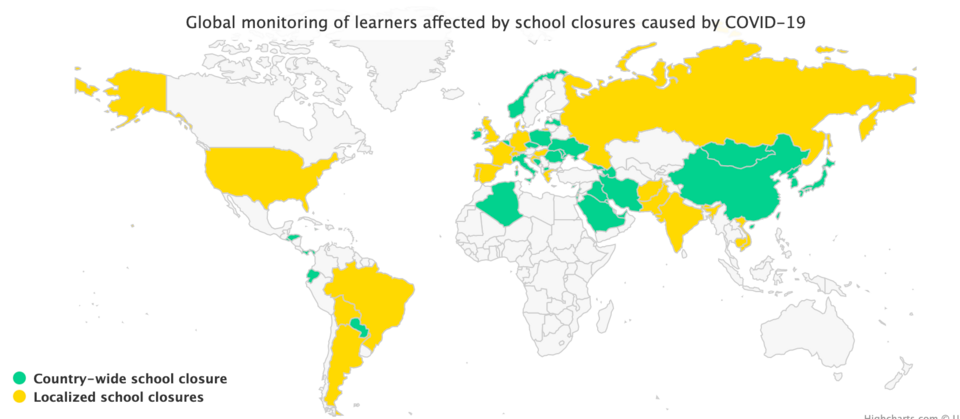
Pandemic geopolitics: closed borders and the discovery of supply-chain risk
Background: COVID-19 shut borders, grounded aviation and exposed how concentrated the production of medicines, protective equipment and semiconductors had become. Export restrictions on medical goods multiplied and vaccine access became a diplomatic instrument. The IMF recorded the deepest global contraction since the Second World War.
Why it matters: governments began treating industrial capacity as a security asset. De-risking, friend-shoring and resilience entered official strategies, and semiconductor self-sufficiency became a stated goal in the US, EU, Japan, China, India and Korea. The 2021–22 chip shortage idled car plants worldwide, container rates rose several-fold before falling back, and critical sectors shifted from just-in-time toward buffer stocks.
The Quad is revived as an Indo-Pacific partnership
Background: the Quadrilateral Security Dialogue, first convened in 2007 after tsunami-relief cooperation and then dormant, was revived at official level in November 2017 on the margins of the East Asia Summit, upgraded to foreign-minister level in 2019 and to a leaders’ summit in 2021, with working groups on vaccines, critical technology, maritime domain awareness, infrastructure and climate.
What it is and is not: the Quad has no treaty, no secretariat and no mutual-defence clause, and its members describe it as a partnership for regional public goods. Ministerial cooperation has continued, while a leaders’ summit India was expected to host had not taken place as of mid-2026 — read by analysts either as quiet institutionalisation or as political drift.
Paris Climate Agreement and the Iran nuclear deal
Background: the Paris Agreement, adopted on 12 December 2015 under the UNFCCC, committed parties to hold warming well below 2°C and pursue 1.5°C through nationally determined contributions. In July, Iran and the P5+1 concluded the Joint Comprehensive Plan of Action, trading nuclear limits for sanctions relief, endorsed by Security Council Resolution 2231.
Why it matters: both showed that near-universal bargains were still possible, and both later demonstrated their fragility. The United States left the JCPOA in 2018, and its withdrawal from the Paris Agreement took effect on 27 January 2026. Paris nonetheless shifted trillions in energy and industrial investment toward low-carbon technology and made climate policy a trade issue through carbon border measures and clean-tech subsidies.
Crimea, sanctions and the end of the G8
Background: after the Maidan protests and the fall of Ukraine’s government, Russian forces took control of Crimea, and a March 2014 referendum was rejected as invalid by the UN General Assembly in Resolution 68/262. Fighting began in the Donbas. The G8 suspended Russia’s participation, returning the group to the G7, and the EU and US introduced sectoral sanctions on finance, energy technology and defence.
Why it matters: 2014 ended the post-Cold War assumption that borders in Europe would not change by force and started the rearmament debate NATO formalised at Wales with a 2%-of-GDP guideline. Sanctions cut EU–Russia agricultural trade and began Europe’s slow search for alternatives to Russian gas.
China launches the Belt and Road Initiative
Background: in speeches in Kazakhstan and Indonesia in 2013, China set out the Silk Road Economic Belt and the 21st Century Maritime Silk Road, later combined as the Belt and Road Initiative. More than 140 countries have since signed cooperation documents covering ports, railways, power plants, industrial parks and digital infrastructure, financed largely by Chinese policy banks.
Why it matters: BRI gave China a standing role in planning other countries’ infrastructure and prompted responses including the EU’s Global Gateway, the G7’s Partnership for Global Infrastructure and Investment, and the India–Middle East–Europe Economic Corridor announced in 2023. It moved substantial capital into emerging markets, while the World Bank, IMF and independent researchers raised debt-sustainability questions in some borrower countries.
Russia–Georgia war and the financial crisis that created the G20 summit
Background: in August 2008 a five-day war between Russia and Georgia over South Ossetia ended with an EU-brokered ceasefire and Russian recognition of South Ossetia and Abkhazia, which most states did not accept. Weeks later the collapse of Lehman Brothers triggered the global financial crisis, and in November 2008 the G20 met at leaders’ level for the first time in Washington.
Why it matters: the year paired a warning about the limits of European security guarantees — NATO’s Bucharest summit that April had said Georgia and Ukraine “will become” members without setting a path — with a permanent shift of economic governance toward a wider table including China, India, Brazil, Indonesia and Saudi Arabia. IMF lending surged and financial regulation was rewritten through the Financial Stability Board.
The Iraq War and the fracture inside the Western camp
Background: a US-led coalition invaded Iraq in March 2003 without a Security Council resolution explicitly authorising force. France, Germany and Russia opposed the war; the UN Secretary-General later said he regarded it as not in conformity with the Charter. No stockpiles of weapons of mass destruction were found, and the UK’s Chilcot Inquiry concluded in 2016 that the case had been presented with unjustified certainty.
Why it matters: the war divided NATO members against each other, strained the Security Council’s authority and reshaped the regional balance in ways that fed later instability. Oil markets carried a war-risk premium for years, and long-run cost estimates for the United States ran into the trillions once veterans’ care and interest were counted.
11 September, the only invocation of Article 5, and China’s entry into the WTO
Background: after the attacks of 11 September 2001, NATO invoked Article 5 for the first and only time, and a US-led coalition began operations in Afghanistan. The Security Council adopted Resolutions 1368 and 1373, building a global counter-terrorism finance and law-enforcement architecture. In June 2001 the Shanghai Cooperation Organisation was founded; in December 2001 China joined the World Trade Organization.
Why it matters: one year contained the security agenda of the next decade and the economic transformation of the next quarter-century. Chinese accession integrated a manufacturing base of unprecedented scale into world trade rules, re-centring supply chains on East Asia, lowering goods prices in importing economies and shifting manufacturing employment — a change that later drove tariff politics in the US and Europe.
European integration deepens as NATO enlarges eastward
Background: the Maastricht Treaty created the European Union in 1993; the euro followed in 1999 and in cash in 2002. NATO admitted the Czech Republic, Hungary and Poland in 1999, then seven more states including the Baltic republics in 2004. The EU’s “big bang” enlargement brought in ten new members in May 2004.
Why it matters: for the new members, membership of both organisations was a single project — security and prosperity together. Russian officials repeatedly objected; Western governments maintained that sovereign states choose their own alignments under the Helsinki principles. The single market and the euro created the world’s largest integrated trading area by rule-making power, giving the EU regulatory influence well beyond its borders.
The Soviet Union dissolves and the Warsaw Pact is wound up
Background: the Warsaw Pact’s military structures were disbanded in spring 1991 and the organisation formally dissolved on 1 July 1991. On 26 December 1991 the Soviet Union ceased to exist, leaving fifteen independent states. Russia assumed the USSR’s permanent seat on the Security Council, and the 1994 Budapest Memorandum accompanied the transfer of Soviet nuclear weapons from Ukraine, Belarus and Kazakhstan to Russia.
Why it matters: the bipolar system ended without a general war, which is historically rare. Post-Soviet economies underwent severe contractions and rapid privatisation, while global defence budgets fell sharply in what was called the peace dividend — capacity that has been rebuilt only since 2022.
The Berlin Wall falls and Europe’s division ends
Background: on 9 November 1989 East Germany opened its border crossings and the Berlin Wall, standing since 1961, ceased to divide the city. Peaceful transitions followed across Central and Eastern Europe within months. German reunification was completed on 3 October 1990 under the Two Plus Four Treaty signed by the two German states and the four wartime allies.
Why it matters: the Cold War’s central confrontation ended by negotiation, and the Conventional Armed Forces in Europe Treaty and the 1990 Charter of Paris tried to lock in a cooperative security order. Reunification cost Germany hundreds of billions of Deutschmarks in transfers and opened Central Europe to Western investment, creating the manufacturing corridor that still supplies the EU’s industrial base.
The US–China opening rewrites the Cold War triangle
Background: after the Sino-Soviet split and border clashes in 1969, secret contacts led to Henry Kissinger’s visit to Beijing in July 1971 and President Nixon’s visit in February 1972, producing the Shanghai Communiqué. In October 1971 the UN General Assembly seated the People’s Republic of China through Resolution 2758. Full diplomatic relations followed in 1979.
Why it matters: the opening turned a two-sided rivalry into a triangle and gave Washington leverage in détente with Moscow. It is the standard case of alignment changing without any change of ideology. Normalisation preceded China’s reform era from 1978 and the trade relationship that became the largest bilateral flow in the world economy — and later its most contested.
The Cuban Missile Crisis and the machinery built to prevent the next one
Background: in October 1962 US surveillance identified Soviet ballistic missiles in Cuba. Thirteen days of quarantine, ultimatum and negotiation ended with the missiles’ withdrawal, a US non-invasion assurance and the later removal of American Jupiter missiles from Türkiye.
Why it matters: the crisis produced the direct Washington–Moscow communications link in 1963, the Partial Test Ban Treaty the same year, and the arms-control tradition that led to the Nuclear Non-Proliferation Treaty in 1968 and the SALT process from 1972. It also entrenched enormous permanent defence budgets on both sides and made nuclear risk a standing factor in markets.
The Warsaw Pact completes the two-bloc system
Background: the Treaty of Friendship, Co-operation and Mutual Assistance was signed in Warsaw on 14 May 1955, days after West Germany joined NATO. Formally a mutual-defence pact of eight states, in practice its command structures were dominated by the Soviet Union, which used them in the interventions in Hungary in 1956 and Czechoslovakia in 1968.
Why it matters: Europe now had two armed camps with fixed membership, forward-deployed forces and rival planning assumptions — the clearest bipolar structure in modern history and the reference point against which today’s looser alignments are measured. The Pact was paired with Comecon, a separate trading system with administered prices that left member economies poorly integrated with world markets when it collapsed.
NATO is founded on the Article 5 promise
Background: the North Atlantic Treaty was signed in Washington on 4 April 1949 by twelve states. Article 5 commits each ally to treat an armed attack against one in Europe or North America as an attack against all, and to assist by such action as it deems necessary. The alliance grew through successive rounds to 32 members, most recently Finland in 2023 and Sweden in 2024.
Why it matters: NATO tied American power permanently to European defence and gave Western Europe the security to rebuild, alongside the Marshall Plan. Its integrated command structure is the deepest peacetime military integration between sovereign states in history, and the standardisation that followed shaped a transatlantic defence industry whose supply chains are themselves now a policy issue.
The United Nations replaces the failed League
Background: the UN Charter was signed in San Francisco on 26 June 1945 and entered into force on 24 October 1945. Its design corrected the League’s two fatal flaws: the great powers were inside it, and the Security Council could take binding decisions. The price was the veto held by China, France, Russia, the UK and the US. The Bretton Woods institutions had been agreed a year earlier, with the GATT following in 1947 and the WTO in 1995.
Why it matters: for the first time, the use of force was prohibited by treaty except in self-defence or with Council authorisation, though enforcement has been uneven and Council paralysis is the system’s standing criticism. The 1944–47 institutions created the rules for exchange rates, development lending and tariff reduction that governed the greatest expansion of world trade in history.
The Second World War and the alliances that reversed themselves
Background: Germany invaded Poland on 1 September 1939, days after the Molotov–Ribbentrop Pact between Berlin and Moscow. That pact collapsed in June 1941, bringing the Soviet Union into the Allied camp; the attack on Pearl Harbor in December 1941 brought in the United States. The war ended in 1945 with an estimated 70–85 million deaths, the majority civilian.
Why it matters: the conflict destroyed the European empires’ capacity to hold their colonies, created two superpowers and produced the nuclear age. Almost every institution described later in this timeline was designed by people trying to prevent a repetition, and post-war reconstruction built the industrial base of the Western alliance system.
Versailles and the League of Nations: collective security without the great powers
Background: the Treaty of Versailles was signed on 28 June 1919, imposing territorial losses, disarmament and reparations on Germany and creating the League of Nations, the first permanent collective-security organisation. The United States never joined; Germany and the Soviet Union were admitted only later and left. The League had no armed force and required unanimity for major decisions.
Why it matters: the League established durable machinery — secretariat, assembly, council, permanent court — that the UN inherited, but failed at its core task, unable to reverse aggression in Manchuria in 1931, Ethiopia in 1935 or Central Europe from 1938. Reparations and war debts destabilised European finance, and the retreat into tariff blocs after 1929 deepened the political crisis that followed.
The First World War: how an alliance web turned a local crisis into a global one
Background: Europe entered 1914 organised into two blocs — the Triple Alliance of Germany, Austria-Hungary and Italy, and the Triple Entente of France, Russia and Britain — bound by treaties, mobilisation schedules and secret clauses. The assassination in Sarajevo on 28 June 1914 activated those commitments in sequence, and a Balkan dispute became a war involving empires on every inhabited continent.
Why it matters: this is the canonical warning about rigid, automatic alliances, and the reason modern texts distinguish carefully between treaty obligations and consultative partnerships. The war ended the first age of globalisation, bankrupted creditor empires, moved financial leadership from London toward New York, and left debts that shaped the following decade.
The Congress of Vienna and the invention of summit diplomacy
Background: meeting from September 1814 to June 1815, the powers that defeated Napoleon redrew Europe’s map and created the Concert of Europe — a habit of consultation among great powers, with periodic congresses to manage disputes. France was reintegrated rather than excluded, a deliberate contrast with 1919.
Why it matters: Vienna produced the longest period without a general European war between 1648 and 1945. Its method — regular consultation, balance rather than domination, settlements that leave the defeated a stake — underpins modern summitry, and the stability that followed supported industrialisation, the first international river commissions and the growth of cross-border finance.
The Peace of Westphalia establishes the sovereign state
Background: the treaties signed at Münster and Osnabrück in 1648 ended the Thirty Years’ War and the Eighty Years’ War. They recognised rulers’ authority over religion within their own territories and established that agreements between states would be made by negotiation among formally equal sovereigns.
Why it matters: historians debate how much changed in 1648 itself, but the Westphalian principle of territorial sovereignty and non-interference became the organising idea of international law, carried into Article 2 of the UN Charter three centuries later. Stable, recognised territories also made taxation, borrowing and long-distance commerce more predictable, supporting chartered trade and the earliest sovereign debt markets.
Alliances, corridors and chokepoints: the physical geography most geopolitical decisions are ultimately about.
Who’s Who: The Organisations That Shape World Politics
Fifteen bodies that appear constantly in coverage of global affairs, with what each actually is — and is not.
United Nations
193 member states. The General Assembly debates and recommends; the Security Council can take binding decisions on peace and security, subject to the veto of its five permanent members. Also runs peacekeeping, humanitarian and development agencies.
NATO
32 allies across Europe and North America bound by the North Atlantic Treaty. Article 5 is a collective-defence commitment; decisions are taken by consensus. Members agreed a 5%-of-GDP spending framework by 2035 at the 2025 Hague summit.
European Union
27 members sharing a single market, customs union and, for 20 states, the euro. It negotiates trade agreements as one party and sets regulations with global reach. Defence remains national, coordinated through EU instruments such as SAFE.
BRICS
An expanded grouping of major developing economies with no treaty, no secretariat and no defence clause. It coordinates positions on development finance, reform of international institutions and trade. India chairs in 2026 and hosts the New Delhi summit in September.
G7
Canada, France, Germany, Italy, Japan, the UK and the US, with the EU participating. No legal personality; it coordinates sanctions, aid and economic-security policy among advanced democracies. The 2026 summit met at Évian, France, on 15–17 June.
G20
Nineteen countries plus the EU and the African Union, covering most of world output. Elevated to leaders’ level during the 2008 crisis and now the main forum for global economic coordination. The United States hosts the 2026 summit in Miami in December.
Quad
Australia, India, Japan and the United States. No treaty, no secretariat, no mutual-defence obligation. Works through leaders’ and ministerial meetings and working groups on maritime domain awareness, critical technology, infrastructure and health.
AUKUS
Australia, the United Kingdom and the United States. Pillar 1 supports Australia’s conventionally armed, nuclear-powered submarine programme; Pillar 2 covers advanced capabilities. It is a capability partnership, not a collective-defence alliance.
ASEAN
Ten Southeast Asian members operating by consensus and non-interference, with a strong norm of “ASEAN centrality” in regional architecture. The Philippines chairs in 2026 under the theme “Navigating Our Future, Together”.
African Union
55 member states, successor to the Organisation of African Unity. Runs the Peace and Security Council and the African Continental Free Trade Area, and holds a permanent seat in the G20. Burundi’s president chairs the Union for 2026.
Shanghai Cooperation Organisation
Founded in Shanghai by China, Russia and Central Asian states; later enlarged to include India, Pakistan, Iran and Belarus. Focused on security cooperation, counter-terrorism and connectivity. Kyrgyzstan holds the chair after the 2025 Tianjin summit.
International Monetary Fund
Provides balance-of-payments lending and surveillance for 190-plus members. Its programmes carry policy conditions, which makes IMF decisions politically charged during debt crises and after wars or sanctions shocks.
World Bank
Lends for development and infrastructure and publishes the data most governments use to compare economies. It now competes and cooperates with newer lenders such as the Asian Infrastructure Investment Bank and the New Development Bank.
World Trade Organization
Administers trade rules agreed by 160-plus members and hosts dispute settlement. Its Appellate Body has been unable to hear appeals since 2019 because appointments are blocked, which has pushed disputes toward bilateral bargaining.
International Court of Justice
The UN’s principal judicial organ, settling disputes between states that accept its jurisdiction and issuing advisory opinions. Its rulings are binding on parties but it has no enforcement mechanism of its own.
Why the differences matter
Comparing NATO with BRICS, or the Quad with AUKUS, is comparing different categories. One is a defence treaty, one an economic grouping, one a consultative partnership, one a capability programme. Membership overlaps constantly.
📚 History Insight — why alliances never stay still
Alliances form against a specific problem, and problems expire. The coalitions that defeated Napoleon dissolved within a generation; the Anglo-Japanese alliance of 1902 was gone by 1923; the wartime partnership of 1941–45 split into rival camps within four years; the Sino-Soviet bloc broke apart over a decade. Permanence is the exception, not the rule. What endures is the habit of consultation — the Vienna idea that powers should meet regularly — and the institutions built to hold conversations going when the original threat has changed shape.
Geopolitics Beyond War
Most geopolitical competition in 2026 happens without a shot being fired. These are the arenas where it takes place.
Semiconductors
Advanced chips are made by a handful of firms using tools from an even smaller group of suppliers. That concentration turned an industrial input into a security question. Export controls introduced from 2022 restricted the sale of the most capable AI accelerators and chipmaking equipment to China; the rules have been revised repeatedly, most recently through a shift in early 2026 to case-by-case licensing for approved customers under conditions reported to include volume caps and testing requirements. Every major economy now runs a subsidy programme — the US CHIPS Act, the EU Chips Act, Japan’s and Korea’s support schemes and India’s semiconductor mission — to reduce dependence on a small number of fabrication sites.
Artificial intelligence
AI has become a subject of formal diplomacy in its own right. The UN established an Independent International Scientific Panel on AI and a Global Dialogue on AI Governance in 2025; the Dialogue held its first session in Geneva on 6–7 July 2026 and received the Panel’s first report. Regional regimes differ sharply — the EU’s AI Act takes a risk-based regulatory approach, while other jurisdictions rely on sectoral rules and voluntary commitments. Compute access, model weights and data-centre energy have all become items in bilateral negotiations.
Critical minerals
Lithium, cobalt, nickel, graphite and the rare-earth elements sit behind batteries, magnets, wind turbines and precision-guided weapons. Mining is spread across many countries; refining is not. China accounts for roughly 90% of global rare-earth refining capacity, which is why its export-control decisions in 2023, 2025 and 2026 reverberated through automotive and defence supply chains. Responses include stockpiling, recycling mandates, minerals partnerships and new processing plants, all of which take years to build.
Supply chains and shipping
Roughly four-fifths of world merchandise trade by volume moves by sea, through a small number of passages. When Red Sea transits fell after 2023, carriers added ten to fourteen days per Asia–Europe voyage by rounding the Cape of Good Hope. Drought has periodically cut Panama Canal transits. Each disruption raises freight, insurance and inventory costs, and each has pushed governments to map dependencies they had never previously counted.
Energy corridors
Energy geography changed faster after 2022 than in any period since the 1970s. European pipeline imports of Russian gas were substituted largely by seaborne LNG from the US, Qatar and others; Russian crude moved to buyers in Asia at a discount. New corridors — the India–Middle East–Europe Economic Corridor, expanded interconnections in the Gulf and Central Asia, and hydrogen and electricity links — are being planned as much for security as for price.
Sanctions and finance
Sanctions have moved from a rarely used instrument to a standing feature of policy. The EU alone has adopted 21 packages against Russia since 2022, the most recent on 23 July 2026, reaching into energy, financial services, crypto-asset providers and industrial inputs. Their use has also prompted work on alternative payment channels and on reserve diversification, which is why financial plumbing now appears in security strategies.
Cybersecurity and digital infrastructure
Undersea cables carry the overwhelming majority of international data; cloud regions, satellite constellations and payment systems are similarly concentrated. States now treat cable protection, data localisation and telecom vendor choice as strategic decisions. Cyber operations against energy grids, hospitals, ports and government systems are documented by national agencies, and NATO has stated that a cyberattack could, in certain circumstances, trigger Article 5 consultations.
💰 Economic Insight — how conflict reaches prices
Wars transmit into economies through four channels. Energy: supply fears raise oil and gas prices, which feed into transport, fertiliser and electricity costs. Shipping: re-routing adds days, fuel and war-risk insurance, and tightens vessel availability. Food: disruption to exporting regions and fertiliser inputs moves grain and edible-oil prices. Finance: risk premiums, currency moves and sanctions compliance raise the cost of capital and cross-border payments. Central banks respond to the inflation that results, so a distant conflict can end up in a household’s mortgage rate — the chain is long but entirely traceable.
⚡ Technology Insight — why chips and minerals are treated like territory
Strategic value comes from concentration plus substitution time. A material or capability becomes leverage when few suppliers control it and replacing them takes years. Advanced lithography, high-bandwidth memory, heavy rare-earth separation and large-scale AI compute all meet both tests. That is why export licences, subsidy programmes and minerals partnerships are negotiated by heads of government, and why analysts describe technology policy as an instrument of statecraft rather than a purely commercial matter.
How Global Alliances Have Changed
Three eras, compared on the terms that matter: security, trade and technology.
| Dimension | Cold War (1947–1991) | Post-Cold War (1991–2014) | Multipolar era (2014–2026) |
|---|---|---|---|
| Structure | Two fixed blocs with declared adversaries | One predominant power, widening institutions | Several significant powers, overlapping groupings |
| Security | NATO vs Warsaw Pact; nuclear deterrence central | Coalitions of the willing; peacekeeping expansion | Alliance reinforcement plus issue-based partnerships |
| Trade | Two largely separate economic systems | Rapid globalisation, WTO accession, offshoring | Bilateral and regional deals, de-risking, industrial policy |
| Technology | State-led, military-first, tightly classified | Commercially led, broadly diffused | Dual-use, export-controlled, subsidised at home |
| Energy | Bloc-aligned supply; OPEC shocks of the 1970s | Global markets, rising interdependence | Security-driven diversification and re-routing |
| Alignment behaviour | Choose a side, or declare non-alignment | Converge on one set of institutions | Hedge: several partnerships at once |
| Main risk cited | Nuclear escalation | Terrorism and state failure | Fragmentation of trade, technology and standards |
Alliance and Grouping Comparison
These bodies are frequently listed together in headlines. They are not equivalents — legal status and purpose differ fundamentally.
| Body | Founded | Type and legal status | Membership | Strategic focus |
|---|---|---|---|---|
| NATO | 1949 | Treaty alliance with collective defence (Article 5) | 32 European and North American allies | Deterrence, defence, crisis management |
| Warsaw Pact | 1955–1991 | Treaty alliance, Soviet-led command | 8 members, all in Eastern Europe | Bloc defence and internal control; dissolved |
| Quad | 2007 / 2017 | Informal partnership, no treaty or secretariat | Australia, India, Japan, United States | Maritime awareness, technology, infrastructure, health |
| AUKUS | 2021 | Trilateral capability partnership, not collective defence | Australia, United Kingdom, United States | Nuclear-powered submarines and advanced capabilities |
| BRICS | 2009 | Intergovernmental grouping, no treaty | Expanded membership plus a partner tier | Development finance, institutional reform, trade |
| SCO | 2001 | Regional organisation with a charter and secretariat | Eurasian members and observers | Security, counter-terrorism, connectivity |
| ASEAN | 1967 | Regional organisation with a charter, consensus-based | 10 Southeast Asian states | Regional stability, economic integration, centrality |
| G7 | 1975 | Informal forum, no legal personality | 7 advanced economies plus the EU | Economic security, sanctions coordination, aid |
| G20 | 1999 / 2008 | Informal forum, no legal personality | 19 countries, the EU and the African Union | Global economic and financial coordination |
| Type of arrangement | What members promise | Typical instruments | Examples |
|---|---|---|---|
| Military alliance | Mutual defence, often automatic | Treaty, integrated command, joint planning | NATO; the former Warsaw Pact |
| Economic partnership | Market access and coordination, no defence duty | Trade agreements, investment rules, finance | EU single market, India–UK CETA, RCEP |
| Technology partnership | Co-development and controlled sharing | Export licences, research programmes, standards | AUKUS Pillar 2, Quad technology working group |
| Trade bloc or customs union | Common external tariff or preferential terms | Tariff schedules, rules of origin | EU customs union, AfCFTA, Mercosur |
| Consultative grouping | Dialogue and coordination only | Summits, communiqués, working groups | BRICS, G7, G20, Quad |
Chokepoints and Critical Materials
Where physical geography and industrial concentration convert into political leverage.
| Passage | Location | Why it matters | Recent disruption |
|---|---|---|---|
| Strait of Hormuz | Gulf, between Iran and Oman | The single most important passage for seaborne crude and LNG | Periodic tension and shipping incidents |
| Suez Canal and Bab el-Mandeb | Egypt and the southern Red Sea | Shortest Asia–Europe sea route | Traffic fell sharply after attacks on shipping from late 2023 |
| Strait of Malacca | Between Malaysia, Indonesia and Singapore | Main artery between the Indian and Pacific Oceans | Congestion and piracy risk; no closure |
| Panama Canal | Panama | Links Atlantic and Pacific for the Americas and Asia | Drought-driven transit limits in recent years |
| Turkish Straits | Bosphorus and Dardanelles | Only outlet for Black Sea grain and energy exports | Regulated under the Montreux Convention during the Ukraine war |
| Undersea cables | Red Sea, Baltic, North Atlantic | Carry the overwhelming majority of international data | Repeated damage incidents under national investigation |
| Material or capability | Where the leverage sits | Used in | Substitution time |
|---|---|---|---|
| Rare-earth elements | Refining concentrated in China, around 90% of capacity | Magnets, motors, wind turbines, defence systems | Years, because separation plants are slow to permit and build |
| Advanced lithography | A single supplier for the most advanced tools | Leading-edge chip manufacturing | Very long; no near-term alternative |
| Leading-edge foundry capacity | Highly concentrated in East Asia | AI accelerators, phones, automotive electronics | Three to five years per new fabrication plant |
| Battery-grade lithium and graphite | Mining spread out, processing concentrated | Electric vehicles, grid storage | Two to five years for new processing |
| LNG export terminals | United States, Qatar, Australia | Gas supply to Europe and Asia | Four to six years per terminal |
🧠 Did You Know?
Modern geopolitical competition increasingly runs through technology, finance, supply chains and digital infrastructure alongside traditional military capability. A licensing decision on chip exports, a sanctions listing, a rare-earth quota or a cable repair schedule can affect more companies in a week than a border deployment does in a year — which is why finance and commerce ministries now sit alongside defence ministries in national security councils.
📑 Timeline Takeaway
Read end to end, the record shows a shift from colonial empires to bipolar rivalry and then toward a more multipolar system with flexible partnerships. The organising unit has changed from empire to bloc to network. What has not changed is the underlying logic: states seek security, prosperity and a say in the rules, and they will change partners to get them.
🔮 Future Watch — officially announced, dates on the record
These are scheduled or formally announced items only. Nothing here is a prediction about outcomes.
- 18th BRICS Summit, New Delhi, 12–13 September 2026, under India’s chairship.
- COP31, Antalya, Türkiye, 9–20 November 2026, under the UNFCCC.
- G20 Leaders’ Summit, United States, 14–15 December 2026.
- EU–India free-trade agreement: legal review, translation, signature and ratification following the January 2026 conclusion of negotiations.
- China’s suspension of certain rare-earth export controls is scheduled to run to 10 November 2026.
- SCO summit under the Kyrgyz chairship, with Pakistan announced as the following host.
- AUKUS Pillar 1 milestones, including submarine rotational presence in Western Australia and SSN-AUKUS construction timelines.
Timeline Summary Table
Every milestone on this page in one scannable view.
| Year | Event | Global impact |
|---|---|---|
| 1648 | Peace of Westphalia | Establishes territorial sovereignty as the basis of international order |
| 1815 | Congress of Vienna | Creates the Concert of Europe and the practice of summit diplomacy |
| 1914 | First World War begins | Rigid alliances turn a regional crisis into a global war |
| 1919 | Versailles and the League of Nations | First collective-security body; weakened by great-power absence |
| 1939–45 | Second World War | Ends European empires, creates superpowers and the nuclear age |
| 1945 | United Nations founded | Universal membership, binding Security Council, veto power |
| 1949 | NATO founded | Ties North American power to European defence via Article 5 |
| 1955 | Warsaw Pact signed | Completes the two-bloc structure of Cold War Europe |
| 1962 | Cuban Missile Crisis | Produces the hotline, test-ban treaty and modern arms control |
| 1971 | US–China opening | Turns bipolar rivalry into a strategic triangle |
| 1989 | Berlin Wall falls | Ends Europe’s division by negotiation rather than war |
| 1991 | USSR dissolves, Warsaw Pact ends | Bipolar system ends; NATO endures and later enlarges |
| 1993–2004 | EU integration and NATO enlargement | Creates the world’s largest regulatory market and a wider alliance |
| 2001 | 9/11, Article 5, China joins the WTO | Sets the security and trade agenda of the next two decades |
| 2003 | Iraq War | Splits Western allies and strains Security Council authority |
| 2008 | Russia–Georgia war; financial crisis | G20 elevated to leaders’ level; economic governance widens |
| 2013 | Belt and Road Initiative | Infrastructure finance becomes a geopolitical instrument |
| 2014 | Crimea; G8 becomes G7 | Ends assumptions about borders in Europe; sanctions era begins |
| 2015 | Paris Agreement; JCPOA | Landmark negotiated bargains, both later strained |
| 2017 | Quad revived | Indo-Pacific partnership without treaty obligations |
| 2020 | Pandemic geopolitics | Supply-chain resilience enters national security policy |
| 2021 | AUKUS announced | Technology transfer becomes central to security partnerships |
| 2022 | Russia invades Ukraine | Sanctions, energy re-routing and European rearmament |
| 2023 | Gaza war; Red Sea disruption; Finland joins NATO | Regional conflict becomes a global shipping and energy event |
| 2024–25 | BRICS expansion; Sweden joins NATO | Parallel enlargements in opposite directions |
| 2025 | Hague 5% pledge; Resolution 2803; Iran snapback | Defence commitments harden; Gaza framework established |
| 2026 | Ankara summit; CETA in force; tariff ruling; AI dialogue | Trade, law and technology governance take centre stage |
💡 Infographic Ideas for This Topic
- Complete geopolitical timeline, 1648–2026, as a single horizontal band colour-coded by war, treaty and alliance.
- Evolution of global alliances: a network diagram showing membership overlap between NATO, EU, BRICS, SCO, ASEAN, the Quad and AUKUS.
- Cold War vs multipolar world: two maps side by side, one with two blocs, one with overlapping partnerships.
- Major trade corridors: Asia–Europe sea routes, the India–Middle East–Europe corridor and Eurasian rail links.
- Energy routes after 2022: pipeline flows before, LNG flows after.
- Critical mineral supply chains from mine to magnet, with the refining step highlighted.
- Technology alliances: chip fabs, export-control regimes and subsidy programmes on one map.
- Global conflict density by decade, drawing on standard conflict datasets.
🌐 Ten Things Most Coverage Leaves Out
- NATO’s Article 5 has been invoked once, and the attack that triggered it was not on Europe.
- The UN Security Council’s permanent membership still reflects the winners of a war that ended in 1945.
- BRICS has no treaty, no headquarters and no defence clause — it is a coordination forum, not a bloc.
- India, Brazil, Indonesia, the UAE and Egypt all belong to groupings on more than one side of current rivalries.
- The WTO’s Appellate Body has been unable to hear appeals since 2019, so trade disputes increasingly end in bargaining.
- The African Union holds a permanent seat at the G20, added in 2023.
- Around four-fifths of world merchandise trade by volume travels by sea.
- Sanctions are usually adopted by individual states or blocs, not by the UN — the two are often confused.
- Most defence spending increases take years to appear as capability, because production lines and training lag budgets.
- Undersea cables, not satellites, carry the overwhelming majority of intercontinental data traffic.
Explore More Timelines
People Also Ask
50 Questions About Global Geopolitics, Answered
Direct answers first, in 40 to 60 words, covering definitions, institutions, conflicts, economics and technology.
Why Understanding Geopolitics Matters More Than Ever
Go back to the departure board. The delays and cancellations were not caused by a single decision or a single villain. They were the visible end of a chain that ran through closed airspace, re-routed shipping, insurance markets, fuel contracts and the calculations of governments that had never met the passengers affected. That is the ordinary condition of the modern world, and it is the reason this subject deserves patient attention rather than instant opinion.
Read across nearly four centuries, the record does not show a world of permanent friends and fixed enemies. It shows evolving diplomacy, cooperation, competition and conflict, with the same states appearing on different sides in different decades. Sovereigns who fought in the seventeenth century built the treaty system; the powers that fought in 1914 and 1939 built the institutions that followed; adversaries in 1962 built the hotline; rivals in 1971 built a working relationship inside eighteen months. Even now, the states most often described as opposed trade with each other daily, sit in the same forums and negotiate on minerals, chips and shipping.
What has changed is the texture of competition. Today’s landscape is shaped by economic interdependence, technological competition, energy security and regional partnerships as much as by armies. A licensing rule for chips, a sanctions designation, a court judgment on tariff powers, a rare-earth quota, a ratified trade agreement — each of these moved global markets in 2026 more visibly than most military deployments. Meanwhile the older machinery still matters: the Security Council still has to authorise a stabilisation force, and treaties still have to be ratified before they mean anything.
For readers, the practical lesson is about method. Interpret global events through verified historical evidence, official diplomatic records and credible international research — the resolution text, the treaty schedule, the government statement, the peer-reviewed study — rather than through social-media narratives or partisan commentary. Ask who is making a claim, on what date, and whether it describes an action taken or an intention inferred. Notice when analysis is being presented as policy. Above all, resist the urge to read every development as proof of a permanent new order. On the evidence of this timeline, the arrangements of 2026 will look different in a decade, and understanding why they change is more useful than betting on which side wins.
⚠️ Editorial and Sourcing Note
This article is an educational historical and policy timeline. It is not political, investment, legal or security advice, and it takes no position on any party to an ongoing conflict. Dates, treaty provisions, membership and resolution numbers are drawn from primary and official sources including the United Nations, NATO, the European Union, ASEAN, the African Union, the Shanghai Cooperation Organisation, the IMF, the World Bank, the WTO and national governments; quantitative context draws on research bodies such as SIPRI and the IISS. Interpretation by scholars, think tanks and journalists is labelled as analysis and never presented as official policy. Confirmed historical events are kept separate from ongoing situations: the wars in Ukraine and the wider Middle East, the Iran nuclear file, and several trade and technology disputes are unresolved at the time of writing, and are described as such. This page contains no forecasts of future conflicts or outcomes. Where sources differ — for example on the exact membership count of an evolving grouping — the range is described rather than a false precision asserted. All content is current as of 29 July 2026 and is updated only when an official treaty, resolution, government announcement or verified multilateral agreement changes the record.
Explore More AiTimeline Stories
Sources & further reading
Every dated entry above was checked against these references. Last reviewed 15 September 2026.