Tata Sierra EV: The Complete History and Timeline, From India’s First Lifestyle SUV of 1991 to a Born-Electric Icon in 2026
The complete Tata Sierra EV history and timeline: from the 1991 original to the born-electric 2026 launch, with confirmed specs, platform and rivals.
Some cars are remembered for how fast they were. The Tata Sierra is remembered for how it made people feel. When it arrived in 1991, most Indian families still measured a car by its mileage and its back seat; here was a tall, three-door machine with a wraparound sheet of glass at the rear that turned the humble act of looking out of a window into an event. It was not the quickest thing on the road, and it was never sold in huge numbers, yet it lodged itself in the national memory as the first vehicle that suggested a car could be about where you wanted to go rather than merely how you got to work. Thirty-five years later, that same name returned, and this time it carried a battery instead of a diesel engine. This is the full, sourced story of the Tata Sierra EV — from a 1990s pioneer to a born-electric SUV that went on sale in 2026 — told with the confirmed facts kept firmly apart from the concepts, the reports and the reasonable guesses.

📌 In One Minute
The Tata Sierra was India’s first indigenously developed lifestyle SUV, launched in 1991 with a distinctive three-door body and a wraparound rear glasshouse. Declining demand ended its run in the early 2000s. Tata revived the name as an electric concept at Auto Expo 2020, refined it over several show appearances, and unveiled near-production ICE and EV versions at the Bharat Mobility Global Expo in January 2025.
The petrol and diesel Sierra ICE launched on 25 November 2025, and the Tata Sierra EV went on sale on 30 June 2026, priced from ₹18.79 lakh to ₹25.99 lakh (ex-showroom). Built on the born-electric Acti.ev+ platform, it offers 63 kWh and 75 kWh batteries with claimed ranges of 565 km and up to 665 km, rear- or all-wheel drive, DC fast charging from 20 to 80 percent in about 26 minutes, and features such as a triple-screen cabin, Level 2 ADAS and vehicle-to-load power. More than a nostalgic revival, it is a marker of how far India’s home-grown car industry has travelled.
The Essentials
What to Remember
- The original Tata Sierra (1991) was India’s first indigenously developed lifestyle SUV, famous for its three-door shape and wraparound rear glass.
- Falling demand ended the original’s run in the early 2000s, but the name never lost its cult following.
- Tata revived the Sierra as an electric concept at Auto Expo 2020, refined it through 2023, and showed near-production ICE and EV models in January 2025.
- The Sierra ICE launched on 25 November 2025; the Sierra EV launched on 30 June 2026, from ₹18.79 lakh ex-showroom.
- The EV uses the born-electric Acti.ev+ platform, with 63 and 75 kWh batteries, claimed ranges up to 665 km, and rear- or all-wheel drive.
- Confirmed highlights include a triple-screen cabin, Level 2 ADAS, vehicle-to-load power and fast charging; range numbers are manufacturer claims, not guaranteed real-world figures.
Launch Status: Where Things Stand
The confirmed, official position as of late July 2026.
The Complete Timeline: From 1991 to the Electric Era
Newest first. Use the filters to follow the original car, the concepts, the design, the technology, production or launch.
The Sierra EV Goes on Sale
What happened. Tata Motors launched the production Sierra EV on 30 June 2026 at ex-showroom prices from ₹18.79 lakh to ₹25.99 lakh, with deliveries starting on 15 July 2026. The nameplate that began life as a diesel three-door in 1991 returned as a battery-electric, five-door mid-size SUV.
Technology. It uses the born-electric Acti.ev+ platform, with 63 kWh and 75 kWh batteries, claimed MIDC ranges of 565 km and up to 665 km, rear-wheel drive as standard and an available dual-motor quad-wheel-drive setup. Tata quotes DC fast charging from 20 to 80 percent in about 26 minutes.
Market impact. Positioned between the Curvv.ev and the Harrier.ev, the Sierra EV entered one of India’s most competitive segments, facing the Mahindra BE 6, MG Windsor EV, Hyundai Creta Electric and Tata’s own siblings.
The Petrol and Diesel Sierra Arrives First
What happened. Tata launched the internal-combustion Sierra on 25 November 2025, ahead of the EV, at ex-showroom prices reported from about ₹11.49 lakh to ₹21.29 lakh across a wide variant range.
Technology. The ICE Sierra offered a choice of 1.5-litre engines — a naturally aspirated petrol, a turbocharged petrol and a diesel — with manual and automatic gearboxes, riding on a long 2,730 mm wheelbase. Higher trims brought Level 2 ADAS and a 360-degree camera.
Business strategy. Launching the combustion version first let Tata establish the new Sierra’s shape, cabin and pricing in the mainstream market before the EV, spreading the model’s reach across fuel types — a pragmatic, multi-powertrain approach.
Near-Production Reveal at Bharat Mobility 2025
What happened. At the Bharat Mobility Global Expo (Auto Expo) on 17 January 2025, Tata unveiled the second-generation Sierra in near-production form, showing both internal-combustion and electric versions and signalling that the long-teased revival was finally ready for showrooms.
Design evolution. The show cars kept the Sierra’s tall, boxy silhouette and paid homage to the original’s glasshouse with large rear quarter glass, while adopting a modern full-width light bar, flush door handles and clean surfacing.
The Acti.ev Platform Comes of Age
What happened. Tata launched its first pure-electric architecture, Acti.ev, with the Punch.ev in January 2024, then rolled it out to the Curvv.ev and, in 2025, the Harrier.ev. Each model matured the platform the Sierra EV would later use in its Acti.ev+ form.
Technology. Acti.ev is a skateboard design built around a flat battery floor, a 400-volt system, and compatibility with permanent-magnet and induction motors in front-, rear- or all-wheel-drive layouts. Its wider battery packs improve packaging, and it supports fast charging and connected features.
Business strategy. By spreading one architecture across several models, Tata could share cost, software and components, making a heritage revival like the Sierra commercially viable rather than a one-off.
Production Confirmed at Auto Expo 2023
What happened. The Sierra returned to centre stage at the 2023 Auto Expo, where Tata executives confirmed it would enter production and described the design as close to production-ready. The same show introduced the Harrier EV concept, hinting at the shared electric family to come.
Design evolution. The 2023 car sharpened the earlier concept’s lines, previewing the surfacing, lighting and proportions that would carry through to the production model.
The Sierra Returns as an Electric Concept
What happened. Tata revived the Sierra name at Auto Expo 2020, showing a striking electric concept that reinterpreted the original’s glasshouse with vast side windows. It was the moment a dormant piece of Indian automotive history was reintroduced to a new generation.
Design evolution. The concept was a design statement rather than a finished product, but it established the revival’s core idea: honour the 1991 car’s glass-heavy character while building it as a modern electric SUV.
Tata’s Electric Strategy Takes Shape
What happened. Before the Sierra could be reborn as an EV, Tata built the foundations. Its Ziptron electric technology and the Nexon EV, launched in 2020, made Tata the early leader in India’s passenger-EV market and proved there was real demand for home-grown electric cars.
Business strategy. Success with early EVs justified deeper investment, a dedicated electric-mobility business and, ultimately, a bespoke platform — the chain of decisions that made a Sierra EV possible.
The Original Sierra Bows Out
What happened. After a production run that began in 1991, the original Sierra was discontinued in the early 2000s as demand faded and newer body styles took over. Tata’s attention moved to the Indica, Safari and Sumo, and the pioneering three-door quietly left the price lists.
Market impact. The Sierra never sold in large numbers, but its cult status only grew after it left showrooms, with well-kept examples becoming prized among enthusiasts — part of why the name was worth reviving.
An Icon Finds Its Following
Historical background. Through the 1990s the Sierra became a symbol of aspiration and adventure. Its tall driving position, rugged image and unusual three-door layout set it apart from the sedans and hatchbacks that dominated Indian roads, and it appeared in a range of variants over the decade.
Design evolution. The defining feature remained the wraparound rear glass — a curved, panoramic glasshouse that flooded the cabin with light and gave the car an unmistakable profile that designers still reference today.
India’s First Home-Grown Lifestyle SUV
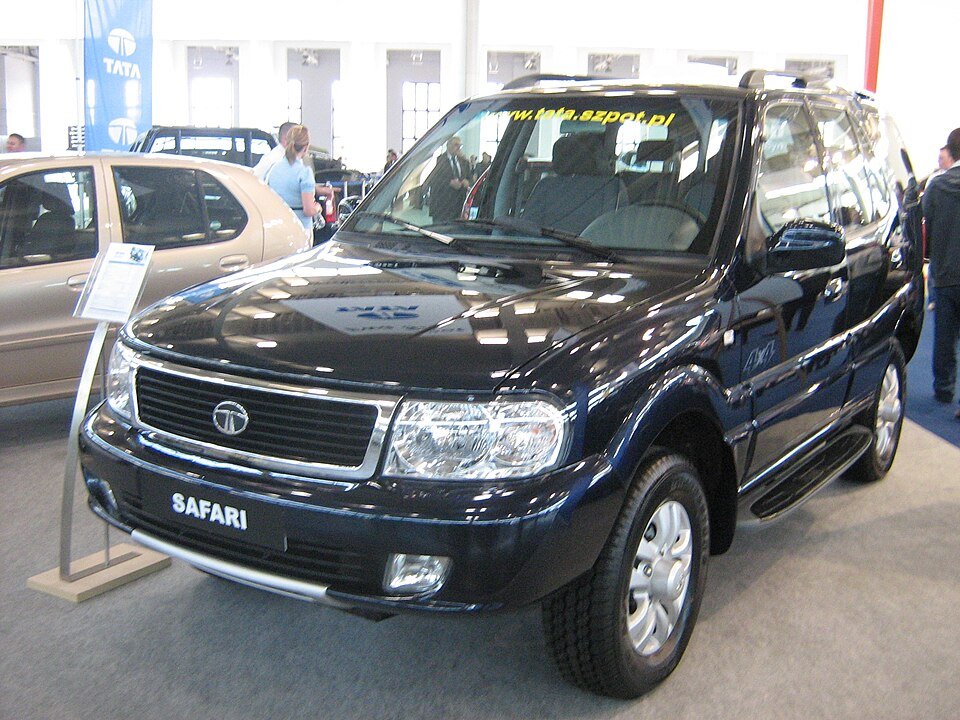
Historical background. The Tata Sierra launched in 1991, developed from Tata’s Telcoline pickup underpinnings and widely regarded as the first SUV designed and built in India. At a time when the market barely knew the term, it introduced the idea of a tall, go-anywhere vehicle aimed at leisure as much as utility.
Technology of its day. Early cars used a 2.0-litre diesel engine, later gaining a turbocharged unit, in a body whose three doors and enormous rear glass made it instantly recognisable.
📜 Did You Know?
The Sierra EV was first shown as a concept at Auto Expo 2020, then given updated previews in later years as Tata refined its EV strategy, before near-production ICE and EV versions appeared at the Bharat Mobility Global Expo in January 2025. In other words, the production car that arrived in 2026 was the end point of a six-year public design journey — unusually long, and unusually visible, for an Indian model.
Inside the Acti.ev+ Platform
How a born-electric architecture shapes the Sierra EV, step by step.
A skateboard battery floor
Acti.ev places the battery flat within the wheelbase, low in the floor. This born-electric layout frees up cabin space, lowers the centre of gravity for better stability, and lets Tata offer larger packs — here, 63 kWh and 75 kWh — without eating into passenger or boot room.
A 400-volt electrical system
The architecture runs at 400 volts and works with both permanent-magnet synchronous and induction motors. In the Sierra EV that means rear-wheel drive as standard, with an available second motor on the front axle for dual-motor, quad-wheel drive on the larger battery.
Fast charging by design
The platform is built for DC fast charging. Tata quotes the Sierra EV charging from 20 to 80 percent in about 26 minutes on a suitable fast charger, adding up to roughly 263 km of range in 15 minutes, with 11 kW AC charging supported for home and workplace top-ups.
Thermal management
A liquid-cooled battery-thermal system keeps cells within their ideal temperature window — important in Indian heat — protecting longevity and sustaining charging and performance. Good thermal control is one of the quiet reasons a dedicated EV platform outperforms a converted petrol chassis.
Regenerative braking
Lifting off or braking lets the motor recover energy back into the battery, with selectable levels of regeneration. Beyond adding range, strong regen enables smoother, near one-pedal driving in traffic, a hallmark of the modern EV experience.
Vehicle-to-load power
The Sierra EV can act as a giant power bank, using vehicle-to-load to run external appliances, and Tata has cited vehicle-to-vehicle capability to charge another EV. It is confirmed vehicle-to-load output of up to 3.3 kW — useful for camping, events or emergencies.
Connected and over-the-air
Connected-car features and over-the-air software updates let the vehicle improve after purchase, adding or refining features remotely. Paired with Level 2 ADAS and a triple-screen cabin, this makes the Sierra EV a software-defined car as much as a mechanical one.
📌 Key EV Terms, Plainly
- Acti.ev+: Tata’s born-electric platform (the “+” denoting the version for larger vehicles) with a flat battery floor and multiple drive layouts.
- PMSM: a permanent-magnet synchronous motor, valued for efficiency and strong low-speed torque.
- V2L / V2V: vehicle-to-load and vehicle-to-vehicle, using the car’s battery to power appliances or charge another EV.
- ADAS: advanced driver-assistance systems; the Sierra EV offers Level 2, which can assist with steering, braking and acceleration but still needs an attentive driver.
- OTA: over-the-air updates delivered remotely, like a smartphone.
Technology Insight
Why does a dedicated EV platform matter so much? Because building a car around a battery, rather than squeezing one into a space meant for an engine and fuel tank, changes everything. The flat floor improves cabin space and lowers the centre of gravity; the structure can be engineered around the battery for crash safety; the packaging allows bigger packs and features like vehicle-to-load; and a common electrical and software backbone makes over-the-air updates and shared development practical. A converted petrol car can be made to work, but it always carries compromises a born-electric design like Acti.ev+ simply avoids.
Original Sierra vs Sierra EV
Two cars, one name, thirty-five years apart.
| Aspect | Original Sierra (1991) | Sierra EV (2026) |
|---|---|---|
| Design philosophy | Rugged three-door lifestyle pioneer | Modern five-door electric SUV |
| Signature feature | Wraparound rear glasshouse | Full-width lighting, glass-inspired rear |
| Powertrain | 2.0-litre diesel (later turbo) | 63/75 kWh electric, RWD or QWD |
| Platform | Telcoline-derived body-on-frame | Born-electric Acti.ev+ skateboard |
| Technology | Mechanical, analogue | Triple screens, Level 2 ADAS, OTA, V2L |
| Target audience | Early adventure and lifestyle buyers | Tech-led mainstream EV buyers |
Design Insight
The hardest trick in any revival is honouring the past without becoming a costume. Tata’s answer was to keep the Sierra’s essence — the tall stance and the glass-rich rear that made the 1991 car feel so open — while translating it into a contemporary, aerodynamically sensible five-door. The original’s panoramic wraparound glass becomes generous rear quarter glazing and a clean, upright tail; the boxy silhouette survives, but flush handles, a full-width light bar and a closed EV grille bring it firmly into the present. It reads as a Sierra at a glance, yet nothing about it feels like nostalgia for its own sake.
How the Sierra EV Compares
Confirmed, manufacturer-claimed figures for the Sierra EV and its main rivals. Ranges are claimed test-cycle numbers.
| Model | Battery | Claimed range | Platform | From (ex-showroom) |
|---|---|---|---|---|
| Tata Sierra EV | 63 / 75 kWh | 565 / up to 665 km | Acti.ev+ | ₹18.79 lakh |
| Tata Harrier EV | 65 / 75 kWh | 538–627 km | Acti.ev | ₹21.69 lakh |
| Tata Curvv EV | 45 / 55 kWh | 502 / 585 km | Acti.ev | ₹17.49 lakh |
| Mahindra BE 6 | 59 / 79 kWh | 556 / 682 km | INGLO | ₹18.90 lakh |
| MG Windsor EV | 38 / 52.9 kWh | 332 / 449 km | MG Cloud | ₹17.50 lakh (Pro) |
| Hyundai Creta Electric | 42 / 51.4 kWh | 390 / 473 km | Creta EV | ~₹17 lakh |
Sierra EV: Confirmed Specifications
Official Tata Motors figures announced with the June 2026 launch.
| Specification | Detail (official / claimed) |
|---|---|
| Batteries | 63 kWh and 75 kWh |
| Claimed range (MIDC) | 565 km (63 kWh); up to 665 km (75 kWh) |
| Drivetrain | Rear-wheel drive; dual-motor quad-wheel drive on 75 kWh |
| Performance (QWD) | 306 PS, 504 Nm; 0–100 km/h in 5.8s (Boost Mode) |
| DC fast charging | 20–80% in about 26 min; up to 263 km in 15 min |
| AC charging / V2L | Up to 11 kW; vehicle-to-load up to 3.3 kW, plus V2V |
| Displays | 10.25-inch cluster + 12.3-inch touchscreen + 12.3-inch passenger screen |
| Safety / ADAS | Level 2 ADAS with 22 driver-assistance and safety features |
| Boot space | 622 litres; 1,257 litres with rear seats folded |
| Price (ex-showroom) | ₹18.79 lakh to ₹25.99 lakh |
The Business Story: Why the Sierra, Why Now
A nameplate revival as a strategy, not just sentiment.
Reviving an old badge is a gamble. Do it badly and you cheapen a memory; do it well and you borrow decades of goodwill for the price of a marketing campaign. Tata’s decision to bring back the Sierra made sense precisely because the original occupied a rare emotional space — admired, distinctive, and gone long enough to feel like a loss. In a market crowded with competent but anonymous SUVs, a name that people already had feelings about was an asset few rivals could match.
The timing was strategic too. By the mid-2020s Tata had done the hard, unglamorous work of building an EV business: early models to prove demand, a dedicated electric-mobility arm, and finally a bespoke platform in Acti.ev. Only once that groundwork existed did a Sierra EV become sensible — a way to put an emotional face on a rational, cost-shared technology programme. Offering the Sierra in combustion and electric forms widened its appeal further, letting the same shape reach buyers who were ready for an EV and those who were not yet.
Placing it between the Curvv.ev and Harrier.ev slotted the Sierra neatly into a family, sharing engineering while carving out its own identity. Whether it becomes a long-term sales success will be settled in showrooms, not on a spec sheet — but as a statement of intent about where India’s largest carmaker sees itself heading, the Sierra EV is hard to misread.
Tata’s Electric Family
The Acti.ev models and the ecosystem around them.
Tata Motors
India’s largest carmaker, which designed both the original 1991 Sierra and the electric revival, and leads the domestic passenger-EV market through its electric-mobility business.
Acti.ev / Acti.ev+
Tata’s born-electric skateboard architecture, debuting on the Punch.ev in 2024, running at 400 volts and underpinning the Curvv, Harrier and Sierra EVs.
Tata Harrier EV
The larger Acti.ev SUV launched in 2025, with 65 and 75 kWh batteries and available all-wheel drive, sitting a rung above the Sierra EV.
Tata Curvv EV
The coupe-styled electric SUV on Acti.ev with 45 and 55 kWh batteries, positioned just below the Sierra EV in size and price.
Original Tata Sierra
The 1991 three-door pioneer, India’s first home-grown lifestyle SUV, whose wraparound glass and cult status made the name worth reviving.
Charging & Safety
Fast-charging networks, home AC charging and India’s Bharat NCAP crash-test regime form the wider ecosystem in which every new electric SUV, including the Sierra EV, now operates.
Explore More Timelines
Related mobility, energy and technology histories from AiTimeline.
Future Watch: Officially Announced Only
What is confirmed to watch — without predicting the rest.
With the Sierra EV now on sale, the sensible things to watch are the ones Tata itself has put on the record: the roll-out of variants and deliveries that began in July 2026, the continued expansion of the Acti.ev family, and improvements delivered through over-the-air updates, which can add or refine features after purchase. Independent Bharat NCAP crash-test results, real-world range and ownership reviews will accumulate over the coming months and are worth following from primary sources.
What this page will not do is guess. Future battery options, price revisions, special editions or export plans will be recorded here only when Tata Motors announces them. Real-world range and reliability will be reported as independent testing confirms them. Anything else — rumoured specs, speculative launch dates, unverified leaks — belongs to the rumour mill, not to a reference timeline.
Future Watch
Track four confirmed threads, without forecasting outcomes: the variant and delivery roll-out through 2026; the growth of the Acti.ev platform across new models; over-the-air updates that evolve the car post-sale; and independent Bharat NCAP and real-world range results as they are published. Everything beyond officially announced product information should be treated as speculation until Tata confirms it.
Confirmed vs Expected: Reading the Facts
What is official, and what is still interpretation, on this page.
✓ Confirmed by Tata Motors
- Sierra EV launch on 30 June 2026 and prices from ₹18.79 lakh.
- 63 kWh and 75 kWh batteries; RWD and dual-motor QWD options.
- Claimed MIDC ranges of 565 km and up to 665 km.
- Fast charging 20–80% in about 26 minutes; V2L up to 3.3 kW.
- Triple-screen cabin, Level 2 ADAS, 622-litre boot.
- Built on the born-electric Acti.ev+ platform.
⚠ Analysis or not yet confirmed
- Real-world range, which is typically below claimed test-cycle figures.
- Independent Bharat NCAP crash-safety ratings, pending testing.
- Long-term reliability, battery degradation and service costs.
- Any future variants, price changes or special editions.
- Judgements about value versus rivals — opinion, not fact.
- Exact original-production end date (sources vary, early 2000s).
⚠️ Editorial Note
This article is an educational, sourced timeline, not a sales brochure or buying advice. Launch dates, prices and specifications are drawn from Tata Motors’ official announcements and established automotive reporting; concept-stage details are labelled as such, and independent analysis is kept separate from confirmed fact. Range and performance figures are manufacturer claims on standard test cycles and will differ in real driving. Prices are ex-showroom and change by variant and location. Verify current details against Tata Motors before making any purchase decision.
Timeline Summary
The Sierra story at a glance, newest first.
| Year | Milestone | Importance |
|---|---|---|
| 2026 | Sierra EV launched (30 June) | Revival completed as a mainstream electric SUV |
| 2025 | Sierra ICE launched (25 November) | New Sierra reaches market in combustion form |
| 2025 | Near-production reveal (January) | Design locked; ICE and EV shown together |
| 2024 | Acti.ev platform matures | Born-electric architecture readied for the Sierra |
| 2023 | Production confirmed at Auto Expo | Revival becomes a firm plan, not a concept |
| 2020 | Sierra EV concept revealed | Iconic name returns as an electric statement |
| 2019–20 | Tata’s EV strategy takes shape | Groundwork that made a Sierra EV possible |
| Early 2000s | Original Sierra discontinued | Pioneer leaves the market; cult status grows |
| 1990s | Popularity and legacy | Becomes India’s aspirational lifestyle SUV |
| 1991 | Original Tata Sierra launched | India’s first home-grown lifestyle SUV |
Frequently Asked Questions
Forty answers on the Tata Sierra EV, its history, platform and rivals.
Why the Tata Sierra EV Represents More Than a Comeback
Go back, one last time, to 1991: a tall three-door with a great curved sheet of glass, promising Indian families a kind of freedom the market had not yet named. The Tata Sierra EV is not simply that car returned. It is the same idea rebuilt for a different century — and, more tellingly, it is proof of how much the company behind it has changed. To revive the Sierra, Tata first had to become something the 1991 firm was not: a maker of dedicated electric platforms, connected software and fast-charging hardware, confident enough to hang all of it on a name people already loved.
That is why the Sierra EV reads as more than nostalgia. Its journey — from a pioneering lifestyle SUV, through a long public run of concepts, to a born-electric production car — mirrors the journey of India’s whole automotive industry, from assembling other people’s designs to engineering its own electric future. The wraparound glass became a light bar; the diesel became a battery; the cult object became a mainstream product. What stayed constant was the willingness to make something distinctive in a market that rewards playing safe.
None of that guarantees success, and this page makes no promises about sales, ratings or real-world range — those will be settled by owners, testers and time. What the record does show is a rare thing done with care: a beloved name brought back not as a costume, but as a statement of where its maker is going. For anyone tracking that story, the discipline is simple — rely on officially confirmed product announcements and verified technical information, treat claims as claims, and let the evidence, not the hype, write the next chapter.
Sources & further reading
Every dated entry above was checked against these references. Last reviewed 29 July 2026.