TikTok Ban Saga: A Global Timeline of Restrictions & Reversals
From India's 2020 ban to the US ownership deal in 2026, explore TikTok's global restrictions, national security disputes, legal battles and reversals.
Latest Story
The TikTok ban timeline runs from Indonesia’s one-week block in 2018 to India’s nationwide ban in 2020, a US divest-or-ban law upheld by the Supreme Court in January 2025, and a US joint venture that closed on 22 January 2026. It also covers device-only restrictions, Montana’s court-blocked ban and Europe’s case-by-case regulation, which has not produced a general ban. Entries run newest first, link primary sources where they exist, and keep a ban, a delay and a regulatory finding separate. For related context see India–China relations and social media age bans.
💡 Short Answer
TikTok is not banned worldwide. India has blocked it nationwide since 29 June 2020. The US passed a divest-or-ban law in April 2024, the Supreme Court upheld it on 17 January 2025, and after five enforcement delays a US joint venture closed on 22 January 2026. Many countries restrict it on government devices, and Europe regulates it through the DSA and DMA rather than banning it.
TikTok Ban: Key Questions
TikTok’s Bans and Reversals in Ten Points
- India: the longest national block, in force since 29 June 2020.
- Indonesia: blocked for about a week in July 2018 and lifted after compliance promises.
- Devices: Canada, the US federal government, the UK and EU bodies restricted official phones in 2023.
- Montana: a statewide ban was blocked by a federal judge before taking effect.
- US law: signed on 24 April 2024 and upheld unanimously on 17 January 2025.
- Outage: TikTok went dark in the US for about half a day on 18–19 January 2025.
- Delays: five orders in 2025; a delay is not a repeal.
- Deal: the US joint venture closed on 22 January 2026.
- Albania: a roughly 330-day ban ended in February 2026.
- Europe: regulation case by case, with the gatekeeper case pending.
TikTok Ban Timeline, Latest First
Each entry is tagged by theme, links primary sources where they exist, and ends with why it matters. Use the filter to isolate nationwide blocks, US events, device limits or Europe.
Nationwide blocks, US courts and deal, device limits or Europe? Filter the TikTok timeline by theme.
–
EU court adviser backs TikTok’s gatekeeper label Europe & regulation
On 15 October 2026 Advocate General Andrea Biondi recommended that the EU Court of Justice dismiss the parts of ByteDance’s appeal he examined against TikTok’s designation as a “gatekeeper” under the Digital Markets Act (Court of Justice press release). The Commission made the designation in September 2023 and the General Court rejected ByteDance’s challenge. The adviser found the General Court erred on one procedural point, the right to be heard, but still proposed dismissal, and said that users also using other apps does not by itself show TikTok is not an important gateway.
An Advocate General’s opinion is not the judgment. The judges deliberate separately and rule later; no date has been announced. It is the first Digital Markets Act case to reach the Court of Justice.

2026
Commission issues preliminary findings on minors’ accounts Europe & regulation
The European Commission said on 24 July 2026 that TikTok’s accounts for minors appear not to meet the Digital Services Act’s requirement of a high level of privacy, safety and security (Commission press release). It objected to a default that lets minors make accounts public, to content from 16- and 17-year-olds being recommended through For You, and to minors’ profiles remaining discoverable through follower lists.
These are preliminary findings. TikTok can reply in writing, and only a final non-compliance decision could bring a fine of up to 6% of global annual turnover. TikTok has said its teen accounts have more than 50 privacy and safety features.
Albania’s year-long TikTok ban ends Nationwide blocks
Albania suspended TikTok from 13 March 2025 for about a year after a 14-year-old was stabbed to death in a dispute that had played out on social media. In early February 2026 the government let the ban end, saying the platform had introduced new safety mechanisms (AFP via bluewin). The cabinet decision came as journalists’ groups and NGOs challenged the blanket ban in court as a restriction on free expression, and many Albanians had used VPNs in the meantime.
Outlets differ on whether the ban was lifted slightly early or simply expired; both agree it ended in February 2026. The opposition had said the ban, imposed weeks before the 2025 election, aimed to silence critics; the government denied this.
First weeks under the new structure: outages and censorship claims US law, courts & deal
Days after the joint venture took over US operations, TikTok suffered a prolonged disruption that it blamed on a power outage at a US data centre; a winter storm was hitting much of the country. A second disruption in early March was blamed on an issue at an Oracle facility. Some users alleged that political content or direct messages containing the word “Epstein” were being suppressed. CNBC confirmed that such messages triggered a warning but could not independently establish wider suppression; the venture said it did not block the name and was investigating.
No source checked ties the outages to the algorithm retraining. They show instead how closely US service now depends on Oracle-linked infrastructure.
2026
TikTok closes the US joint venture deal US law, courts & deal
TikTok announced on 22 January 2026 that it had closed the deal creating TikTok USDS Joint Venture LLC, the day before the administration’s non-enforcement period was due to end (AP via ABC News). Oracle, Silver Lake and Abu Dhabi’s MGX each hold 15% as managing investors and ByteDance keeps 19.9%. The remaining stake sits with other investors, including affiliates of existing ByteDance investors. The seven-member board has a majority of US members.
The venture is responsible for US data protection, algorithm security, software assurance and content moderation, with Oracle in a central security role. Axios reported a value of roughly US$14 billion and sign-off from both governments, a figure and approval AiTimeline could not confirm from a primary document.
Binding agreements signed; closing date set US law, courts & deal
On 18 December 2025 TikTok chief executive Shou Chew told staff in a memo that TikTok and ByteDance had signed binding agreements with investors for a new US joint venture. The memo, reported the next day, said Oracle, Silver Lake and MGX would each hold 15%, ByteDance would hold 19.9% and the board would have seven members with a majority of Americans. It gave 22 January 2026 as the expected closing.
Coverage noted the memo suggested ByteDance-linked entities would keep some commercial functions such as e-commerce, advertising and marketing, a point critics watched closely.
2025
Executive order approves the framework and delays enforcement to January US law, courts & deal
Nine days after the December deadline was set, Trump signed Executive Order 14352, “Saving TikTok While Protecting National Security” (White House). It directed the Attorney General not to enforce the Act for 120 days, which runs to about 23 January 2026, and determined that the divestiture, once the implementing agreements were signed, would be a “qualified divestiture”. It also said recommendation models using US user data must be retrained and monitored by trusted security partners.
This is why many 2025 summaries that stop at 16 December are out of date: the operative deadline moved to January.
2025
Fourth enforcement delay, to 16 December US law, courts & deal
After US and Chinese officials held talks in Madrid and Treasury Secretary Scott Bessent said a “framework” for TikTok had been agreed, Trump on 16 September 2025 extended the enforcement pause to 16 December (US Government Publishing Office; NPR). It followed earlier delays in January, April and June.
Critics asked whether repeated delays weakened a law Congress had passed; supporters said a negotiated ownership change could meet security concerns while keeping a service millions use.
India: TikTok’s website briefly reachable, government says ban stands Nationwide blocks
In August 2025 some users reported that TikTok’s website loaded in India. TikTok said the app remained inaccessible there (Storyboard18), and government sources told Indian media that no order lifting the ban had been issued and called reports of unblocking false (Business Today). The episode was attributed to a network-level misconfiguration, not a policy change.
AiTimeline found no later confirmed order restoring TikTok in India through 21 October 2026.
2025
Third delay, to 17 September US law, courts & deal
On 19 June 2025 the Trump administration extended the pause again, this time to 17 September. The repeated extensions underscored how hard it was to separate TikTok’s US business from ByteDance while settling questions about the recommendation algorithm, software, data access and corporate control. TikTok stayed available to US users throughout.
2025
Second delay, to 19 June US law, courts & deal
The first 75-day pause ended around 5 April 2025. On 4 April Trump extended it to 19 June while his administration negotiated a deal. A recurring pattern emerged: the law created a potential ban and executive decisions repeatedly postponed it.
2025
TikTok goes dark in the US for about half a day US law, courts & deal
As the law’s deadline arrived, TikTok stopped serving US users on the evening of 18 January 2025 and its app disappeared from major US app stores. Service came back on 19 January after Trump said he would act. On 20 January he signed an order directing the Justice Department not to enforce the Act for 75 days (White House). The app returned to US app stores in mid-February.
The episode showed that a law aimed at distribution and hosting can disrupt access even without a conventional nationwide internet shutdown.
2025
US Supreme Court upholds the divest-or-ban law US law, courts & deal
In TikTok Inc. v. Garland the Supreme Court held on 17 January 2025 that the challenged provisions of the Protecting Americans from Foreign Adversary Controlled Applications Act did not violate the First Amendment as applied (opinion). The Court assumed without deciding that heightened scrutiny applied and found the data-security rationale sufficient.
The ruling cleared the main legal obstacle but did not say how the executive must enforce the law.
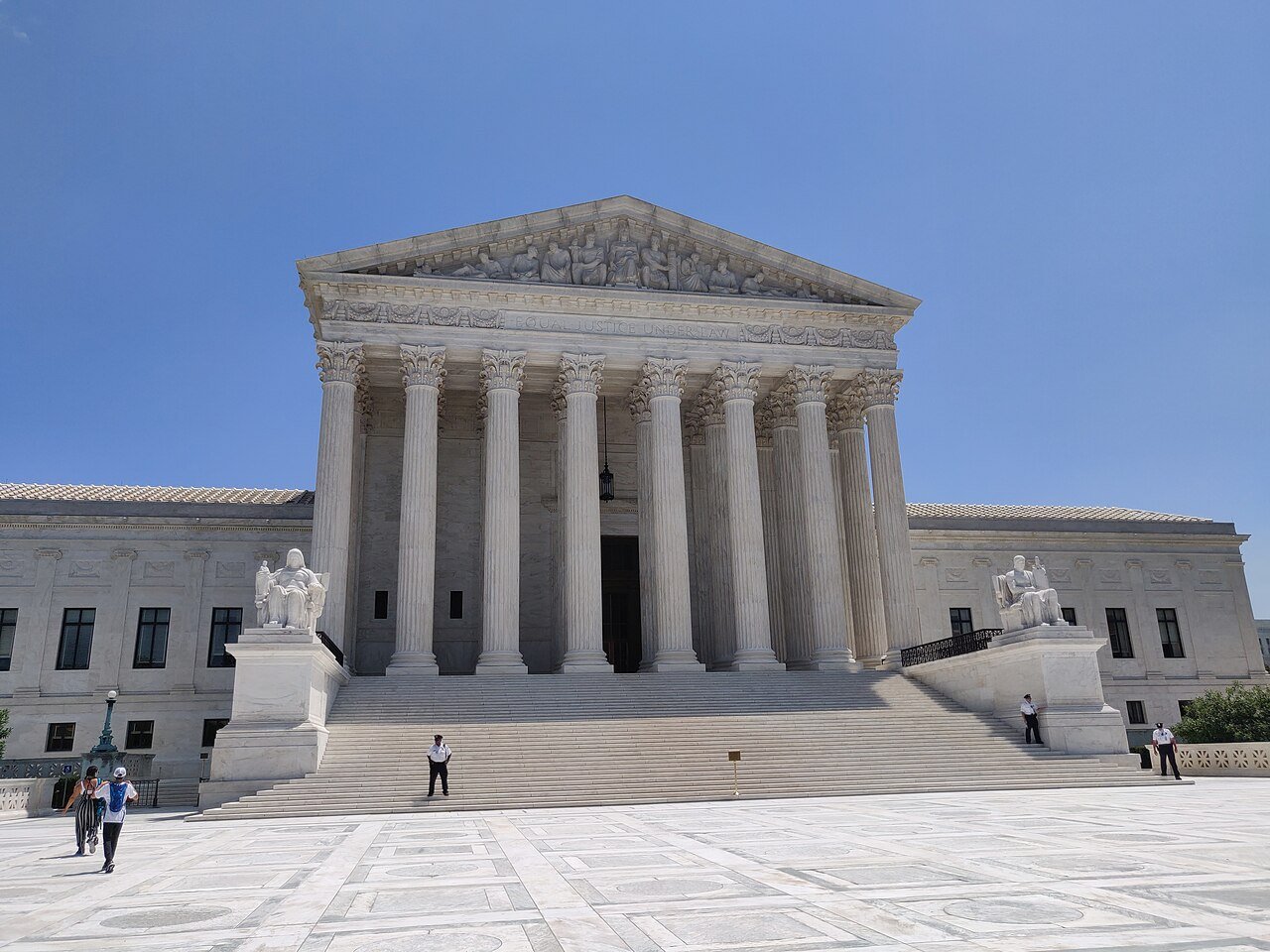
The countdown reaches the Supreme Court US law, courts & deal
On 6 December 2024 the US Court of Appeals for the D.C. Circuit upheld the law. TikTok, ByteDance and a group of creators turned to the Supreme Court, which agreed on 18 December to hear the case on an expedited basis, with argument on 10 January 2025.
Lawmakers argued that ByteDance’s ownership created unacceptable data and influence risks; TikTok said the law would silence a major channel for speech. It was a landmark test of how First Amendment protections apply to a foreign-owned platform with a large US audience.
Europe forces TikTok Lite’s rewards programme off the market Europe & regulation
On 22 April 2024 the European Commission opened formal proceedings over TikTok Lite, a version of the app with a points-for-activity rewards feature (Commission). It cited the feature’s potential to be addictive and TikTok’s failure to assess its risks before launch. TikTok suspended the rewards programme in France and Spain and paused its rollout elsewhere in the EU, then on 5 August the Commission made TikTok’s commitment to permanently withdraw it legally binding (Commission).
It was a significant intervention, but not a ban on TikTok. The dispute concerned one feature and compliance with the Digital Services Act.
2024
Congress passes the divest-or-ban law; Biden signs it US law, courts & deal
The House passed a standalone bill on 13 March 2024 by 352 votes to 65. A revised version was attached to a foreign-aid package that the Senate passed 79–18 on 23 April, and President Joe Biden signed it on 24 April 2024. The Protecting Americans from Foreign Adversary Controlled Applications Act required ByteDance to divest TikTok’s US operations within 270 days, with a possible 90-day extension, or face restrictions on app stores and hosting services.
The 270 days ran to 19 January 2025. The law moved the dispute from executive proposals to a statute.
Montana passes a statewide ban, and a federal judge blocks it Device & state limits
Montana became the first US state to pass a law meant to ban TikTok for everyone in the state, signed by Governor Greg Gianforte in May 2023 and due to take effect on 1 January 2024. TikTok and a group of Montana creators sued. On 30 November 2023 US District Judge Donald Molloy blocked the law, finding the challengers likely to succeed on constitutional grounds, including free speech.
It showed that state-level bans face steep legal barriers over speech, federal authority and national-security powers.
Government-device restrictions spread across Western countries Device & state limits
In 2023 governments and institutions across the West restricted TikTok on work phones. The European Commission told staff to remove it in late February, the White House budget office gave US agencies 30 days from 27 February, the UK followed on 16 March, and Australia on 4 April. Many other governments and legislatures did similar things.
These measures were narrower than a national ban: they targeted government-owned devices and left ordinary citizens free to use TikTok on personal phones.
2023
Canada bans TikTok on federal government devices Device & state limits
Canada announced on 27 February 2023 that TikTok would be removed from government-issued mobile devices and blocked from future installation, effective the next day. It described the step as a precaution after a review by the chief information officer, citing privacy and security concerns. Canada’s measure did not restrict the public.
US restricts TikTok on federal devices Device & state limits
The government funding law signed on 29 December 2022 included a ban on TikTok on federal government devices, with exceptions for law enforcement and security research. Texas had already banned it on state devices on 7 December, and dozens of other states followed in the months after. The White House budget office issued the implementing guidance on 27 February 2023.
These steps raised scrutiny sharply but were not the public-wide prohibition later pursued by the 2024 law.
Trump’s first-term bans are blocked by courts US law, courts & deal
On 6 August 2020 President Donald Trump signed an executive order that would have barred US transactions with ByteDance and TikTok after 45 days (Federal Register). On 14 August a second order told ByteDance to divest US TikTok assets within 90 days (Federal Register). A proposed Oracle and Walmart arrangement was announced in September but never closed.
Judge Carl Nichols in Washington blocked the app-store prohibition on 27 September, and Judge Wendy Beetlestone in Philadelphia blocked the remaining restrictions on 30 October. President Joe Biden revoked the orders in June 2021 and ordered a broader review of apps tied to foreign adversaries.
2020
India blocks TikTok and 58 other apps nationwide Nationwide blocks
India’s Ministry of Electronics and Information Technology announced on 29 June 2020 that it was blocking 59 apps, including TikTok, under Section 69A of the Information Technology Act, calling them prejudicial to India’s sovereignty and integrity, defence, state security and public order (Press Information Bureau). The decision followed the deadly Galwan Valley border clash with China on 15 June.
Unlike the device bans elsewhere, India’s measure cut off the general public in one of TikTok’s largest markets. It has not been revoked as of 21 October 2026.
India’s first brush: a court order and a week off the app stores Nationwide blocks
In April 2019 a Madras High Court order led the Indian government to ask Apple and Google to remove TikTok from their app stores over concerns about pornographic content and child safety. The Supreme Court declined to stay the order, the apps were removed from the stores, and the Madras High Court lifted its order on 24 April after ByteDance assured it would police content more strictly.
That episode, a court-driven content dispute and not a national-security block, is distinct from the June 2020 ban.
Indonesia temporarily blocks TikTok Nationwide blocks
Indonesia’s communications ministry blocked TikTok on 3 July 2018, citing inappropriate content and its possible effect on young users. TikTok agreed to remove offending material and add moderators, and the block was lifted about a week later.
TikTok expands internationally and merges with Musical.ly Nationwide blocks
ByteDance launched TikTok internationally in 2017, announced its acquisition of Musical.ly in November 2017 and merged the two apps into one in August 2018. A recommendation system that let creators reach large audiences without already having a following drove rapid growth, particularly among young users.
That scale also made TikTok a subject of political scrutiny: how its data is handled, how content is recommended and whether it could be influenced by Chinese law. The Musical.ly acquisition later became the legal hook for the 2020 US divestiture order.
The Five 2025 Enforcement Delays
Who Owns TikTok in the US Now
How Long Each Restriction Lasted
Some bans were bargaining tools lasting days; others lasted years or never took effect.
| Restriction | Where | How long it lasted | How it ended |
|---|---|---|---|
| Nationwide block, 29 Jun 2020 | India | About 2,300 days and counting (to 21 Oct 2026) | Still in force |
| Nationwide suspension, 13 Mar 2025 | Albania | About 330 days | Ended early Feb 2026 after new safety mechanisms |
| Block, 3 Jul 2018 | Indonesia | About 7 days | Lifted after TikTok agreed to moderate content |
| App-store removal, Apr 2019 | India | About a week | Madras High Court lifted its order on 24 Apr 2019 |
| US service outage, 18–19 Jan 2025 | United States | Roughly half a day | Service restored after Trump said he would delay enforcement |
| Statewide ban, passed May 2023 | Montana, US | Never took effect | Blocked by a federal judge on 30 Nov 2023 |
| Trump orders, Aug 2020 | United States | Never took effect | Blocked by federal courts in Sep and Oct 2020; revoked Jun 2021 |
The Story at a Glance
Dates and figures from India’s PIB, the US Supreme Court and White House, the European Commission and the news sources listed below.
| Date | Event | Detail |
|---|---|---|
| 2017–2018 | Global expansion | Musical.ly merged into TikTok in Aug 2018 |
| 3 Jul 2018 | Indonesia block | Lifted about a week later |
| Apr 2019 | India app-store removal | Madras High Court order, lifted 24 Apr |
| 29 Jun 2020 | India nationwide ban | 59 apps under Section 69A |
| Aug 2020 | Trump executive orders | Blocked by courts |
| Dec 2022 | US federal-device ban | Signed 29 Dec 2022 |
| 27 Feb 2023 | Canada device ban | Effective 28 Feb |
| 30 Nov 2023 | Montana ban blocked | Federal judge Donald Molloy |
| 24 Apr 2024 | US divest-or-ban law | Signed by President Biden |
| 5 Aug 2024 | TikTok Lite rewards withdrawn | EU commitments made binding |
| 17 Jan 2025 | Supreme Court ruling | Law upheld, unanimous |
| 18–19 Jan 2025 | US outage | About half a day |
| 25 Sep 2025 | Executive Order 14352 | Enforcement paused 120 days |
| 22 Jan 2026 | US joint venture closes | Oracle, Silver Lake, MGX 15% each |
| Feb 2026 | Albania ban ends | After about 330 days |
| 24 Jul 2026 | EU preliminary findings | Minors’ accounts, DSA |
| 15 Oct 2026 | Advocate General opinion | Gatekeeper appeal, not final |
Why Do Countries Restrict TikTok?
1. National security and data access. Some governments worry that user data could be reached by a foreign government or that the platform could support intelligence gathering. TikTok disputes allegations that it improperly shares data with the Chinese government. The policy question is whether ownership, legal obligations, technical safeguards and oversight can manage the risk.
2. Privacy and cybersecurity. Like other big platforms, TikTok collects data to personalise recommendations. Regulators examine what is collected, how long it is kept and who can reach it. A privacy concern is not proof that a government accessed data; allegations, technical findings and confirmed incidents differ. See also India’s data protection law timeline.
3. Political influence and algorithms. Because a recommendation system decides what people see, governments worry about manipulation or about amplifying and suppressing viewpoints. Such concerns are hard to prove and overlap with wider debates about platform transparency.
4. Children’s safety and addictive design. Authorities have focused on young users, screen time and features that encourage prolonged use. Europe’s TikTok Lite and minors’ cases show regulators changing specific features without prohibiting the service.
5. Geopolitical tension. TikTok sits inside the wider contest between China and Western governments over technology and data; see India’s semiconductor race, US secondary sanctions and Trump’s China weapons policy. Restrictions can reflect both technical assessments and these tensions. For the platform’s early rivals, see Facebook’s early decisions.
| Term | Meaning | Why it matters here |
|---|---|---|
| Divest-or-ban law | US statute requiring a foreign-adversary-controlled app to be sold or lose distribution and hosting | The 2024 act behind the 2025 and 2026 events |
| Qualified divestiture | A sale or restructuring the President determines ends foreign-adversary control | The basis for treating the 2026 joint venture as compliant |
| Section 69A | India’s IT Act power to block online content in the interest of sovereignty and security | Used for the June 2020 order |
| Government-device ban | A rule against installing an app on official phones and systems | Canada, the US federal government, the UK and others in 2023 |
| Enforcement delay | A direction not to enforce a law for a set period | Used five times in 2025; not a repeal |
| Digital Services Act (DSA) | EU law on online platform risks, including minors, with fines up to 6% of turnover | Basis for the TikTok Lite and July 2026 minors cases |
| Digital Markets Act (DMA) | EU competition law for large ‘gatekeeper’ platforms | Basis for the gatekeeper designation |
| Advocate General | EU court officer who gives a non-binding opinion before the judges rule | The 15 Oct 2026 step |
| Preliminary findings | The Commission’s provisional view before a final decision | The 24 Jul 2026 DSA step |
Is TikTok Banned Worldwide?
No. TikTok has faced different kinds of restrictions in different places, and they are not interchangeable.
Nationwide blocking: India, since 2020; Albania for about a year, ending in February 2026; Indonesia for a week in 2018. Divest-or-ban legislation: the US, where the 2024 law ended with a new joint venture in January 2026. Government-device restrictions: Canada, the US federal government, the UK, Australia and EU bodies. Feature-specific regulation: the EU’s TikTok Lite action. Court-blocked laws: Montana’s statewide ban and Trump’s 2020 orders never took effect.
The status of an app can change through legislation, court rulings, enforcement decisions, negotiations and ownership changes, so check the latest position before relying on a summary.
Who Is Who in the Story
Donald Trump
Signed five enforcement delays in 2025 and the order that framed the joint venture.
Joe Biden
Signed the divest-or-ban law on 24 April 2024.
Shou Chew
Told staff on 18 December 2025 that binding agreements were signed.
Scott Bessent
Announced the Madrid-talks framework in September 2025.
Andrea Biondi
Gave the 15 October 2026 opinion on the gatekeeper appeal.
Carl Nichols
Blocked the 2020 app-store ban on 27 September 2020.
Donald Molloy
Blocked Montana’s ban on 30 November 2023.
Oracle, Silver Lake, MGX
The three managing investors in the US venture, with 15% each.
What the TikTok Saga Means for Users and Businesses
For users and creators. Restrictions can cut access to audiences, entertainment, news and income. The January 2025 outage showed how quickly reach can vanish.
For governments. The challenge is addressing security risks without unnecessarily restricting lawful expression. The US route changed ownership and technical safeguards instead of blocking the platform; India chose a nationwide block; Europe targets features and conduct.
What is unresolved. Whether the US structure fully addresses concerns depends on implementation, oversight and enforceability. The EU gatekeeper judgment and the minors’ case decision are still to come, and India’s ban remains.
The Popular Story vs the Record
| Popular version | What the record shows |
|---|---|
| TikTok was banned in the US | A shutdown lasted about half a day in January 2025; enforcement was then delayed and a US joint venture closed on 22 Jan 2026 |
| A delayed deadline means the law was repealed | The statute stayed in force; presidents directed the Justice Department not to enforce it for set periods |
| The final US deadline was 16 December 2025 | A 25 Sep 2025 order superseded it with a 120-day pause that ran to about 23 Jan 2026 |
| Europe banned TikTok | There is no EU-wide public ban; the cases concern TikTok Lite, minors’ accounts and the gatekeeper label |
| A government-device ban is a national ban | Device bans cover official phones only; India’s 2020 order cut off the general public |
| India’s ban was lifted in 2025 | Government sources denied it in August 2025; the website access was attributed to a misconfiguration |
| Montana’s ban took effect | A federal judge blocked it on 30 Nov 2023, before its 1 Jan 2024 start |
| The Advocate General’s opinion ends the EU case | It is non-binding; the Court of Justice has not ruled |
The TikTok Ban in Numbers
| Measure | Figure | Source and caveat |
|---|---|---|
| India block | 59 apps, 29 Jun 2020 | PIB |
| US law deadline | 270 days from 24 Apr 2024 (19 Jan 2025) | Statute; 90-day extension possible |
| House vote, 13 Mar 2024 | 352–65 | Congressional record |
| Senate vote, 23 Apr 2024 | 79–18 | Congressional record |
| Supreme Court vote | Unanimous, 17 Jan 2025 | TikTok Inc. v. Garland |
| Executive pause, Jan 2025 | 75 days | White House order, 20 Jan 2025 |
| Executive pause, Sep 2025 | 120 days | EO 14352, 25 Sep 2025 |
| Joint venture stakes | Oracle, Silver Lake, MGX 15% each; ByteDance 19.9% | AP, Axios |
| Reported valuation | About US$14bn | Axios; not confirmed by a primary document |
| Albania ban length | About 330 days | AFP, Reuters; sources differ on early lifting vs expiry |
| DSA maximum fine | 6% of global annual turnover | EU Commission |
Explore More Timelines
People Also Ask
Frequently Asked Questions
Related AiTimeline Stories
⚠️ Editorial Note
Last updated 21 October 2026. A government-device ban is not a nationwide ban, a court-blocked law is not an implemented ban, and an enforcement delay does not repeal the underlying legislation; this page keeps them apart. Facts were checked against India’s PIB release of 29 June 2020, the Supreme Court opinion of 17 January 2025, White House orders of 20 January and 25 September 2025, European Commission and Court of Justice releases, and AP, NPR, AFP and Axios reporting. Corrections to the draft brief: Indonesia’s block was in July 2018, not October; the operative US deadline after September 2025 was about 23 January 2026 (Executive Order 14352), not 16 December 2025; TikTok went dark on the evening of 18 January 2025, not 19 January; and the December 2025 step was the signing of binding agreements. Added: India’s April 2019 app-store removal, Albania’s 2025–26 ban, the January and March 2026 outages and India’s August 2025 denial. Reuters links in the brief returned a 401 and the Canada.ca statement could not be reached during checking, so they are not linked. The Axios valuation of about US$14 billion and the Chinese government’s sign-off are reported but not independently confirmed. Review when a major court judgment, national restriction or ownership change occurs.
Sources & further reading
Every dated entry above was checked against these references. Last reviewed 21 October 2026.
- Press Information Bureau: Government blocks 59 mobile apps including TikTok (29 Jun 2020)
- US Supreme Court: TikTok Inc. v. Garland, No. 24-656 (17 Jan 2025)
- White House: Application of the Protecting Americans from Foreign Adversary Controlled Applications Act to TikTok (20 Jan 2025)
- White House: Saving TikTok While Protecting National Security, Executive Order 14352 (25 Sep 2025)
- US Government Publishing Office: Further extension of TikTok enforcement delay (16 Sep 2025)
- AP: TikTok finalizes deal to operate in the US (Jan 2026)
- European Commission: proceedings against TikTok over TikTok Lite (22 Apr 2024)
- European Commission: TikTok commits to permanently withdraw TikTok Lite Rewards (5 Aug 2024)
- European Commission: preliminary findings on TikTok minors' accounts under the DSA (24 Jul 2026)
- Court of Justice of the EU: Advocate General opinion in Case C-627/24 P, Bytedance v Commission (15 Oct 2026)
- NPR: Trump extends TikTok reprieve as deal nears (16 Sep 2025)