Most Disputed Nobel Prizes in History & Their Controversies
Explore the most disputed Nobel Prize decisions, from Roosevelt and Ossietzky to Kissinger, Gandhi, Dylan and Handke, and why each award caused a row.
Latest Story
A peace prize for a president known for his “big stick”. A literature prize for a songwriter. A medicine prize for lobotomy, a procedure later abandoned. The most controversial Nobel Prizes in history show that a Nobel decision can start as big an argument as the work it honours. Some rows began the day a prize was announced. Others started years later, when events changed how people saw a decision. And two of the biggest are about people who never won: Mahatma Gandhi and Rosalind Franklin.
🧠 The Short Answer
The Nobel Institute’s own history calls the 1973 Peace Prize to Henry Kissinger and Le Duc Tho “definitely the most controversial” in the prize’s history. Le Duc Tho refused it, and two committee members resigned. Other long-running disputes include Carl von Ossietzky (1935), Gandhi’s omission (1948), lobotomy pioneer Egas Moniz (1949), the DNA prize that could not include Rosalind Franklin (1962), Barack Obama (2009), Bob Dylan (2016) and Peter Handke (2019).
Nobel Prize Controversies: Key Questions
What 11 Disputed Decisions Reveal
- 1973 tops the list: Kissinger and Le Duc Tho won for a cease-fire that did not stop the fighting. The Nobel Institute calls it the most controversial Peace Prize.
- Some disputes are about people who never won: Gandhi (nominated five times) and Rosalind Franklin (died in 1958) are as argued-over as any winner.
- The 1948 blank is deliberate: the committee found “no suitable living candidate”, widely read as a silent tribute to Gandhi.
- Committee members have quit over choices: two stepped aside over Ossietzky (1935), two resigned over 1973, and one resigned over Arafat (1994).
- Hitler banned Germans from accepting Nobels after the prize went to imprisoned pacifist Carl von Ossietzky. Three German scientists were later forced to decline.
- Science prizes can age badly: Moniz’s 1949 prize for lobotomy looks very different now that the operation has been abandoned.
- Timing is the Peace Prize’s recurring trap: Obama (2009) was nominated 12 days into his presidency, and Kissinger won before the peace had lasted.
- The Literature Prize keeps testing its own limits: a statesman (Churchill), a songwriter (Dylan) and a politically divisive writer (Handke).
- No Nobel has ever been revoked: the statutes do not allow it, so disputes live on in history rather than in the record.
The 11 Most Disputed Nobel Decisions, Newest First
Each entry is tagged by why it was contested: politics, timing, science, credit, literature or omission. Most involve more than one.
Peter Handke: Can Literature Be Separated From Politics?
The award: The Swedish Academy honoured Handke for “an influential work that with linguistic ingenuity has explored the periphery and the specificity of human experience”. It was announced in October 2019 alongside Olga Tokarczuk’s delayed 2018 prize.
The dispute: Handke had defended Serbia during the Yugoslav wars. Critics said his 1996 travel essay on Serbia played down Serb war crimes, and in 2006 he spoke at Slobodan Milošević’s funeral. Survivors’ groups in Bosnia and Kosovo condemned the choice.
The fallout: Gun-Britt Sundström, an external member of the Nobel literature committee, resigned in December 2019. She said the choice implied that literature stood above politics, a view she did not share.
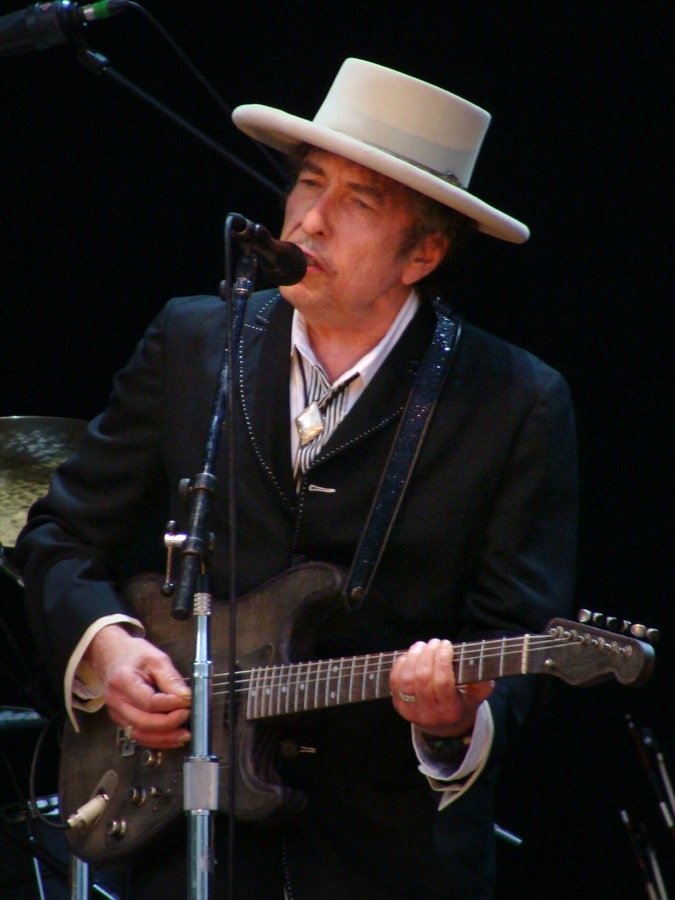
Bob Dylan: When Does a Song Become Literature?
The award: Dylan won “for having created new poetic expressions within the great American song tradition”. He was the first musician to win the Literature Prize.
The dispute: Supporters pointed to the ancient tradition of sung poetry, from Homer onward. Critics said the prize should go to novelists, poets and playwrights, and that giving it to a rock star made literature smaller. The argument was not about whether Dylan’s lyrics were good. It was about where literature ends.
The fallout: Dylan did not respond publicly for about two weeks and skipped the December ceremony, where Patti Smith sang “A Hard Rain’s A-Gonna Fall” in his place. He delivered the required Nobel lecture as a recording in June 2017, just before the deadline for claiming the prize money.
Barack Obama: A Prize Before the Results?
The award: The committee cited Obama’s “extraordinary efforts to strengthen international diplomacy and cooperation between peoples” and his vision of a world without nuclear weapons.
The dispute: The nomination deadline was February 1, 2009, just 12 days after his inauguration, and the prize was announced less than nine months into his presidency. Critics were not saying he had done something wrong. They were saying he had not yet had time to do much at all. Obama himself said he did not see it “as a recognition of my own accomplishments”.
The fallout: In a 2015 memoir, former Nobel Institute director Geir Lundestad wrote that the prize “didn’t achieve what the committee had hoped for”. He later denied that he had called the award a mistake.
Arafat, Rabin and Peres: Can Former Enemies Be Peace Laureates?
The award: Yasser Arafat, Yitzhak Rabin and Shimon Peres shared the prize for the Oslo Accords. The accords produced mutual recognition between Israel and the PLO and a framework for peace talks.
The dispute: Arafat’s past as leader of the PLO’s armed struggle made his inclusion the most contested part. The Nobel Institute notes that the three “were still far from establishing a final peace”.
The fallout: Committee member Kåre Kristiansen resigned in protest over Arafat. It was the third resignation in the committee’s history. Rabin was assassinated the following year, and the Oslo process later collapsed.
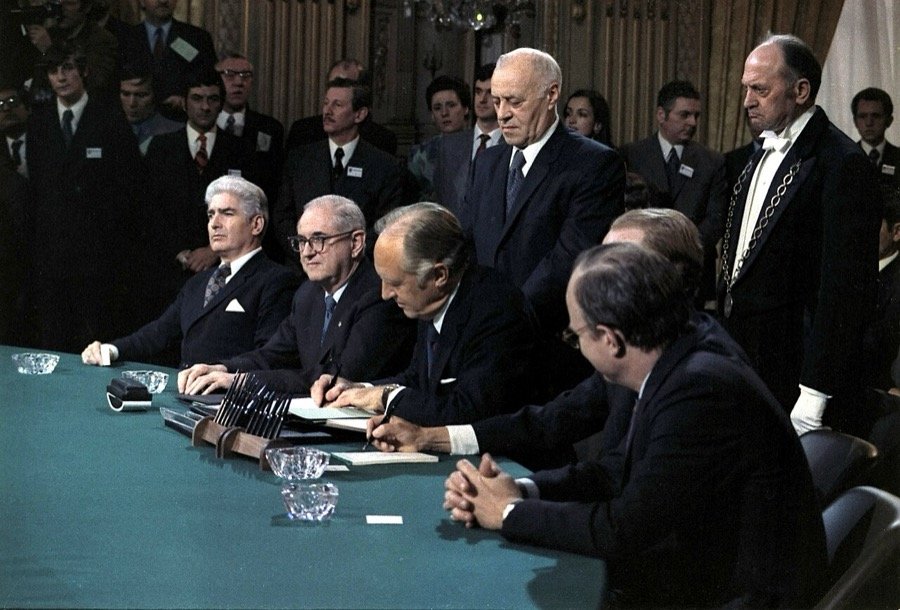
Kissinger and Le Duc Tho: The Nobel That Split Its Own Committee
The award: US Secretary of State Henry Kissinger and North Vietnamese negotiator Le Duc Tho were honoured for the Paris agreement of January 1973. The agreement was meant to bring a cease-fire in Vietnam and the withdrawal of US forces.
The dispute: The fighting never really stopped. Kissinger had also helped direct the US bombing campaign, including the December 1972 “Christmas bombing” of Hanoi, so the man honoured for making peace had also helped wage the war. Public reaction in Norway and abroad was, in the Nobel Institute’s words, “largely negative”.
The fallout: Le Duc Tho refused the prize because there was still no peace. He is the only person ever to decline the Peace Prize. Kissinger did not go to Oslo and later tried to return the prize, but was told the statutes did not allow it. Two committee members resigned when it came out that they had opposed the award. Saigon fell in April 1975.
Watson, Crick and Wilkins: Where Was Rosalind Franklin?
The award: Francis Crick, James Watson and Maurice Wilkins were honoured “for their discoveries concerning the molecular structure of nucleic acids and its significance for information transfer in living material”.
The dispute: Franklin’s X-ray diffraction work at King’s College London, including the 1952 image known as Photo 51, gave crucial evidence for the double helix. Watson saw the image without her knowledge. Franklin died of ovarian cancer on 16 April 1958, aged 37, four years before the prize.
Why she could not be added: Nobels were not normally given after death (the rule was written into the statutes in 1974), and one prize can be split among at most three people.
Winston Churchill: Literature or Politics?
The award: Churchill won the Literature Prize, not the Peace Prize, “for his mastery of historical and biographical description as well as for brilliant oratory in defending exalted human values”. His six-volume The Second World War was central to the case.
The dispute: To most of the world Churchill was a wartime prime minister first and a writer second. It was hard to separate Churchill the author from Churchill the statesman. Critics saw the prize as honouring a political reputation, and pointed out that working novelists and poets were passed over.
The fallout: Churchill was prime minister again when he won. He was at a summit in Bermuda during the ceremony, so his wife Clementine accepted the prize for him.
Egas Moniz: When a Nobel-Winning Treatment Became Obsolete
The award: Portuguese neurologist Moniz received half the prize “for his discovery of the therapeutic value of leucotomy in certain psychoses”. Swiss physiologist Walter Rudolf Hess received the other half for separate work.
The dispute: The Nobel Prize’s own summary notes that the operation “was widespread during the 1940s and 1950s, but it became apparent that it could lead to serious personality changes”. Tens of thousands of people were lobotomised, often in crude versions of the procedure. Its use collapsed once antipsychotic drugs arrived in the 1950s. Descendants of lobotomy patients have campaigned for the prize to be rescinded, which the statutes do not allow.
The defence: Historians point out that in the 1930s and 40s, people with severe mental illness had few alternatives beyond long-term confinement.
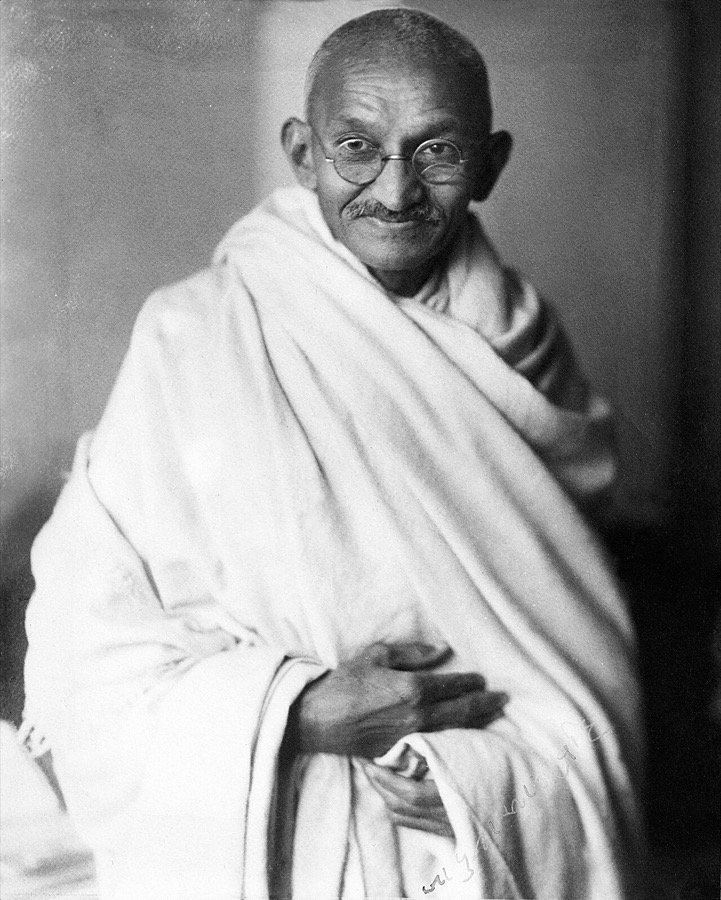
Mahatma Gandhi: The Nobel Prize That Was Never Awarded
The record: Gandhi was nominated in 1937, 1938, 1939 and 1947, and finally a few days before he was killed on 30 January 1948. That was two days before the 1948 nomination deadline. He made the committee’s shortlist three times.
What happened in 1947: The Nobel archives show the majority passed over him mainly because of the conflict between India and Pakistan, and a prayer-meeting remark that made some members wonder whether he was abandoning his pacifism.
What happened in 1948: The committee seriously considered a posthumous prize. The statutes then in force did not rule it out; Dag Hammarskjöld received one in 1961. But the Swedish prize-awarding institutions advised against it. Chairman Gunnar Jahn wrote that a posthumous award seemed “contrary to the intentions of the testator”. On 18 November 1948 the committee made no award, finding “no suitable living candidate”.
The Britain theory, rejected: The Nobel archives found “no hint” that the committee worried about an adverse British reaction, so the popular belief that Britain blocked the prize is not supported.
Carl von Ossietzky: A Nobel Prize Against Nazi Germany
The award: Ossietzky was a German journalist and pacifist who exposed Germany’s secret rearmament. The Nazis held him in concentration camps, and he became an international symbol of resistance. The 1935 prize was held back and awarded to him in November 1936.
The dispute: Supporters saw the award as recognition of anti-militarism. Opponents, including many in Norway, said it meddled in another country’s internal affairs.
The fallout: Foreign Minister Halvdan Koht and former Prime Minister Johan Ludwig Mowinckel stepped away from the committee. It was the first such withdrawal in its history. The Storting (Norway’s parliament) then ruled that serving government ministers could not sit on the committee. Hitler banned all Germans from accepting any Nobel Prize, which later forced chemists Richard Kuhn and Adolf Butenandt and physician Gerhard Domagk to decline. Ossietzky was not allowed to travel to Oslo. He died in May 1938, still under police watch, of tuberculosis he contracted in the camps.
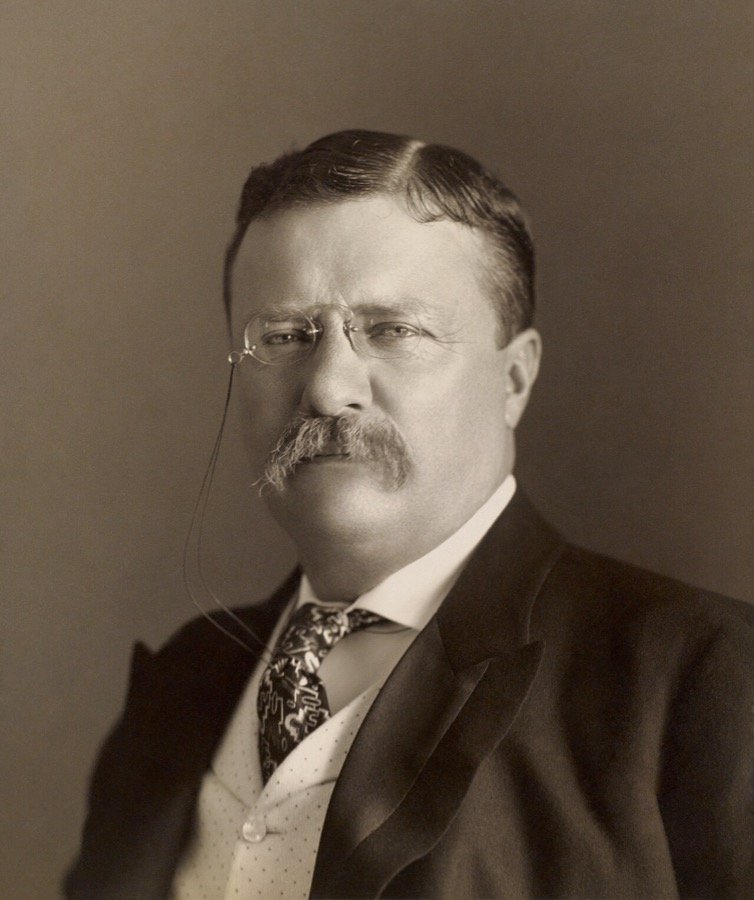
Theodore Roosevelt: Could a “Big Stick” President Win a Peace Prize?
The award: Roosevelt was honoured for mediating an end to the Russo-Japanese War through the Treaty of Portsmouth (1905), and for sending the Hague arbitration court its very first case. He was the first statesman, and the first American, to win a Nobel Prize.
The dispute: Roosevelt had led the Rough Riders in the Spanish-American War and championed a muscular foreign policy. The Nobel Institute notes he was internationally “best known for a rather bellicose posture, which certainly included the use of force”. Both the committee’s secretary and its adviser were “highly critical” of the choice.
Why it may have happened: Norway had only become independent from Sweden in 1905. A Norwegian newspaper of the time argued that the young state “needed a large, friendly neighbor – even if he is far away”.
The Pattern Behind the Controversies
These disputes look unrelated. The same five questions keep coming up.
Results or intentions?
Obama in 2009 and Kissinger in 1973 both won before the outcome was known. The committee has at times used the prize to encourage a process, not to reward a finished one.
Can politics and peace be separated?
Roosevelt, Ossietzky, Kissinger and Arafat show that a peace prize to a political actor is always read as a political statement too.
Can today’s standards judge yesterday’s science?
Moniz’s lobotomy prize fits the options of the 1940s. It looks disastrous by the standards of the 1960s and after.
Who deserves credit for shared work?
The three-person limit and the no-posthumous rule meant the DNA prize could never have included Rosalind Franklin.
What counts as literature?
Churchill (history and speeches), Dylan (songs) and Handke (a divisive public figure) each pushed the Literature Prize’s boundaries.
No revocation
Because no prize can be taken back, every dispute stays permanent. The record never changes; only the way people read it does.
Nobel Controversy Summary Table
| Year | Prize | Laureate(s) | Central controversy | Fallout |
|---|---|---|---|---|
| 1906 | Peace | Theodore Roosevelt | A “bellicose” statesman as peace laureate | Committee’s own secretary and adviser opposed it |
| 1935 | Peace | Carl von Ossietzky | Seen as meddling in Nazi Germany’s affairs | 2 members stepped aside; Hitler’s Nobel ban |
| 1948 | Peace | No award | Gandhi killed; posthumous prize rejected | “No suitable living candidate” |
| 1949 | Medicine | Egas Moniz (shared with W.R. Hess) | Lobotomy later abandoned | Campaigns to rescind, which the statutes do not allow |
| 1953 | Literature | Winston Churchill | Political stature vs literary merit | Accepted by his wife Clementine |
| 1962 | Medicine | Watson, Crick, Wilkins | Rosalind Franklin’s role in DNA | Enduring credit debate |
| 1973 | Peace | Kissinger, Le Duc Tho | Cease-fire that did not hold | Declined by Tho; 2 resignations |
| 1994 | Peace | Arafat, Rabin, Peres | Former adversaries honoured together | 1 committee resignation |
| 2009 | Peace | Barack Obama | Awarded 9 months into his presidency | Ex-director: “didn’t achieve” its aim |
| 2016 | Literature | Bob Dylan | Is songwriting literature? | Skipped ceremony; late lecture |
| 2019 | Literature | Peter Handke | Stance on the Yugoslav wars | External committee member resigned |
Laureates Who Refused (or Were Forced to Refuse)
Refusals are rare, and each one became a controversy of its own.
| Year | Prize | Laureate | Why |
|---|---|---|---|
| 1938–39 | Chemistry, Medicine | Richard Kuhn, Adolf Butenandt, Gerhard Domagk | Forced by Hitler’s ban after the Ossietzky prize; they received their diplomas and medals later |
| 1958 | Literature | Boris Pasternak | Accepted, then declined under pressure from Soviet authorities |
| 1964 | Literature | Jean-Paul Sartre | Declined on principle; he refused all official honours |
| 1973 | Peace | Le Duc Tho | Said peace had not been established in Vietnam |
Interactive: Nobel Controversy Detector
Was the dispute about the person, or about what the Nobel Prize is supposed to mean? Tap each case to reveal it.
The four types
- 🏆 The Winner: the laureate’s record or conduct.
- 📜 The Criteria: what the prize should recognise at all.
- ⏱️ The Timing: the award came before the outcome was clear.
- 🔬 The Credit: who really deserved recognition for a discovery.
Kissinger & Le Duc Tho, 1973
Barack Obama, 2009
Bob Dylan, 2016
Egas Moniz, 1949
DNA prize, 1962
Gandhi, 1948
Ossietzky, 1935
What Would You Do?
You sit on the Nobel committee. A peace agreement has been signed, but fighting continues.
A: Award the prize now
B: Wait for the conflict to end
C: Honour the effort, delay the prize
Quiz: How Well Do You Know Nobel Controversies?
1. Who is the only person to decline the Nobel Peace Prize?
2. Which writer declined the Nobel Prize in Literature on principle?
3. In which year was the Nobel Prize awarded for leucotomy (lobotomy)?
4. Which Nobel Prize did Winston Churchill win?
5. Why did Gandhi not receive the 1948 Peace Prize?
Did You Know?
- The Peace Prize has been left unawarded 19 times, most of them during the two World Wars. 1948 is the most famous.
- Dag Hammarskjöld (1961) is the only person to receive the Peace Prize after death. The statutes were then tightened to make posthumous prizes almost impossible.
- Nomination records are sealed for 50 years, which is why the Gandhi archive story could only be told decades later.
- The two members who resigned in 1973 had backed Brazilian archbishop Hélder Câmara, who received a Norwegian “People’s Peace Prize” instead.
- After the Ossietzky row, Germany created its own “German National Prize for Art and Science” as a Nazi alternative to the Nobel.
Explore More Timelines
People Also Ask
Frequently Asked Questions
Keep Exploring
⚠️ Editorial Note
This article relies mainly on the Nobel Prize’s own historical writing (nobelprize.org), including Geir Lundestad’s history of the Peace Prize and Øyvind Tønnesson’s archive study of Gandhi’s candidacy. Quotations are from those sources or from official prize citations. Where the historical record is contested, as with the lobotomy debate and Obama’s prize, we present both positions instead of a verdict.
Sources & further reading
Every dated entry above was checked against these references. Last reviewed 26 September 2026.
- Nobel Prize -- The Nobel Peace Prize 1901-2000 (Geir Lundestad)
- Nobel Prize -- Mahatma Gandhi, the Missing Laureate
- Nobel Prize -- The Nobel Peace Prize 1973
- Nobel Prize -- Egas Moniz, Facts (1949)
- Nobel Prize -- The Nobel Prize in Physiology or Medicine 1962
- Nobel Prize -- Bob Dylan, Facts (2016)
- France 24 -- Nobel committee member resigns over Handke award
- Times of Israel -- Ex-Nobel official: Obama peace prize didn't have desired effect