Punjab Kesari History: From a 1965 Jalandhar Daily to a North India News Network
Punjab Kesari history: born in Jalandhar in 1965, founders assassinated, Delhi in 1983, a family split, and the 2026 Supreme Court order on its press.
Latest Story
Punjab Kesari started in Jalandhar in 1965 with a print run of a few thousand copies at most. Within 21 years it was the best-selling Hindi daily in India. Along the way its founder and his son were assassinated, more than 60 of its people were killed, it ran its press off a tractor during the Emergency, and the family that owns it split in two. This is the history of Punjab Kesari, from Lala Jagat Narain’s Urdu daily in 1948 to the 2026 Supreme Court order that kept its presses running.
💡 Short Answer
Punjab Kesari is a Hindi daily founded in Jalandhar in 1965 by Lala Jagat Narain, whose group already published the Urdu Hind Samachar (1948). It added Delhi on 1 January 1983 and was India’s top-selling Hindi daily by 1986. Jagat Narain (1981) and his son Romesh Chander (1984) were assassinated by militants. A family split, settled in 2005 and 2022, left the Delhi edition with a separate company. In 2026 the Supreme Court ordered its press to keep printing during a dispute with the Punjab government.
Punjab Kesari History: Key Questions
Punjab Kesari in Ten Points
- Urdu first: Hind Samachar (1948) came 17 years before the Hindi Punjab Kesari (1965).
- A borrowed name: ‘Punjab Kesari’ was Lala Lajpat Rai’s title and a 1929 Lahore weekly’s name.
- Small start: 3,000 or 1,200 copies, depending on the account.
- The Emergency: founder detained, power cut, press run by tractor, by the group’s account.
- Two assassinations: Jagat Narain in 1981, Romesh Chander in 1984; 62 people killed in all, per the group.
- Delhi in 1983: under Ashwini Kumar Chopra, from 1 January.
- Peak: India’s top-selling Hindi daily in 1986, at about 4.6 lakh copies.
- Late expansion: most printing centres opened between 2004 and 2009.
- Split masthead: Jalandhar and Delhi have been separate businesses since 2005.
- 2026: the Supreme Court ordered its press kept running during a dispute with the state.
The Punjab Kesari Timeline, 1929–2026
Newest first. Tags mark editions, ownership changes and turning points. Where sources conflict, we say so.
Apr 2026
The press stays on, by court order Turning point
On 13 January 2026 the Punjab Pollution Control Board ordered electricity cut to a Jalandhar hotel owned by the Chopra family, alleging water-pollution and consent violations, and moved against the group’s Ludhiana printing press. The group said nearly 20 coercive steps, including FIRs, followed within a week of articles critical of the Aam Aadmi Party government, and that state advertising had stopped since 2 November 2025. On 20 January a Supreme Court bench led by Chief Justice Surya Kant ordered that the press ‘shall continue to function uninterruptedly’, saying ‘newspapers cannot be stopped’. The High Court sent the case to the National Green Tribunal on 23 January, the Supreme Court agreed on 29 January, and an expert committee filed a factual site report on 3 April. In March the High Court separately refused to reclassify the hotel, which it found had a smaller front setback than its approved plan. The state says it enforced environmental and building law; the tribunal had not ruled publicly when this page was updated.
The 118th Shaheed Parivar Fund function
Himachal Pradesh Chief Minister Sukhvinder Singh Sukhu attended the 118th distribution function of the Shaheed Parivar Fund in Jalandhar, where relief material and financial aid were sent to 225 families in Jammu and Kashmir. Vijay Kumar Chopra presided, with his sons Avinash and Amit Chopra. Four decades after it was set up for victims of Punjab’s militancy, the fund had widened to victims of terrorism elsewhere in India.
The family split becomes final Ownership
The National Company Law Appellate Tribunal recorded a family settlement ending almost three decades of litigation inside the Hind Samachar company. Jalandhar-based The Hind Samachar Ltd, run by Vijay Kumar Chopra’s family, kept its company and units; the Delhi business vested in Dainik Samachar Ltd, which Ashwini Kumar Chopra’s heirs had incorporated in September 2021. Since then two companies have published papers under the Punjab Kesari name.
Ashwini Kumar Chopra dies Turning point
Ashwini Kumar Chopra, editor of Punjab Kesari Delhi since 1983 and BJP MP for Karnal from 2014 to 2019, died on 18 January 2020. His son Aditya Narayan Chopra took over the editor’s pen, with brothers Arjun and Aakash, and their mother Kiran Chopra as director. Ashwini Kumar had been known for a signed front-page editorial; in 2019 he had praised Congress leaders in print while still a BJP MP.
2013
A new Delhi paper, and a stamp Edition
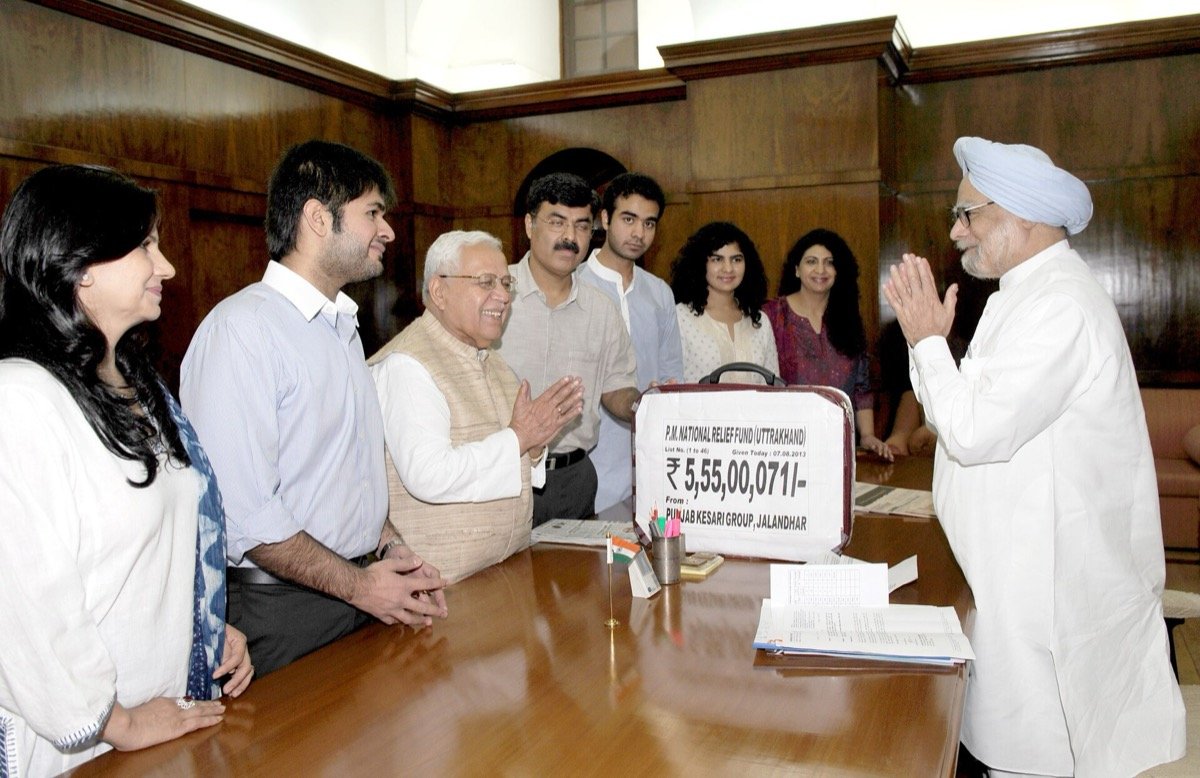
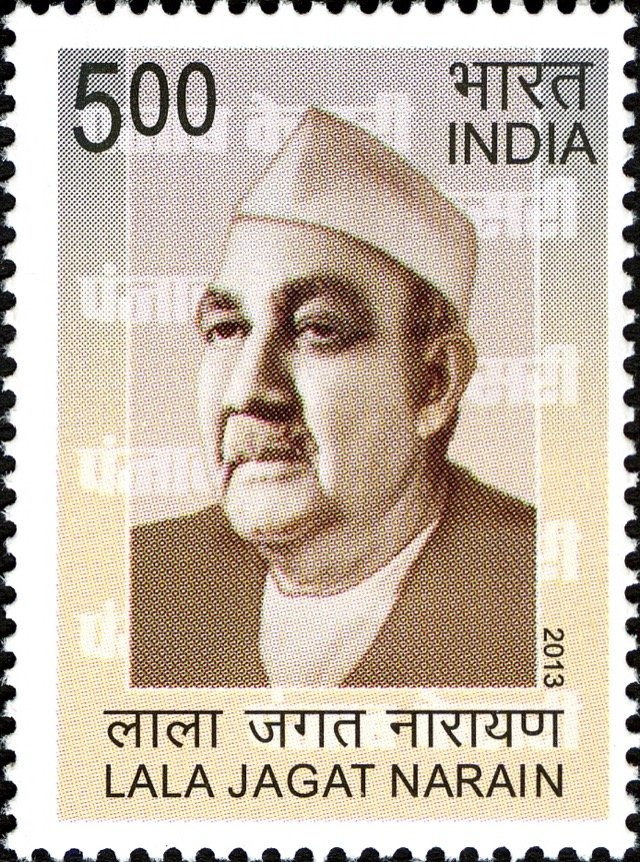
With the Punjab Kesari title in Delhi now with the other branch of the family, the Jalandhar group launched a new Hindi daily there: Navodaya Times, on 6 August 2013, carrying the group’s columnists and cartoonist. A day later its representatives met Prime Minister Manmohan Singh with a contribution of more than Rs 3.5 crore for Uttarakhand flood relief. On 9 September, the 32nd anniversary of Jagat Narain’s killing, the Prime Minister released a postage stamp in his memory.
Delhi’s Punjab Kesari eyes UP Edition
Ashwini Kumar told afaqs that Punjab Kesari Delhi would enter Uttar Pradesh and Uttarakhand, with land acquired for facilities in Noida, Meerut, Ghaziabad, Lucknow, Dehradun, Bareilly and Agra, and Rs 150 crore to be raised. ‘The brand name Punjab Kesari is very strong,’ he said, so there was no reason to change it for UP readers. That is where the UP cities in the paper’s later e-paper listings come from.
2009
The edition wave Edition
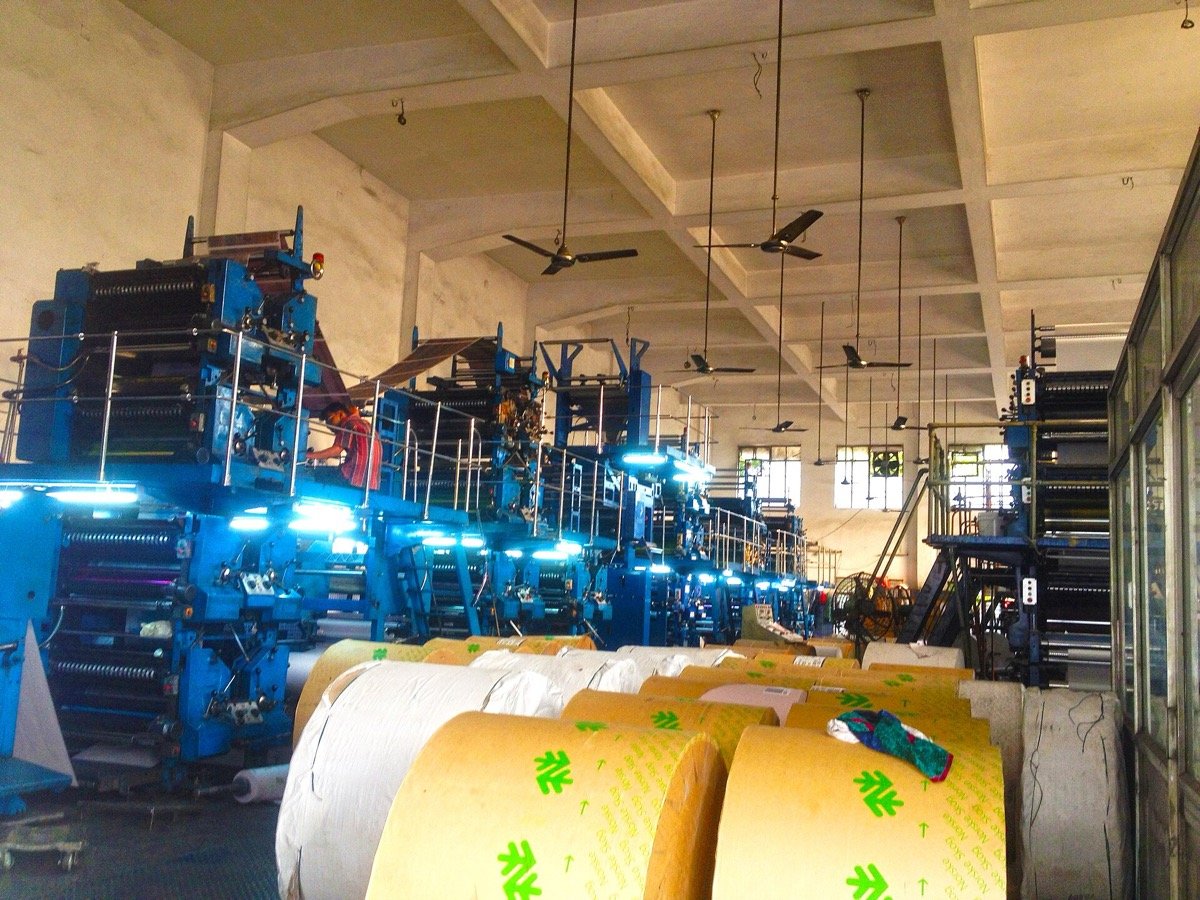
Most of Punjab Kesari’s printing centres date not from the 1990s but from these six years. Editions opened at Palampur and Ludhiana (2004), Jaipur, Panipat and Hisar (2006), Jammu (2007), Mohali (2008) and Chandigarh and Shimla (2009). It was the industry’s logic, print close to the reader with district pages, but it came late: Dainik Jagran, Dainik Bhaskar and Amar Ujala were by then expanding faster across the Hindi belt.
2005
A family divided Ownership
Inside the Hind Samachar company, the families of the two brothers fell out. Vijay Kumar Chopra’s branch and Romesh Chander’s widow and sons signed settlements in 1995 and 1996, but after a 1998 board meeting no board met for six years. A 2004 Company Law Board order split the business into two lots: Jalandhar and Ambala to Vijay Chopra’s side, Delhi and Jaipur to Romesh Chander’s heirs, formalised in an October 2005 consent order. Each side has kept separate accounts since 2006.
Ambala Edition
Punjab Kesari opened its first printing centre in Haryana at Ambala Cantt. It was still a dangerous time to work for the group: by early 1993, according to the historian Robin Jeffrey, more than 60 of its employees had been killed. The group’s own figure is 62 people, from hawkers and agents to sub-editors.
India’s top-selling Hindi daily Turning point
The Registrar of Newspapers’ annual Press in India report found that in 1986 Punjab Kesari sold about 4,60,000 copies a day, making it the largest-circulating Hindi daily in India. Robin Jeffrey later described its colloquial style, its use of lottery results and classifieds to drive sales, and its habit of putting a colour magazine, not news, on the front page. It held its northern lead into the late 1990s.
The second editor is killed Turning point
Romesh Chander, Jagat Narain’s elder son and successor, was shot dead in Jalandhar on 12 May 1984. He had kept up the papers’ attacks on militants, including their use of the Golden Temple to store arms. A month later the army entered the temple in Operation Blue Star. His younger brother Vijay Kumar Chopra, a Padma Shri recipient in 1990, became chairman and editor-in-chief, a role he still held at 91 in 2023.
Delhi, and a fund for victims Edition
Punjab Kesari launched in Delhi on 1 January 1983, according to its Delhi edition, under Romesh Chander’s son Ashwini Kumar Chopra. Until then it had printed only in Jalandhar. The same year Romesh Chander set up the Shaheed Parivar Fund for the families of people killed by militants, which went on to hold more than a hundred distribution functions.
The founder is assassinated Turning point
Lala Jagat Narain, 82, was shot dead by two gunmen on 9 September 1981. He had survived an attempt in January, had called the Khalistan movement ‘anti-national’ and had testified against Jarnail Singh Bhindranwale after the 1978 Nirankari clash. Nachhatar Singh Rode was arrested at the scene. Bhindranwale was arrested and released for lack of evidence; a 1984 government white paper said Narain was killed for criticising him. About 80,000 people attended his last rites.
Jagbani, in Punjabi Edition
The group added a Punjabi daily, Jagbani, so that it now published in Urdu, Hindi and Punjabi from Jalandhar. Robin Jeffrey describes a lean system in which one reporter or stringer covered a beat for all three papers, backed by agencies and many copy editors. Jagbani is still printed in Jalandhar and Ludhiana.
1977
The Emergency Turning point
During the Emergency, Jagat Narain was detained under MISA until January 1977, and he left the Congress. The group says the state cut power to its press, so it ran the rotary press off a tractor for ten days. Ashwini Kumar told Robin Jeffrey that when the paper could not print news freely it moved a colour magazine to page one as a signal to readers, and that circulation doubled by the end of the Emergency. Jeffrey found audited figures largely bore this out.
Punjab Kesari is born Turning point
Seventeen years after Hind Samachar, Jagat Narain launched a Hindi daily, Punjab Kesari, once, as Sevanti Ninan puts it, ‘the Hindi-reading public in Punjab was judged to be large enough to make it worthwhile’. The group marks 13 June as its anniversary. Accounts of the first print run differ: about 3,000 copies in some, while the Delhi edition’s 2025 anniversary editorial says 1,200. Within a year the group’s Urdu Hind Samachar was the highest-circulating daily in Punjab.
Hind Samachar, in Urdu Edition
Jagat Narain, a Lahore Congress leader who had spent about nine years in colonial jails, came to Jalandhar as a refugee and started an Urdu daily, Hind Samachar. The Registrar of Newspapers dates it to 1948, with his son Romesh Chander as printer and publisher; a family account says 1949. Urdu was then the newspaper language of Punjab’s salaried urban readers.
The name before the paper Turning point
Lala Lajpat Rai’s Lok Sevak Mandal began a weekly called Punjab Kesari in Lahore, which became a daily during the 1929 Lahore Congress and closed afterwards. ‘Punjab Kesari’, the Lion of Punjab, was Lajpat Rai’s own title. Jagat Narain had been his secretary in jail in the early 1920s, and revived the name for his Hindi daily 36 years later.
The Edition Map: 18 Years in One City
When each printing centre opened.
Where was it printing, and who was running it?
Drag the year. The explorer shows where Punjab Kesari was printing, who led it, what its readers faced and what it was competing with. Chips in blue belong to the Delhi branch after the 2005 split.
The People Who Ran It
Three generations of one family, now in two companies.
| Person | Role | Years | Note |
|---|---|---|---|
| Lala Jagat Narain | Founder, editor | 1948-1981 | MLA, minister, Rajya Sabha MP; assassinated 9 Sep 1981 |
| Romesh Chander | Editor after his father | 1981-1984 | Set up Shaheed Parivar Fund 1983; assassinated 12 May 1984 |
| Vijay Kumar Chopra | Chairman, editor-in-chief (Jalandhar) | 1984-present | Padma Shri 1990; PTI chairman 2001 and 2009 |
| Ashwini Kumar Chopra | Editor, Punjab Kesari Delhi | 1983-2020 | BJP MP, Karnal, 2014-2019; died 18 Jan 2020 |
| Aditya Narayan Chopra | Editor, Punjab Kesari Delhi | 2020-present | With brothers Arjun and Aakash; Kiran Chopra director |
| Avinash and Amit Chopra | Joint managing directors (Jalandhar) | Present | Majority holders of Hind Samachar Ltd Class A shares (2022 list) |
Two Punjab Kesaris
Most histories of Punjab Kesari skip this part. It explains why its Delhi edition and its Punjab editions are separate businesses.
The trouble began inside the family company after the killings. By 1994 Vijay Kumar Chopra’s branch and the family of his late brother Romesh Chander were in dispute. Agreements in 1995, 1996 and 1997 gave each side 49.1% of the shares and four board seats each. It did not hold: after 1998 no board meeting was held for six years, accounts went unadopted, and the Company Law Board noted allegations from both sides of company funds being misused.
The settlement divided the business by geography. The 2005 consent order gave Lot 1, the Jalandhar and Ambala units and the company itself, to Vijay Chopra’s side, and Lot 2, Delhi and Jaipur, to Romesh Chander’s heirs, with Rs 2.4 crore in compensation. The details took until 2022 to settle. The result is the arrangement readers see today: Punjab Kesari Delhi at punjabkesari.com, the Jalandhar group’s editions at punjabkesari.in, and a Jalandhar-owned Hindi daily in Delhi, Navodaya Times, under a different name.
| Jalandhar group | Delhi group | |
|---|---|---|
| Company | The Hind Samachar Ltd | Dainik Samachar Ltd (incorporated Sep 2021) |
| Family branch | Vijay Kumar Chopra and sons | Heirs of Romesh Chander and Ashwini Kumar Chopra |
| Units in the 2005 split | Jalandhar, Ambala (Lot 1) | Delhi, Jaipur (Lot 2) |
| Papers | Punjab Kesari (Punjab, Haryana, Himachal, Jammu, Rajasthan), Jagbani, Hind Samachar, Navodaya Times | Punjab Kesari Delhi |
| Website | punjabkesari.in | punjabkesari.com |
| In 2026 | Court fight with Punjab government over press and hotel | Aditya Narayan Chopra edits; Delhi and NCR focus |
Under Fire: The Militancy Years
The founder on a hit list
Jagat Narain condemned the 1978 Nirankari killings, testified against Bhindranwale, called the Khalistan movement ‘anti-national’ and refused to retract. He reported about 20 threat letters and survived one attempt before he was killed.
His successor killed
Romesh Chander attacked militants’ use of the Golden Temple to store arms. He was shot dead on 12 May 1984, three weeks before Operation Blue Star.
The staff paid too
Hawkers, agents, sub-editors and senior sub-editors were among the 62 people the group lost. Distributing the paper became dangerous work.
A fund, not just a story
The Shaheed Parivar Fund gave money to families of people killed by militants, at public functions that continued long after the violence ended.
Scrutiny and Criticism
Punjab Kesari’s own account of itself is one of courage under fire, and the killings are a matter of record. Historians of Punjab add a harder strand. Jagat Narain, an Arya Samaj leader, opposed the Punjabi Suba movement for a Punjabi-speaking state and urged Punjabi Hindus to declare Hindi, not Punjabi, as their mother tongue. Scholars cited on his Wikipedia entry argue that his papers, and the Jalandhar Hindi press generally, helped deepen Hindu-Sikh mistrust in the 1960s and 1970s. Bhindranwale accused his papers of insulting the Sikh gurus.
The journalist Kulbir Natt, writing in Index on Censorship in 1991, called Narain ‘a politician first and journalist second’, and also noted that he urged Hindus and Sikhs to act together, not on sectarian lines, for Punjab’s interests. Both things can be true. Neither justifies the killings of Narain, Romesh Chander and the paper’s staff.
The 2026 dispute is also contested. The group says the Punjab government cut its advertising and used pollution and building law to punish critical reporting. The state says it enforced the law against a hotel that broke its consent and building conditions. The Supreme Court protected the newspaper press without ruling on the merits, and the High Court did find that the hotel’s front setback was below its approved plan.
Circulation, Read Carefully
Copies, print runs and readers are different measures. Here they are kept apart, with dates.
| Figure | What it measures | Source and date | How to read it |
|---|---|---|---|
| 3,000 or 1,200 | First print run, 1965 | Launch accounts; Punjab Kesari Delhi editorial, 13 Jun 2025 | Conflicting; both small |
| 4.6 lakh a day | Copies sold, 1986 | Press in India 1986 (via Newslaundry) | Largest Hindi daily in India that year |
| 1,159,489 a day | Audited copies, all editions | ABC, Jul-Dec 2015 (via Wikipedia) | Latest public audited figure we found |
| 9 lakh+ | Combined daily circulation, all Jalandhar-group papers | Care Ratings report, FY2022 (via Newslaundry) | Includes Jagbani, Hind Samachar, Navodaya Times |
| 62 | People linked to the group killed in the militancy | Group; H.K. Dua | Robin Jeffrey: more than 60 by early 1993 |
| 118 | Shaheed Parivar Fund functions held | Himachal government release, 10 Sep 2023 | Running count; latest public number we found |
Punjab Kesari really was India’s top-selling Hindi daily in the mid-1980s, according to the government’s own Press in India report. It is not today: national Hindi readership has long been led by Dainik Jagran and Dainik Bhaskar. The last public audited figure we found, 1,159,489 copies a day in late 2015, still places it among India’s larger Hindi papers. Since 2005, figures for ‘Punjab Kesari’ may cover editions from two separate companies, so read them with care.
1965 vs 2026: What Actually Changed
| Dimension | 1965 | 2026 |
|---|---|---|
| Owner | One family, one company | Two companies, two branches of the family |
| Printing | One press, Jalandhar | Centres across Punjab, Haryana, Himachal, Jammu, Rajasthan and Delhi |
| Languages | Urdu and Hindi | Urdu, Hindi and Punjabi, plus English web news |
| Distribution | Trains, milkmen, postmen, students | Hawkers, e-paper, websites, apps, YouTube |
| Pressure | Readers and rival dailies | Rival chains, platforms and a court fight with the state government |
Corrections and Clarifications
Claims in the earlier draft of this page and in the material it was built from, checked against Wikipedia, Newslaundry, Punjab Kesari’s own editorials, court reports and trade press.
“Initially about 3,000 copies”
We could not find the anniversary account the source material cites. Punjab Kesari Delhi’s own 13 June 2025 editorial says 1,200. We give both.
One group, one paper
The source material treats Punjab Kesari as one organisation. Since the 2005 split, the Delhi edition and the Punjab editions belong to different companies run by different branches of the family.
Navodaya Times “expanded the portfolio”
True for the Jalandhar group, but it was launched in Delhi under a new name in 2013 because Punjab Kesari Delhi belonged to the other branch.
“1990s: a regional network”
Only Ambala opened in the 1990s (1991). Palampur, Ludhiana, Jaipur, Panipat, Hisar, Jammu, Mohali, Chandigarh and Shimla opened between 2004 and 2009.
Fund’s first function on 5 March 1984
The Shaheed Parivar Fund dates from 1983 per Wikipedia and Newslaundry. We could not confirm the first function’s date, so it is not in the timeline.
22 October 1965 registration; 373,690 Delhi copies
Both are attributed to Press Registrar records we could not open. We use the audited 2015 ABC figure and the 1986 Press in India figure instead.
UP e-paper cities as one network
Agra, Lucknow and Meerut trace to Punjab Kesari Delhi’s 2012 UP plan. The Jalandhar group’s e-paper lists Punjab, Haryana, Himachal, Jammu, Rajasthan and UP editions plus Navodaya Times NCR and Uttarakhand.
The Emergency tractor
The story is the group’s own: it says it ran the press off a tractor for ten days after power was cut. We found no independent record, so we attribute it.
What the source material skipped
The 1929 weekly, India’s top Hindi daily in 1986, the 62 staff killed, the family split, Ashwini Kumar Chopra, the 2013 stamp, the criticism of the founder and the 2026 Supreme Court order. We added them.
What Comes Next
Punjab Kesari’s first fight was for readers in a state where Hindi papers were the minority. Its hardest was for survival, when militants killed its editors and hawkers. Its longest was inside the family. Its newest, in 2026, is with a state government, settled for now by a court order that the press keep running. Through each one the paper kept printing.
What has changed is how much of the reader’s day it holds. The Jalandhar group now runs dozens of district e-paper editions, Hindi, Punjabi and English websites, and YouTube channels. The test for a 61-year-old masthead, or two of them, is whether its local reporting from Ludhiana, Shimla or Jammu still gives readers something a feed does not.
Explore More Timelines
People Also Ask
Frequently Asked Questions
The Bottom Line
Punjab Kesari began in Jalandhar in 1965 as the Hindi sister of an Urdu daily, borrowing Lala Lajpat Rai’s title. It came through the Emergency with a bigger readership, lost its founder and his successor to militants, reached Delhi in 1983 and led Hindi newspaper sales in 1986. A family split then turned one masthead into two businesses, and most of its printing centres came only after 2004. In 2026 it is a North Indian print and digital network, and it needed the Supreme Court to keep its press running.
Related AiTimeline Stories
⚠️ Editorial Note
Last updated 7 October 2026. Founding, edition years and biographies are from Wikipedia’s entries on Punjab Kesari, Lala Jagat Narain, Vijay Kumar Chopra, Ashwini Kumar Chopra, Hind Samachar, Jagbani and Navodaya Times; ownership, the 1986 figure and Robin Jeffrey’s research from Newslaundry’s ‘Who Owns Your Media’ (October 2023); the 1965 print run, Delhi launch date and tractor account from Punjab Kesari Delhi’s editorials; the 2026 dispute from The Tribune, LiveLaw, Law Trend and the National Green Tribunal record. AiTimeline has no commercial relationship with either Punjab Kesari company.
Sources & further reading
Every dated entry above was checked against these references. Last reviewed 7 October 2026.
- Wikipedia: Punjab Kesari
- Wikipedia: Lala Jagat Narain
- Newslaundry: Who Owns Your Media - Punjab Kesari's rebellious legacy, and a tale of splitting heirs (12 October 2023)
- Punjab Kesari: Punjab Kesari Newspaper Published in 1965 with help of Tractor Engine (13 June 2025)
- The Tribune: Don't shut down 'Punjab Kesari' printing press, Supreme Court orders Punjab Government (20 January 2026)
- LiveLaw: 'Approach NGT' - P&H High Court on Punjab Kesari printing press (23 January 2026)
- National Green Tribunal: Joint Committee report, Appeal No. 8 of 2026, Chopra Hotels Pvt Ltd vs PPCB (3 April 2026)
- afaqs: Punjab Kesari to enter UP and Uttarakhand (1 May 2012)