Red Sea Shipping Attacks: Timeline of Rerouting Costs and Global Trade Impact
Red Sea shipping attacks timeline: why ships went round Africa, extra days and costs, freight spikes, Egypt's Suez losses and the 2026 return to the canal.
Latest Story
A container ship sailing from Shanghai to Rotterdam can take the Suez Canal, or it can go round the southern tip of Africa: about 3,500 nautical miles and a week or more further. Since December 2023, when attacks by Yemen’s Houthis made the Red Sea dangerous, most big carriers chose the long way. This timeline of the Red Sea shipping attacks follows what that choice cost, in days, fuel, freight rates, insurance and Egypt’s canal income, and where things stand in October 2026, when ships are coming back even as the Houthis hold the shore of the strait.
💡 Short Answer
Houthi attacks on merchant ships near the Bab el-Mandeb strait, which began in November 2023, pushed most container lines to sail round the Cape of Good Hope from mid-December 2023. The detour adds about 3,000–3,500 nautical miles and 7–10 or more days to an Asia–Europe voyage. Suez trade volume fell by half in early 2024, Shanghai–Europe spot rates rose 256% in two months, and Egypt lost about $6 billion in canal income in 2024. In September 2026 carriers began returning to Suez, but the Houthis’ July 2026 blockade on Saudi-linked shipping and their capture of the strait’s Yemeni coast keep the route at risk.
Red Sea Shipping Crisis: Key Questions
The Red Sea Crisis in Nine Points
- Nov 2023: the Houthis seize the Galaxy Leader and begin attacking ships they link to Israel.
- Dec 2023: Maersk, Hapag-Lloyd, MSC and CMA CGM pause the Red Sea; Operation Prosperity Guardian launches.
- Early 2024: Suez trade volume halves and Shanghai–Europe spot rates jump 256%.
- Mar 2024: the Rubymar sinks and three crew die on the True Confidence.
- 2024: Egypt loses about $6 billion in canal income; Suez transits are down 70% by June.
- 2025: a US–Houthi truce, a Suez fee discount and two more sinkings; attacks pause after the Gaza ceasefire.
- Mar 2026: the Iran war ends a tentative return within weeks.
- Jul–Sep 2026: a Houthi blockade on Saudi shipping, an India-flagged vessel sunk, and the Houthis take Mokha and Perim Island.
- Sep–Oct 2026: container lines return to Suez on about a third of Asia–Europe sailings, conditionally.
The Red Sea Shipping Crisis Timeline, 2023–2026
Newest first. Tags mark attacks, route changes, costs, policy moves and returns. Cost and rate figures carry their dates; they are historical benchmarks, not current quotes.
2026
Yemen’s war returns to the coast Attack
Yemen’s internationally recognised government announced a full-scale counter-offensive, backed by the Saudi-led coalition, to retake Houthi-held territory, and on 5 October claimed to have retaken the Dhubab district near the strait, which the Houthis disputed. Fighting on the shore of Bab el-Mandeb is a new risk for ships that have only just come back, and analysts at the Red Team Analysis Society count it as the fifth phase of the maritime crisis.
Carriers come back, cautiously Return
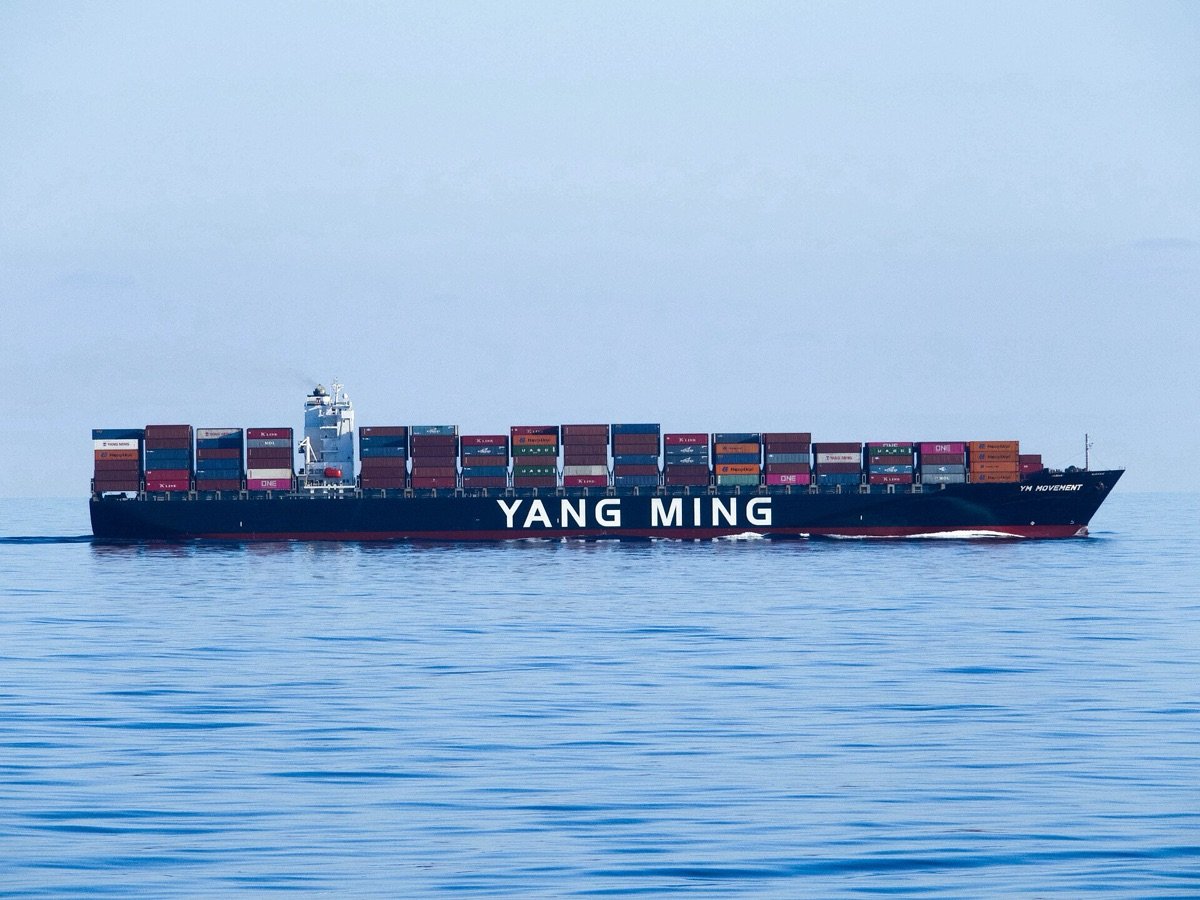
Lloyd’s List Intelligence counted 314 container-ship crossings of Bab el-Mandeb in September 2026, 64% more than a year earlier and the highest since the attacks began. Linerlytica estimated that more than 140 container ships with over 2 million TEU of capacity had returned to the Suez route since May, so that about 35% of Asia–Europe sailings used the Red Sea. Maersk, Hapag-Lloyd, MSC, CMA CGM and COSCO had all moved some services back; ONE, HMM and Yang Ming announced two. Total cargo through the strait was still only about one-third of 2023 levels.
2026
Gemini moves four more services to Suez Return
Maersk and Hapag-Lloyd said four more Gemini Cooperation services would switch from the Cape to the Suez Canal: AE5 (Asia–North Europe), AE11 and AE12 (Asia–Mediterranean) and ME2 (India–Europe), with first westbound sailings by Antonia Maersk on 19 September, Marchen Maersk on 21 September and Cornelia Maersk on 24 September. They called Suez “the fastest, most sustainable and most efficient” route, but cited the Houthis’ advance along the coast and said they would reroute if security worsened.
2026
Houthis take the strait’s Yemeni shore Attack
A Houthi offensive along the coast, launched on 3 September, captured the port of Mokha on 10 September and then Perim (Mayun) Island, which splits the Bab el-Mandeb into two channels, and the Greater and Lesser Hanish islands, after government forces withdrew. For the first time the Houthis physically held the Yemeni side of the strait. Brent crude rose above $100 a barrel. Container lines went ahead with their return plans, but insurers and navies treated the strait as a higher-risk zone.
Suez revenue recovers; a dhow sinks Cost
The Suez Canal Authority reported 1,358 transits and $567.1 million in August 2026, up 27% and 56.7% on August 2025, and fiscal 2025/26 revenue of $4.67 billion, up 23% but still about half the pre-crisis level. On 4 August the India-flagged vessel Faize Noore Oliya sank off Yemen after being hit by a projectile; all crew, including 13 Indians, were rescued by the Yemeni coast guard, and India’s Ministry of External Affairs condemned the attack. No group claimed it. Analysts counted 12 attacks on merchant ships in July and August.
2026
A blockade on Saudi shipping Attack
A week after Saudi Arabia struck the runway at Sanaa airport, Houthi military spokesman Yahya Saree announced a maritime embargo on Saudi Arabia on 20 July, saying ships calling at Saudi ports or carrying Saudi oil could be targeted. By 21–22 July ship-tracking data showed Saudi-bound vessels, including a Chinese-operated container ship, turning around before entering the Red Sea. It ended four years of relative calm between the Houthis and Saudi Arabia, and came while Saudi Arabia was relying on Red Sea ports to export oil around the closed Strait of Hormuz.
2026
IMF: still half of normal Cost
An IMF analysis of global transport disruptions found that transits through Bab el-Mandeb “remain stuck at roughly half their pre-attack level”, more than two years after the attacks began. It warned that if Hormuz shipping and Gulf air traffic recovered as slowly, “the drag on growth will persist long after the fighting stops”.
2026
A return cut short by the Iran war Route change
After a pause in attacks on merchant ships from November 2025, Maersk and Hapag-Lloyd began tentative Red Sea transits in early February 2026. Within weeks the US and Israel struck Iran, and around 1 March the Houthis signalled that attacks on shipping would resume. Maersk diverted sailings back to the Cape from 5 March. The Houthis resumed missile fire at Israel on 28 March, and the Iran war closed most traffic through the Strait of Hormuz.
2025
Gaza ceasefire, attacks pause Return
The Gaza ceasefire that began on 10 October 2025 led the Houthis to halt their campaign, and large-scale attacks on merchant ships had effectively stopped by November. Shipping lines began planning returns, and in December Reuters surveyed carriers’ plans: most wanted a sustained period without attacks before committing full services.
2025
Two more ships sunk Attack
Two months after the US–Houthi truce, the Houthis attacked and sank the bulk carriers Magic Seas and Eternity C. Several Eternity C crew were killed and others went missing or were taken ashore. The attacks showed that the May agreement protected US ships, not merchant shipping as a whole, and carriers that had considered returning stayed away.
2025
Suez offers a 15% discount Policy
The Suez Canal Authority announced a 15% cut in transit fees for container ships of 130,000 net tonnes or more, laden or empty, for 90 days from 15 May. Canal revenue had fallen to $880.9 million in the fourth quarter of 2024 from $2.4 billion a year earlier. The discount made the canal cheaper; it did not make the strait safer, and few lines changed course.
2025
US–Houthi ceasefire Policy
After a seven-week US bombing campaign, Oman announced that the US and the Houthis had agreed to stop attacking each other. The deal did not cover Israel, and the Houthis said Israel-linked shipping remained a target. Shippers told analysts they wanted at least three months without attacks before returning.
2025
Gaza truce; Galaxy Leader crew freed Policy
With the January 2025 Gaza ceasefire, the Houthis said they would target only Israel-linked ships, and on 22 January released the 25 crew of the Galaxy Leader, held since November 2023. Shipping lines did not return: the truce collapsed in March.
Egypt loses about $6 billion Cost
Egypt, which relies on canal tolls for foreign currency, was the biggest single economic loser. The IMF later estimated that the disruption cut its foreign-exchange income from the canal by about $6 billion in 2024, with transit volumes about a third of pre-conflict levels. Canal revenue fell from $9.4 billion in fiscal 2022/23 to $7.2 billion in 2023/24, and transits from 25,911 to 20,148.
Suez transits down 70% Route change
UNCTAD’s Review of Maritime Transport found that by June 2024 Suez Canal transits were down 70% compared with mid-December 2023, while arrivals at the Cape of Good Hope were up 89% and container-ship capacity entering the Gulf of Aden had fallen 92%. It put the average cost of an Asia–Europe round trip by a median-sized container ship at about $1 million via Suez and $1.7 million via the Cape. The same month the bulk carrier Tutor was hit and sank, killing one seafarer.
2024
First ship sunk, first deaths Attack
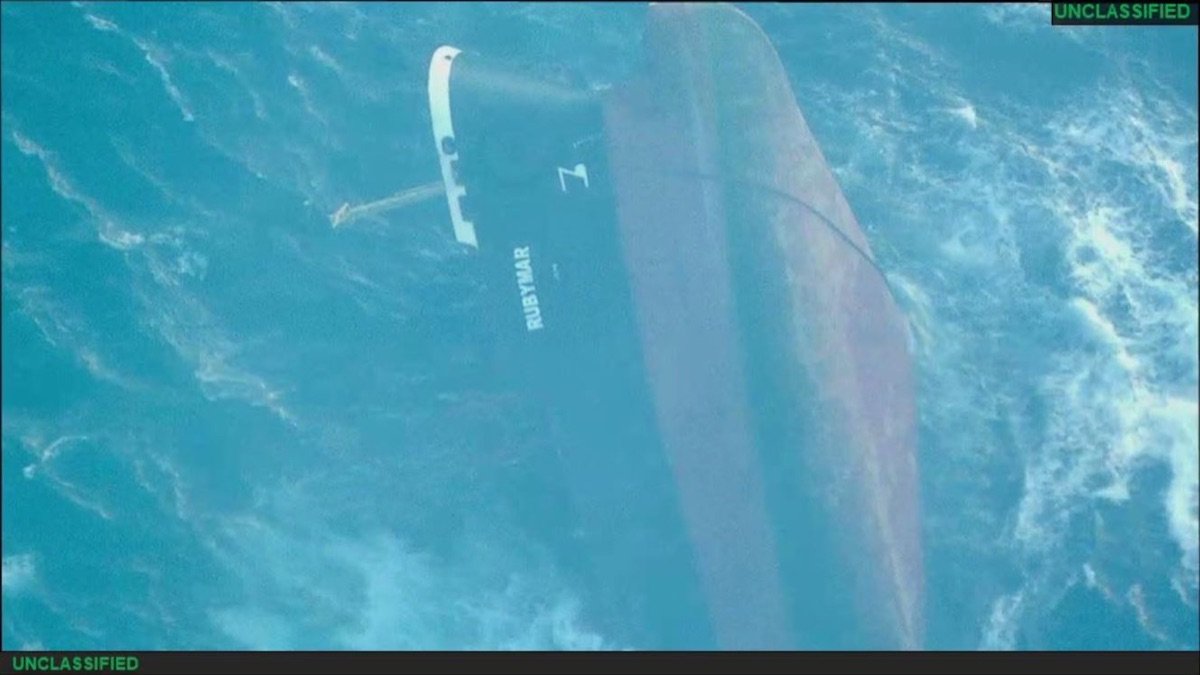
The cargo ship Rubymar, hit on 18 February, sank on 2 March, the first ship lost in the campaign. Four days later a missile struck the bulk carrier True Confidence in the Gulf of Aden, killing three crew, the first deaths. Insurers raised war-risk premiums for the area, and almost all large container lines stayed on the Cape route.
2024
Suez volume halves; freight rates spike Cost
The IMF found that Suez trade volume fell 50% year on year in the first two months of 2024, while traffic round the Cape rose about 74%, and that diversions added 10 days or more to delivery times. UNCTAD reported that by early February average container spot rates from Shanghai were up 122% on early December, and Shanghai–Europe rates up 256%. At the same time a drought cut Panama Canal trade volume by almost a third.
The Cape becomes the main route Route change
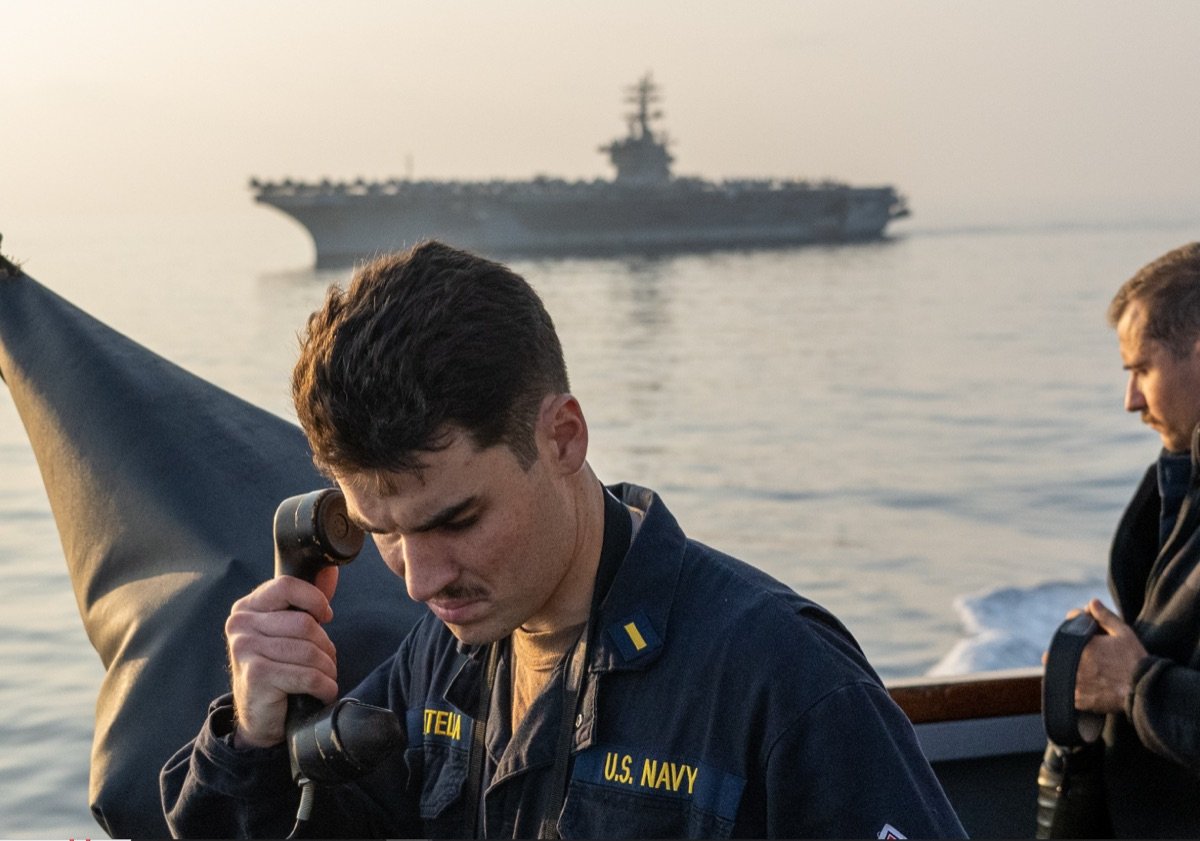
The World Bank estimated that rerouting round the Cape added 3,000–3,500 nautical miles (5,500–6,500 km) and seven to 10 days to a typical Asia–Europe trip, and up to $1 million in fuel per round trip. Asia–Europe rates passed $3,000 per 40-foot container, three times the 2023 low. Longer voyages meant each ship made fewer trips a year, so the industry lost effective capacity. On 12 January the US and UK began air strikes on Houthi targets; in late January the Indian Navy’s INS Visakhapatnam helped fight a fire on the tanker Marlin Luanda after a missile hit.
2023
Carriers pause the Red Sea Route change
After a string of attacks, Maersk, Hapag-Lloyd, MSC and CMA CGM paused Red Sea transits between 15 and 18 December, and oil companies and tanker owners followed. On 18 December the US announced Operation Prosperity Guardian, a multinational escort mission. Carriers added emergency surcharges, and the average container spot rate recorded its largest-ever weekly rise, about $500, in the last week of December. India deployed warships to the Arabian Sea after the tanker Chem Pluto was hit by a drone off Gujarat on 23 December.
2023
Galaxy Leader seized Attack
The Houthis had fired missiles and drones toward Israel from 19 October 2023, saying they acted in support of Palestinians during the Gaza war. On 19 November fighters landed by helicopter on the car carrier Galaxy Leader, which had a link to an Israeli businessman, and took it to Yemen with its 25 crew. The Houthis then broadened their targets to ships they said were linked to Israel, and later to the US and UK.
Oct 2023
The Suez shortcut Policy
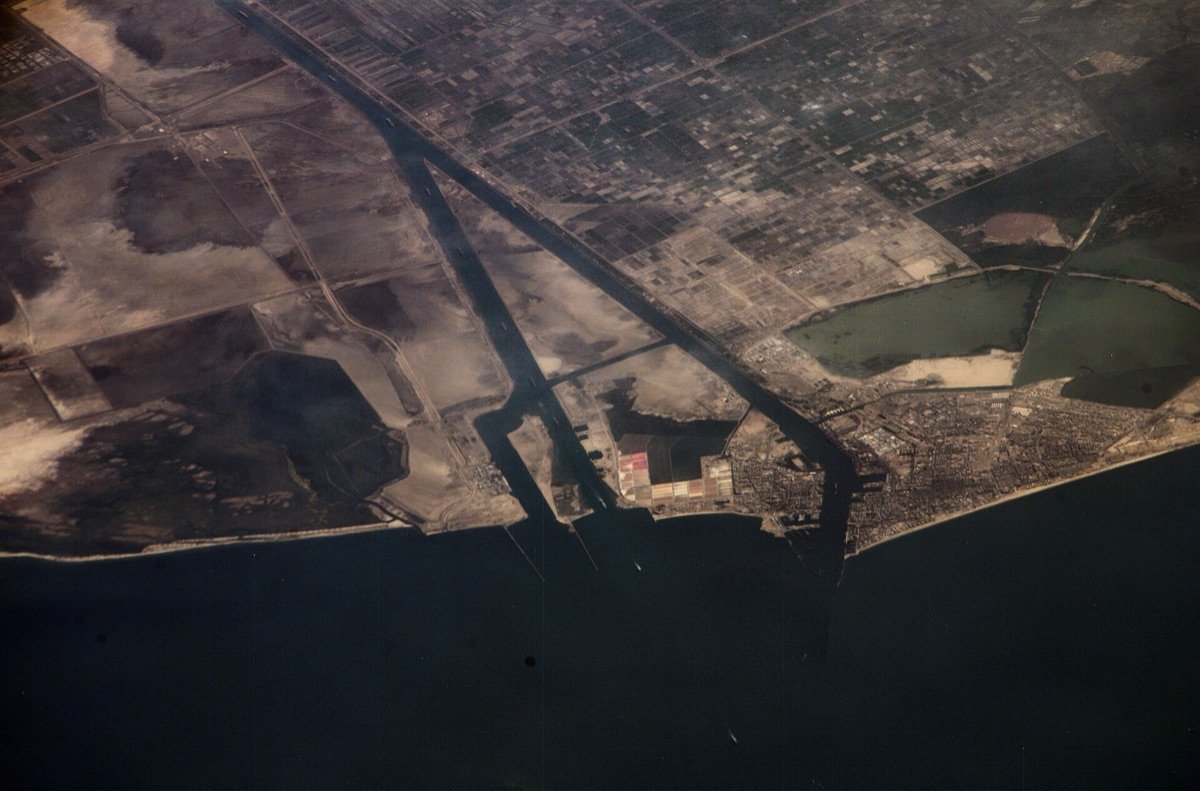
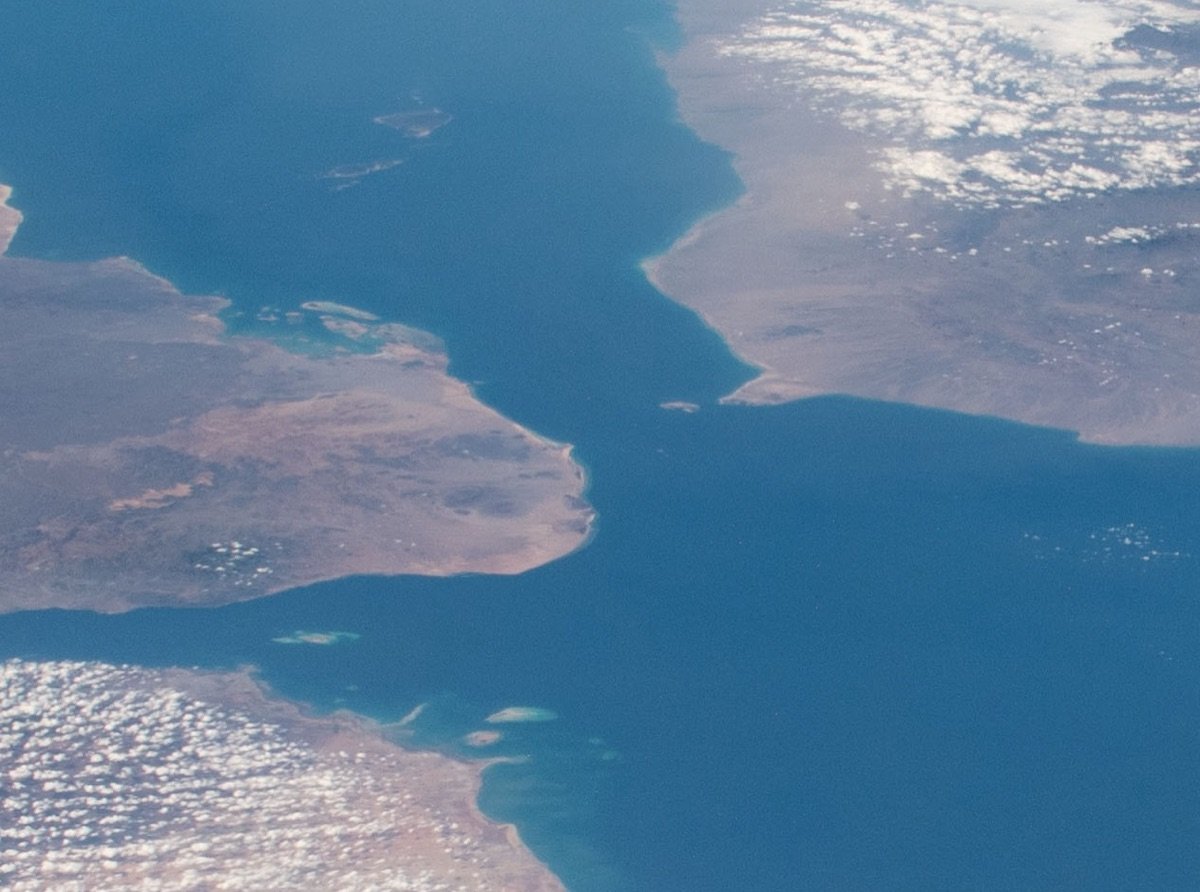
The Suez Canal joins the Mediterranean to the Red Sea, saving ships between Asia and Europe the voyage round Africa. To use it, ships coming from Asia, the Gulf or East Africa must pass the Bab el-Mandeb strait between Yemen and Djibouti. Before the crisis the Red Sea route carried an estimated 10–15% of world seaborne trade, and Egypt earned $9.4 billion from canal tolls in 2022/23. Supply chains had been built around that shortcut.
Suez vs the Cape: How Much Further?
The detour adds a similar number of miles to most Asia–Europe routes. What changes is how much of the trip it adds.
Pick a route and a speed. See what the detour adds
Distances are rounded AiTimeline estimates from standard port-to-port legs. Container ships typically sail at 14–18 knots; faster means more fuel.
What Rerouting Actually Costs
There is no single price tag. These are the cost lines, with the best dated benchmark for each.
| Cost | Why it rises on the Cape route | Benchmark (with date) |
|---|---|---|
| Fuel | More distance, and ships may speed up to keep schedules | Up to $1 m extra per Asia–Europe round trip (World Bank, Jan 2024) |
| Ship time | Each voyage takes longer, so each ship makes fewer trips a year | +7–10 days each way (World Bank); 10+ days (IMF) |
| Total voyage cost | Fuel, charter, crew and other operating costs | ~$1.0 m via Suez vs ~$1.7 m via Cape, median container ship, round trip (UNCTAD, 2024) |
| Freight rates | Effective capacity shrinks, so carriers raise rates and surcharges | Shanghai–Europe spot +256%, early Dec 2023 to early Feb 2024 (UNCTAD) |
| Insurance | War-risk premiums for the Red Sea, or for the extra time at sea | Varies by ship, owner and flag; rose again after July 2026 |
| Canal tolls | Saved on the Cape route, offsetting part of the extra cost | Hundreds of thousands of dollars per big container-ship transit |
| Inventory | Importers hold more stock or pay for faster options | Varies; hardest for firms running lean stock |
| Emissions | More fuel burned over a longer distance | Rises roughly in line with extra fuel |
The biggest cost is not the fuel on any one voyage but the loss of capacity across the fleet. If every Asia–Europe round trip takes two or three weeks longer, a carrier needs more ships to keep a weekly service, and the market has fewer spare ships for everything else. That is why freight rates rose even on routes that never went near the Red Sea, and why the return of ships to Suez in 2026 pushed rates down again: Linerlytica’s market indicator turned negative in September 2026 for the first time since January.
Some costs offset each other. A ship on the Cape route pays no Suez tolls, and the big carriers’ profits rose in 2024 as rates climbed. Others land on people who never chose the route: exporters with small volumes and little bargaining power, and factories that ran short of parts.
Egypt’s Lost Canal Income
The Suez Canal is one of Egypt’s main sources of foreign currency.
Pick a moment and see what carriers were doing, and why
The route has not simply been “closed” or “open”. Each phase had its own risk and its own carrier response.
Who Pays the Price?
| Who | What it cost them | Example |
|---|---|---|
| Seafarers | Danger, death and captivity | 3 killed on True Confidence; 25 Galaxy Leader crew held 14 months |
| Egypt | Lost canal tolls and foreign currency | ~$6 bn in 2024 (IMF) |
| Shipping lines | Higher costs, but also higher rates | Rates tripled on Asia–Europe in early 2024 |
| Exporters and importers | Longer, less predictable deliveries; surcharges | Indian exporters to Europe and the US East Coast |
| Manufacturers | Late parts, extra stock | Some European car plants paused output in early 2024 |
| Consumers | Small, delayed price effects on imported goods | Depends on product and how long the disruption lasts |
What the Crisis Means for India
India’s trade with Europe, the Mediterranean, North Africa and the US East Coast normally runs through the Red Sea.
A bigger detour, proportionally
Because the Suez route from India is short, going round the Cape adds around 70% to a Mumbai–Rotterdam voyage by our estimate, against about a third for Shanghai–Rotterdam. Indian exporters lose more time relative to East Asian competitors.
Freight and working capital
Engineering goods, textiles, chemicals and farm exporters to Europe faced higher rates and longer payment cycles. Small exporters, who buy shipping on the spot market, were hit hardest.
Indian warships at sea
The Indian Navy deployed warships to the Arabian Sea and Gulf of Aden from December 2023 and helped ships in distress, including firefighting on the Marlin Luanda in January 2024.
Indian crews in harm’s way
Indians are among the largest groups of seafarers worldwide. In August 2026 the India-flagged Faize Noore Oliya sank off Yemen; its 13 Indian crew were rescued.
ME2 back through Suez
Maersk and Hapag-Lloyd’s India–Europe ME2 service returned to Suez with Cornelia Maersk’s sailing on 24 September 2026, shortening India–Europe transit times again, for as long as the route holds.
Oil from both chokepoints
India buys crude from the Gulf and, in 2026, faced disruption at Hormuz and new risk at Bab el-Mandeb at the same time, adding to freight and insurance costs and pressure on the rupee.
What Would It Take to Return to Normal?
A durable halt to attacks, not a pause. Each return so far, in early 2024, after the May 2025 truce, and in February 2026, was cut short by new attacks or a wider war. Shippers have said they want months of calm, not weeks.
Affordable insurance. War-risk premiums have to fall to levels that make the shortcut cheaper than the detour once all costs are counted.
Rebuilt schedules. Switching a service back takes weeks of repositioning ships and containers, and a carrier that switches back too early risks another costly reroute.
A settlement on land. Since September 2026 the strait’s Yemeni shore and islands are held by the Houthis and contested by government forces. The shipping crisis cannot fully end while Yemen’s war is being fought on the waterline.
Corrections and Clarifications
Claims in the brief this page was built from, checked against the IMF, the World Bank, UNCTAD, the Suez Canal Authority and news reports.
“By late December 2023, rates rose 122% and 256%”
UNCTAD’s figures compare early February 2024 with early December 2023. What happened in late December was the largest-ever weekly rise in average spot rates, about $500.
“Additional cost rose from $1 million to $1.7 million”
UNCTAD’s $1 million and $1.7 million are the total average costs of a round trip via Suez and via the Cape. The difference, about $700,000, is the additional cost.
“Suez considering a 12–15% discount”
The Suez Canal Authority announced a 15% discount on 13 May 2025, for container ships of 130,000+ net tonnes, for 90 days from 15 May. The revenue comparison was Q4 2024 vs Q4 2023.
“Suez trade volume down 50%” vs “transits down 70%”
Both are right but measure different things: the IMF compared January–February 2024 with a year earlier; UNCTAD compared June 2024 with mid-December 2023.
The human cost
The brief did not mention that ships were sunk and seafarers killed: the Rubymar, Tutor, Magic Seas and Eternity C sank, and at least three crew died on the True Confidence.
The story after July 2026
We added the Indian vessel sunk on 4 August, the Houthi capture of Mokha and Perim in September, the Gemini services’ return to Suez, September’s post-crisis high in crossings and October’s Yemen counter-offensive.
Explore More Timelines
People Also Ask
Frequently Asked Questions
The Bottom Line
For almost three years the Red Sea shipping attacks turned the world’s main Asia–Europe shortcut into a route most big ships avoided. Going round Africa added about 3,500 nautical miles and a week or two to each voyage, tripled freight rates for a time, cost Egypt billions, and killed seafarers who had no part in the conflict. By October 2026 a third of Asia–Europe sailings had come back to Suez, but the strait’s shore is now a front line. The cheapest route is only cheap when ships can use it safely.
Related AiTimeline Stories
⚠️ Editorial Note
Last updated 11 October 2026. Traffic, cost and rate figures are from the IMF (March 2024 and April 2026 blogs; Egypt 2025 Article IV), the World Bank (January 2024), and UNCTAD (February 2024 assessment; Review of Maritime Transport 2024), and are dated benchmarks, not current quotes. Suez revenue is from Suez Canal Authority statements reported by Egypt Today and Ahram Online. 2026 events are from carrier announcements, Lloyd’s List Intelligence via Kuehne+Nagel, The Washington Post, Euronews and the Red Team Analysis Society. Route distances in the calculator and chart are rounded AiTimeline estimates. The situation in Yemen is changing quickly. AiTimeline has no commercial relationship with any carrier, insurer or freight forwarder.
Sources & further reading
Every dated entry above was checked against these references. Last reviewed 11 October 2026.
- IMF: Red Sea Attacks Disrupt Global Trade (March 2024)
- World Bank: Will prolonged rerouting of ships away from Suez trigger a new supply chain crisis? (January 2024)
- UNCTAD: Unprecedented shipping disruptions raise risk to global trade (February 2024)
- UNCTAD: Review of Maritime Transport 2024, Chapter II
- IMF: Arab Republic of Egypt, 2025 Article IV Consultation
- IMF: Global disruptions are testing how the world moves goods and people (April 2026)
- Egypt Today: Suez Canal revenues fall to $7.2B in FY23/24
- Ahram Online: Suez Canal traffic rises 27% in August 2026, revenue $567 mln
- The Washington Post: Ships bound for Saudi Arabia turn around in sign of new Red Sea blockade (July 2026)
- Euronews: Houthis seize Yemeni island in Bab el-Mandeb (September 2026)
- gCaptain: Maersk, Hapag-Lloyd accelerate return to Suez (September 2026)
- Kuehne+Nagel: Red Sea container transits hit post-crisis high