US Government Shutdowns: A Comprehensive Timeline of Causes and Resolutions
America's government shutdowns have repeatedly disrupted federal operations, from the Clinton-era budget fights to the record 43-day shutdown of 2025 and
Latest Story
A US government shutdown does not mean the country has run out of money. It means Congress and the President have failed to pass the laws that fund federal agencies before the old funding expires. This US government shutdown timeline runs from the first funding gaps of 1976 and the legal opinions of 1980-81 that turned gaps into furloughs, through the Clinton-Gingrich showdowns, the 2013 health-care fight and the 2018-19 border wall stand-off, to the record 43-day shutdown of 2025, the two partial lapses of 2026 and the next deadline on 11 December 2026. Dates and durations are checked against the Congressional Research Service and the laws that ended each lapse.
💡 Short Answer
A US government shutdown happens when appropriations lapse and agencies must stop work that is not legally excepted. CRS counts 23 funding gaps since 1976. The longest government-wide shutdown ran 43 days, from 1 October to 12 November 2025, over Affordable Care Act subsidies. Two partial lapses followed in 2026, including a 75-day Homeland Security lapse. The government is now funded to 11 December 2026.
US Government Shutdowns: Key Questions
Government Shutdowns in Ten Points
- What it is: agencies stop non-excepted work when their appropriations lapse; it is not a lack of money.
- Origin: funding gaps began with the new 1 October fiscal year in 1976; Civiletti’s 1980-81 opinions made them shutdowns.
- Count: 23 funding gaps since fiscal 1977, from one to 75 full days.
- Record: 43 days, 1 October to 12 November 2025, the longest government-wide shutdown.
- 2026: two partial lapses: six bills for three days, then Homeland Security for 75 days.
- Causes: health care (2013, 2025), immigration (2018, 2026), a border wall (2018-19), balanced budgets (1995-96).
- Pay: back pay is guaranteed by law since January 2019; contractors are not covered.
- Cost: CBO put the permanent GDP loss at about $3 billion in 2018-19 and about $11 billion for a six-week 2025 shutdown.
- Not the debt ceiling: a shutdown is about spending laws, not the borrowing cap.
- Next: current funding expires on 11 December 2026.
Funding Gap, Shutdown, Stopgap, Debt Ceiling
Four terms that are often mixed up.
The 12 spending bills
Annual laws that fund agencies from 1 October. Since 1977 all have been on time in only four years.
The stopgap
Temporary funding, usually at last year’s rates, while Congress finishes the bills. Most years start on one.
The legal lapse
A full day with no budget authority. CRS counts 23 since fiscal 1977.
The response
Agencies halt work that is not excepted and furlough staff. Short or weekend gaps may cause little of it.
The US Government Shutdown Timeline, 1976–2026
Newest first. Tags mark shutdowns, funding gaps, records, laws, partial lapses and what to watch.
Funded to 11 December; the next deadline nears Watch
Fiscal year 2027 began on 1 October 2026 without a shutdown. The Senate passed a stopgap on 8 August and the House cleared it 370-48 on 1 September; President Trump signed it on 2 September as Division A of P.L. 119-103, the Continuing Appropriations and Extensions Act, 2027. It funds agencies under all 12 appropriations bills at rates based on fiscal 2026 laws for 72 days, to 11 December 2026. CBO estimated it provides an annualised $1.701 trillion of discretionary budget authority. Unless Congress passes full-year bills or another continuing resolution, a funding gap would begin on 12 December, a month after the November midterm elections. In July the House Appropriations Committee held a hearing on shutdown reform; no reform has passed.
2026
The Homeland Security lapse: 75 days, a new record Record
The February law funded Homeland Security for only two weeks, and on 14 February 2026 DHS appropriations lapsed. Democrats, after two US citizens were killed in Minneapolis during federal immigration operations in January, demanded limits on Immigration and Customs Enforcement and Customs and Border Protection: body cameras, visible identification, no masks and judicial warrants before entering private property. Republicans refused. Because the 2025 reconciliation law had given DHS large multi-year funds, ICE and CBP kept operating and the administration used $10 billion from that law to pay about 70,000 law-enforcement staff, while TSA screeners went unpaid for most of the lapse. CISA furloughed about 60% of its staff and the Coast Guard built a backlog of 15,000 mariner credentials. On 27 March the Senate passed a bill by voice vote that funded DHS except ICE and the Border Patrol, and the President ordered TSA, then all DHS staff, paid. The House passed it on 30 April (P.L. 119-86), after 75 full days, the longest lapse for any department. ICE and the Border Patrol got almost $70 billion in a reconciliation law signed on 10 June 2026 (P.L. 119-98).
2026
A four-day partial shutdown Partial
The November 2025 stopgap expired on 30 January 2026. By then three of the 12 bills had full-year funding and three more had been enacted in January, but agencies under the other six bills, including Defense, Labor-HHS-Education, Transportation-HUD, State and Homeland Security, lost funding at midnight. The Senate passed a package on 30 January, but the House was out until the following week. It passed the package 217-214 on 3 February and the President signed it the same day as P.L. 119-75. The gap lasted three full days. The package funded five bills for the rest of the year but gave Homeland Security only a two-week stopgap, setting up the next lapse.
2025
The 43-day shutdown, the longest government-wide Record
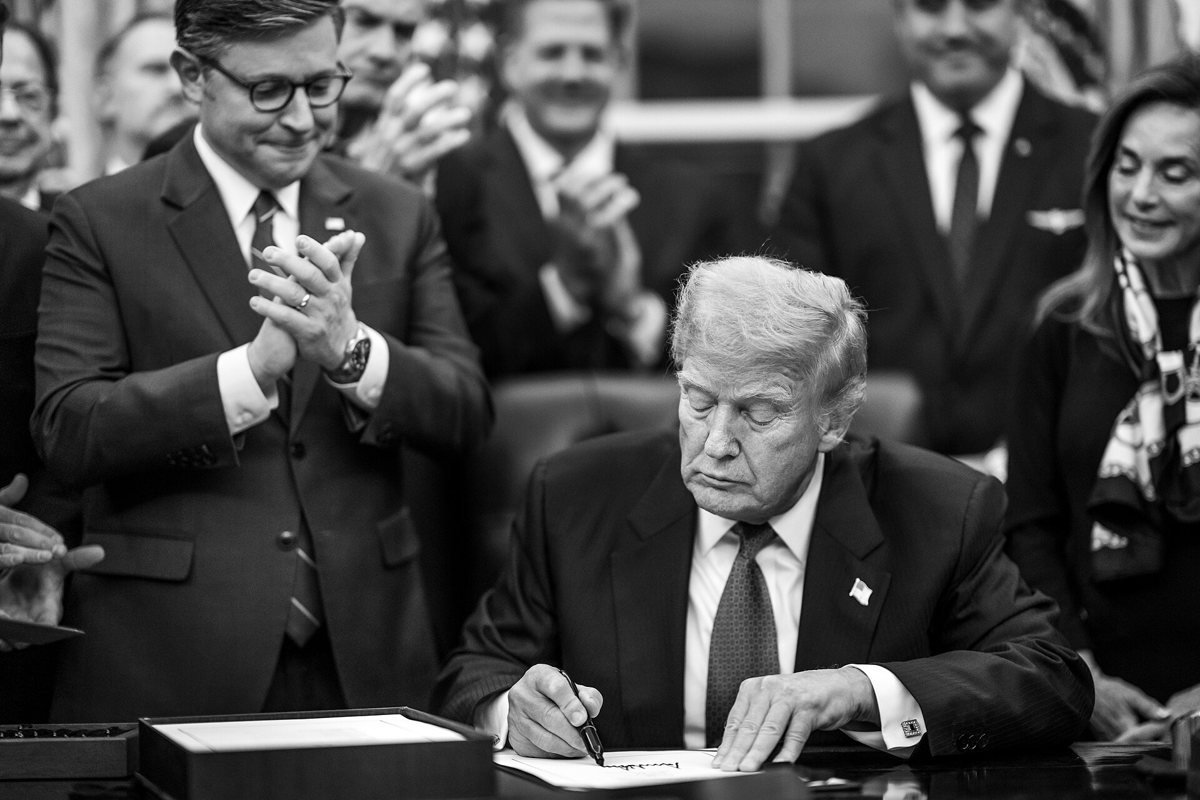
None of the 12 appropriations bills for fiscal 2026 had been enacted when the year began, and a House-passed stopgap (H.R. 5371) failed in the Senate on 19 and 30 September. At 12:01 a.m. on 1 October 2025 a government-wide shutdown began. Senate Democrats demanded an extension of the enhanced Affordable Care Act premium tax credits, due to expire at the end of 2025; Republicans insisted on a clean bill first. CBO had estimated about 750,000 employees could be furloughed each day. The administration issued layoff notices to about 4,000 workers, used other funds to pay troops, and the November SNAP food benefits were delayed and fought over in court. With air traffic controllers working unpaid, the FAA ordered airlines to cut flights at 40 major airports from 7 November. On 10 November eight Democratic-caucus senators joined Republicans to pass a revised bill 60-40 with a promise of a later vote on the health subsidies; the House passed it 222-209 on 12 November and President Trump signed it that night as P.L. 119-37. It funded agriculture, military construction and veterans, and the legislative branch for the full year, extended the rest to 30 January 2026, reversed the shutdown layoffs and guaranteed back pay. The lapse lasted 43 calendar days, 42 full days. CBO put the permanent loss of a six-week shutdown at about $11 billion of GDP.
2024
Near-misses, but no lapses Watch
For more than six years after the 2018-19 shutdown there was no funding gap, but continuing resolutions became the norm, and fiscal 2021 to 2025 all began on stopgaps. On 30 September 2023 Speaker Kevin McCarthy passed a 45-day CR with Democratic votes hours before the deadline, and was removed as Speaker days later. In December 2024 a bipartisan deal collapsed after opposition from President-elect Trump and Elon Musk; a slimmer stopgap was signed on 21 December, just after the deadline, without the government shutting down. CRS does not count a lapse of a few hours as a funding gap unless no budget authority exists for a full day.
Back pay becomes the law Law
Three weeks into the longest shutdown to that point, Congress passed the Government Employee Fair Treatment Act of 2019 (S. 24), and President Trump signed it on 16 January 2019 as P.L. 116-1. It requires that federal employees furloughed or required to work during any future lapse be paid once funding is restored, at the earliest date possible. Before 2019 Congress had approved back pay after each shutdown, but it was never guaranteed. The law does not cover federal contractors, who can lose wages for the time their work is stopped.
Jan 2019
The border wall shutdown: 35 days Shutdown
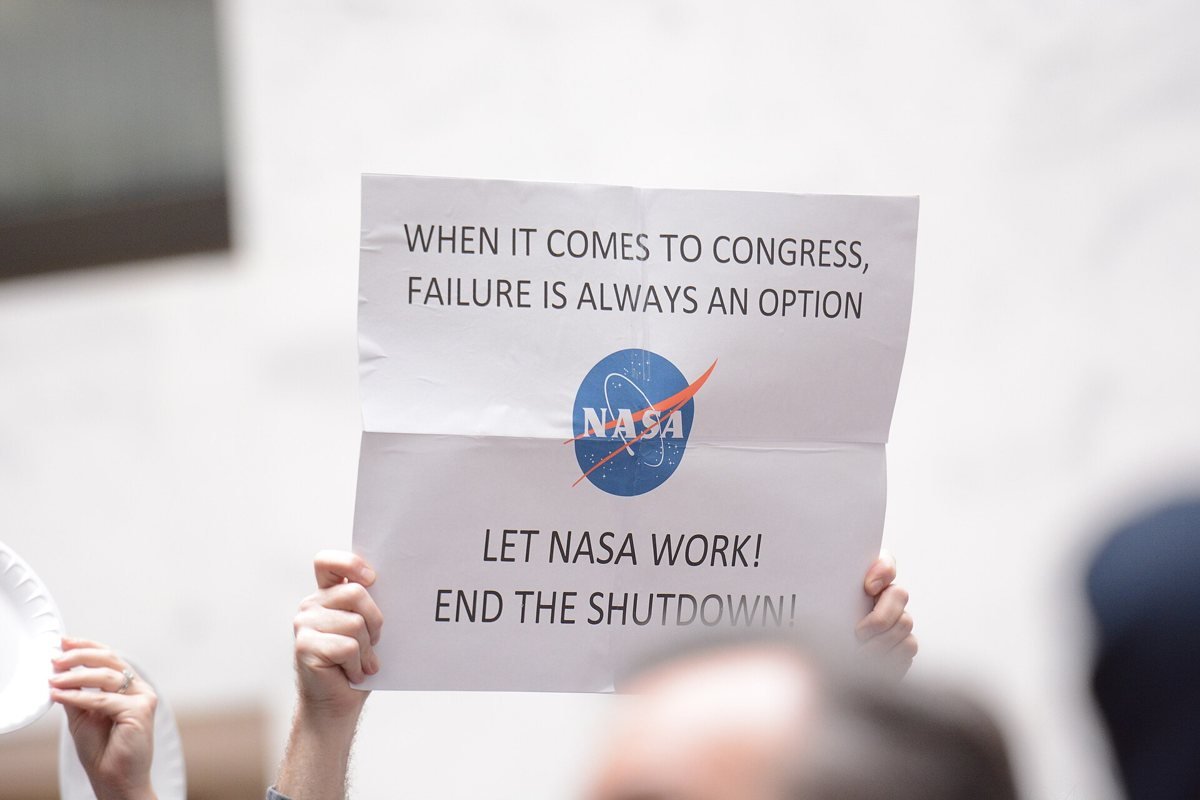
Five of the 12 bills for fiscal 2019, including Defense, had been enacted in 2018, so this was a partial shutdown. The other seven, covering departments such as Homeland Security, Justice, Agriculture, Interior and Treasury, lapsed at midnight on 21 December 2018, after the House added $5.7 billion for a border wall to a Senate stopgap and the Senate could not get 60 votes. About 800,000 federal employees were furloughed or worked without pay. Democrats took the House on 3 January and refused wall money. As unpaid air traffic controllers and TSA officers called in sick and flights at LaGuardia were briefly halted, President Trump signed a three-week stopgap without wall funds on 25 January 2019 (P.L. 116-5). The gap lasted 34 full days. CBO estimated it cost about $11 billion of GDP, $3 billion of it permanently. In February Trump declared a national emergency to redirect money to the wall.
A shutdown measured in hours Funding gap
Funding lapsed again at midnight on 8-9 February 2018 after Senator Rand Paul objected to speeding up a vote on a two-year budget deal over its spending increases. The Senate and House passed the Bipartisan Budget Act of 2018 in the early hours and President Trump signed it on the morning of 9 February. It raised spending caps for two years, extended funding to 23 March and suspended the debt limit. Because the lapse lasted only hours, CRS lists it as a brief shutdown but not as a funding gap of a full day.
The DACA shutdown Shutdown
The fiscal 2018 government had run on three stopgaps when the last expired at midnight on 19 January 2018. Senate Democrats wanted legal protection for immigrants brought to the US as children, the “Dreamers”, after President Trump ended the DACA programme in 2017. Furloughs began over the weekend and ran into Monday. The shutdown ended on 22 January when Democrats accepted a stopgap to 8 February with a promise of a Senate immigration debate, and P.L. 115-120 was signed. It also funded the Children’s Health Insurance Program for six years. The gap lasted two full days.
The Obamacare shutdown: 16 days Shutdown
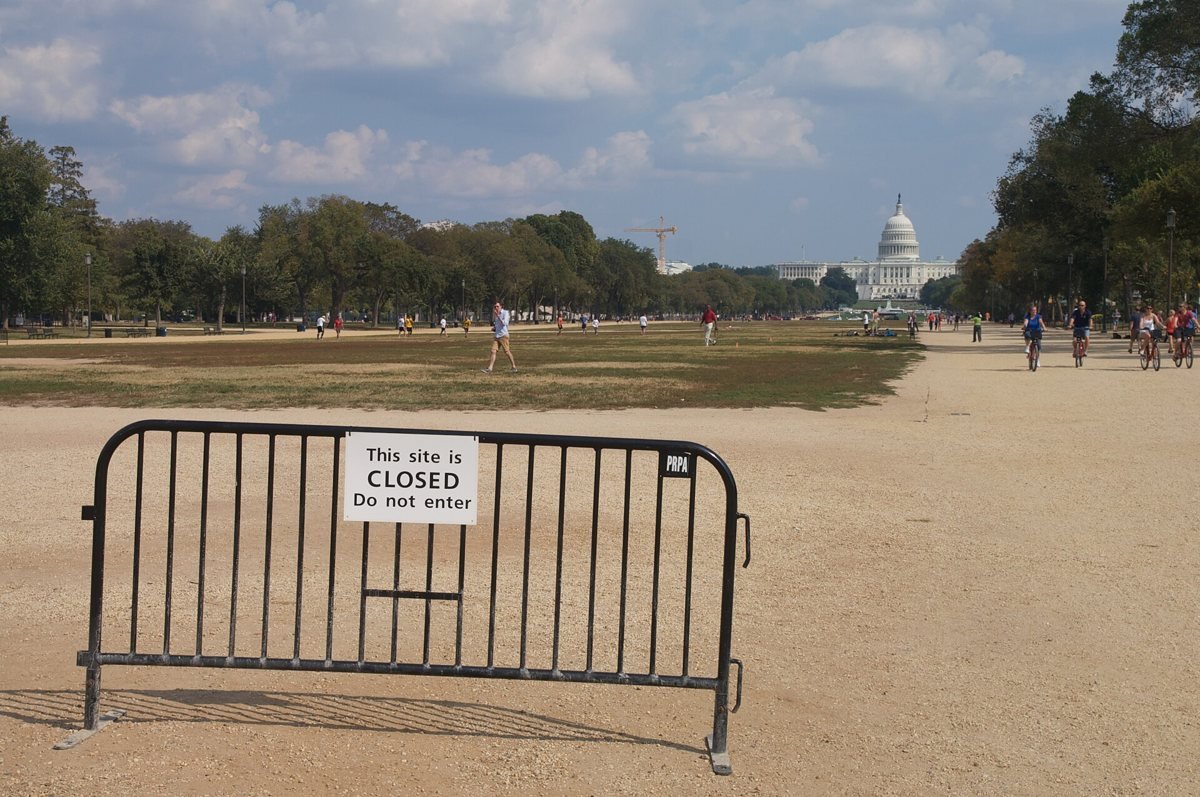
On 1 October 2013, the day the Affordable Care Act’s insurance exchanges opened, government-wide funding lapsed. House Republicans passed stopgaps that would delay or defund the health law, which President Obama and the Democratic Senate rejected. More than 800,000 employees were furloughed at first, though the Pay Our Military Act, signed on 30 September, and later recalls brought many defence civilians back. National parks, the Smithsonian museums and the National Mall closed. The fight ran into the debt limit, which Treasury said would bind by 17 October. On 16 October the Senate passed a deal 81-18 and the House 285-144; Obama signed P.L. 113-46 just after midnight on 17 October, funding the government to 15 January 2014 and suspending the debt limit. The gap lasted 16 full days. OMB later counted about 6.6 million days of lost work and about $2 billion paid to furloughed staff for time they could not work.
Jan 1996
Clinton vs Gingrich, round two: 21 days Shutdown
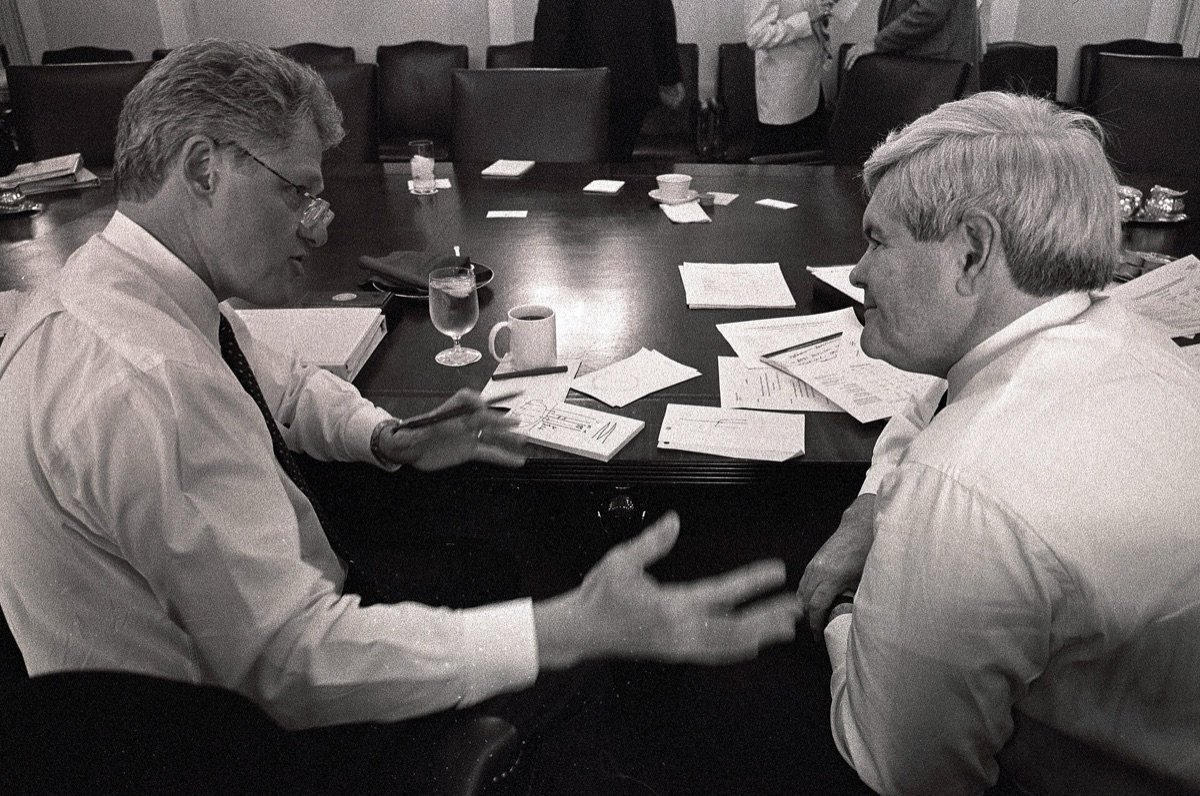
The November truce ran out at the end of 15 December 1995, with six of the 13 appropriations bills of the time still unfinished. Talks between President Bill Clinton and the Republican Congress led by Speaker Newt Gingrich over a seven-year balanced budget, Medicare, Medicaid and tax cuts broke down. About 280,000 employees were furloughed, and many more worked without pay; a small law signed on 22 December kept veterans’ and welfare payments and the District of Columbia government going. Public opinion turned against the congressional Republicans. On 6 January 1996, as a blizzard hit Washington, Clinton signed three stopgaps that reopened the government. The gap lasted 21 full days, then the longest, and five more stopgaps were needed before the year’s funding was finished on 26 April 1996.
Clinton vetoes, 800,000 sent home Shutdown
Only three of 13 appropriations bills had been enacted when the fiscal 1996 stopgap expired at the end of 13 November 1995. That day President Clinton vetoed a second stopgap, objecting to the Medicare premium increases in it, and also vetoed a debt-limit bill. About 800,000 federal employees were furloughed. After five full days, the two sides agreed on 19 November to a stopgap to 15 December and a shared goal of balancing the budget in seven years, with the details to be fought over later.
Bush vetoes and a Columbus Day shutdown Shutdown
In the autumn of 1990 President George H. W. Bush and congressional leaders were negotiating a deficit-reduction package after Bush had abandoned his “no new taxes” pledge. When the House rejected their first budget summit agreement, Bush vetoed a stopgap that did not include it, and funding expired at the end of 5 October 1990. Over the Columbus Day weekend some national parks and museums closed. A new stopgap was signed on 9 October, after three full days, and the Omnibus Budget Reconciliation Act followed in November.
1987
Reagan’s eight short gaps Funding gap
Under President Ronald Reagan there were eight funding gaps, each one to three full days long. The first followed his veto of a stopgap in November 1981 over spending levels, when thousands of employees were sent home for part of the day. Others came in October and December 1982, November 1983, twice in October 1984, October 1986 and December 1987. Many fell over weekends or holidays, so agencies did little shutting down; during the October 1984 gap, non-excepted staff were furloughed for part of a day. These short gaps made the threat routine, but not yet costly.
1981
The Civiletti opinions change the rules Law
The modern shutdown was created by two legal opinions from Attorney General Benjamin Civiletti, requested by President Jimmy Carter’s administration. In 1980 he concluded that the Antideficiency Act forbids agencies to keep working when their appropriations expire, and in January 1981 he set out the exceptions: activities with a “reasonable and articulable connection” to the safety of human life or the protection of property, plus work authorised by other law. OMB told agencies to draw up shutdown plans in Bulletin 80-14 of August 1980. From then on, a funding gap meant furloughs.
1979
Funding gaps without shutdowns Funding gap
The Congressional Budget Act of 1974 moved the fiscal year to start on 1 October from fiscal 1977. The first funding gap followed at once: budget authority for some agencies expired on 30 September 1976 and was restored on 11 October, a 10-day gap under President Gerald Ford. Under President Jimmy Carter there were five more, of 8 to 17 days, including three in fiscal 1978 over abortion funding in the Labor and Health, Education and Welfare bill. Agencies largely kept working and cut back on hiring, travel and new contracts, expecting Congress to pay later.
Pick a service
What usually happens to each one during a lapse in appropriations. Plans vary by administration and by which bills have lapsed.
How Long Each Modern Shutdown Lasted
Full days without funding, as counted by CRS.
Pick a shutdown
The trigger, the way out, and what it left behind.
US Government Shutdowns at a Glance
Selected funding gaps. Full days follow CRS; calendar days can be one higher.
| Period | Full days | Scope | Main issue | How it ended |
|---|---|---|---|---|
| 1–11 Oct 1976 | 10 | Some agencies | First year of the new fiscal calendar | Funding restored; no shutdown |
| Nov 1981 | 2 | Partial | Reagan veto over spending | Stopgap, 23 Nov |
| 6–8 Oct 1990 | 3 | Most agencies | Bush veto during deficit talks | Stopgap, 9 Oct |
| 14–19 Nov 1995 | 5 | Partial (10 of 13 bills) | Clinton vs Congress, Medicare premiums | Stopgap, 19 Nov |
| 16 Dec 1995–6 Jan 1996 | 21 | Partial (6 bills) | Balanced-budget plan | Three stopgaps, 6 Jan |
| 1–16 Oct 2013 | 16 | Government-wide | Affordable Care Act | P.L. 113-46, 17 Oct |
| 20–22 Jan 2018 | 2 | Government-wide | DACA, immigration | P.L. 115-120, 22 Jan |
| 9 Feb 2018 | hours | Government-wide | Objection to fast vote on budget deal | Bipartisan Budget Act, 9 Feb |
| 22 Dec 2018–25 Jan 2019 | 34 | Partial (7 bills) | Border wall money | P.L. 116-5, 25 Jan |
| 1 Oct–12 Nov 2025 | 42 | Government-wide | ACA premium tax credits | P.L. 119-37, 12 Nov |
| 31 Jan–3 Feb 2026 | 3 | Partial (6 bills) | Stopgap expired, House away | P.L. 119-75, 3 Feb |
| 14 Feb–30 Apr 2026 | 75 | Homeland Security | ICE and Border Patrol limits | P.L. 119-86, 30 Apr; ICE, USBP 10 Jun |
Funding Gaps by Decade
Frequent and short before 1990; rarer and longer since 2013.
What Happens During a Government Shutdown?
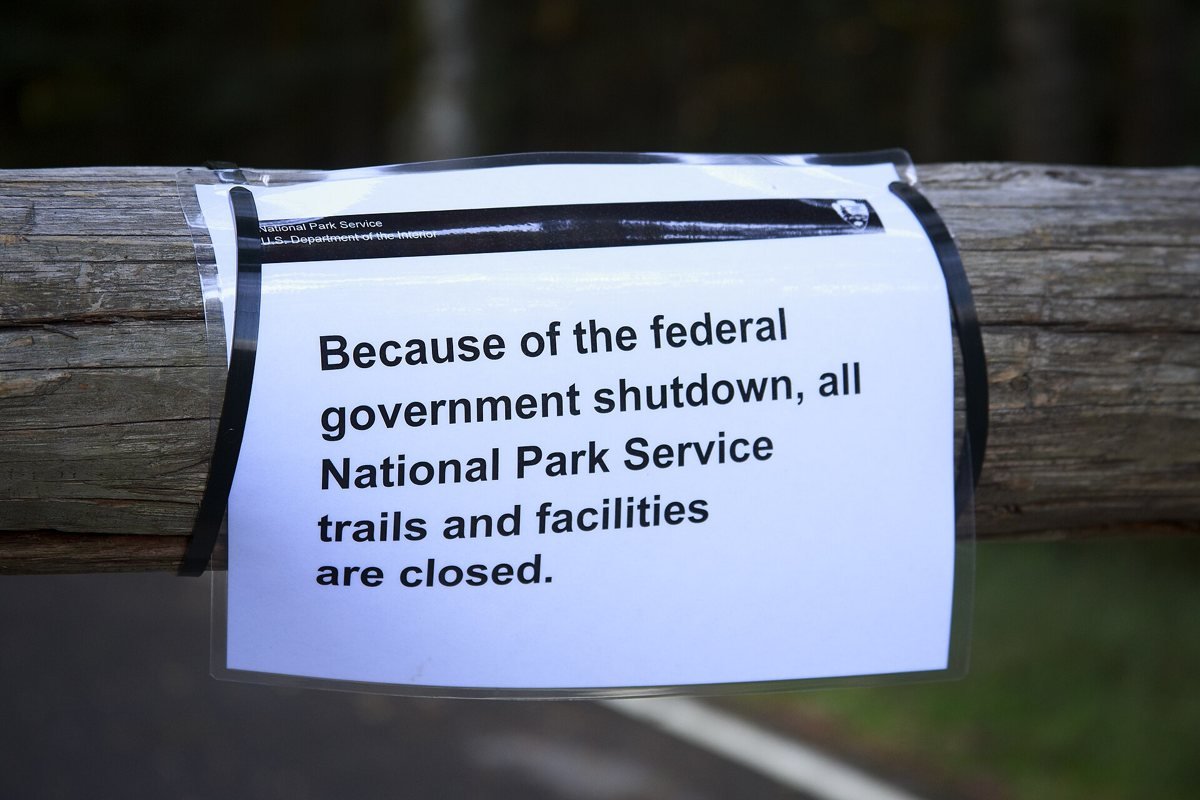
Each agency follows a contingency plan filed with the Office of Management and Budget. Employees are sorted into three groups. Exempt staff are paid from money that has not lapsed, such as fees or multi-year funds, and carry on. Excepted staff, whose work protects life or property, keep working but are not paid until funding returns: air traffic controllers, TSA screeners, Border Patrol agents, prison officers, most of the military. Everyone else is furloughed and may not work, even as a volunteer.
Mandatory programmes such as Social Security and Medicare keep paying benefits, and the Postal Service runs on postage. What closes depends on which bills have lapsed: in 2018-19 the Defense Department was already funded and kept working, while in 2025 every agency was affected. The longer a lapse runs, the more it bites, as cash-funded cushions run dry, excepted workers miss paychecks and contracts, permits, loans, inspections and grants pile up.
How Does a Shutdown End?
Only a new law ends it: either full-year appropriations for the lapsed agencies, or a continuing resolution that funds them for a few weeks or months, passed by both chambers and signed by the President. Agencies then recall staff, often the same day, and back pay follows. Some shutdowns ended with a law that settled the fight, as in January 1996; more often, as in 2013, 2018-19 and 2025, the law simply moved the deadline. In 2026 the Homeland Security lapse ended in two pieces: an appropriations act on 30 April and a reconciliation law for ICE and the Border Patrol on 10 June.
Shutdown vs Debt Ceiling
Two deadlines that are often confused. See our US debt ceiling standoffs timeline.
Government Shutdown vs Debt Ceiling Crisis
Why Does Washington Keep Shutting Down?
The calendar is rarely met
Since fiscal 1977 Congress has finished every appropriations bill on time only four times.
Sixty votes in the Senate
Most funding bills need minority-party votes, so the minority holds leverage over each deadline.
Funding as a bargaining chip
Health care, immigration and a border wall have all been tied to keeping agencies open.
Every fix sets a new deadline
Short continuing resolutions end one shutdown and schedule the next fight, as 2025-26 showed.
Government Shutdowns in Numbers
Measured and estimated figures, labelled by source.
| Figure | What it measures | Source | How to read it |
|---|---|---|---|
| 23 | Funding gaps since FY1977 | CRS RS20348 (May 2026) | Not all became shutdowns |
| 42 full days | Oct–Nov 2025 shutdown | CRS R41759 | 43 calendar days; government-wide record |
| 75 full days | DHS lapse, Feb–Apr 2026 | CRS RS20348 | Longest for one department |
| 120 days | Total of three FY2026 gaps | CRS RS20348 | Most in any fiscal year |
| ~800,000 | Employees furloughed, Nov 1995 and Oct 2013 (start) | CRS | Counts fall as staff are recalled |
| $11bn / $3bn | GDP lost / lost for good, 2018–19 | CBO, Jan 2019 | Excludes indirect costs |
| ~$11bn | Permanent GDP loss, six-week 2025 shutdown | CBO, 29 Oct 2025 | Range $7–14bn |
| 4 of 50 | Fiscal years with all bills on time since FY1977 | CRS RS20348 | FY1977, 1989, 1995, 1997 |
| 11 Dec 2026 | Current stopgap expires | CRS R49353 | Gap would start 12 Dec |
Corrections and Clarifications
Claims in the brief this page was built from, checked against CRS reports and the laws.
“DHS lapse: 76 days”
CRS counts 75 full days, 14 February to 30 April 2026 (76 calendar days). And it did not end for everyone on 30 April: ICE and the Border Patrol stayed without annual funding until 10 June 2026.
“September 1976” gap
Budget authority expired at the end of 30 September 1976; the 10-day gap ran in October, to 11 October 1976.
Back-pay law citation
The Government Employee Fair Treatment Act of 2019 was S. 24, P.L. 116-1, signed on 16 January 2019, not H.R. 2490.
The current deadline
The brief said the 2026 lapses had ended but not what funds the government now: a stopgap, P.L. 119-103, runs to 11 December 2026.
The January 2026 lapse
It hit agencies under six appropriations bills, began on 31 January and ended when P.L. 119-75 was signed on 3 February, after three full days.
“Longest in modern US history”
True for government-wide shutdowns. The 2026 DHS lapse was longer but partial; CRS calls it the longest lapse for any single department.
February 2018
That lapse lasted hours, overnight on 8-9 February. CRS lists it as a brief shutdown but not as a full-day funding gap.
Why the 2026 DHS fight happened
Democrats demanded limits on ICE and Border Patrol tactics after two US citizens were killed in Minneapolis in January 2026. The brief gave no cause.
What to Watch Before 11 December
The fiscal 2027 stopgap gives Congress until 11 December 2026, five weeks after the 3 November midterm elections. A lame-duck Congress can pass full-year bills, often bundled as an omnibus, or another continuing resolution into 2027 for the new Congress to finish. The Homeland Security bill is the obvious flashpoint: the House Appropriations Committee’s fiscal 2027 bill funds ICE and the Border Patrol again, while those agencies already hold multi-year money from the 2025 and 2026 reconciliation laws.
Reform ideas keep returning: an automatic continuing resolution that would keep funding at existing levels when a deadline passes, docking lawmakers’ pay, or barring members from leaving Washington during a lapse. The House Appropriations Committee examined them on 22 July 2026. None has become law, so each deadline still needs a vote.
Explore More Timelines
People Also Ask
Frequently Asked Questions
The Bottom Line
Shutdowns are a failure to agree, not a failure of money. They became real in 1980-81, when the Antideficiency Act was read to mean that unfunded agencies must stop, and they have grown longer as each side has used funding deadlines to fight over health care, immigration and the size of government. The 2025 shutdown set the government-wide record at 43 days, and 2026 brought the longest lapse for a single department. Every one ended the same way: with a law. The next deadline is 11 December 2026.
Related AiTimeline Stories
⚠️ Editorial Note
Last updated 12 October 2026. Dates, durations and laws come from Congressional Research Service reports: R41759 (updated 16 September 2026), RS20348 (updated 26 May 2026), R49105 on DHS lapses (7 August 2026), R49353 on the fiscal 2027 stopgap and R48832 on the 2025 shutdown’s economic effects. “Full days” follow CRS; calendar-day counts can be one higher. Economic estimates are CBO’s. Vote counts are from the House and Senate records as reported. Service-by-service effects vary by administration plan. This page is non-partisan and is not legal or financial advice.
Sources & further reading
Every dated entry above was checked against these references. Last reviewed 12 October 2026.
- Congressional Research Service: Past Government Shutdowns: Key Resources (CRS R41759, updated 16 September 2026)
- Congressional Research Service: Federal Funding Gaps: A Brief Overview (CRS RS20348, updated 26 May 2026)
- Congressional Research Service: Lapses in DHS Appropriations: History and Plans (CRS R49105, 7 August 2026)
- Congressional Research Service: Overview of Continuing Appropriations for FY2027 (CRS R49353)
- Congressional Research Service: The 2025 (FY2026) Government Shutdown: Economic Effects (CRS R48832)
- Congressional Research Service: Shutdown of the Federal Government: Causes, Processes, and Effects (CRS RL34680)
- Congressional Budget Office: The Effects of the Partial Shutdown Ending in January 2019
- Congress.gov: Government Employee Fair Treatment Act of 2019 (S. 24, P.L. 116-1)
- US House of Representatives, History, Art & Archives: Funding Gaps and Shutdowns in the Federal Government