First Battery: Galvani, Volta, and the Dawn of Electricity
How Galvani's frog experiments and Volta's 1799 voltaic pile, announced on 20 March 1800, created the first battery and a steady electric current.
Latest Story
A frog’s twitch changed the history of science. In the 1780s, the Bologna physician Luigi Galvani found that electricity made the legs of dead frogs kick, and decided that animals make their own electricity. His friend Alessandro Volta doubted it, and set out to prove the current came from the metals. The result was the first battery: the voltaic pile, built in 1799 and announced to the Royal Society on 20 March 1800. This timeline traces how it happened, how the pile worked, and how its descendants power the modern world, checked against Volta’s letter and recent histories.
💡 Short Answer
Alessandro Volta invented the first battery, the voltaic pile, in 1799 and announced it in a letter to the Royal Society dated 20 March 1800. It was a stack of silver or copper and zinc discs separated by pads soaked in salt water, and it produced a steady electric current. Volta built it to disprove Luigi Galvani’s theory, from frog experiments published in 1791, that animals generate their own electricity.
The First Battery: Key Questions
The Birth of the Battery in Nine Points
- The spark: Galvani saw frog legs twitch under electrical stimulation in Bologna in the 1780s.
- The theory: his 1791 book argued animals carry their own “animal electricity”.
- The challenge: from 1792 Volta argued the current came from two different metals.
- The invention: Volta’s pile of 1799, silver or copper and zinc with brine pads, gave a steady current.
- The announcement: a letter to Sir Joseph Banks dated 20 March 1800, read in London on 26 June.
- Instant impact: Nicholson and Carlisle split water by electrolysis within weeks.
- New elements: Davy used batteries to isolate potassium and sodium in 1807.
- Both right, both wrong: Galvani founded electrophysiology; Volta, electrochemistry.
- Legacy: the volt is named after Volta, and every battery since uses his principle.
At a Glance: The Birth of the Battery
From the Leyden jar to Ørsted’s compass. Scroll the table sideways on a phone.
| Date | Milestone | Why it mattered |
|---|---|---|
| 1745–46 | Leyden jar invented | Stored static charge, one spark at a time |
| 1780s | Galvani’s frog experiments, Bologna | Electricity makes muscles contract |
| 1791 | Galvani publishes De viribus | Theory of animal electricity |
| 1792 | Volta challenges Galvani | Two different metals create the effect |
| 1794 | Galvani’s metal-free contraction | Tissue carries electrical signals |
| 1799 | Volta builds the pile | First steady electric current |
| 20 Mar 1800 | Volta’s letter to the Royal Society | Announces the battery |
| May 1800 | Nicholson and Carlisle split water | First electrolysis |
| 1807 | Davy isolates potassium and sodium | Batteries discover new elements |
| 1820 | Ørsted’s compass needle | Current and magnetism linked |
Before the Battery: Electricity Without a Steady Supply
By the mid-18th century, experimenters could make static electricity with friction machines, glass globes or discs rubbed as they turned, and store it in a Leyden jar. A jar could knock a person off their feet, light spirits or kill a small animal, but it gave one discharge and then had to be charged again by hand.
That made careful, repeatable experiments on electricity in motion almost impossible. What science lacked was a source that would keep supplying a current for minutes or hours. The clue that led to one came, unexpectedly, from anatomy.
The Timeline, Newest First
From the 2026 bicentenary back to the Leyden jar.
Volta’s bicentenary and a second look at the debate 2026
Lombardy is marking the 200th anniversary of Volta’s death with 200VOLTeVOLTA, a programme of exhibitions, lectures and school projects in Como, Pavia, Milan and Bologna that runs through 2026, ahead of the anniversary itself on 5 March 2027. Como’s Festival of Light ran from 24 September to 2 October 2026.
Why it matters: the anniversary has prompted a fresh look at the old story. In the September 2026 issue of IEEE Spectrum, historian Allison Marsh argues that Galvani and Volta were each partly right and partly wrong, and that the usual telling, with Volta as winner, misses how their dispute founded two sciences: electrophysiology and electrochemistry.

A Nobel Prize for the lithium-ion battery Legacy
The Royal Swedish Academy of Sciences awarded the Nobel Prize in Chemistry to M. Stanley Whittingham, John B. Goodenough and Akira Yoshino for developing the lithium-ion battery. Whittingham made the first working lithium battery in the 1970s; Goodenough doubled its voltage with a cobalt oxide cathode in 1980; Yoshino replaced reactive lithium metal with a carbon anode in 1985, making it safe to sell.
Why it matters: the prize recognised the descendant of Volta’s pile that powers phones, laptops and electric cars. Goodenough, 97 at the time, became the oldest Nobel laureate.
Sony sells the first lithium-ion battery Breakthrough
Sony began selling rechargeable lithium-ion cells, first used in a camcorder. They were lighter and stored far more energy than nickel-cadmium cells of the same size, and they did not suffer the same “memory” loss of capacity.
Why it matters: the lithium-ion cell made mobile phones, laptops and, later, long-range electric vehicles practical. It still uses Volta’s basic arrangement: two electrodes and an electrolyte.
The volt becomes an international unit Legacy
Delegates at the first International Electrical Congress in Paris agreed on a common set of electrical units, including the volt for electrical potential, named after Volta, and the ampere, named after André-Marie Ampère. British engineers had proposed the name in the 1860s.
Why it matters: every battery, plug and power line in the world is now rated in volts.
1886
Better cells: Daniell, Planté, Leclanché Breakthrough
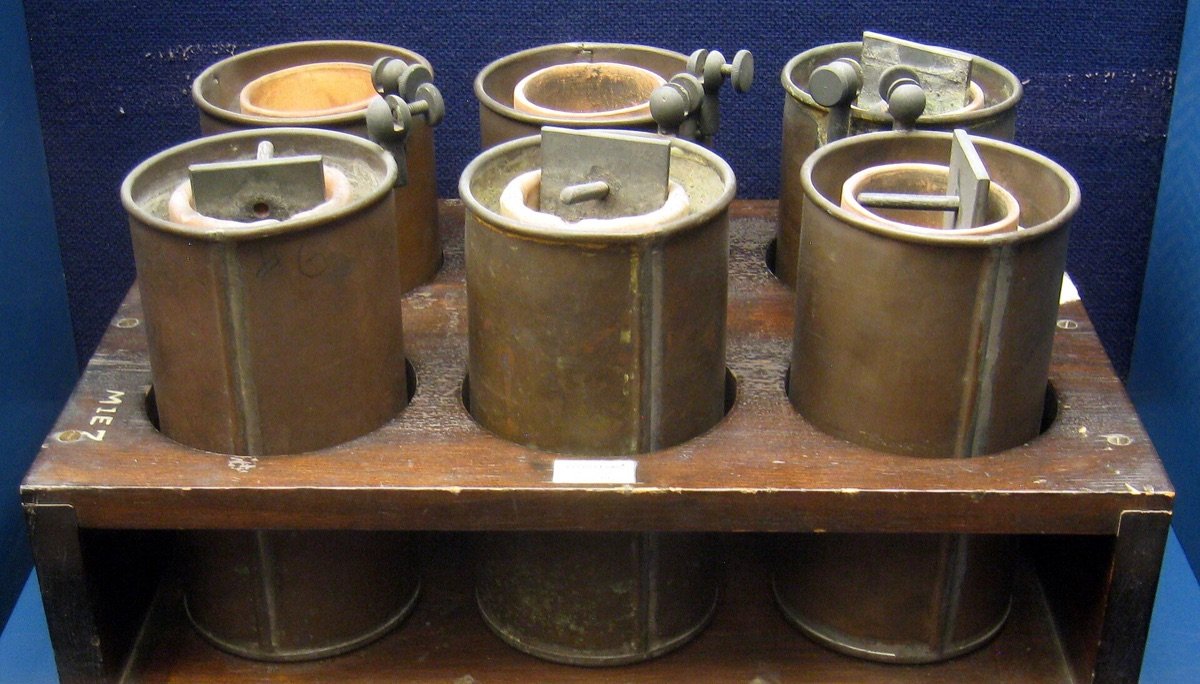
Volta’s pile faded within hours as hydrogen bubbles built up on its plates. In 1836 the British chemist John Frederic Daniell separated the two metals into different solutions, giving a steady voltage that made the cell the workhorse of the electric telegraph. In 1859 Gaston Planté made the first rechargeable battery, from lead plates in sulphuric acid. Georges Leclanché’s zinc-carbon cell of 1866 became, as a sealed paste “dry cell” patented by Carl Gassner in 1886, the ancestor of the torch battery.
Why it matters: each design fixed a weakness of the pile: unsteady output, no recharging, liquid that spilled.
1831
Current reveals electromagnetism Breakthrough
In 1820 the Danish physicist Hans Christian Ørsted saw that a wire carrying current from a battery moved a nearby compass needle, the first evidence that electricity and magnetism are linked. André-Marie Ampère worked out the forces between currents within weeks. In 1831 Michael Faraday showed the reverse: a moving magnet induces a current, the principle of the generator.
Why it matters: none of these experiments was possible with static electricity alone; all needed the steady current that batteries supplied. Faraday kept a pile that Volta had given him in 1814.
Davy isolates potassium and sodium Breakthrough
Humphry Davy passed the current from large voltaic batteries through molten potash and soda and obtained two new metals, potassium and sodium. The next year he isolated calcium, barium, strontium and magnesium the same way.
Why it matters: the battery became a tool for discovering elements, and electrolysis became a branch of chemistry. Davy’s assistant, from 1813, was the young Michael Faraday.
1801
Volta demonstrates the pile in Paris Breakthrough
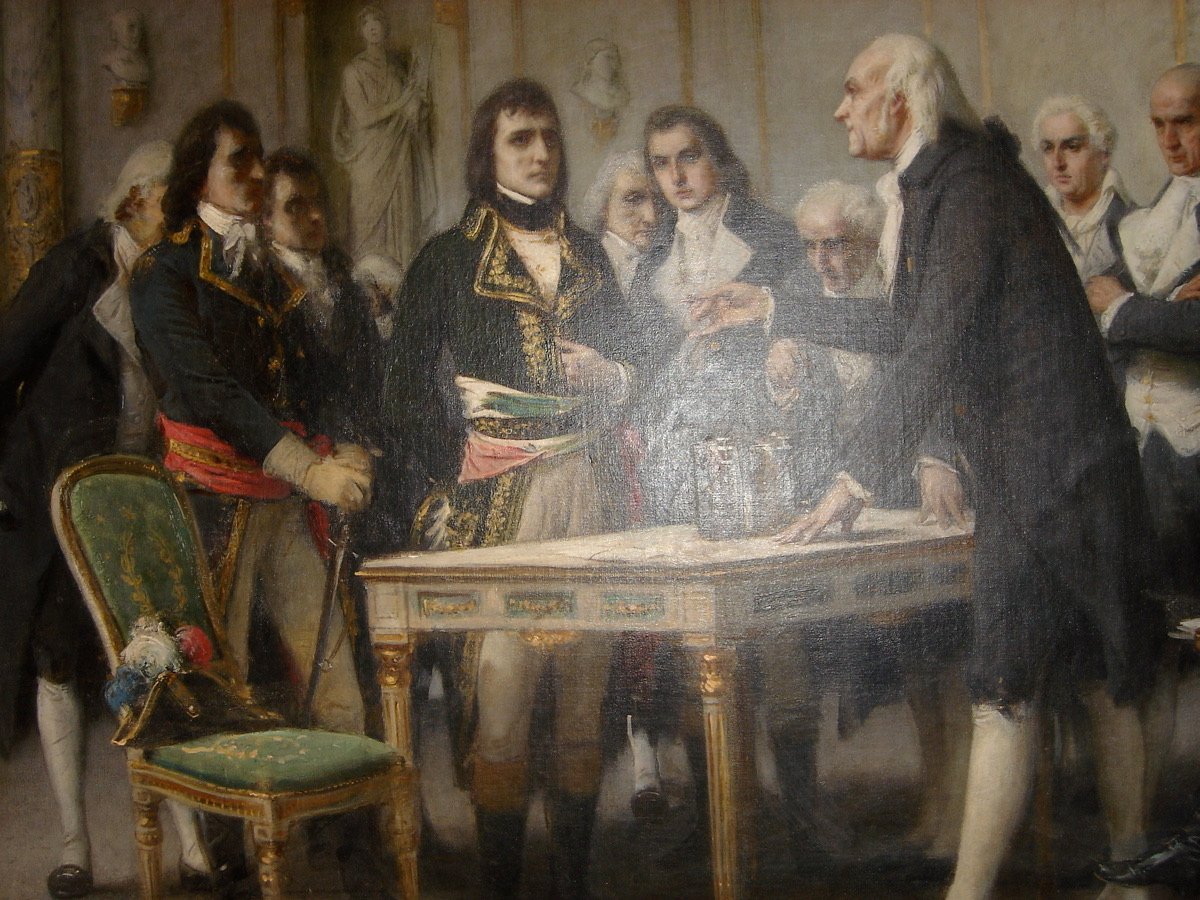
Invited to Paris, Volta demonstrated the pile at the Institut de France over several sessions in November 1801, with Napoleon Bonaparte in attendance. The Institut awarded him a gold medal, and Napoleon later made him a count and a senator of the Kingdom of Italy.
Why it matters: official recognition from the leading scientific body of the age confirmed the pile as the discovery of its day, and spread it quickly across Europe’s laboratories.
1800
Nicholson and Carlisle split water Breakthrough
Banks showed Volta’s letter to friends before it was read in public. William Nicholson and Anthony Carlisle built a pile of their own and, at the start of May 1800, noticed gas bubbling where the wires touched water. Collecting it, they found hydrogen at one wire and oxygen at the other.
Why it matters: it was the first time electricity had been used to drive a chemical reaction, the process now called electrolysis. It also hinted that the pile itself worked by chemistry, not, as Volta believed, by contact between metals alone.
1800
Volta writes to the Royal Society Breakthrough
From Como, Volta wrote to Sir Joseph Banks, president of the Royal Society, describing what he called an “artificial electric organ”. He gave two designs: a column of discs, and a crown of cups, a ring of glasses of salt water joined by metal strips. The letter was read to the Society on 26 June 1800 and printed as “On the Electricity excited by the mere Contact of conducting Substances of different Kinds”.
Why it matters: it is the founding document of the battery. Volta’s explanation, that contact between metals created the electricity, turned out to be incomplete; the chemistry in the wet layers does the work.
The voltaic pile is built Breakthrough
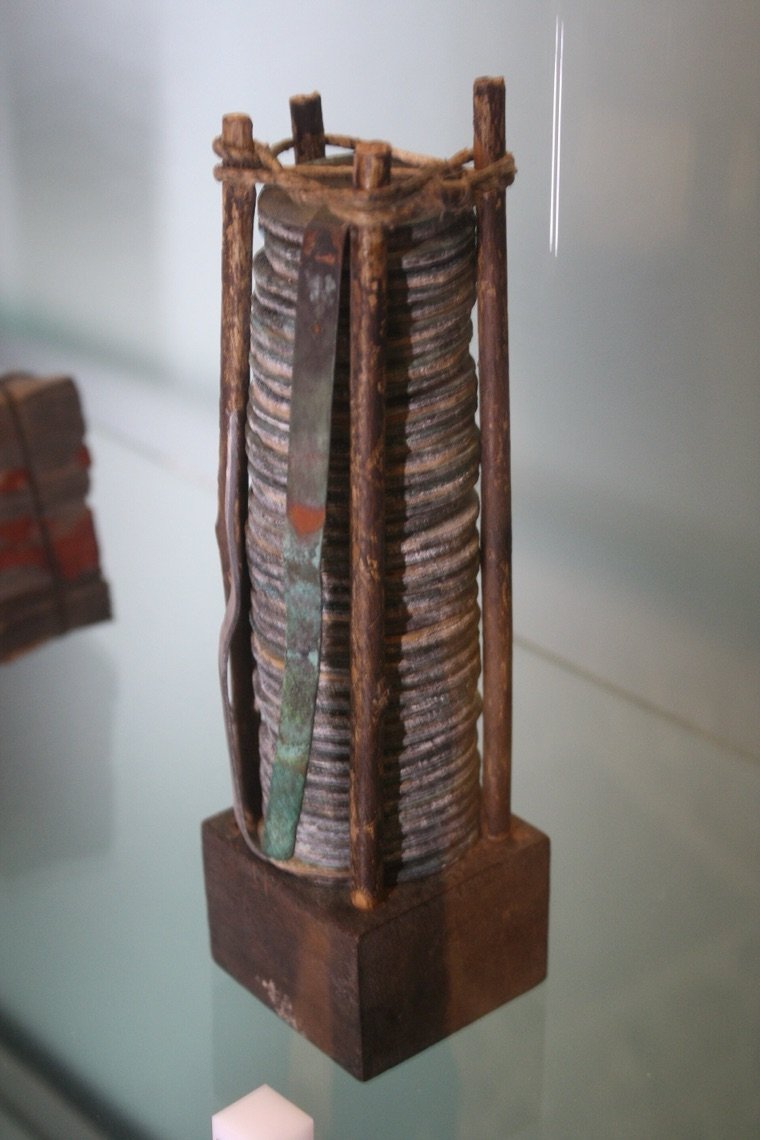
Between 1794 and 1799 Volta tested combinations of metals and wet conductors. The answer was a stack: a disc of silver or copper, a disc of zinc, a pad soaked in brine, then the same again, dozens of times. Touching the top and bottom gave a shock, and, unlike a Leyden jar, the shock could be felt again and again without recharging.
Why it matters: for the first time, scientists had a source of continuous electric current. Every battery since descends from this stack.
1798
Galvani dies in Bologna Debate
When French-backed forces created the Cisalpine Republic, Galvani refused to swear the oath of loyalty required of university staff and lost his professorship in Bologna. He died on 4 December 1798, aged 61, still convinced animal electricity was real.
Why it matters: Volta did not announce the pile, the device that seemed to settle their argument, until after his friend and rival had died.
Galvani makes a frog twitch without metal Debate
Answering Volta, Galvani (writing anonymously) described an experiment in which a frog’s leg contracted when its own nerve touched its muscle, with no metal in the circuit at all. That pointed to electricity inside the tissue. The same year, the Royal Society gave Volta its Copley Medal for his work on Galvani’s experiments.
Why it matters: both men had a piece of the truth. Volta was right that metals could create a current; Galvani was right that nerves and muscles carry electrical signals.
Volta challenges animal electricity Debate
Volta, professor of physics at Pavia, first accepted Galvani’s idea. Repeating the experiments in 1792, he found the twitch was strongest when two different metals touched the nerve and muscle. He concluded that the frog was only a very sensitive detector, an electroscope, and that the electricity came from the metals.
Why it matters: by shifting attention from the frog to the materials, Volta set himself on the path to a device that could make electricity with no animal at all.
Galvani publishes De viribus Breakthrough
After more than a decade of experiments, Galvani published De viribus electricitatis in motu musculari commentarius. It described frog legs contracting when touched by sparks from an electrostatic machine, during thunderstorms, and when a brass hook in the spinal cord touched an iron surface.
Why it matters: Galvani argued that the frog was itself a store of animal electricity, like a living Leyden jar. The book was read across Europe and, within months, was being tested by Volta.
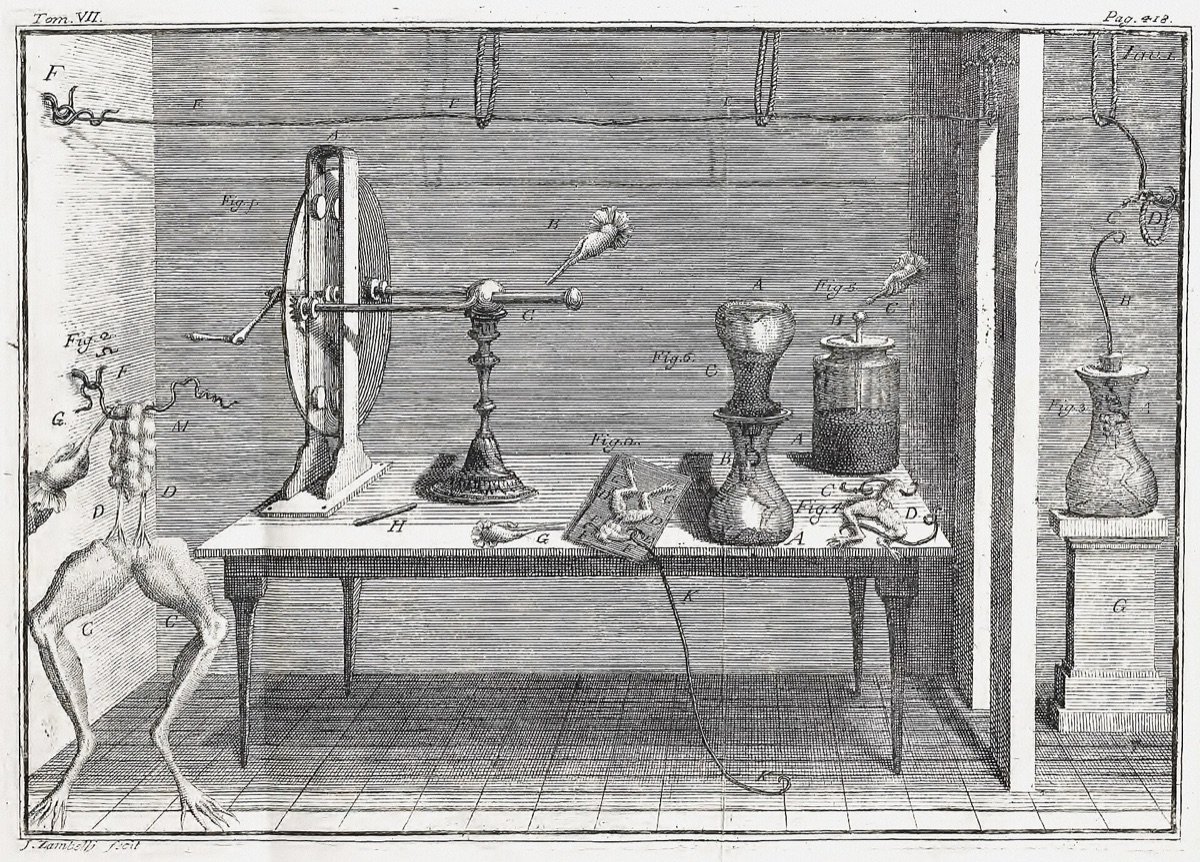
Frog legs twitch in Bologna Debate
Galvani, a physician and anatomist, studied how dissected frogs’ muscles responded to electricity. He noticed that a leg kicked when a scalpel touched its nerve while a nearby electrostatic machine sparked, and later that legs hung by brass hooks twitched against an iron railing even with no machine running.
Why it matters: the observations raised a question nobody could yet answer: was the electricity coming from the animal, or from the metal touching it?
Before the battery: the Leyden jar
The Leyden jar, a glass jar coated with metal foil, could store static charge from a friction machine and release it in a single powerful spark. It made electricity a sensation in 18th-century salons and laboratories, and Galvani used one in his frog experiments.
Why it matters: a jar gives one discharge and must be recharged. Science lacked a steady current, the gap Volta’s pile would fill.
How the First Battery Worked
A simplified look at the chemistry Volta did not yet understand.
Every cell in the pile has three parts: two different metals and a liquid that conducts electricity. Zinc reacts with the salt water or acid and gives up electrons; it becomes the negative terminal. The copper or silver becomes the positive terminal, where hydrogen forms from the liquid. Joining the two ends with a wire lets the electrons flow through it, and stacking cells adds their voltages like steps on a staircase.
Volta himself thought the electricity came from the contact between the two metals. Chemists soon showed that the energy came from the reactions in the wet layers, which is why the zinc slowly dissolved and the pads dried or fouled. It took until the mid-19th century for the chemical explanation to win outright.
How to Build a Voltaic Pile in Five Steps
- Cut the discs: Prepare equal numbers of discs of two different metals, such as copper or silver and zinc.
- Soak the separators: Cut pads of cardboard, leather or cloth and soak them in salt water or weak acid.
- Stack one cell: Lay a copper disc, a zinc disc and a wet pad on top of each other.
- Repeat the stack: Repeat the same order many times; each set adds roughly 0.7 to 1 volt.
- Close the circuit: Join the top and bottom of the column with a wire to make a current flow.
How many discs would you need?
Choose how many zinc-copper pairs to stack and what to soak the pads in. The estimate uses typical values; real piles varied.
Leyden Jar vs Voltaic Pile
| Leyden jar (1745) | Voltaic pile (1799) | |
|---|---|---|
| What it does | Stores static charge | Generates electricity |
| Source of energy | Friction machine, charged by hand | Chemical reactions in the stack |
| Output | One brief, high-voltage spark | Steady, low-voltage current |
| After use | Must be recharged | Keeps working until the zinc or pads give out |
| Modern relative | Capacitor | Battery |
The People Behind the First Battery
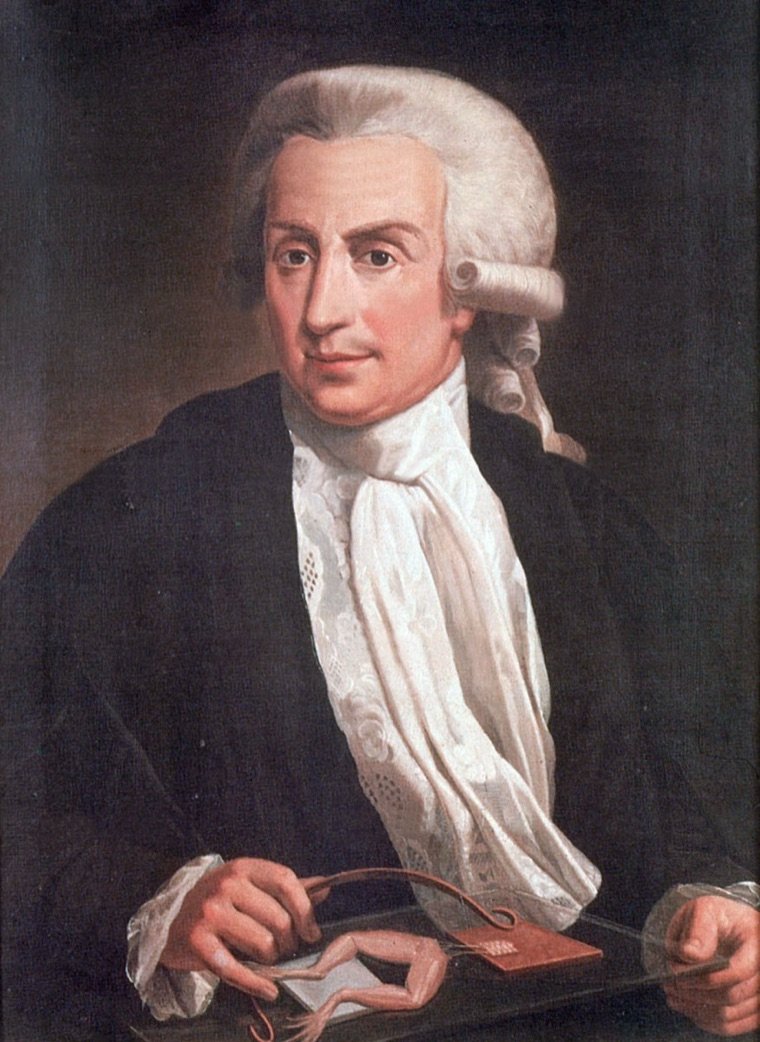
Luigi Galvani
Physician and anatomist whose frog experiments launched the debate. His name lives on in “galvanise” and the galvanometer.
Alessandro Volta
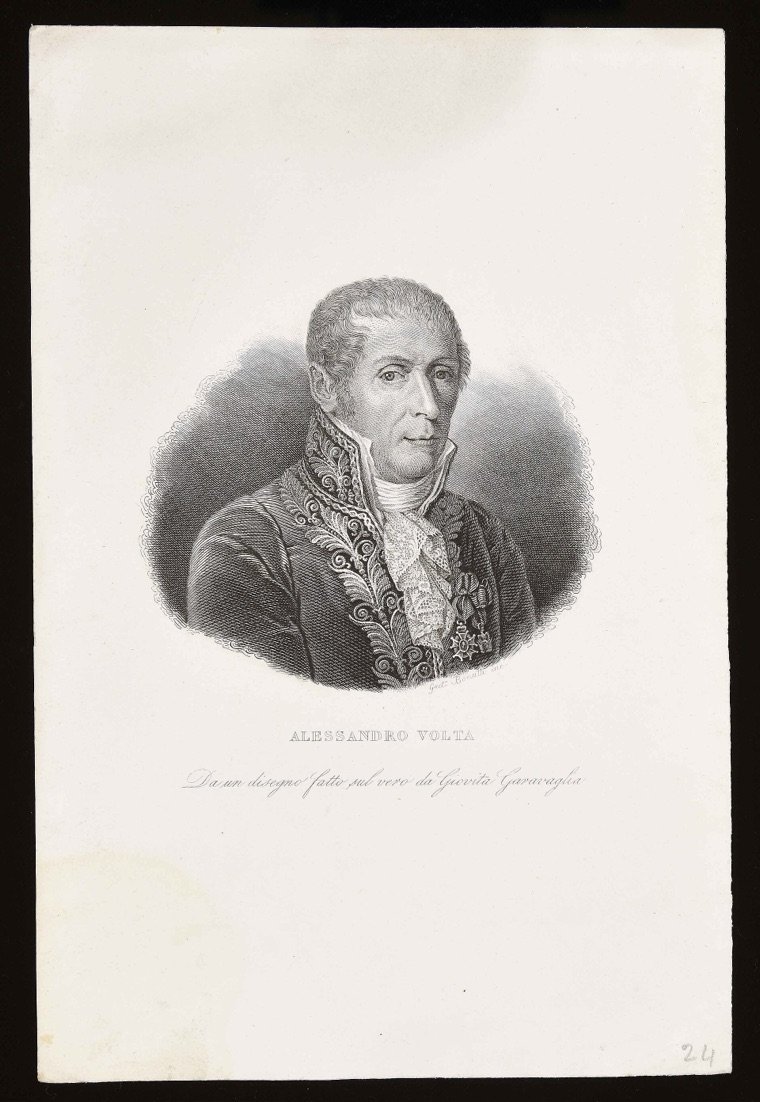
Physics professor at Pavia; improved the electrophorus, identified methane and built the pile. The volt is named after him.
Lucia Galeazzi Galvani
Galvani’s wife, daughter of his anatomy teacher, who took part in his laboratory work until her death in 1788.
Sir Joseph Banks
President of the Royal Society, who received Volta’s letter and shared it before it was read in June 1800.
Nicholson and Carlisle
William Nicholson and Anthony Carlisle used a home-built pile to split water, discovering electrolysis.
Humphry Davy
Used giant batteries at the Royal Institution to isolate potassium, sodium and four more elements.
Giovanni Aldini
Galvani’s nephew, who toured Europe shocking animal and human corpses with piles to defend his uncle’s ideas.
Hans Christian Ørsted
Used a battery to show that an electric current moves a compass needle, linking electricity and magnetism.
Galvani vs Volta: Who Was Right?
The story is often told with a winner and a loser. Modern science is more generous.
| Question | Galvani | Volta |
|---|---|---|
| Born / died | 1737–1798, Bologna | 1745–1827, Como |
| Profession | Physician, anatomist, Bologna | Professor of physics, Pavia |
| Key work | De viribus, 1791 | Letter to the Royal Society, 1800 |
| Source of the electricity | The animal itself | Contact between different metals |
| What science kept | Nerves and muscles use electrical signals | Two electrodes and an electrolyte make a cell |
| Field founded | Electrophysiology | Electrochemistry and battery science |
| Named after him | Galvanise, galvanometer, galvanic cell | The volt, voltage, voltaic pile |
Pick a claim
The verdict of modern science on each side of the argument.
Volta won the argument in his lifetime. The pile seemed to prove that metals, not frogs, made the electricity, and Galvani died before it was announced. But Galvani’s 1794 experiment, in which a frog’s nerve touching its own muscle produced a twitch with no metal involved, was the first evidence that living tissue generates electrical signals. In the 1840s Carlo Matteucci and Emil du Bois-Reymond measured those signals directly, and today the electrocardiogram and the brain scan rest on the field Galvani started.
“It contains one of the most beautiful and surprising discoveries and the germ of many others.”
Alessandro Volta on Galvani’s work, writing in 1816, as quoted by IEEE Spectrum
The Long Road From Volta’s Pile to Modern Batteries
The battery was not perfected in a single moment.
| Year | Battery | Inventor | What it fixed or added |
|---|---|---|---|
| 1799 | Voltaic pile | Alessandro Volta | First continuous current |
| 1836 | Daniell cell | John Frederic Daniell | Steady voltage; powered the telegraph |
| 1859 | Lead-acid | Gaston Planté | First rechargeable battery |
| 1866 | Leclanché cell | Georges Leclanché | Cheap zinc-carbon cell for doorbells and telegraphs |
| 1886 | Dry cell | Carl Gassner | Sealed paste; portable |
| 1899 | Nickel-cadmium | Waldemar Jungner | Rugged rechargeable |
| 1991 | Lithium-ion (commercial) | Whittingham, Goodenough, Yoshino; sold by Sony | Light, high energy, rechargeable |
Early piles gave out within hours, their liquid dried or leaked, and they were heavy. Each later design solved one problem: Daniell’s cell gave a steady voltage, Planté’s lead-acid battery could be recharged, Gassner’s dry cell could be carried in a pocket, and lithium-ion packed far more energy into a small, rechargeable cell. What none of them changed is the principle Volta demonstrated: two different electrode materials and an electrolyte turn chemical energy into electrical energy.
Why the First Battery Still Matters
Phones and laptops
Rechargeable lithium-ion cells, the direct descendants of the pile, power portable computing.
Electric vehicles
Packs of thousands of cells, wired in series and parallel much as Volta stacked his discs.
Energy storage
Large batteries store solar and wind power and balance electricity supply and demand.
Medicine
Pacemakers run on batteries and work on nerves and muscle: both halves of the Galvani-Volta story at once.
Common Myths About the First Battery
“The Baghdad battery came first”
No evidence these ancient jars were ever used for electricity; most archaeologists think they held scrolls.
“Volta used only zinc and copper”
His 1800 letter names silver, or copper or brass, with zinc or tin. Zinc-copper became the common pair later.
“Galvani was simply wrong”
He was right that nerves and muscles use electrical signals; his theory of stored animal electricity was the error.
“Volta coined the word battery”
“Battery” was already used for linked Leyden jars, a term often credited to Benjamin Franklin in the 1740s.
Explore More Timelines
People Also Ask
Frequently Asked Questions
Conclusion: A Frog’s Twitch That Changed Electrical History
The first battery began with a simple question: where did the electricity that made a frog’s leg twitch actually come from? Galvani’s answer founded the study of electricity in living things. Volta’s answer gave the world a steady electric current, announced in 1800, which within a generation had split water, revealed new elements and exposed the link between electricity and magnetism. The pile was small and short-lived. Its descendants now power phones, cars and grids, and as Volta’s bicentenary approaches in March 2027, both men’s parts in the story are getting their due.
Related AiTimeline Stories
⚠️ Editorial Note
Dates and details come from Volta’s 1800 letter in Philosophical Transactions and Galvani’s 1791 Commentarius (both reproduced by the Electrochemical Society), the Alessandro Volta Foundation’s historical project, the Royal Society and IEEE Spectrum’s September 2026 history, with later milestones from the Nobel Foundation. Some early dates, such as the start of Galvani’s frog work, differ between sources and are given as decades. Voltages in the interactive pile are rough estimates. Updated 13 October 2026.
Sources & further reading
Every dated entry above was checked against these references. Last reviewed 13 October 2026.
- Volta, A. (1800) On the Electricity excited by the mere Contact of conducting Substances of different Kinds, Philosophical Transactions vol. 90 (via Electrochemical Society ESTIR historic papers)
- IEEE Spectrum: The First Battery Was Inspired By a Dead Frog (Allison Marsh, 31 August 2026)
- Alessandro Volta Foundation: The Discovery of the Battery - Volta, Galvani and Electric Current
- Alessandro Volta Foundation: 200VOLTeVOLTA bicentenary programme
- Royal Society: Blogspawn - frogs, Swammerdam and Galvani's experiments
- Royal Society Publishing: Volta's 1800 letter in Philosophical Transactions (DOI 10.1098/rstl.1800.0018)
- Nobel Prize: The Nobel Prize in Chemistry 2019 press release (lithium-ion batteries)