RTI Act Anniversary: Impact & Exemptions in India
Explore 21 years of India's RTI Act, its impact on transparency, Section 8 exemptions, the new personal-information rule and the growing appeals backlog.
Latest Story
India’s Right to Information Act, 2005 changed the relationship between citizens and the state. Instead of relying on official statements, any citizen could ask for the records behind them, from muster rolls and road contracts to recruitment files and file notings, and expect an answer in 30 days. Twenty-one years on, the law faces two tests at once: a backlog of more than 3.85 lakh appeals in its watchdog commissions, and a rewritten personal-information exemption that the Supreme Court is now examining. This is how the RTI Act came about, what it has achieved, what can still be withheld, and what changed in 2025.
💡 Short Answer
The RTI Act came fully into force on 12 October 2005 and turned 21 on 12 October 2026. It lets any Indian citizen request records from public authorities, with replies due in 30 days and appeals to Information Commissions. Section 8 lets authorities withhold some information, and from 13 November 2025 the Digital Personal Data Protection Act broadened the personal-information exemption, a change now under Supreme Court challenge. Over 3.85 lakh appeals were pending on 30 June 2026.
RTI Act Anniversary: Key Questions
21 Years of RTI in Ten Points
- Born in villages: the demand began with Rajasthan workers asking to see muster rolls in the early 1990s.
- A real law in 2005: assent on 15 June, fully in force on 12 October 2005.
- Simple to use: any citizen, ₹10 for central bodies, no reason required, 30-day deadline.
- Two-tier appeals: First Appellate Authority, then the Central or State Information Commission.
- Penalties exist: up to ₹25,000 on a PIO who stalls without reasonable cause.
- Exemptions are listed: Section 8 has ten categories; Section 8(2) allows public-interest disclosure.
- 2019: commissioners’ tenure and pay handed to the Centre; terms cut to three years.
- 2025: the DPDP Act rewrote Section 8(1)(j), in force from 13 November 2025.
- 2026: the Supreme Court refused a stay and sent the challenge to a larger bench.
- The backlog: 3,85,716 appeals and complaints pending in 28 commissions on 30 June 2026.
RTI Act at a Glance
Statutory timelines apply to central and state public authorities; fees and filing rules for state bodies are set by each state.
| Key fact | Details |
|---|---|
| Law | Right to Information Act, 2005 (Act No. 22 of 2005) |
| Assent / in force | 15 June 2005 / fully from 12 October 2005 |
| Who can use it | Any citizen of India; no reason needed |
| Fee (central bodies) | ₹10; free for applicants below the poverty line |
| Reply deadline | 30 days; 48 hours for life or liberty |
| First appeal | Within 30 days, to the First Appellate Authority |
| Second appeal | Within 90 days, to the Central or State Information Commission |
| Penalty on PIO | ₹250 a day, up to ₹25,000 (Section 20) |
| Main exemptions | Section 8(1)(a)–(j), Section 9, Section 24 |
| Latest change | Section 8(1)(j) rewritten by the DPDP Act, in force 13 November 2025 |
| Backlog | 3,85,716 pending in 28 commissions, 30 June 2026 |
| Court status | Challenge pending in the Supreme Court; no stay |
RTI Act Timeline: From Village Hearings to the Supreme Court
Newest first, from the 21st anniversary back to the 1970s. Tags mark the movement, the law, court rulings, amendments, the privacy debate, the law’s impact and the backlog.
2026
RTI turns 21 with 3.85 lakh cases waiting Backlog
On the Act’s 21st anniversary, Satark Nagrik Sangathan’s Report Card on the Performance of Information Commissions in India, 2025–26 found 3,85,716 appeals and complaints pending on 30 June 2026. Maharashtra’s commission had the largest backlog (77,397), followed by Chhattisgarh (52,559), Bihar (42,243), the Central Information Commission (39,121) and Tamil Nadu (37,150).
Commissions registered 2,61,669 cases in the year and disposed of 2,41,627, so the pile kept growing. Nine commissions returned 37,701 cases without a decision, mostly on procedural grounds; nearly 95% of those returned by the CIC were never re-filed. Jharkhand’s commission was defunct throughout the year and Himachal Pradesh’s since 3 July 2025.
Anniversary coverage also flagged weak proactive disclosure: only 1,446 of 2,303 central public authorities (62.7%) had submitted transparency audit reports to the CIC.
2026
Supreme Court hearing: Centre given time to reply Court
At the latest reported hearing in the constitutional challenge to the Digital Personal Data Protection Act and Rules, the Union government was given two weeks to file its reply. As of mid-October 2026, no final ruling on the amended Section 8(1)(j) had been reported, and the amendment remains in force.
2026
Supreme Court issues notice, refuses a stay Court
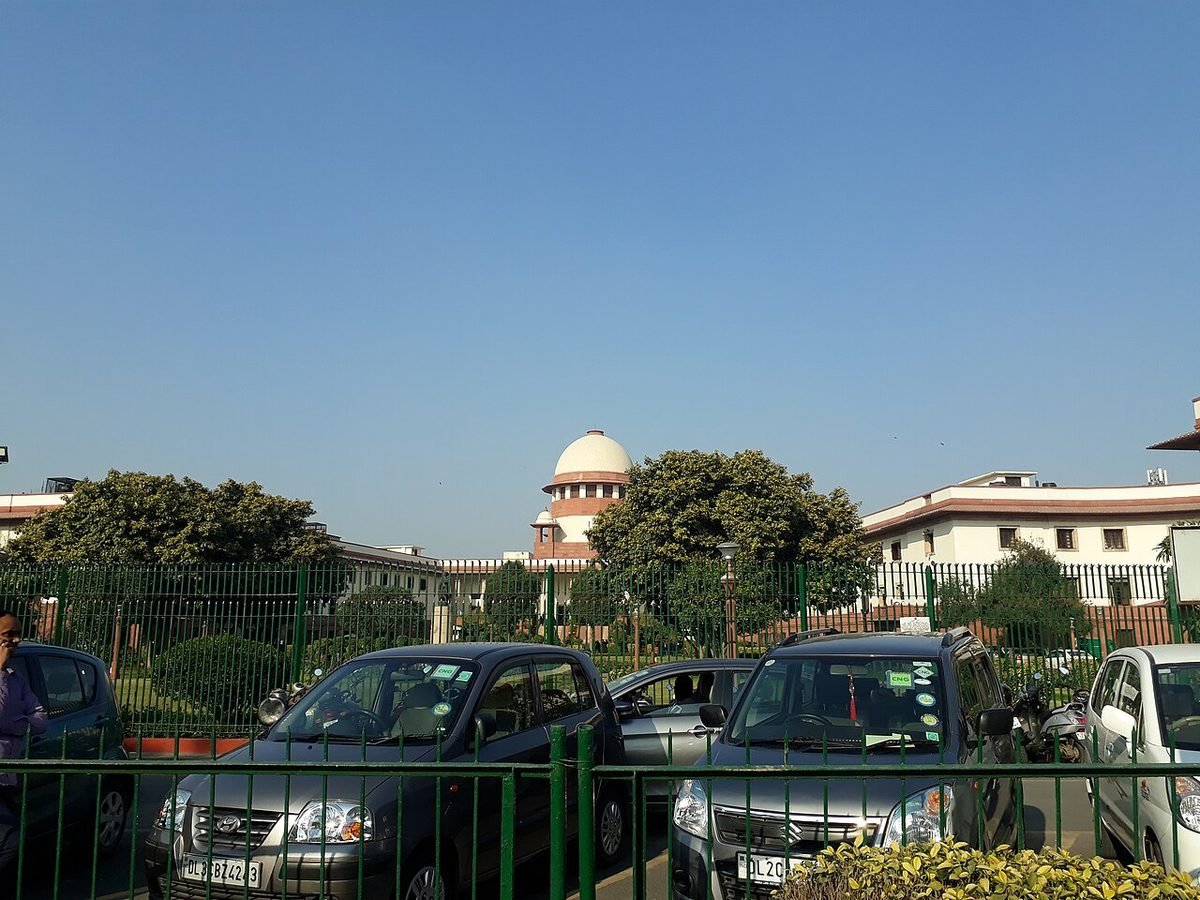
Hearing petitions filed by RTI researcher Venkatesh Nayak, The Reporters Collective and journalist Nitin Sethi, and the National Campaign for People’s Right to Information, the Supreme Court issued notice to the Centre. It declined to suspend the amendment: ‘No question of stay. Through interim order, we will not introduce a regime which Parliament has thought of,’ Chief Justice Surya Kant said, adding that ‘some ironing out of the creases might be needed to strike a balance’.
The bench referred the core questions, including whether the new Section 8(1)(j) is compatible with the right to information under Article 19(1)(a), to a larger bench.
2025
A full Central Information Commission for the first time in nine years Law
President Droupadi Murmu administered the oath to Raj Kumar Goyal, a former Secretary of the Department of Justice, as Chief Information Commissioner, after a selection committee headed by Prime Minister Narendra Modi recommended him and eight Information Commissioners on 10 December. The appointments brought the CIC to its full sanctioned strength for the first time in about nine years.
Vacancies had been a recurring cause of delays. Even at full strength, the CIC’s pending cases rose by 9,378 between 1 January and 12 October 2026, according to anniversary reporting.
2025
Personal-information exemption rewritten Amendment
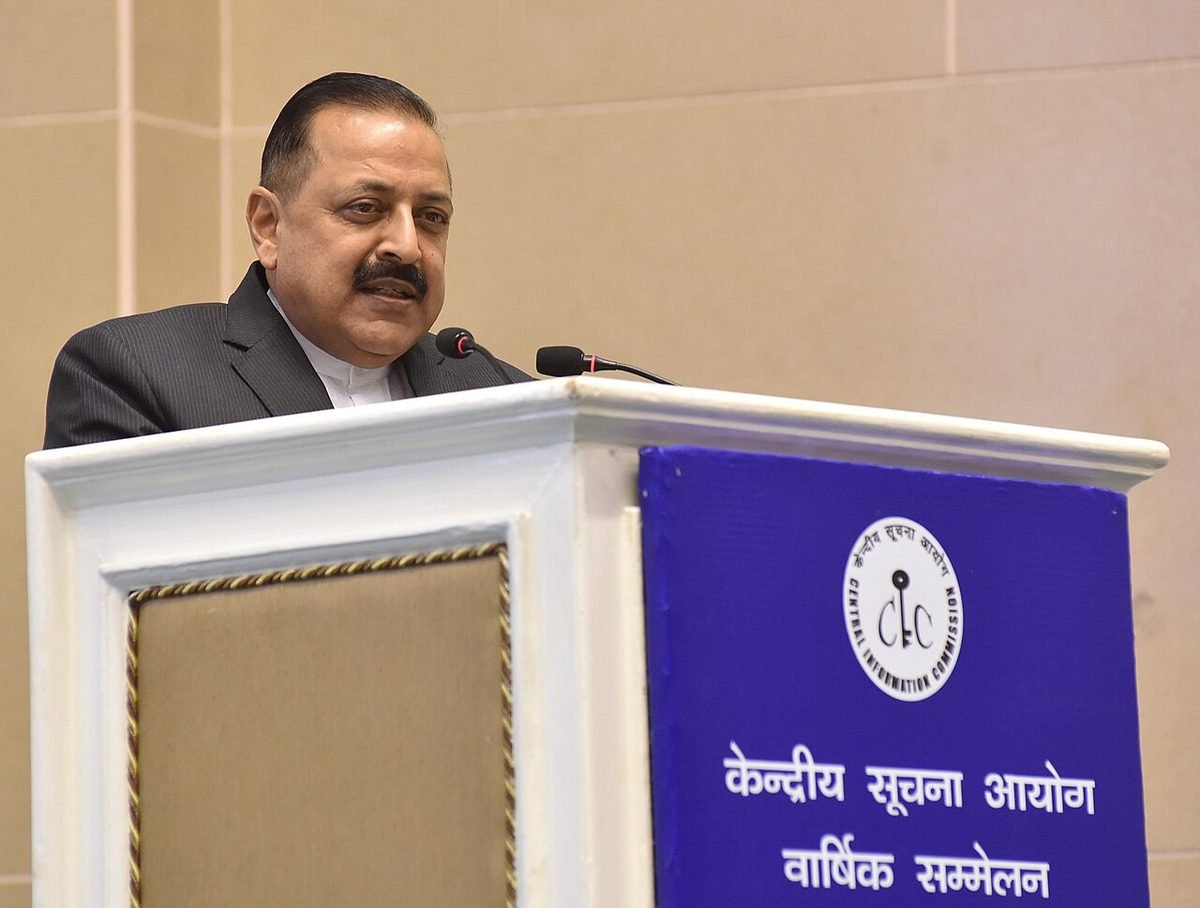
When the Ministry of Electronics and IT notified the Digital Personal Data Protection Rules, 2025, it brought into force, with immediate effect, the provisions creating the Data Protection Board and Section 44(3) of the DPDP Act, which substitutes a new Section 8(1)(j) in the RTI Act.
The old clause protected personal information only where it had no relationship to public activity or interest or would cause an unwarranted invasion of privacy, and it allowed disclosure where larger public interest justified it. The new clause exempts ‘information which relates to personal information’, without those tests. Transparency groups warned that records central to accountability, from beneficiary lists to officials’ conduct, could now be refused because they contain a name.
Government: the change ‘harmonises’ privacy and RTI Privacy
Responding to criticism in Parliament, IT Minister Ashwini Vaishnaw said the amendment does not restrict the disclosure of personal information but balances privacy with the right to information. He pointed to Section 8(2), which still allows any exempt information to be released if the public interest in disclosure outweighs the harm. Opposition MPs, media bodies and former information commissioners called for the amendment to be repealed.
2024
Electoral bonds struck down on voters’ right to know Court
The Supreme Court struck down the electoral bond scheme, holding that voters’ right to information about political funding is part of the freedom of speech and expression under Article 19(1)(a). The ruling was not an RTI Act case, but it reaffirmed the constitutional basis on which the RTI Act rests: an informed citizenry is essential to democracy.
2023
DPDP Act passed, with a clause amending RTI Privacy
Parliament passed India’s first comprehensive data-protection law. Tucked into its final chapter, Section 44(3) rewrote the RTI Act’s personal-information exemption. Campaigners objected immediately, arguing that the change had been introduced without adequate consultation and would let authorities refuse information about how public servants exercise power.
2019
The Chief Justice’s office comes under RTI Court
A Constitution Bench held that the office of the Chief Justice of India is a ‘public authority’ under the Act. The court said information such as judges’ asset declarations could be disclosed, but each request had to be weighed against privacy and judicial independence, applying the public-interest test that the old Section 8(1)(j) contained.
2019
Parliament amends commissioners’ tenure and pay Amendment
The original Act fixed a five-year term (up to age 65) for Information Commissioners, with salaries equal to those of the Election Commission. The Right to Information (Amendment) Act, 2019, passed in July, let the Central Government set tenure, salaries and conditions by rules for both central and state commissioners. Rules notified on 24 October 2019 cut terms to three years.
The government called it a correction of anomalies. Critics, including former information commissioners, said that making commissioners’ terms and pay depend on the executive weakened the independence of bodies that order the executive to disclose.
2019
Supreme Court orders timely appointments Court
Ruling on a petition by RTI activists Anjali Bhardwaj, Commodore Lokesh Batra and Amrita Johri, the Supreme Court directed the Centre and states to fill vacancies in Information Commissions in a transparent and timely manner. It warned that without commissioners, the right to information becomes ineffective. Compliance has been the subject of repeated follow-up hearings since.
2017
Privacy declared a fundamental right Privacy
A nine-judge bench unanimously held that privacy is a fundamental right under Article 21. The judgment led directly to the data-protection law, and its reasoning sits behind the government’s argument that personal data held by the state deserves stronger protection, including against RTI requests.
2013
Political parties declared public authorities Impact
Acting on complaints by the Association for Democratic Reforms and activist Subhash Chandra Agrawal, a full bench of the Central Information Commission ruled that six national parties, given land and other benefits by government, were public authorities that must appoint PIOs. None complied. A bill to override the order lapsed, and the question has since been before the Supreme Court.
2012
Courts draw the boundaries Court
The courts and the government defined the edges of the right. In CBSE v Aditya Bandopadhyay (2011), the Supreme Court held that students can inspect their evaluated answer sheets. In Girish Ramchandra Deshpande v CIC (2012), it held that an employee’s service record, disciplinary proceedings and assets were personal information, exempt unless larger public interest was shown. Meanwhile, the Centre added the CBI to the list of organisations largely excluded under Section 24.
RTI exposes scandals, and activists pay a price Impact
Records obtained under RTI helped expose how the Adarsh Housing Society in Mumbai, meant for war widows and veterans, obtained land and clearances, one of several high-profile cases built on documents rather than allegations alone. The same year, Gujarat RTI activist Amit Jethwa, who had used the law to challenge illegal mining near the Gir forest, was shot dead outside the Gujarat High Court. Dozens of RTI users have been killed since 2005, and the Whistle Blowers Protection Act passed in 2014 has still not been brought into force.
2006
One year on, and a fight over file notings Impact
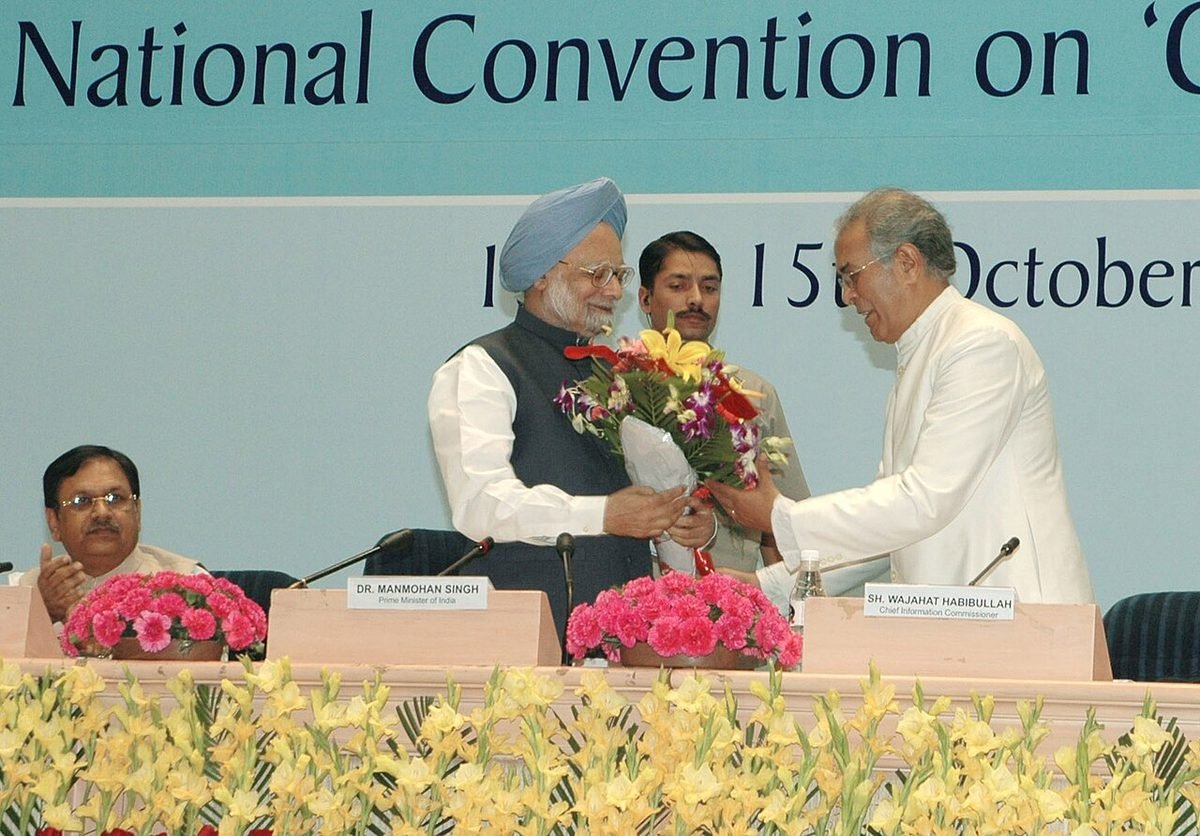
Within months, citizens were filing applications on ration cards, pensions, roads and recruitment. In mid-2006 the government proposed an amendment to keep ‘file notings’ (officials’ internal comments on files) out of the Act. After protests by campaigners, including a fast by Anna Hazare, the proposal was shelved. At the first-anniversary convention, Prime Minister Manmohan Singh was welcomed by the first Chief Information Commissioner, Wajahat Habibullah.
2005
The RTI Act comes fully into force Law
The Act applied to all public authorities of the Centre and the states (Jammu and Kashmir, then under its own 2004 law, was added in 2019). Any citizen could now ask for any record, document, email, file noting, sample or data held by a public authority, without giving a reason, and expect a reply within 30 days.
2005
Presidential assent Law
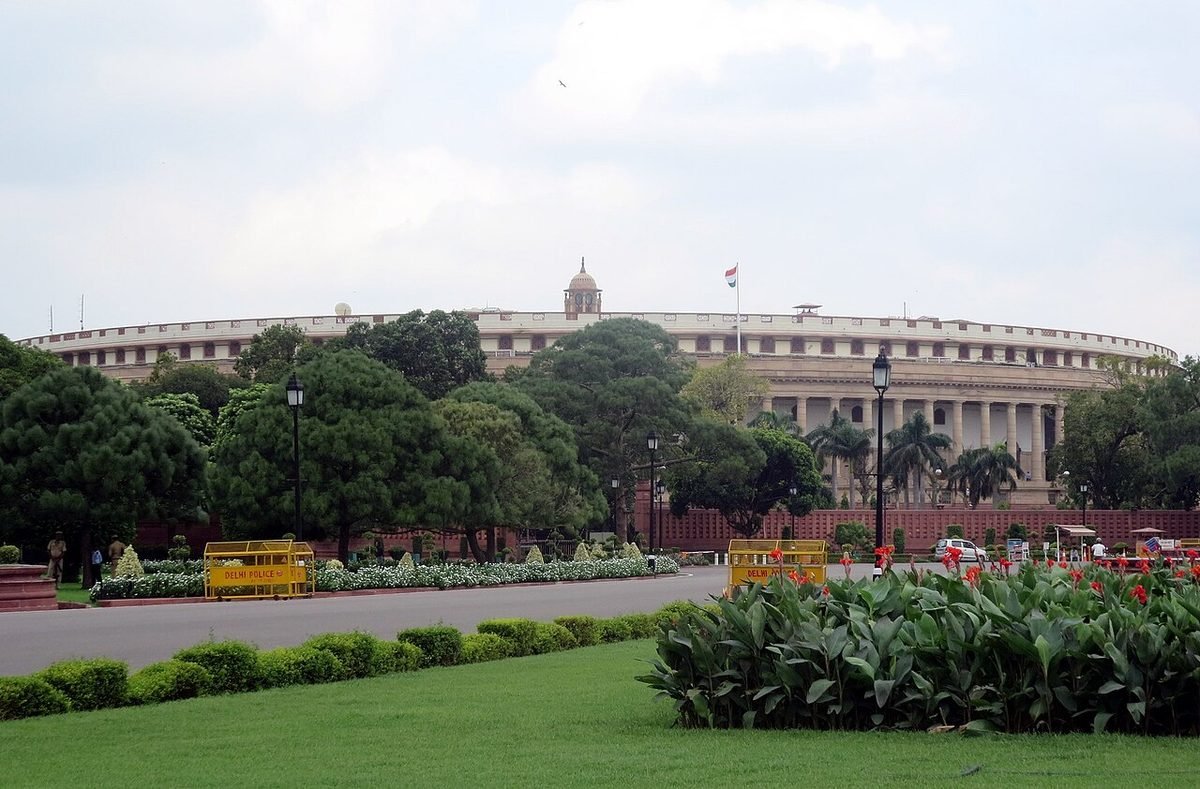
Introduced in December 2004 and substantially strengthened after recommendations from the National Advisory Council and campaigners, the Right to Information Bill passed both houses in May 2005 and received the President’s assent on 15 June. Its 120-day lead time let authorities designate information officers before the main provisions took effect.
2003
A weak first law that never came into force Law
Parliament passed the Freedom of Information Act in December 2002, but it had no penalties, no independent appeals body and broad exemptions, and the government never notified it. In parallel, Supreme Court rulings in Union of India v Association for Democratic Reforms (2002) and PUCL v Union of India (2003) required election candidates to disclose criminal, financial and educational backgrounds, grounding a voter’s right to know in Article 19(1)(a).
2002
States go first Movement
Before a national law existed, several states passed their own right-to-information laws. They varied widely in strength, and Maharashtra’s 2002 version, revised in 2003 after a hunger strike by Anna Hazare, became one of the models for the central Act.
The Beawar dharna and a national campaign Movement
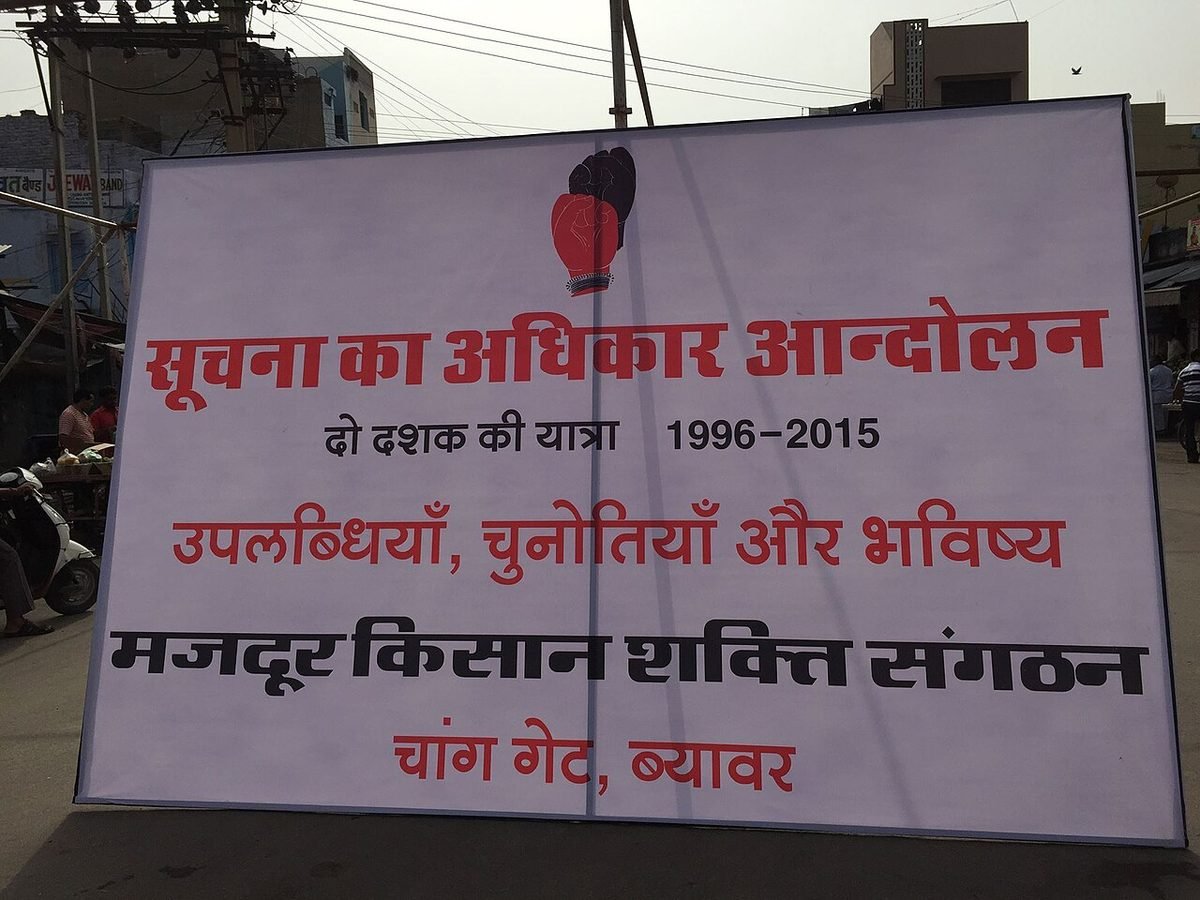
In April–May 1996, the MKSS held a 40-day sit-in in the market town of Beawar demanding the right to inspect and copy local government records. The slogan ‘our money, our accounts’ captured the idea. The same year, journalists, lawyers, retired officials and activists formed the National Campaign for People’s Right to Information, which drafted model legislation.
1995
Public hearings in Rajasthan’s villages Movement
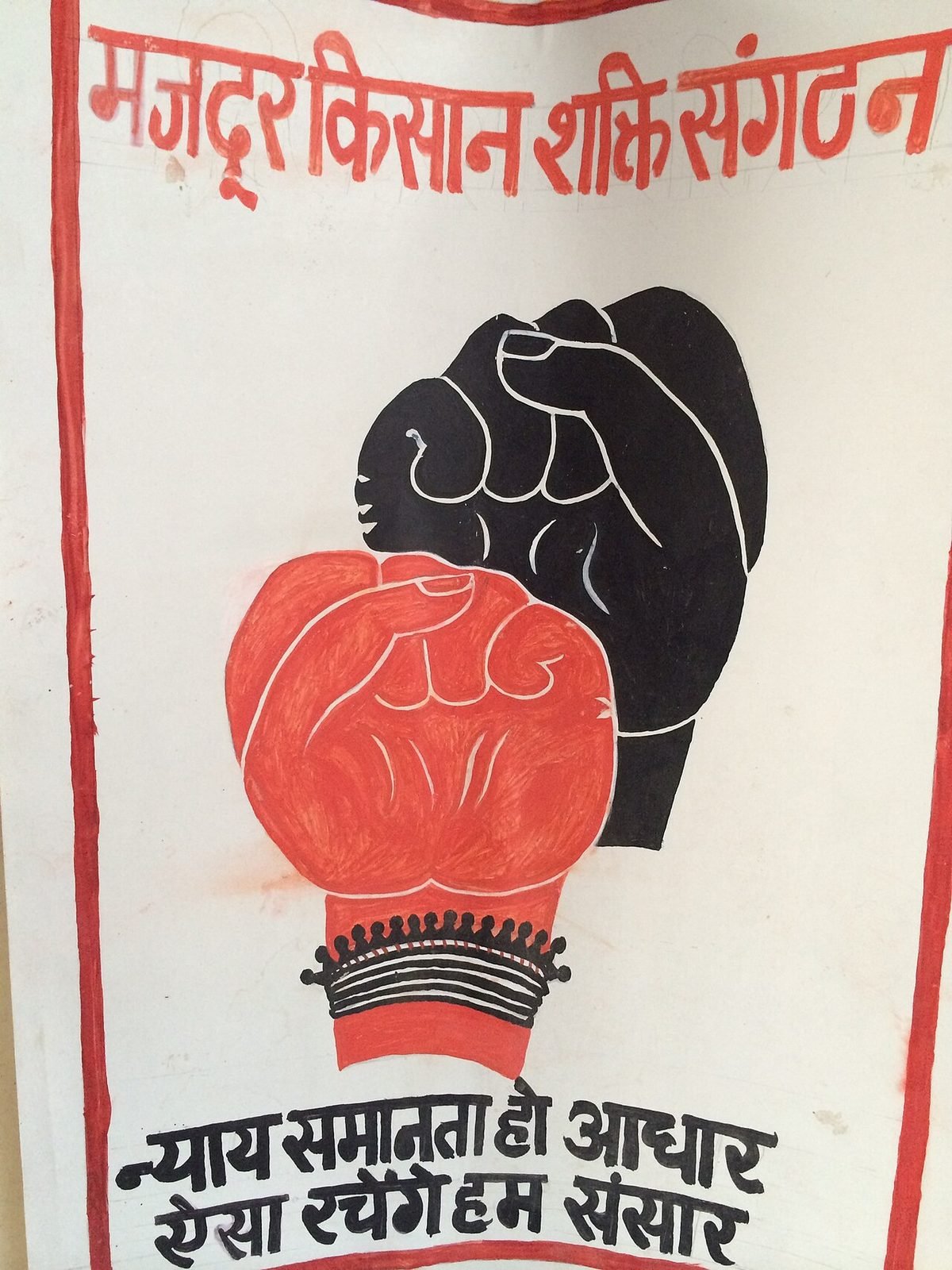
The Mazdoor Kisan Shakti Sangathan began by organising workers who were not paid minimum wages on government famine-relief works. To prove fraud, it needed muster rolls and bills. From December 1994 it held jan sunwais, village public hearings where official records, obtained with difficulty, were read aloud, and residents testified about ‘ghost’ workers and works never built.
1982
The right to know enters constitutional law Court
Long before any statute, the Supreme Court said citizens have a right to know about public acts. In Raj Narain (1975), it held that the people have a right to know every public act done in a public way by their functionaries. In the 1981 S.P. Gupta judges’ case, it said disclosure should be the rule and secrecy the exception. These rulings later anchored the argument that RTI is a fundamental right, not a gift of legislation.
How Has RTI Changed India?
Six things the law made possible, and their limits.
1. A legal route to question government
Before 2005, access to most government records depended on an official’s discretion. The Act made it a statutory right with a deadline and an appeal. It covers existing records: an authority need not create new information, offer opinions or answer hypothetical questions, so the best applications name the documents wanted.
2. Following public money
Sanction orders, work orders, measurement books, bills and completion certificates let citizens check what a department recorded against what was built. A record is not proof of wrongdoing, but it turns suspicion into a documented question that an official must answer.
3. Social audits
The MKSS’s village hearings became the template for social audits written into the 2005 rural employment guarantee law (MGNREGA). RTI complements them by getting the documents those audits depend on.
4. Journalism and accountability
Reporters have used RTI to obtain correspondence, file notings, expenditure data and orders that tested official claims, from housing scandals to defence purchases and electoral finance. Exemptions, privacy and slow appeals still limit what arrives and when.
5. Proactive disclosure
Section 4 requires authorities to publish their structure, functions, rules, budgets, subsidies, salaries and PIO details without waiting to be asked. In practice compliance is patchy: in 2026 only 62.7% of central public authorities had even submitted transparency audit reports.
6. A remedy when information is denied
First appeals, second appeals, complaints and penalties give the right teeth. But a remedy that takes years can make information useless, which is why the backlog section below matters as much as the exemptions.
RTI Exemptions Explained: What Can Be Withheld?
Disclosure is the rule; a refusal must cite a specific clause. Scroll sideways on a phone.
| Clause | What it protects | Public-interest route? |
|---|---|---|
| 8(1)(a) | Sovereignty, security, strategic, scientific or economic interests; foreign relations; incitement to an offence | Section 8(2) only; not lifted after 20 years |
| 8(1)(b) | Information a court or tribunal has expressly forbidden, or that would be contempt | Section 8(2) |
| 8(1)(c) | Breach of the privilege of Parliament or a state legislature | Section 8(2); not lifted after 20 years |
| 8(1)(d) | Commercial confidence, trade secrets, intellectual property that would harm a third party’s competitive position | Yes, built into the clause |
| 8(1)(e) | Information held in a fiduciary relationship | Yes, built into the clause |
| 8(1)(f) | Information received in confidence from a foreign government | Section 8(2) |
| 8(1)(g) | Information that would endanger life or physical safety, or identify a confidential source | Section 8(2) |
| 8(1)(h) | Information that would impede investigation, apprehension or prosecution | Section 8(2) |
| 8(1)(i) | Cabinet papers, until the decision is taken and the matter is complete | Reasons must be published after the decision; not lifted after 20 years |
| 8(1)(j) before Nov 2025 | Personal information with no link to public activity, or an unwarranted invasion of privacy | Yes, built into the clause, plus the ‘cannot be denied to Parliament’ test |
| 8(1)(j) after Nov 2025 | Information which relates to personal information | Section 8(2) only; under challenge |
| Section 9 | Copyright held by someone other than the state | No |
| Section 24 | Second Schedule intelligence and security organisations | Corruption and human-rights allegations still covered |
Section 8(2): the public-interest override
Even where an exemption applies, a public authority may allow access if the public interest in disclosure outweighs the harm to the protected interest, notwithstanding the Official Secrets Act, 1923. It is now the main route to personal information, and its reach is what the Supreme Court case will decide.
Section 8(3): the 20-year rule
Information about events more than 20 years old must generally be released, even if a Section 8(1) exemption would otherwise apply. Security, legislative privilege and Cabinet papers stay protected, and an authority cannot produce a record that was lawfully destroyed.
Section 10: severability
If part of a record is exempt, the rest must be released with the exempt portion removed. A contract with a supplier’s bank details or a list of beneficiaries with medical data should be redacted, not refused outright.
Section 11: third parties
Where a request concerns confidential information supplied by a third party, the PIO must give that party notice and consider its objections before deciding. It is a procedure, not a blanket exemption.
Section 24: intelligence and security organisations
Bodies listed in the Second Schedule, including the Intelligence Bureau, RAW, the BSF and, since 2011, the CBI, are largely outside the Act. Information about allegations of corruption and human-rights violations is not excluded; for human-rights matters the Information Commission must approve disclosure, which must then come within 45 days.
Pick a request. Which rule decides it?
Simplified illustrations of how the exemptions usually apply after November 2025. Real outcomes depend on the exact record, the officer, the commission and, now, the Supreme Court. Not legal advice.
The New Privacy Fight: Section 8(1)(j) Before and After
One clause, rewritten by a data-protection law, now before the Supreme Court.
Section 8(1)(j): old text vs new text
‘information which relates to personal information the disclosure of which has no relationship to any public activity or interest, or which would cause unwarranted invasion of the privacy of the individual unless the Central Public Information Officer or the State Public Information Officer or the appellate authority, as the case may be, is satisfied that the larger public interest justifies the disclosure of such information’, followed by the proviso that information which cannot be denied to Parliament or a state legislature shall not be denied to any person.
‘information which relates to personal information;’
The debate is not about whether privacy matters: since Puttaswamy (2017) it has been a fundamental right. It is about how to balance it when personal information is bound up with the exercise of public power. A neighbour’s medical file is an easy case for privacy. A list of people who received a subsidy, an officer’s disciplinary record or the names on a public appointment are harder, because the names are what make the record useful for scrutiny.
The government’s position is that the change harmonises the RTI Act with the right to privacy and that Section 8(2) still allows disclosure where the public interest is stronger. Petitioners argue that almost every government record ‘relates to’ some person, that the old clause already protected genuine privacy, and that moving the public-interest test to a discretionary general override invites routine refusals. Until the Supreme Court decides, neither reading is a final judicial determination.
Why Are RTI Appeals Taking So Long?
The law gives the PIO 30 days. It gives the Information Commission none.
| Commission | Pending (30 Jun 2026) | Estimated wait for a new case |
|---|---|---|
| Maharashtra SIC | 77,397 | Not given in reports reviewed |
| Chhattisgarh SIC | 52,559 | 18 years |
| Bihar SIC | 42,243 | 6 years 7 months |
| Central Information Commission | 39,121 | 2 years 3 months |
| Tamil Nadu SIC | 37,150 | 1 year 7 months |
| Madhya Pradesh SIC | Not given in reports reviewed | 19 years 2 months |
| Tripura SIC | Not given in reports reviewed | 19 years 8 months |
| Jharkhand SIC | Defunct all year | No hearings |
| Himachal Pradesh SIC | Defunct since 3 Jul 2025 | No hearings |
| All 28 commissions | 3,85,716 | 14 commissions over 1 year |
Commissions registered 2,61,669 new cases between July 2025 and June 2026 and disposed of 2,41,627, so the pile grew by roughly 20,000. Several factors feed it:
- Vacancies and defunct commissions: Jharkhand’s commission did not function all year; Himachal Pradesh’s has been headless since July 2025.
- Returned cases: 37,701 appeals were sent back without orders on procedural grounds, and most were never re-filed.
- Poor first responses: incomplete or unreasoned replies by PIOs push cases up the ladder.
- Weak record-keeping and disclosure: information that should be published under Section 4 is requested again and again.
- Rare penalties: when delay carries little cost, it becomes routine.
An answer that comes years later may be worthless if it was needed to challenge a current tender, a ration-card deletion or a recruitment list. That is why campaigners argue the backlog is as serious a threat to the right as any exemption.
How to File an Effective RTI Request
Six steps, then check your deadlines with the calculator below.
- Find the right public authority. Address the PIO of the body that holds the record. If it is held elsewhere, the PIO must transfer the request within five days (Section 6(3)).
- Ask for identifiable records. Name documents, dates, file numbers or registers; ask for copies or inspection, not opinions.
- Keep it focused. A short, numbered list of records is easier to answer in 30 days and harder to refuse as vague.
- Pay the fee correctly. ₹10 for central bodies via RTI Online; states set their own fees and portals. Attach a BPL certificate if exempt.
- Track the deadline. Keep proof of receipt. Count 30 days (48 hours for life or liberty).
- Appeal if needed. First appeal within 30 days; second appeal or complaint to the Information Commission within 90 days of the first-appeal decision.
When must they reply, and when must you appeal?
Choose the type of request and the date the public authority received it. The calculator applies the statutory limits; holidays do not extend them. A guide, not legal advice: check your state’s rules for state bodies.
Who’s Who in the RTI Story
Aruna Roy
Former IAS officer who helped lead the Rajasthan campaign and served on the National Advisory Council that shaped the 2005 Act.
NCPRI
National Campaign for People’s Right to Information, formed in 1996; now a petitioner against the DPDP amendment.
Wajahat Habibullah
Built the Central Information Commission’s early practice and precedents.
Raj Kumar Goyal
Sworn in on 15 December 2025, heading a CIC at full strength.
Satark Nagrik Sangathan
Delhi-based group whose annual assessments track pendency and penalties in Information Commissions.
Venkatesh Nayak
RTI researcher among those challenging the rewritten Section 8(1)(j) in the Supreme Court.
Explore More Timelines
People Also Ask
Frequently Asked Questions
Conclusion: A Right Is Only as Strong as Its Enforcement
Twenty-one years after it came into force, the RTI Act remains one of India’s most widely used tools for demanding accountability. It moved the default from secrecy to disclosure and gave ordinary people a way to make officials explain themselves in writing. But a right on paper depends on two things the law cannot guarantee by itself: commissions that decide appeals in time, and exemptions narrow enough that a record is not refused simply because it carries a name.
The lasting test of the RTI Act is whether an ordinary citizen can obtain a timely, meaningful answer when public money, public power or public welfare is at stake. The Supreme Court’s ruling on Section 8(1)(j), and whether the backlog falls, will decide how the law looks at 25.
Related AiTimeline Stories
⚠️ Editorial Note
This article draws on the text of the Right to Information Act, 2005, Department of Personnel and Training and Central Information Commission material, Supreme Court judgments and case records, the Ministry of Electronics and IT’s DPDP notifications, Satark Nagrik Sangathan’s 2025–26 report card as reported in October 2026, and news coverage. Statutory timelines are summarised and have conditions and exceptions; state rules differ. The interpretation of the amended Section 8(1)(j) is disputed and pending before the Supreme Court, and this article presents both the government’s and petitioners’ positions without treating either as settled. Nothing here is legal advice. Last checked 15 October 2026.
Sources & further reading
Every dated entry above was checked against these references. Last reviewed 15 October 2026.
- Right to Information Act, 2005 (text, rules and notifications)
- Central Information Commission
- RTI Online: file applications to central public authorities
- 3.85L complaints, appeals pending with 28 information commissions
- RTI at 21: 3.85 lakh cases pending, procedural hurdles flagged in returned appeals
- Supreme Court refers pleas challenging DPDP Act amendment to RTI Act to larger bench
- Constitutionality of the Digital Personal Data Protection Act, 2023
- Enforcement of the DPDP Act and notification of the DPDP Rules
- Why the new Digital Personal Data Protection Act faces a constitutional challenge
- New Delhi to have a full information commission after nine years
- About the RTI Act
- Right to Information Act, 2005