Turkish Lira Crisis: Why the Currency Plunged
Turkey's currency crisis came in repeated shocks, not one collapse. This timeline traces rate decisions, inflation, political shocks and the slide to
Latest Story
The Turkish lira crisis was not one sudden collapse but a run of shocks: a banking crisis in 2001, a corruption probe in 2014, the US tariff dispute of 2018, rate cuts into rising inflation in 2021, and political and financial shocks again in 2025 and 2026. This timeline runs newest first, from this month’s inflation data back to the 2001 float, and keeps rate decisions, political shocks and inflation figures apart, each with its source.
💡 Short Answer
The lira fell because inflation stayed high while interest-rate policy and central-bank independence were repeatedly in doubt, and because Turkey relies on foreign financing. The sharpest drops followed the 2018 US dispute, the 2021 rate cuts and political shocks in 2025 and 2026. In October 2026 the policy rate is 37%, annual inflation is 29.73% and the lira is near 48.5 per dollar.
Turkish Lira Crisis: Key Questions
The Turkish Lira Crisis in Ten Points
- Repeated shocks: 2001, 2014, 2018, 2021, 2025 and 2026 each hit the lira.
- 2018: US tariffs and the Brunson dispute sent the lira to 7.24 per dollar on 13 August.
- 2021: rates fell from 19% to 14% as inflation passed 21%, and the lira hit 18.36.
- Credibility: Ağbal’s sacking on 20 March 2021 cut the lira by up to 16% in a day.
- Inflation peak: 85.51% officially in October 2022, with ENAG at 185%.
- Pivot: a 15% rate on 22 June 2023 and 50% by March 2024.
- Politics still matters: İmamoğlu’s arrest in 2025 and the CHP ruling in May 2026 caused sell-offs.
- Now: 37% policy rate, 29.73% inflation and about 48.5 per dollar.
- New stress: a $20.4 billion fund liquidation in September 2026.
- Data gap: official and independent inflation figures differ by about 17 points.
Turkish Lira Crisis Timeline, Latest First
Each entry is tagged and ends with why it matters. Use the filter to separate rate decisions from shocks.
Rates, shocks, inflation or reform? Filter the Turkish lira timeline by type.
–
2026
Annual inflation falls below 30% for the first time since November 2021 Inflation
Turkish Minute reported that official annual inflation fell to 29.73%, the lowest reading in almost five years. Housing and utilities ran at 39.99% annually, transport at 35.10% and food at 27.62%. The central bank’s survey of economists expected 29.61% by the end of 2026. The independent ENAG estimate of 46.61% was far higher, and the gap is itself part of the confidence story. The next rate decision is due on 22 October.
2026
Regulator orders 131 investment funds liquidated; stocks have their worst month since 2008 Political or market shock
The funds had poured money into thinly traded shares, which lifted prices and made returns look strong until outflows hit. Reports put outflows at as much as $1 billion in a single day. The liquidation period was first set at three months and extended to six on 21 September. Turkish Minute also reported criminal investigations into market manipulation.
2026
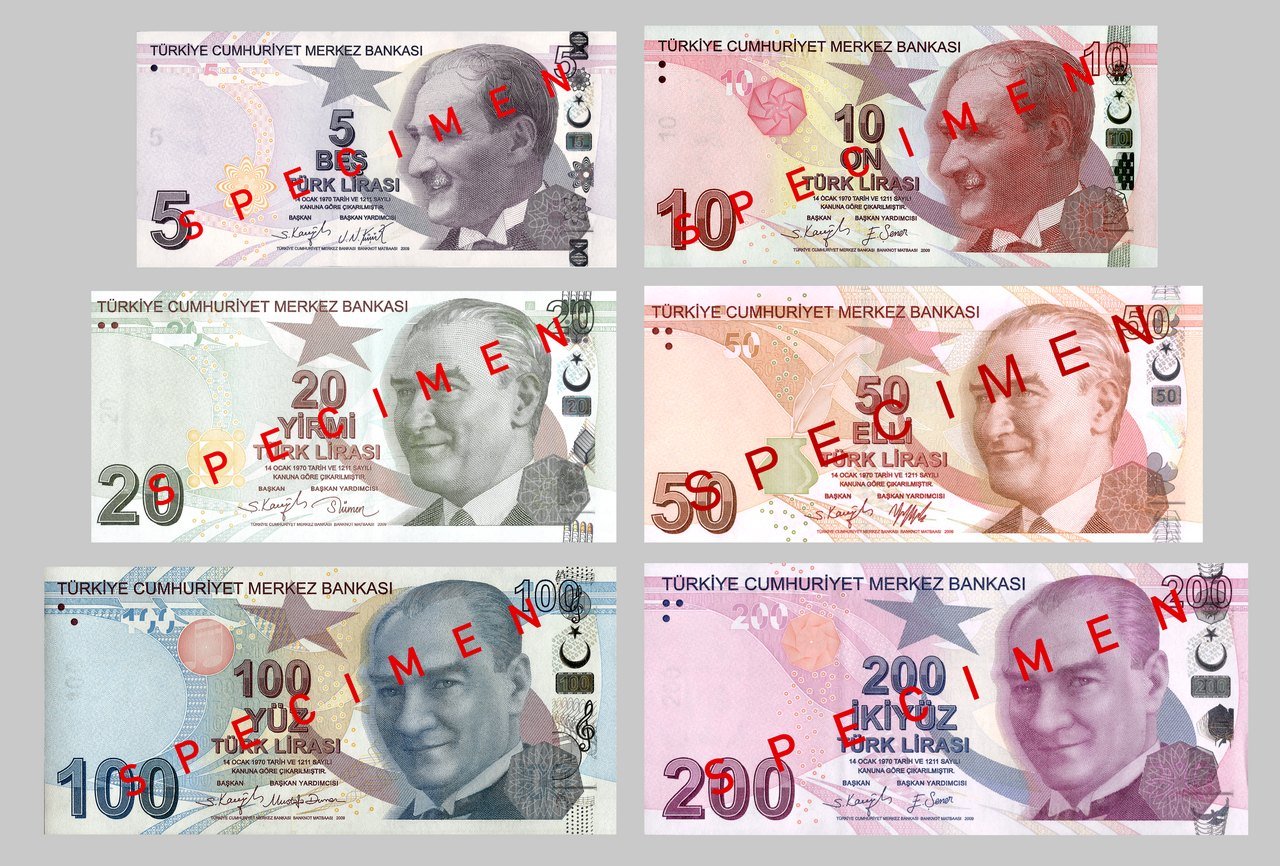
Central bank holds at 37% for the fifth meeting in a row Rate decision
The Monetary Policy Committee said underlying inflation was falling and domestic demand was weak, but that high energy prices from geopolitical developments, including the US conflict with Iran, raised the risk to the inflation outlook. Bloomberg’s headline said the hold on oil risks opened the door for an October cut. The next meeting is on 22 October 2026.
2026
Policy rate kept at 37% for the fourth straight meeting Rate decision
The July decision continued the restrictive stance adopted to bring inflation down. The rate was far below the 50% peak of 2024, but still high by international standards, and the bank’s challenge was to slow price rises without choking activity and borrowers.
2026
May inflation at 32.61% annual Inflation
Higher energy prices and geopolitical tension complicated the disinflation path. Inflation had risen to about 31% in February 2026 and stayed above that level until September, with readings of 31.75% in July, 31.51% in August and 29.73% in September.
2026
Court ruling removes the CHP leader; lira hits a record low of about 45.78 Political or market shock
The 36th Civil Chamber found an “absolute nullity” in the November 2023 congress at which Özel had defeated Kılıçdaroğlu, citing vote-buying allegations. Policymakers met on the morning of 22 May to address market turbulence, and press reports said the central bank sold billions of dollars of reserves to hold the lira. Reuters reported the markets rebounded after the initial tumble.
2026
Pause after the first cut: the Iran war lifts energy costs Rate decision
FocusEconomics reported that the bank held to assess the aggressive easing of the previous nine months, with inflation back at about 31%. The war in Iran and the jump in energy costs added upside risk, and Turkey imports most of the oil and gas it uses.
First cut of 2026: policy rate lowered from 38% to 37% Rate decision
The bank cut by one percentage point at its first meeting of 2026, less than the median market forecast. It continued the easing that began in December 2024 and was interrupted by the political shock of March 2025.
2025
Easing resumes: 43%, 40.5%, 39.5%, then 38% Rate decision
After the spring shock the bank restarted cuts on 24 July. The pace eased to 100 basis points in October, then rose to 150 in December after softer inflation data, according to Bloomberg’s report on the 11 December cut.
2025
İmamoğlu’s arrest sparks a sell-off; the bank hikes to 46% Political or market shock
The arrest of Ekrem İmamoğlu, the opposition’s leading presidential contender, drove the lira down roughly 12% against major currencies at one point, and the central bank sold large amounts of foreign reserves. The April hike surprised most economists polled by Bloomberg, who had expected the rate to stay at 42.5%.
2024
First rate cut after 18 months of tightening: 50% to 47.5% Rate decision
Duvar English and Euronews reported that the cut, which surprised some markets, started the easing cycle after an 18-month tightening effort that reversed years of unorthodox policy. A follow-up 250 bp cut came in January 2025, taking the rate to 45%.
2024
Policy rate raised to 50% Rate decision
The central bank pushed borrowing costs to their peak, seeking to make lira deposits more attractive, slow credit growth and cut demand for foreign currency. The tightening raised costs for households and companies, the trade-off involved in stabilising a currency. Karahan, a former Federal Reserve Bank of New York economist, took over from Erkan after her resignation.
2023
Turkey reverses course: rate raised from 8.5% to 15% Institutions and reform
After the 2023 elections, Erdoğan appointed Şimşek and Erkan, a former Wall Street banker, and signalled he accepted rate rises. CNBC reported the 15% hike was smaller than the 21% median in a Reuters poll, and the lira tumbled to a record low in the following half hour. The pivot was gradual, and the lira stayed weak during the adjustment.
Official inflation peaks at 85.51% Inflation
TurkStat’s figure for October 2022 was the highest since 1998, according to Bianet. Imported energy and food, a weak lira and the 2021 rate cuts fed on each other. Independent researchers said true inflation was far higher, and the official statistics office disputed their figures.
2021
Rate cut to 14%; lira plunges to 18.36, then Erdoğan announces deposit protection Rate decision
Al Jazeera reported that Erdoğan said the government would cover lira deposit holders if the lira’s losses against foreign currencies exceeded bank interest rates. It was the origin of the foreign-exchange-protected deposit scheme. The central bank had been cutting since September on the government’s argument that lower rates would support production, investment and jobs.

2021
Another 100 bp cut, to 15%, and a new record low for the lira Rate decision
Al Jazeera’s report on the November decision noted the lira sinking to a record low as markets read the cuts as a sign that policy was driven by the president’s preference for low rates rather than by inflation.
2021
Governor Naci Ağbal sacked two days after a 200 bp hike Institutions and reform
The dismissal came at the weekend, and Reuters reported the lira plunged to near its record low as markets opened. Kavcıoğlu was a former ruling-party lawmaker who, like the president, was critical of high interest rates. The episode showed how institutional credibility moves a currency before any data arrives.
2020
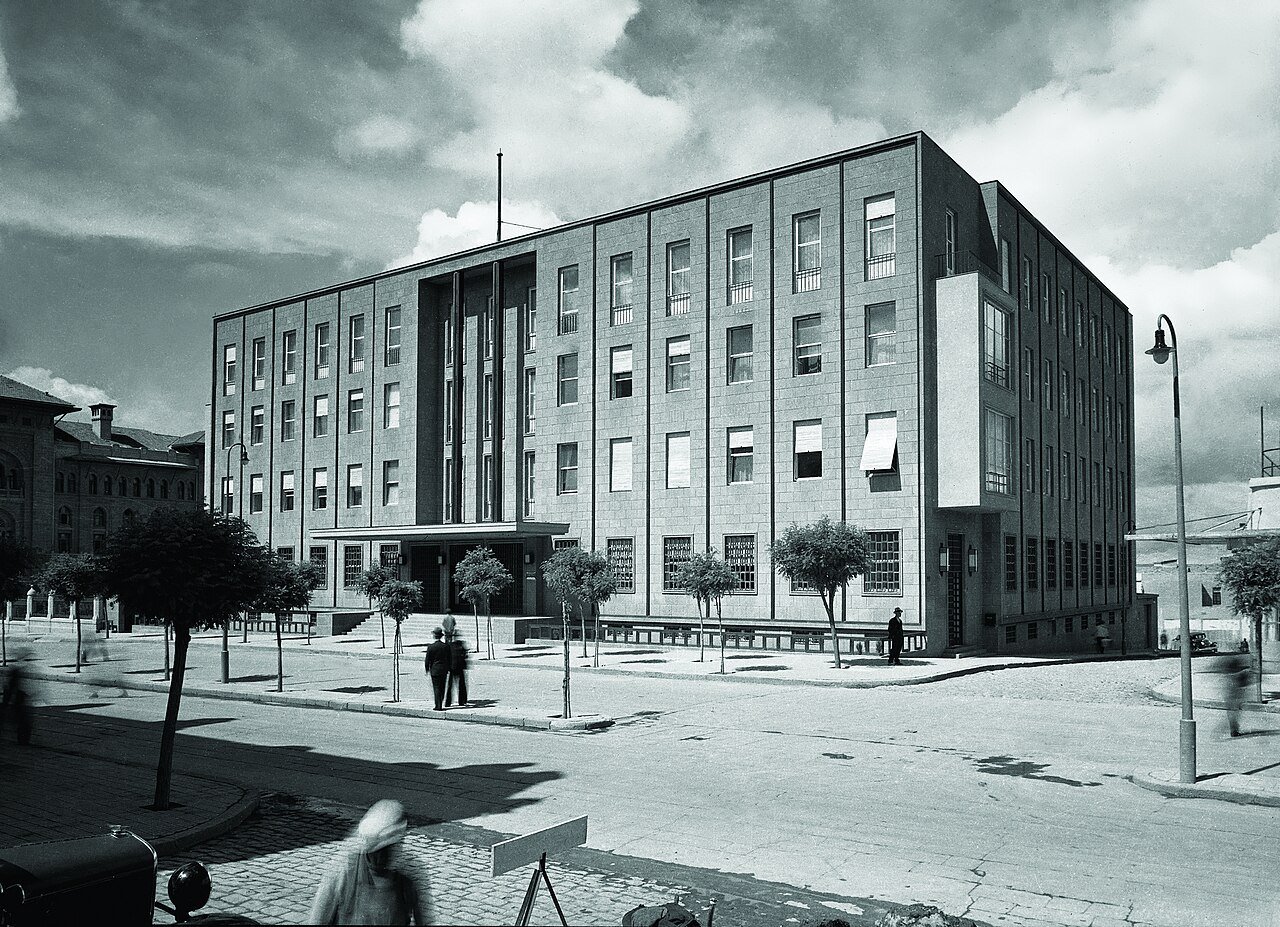
Governor Murat Uysal removed, Ağbal appointed; Finance Minister Albayrak resigns Institutions and reform
Albayrak, the president’s son-in-law, left a day after Erdoğan replaced the central bank governor. The lira recovered for a time after the changes.
Inflation hits 25.24%, a 15-year high Inflation
The Bianet and CNBC reports of the 5 November release described the sustained effect of the currency crisis on prices. The central bank had raised its benchmark to 24% on 13 September despite President Erdoğan’s public criticism of rate hikes, and had earlier called high rates “the mother and father of all evil”, according to Wikipedia.
2018
US tariffs and the Brunson dispute trigger a lira collapse Political or market shock
The dispute over the detention of American pastor Andrew Brunson hit an economy with a current-account deficit of about $51.6 billion a year and companies heavily indebted in foreign currency. Repaying dollar and euro loans became more expensive in lira terms. Credit-rating agencies later downgraded Turkey’s debt, and the lira had lost about 40% in the year to mid-August.
2014
Emergency midnight rate hike after a corruption probe Political or market shock
Capital outflows and the lira’s slide forced the central bank to act at an emergency meeting, ignoring Prime Minister Erdoğan, who had said hours earlier that he was against a hike. Reuters reported that the scale of the move stunned investors and lifted the lira.
2005
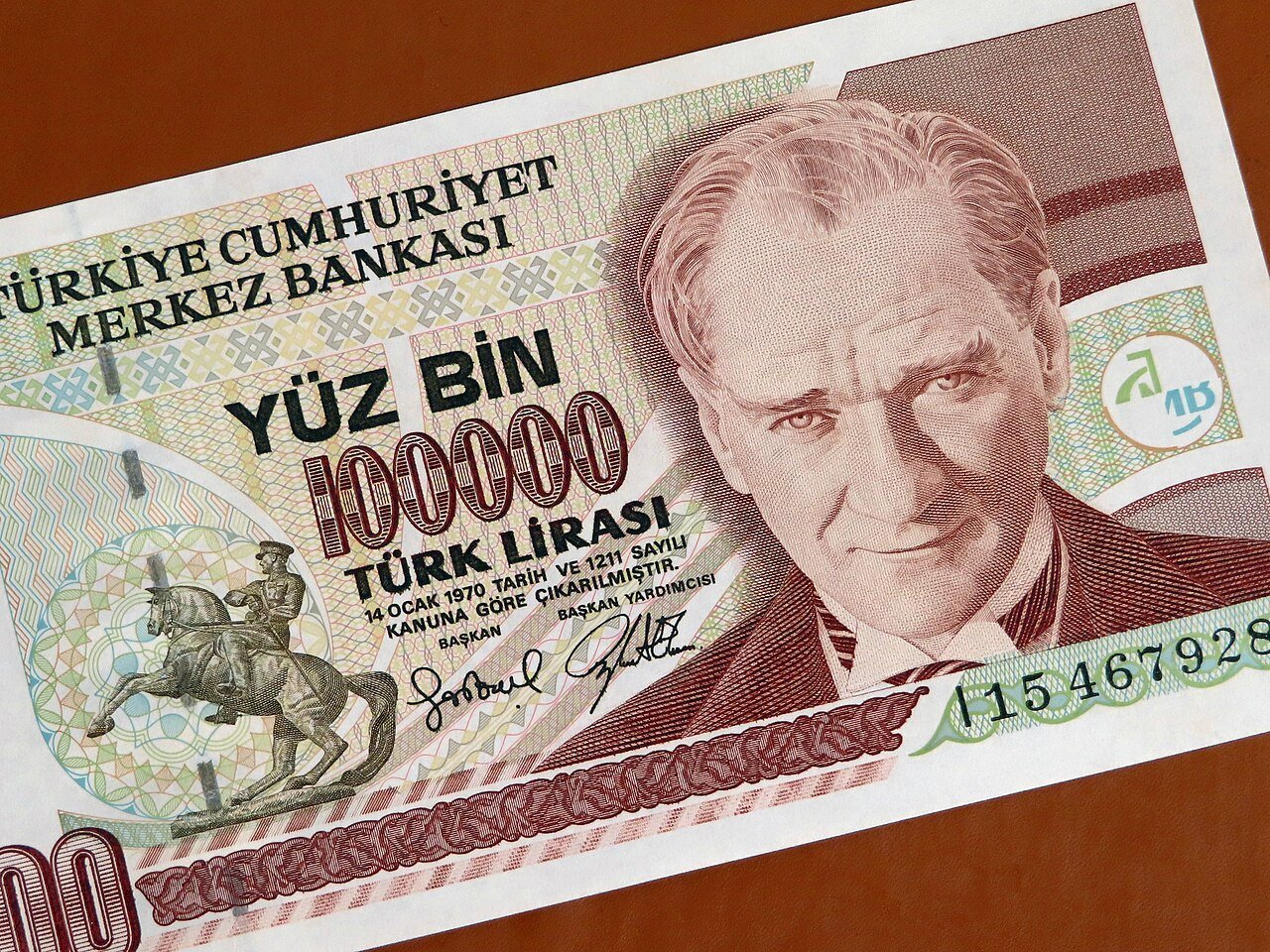
Six zeros removed: 1 new lira replaces 1,000,000 old lira Institutions and reform
The redenomination removed the scale of the old currency, in which a 100,000-lira note, as shown here, was worth little. It was a symbolic cornerstone of the post-2001 stabilisation programme, which the IMF backed, and it did not by itself stop inflation.
2001
Lira floated after a banking crisis; it falls about 40% Political or market shock
A US Congressional Research Service summary and an academic account described a run on the crawling-peg exchange rate that started in November 2000 and ended with the lira floating and the worst recession in the Republic’s history.
How Far the Lira Has Fallen
The Policy Rate Through the Crisis
One-week repo rate at key decisions. Dates and levels are from central-bank decisions as reported in the sources listed below.
| Date | One-week repo rate | Move | Context |
|---|---|---|---|
| 28 Jan 2014 | 10% | From 4.5% | Emergency hike after the corruption probe |
| 13 Sep 2018 | 24% | Hike | Weeks after the August 2018 crash |
| 18 Mar 2021 | 19% | From 17% | Ağbal’s hike; he was sacked two days later |
| Sep–Dec 2021 | 14% | From 19% | Cuts while inflation passed 21% |
| 22 Jun 2023 | 15% | From 8.5% | Policy reversal under Erkan and Şimşek |
| 21 Mar 2024 | 50% | Peak | Tightening at its height |
| 26 Dec 2024 | 47.5% | -250 bp | First cut after 18 months |
| 17 Apr 2025 | 46% | From 42.5% | After İmamoğlu’s arrest |
| 11 Dec 2025 | 38% | From 39.5% | After cuts on 24 Jul, 11 Sep and 23 Oct |
| Jan 2026 | 37% | -100 bp | First cut of 2026 |
| 10 Sep 2026 | 37% | Hold (5th) | Next meeting 22 Oct 2026 |
Official and Independent Inflation
TurkStat’s official index and ENAG’s independent estimate measure different things and diverge widely.
| Date | Official annual CPI | Independent estimate | Source |
|---|---|---|---|
| Oct 2018 | 25.24% | n/a | TurkStat via Bianet, CNBC |
| Oct 2022 | 85.51% | 185% (ENAG) | TurkStat via Bianet |
| Nov 2024 | About 47% | n/a | Wikipedia |
| Feb 2026 | About 31% | n/a | FocusEconomics |
| May 2026 | 32.61% | n/a | TurkStat via Reuters |
| Jul 2026 | 31.75% | n/a | Turkish Minute |
| Aug 2026 | 31.51% | 49.03% (ENAG) | Turkish Minute |
| Sep 2026 | 29.73% | 46.61% (ENAG) | Turkish Minute |
Latest Numbers at a Glance
| Measure | Figure | Source and caveat |
|---|---|---|
| Lira, record low | About 48.5 per USD | Trading Economics, Sep 2026; central bank manages a slow depreciation |
| Lira, political shock | About 45.78 per USD, 22 May 2026 | FXStreet; Reuters headline figure about 45.74 per the editor’s brief |
| Policy rate | 37% (one-week repo) | CBRT, held 10 Sep 2026; lending 40%, borrowing 35.5% |
| Year-end inflation forecast | 28% | CBRT, raised from 26% on 10 Sep 2026 |
| Investment-fund liquidations | 131 funds, $20.4 billion | Capital Markets Board, as of 16 Sep 2026 |
| Stock index | -16.65% in September 2026 | BIST 100, worst month since 2008 |
| Households’ 12-month expectation | 45.6% | Central bank survey, Sep 2026 |
Why Did the Turkish Lira Plunge?
1. Rates were cut while inflation was high. Ordinarily central banks raise rates to restrain demand and prices. Turkey cut from 19% to 14% between September and December 2021 while inflation was above 21%, which made foreign currency more attractive to savers.
2. Inflation weakened confidence in money. When prices rise fast, households bring purchases forward, firms reprice more often and investors seek more stable currencies. Depreciation, higher import prices and more dollar buying then feed one another.
3. Policy credibility was repeatedly in question. Repeated governor changes since 2019 and Ağbal’s dismissal two days after a rate hike made markets ask whether the central bank would be allowed to keep rates high enough.
4. Turkey depends on external financing. A current-account deficit of about $51.6 billion in early 2018 and heavy foreign-currency borrowing by companies meant a falling lira raised repayment costs in lira terms.
5. Imported energy adds pressure. Turkey imports important commodities. In 2026 the central bank again cited high energy prices linked to the US conflict with Iran as a risk to the inflation outlook.
6. Global conditions matter. US interest rates, appetite for emerging-market assets and geopolitical risk influence capital flows even when domestic policy is tight.
What a Weak Lira Means for Ordinary People
Households: imported goods, fuel and electronics cost more, and savings in lira lose purchasing power when inflation exceeds deposit returns.
Businesses: firms using imported inputs or owing foreign-currency debt face higher costs and repayments.
Exporters and tourism: a weaker currency can make Turkish goods and holidays cheaper for foreign buyers, but imported inputs and domestic inflation offset some of the gain. The effect depends on the sector, debt exposure and how fast domestic prices adjust.
Can Turkey Stabilise the Lira?
Keep policy consistent. Rates and communication need to match the goal of lowering inflation. If markets expect abrupt changes, the benefit of high rates is limited.
Bring inflation down persistently. The fall below 30% in September 2026 is progress, but households still expected 45.6% inflation over the next 12 months.
Rebuild buffers and transparency. Adequate reserves help in stress, but they cannot fix persistent imbalances. Predictable decisions and trusted data reduce uncertainty.
Reduce external and political risk. Stable financing, strong institutions and clear rules lower exposure to sudden outflows. The 2025 and 2026 episodes show that political events can override tight monetary policy.
Who’s Who in the Lira Story
Roles as described in press and official sources. Naming an institution here is not a finding of fault.
Central Bank of the Republic of Türkiye
Sets the one-week repo rate. Fatih Karahan has been governor since 3 February 2024.
Treasury and Finance Ministry
Mehmet Şimşek has been finance minister since the 2023 pivot toward conventional policy.
President Recep Tayyip Erdoğan
Appoints the governor by decree and has argued for lower interest rates, including in 2018 and 2021.
TurkStat
Publishes the official consumer price index, released early each month.
Inflation Research Group (ENAG)
Publishes higher independent estimates that the official body disputes.
Capital Markets Board (SPK)
Ordered the liquidation of 131 investment funds on 17 September 2026.
Explore More Timelines
People Also Ask
Frequently Asked Questions
Related AiTimeline Stories
⚠️ Editorial Note
This page is a dated record, not investment advice or an exchange-rate quote. Rates, inflation prints and exchange rates change quickly; check the central bank, TurkStat or a regulated provider before acting. Exchange rates are peaks reported at the time. The editor’s brief cited IMF Article IV pages and Reuters links that could not be opened for checking, so figures here were checked against other reports and are credited to them. Official inflation (TurkStat) and independent estimates (ENAG) are shown separately and labelled.
Sources & further reading
Every dated entry above was checked against these references. Last reviewed 20 October 2026.
- Central Bank of the Republic of Türkiye: Monetary Policy Committee decisions
- Turkey's central bank keeps policy rate at 37 percent for 5th straight meeting (10 September 2026)
- Turkey's annual inflation slows to 29.7 percent in September (5 October 2026)
- Turkey's central bank keeps policy rate at 37 percent (23 July 2026)
- Turkish Lira drops to record lows after Ankara court annuls 2023 leadership contest (22 May 2026)
- Republican People's Party absolute nullity crisis
- Shock on the Turkish stock market: another crisis of confidence (1 October 2026)
- Turkish economic crisis (2018-current)
- Turkey's Erdogan sacks central bank governor after rate hike (20 March 2021)
- Turkish lira rockets after Erdogan's promise to protect deposits (21 December 2021)
- Turkey's central bank hikes interest rate to 15% in dramatic U-turn (22 June 2023)
- Turkiye's official inflation rate surpasses 85 percent (3 November 2022)
- Turkey hikes interest rate to 46% amid turmoil over Imamoglu's arrest (April 2025)
- Turkish central bank makes massive rate hikes to stem lira fall (29 January 2014)
- Turkey: Financial Crises in Context (CRS Report RS20842)