Ferrari History Timeline: From Enzo Ferrari’s Racing Dream to Global Supercar Icon
Ferrari history timeline: from Enzo Ferrari's racing dream to the global supercar icon - key models, F1 wins and milestones from 1947 to today.
Latest Story
No name in motoring carries the weight of Ferrari. Born from Enzo Ferrari’s obsession with racing, the Prancing Horse grew from a 1929 racing team into the most successful Formula 1 constructor in history and the world’s most desirable supercar brand. This Ferrari History Timeline charts every defining moment — from the 1947 125 S to today’s hybrid hypercars — with the context, racing significance and business impact behind each. Read newest first.
Ferrari History: Key Facts
Ferrari History — Key Takeaways
- Enzo Ferrari founded Scuderia Ferrari in 1929 and the car company in 1947.
- The 125 S (1947) was the first Ferrari, powered by a 1.5-litre V12.
- Ferrari won its first Le Mans in 1949 with the 166 MM, just two years after founding.
- Ferrari has competed in Formula 1 since the championship began in 1950 — the only team to do so.
- The 250 GTO (1962) is the most valuable car in the world, selling for over $48 million.
- Ferrari rejected a Ford buyout in 1963, sparking the legendary Ford GT40 rivalry at Le Mans.
- Fiat acquired a 50% stake in Ferrari in 1969, providing crucial financial stability.
- Michael Schumacher won five straight titles for Ferrari from 2000 to 2004.
- The F40 (1987) was the last car personally approved by Enzo Ferrari before his death.
- Ferrari became a public company (Ferrari N.V.) in 2015–2016 and is now hugely profitable.
Top 10 Most Important Ferrari Models
The cars that defined the Prancing Horse, by launch year. Engine and peak power shown for each landmark.
Holy grail
Purist icon
Hybrid era
The origin
2000s flagship
Pop culture
Racing legend
Modern hybrid
GT legend
Modern V12
Ferrari History Timeline (Reverse Chronological)
From the 2025–26 hybrid era back to the 1929 founding of Scuderia Ferrari — every milestone with its racing and business significance.
26
Hybrid Expansion & Electrification Strategy
Context: Ferrari now offers hybrid power across its core range, from the 296 GTB V6 to the SF90 and the F80 flagship, while preparing its first fully electric model.
Business impact: Record profits and waiting lists have made Ferrari one of the most valuable car companies in the world by market value per car sold.
Why it matters: Ferrari is balancing electrification with its V12 heritage, promising its first EV while keeping combustion engines alive with synthetic fuels.
The 12Cilindri Era — The V12 Endures
Context: The 12Cilindri replaced the 812 Superfast with a naturally aspirated 6.5-litre V12 producing 819 hp, a defiant celebration of Ferrari’s twelve-cylinder tradition.
Innovation: Modern aerodynamics and electronics wrapped around a classic front-mid V12 layout, with styling echoing the 1960s Daytona.
Legacy: In an electrifying world, the 12Cilindri reaffirmed that the naturally aspirated V12 remains central to Ferrari’s identity.
LaFerrari Launch — The Hybrid Flagship
Context: LaFerrari paired a 6.3-litre V12 with a Formula 1-derived HY-KERS hybrid system for 950 hp, Ferrari’s first hybrid road car.
Racing significance: Its hybrid technology came straight from Ferrari’s F1 energy-recovery systems, bridging track and road.
Legacy: Limited to 499 units, LaFerrari joined the McLaren P1 and Porsche 918 as one of the “Holy Trinity” of hybrid hypercars.
The Enzo Ferrari Hypercar
Context: Named after the founder, the Enzo distilled Ferrari’s Formula 1 dominance into a 660 hp, carbon-bodied road car limited to 399 units.
Innovation: Carbon-fibre construction, a paddle-shift gearbox and active aerodynamics brought F1 technology to the street.
Legacy: The Enzo defined the modern Ferrari hypercar template later followed by LaFerrari and the F80.
2005
The Schumacher Era — Total F1 Dominance
Context: After a 21-year drought, Ferrari and Michael Schumacher won five consecutive Drivers’ Championships from 2000 to 2004 and six Constructors’ titles.
Racing significance: The Schumacher–Ferrari partnership, with Jean Todt and Ross Brawn, is the most dominant era in F1 history.
Business impact: On-track success supercharged Ferrari’s brand value and road-car demand worldwide.
Ferrari F40 — Enzo’s Final Masterpiece
Context: Built to mark Ferrari’s 40th anniversary, the F40 was the last car personally approved by Enzo Ferrari before his death in 1988.
Innovation: A stripped-out Kevlar and carbon-fibre body and twin-turbo V8 made it the first production car to exceed 200 mph.
Legacy: Raw and uncompromising, the F40 is revered as the definitive driver’s Ferrari and a blue-chip collector car.
The Testarossa Phenomenon
Context: The Testarossa, with its dramatic side strakes and 390 hp flat-12, became the defining supercar of the 1980s.
Business impact: Wide exposure in TV and film, especially Miami Vice, made it one of the most recognisable cars on earth.
Legacy: The Testarossa symbolised 1980s excess and remains a pop-culture and design icon.
The Berlinetta Boxer Era — Ferrari Goes Mid-Engine
Context: The 365 GT4 Berlinetta Boxer was Ferrari’s first mid-engine flat-12 road car, a response to the mid-engine Lamborghini Miura.
Innovation: Mounting the flat-12 behind the driver transformed Ferrari’s road-car dynamics and packaging.
Legacy: The Boxer line led directly to the Testarossa and established the mid-engine flagship layout.
Fiat Acquires a 50% Stake
Context: In 1969, Enzo Ferrari sold 50% of the company to Fiat, securing the capital needed to compete and expand while retaining control of racing.
Business impact: Fiat’s investment modernised production and stabilised Ferrari’s finances for decades.
Legacy: The Fiat partnership underpinned Ferrari’s growth until its public listing in 2015–2016.
The 250 GTO Era — Birth of a Legend
Context: The 250 GTO combined a 300 hp V12 with aerodynamic Scaglietti bodywork, dominating GT racing in the early 1960s.
Racing significance: Only 36 were built, each hand-finished, and they won championships across three seasons.
Legacy: The 250 GTO is now the most valuable car in the world, with examples selling for $48–70 million.
The 250 Testa Rossa — Racing Royalty
Context: The 250 Testa Rossa became one of the most successful sports-racing cars of its era, winning Le Mans and the World Sportscar Championship.
Innovation: Its red-painted cam covers gave it the “Testa Rossa” (red head) name later revived for the 1984 road car.
Legacy: Original Testa Rossas are among the most valuable racing cars ever sold at auction.
Ferrari’s Formula One Debut
Context: Ferrari entered the inaugural Formula 1 World Championship in 1950 and remains the only team to have competed in every season since.
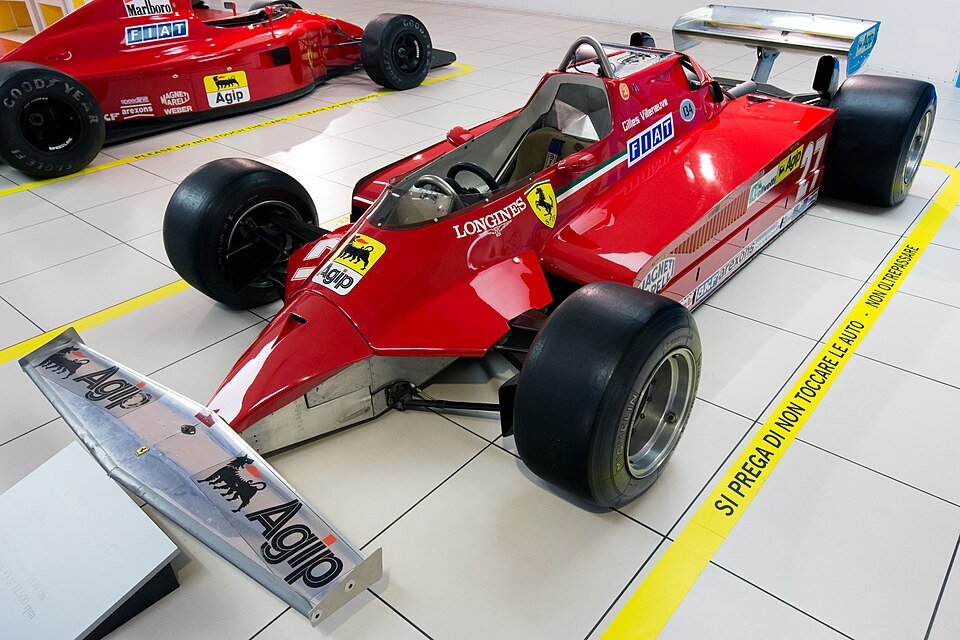
Racing significance: Ferrari took its first F1 win in 1951 and its first Drivers’ title with Alberto Ascari in 1952.
Legacy: Ferrari is F1’s most successful and most iconic team, with 16 Constructors’ and 15 Drivers’ Championships.
First Le Mans Victory — 166 MM
Context: The Ferrari 166 MM won the 1949 24 Hours of Le Mans, an astonishing achievement just two years after the company’s founding.
Racing significance: The victory announced Ferrari as a serious force in endurance racing on the world stage.
Legacy: It began a Le Mans heritage that includes nine outright victories and Ferrari’s 2023 return win.
Ferrari 125 S — The First Ferrari
Context: The 125 S was the first car to wear the Ferrari name, powered by a 1.5-litre V12 designed by Gioacchino Colombo.
Innovation: Its V12 set the template for Ferrari’s signature engine layout for decades to come.
Legacy: The 125 S won its second-ever race at Rome’s Caracalla circuit, launching the Ferrari legend.
Scuderia Ferrari Founded
Context: Enzo Ferrari founded Scuderia Ferrari in 1929 as a racing team, initially preparing and racing Alfa Romeo cars.
Racing significance: The Scuderia became Alfa Romeo’s de facto works team, building Enzo’s reputation as a racing manager.
Legacy: The prancing horse badge and racing-first philosophy established here still define Ferrari today.
Ferrari & Formula 1: The Greatest Story in Motorsport
Ferrari is Formula 1. No other team carries the same history, and none has matched its record. Ferrari has contested every F1 season since the championship began in 1950 — a unique distinction — and holds the records for most race wins, most Constructors’ Championships (16) and most Drivers’ Championships (15).
1950 debut: Ferrari entered the first World Championship season and took its maiden win at the 1951 British Grand Prix with Froilán González. First championship: Alberto Ascari delivered Ferrari’s first Drivers’ titles in 1952 and 1953. Schumacher era: the partnership with Michael Schumacher, Jean Todt and Ross Brawn produced five straight Drivers’ titles (2000–2004). Hybrid era: since 2014, Ferrari has developed turbo-hybrid power units, chasing championship glory against Mercedes and Red Bull. Legendary Ferrari drivers include Ascari, Lauda, Schumacher, and Räikkönen, who won Ferrari’s most recent Drivers’ title in 2007.
Key People & Entities in Ferrari History
Enzo Ferrari
The racing-obsessed founder (1898–1988) who created Scuderia Ferrari in 1929 and the car company in 1947. He sold cars only to fund his racing, shaping Ferrari’s entire identity around motorsport.
Scuderia Ferrari
Ferrari’s Formula 1 and motorsport division, founded in 1929. It is the most successful and longest-running team in F1, with a record 16 Constructors’ Championships.
Formula One
The pinnacle of motorsport, where Ferrari has competed continuously since 1950. F1 success is central to Ferrari’s brand, marketing and engineering credibility.
Fiat
The Italian industrial giant that bought 50% of Ferrari in 1969 and later increased its stake, providing decades of financial stability before Ferrari was spun off as a public company.
Maranello
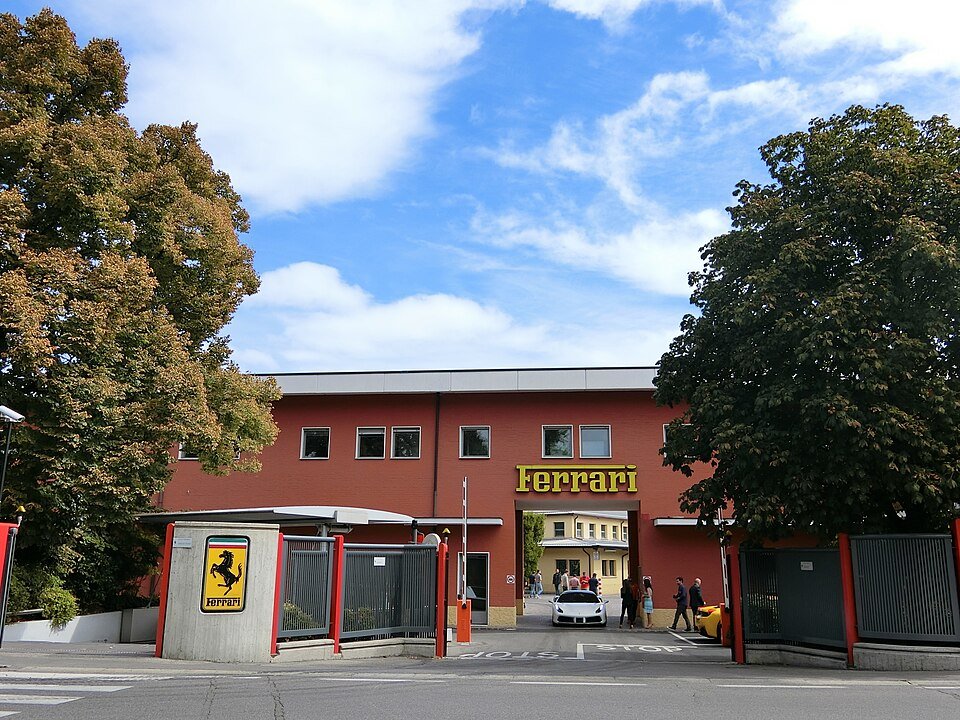
The town in Emilia-Romagna, Italy that has been Ferrari’s headquarters and factory since 1943. “Maranello” is now synonymous with the Ferrari brand worldwide.
Pininfarina
The legendary Italian design studio responsible for most classic Ferrari shapes, from the 250 series to the Daytona, Testarossa and Enzo. Its partnership defined Ferrari styling for over 60 years.
Michael Schumacher
The German champion who joined Ferrari in 1996 and ended its title drought, winning five consecutive Drivers’ Championships (2000–2004) and becoming the face of Ferrari’s greatest F1 era.
Ferrari N.V.
Ferrari became an independent public company in 2015–2016, listed on the New York Stock Exchange under “RACE.” It is now one of the most profitable and valuable luxury-car makers in the world.
Iconic Ferrari Models: Mini-Histories
125 S 1947
The first Ferrari. A 1.5-litre Colombo V12 in a lightweight body launched the marque and its V12 obsession. It won its second race and started everything.
166 MM 1948
The car that won Ferrari’s first Le Mans (1949) and Mille Miglia. Its 2.0-litre V12 and barchetta body made Ferrari a global racing name within two years.
250 Testa Rossa 1957
A dominant sports-racing car that won Le Mans and the World Sportscar Championship. Its red cam covers gave Ferrari one of its most evocative names.
250 GTO 1962
The most valuable car in the world. Just 36 were built, blending a 300 hp V12 with stunning aerodynamics. Examples now trade for $48–70 million.
365 GTB/4 Daytona 1968
A front-engine V12 GT that hit 174 mph, then the fastest production car. Its Pininfarina styling makes it one of the most beautiful Ferraris ever.
Berlinetta Boxer 1973
Ferrari’s first mid-engine flat-12 road car, breaking Enzo’s resistance to mid-engine designs and setting up the Testarossa dynasty.
Testarossa 1984
The 1980s icon. Its 390 hp flat-12 and side-strake design made it a pop-culture sensation, immortalised by Miami Vice and countless posters.
F40 1987
Enzo’s last car and the first 200 mph production car. Stripped-out, twin-turbocharged and raw, the F40 is the ultimate analog Ferrari.
F50 1995
A 513 hp V12 hypercar with a genuine F1-derived engine bolted to the chassis. Just 349 were built, making it one of the rarest modern Ferraris.
Enzo 2002
A 660 hp carbon-fibre hypercar named after the founder, packed with Formula 1 technology. Only 399 were made, defining the modern Ferrari halo car.
LaFerrari 2013
Ferrari’s first hybrid, combining a 6.3-litre V12 with an F1-style energy-recovery system for 950 hp. A 499-unit member of the Holy Trinity.
SF90 Stradale 2019
Ferrari’s first plug-in hybrid and first all-wheel-drive supercar, producing 986 hp from a twin-turbo V8 and three electric motors.
12Cilindri 2024
A defiant celebration of the V12, with 819 naturally aspirated horsepower. It proves Ferrari’s twelve-cylinder heart still beats in the electric age.
Ferrari’s Business Evolution
1947–1969: Independent Ferrari
For its first two decades, Ferrari was a small, fiercely independent maker that sold road cars mainly to fund racing. Demand outstripped supply, building the brand’s exclusivity.
1969: The Fiat Partnership
Fiat’s purchase of 50% of Ferrari in 1969 brought capital and industrial expertise, letting Ferrari modernise while Enzo retained control of the Scuderia.
Luxury Brand Expansion
From the 1990s onward, Ferrari grew carefully managed road-car production, licensing, and brand experiences, always protecting exclusivity by limiting volume.
Modern Public Company Era
Ferrari was spun off from Fiat Chrysler and listed publicly in 2015–2016 as Ferrari N.V. Today it is among the most profitable car companies per vehicle on earth.
Case Studies
Case Study 1 — Enzo Ferrari vs Ford
Background: In 1963, Ford attempted to buy Ferrari, but Enzo walked away when he learned he would lose control of racing. Impact: A humiliated Ford built the GT40, which beat Ferrari at Le Mans from 1966 to 1969. Lesson: the feud, dramatised in the film Ford v Ferrari, became one of motorsport’s greatest rivalries.
Case Study 2 — The 250 GTO and the Collector Market
Background: Only 36 GTOs were built for racing in 1962–64. Impact: Their rarity, beauty and racing pedigree made them the ultimate collector cars, reaching $48–70 million. Lesson: scarcity plus provenance creates almost limitless value.
Case Study 3 — The F40 Legacy
Background: Enzo’s final car was a no-compromise 200 mph machine. Impact: It became the most desirable analog supercar and a benchmark for raw driving purity. Lesson: emotional purity can outlast outright performance numbers.
Case Study 4 — The Schumacher Transformation
Background: Ferrari hadn’t won a Drivers’ title since 1979. Impact: Schumacher, Todt and Brawn rebuilt the team into a five-time champion. Lesson: sustained investment in people and process beats short-term fixes.
Case Study 5 — LaFerrari and Hybrid Innovation
Background: Tightening rules threatened the V12. Impact: LaFerrari used F1 hybrid tech to make the V12 more powerful, not less. Lesson: embracing new technology can protect heritage rather than dilute it.
Data Tables
| Model | Year | Engine | Horsepower | Significance |
|---|---|---|---|---|
| 125 S | 1947 | 1.5L V12 | 118 hp | First Ferrari |
| 166 MM | 1948 | 2.0L V12 | 140 hp | First Le Mans win |
| 250 Testa Rossa | 1957 | 3.0L V12 | 300 hp | Sports-racing icon |
| 250 GTO | 1962 | 3.0L V12 | 300 hp | Most valuable car ever |
| 365 GTB/4 Daytona | 1968 | 4.4L V12 | 352 hp | Fastest GT of its day |
| 365 GT4 BB | 1973 | 4.4L flat-12 | 344 hp | First mid-engine road Ferrari |
| Testarossa | 1984 | 4.9L flat-12 | 390 hp | 1980s pop icon |
| F40 | 1987 | 2.9L TT V8 | 471 hp | First 200 mph road car |
| F50 | 1995 | 4.7L V12 | 513 hp | F1-derived V12 |
| Enzo | 2002 | 6.0L V12 | 660 hp | F1-tech hypercar |
| LaFerrari | 2013 | 6.3L V12 hybrid | 950 hp | First hybrid Ferrari |
| SF90 Stradale | 2019 | 4.0L TT V8 hybrid | 986 hp | First plug-in hybrid Ferrari |
| 12Cilindri | 2024 | 6.5L V12 | 819 hp | Modern V12 flagship |
| Formula 1 Achievement | Detail |
|---|---|
| F1 debut | 1950 (every season since) |
| First Grand Prix win | 1951 British GP (González) |
| First Drivers’ title | 1952 (Alberto Ascari) |
| Constructors’ Championships | 16 (record) |
| Drivers’ Championships | 15 (record) |
| Schumacher titles | 5 straight (2000–2004) |
| Most recent Drivers’ title | 2007 (Kimi Räikkönen) |
| Le Mans outright wins | 9 (incl. 2023 return) |
| Most Valuable Ferraris | Year | Approx. Price |
|---|---|---|
| 250 GTO (private sale) | 1963 | ~$70 million |
| 250 GTO (auction) | 1962 | $48.4 million |
| 335 S Scaglietti Spider | 1957 | $35.7 million |
| 290 MM | 1956 | $28 million |
| 275 GTB/C Speciale | 1964 | $26 million |
| 250 Testa Rossa | 1957 | $39 million |
Ferrari vs Lamborghini: Historical Comparison
| Aspect | Ferrari | Lamborghini |
|---|---|---|
| Founded | 1947 (Scuderia 1929) | 1963 |
| Founder | Enzo Ferrari | Ferruccio Lamborghini |
| Headquarters | Maranello, Italy | Sant’Agata Bolognese, Italy |
| Emblem | Prancing Horse | Raging Bull |
| Current owner | Public — Ferrari N.V. (NYSE: RACE) | Audi (Volkswagen Group) |
| Formula 1 titles | 16 Constructors’, 15 Drivers’ | None (never raced F1) |
| Signature engines | V12, plus V8 & V6 hybrids | V12 and V10 |
| Iconic models | 250 GTO, F40, LaFerrari | Miura, Countach, Aventador |
| First supercar rivalry | Responded with mid-engine Boxer (1973) | Invented it with the Miura (1966) |
Rivalries, Records & Unexpected Facts
Stories Behind the Prancing Horse
- The Ford feud: Ford tried to buy Ferrari in 1963; Enzo’s refusal led to the GT40 and four straight Ford Le Mans wins (1966–69), dramatised in Ford v Ferrari.
- The lucky badge: The prancing horse came from WWI fighter ace Francesco Baracca; his mother suggested Enzo use it for good luck.
- Why Ferrari is red: Rosso Corsa (“racing red”) was the international racing colour assigned to Italy in early Grand Prix racing.
- Buyer approval: Enzo personally vetted who could buy his most exclusive cars, including the 250 GTO.
- Hollywood star: Ferraris feature in films from Ferris Bueller’s Day Off to Ford v Ferrari and the 2023 Ferrari biopic.
- Auction royalty: The 250 GTO is the most valuable car in the world, with private sales reported near $70 million.
- Le Mans return: Ferrari won the 24 Hours of Le Mans outright in 2023, 50 years after its previous top-class win.
Explore More Timelines
Frequently Asked Questions
People Also Ask
Explore More Timelines
Sources & further reading
Every dated entry above was checked against these references. Last reviewed 15 September 2026.