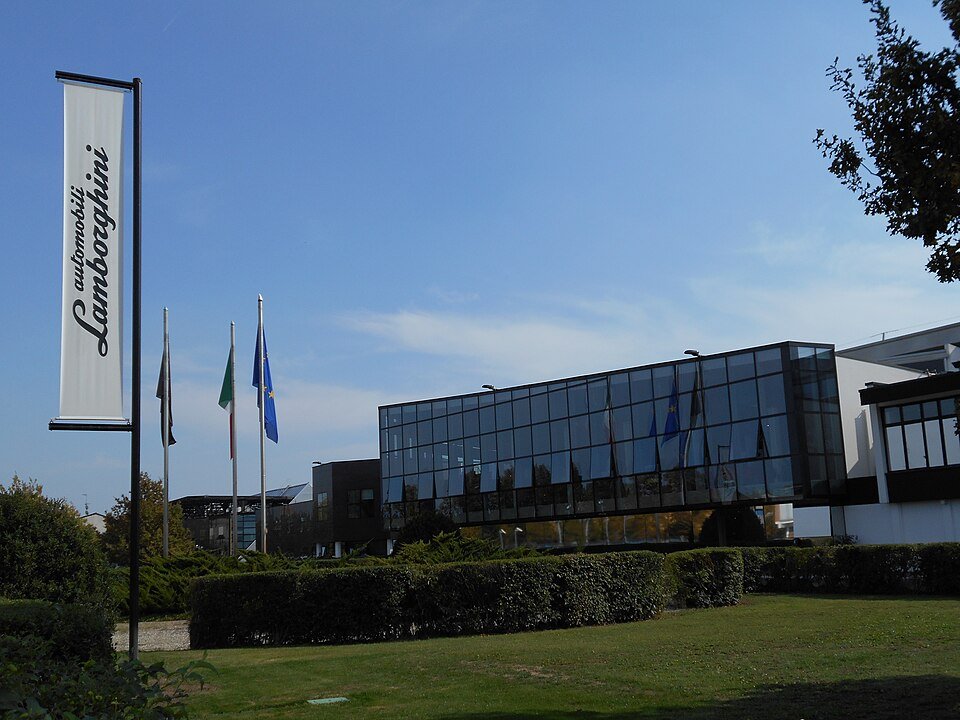
Lamborghini History Timeline: From Tractors to Supercar Legend
Lamborghini history timeline: from Ferruccio's tractors to the Miura, Countach, Aventador and today's hybrids - the rise of a supercar legend.
Latest Story
Few car makers have a creation myth as good as Lamborghini. A wealthy tractor manufacturer, insulted by Enzo Ferrari over a faulty clutch, set out to build a better grand tourer — and ended up inventing the modern supercar. This Lamborghini History Timeline traces the company from Ferruccio Lamborghini’s post-war tractor business to today’s hybrid V12 hypercars, charting every landmark model, owner and engineering breakthrough. Read in reverse chronological order, newest first.
Latest Update — October 2026
Lamborghini has changed its electrification plan. In February 2026 CEO Stephan Winkelmann told The Times the battery-electric Lanzador had been cancelled and its fourth model line will arrive as a plug-in hybrid instead, with the whole range to be plug-in hybrid by 2030, per Electrive’s 23 February 2026 report. In August 2026 the company unveiled the Revuelto SV at The Quail during Monterey Car Week: a limited run of 1,963 cars with 783 kW (about 1,050 hp) and 1,425 Nm, making it the most powerful production Lamborghini yet, as reported by TimesLIVE on 17 August 2026.
Lamborghini History: Key Facts
Lamborghini History — Key Takeaways
- Ferruccio Lamborghini built his fortune on tractors before founding the car company in 1963.
- The brand was born from a personal feud with Enzo Ferrari over a clutch complaint.
- The 350 GT (1964) was the first production Lamborghini, powered by a Bizzarrini V12.
- The 1966 Miura invented the mid-engine supercar and stunned the automotive world.
- The Countach (1974) defined the wedge-shaped, scissor-door supercar for generations.
- Financial turmoil in the 1970s saw Ferruccio sell the company and exit by 1974.
- After several owners and a Chrysler era, Audi (Volkswagen Group) acquired Lamborghini in 1998.
- The Gallardo (2003) and Huracán (2014) became the brand’s best-selling cars.
- The Urus Super SUV (2018) roughly doubled production and transformed Lamborghini’s business.
- The Revuelto (2023) launched the hybrid V12 era as Lamborghini begins electrifying its range.
Lamborghini’s Most Iconic Models
The cars that built the legend, by launch year. Engine and peak power shown for each landmark model.
First supercar
1980s icon
1990s flagship
Modern era
Best-seller
V12 flagship
V10 hero
Volume driver
Hybrid era
The origin
Lamborghini History Timeline (Reverse Chronological)
From the 2025–26 hybrid era back to Ferruccio’s tractor workshop — every milestone with its context, impact and legacy.
26
The Hybrid Lamborghini Era & Electrification Roadmap
Context: Under its “Direzione Cortina” strategy, Lamborghini has hybridised its entire lineup — the Revuelto V12, the plug-in Urus SE (joined by the Urus SE Performante), and the Temerario, a twin-turbo V8 hybrid replacing the Huracán, with deliveries starting in early 2026.
Business impact: Lamborghini closed 2025 with record full-year results — 10,747 cars delivered and €3.20 billion in revenue — as of its January 2026 results, per the company’s own reporting. In the first half of 2026, revenue rose again to a record €1.74 billion (+7.4%), even though deliveries dipped 4.6% to 5,422 cars amid US tariffs, Middle East conflict and a softer Chinese luxury market, as of Lamborghini’s August 2026 half-year results.
Why it matters: Lamborghini is balancing emissions rules and market headwinds with enthusiast demand, dropping the planned battery-electric Lanzador in February 2026 in favour of a plug-in hybrid fourth model line, while keeping order books at roughly a year’s wait.
Lamborghini Revuelto Launch — The First Hybrid V12
Context: The Revuelto paired a new 6.5-litre naturally aspirated V12 with three electric motors for a combined 1,001 hp — the most powerful series Lamborghini ever.
Innovation: A plug-in hybrid system and new carbon-fibre “monofuselage” chassis modernised the V12 flagship without abandoning its naturally aspirated soul.
Legacy: The Revuelto proved Lamborghini could electrify its halo car while making it faster and more dramatic than ever.
Lamborghini Urus — The Super SUV Revolution
Context: The Urus, powered by a 641 hp twin-turbo V8, was Lamborghini’s first SUV since the 1980s LM002 — and a deliberate bid for higher volume.
Business impact: The Urus roughly doubled Lamborghini’s annual production and quickly became its best-selling model, funding the supercar range.
Legacy: It brought thousands of new customers to the brand and reshaped Lamborghini into a far larger, more profitable company.
Aventador Launch — Carbon-Fibre V12 Flagship
Context: The Aventador introduced an all-new 6.5-litre V12 and a Formula 1-inspired carbon-fibre monocoque, with a top speed of around 217 mph.
Innovation: Its lightweight carbon tub and pushrod suspension brought genuine supercar engineering to the V12 flagship.
Legacy: Produced for over a decade in many special editions, the Aventador sold more than 11,000 units — remarkable for a V12 hypercar.
Gallardo Launch — Lamborghini’s First V10
Context: The Gallardo introduced a 5.0-litre V10 and a more usable, everyday supercar positioned below the V12 flagship.
Business impact: With 14,022 built, the Gallardo became Lamborghini’s best-selling car at the time and the commercial backbone of the Audi era.
Legacy: It shared engineering with the Audi R8 and proved Lamborghini could build reliable, high-volume supercars.
Audi Acquisition — The Volkswagen Group Era Begins
Context: In 1998, Audi AG — part of the Volkswagen Group — acquired Lamborghini, ending decades of financial instability and frequent ownership changes.
Business impact: German engineering, quality control and investment transformed Lamborghini into a modern, profitable manufacturer.
Legacy: Audi ownership produced the Murciélago, Gallardo, Aventador, Huracán and Urus — the most successful era in Lamborghini’s history.
Diablo Era — Lamborghini Breaks 200 mph
Context: Developed partly under Chrysler ownership, the Diablo replaced the Countach with a 5.7-litre V12 producing 492 hp.
Innovation: It was the first Lamborghini capable of exceeding 200 mph, later gaining all-wheel drive and fuel injection.
Legacy: The Diablo carried Lamborghini through the 1990s and bridged the analog Countach era to the modern Audi years.
Countach Launch — The Wedge Revolution
Context: The Countach debuted Gandini’s radical wedge shape and the now-iconic scissor doors, replacing the curvaceous Miura.
Innovation: Its dramatic, angular design and mid-mounted V12 set the visual template for supercars for the next two decades.
Legacy: The Countach became the definitive 1980s “poster car” and made Lamborghini a global symbol of speed and excess.
73
Financial Challenges — Ferruccio Sells Up
Context: A failed tractor export deal with Bolivia and broader business strain led Ferruccio Lamborghini to begin selling his shares in the company.
Business impact: He sold a controlling stake to Swiss investors in 1972 and fully exited by 1974, just as the 1973 oil crisis hammered the supercar market.
Legacy: Lamborghini entered a turbulent period of changing owners, yet its cars kept the brand alive and desirable.
Lamborghini Espada — The Four-Seat GT
Context: The Espada was a sleek four-seat grand tourer powered by a front-mounted V12, designed for buyers who wanted a usable Lamborghini.
Business impact: With around 1,200 built over a decade, it became one of Lamborghini’s most commercially successful early models.
Legacy: The Espada proved Lamborghini could build practical GTs alongside exotic supercars — a philosophy echoed by today’s Urus.
Lamborghini Miura — The First Supercar
Context: The Miura stunned the 1966 Geneva Motor Show with a transverse mid-mounted V12 — a layout no road car had used before.
Innovation: Its mid-engine design and breathtaking Bertone styling created the supercar template every exotic has followed since.
Legacy: Widely considered the first supercar, the Miura transformed Lamborghini from a GT maker into a legend overnight.
350 GT Launch — The First Production Lamborghini
Context: The 350 GT was Lamborghini’s first production car, a refined front-engine grand tourer with a 3.5-litre V12 making around 270 hp.
Innovation: Its smooth, powerful V12 and comfortable touring manners directly answered the criticisms Ferruccio had of his Ferrari.
Legacy: Around 120 were built, establishing the V12 grand touring formula and proving the new marque was serious.
Automobili Lamborghini Founded
Context: Ferruccio Lamborghini founded Automobili Lamborghini in 1963, building a state-of-the-art factory in Sant’Agata Bolognese.
Business impact: Backed by his tractor and industrial fortune, he hired top young engineers and set out to beat Ferrari at its own game.
Legacy: The raging bull badge, inspired by Ferruccio’s Taurus star sign and love of bullfighting, became one of the most famous logos in motoring.
62
Ferruccio Lamborghini’s Tractor Business
Context: After World War II, Ferruccio Lamborghini built tractors from surplus military parts, founding Lamborghini Trattori in 1948.
Business impact: He grew it into one of Italy’s largest agricultural machinery makers, also building success in heating and air-conditioning systems.
Legacy: This industrial wealth gave Ferruccio the means — and the engineering confidence — to challenge Ferrari with his own sports cars.
The Founding Feud: Lamborghini vs Ferrari
The most famous origin story in motoring begins with a clutch. Ferruccio Lamborghini, a self-made industrialist who owned several Ferraris, was frustrated by what he saw as their weak clutches and highly-strung road manners. He took his complaint directly to Enzo Ferrari, who reportedly dismissed the tractor maker, telling him to stick to farm machinery and leave sports cars to the experts.
Insulted, Ferruccio resolved to build a grander, more refined GT than anything from Maranello. Within a year he had founded Automobili Lamborghini, hired ex-Ferrari engineers, and launched the 350 GT. Three years later, the Miura humiliated Ferrari by inventing the mid-engine supercar. The rivalry — bull versus horse, Sant’Agata versus Maranello — has defined both brands ever since.
Key People & Companies in Lamborghini History
Ferruccio Lamborghini
The industrialist (1916–1993) who built a tractor empire, then founded Automobili Lamborghini in 1963 to challenge Ferrari. His vision created the brand, though he sold his stake and exited by 1974.
Ferrari & Enzo Ferrari
The Maranello marque whose founder’s dismissal of Ferruccio sparked Lamborghini’s creation. The Ferrari–Lamborghini rivalry has driven both companies to greater performance for over 60 years.
Audi AG
The German premium brand that acquired Lamborghini in 1998, bringing engineering rigour, quality and investment. Audi ownership delivered the Gallardo, Huracán, Aventador and Urus.
Volkswagen Group
The automotive giant that ultimately owns Lamborghini through Audi. Its shared platforms and components — especially for the Urus — gave Lamborghini economies of scale it never had before.
Bertone
The Italian carrozzeria that styled the Miura, Espada and Countach. Bertone’s partnership with Lamborghini produced some of the most influential car designs in history.
Marcello Gandini
The legendary Bertone designer behind the Miura, Espada, Countach and Diablo. Gandini’s wedge-shaped vision defined the look of the supercar from the 1970s onward.
Iconic Lamborghini Models: Mini-Histories
350 GT 1964
Lamborghini’s debut car. A Giotto Bizzarrini-designed 3.5-litre V12 in a smooth front-engine GT body proved the new marque could out-refine Ferrari. Around 120 were built, establishing the V12 grand touring identity.
Miura 1966
The car that invented the supercar. Its transverse mid-mounted V12 and sensational Gandini styling made it the most desirable car of its era. Roughly 764 were built across P400, S and SV versions, and values now reach into the millions.
Espada 1968
A genuine four-seat V12 grand tourer and one of Lamborghini’s early commercial hits, with about 1,200 built. It showed the brand could make usable, family-friendly exotics decades before the Urus.
Countach 1974
The definitive poster supercar. Gandini’s wedge design and scissor doors made it a cultural icon through the 1970s and 80s. Produced until 1990, about 1,983 were built, each more outrageous than the last.
Diablo 1990
The first Lamborghini to exceed 200 mph. Developed into the Chrysler era, the Diablo modernised with all-wheel drive and fuel injection, carrying the V12 flagship torch through the 1990s with around 2,900 built.
Murciélago 2001
The first all-new Lamborghini under Audi. A 6.2-litre (later 6.5) V12 and aggressive styling re-established the brand’s flagship credibility, with about 4,099 built before the Aventador replaced it.
Gallardo 2003
Lamborghini’s first V10 and first true volume model. Sharing engineering with the Audi R8, it sold 14,022 units — then a record — and made the brand financially sustainable.
Aventador 2011
A carbon-fibre-tubbed V12 flagship with a new 6.5-litre engine and scissor doors. Over 11,000 were built across a decade of special editions, an extraordinary figure for a V12 hypercar.
Huracán 2014
The Gallardo’s successor and Lamborghini’s best-selling car ever, surpassing 20,000 units. Its 5.2-litre V10 spawned rear-drive, track-focused STO and off-road Sterrato variants.
Urus 2018
The Super SUV that transformed the business. A 641 hp twin-turbo V8 in a practical SUV body roughly doubled production and made the Urus Lamborghini’s best-seller almost overnight.
Revuelto 2023
The first hybrid V12. Combining a new naturally aspirated V12 with three electric motors for 1,001 hp, the Revuelto launched Lamborghini’s electrified era while preserving its signature engine.
How Lamborghini Shaped the Supercar
Birth of the Supercar
Lamborghini didn’t just join the supercar world — it created it. The 1966 Miura established the idea of a road car with race-car layout, supermodel looks and a thunderous V12.
The Mid-Engine Revolution
By mounting the V12 behind the driver, the Miura delivered balance and drama no front-engine GT could match. Mid-engine layout became the supercar standard, used by Lamborghini ever since.
The Wedge-Shaped Design Era
Gandini’s Countach turned the supercar angular and aggressive. The wedge silhouette and scissor doors became Lamborghini design signatures that survive in today’s Revuelto.
V12 Evolution
From the 3.5-litre Bizzarrini unit of 1963 to the 6.5-litre hybrid V12 of the Revuelto, the naturally aspirated twelve-cylinder engine has been Lamborghini’s beating heart for six decades.
Carbon-Fibre Adoption
The Aventador’s carbon-fibre monocoque brought aerospace-grade lightness to Lamborghini, and the company now produces its own advanced composite structures.
Hybrid Performance Technology
The Revuelto and Temerario use electric motors to boost power and fill torque gaps, marking Lamborghini’s shift toward electrified performance without losing its character.
Data Tables
| Model | Launch Year | Engine | Horsepower | Legacy |
|---|---|---|---|---|
| 350 GT | 1964 | 3.5L V12 | 270 hp | First production Lambo |
| Miura | 1966 | 3.9L V12 | 350 hp | First supercar |
| Espada | 1968 | 3.9L V12 | 325 hp | 4-seat GT success |
| Countach | 1974 | 4.0L V12 | 375 hp | Wedge icon |
| LM002 | 1986 | 5.2L V12 | 450 hp | “Rambo Lambo” SUV |
| Diablo | 1990 | 5.7L V12 | 492 hp | First 200 mph Lambo |
| Murciélago | 2001 | 6.2L V12 | 572 hp | First Audi-era flagship |
| Gallardo | 2003 | 5.0L V10 | 493 hp | Best-seller of its time |
| Aventador | 2011 | 6.5L V12 | 690 hp | Carbon-fibre flagship |
| Huracán | 2014 | 5.2L V10 | 602 hp | Best-selling Lambo ever |
| Urus | 2018 | 4.0L TT V8 | 641 hp | Super SUV, volume driver |
| Revuelto | 2023 | 6.5L V12 hybrid | 1,001 hp | First hybrid V12 |
| Rank | Best-Selling Models | Approx. Units | Type |
|---|---|---|---|
| 1 | Urus | 20,000+ (ongoing) | Super SUV |
| 2 | Huracán | 20,000+ | V10 supercar |
| 3 | Gallardo | 14,022 | V10 supercar |
| 4 | Aventador | 11,000+ | V12 flagship |
| 5 | Murciélago | 4,099 | V12 flagship |
| 6 | Diablo | 2,903 | V12 flagship |
| Year | V12 Displacement | Model | Power |
|---|---|---|---|
| 1963 | 3.5L | 350 GT | 270 hp |
| 1966 | 3.9L | Miura | 350 hp |
| 1974 | 4.0L | Countach LP400 | 375 hp |
| 1985 | 5.2L | Countach QV | 455 hp |
| 1990 | 5.7L | Diablo | 492 hp |
| 2001 | 6.2L | Murciélago | 572 hp |
| 2011 | 6.5L | Aventador | 690 hp |
| 2023 | 6.5L hybrid | Revuelto | 1,001 hp |
Lamborghini vs Ferrari: Historical Comparison
Rivalries, Records & Unexpected Facts
Stories Behind the Bull
- The clutch that started it all: Ferruccio’s complaint about his Ferrari’s clutch — and Enzo’s dismissal — directly inspired the founding of Lamborghini.
- Tractors first: Lamborghini still exists as a separate tractor company (Lamborghini Trattori), now owned by a different firm.
- The bull badge: Ferruccio, a Taurus by birth, chose the raging bull after visiting Don Eduardo Miura’s fighting-bull ranch.
- Movie star: The Countach appeared memorably in The Wolf of Wall Street and The Cannonball Run, cementing its pop-culture status.
- “Rambo Lambo”: The 1986 LM002 was a V12-powered military-style off-roader — the spiritual ancestor of the Urus.
- Wine, not just wheels: After leaving the car company, Ferruccio successfully made wine at his Umbrian estate.
- No Le Mans obsession: Unlike Ferrari, Lamborghini historically avoided top-flight racing, focusing on road-car drama instead.
Explore More Timelines
Frequently Asked Questions
Explore More Timelines
Sources & further reading
Every dated entry above was checked against these references. Last reviewed 18 October 2026.