Pearl Harbor Intelligence Warnings: What Was Missed
Pearl Harbor intelligence failure explained: MAGIC intercepts, the war warning, the USS Ward and the 7:02 a.m. radar alert missed on December 7, 1941.
Latest Story
On the morning of 7 December 1941, Japanese aircraft struck the US Pacific Fleet at Pearl Harbor and killed 2,403 Americans. The attack did not come out of an intelligence vacuum. US codebreakers were reading Japan’s diplomatic cables, Washington had warned its Pacific commanders that war was days away, and in the last hour a destroyer fought a Japanese submarine and a radar station tracked the incoming planes. The Pearl Harbor intelligence failure was not that every warning was ignored. It was that no one joined the warnings up, read them correctly and turned them into an alert in time. This timeline traces what US officials knew, what they misread and which warnings came too late, ahead of the attack’s 85th anniversary on 7 December 2026.
💡 Short Answer
Before Pearl Harbor, US officials had a January 1941 rumour of a surprise attack on the base, decrypted Japanese requests for exact ship positions in the harbor, a formal war warning on 27 November, a submarine fight at 6:45 a.m. and a radar contact at 7:02 a.m. on 7 December. None named the date, target and carrier force together, and each was discounted, delayed or misread, so Hawaii was not on alert when the attack began at 7:55 a.m.
Pearl Harbor Intelligence Failure: Key Questions
The Missed Warnings in Ten Points
- The risk was known: in January and March 1941 US officials wrote that a war could open with a surprise carrier air attack on Pearl Harbor.
- A rumour named the target: Ambassador Grew reported it on 27 January 1941, and naval intelligence dismissed it.
- Codebreakers read diplomacy, not war plans: PURPLE was broken in 1940, but Japan’s naval code was not.
- The spies left clues: the bomb plot message of 24 September asked for ship positions in a grid of the harbor, and was never sent to Hawaii.
- The war warning pointed elsewhere: the 27 November messages named the Philippines, Thailand and Borneo.
- The wrong alert: Short guarded against sabotage, bunching aircraft that were then destroyed on the ground.
- The carriers went dark: radio silence meant US analysts did not know where they were.
- Two last-hour warnings: the USS Ward at 6:45 a.m. and the Opana radar at 7:02 a.m. produced no alarm.
- A cable sent the slow way: Marshall’s final warning reached Short seven hours after the attack began.
- Still unresolved: Kimmel’s and Short’s ranks were never restored, and in 2026 the Arizona’s Unknowns are finally being identified.
Pearl Harbor at a Glance
The essentials of the attack and the warnings before it. Scroll sideways on a phone.
| Key fact | Details |
|---|---|
| Attack date | Sunday 7 December 1941 |
| Attacker | Japan: six carriers, about 350 aircraft in two waves, plus five midget submarines |
| Target | US Pacific Fleet at Pearl Harbor and airfields across Oahu |
| First wave launched | About 6:10 a.m. Hawaii time, roughly 230 miles north of Oahu |
| USS Ward fires | About 6:45 a.m., at a midget submarine off the harbor entrance |
| Radar contact | 7:02 a.m. at Opana Point, about 130 miles out |
| Final warning reaches Honolulu | 7:33 a.m., by commercial telegraph |
| Attack began | About 7:55 a.m. |
| Main intelligence source | MAGIC: decrypted Japanese diplomatic messages (PURPLE cipher) |
| US dead | 2,403, including 68 civilians; 1,177 on the USS Arizona |
| Core failure | Strategic warnings never became a specific, timely defensive alert in Hawaii |
| Consequence | US declared war on Japan on 8 December 1941 |
The Timeline: From the First Warning to the 85th Anniversary
Newest first, from the 2026 commemorations back to 1940. Tags mark warnings, intelligence developments, missed signals, Japan’s moves, the attack, its aftermath and 2026 events. All 7 December times are Hawaii time.
2026
85th anniversary, and the Arizona Unknowns are exhumed 2026
The National Pearl Harbor Remembrance Ceremony, with the theme ‘Courage of Commitment’, is scheduled for 7:30 a.m. on Monday 7 December 2026 at Pearl Harbor National Memorial, with ceremonies for the USS Utah and USS Oklahoma on Ford Island. On the same morning the Defense POW/MIA Accounting Agency is due to begin disinterring the 86 USS Arizona sailors and Marines buried as Unknowns at the National Memorial Cemetery of the Pacific, eight caskets at a time over about 11 weeks, so they can be identified by DNA.
DPAA confirms the Arizona exhumation plan 2026
Military Times reported that hundreds of family members are expected in Hawaii for the start of the exhumations. DPAA director Kelly McKeague said the agency was ‘honored to be able to provide long-sought answers to families of these Unknowns’. The project had been considered unworkable until families reached the required DNA threshold in about three years.
2026
The last witnesses 2026
The number of living survivors is now in single figures or close to it. In May 2026 the Associated Press counted 11, all over 100; the oldest, Freeman Johnson, 106, was working below deck on the cruiser USS St. Louis during the attack. Rolland Briar, who was waiting for a launch to church on the deck of the USS Whitney when the bombing began, died in early August at 104.
2025
Ike Schab dies at 105 2026
Ira ‘Ike’ Schab, one of the best-known survivors and a regular at the Pearl Harbor commemorations, died at home in Oregon less than three weeks after the 84th anniversary, which he had been too ill to attend.
2016
A Japanese prime minister at the Arizona Memorial Aftermath
Shinzo Abe became the first sitting Japanese prime minister to visit the USS Arizona Memorial together with a US president, offering ‘sincere and everlasting condolences’. It followed Obama’s visit to Hiroshima in May 2016.
1999
The Senate moves to clear Kimmel and Short Aftermath
After decades of campaigning by their families, the Senate adopted a resolution saying the two commanders had not been given vital intelligence available in Washington and that the losses were not the result of their dereliction of duty. The defence authorisation act for fiscal 2001 asked the President to restore them posthumously to their wartime ranks. Neither President Clinton nor any successor has done so.
1946
Congress publishes its verdict Aftermath
The congressional inquiry, which held hearings from November 1945 to May 1946, found that the Hawaiian commands had failed to discharge their responsibilities, while the War and Navy departments had failed to share intelligence and to correct the inadequate alert in Hawaii. It also found no evidence that Roosevelt or his aides had tricked Japan into attacking.
Inquiry after inquiry Aftermath
The Roberts Commission, appointed by Roosevelt, reported on 24 January 1942 that Kimmel and Short had been guilty of dereliction of duty. In 1944 the Army Pearl Harbor Board and the Navy Court of Inquiry, which could see more of the MAGIC record, shifted part of the blame to Washington, including General Marshall and Admiral Stark. Much of their work stayed secret until the war ended, because revealing it would have exposed codebreaking.
1941
The United States declares war on Japan Aftermath
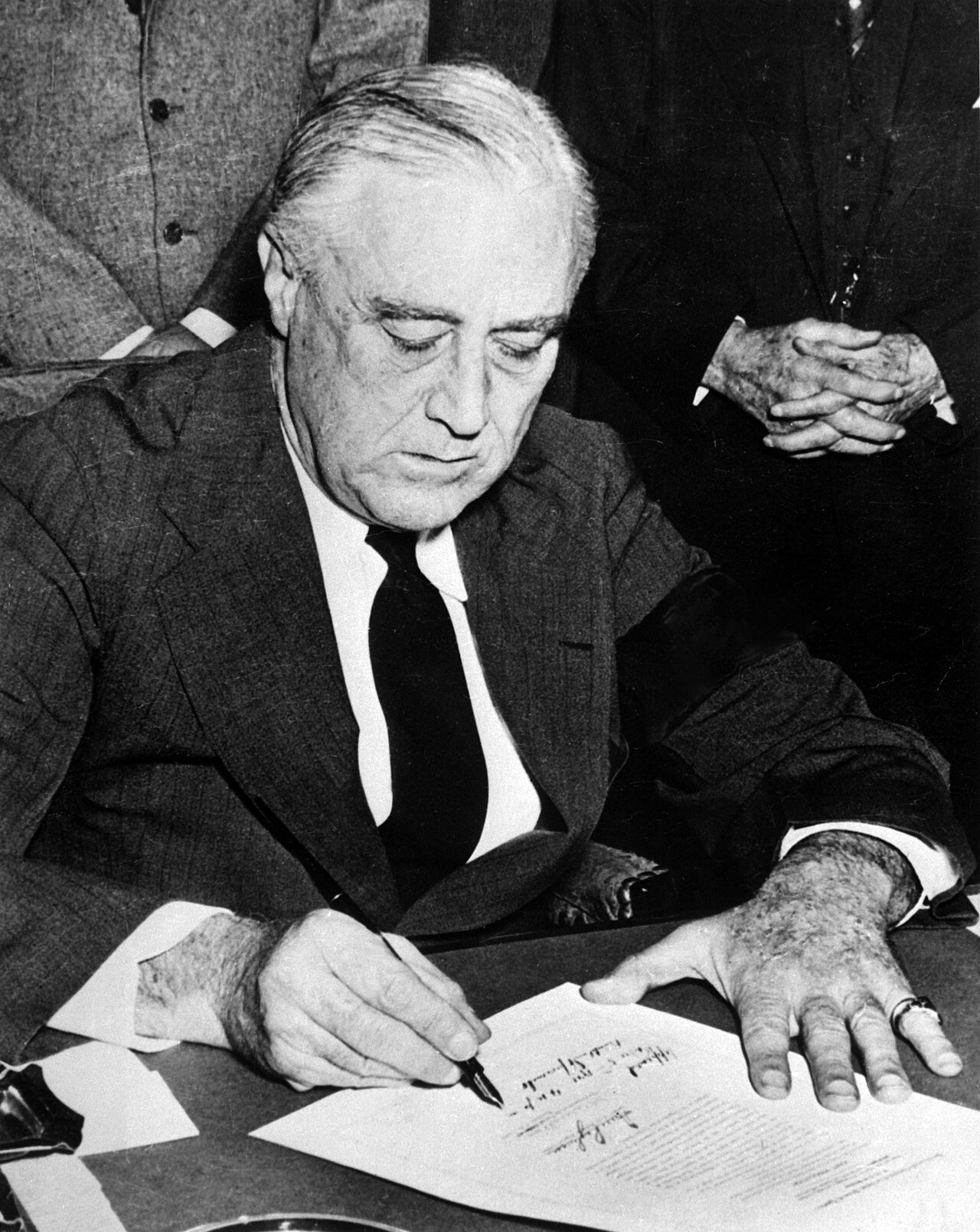
Roosevelt asked a joint session of Congress at 12:30 p.m. to declare war, and both houses voted within an hour; Jeannette Rankin cast the only vote against. Kimmel was relieved on 17 December and replaced by Admiral Chester Nimitz; Short was replaced the same day.
2:58 p.m.
Marshall’s warning reaches Short, decoded Missed
The final warning from Washington, which had reached Honolulu at 7:33 a.m., was carried to Fort Shafter by a messenger who arrived at 11:45 a.m., having taken cover in a ditch during the raid. It was decoded and delivered to Short’s headquarters at 2:58 p.m., long after the last Japanese aircraft had left.
7:55 a.m.
The attack begins Attack
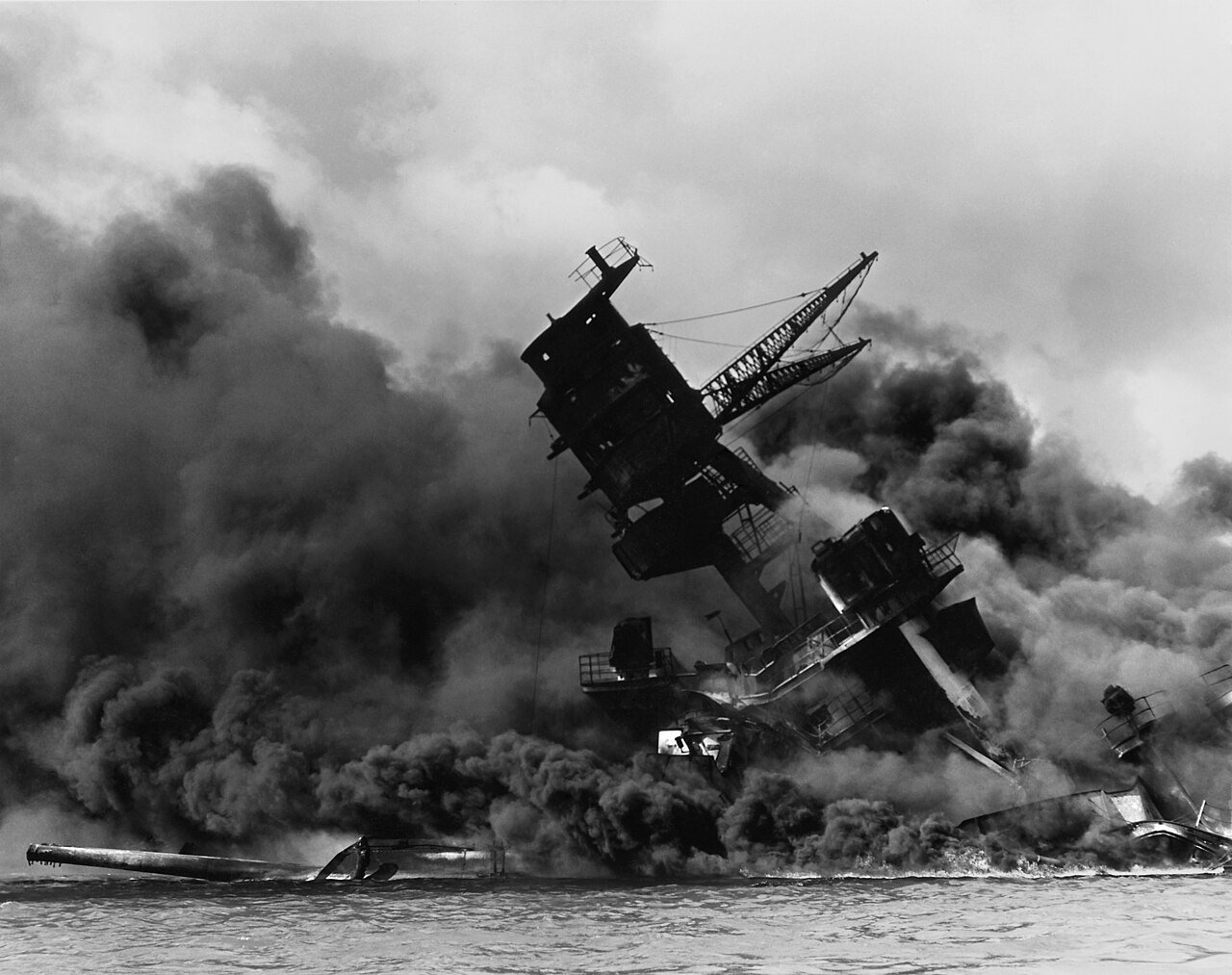
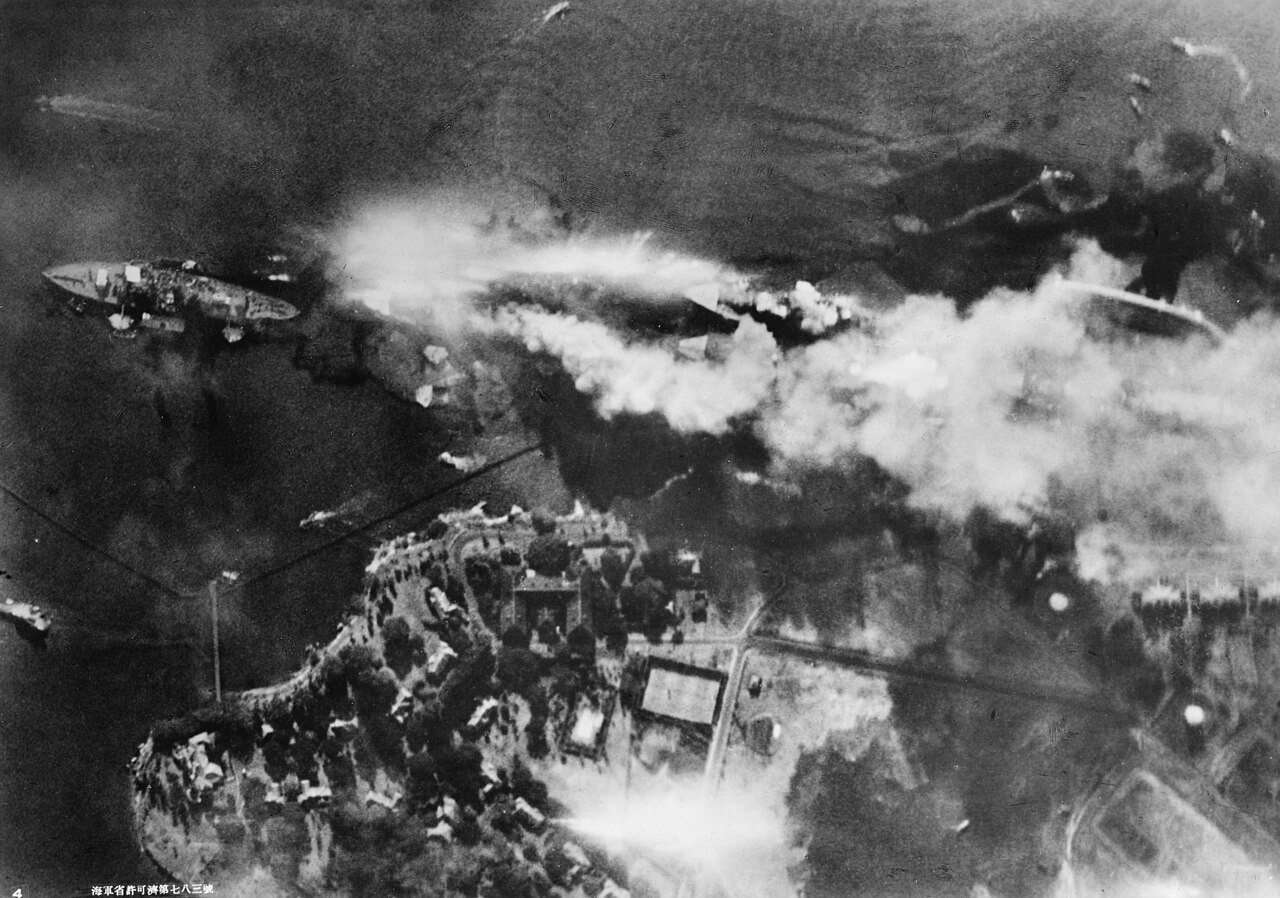
Airfields at Wheeler, Hickam, Kaneohe and Ewa were hit first, so few US aircraft could get airborne. Torpedo bombers then struck Battleship Row. At about 8:06 a bomb penetrated the USS Arizona’s forward magazine, and the explosion killed most of the 1,177 men lost aboard. By the end of the second wave, 2,403 Americans were dead and 21 ships had been sunk or damaged.
7:33 a.m.
The last warning lands in Honolulu Missed
In Washington, officers had decrypted the instruction to deliver Japan’s reply at exactly 1 p.m. Colonel Rufus Bratton and Commander Arthur McCollum saw that 1 p.m. in Washington was dawn in Hawaii. Marshall, back from his Sunday ride, wrote a warning that Japan would deliver what amounted to an ultimatum at 1 p.m. and that commanders should be on the alert. Army radio could not raise Hawaii, so it went by commercial cable.
7:02 a.m.
Radar at Opana sees the first wave Missed
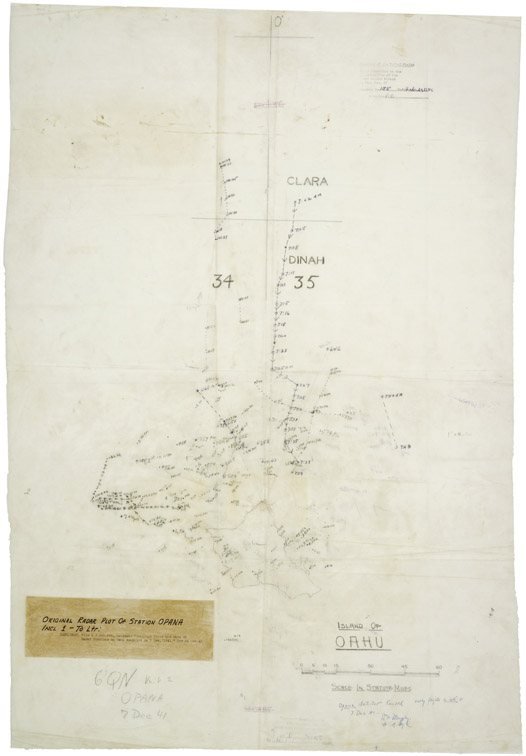
The mobile SCR-270 set at Opana Point was due to close down at 7 a.m. but stayed on for training. Elliott saw the biggest return either man had ever seen. When they phoned Fort Shafter, Lieutenant Kermit Tyler, on his second day at the information centre, assumed it was the B-17s due from California and told them not to worry about it. They kept tracking it until it vanished in ground clutter near the island.
6:45 a.m.
USS Ward sinks a midget submarine Missed
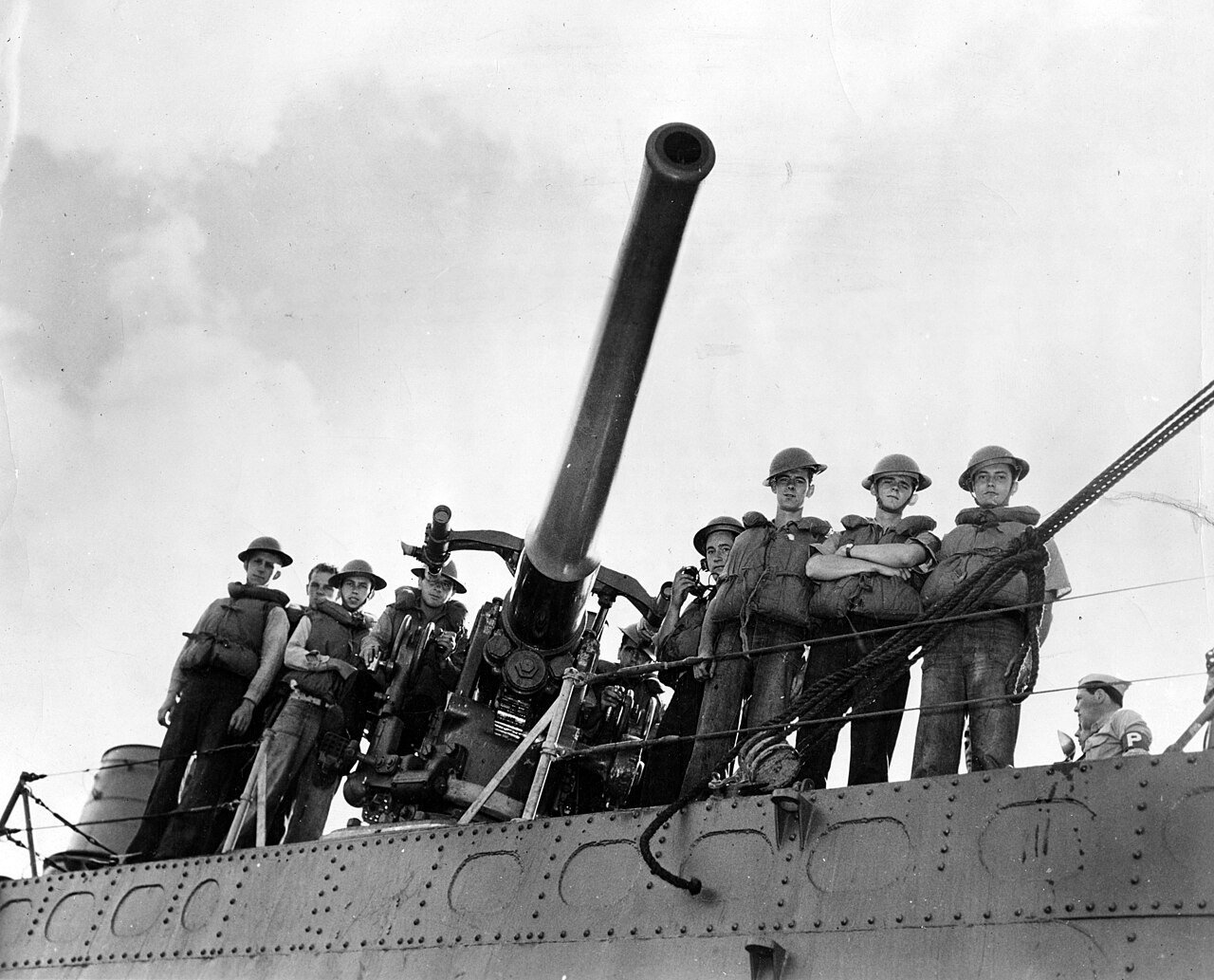
The destroyer USS Ward, patrolling the harbor entrance, fired on a midget submarine following the supply ship Antares and depth-charged it. Its report that it had attacked a submarine in the defensive sea area reached the duty officers, who had heard many false submarine reports and spent precious time trying to confirm it. It did not trigger a general alarm.
6:10 a.m.
The first wave takes off Japan
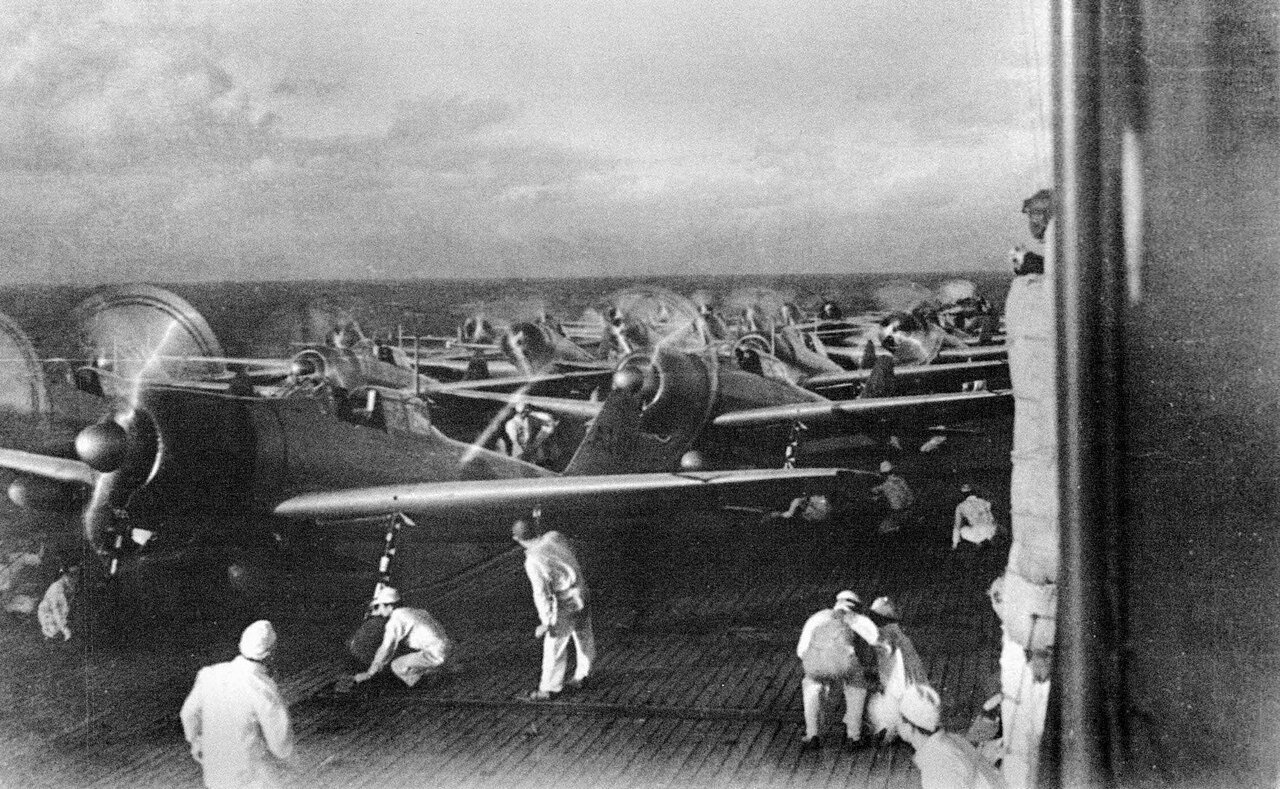
The first Zero fighter left the carrier Akagi at about 6:10 a.m., followed by over 180 aircraft from all six carriers. Commander Mitsuo Fuchida led the strike. In Washington it was 11:40 a.m.; in Tokyo, 1:40 a.m. on 8 December.
1941
Thirteen parts and ‘This means war’ Intelligence
US codebreakers intercepted the first 13 parts of the Fourteen-Part Message as they reached the Japanese embassy. Roosevelt read them that evening and told Harry Hopkins it meant war. The message did not name a target. The same day the Honolulu consulate sent Tokyo reports on ships in harbor and noted no barrage balloons or torpedo nets; those messages were not translated until after the attack.
1941
‘Climb Mount Niitaka 1208’ Japan
After the Imperial Conference of 1 December approved war, the Combined Fleet signalled the task force to proceed with the attack on 8 December, Tokyo time. US intercepts showed Japan was preparing to move but not where its carriers were.
Dec 1941
The carriers vanish from the intelligence picture Intelligence
Commander Joseph Rochefort’s radio-intelligence unit in Hawaii and the Pacific Fleet’s intelligence officer, Edwin Layton, tracked Japanese ships largely by their call signs and traffic. In early December they could not locate Japan’s big carriers and assumed they were in home waters. Layton later recalled Kimmel asking whether they could be rounding Diamond Head without him knowing.
1941
‘This dispatch is to be considered a war warning’ Warning
A day after Secretary of State Cordell Hull handed Japan the US proposals of 26 November, Washington warned that negotiations had ended and that an aggressive move by Japan was expected within days. Kimmel concentrated on preparing the fleet for offensive operations and did not order long-range air reconnaissance in all directions. Short ordered Alert No. 1, against sabotage, and parked his aircraft wingtip to wingtip. Neither choice was challenged by Washington.
1941
MAGIC reveals a deadline Intelligence
Decrypted messages to Ambassador Kichisaburo Nomura showed that Tokyo had set a hard deadline for a settlement. When it extended the date to 29 November, it warned that after that ‘things are automatically going to happen’. Washington understood that war was coming; the messages did not say where.
1941
The bomb plot message Missed
Tokyo asked the consulate in Honolulu, where naval spy Takeo Yoshikawa worked under cover, to report warships by their position in five areas of Pearl Harbor and to say which were moored side by side. Some officers thought the detail unusual, since it was the kind of grid needed for targeting, but the message was treated as routine espionage and was not passed to Hawaii.
1941
The oil embargo sets the clock running Japan
The asset freeze and the effective oil embargo left Japan with a dwindling stock of fuel and a choice between giving way in China and seizing resources in Southeast Asia. Admiral Isoroku Yamamoto had already ordered planning for a carrier strike to neutralise the US Pacific Fleet at the outset of any war.
1941
The Martin–Bellinger report predicts a dawn raid Warning
Major General Frederick Martin and Rear Admiral Patrick Bellinger warned that the most likely and dangerous form of attack on Oahu would be a surprise air raid launched at dawn from carriers within about 300 miles. They recommended daily long-range reconnaissance, which required more patrol aircraft than Hawaii had.
1941
Ambassador Grew’s Pearl Harbor rumour Warning
Joseph Grew cabled Washington that the Peruvian minister, Ricardo Rivera Schreiber, had heard that Japanese forces planned a surprise mass attack on Pearl Harbor in case of trouble with the United States. The Office of Naval Intelligence judged it a rumour, and on 1 February Admiral Harold Stark’s staff passed it to the new Pacific Fleet commander, Admiral Kimmel, with that assessment.
1941
Knox warns of a surprise attack on the fleet Warning
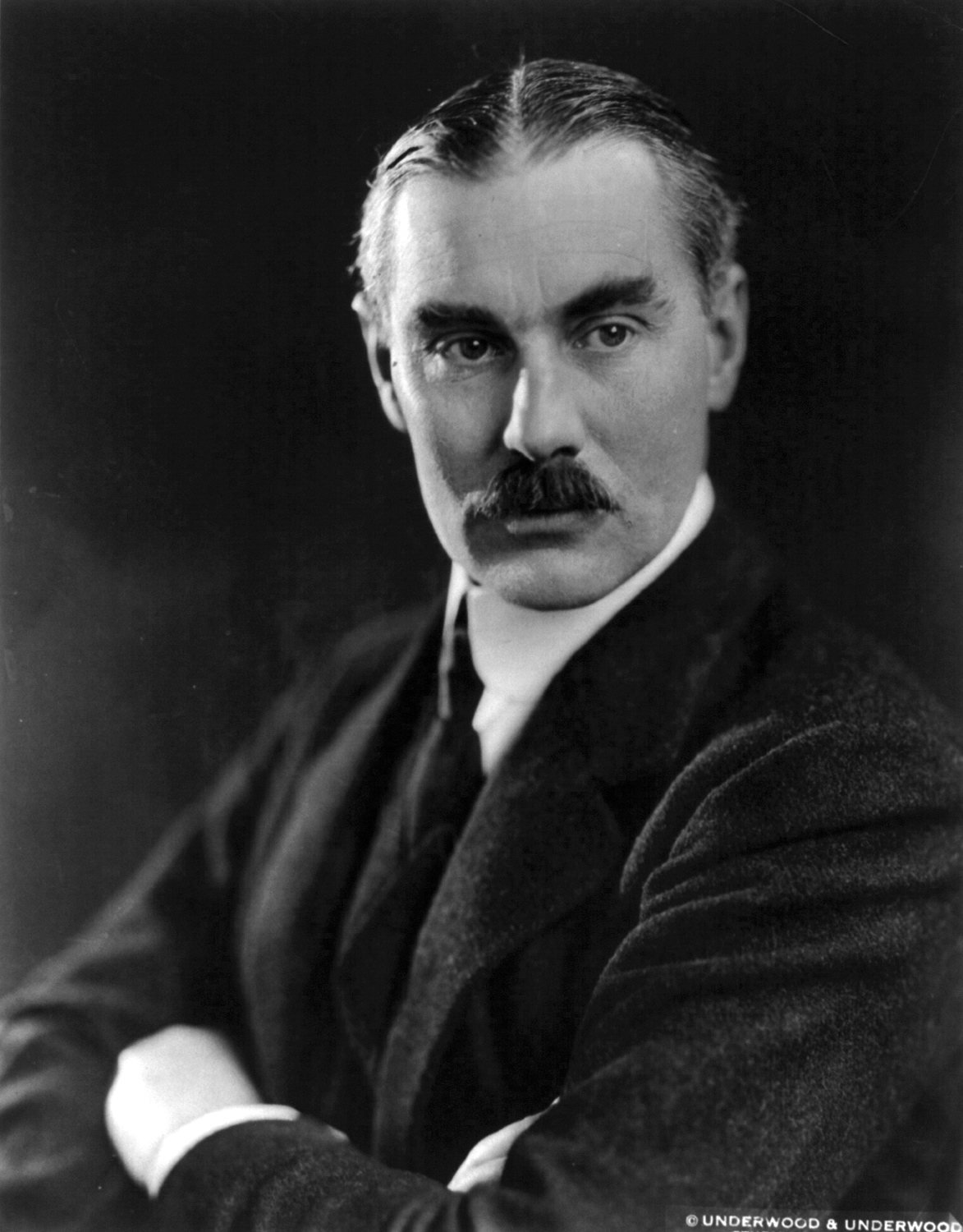
Knox wrote that if war came with Japan, it was believed easily possible that it would begin with a surprise attack on the fleet or the naval base at Pearl Harbor, and listed air bombing and air torpedo attack as the greatest dangers. The letter shows the risk was understood in principle ten months before the attack.
US codebreakers break PURPLE Intelligence
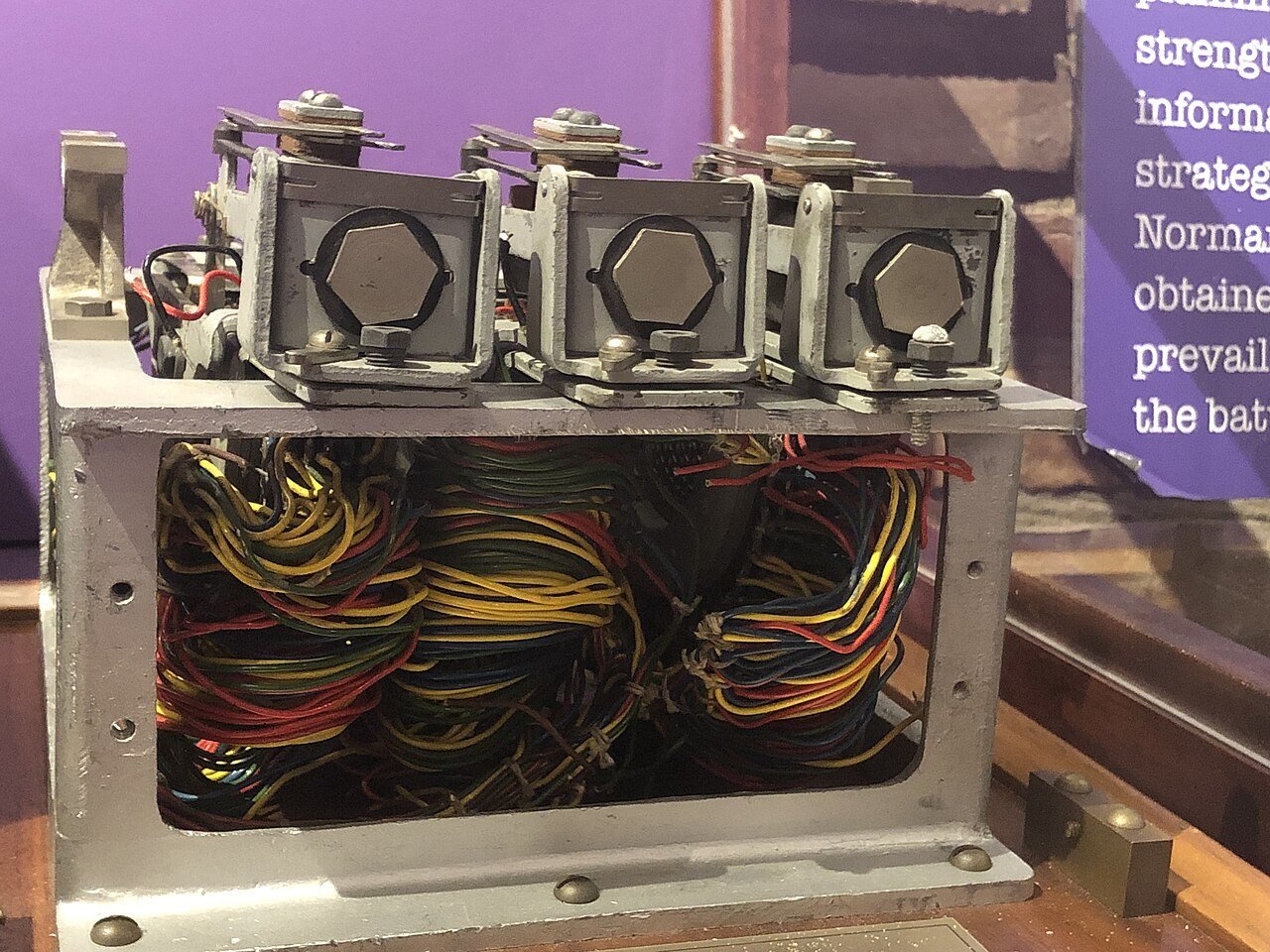
The SIS team reconstructed the logic of Japan’s top diplomatic cipher machine and built working copies. The resulting intelligence, codenamed MAGIC, went to a tiny circle in Washington. It revealed diplomacy and espionage, not naval operations: the main fleet code, JN-25, was still largely unreadable.
The Pacific Fleet stays at Pearl Harbor Japan
Roosevelt kept the fleet in Hawaii after spring exercises to deter Japanese expansion. Admiral James Richardson protested that the base was exposed and poorly supplied and was replaced by Kimmel in February 1941. The deterrent also made the fleet a target.
The Last Hours Before the Attack
The final warnings arrived close together, and each was handled on its own.
Pick a warning. How much time did it buy, and what happened to it?
Seven warnings that reached US officials in 1941, from the first letter in January to the last cable on the morning of the attack. Lead time is measured to 7:55 a.m., Hawaii time, on 7 December 1941.
What Exactly Was Missed?
The failure was a chain, not one lost message.
| Warning or weakness | What officials had | Why it did not prevent the attack |
|---|---|---|
| Knox letter and Martin–Bellinger report | Written forecasts of a surprise carrier air attack at dawn | Defences needed aircraft, radar and patrol planes Hawaii did not yet have |
| Grew’s January cable | A second-hand rumour naming Pearl Harbor | Judged unreliable; Japan’s plan had barely begun |
| Bomb plot messages | Requests for exact ship positions in five harbor areas | Read as routine espionage; not sent to Hawaii |
| November deadline intercepts | Proof that Tokyo had set a date after which war would follow | Pointed to war, not to a target |
| 27 November war warnings | Notice that Japanese aggression was expected within days | Named targets elsewhere; produced a sabotage alert and no full air patrols |
| Lost carriers | No fix on Japan’s carriers for over a week | Silence read as ships in home waters |
| USS Ward | An actual fight with a submarine at the harbor mouth | Slow verification; not treated as the start of an attack |
| Opana radar | A huge formation 130 miles out, 53 minutes before the attack | Assumed to be friendly B-17s; size never checked |
| Fourteen-Part and 1 p.m. messages | Evidence of a break, timed for dawn in Hawaii | Warning sent too slowly, by the wrong channel |
Five Reasons the Warnings Failed
Each was understandable on its own. Together they made surprise possible.
No one saw the whole picture
Army and Navy intelligence, the State Department, the Honolulu commands and the radar network each held pieces. MAGIC was kept so secret that the commanders who most needed it, Kimmel and Short, did not receive it.
Analysts expected a different first move
Japanese convoys were visibly heading south. Washington expected strikes on the Philippines, Malaya or the Dutch East Indies, and read ambiguous signals in that light.
Strategic, not tactical
‘War within days’ does not tell a commander which base, what time or from which direction. The warnings never said Hawaii, and the one detail that suggested a target, the bomb plot grid, stayed in Washington.
Detection without response
Radar worked. The failure came after it: an information centre still in training, a lone duty officer and no procedure to check a contact’s size against what was expected.
Defences built for the wrong threat
Hawaii prepared against sabotage and submarines. Long-range air patrols were thin, anti-aircraft ammunition was locked up and ships had no torpedo nets.
Urgency lost in transit
Warnings were worded cautiously, sent without priority markings and, on the last morning, by commercial telegraph. Washington never checked how Hawaii had responded to them.
Pick a moment. What time was it in Hawaii, Washington and Tokyo?
In 1941 Hawaii ran 10½ hours behind Greenwich, so it was 5½ hours behind Washington and 19½ hours behind Tokyo. That gap is why the ‘1 p.m.’ deadline mattered.
Did Roosevelt Know Pearl Harbor Would Be Attacked?
No. The record shows officials expected war, not this attack.
The idea that President Roosevelt knew the attack was coming, and let it happen to bring the United States into the war, has circulated since the 1940s. The record does not support it. MAGIC was a diplomatic source: it showed that Tokyo had set deadlines, was preparing to break off talks and had spies watching the harbor, but not that six carriers were heading for Hawaii. The naval code that carried those orders was largely unreadable, and the task force kept radio silence.
The historian R.J.C. Butow, writing in the National Archives’ Prologue magazine, called the conspiracy theory ‘myth masquerading as history’, pointing to understaffed translation sections, the low priority given to consular traffic and the fact that two Honolulu spy reports from 6 December were not translated until 8 December. The 1946 congressional committee likewise found no evidence that Roosevelt or his officials had tricked or provoked Japan into the attack.
The more uncomfortable conclusion is that Washington held more than it passed on, and did not check whether its warnings had been understood. That is a failure of organisation, not a plot.
Investigations and Blame
Nine inquiries in five years, and a debate that never fully closed.
| Inquiry | When | Main finding |
|---|---|---|
| Roberts Commission | Dec 1941 – 24 Jan 1942 | Kimmel and Short guilty of dereliction of duty |
| Hart inquiry (Navy) | 1944 | Gathered testimony while witnesses were still available |
| Army Pearl Harbor Board | Jul–Oct 1944 | Faulted Short, but also Marshall and the War Department |
| Navy Court of Inquiry | Jul–Oct 1944 | Largely cleared Kimmel; criticised Stark |
| Clausen and Hewitt reviews | 1944–45 | Follow-ups on what MAGIC showed and who saw it |
| Joint Congressional Committee | Nov 1945 – 20 Jul 1946 | Hawaiian commanders and Washington both failed; no evidence of a plot |
| Dorn review (Pentagon) | December 1995 | Blame should be shared; ranks not restored |
| Senate resolution | 25 May 1999 | Both commanders acted ‘competently and professionally’; non-binding |
Hawaii versus Washington
Had general war warnings and local clues but chose a sabotage alert, did not fly full air patrols and did not coordinate Army and Navy defences closely.
Held MAGIC and the bomb plot messages, sent warnings that named other targets, did not correct the sabotage alert and sent the final warning without urgency.
| Measure | United States | Japan |
|---|---|---|
| Killed | 2,403 (including 68 civilians) | About 64 |
| Wounded | About 1,178 | – |
| Ships | 21 sunk or damaged; all 8 battleships hit | 5 midget submarines lost |
| Aircraft | 188 destroyed, 159 damaged (commonly cited) | 29 lost |
| Single heaviest loss | USS Arizona, 1,177 dead | – |
Pearl Harbor in 2026: The Last Survivors and the Arizona Unknowns
Eighty-five years on, the attack is passing out of living memory. The Associated Press counted 11 survivors in May 2026, all over 100, and at least one more, Rolland Briar, has died since. The oldest, Freeman Johnson, turned 106 in March. The Sons and Daughters of Pearl Harbor Survivors are holding their 2026 convention in Honolulu from 4 to 7 December to coincide with the anniversary.
The anniversary will also begin one of the last pieces of unfinished business from that morning. Starting on 7 December 2026, the Defense POW/MIA Accounting Agency plans to exhume the 86 USS Arizona crew members buried as Unknowns at the National Memorial Cemetery of the Pacific, eight at a time, and compare their DNA with samples given by relatives. The 900-plus men still inside the sunken battleship will stay there; the Arizona remains their grave.
Explore More Timelines
People Also Ask
Frequently Asked Questions
The Lasting Lesson
Pearl Harbor is still taught as the defining case of strategic surprise because the United States was not blind. It had broken Japan’s diplomatic cipher, written down the exact danger, intercepted spy traffic about the harbor and, on the morning itself, detected both a submarine and the attacking aircraft. What it lacked was a system that pulled those signals together, questioned the assumption that Japan would strike elsewhere, and put the forces in Hawaii on a footing to respond.
Collecting intelligence is not the same as understanding a threat, and understanding a threat is not the same as being ready for it. Eighty-five years later, that is why the warnings before 7 December 1941 are still studied.
Related AiTimeline Stories
⚠️ Editorial Note
This article draws on the Pearl Harbor National Memorial’s minute-by-minute timeline and casualty records, the US Army’s history of intelligence and the attack, the National WWII Museum, R.J.C. Butow’s study in the National Archives’ Prologue magazine, the findings of the 1946 Joint Congressional Committee, and 2025–2026 reporting by the Associated Press, Military Times, Hawaii News Now and Stars and Stripes. Times on 7 December are Hawaii time and some are approximate; sources differ by a few minutes. Survivor numbers change and are reported counts, not an official register. Quotations from 1941 messages are as reproduced in the congressional record and later histories.
Sources & further reading
Every dated entry above was checked against these references. Last reviewed 15 October 2026.
- Pearl Harbor National Memorial: Minute-by-Minute Timeline of the Attack
- Intelligence and the Japanese Attack on Pearl Harbor
- US Intelligence Failures at Pearl Harbor
- How Roosevelt Attacked Japan at Pearl Harbor: Myth Masquerading as History (R.J.C. Butow, Prologue, Fall 1996)
- The Pearl Harbor Attack, December 7, 1941
- Pearl Harbor Military Casualties
- Joint Address to Congress Leading to a Declaration of War Against Japan (1941)
- Investigation of the Pearl Harbor Attack
- 'Unknown' sailors and Marines from the battleship Arizona to be disinterred Dec. 7 (9 Oct 2026)
- Oldest Pearl Harbor survivor is keeping the memory of the surprise bombing alive at 106 (AP, 24 May 2026)
- Pearl Harbor survivor Rolland Briar dies at 104 (5 Aug 2026)