French Teenagers: Education Protests Timeline (1968–2026)
Why French teenagers are blocking schools in 2026, and how student protests from May 68 to the CPE and Parcoursup shaped France's education fights.
Latest Story
In September 2026 teachers at one lycée in Créteil went on strike because their posts had never been filled. Within three weeks, French teenagers had blockaded hundreds of schools, filled the streets of every major city and forced the government into emergency measures. It is the latest chapter in a long history of French student protests: from May 1968 to the Devaquet bill, the 1990 lycée revolt, the CPE and Parcoursup. This timeline explains what each generation fought for, what it won, and why the 2026 movement is about something very basic: a teacher in every classroom.
💡 Short Answer
French high-school students began protesting in September 2026 over missing teachers, run-down buildings, overloaded timetables and Parcoursup stress. Starting at a lycée in Créteil, the movement peaked on 6 October with about 266,000 marchers by the Interior Ministry’s count (450,000 by organisers). It follows a long line of youth protests, from May 1968 and the 1986 Devaquet bill to the 2006 CPE, several of which forced governments to retreat.
French Student Protests: Key Questions
French Youth Protest in Ten Points
- 2026 began with empty posts: a teachers’ strike at one Créteil lycée on 17 September.
- Four grievances: missing teachers, dilapidated lycées, overloaded timetables, Parcoursup stress.
- Peak: 6 October, ~266,000 by the ministry, 450,000 by organisers.
- Policing is now an issue: 5,060 arrests to 6 October, 87% minors; a 15-year-old lost his hand in Lens.
- First answer: ~3,000 substitutes redeployed; proposals due by the end of October.
- 1968: students became a national political force, and lycéens joined them.
- 1986: Malik Oussekine’s death ended the Devaquet bill.
- 1990: the closest precedent, a lycée revolt over conditions that won an emergency plan.
- 2006: the CPE showed students and unions together can sink a law.
- The pattern: single measures can be withdrawn; budgets and flagship reforms are harder to move.
The 2026 Lycée Movement, Day by Day
Official figures for each national day, with their source. Counts of “affected”, “disrupted” and “blockaded” schools are not the same measure.
The movement began with a staffing problem, not a reform. At Lycée Antoine-de-Saint-Exupéry in Créteil, several teaching posts were still empty weeks after the start of term, and teachers went on strike on 17 September 2026. Students blockaded the school in their support. By the end of September, the blockades had spread from the Paris suburbs to the whole country, helped by social media and by grievances that every lycée student recognised.
The government’s first response was mainly about public order. Ministers counted arrests in the hundreds, then thousands, closed schools for safety and blamed far-left activists for the escalation. After the injury of a 15-year-old in Lens on 5 October and the largest marches on 6 October, the tone changed: Prime Minister Sébastien Lecornu asked for proposals on the students’ demands, and Education Minister Édouard Geffray announced an emergency redeployment of substitute teachers.
| Date | Turnout | Schools | Arrests | Source |
|---|---|---|---|---|
| 29 Sep | – | ~400 of ~3,700 disrupted | 440 | Education and Interior ministries |
| 30 Sep | – | 356 affected | 625 | Interior Minister Laurent Nuñez |
| 1 Oct | – | 1,027 affected, 222 blockaded | 1,949 | Interior Ministry |
| 6 Oct | ~266,000 (ministry); 450,000 (organisers) | 891 disrupted | 5,060 total since start | Interior and Justice ministries |
| 8 Oct | 71,500 (ministry); 130,000+ (CGT) | – | 504 | Interior Ministry, CGT |
What the Students Want, and What They Have Got
| Grievance | What students describe | Response so far (9 Oct) |
|---|---|---|
| Missing teachers | Posts unfilled since September; absent teachers not replaced | ~3,000 unassigned substitutes redeployed; several hundred extra hires allowed |
| Dilapidated lycées | Broken facilities, buildings that overheat | Building repairs in the PM’s list for end-October proposals |
| Overloaded timetables and classes | Long days, crowded classes | School-day review promised |
| Parcoursup stress | Opaque selection, waiting lists | No announcement yet |
| Funding | “10 billion on the table” | Amendments to the 2027 budget promised |
| Policing | Mass arrests of minors; Lens injury | IGPN investigation into Lens |
A school without teachers: which fix would you fund first?
Each option answers a real 2026 demand. None solves everything. Pick one to see the trade-off. This is an explainer, not a poll; no answers are recorded.
Choose an option above
Why France’s Teenagers Keep Taking to the Streets
The republican promise
School is meant to be where égalité becomes real. When one lycée has teachers and another does not, students read it as a broken promise, not a local problem.
Lycéens as a political force
Since 1968 French secondary students have had their own unions, tactics (the blocus) and a record of forcing retreats. Each generation inherits the repertoire.
Paris decides, classrooms feel it
Teachers are hired nationally and exams set nationally, so local shortages become national grievances aimed at one ministry.
Competing demands
France is trying to cut its deficit as pupil numbers fall. Students see posts cut; the government sees fewer pupils. The 2027 budget is where that argument will be settled.
Fifty-Eight Years of Youth Protest
From May ’68 to Parcoursup: what each generation fought for.
May 1968 made French students a political force. A revolt that began at Nanterre and the Sorbonne became, after the barricades of 10–11 May, the largest general strike in French history. Lycéens joined through their own action committees. De Gaulle survived and won the June election, but the universities were reorganised by the Faure law that November.
The next two decades taught a lesson that still shapes French politics: youth movements can stop a specific measure. In 1986, students and lycéens marched against the Devaquet bill, which would have allowed university selection and higher fees. When 22-year-old Malik Oussekine died after a police beating on the night of 5–6 December, the bill was withdrawn within two days. In 1990 lycéens marched not against a reform but against their conditions: violence, overcrowding and crumbling schools. President Mitterrand received them and the government found 4.5 billion francs for an emergency plan. Thirty-six years later, that movement is the closest parallel to 2026.

The pattern continued: the CIP youth wage dropped in 1994; the bac reform in François Fillon’s school law dropped in 2005; the CPE first-job contract replaced in April 2006 after marches of over a million. But when governments staked themselves on a flagship reform, youth protest was not enough: the pension reforms of 2010 and 2023 passed, and Parcoursup, introduced in 2018, survived lycée blockades and the national shock of Mantes-la-Jolie, where 151 teenagers were filmed kneeling in front of police.
1990 and 2026: The Closest Parallel
| 1990 lycée movement | 2026 lycée movement | |
|---|---|---|
| Trigger | Violence and overcrowding in suburban lycées | Unfilled teaching posts in a Créteil lycée |
| Core demand | Safer, better-equipped schools | Teachers, buildings, timetables, Parcoursup |
| Peak | ~100,000 in Paris, 200,000 elsewhere, 12 Nov | ~266,000 (ministry) to 450,000 (organisers), 6 Oct |
| State response | President received students; 4.5bn-franc plan | Substitutes redeployed; proposals due end-October |
| Budget context | Growing economy | Tight 2027 budget, falling pupil numbers |
French Student Protests: The Full Timeline, 1968–2026
Newest first. Tags show whether the government backed down, and where 2026 figures are disputed.
2026
Next national strike called 2026 Unresolved
Announced at Place de la Bastille on 8 October, the joint call brings lycée and university unions together with teacher unions for a strike and marches across France. Union étudiante spokeswoman Sabrine Kharbach says mobilisation will continue “until we have 10 billion on the table”.
2026
Act IV and the replacement plan 2026 Figures disputed
Turnout falls from 6 October. Education Minister Édouard Geffray meets the three main lycée unions and announces that about 3,000 substitute teachers without classes will be sent from 9 October to schools short of staff, prioritising 114 “red” and 400 “orange” lycées, and that regional chiefs may hire several hundred more. The government’s online platform has received 66,000 student contributions. An LFI deputy asks where these unassigned teachers were before; unions say it falls far short.
2026
Act III: the biggest day 2026 Figures disputed
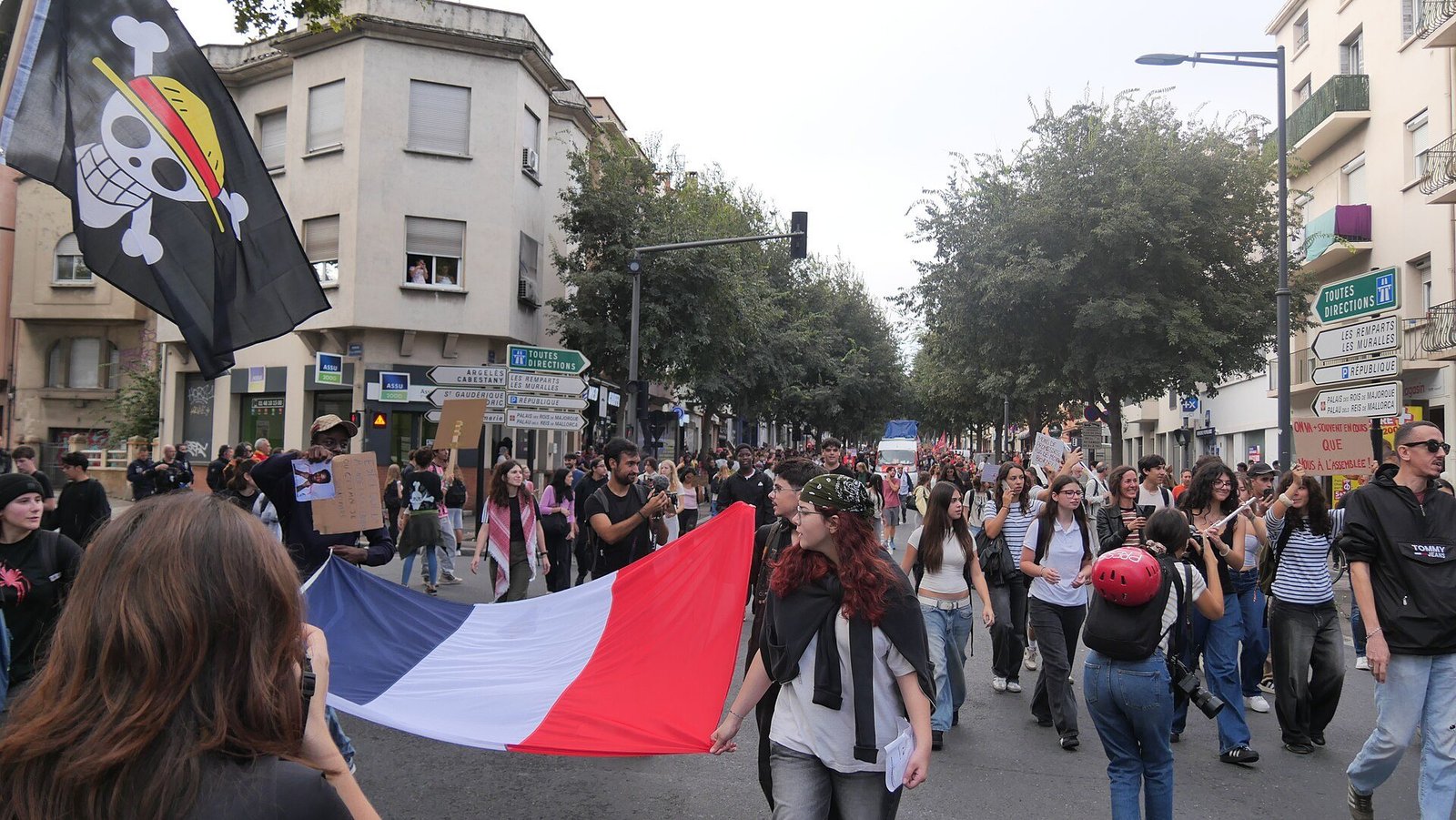
Lycéens are joined by university students and teachers; the Sorbonne is blockaded. In Paris estimates run from about 56,000 to 100,000. Prime Minister Sébastien Lecornu orders ministers to answer the main demands, including teacher replacement, the school day and building repairs, with first proposals by the end of October. The Justice Ministry says 5,060 people have been arrested since the start, 87% of them minors; the PM’s office counts at least 715 police and 215 teenagers injured.
2026
A 15-year-old loses his hand in Lens 2026 Figures disputed
A grenade used by riot police explodes in a teenager’s hand near his school. The Béthune prosecutor says it is not yet established whether he picked it up or it was thrown at him; a police source says he picked it up. The injury becomes the movement’s rallying point and puts the policing of minors at the centre of national debate.
2026
Schools shut, schools burned 2026
Geffray orders about 400 establishments closed on 2 October for safety. By 4 October he says 400 to 500 lycées have suspended classes and 24 have been burned or vandalised, and blames far-left infiltration for the escalation. The government accuses La France insoumise of fuelling the protests, which the party denies.
2026
The movement goes national 2026
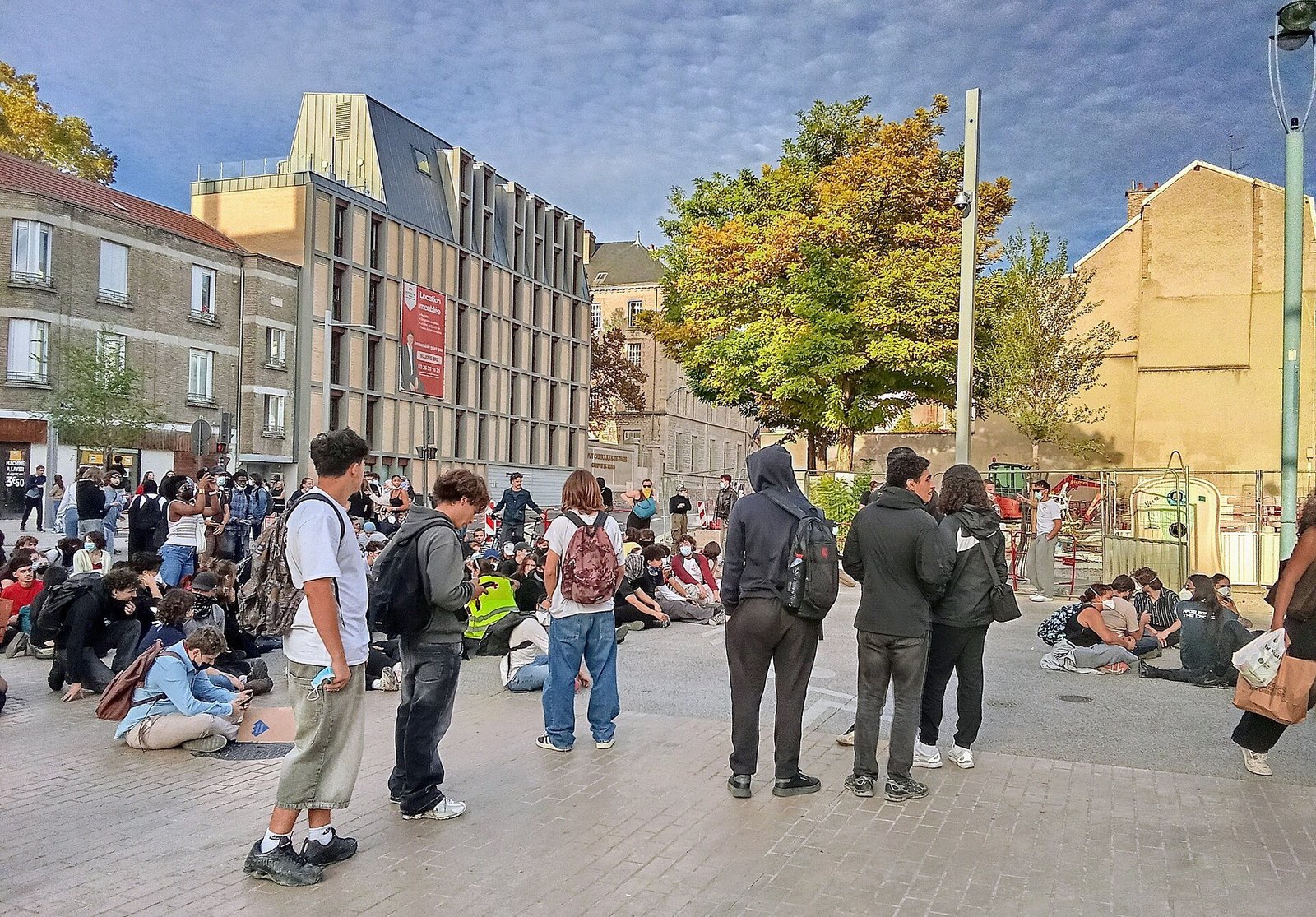
On 29 September the Education Ministry says about 400 of France’s roughly 3,700 lycées are disrupted and 440 people are detained, mostly minors. On 30 September 356 schools are affected and 625 detained. On 1 October the Interior Ministry reports 1,027 lycées affected, 222 of them blockaded, and 1,949 arrests in a single day. University students join, with around 30 campus blockades.
2026
Créteil: a strike over empty posts 2026
Teachers at the Créteil lycée strike because several teaching posts have not been filled at the start of the school year. Students blockade the school in support, and a student mobilisation is under way by 21 September. By 24–25 September “a good dozen” lycées are blocked, mainly in Seine-Saint-Denis and Val-de-Marne.
2025
“Bloquons tout” reaches the lycées History
A nationwide day of action against budget cuts, organised largely online, includes blockades of Paris lycées. Two days earlier, the Bayrou government had fallen; Sébastien Lecornu becomes prime minister on 9 September.
2023
Pension reform: students join the unions History Reform went ahead
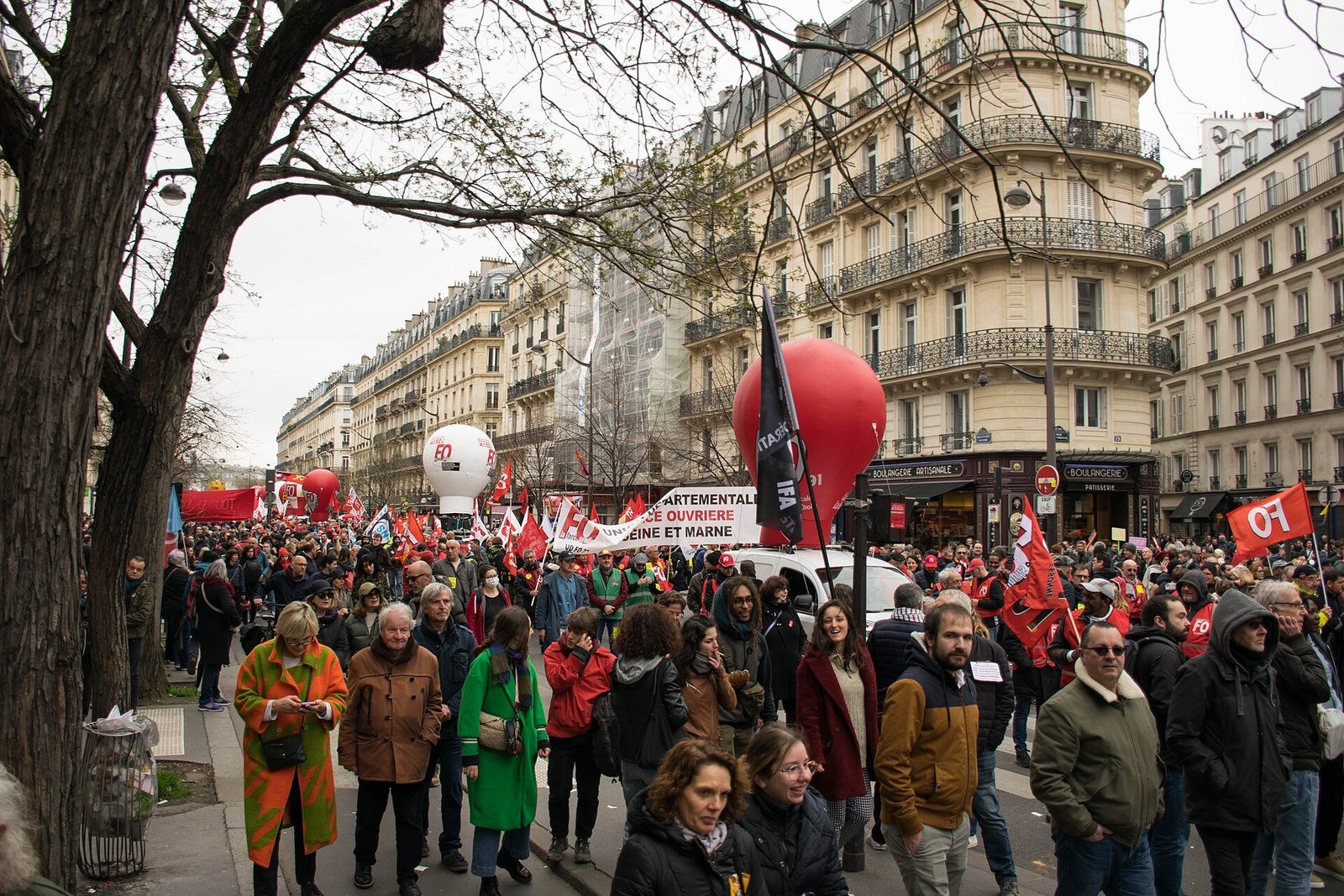
Lycéens and university students join months of union-led marches. The government forces the reform through without a vote using Article 49.3, the Constitutional Council validates it in April, and it becomes law. School conditions are not the issue, but the protests rehearse the alliances of 2026.
Exam blockades over the new bac History
The first common tests of the reformed baccalauréat are blockaded or cancelled at dozens of lycées. The reform stays, but the tests are later replaced by ordinary continuous assessment.
2018
Mantes-la-Jolie: 151 teenagers on their knees History
During a week of lycée blockades that overlap with the gilets jaunes protests, police in Mantes-la-Jolie detain 151 young people and film them kneeling, hands on heads. The video becomes a national symbol of how the state treats young protesters.
Parcoursup arrives History Reform went ahead
Parcoursup replaces the APB admissions system, which had used lotteries for full courses. Opponents call it selection by the back door; universities including Tolbiac in Paris are occupied in spring 2018. The platform stays, and Parcoursup anxiety becomes one of the four headline grievances of 2026.
Lycées blockaded over pensions History Reform went ahead
Hundreds of lycées are blockaded during the union protests against raising the retirement age. The reform passes in November 2010.
2006
The CPE History Government backed down
A job contract allowing dismissal without reason during a two-year trial period brings universities and lycées to a standstill, with marches of over a million in March. Prime Minister Dominique de Villepin replaces it on 10 April.
2005
The suburban riots History
The deaths of two teenagers hiding from police in an electricity substation set off three weeks of rioting in deprived suburbs. Discrimination, unemployment and policing were the issues, not education policy, but the crisis shaped how France talks about young people from the banlieues.
2005
Lycéens against the Fillon law History Government backed down
Hundreds of thousands of lycéens march against François Fillon’s school law. He withdraws its planned baccalauréat reform in February; the rest of the law passes in April.
The CIP youth wage History Government backed down
A plan to let employers pay young people below the minimum wage is dropped after weeks of student and lycée protests.
1990
The lycée movement over school conditions History Government backed down
The closest precedent for 2026. Lycéens from the suburbs and the provinces protest over violence, overcrowding and crumbling buildings. President Mitterrand receives a student delegation and admits the crisis is real, and the government adopts a 4.5-billion-franc emergency plan for lycées.
1986
The Devaquet bill and Malik Oussekine History Government backed down
Students and lycéens march against a reform allowing university selection and higher fees. On the night of 5–6 December, 22-year-old student Malik Oussekine dies after being beaten by police on motorbikes. The bill is withdrawn two days later and minister Alain Devaquet resigns.
May ’68 History
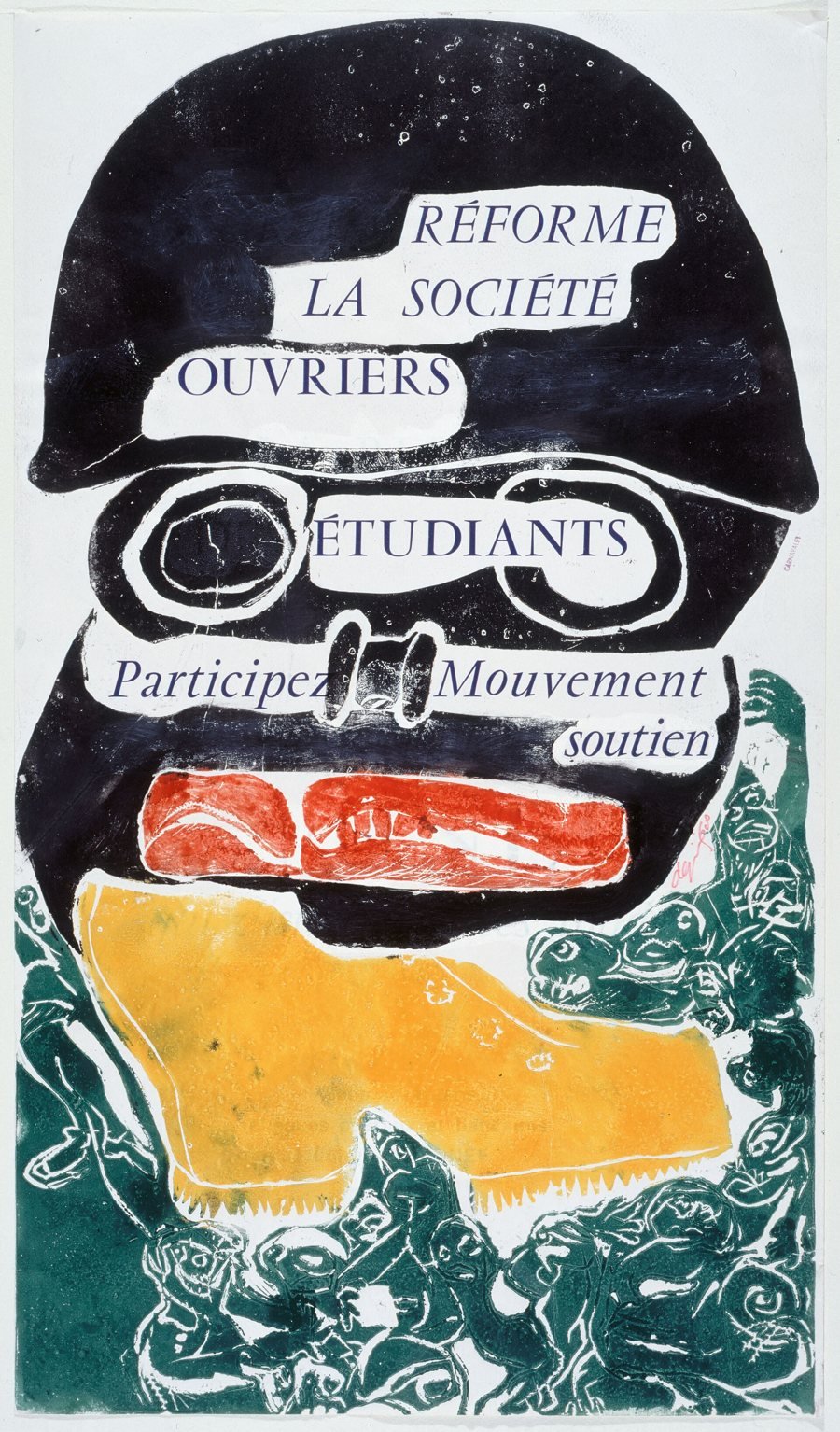
A student revolt that began at Nanterre spreads to the Sorbonne, the Latin Quarter barricades and then the largest general strike in French history. Lycéens join through their action committees. De Gaulle survives and wins the June election, but the Faure law of November 1968 remakes the universities.
Corrections to Claims Circulating Online
From the summary material this page was built from, checked against ministry figures and French and international reporting.
“The movement began around 21 September in Créteil”
Teachers at the Créteil lycée struck on 17 September over unfilled posts; students blockaded in support. 21 September is when the student mobilisation is usually dated.
“More than 266,000 joined on 6 October”
That is the Interior Ministry’s count (some outlets rounded to 250,000). Organisers said 450,000. Both should be given.
“2005: youth protests in the suburbs” as an education protest
The 2005 education protest was the lycée movement against the Fillon law, which won the withdrawal of its bac reform. The suburban riots were a separate crisis.
1986: “the government withdrew the reform after the protests”
It was withdrawn two days after student Malik Oussekine died following a police beating, and minister Alain Devaquet resigned.
No 1990 entry
The 1990 lycée movement over school conditions, which won a 4.5-billion-franc emergency plan, is the nearest precedent for 2026.
“Proposed teacher replacements and additional staffing”
Specifically: ~3,000 unassigned substitutes redeployed from 9 October to 114 “red” and 400 “orange” lycées, plus several hundred extra hires; proposals due end-October.
What Remains Contested
- Turnout: ministry and organiser counts differ by nearly half on every day.
- Who drives the movement: ministers blame far-left infiltration and La France insoumise; students say it is about their schools.
- Policing: the Lens injury is under IGPN investigation; the scale of arrests of minors is criticised by lawyers’ groups.
- Teacher numbers: the government points to falling pupil numbers; unions point to unfilled posts this September.
- Outcome: whether end-October proposals and the 2027 budget will meet a “10 billion” demand is unknown.
What to Watch
- 13 October: the size of the joint strike will show whether the movement is growing or fading.
- Substitutes in classrooms: whether the 3,000 redeployed teachers actually fill the gaps in the 114 red lycées.
- End of October: the government’s proposals on replacement, the school day and buildings.
- The 2027 budget: amendments for education, and how much money they carry.
- Lens: the findings of the IGPN investigation.
Quick Quiz
1. Where did the 2026 lycée movement start?
2. Which 1986 reform was withdrawn after Malik Oussekine’s death?
3. How many marched on 6 October 2026 by the Interior Ministry’s count?
4. What did the government promise on 8 October?
5. Which youth protest did NOT force a retreat?
Explore More Timelines
People Also Ask
Frequently Asked Questions
A Teacher in Every Classroom
May 1968 questioned authority itself. The movements of 1986, 2006 and 2018 fought over who gets into university and on what terms. The 2026 lycée movement is about something more basic: whether there is a teacher at the front of the room and a building fit to learn in.
The real test is not when the blockades end. It is whether students go back to classrooms where teachers are present, buildings work and the route to higher education feels fair. A country’s education system is judged not only by what it promises, but by what a teenager finds on an ordinary school day.
Related AiTimeline Stories
⚠️ Editorial Note
Last updated 9 October 2026. The 2026 movement is ongoing. Turnout, arrest, injury and school-disruption figures are attributed to the ministry, union or organiser that published them and may be revised; ministry and organiser counts routinely differ. Claims by the government and by protesters about who is responsible for violence are reported as claims. Historical figures are widely cited estimates. This page takes no side in French politics.
Sources & further reading
Every dated entry above was checked against these references. Last reviewed 9 October 2026.
- franceinfo: Mobilisation des lycéens, live coverage and Geffray's announcements (8 Oct 2026)
- VousNousIls: Blocus lycéens, une nouvelle journée de mobilisation jeudi 8 octobre (7 Oct 2026)
- Sud Radio: Lycées, cours suspendus dans 400 à 500 établissements, 24 saccagés ou incendiés (4 Oct 2026)
- Paris Match Belgique: Un ado a eu la main arrachée à Lens (5 Oct 2026)
- Sortiraparis: October 13 strike, high school students, university students and teachers urged to protest
- Wikipedia: 2026 French lycée protests
- Wikipédia: Affaire Malik Oussekine (1986)