Orbital Data Centres: The Future of AI in Space — A Timeline
Orbital data centres timeline: Starcloud's H100 in orbit, Axiom's nodes, China's computing satellites, Google's Project Suncatcher and the cost hurdles.
Latest Story
AI needs electricity, cooling, land and water on a scale that is straining power grids. So a growing number of companies want to move some of that computing off the planet. Orbital data centres put processors, storage and networking on satellites powered by sunlight. Since 2025 the idea has gone from white papers to hardware: an NVIDIA H100 in orbit, Axiom’s first nodes, China’s computing constellation and, on 1 October 2026, Google’s first TPU satellite. But a few prototypes are not a data centre. This timeline separates what has flown from what has only been filed, and sets out the engineering and cost problems still unsolved.
💡 Short Answer
Orbital data centres are computers on satellites that process data in space using solar power. Prototypes are flying: China’s 12-satellite Three-Body constellation (May 2025), Starcloud-1 with an NVIDIA H100 (November 2025), Axiom Space’s nodes (January 2026) and Google’s Project Suncatcher TPU satellite (October 2026). None is commercial at scale; BCG estimates orbit costs 2.5–3 times more than the ground today.
Orbital Data Centres: Key Questions
Orbital Data Centres in Ten Points
- Old roots: HPE ran off-the-shelf servers on the ISS from 2017.
- China first at scale: 12 computing satellites launched on 14 May 2025.
- A real AI chip: Starcloud-1 took an NVIDIA H100 to orbit on 2 November 2025.
- First training in space: Starcloud trained a small NanoGPT model in December 2025.
- Networked nodes: Axiom’s first two nodes joined Kepler’s laser network on 11 January 2026.
- Huge filings: SpaceX asked to launch up to one million data-centre satellites.
- Official caution: the US GAO flagged cooling, radiation, cost and debris in April 2026.
- Cost gap: BCG put orbital computing at 2.5–3x ground costs.
- Google in orbit: its Suncatcher TPU prototype reported working on 1 October 2026.
- Reality: prototypes, not hyperscale; the first real gains are processing data already in space.
Orbital Data Centres at a Glance
Prototype launches and filings are not the same as a commercial, large-scale AI data-centre network. Scroll the table sideways on a phone.
| Date | Milestone | Status |
|---|---|---|
| Aug 2017 | HPE Spaceborne Computer, off-the-shelf servers, on the ISS | Demonstrated |
| 14 May 2025 | China’s Three-Body Computing Constellation: first 12 satellites | In orbit |
| 2025 | Axiom Space AxDCU-1 computing unit on the ISS | Demonstrated |
| 2 Nov 2025 | Starcloud-1 launches with an NVIDIA H100 | In orbit |
| 4 Nov 2025 | Google announces Project Suncatcher | Research plan |
| Dec 2025 | Starcloud trains NanoGPT and runs Gemma in orbit | Demonstrated |
| 11 Jan 2026 | Axiom’s first two orbital data-centre nodes launch | In orbit |
| 30 Jan 2026 | SpaceX files with the FCC for up to 1 million satellites | Filing |
| 16 Mar 2026 | NVIDIA announces Space-1 Vera Rubin Module | Product plan |
| 28 Apr 2026 | US GAO publishes Data Centers in Space | Assessment |
| 27 Aug 2026 | BCG: orbit costs 2.5–3x more today | Assessment |
| 1 Oct 2026 | Google’s Suncatcher TPU prototype confirmed in orbit | In orbit |
| 2027 and beyond | Starcloud-2, more Suncatcher satellites, larger constellations | Planned |
The Timeline, Newest First
From Google’s October 2026 prototype back to the first onboard computers. Tags show what is in orbit, what is a plan or filing, and where a reality check came in.
Google’s Suncatcher prototype reaches orbit In orbit
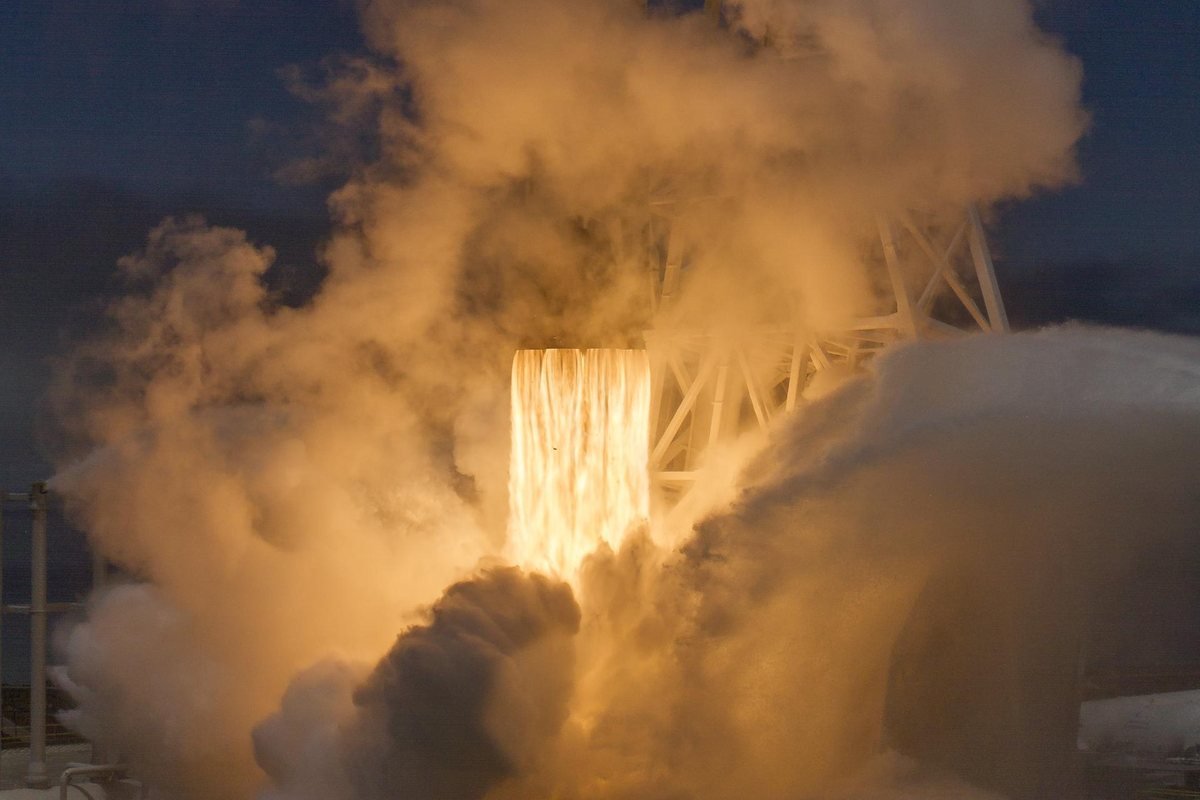
Google said its first Project Suncatcher satellite, built with Earth-imaging company Planet, had launched on SpaceX’s Transporter-18 rideshare from California. The team confirmed contact and said the spacecraft was operating as expected. Over the following weeks it is gathering data on how Google’s Tensor Processing Units cope with launch, radiation and temperature swings.
Reports described a fridge-sized satellite with about a kilowatt of solar power. Google has said further satellites are planned for 2027, and published a peer-reviewed design paper in the journal Joule.
Rules and regulators start to catch up 2026
Orbital AI data centres were on the agenda of the 77th International Astronautical Congress in Antalya, Turkey, alongside crowded orbits and the race to the Moon. In the US, the Office of Space Commerce opened a pilot certification programme for novel in-space activities, including orbital data centres, with expressions of interest due by 5 October 2026.
Law firms and policy analysts are working through basic questions: which country’s data-protection law applies to a server in orbit, how such satellites are licensed and insured, and who is liable for debris.
BCG prices the gap: 2.5–3x more expensive Reality check
Boston Consulting Group’s Space-Based Data Centers: Cost and Outlook to 2040 estimated that an orbital data centre today costs 2.5 to 3 times as much over 20 years as one on the ground, narrowing to about 1.5x by 2030–35 in realistic scenarios. It called cooling the principal bottleneck: roughly 400 m² of radiator for a 100 kW satellite.
BCG still saw a niche worth $240–320 billion a year by 2040, 10–15% of the AI data-centre market, mainly latency-tolerant inference, processing of space-generated data and sovereign workloads.
Laser links and studies multiply Plan
Starcloud agreed to fit SpaceX’s Starlink mini laser terminals on its next 25 satellites, so they can pass data through the Starlink network instead of waiting for a ground station. In Europe, the European Space Agency awarded Edge Aerospace a contract to study orbital data-centre architectures and a roadmap.
2026
The US GAO weighs the idea Reality check
The US Government Accountability Office published Science & Tech Spotlight: Data Centers in Space. It cited a Department of Energy projection that data centres could use up to 12% of US electricity by 2028, driven by AI, and said moving some computing to orbit could ease demand for power, water and land and speed up processing of data collected in space.
It listed the obstacles plainly: cooling in a vacuum, radiation damage that could force more frequent replacement, launch and manufacturing costs, collision risks including for crewed missions, and interference with astronomy. It asked whether launch capacity, space law and research funding are ready.
NVIDIA builds chips for space; Starcloud becomes a unicorn Plan
At its GTC conference NVIDIA announced a space computing line-up headed by the Space-1 Vera Rubin Module, which it says offers up to 25 times the AI inference compute of the H100, alongside the smaller IGX Thor and Jetson Orin. It named Axiom Space, Kepler, Planet, Starcloud, Sophia Space and Aetherflux as users of its platforms.
Two weeks later Starcloud raised $170 million at a $1.1 billion valuation to build Starcloud-2, designed to carry an NVIDIA Blackwell GPU, an AWS server blade and bitcoin-mining chips, with about 100 times Starcloud-1’s power and a large deployable radiator.
2026
The mega-filings: up to one million satellites Filing
SpaceX asked the US Federal Communications Commission to authorise up to one million satellites between 500 and 2,000 km to act as solar-powered orbital data centres, saying they were “the most efficient way to meet the accelerating demand for AI computing power”. Days later SpaceX confirmed it had acquired Elon Musk’s AI company xAI, in a deal valuing the combined company at about $1.25 trillion.
Blue Origin announced TeraWave, a network of about 5,400 satellites for data-centre connectivity, and Starcloud filed for a constellation of up to 88,000 satellites.
2026
Axiom’s first orbital data-centre nodes launch In orbit
Axiom Space said its first two orbital data-centre nodes had reached low Earth orbit, flying as part of Kepler Communications’ optical relay constellation. Their laser links, compatible with the US Space Development Agency’s Tranche 1 standard, let other satellites send data to the nodes for processing without routing it through the ground.
Axiom uses commercial off-the-shelf hardware and standard container software, and says it aims to grow from kilowatts to megawatts of capacity over the coming years.
The first AI model trained in orbit In orbit
Starcloud said its satellite had trained NanoGPT, a small language model by Andrej Karpathy, on the complete works of Shakespeare, the first training of a language model in space, and had run and answered queries with Google’s open Gemma model. Starcloud describes this as running ‘a version of Gemini’.
2025
Starcloud-1 puts an NVIDIA H100 in orbit In orbit
Starcloud, a start-up founded in 2024 as Lumen Orbit, launched Starcloud-1 carrying an NVIDIA H100, a data-centre AI accelerator about 100 times more powerful than any GPU previously flown, according to the company. The satellite flies along the boundary between day and night so its solar panels stay lit.
Getting a chip designed for air-conditioned server halls to work in vacuum, radiation and extreme temperature swings was the real test.

2025
Google announces Project Suncatcher Plan
Google unveiled Project Suncatcher, a research moonshot asking whether constellations of solar-powered satellites carrying its TPUs could scale machine learning in space. It said its Trillium TPUs survived radiation testing well, and modelled clusters of 81 satellites flying within about a kilometre of each other, linked by lasers.
Google’s analysis suggested the economics could work if launch prices fall below about $200 per kg by the mid-2030s. It planned two prototype satellites with Planet by early 2027.
Axiom tests AxDCU-1 on the ISS In orbit
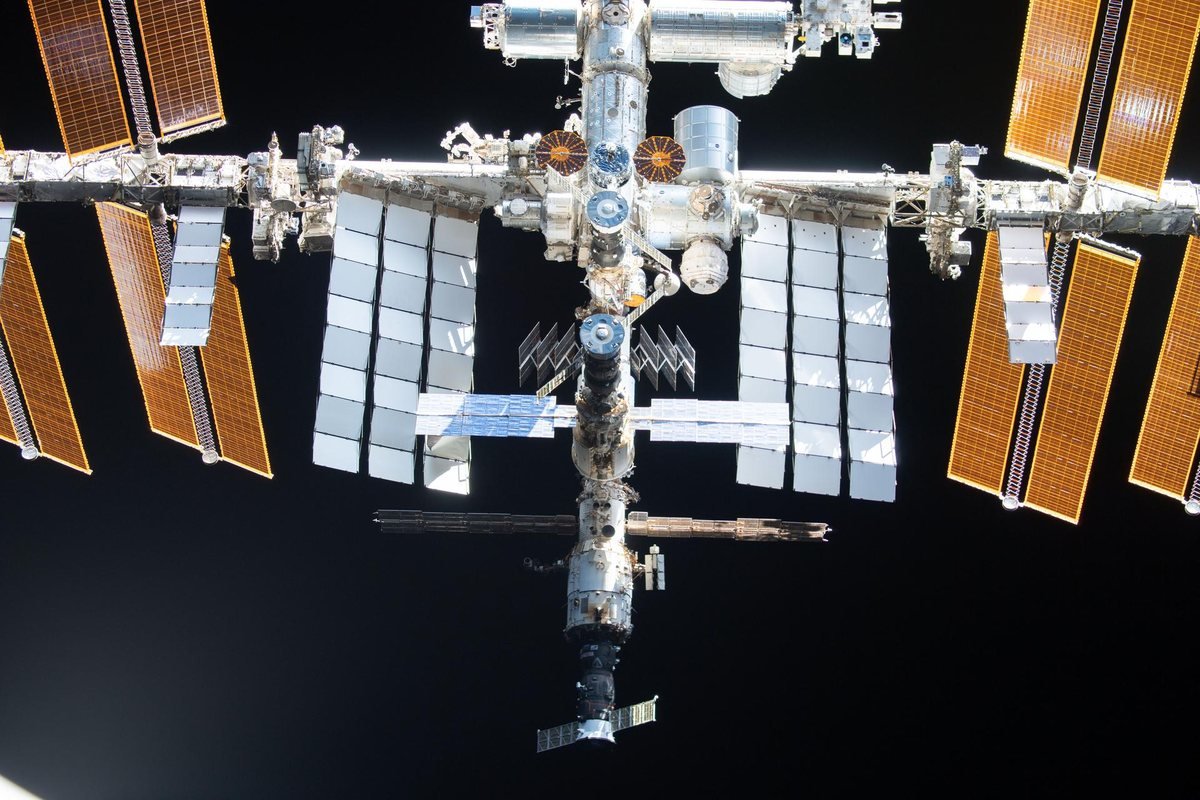
Axiom Space installed AxDCU-1, a prototype data-processing unit running Red Hat Device Edge, on the International Space Station in 2025 to test cloud services, AI and machine learning, data fusion and space cybersecurity.
The ISS is a forgiving test bed: the station supplies power, cooling and communications. A free-flying orbital data centre must provide all of those itself.
2025
China launches the Three-Body Computing Constellation In orbit
China launched the first 12 satellites of the Three-Body Computing Constellation, billed by ADA Space as the world’s first dedicated orbital computing constellation. Together they offer about 5 peta-operations per second, 30 TB of storage and laser links of up to 100 Gbps, and process remote-sensing data in orbit.
The wider Star-Compute programme plans about 2,800 satellites and 1,000 POPS.
2025
A data centre goes to the Moon In orbit
Lonestar Data Holdings flew its small ‘Freedom’ data-storage payload on Intuitive Machines’ IM-2 lunar mission. The company said the payload met its tests in cislunar space and lunar orbit, with stable power, temperature and memory readings, but the Athena lander tipped over after touching down far from its target in March, cutting the mission short.
From papers to start-ups Plan
Starcloud was founded in January 2024 and published a white paper proposing gigawatt-scale orbital data centres built from modular solar and radiator units. In Europe, the ASCEND feasibility study led by Thales Alenia Space for the European Commission examined whether orbital data centres could cut the carbon footprint of computing, concluding that it would depend on much cleaner, cheaper launchers.
Off-the-shelf servers survive the ISS In orbit
Hewlett Packard Enterprise sent the Spaceborne Computer, built from commercial off-the-shelf servers rather than radiation-hardened parts, to the ISS on SpaceX’s CRS-12 mission. It ran for more than a year, reached about one teraflop, and relied on software to manage radiation errors. It returned to Earth in 2019 and a second version followed in 2021.
2017
Satellites learn to think for themselves Plan
Satellites have always carried computers to run the spacecraft and its instruments, usually slow, radiation-hardened chips. As sensors grew more capable, operators began filtering and compressing data on board to save scarce downlink bandwidth.
Who Has Actually Flown What?
The projects compared, and how far each has got.
Pick a project. How far has it really got?
The meter shows each effort’s stage on a five-step scale, from a regulatory filing to commercial scale. Status as of 13 October 2026.
| Project | Who | Compute in orbit | Links | Next step |
|---|---|---|---|---|
| Starcloud-1 | Starcloud (US) | NVIDIA H100 | Radio; Starlink lasers planned | Starcloud-2 (Blackwell) |
| ODC nodes | Axiom Space + Kepler | Commercial off-the-shelf | 2.5 Gbps optical | More nodes, more power |
| Three-Body Constellation | ADA Space + Zhejiang Lab (China) | 12 sats, ~5 POPS total | Up to 100 Gbps optical | ~2,800 satellites |
| Project Suncatcher | Google + Planet | Google TPUs | Optical (design) | More satellites in 2027 |
| Orbital data-centre filing | SpaceX (with xAI) | None yet | Starlink lasers | Up to 1 million satellites (filing) |
How Would an Orbital Data Centre Work?
Five systems have to work together.
Solar power
Large arrays turn sunlight into electricity. A dawn-dusk orbit can keep panels lit almost all the time; other orbits need batteries for eclipses.
AI processors
GPUs, TPUs or other accelerators, either radiation-hardened or ordinary chips protected by shielding and error-correcting software.
Thermal management
Heat is piped from the chips to radiators that emit it as infrared light. There is no air for fans to use.
Communications
Laser links between satellites and to relay networks, plus radio and optical links to ground stations.
Software orchestration
Scheduling, monitoring and fault tolerance so that many satellites behave like one computer, and survive the loss of some.
Why Put AI Data Centres in Space?
Strong, steady sunlight
No clouds, no night in the right orbit. Google says a panel can be up to eight times more productive than on Earth.
No land, grid or water
The GAO cited projections that data centres may use up to 12% of US electricity by 2028. Orbit avoids local grid and water fights.
Process data where it is made
Earth-observation satellites can spot fires, floods or ships in orbit and send down answers instead of raw images.
Shared computing for spacecraft
Future constellations and stations could rent processing from orbital nodes rather than carry it themselves.
The Biggest Challenges
Why most experts see a niche, not a replacement, for now.
Cooling is not automatic
Space is cold but empty. BCG estimates about 400 m² of radiator for a 100 kW satellite.
Launch and replacement
Every panel, radiator and chip must be built, launched and eventually replaced. Today that makes orbit 2.5–3x dearer.
Errors and wear
Particles flip bits and degrade chips over time, forcing shielding, error correction or earlier replacement.
Links between satellites
AI training needs enormous data flows between chips; lasers between moving spacecraft must be fast and precisely aimed.
No technician in orbit
AI chips age in two or three years; a satellite cannot simply have a new GPU slotted in.
Debris and astronomy
Thousands more satellites raise collision risk and can streak telescope images.
The Cost Gap: Ground vs Orbit
The economics, not the physics, will decide how big this gets.
Ground or orbit: what does a megawatt cost?
20-year total cost per megawatt of computing, using BCG’s August 2026 estimates. The 2030–35 figure applies BCG’s ~1.5x premium to today’s ground cost.
Will Orbital Data Centres Replace Earth-Based AI Data Centres?
Not in the foreseeable future. Ground data centres have mature supply chains, fibre networks, cheap repairs and the ability to swap in new chips every couple of years. They also face real limits on power, cooling water, land and permits, which is why the orbital idea has attracted so much money.
The more plausible future is a hybrid: terrestrial data centres do most training and cloud work, while orbital nodes process data that is already in space, serve other spacecraft and take on specialised, latency-tolerant jobs. Whether orbit grows beyond that depends on measurable gains in launch prices, radiators, radiation tolerance and laser links.
Common Myths About Data Centres in Space
“Space is cold, so cooling is free”
A vacuum insulates. Heat must be radiated, which needs large, heavy panels.
“AI data centres are already in orbit”
Single GPUs and small constellations are. A hyperscale AI facility is not.
“SpaceX is launching a million satellites”
It has applied for permission for up to a million. That is a ceiling, not a schedule.
“Gemini runs in space”
Starcloud ran Google’s small open Gemma model, which shares Gemini’s research roots, not the Gemini service.
Explore More Timelines
People Also Ask
Frequently Asked Questions
Conclusion: AI’s Next Frontier May Be Above Earth, Eventually
In less than two years, orbital computing has moved from slide decks to satellites: China’s computing constellation, Starcloud’s H100, Axiom’s laser-linked nodes and now Google’s TPU prototype. Each shows that AI hardware can work in space. None shows that it can do so at a price that competes with a data centre on the ground.
The first real gains will probably come from processing data that is already in orbit. Whether whole AI data centres follow depends not on how spectacular the idea sounds, but on whether launch, cooling and radiation costs fall far enough to deliver useful computing at a competitive price.
Related AiTimeline Stories
⚠️ Editorial Note
This timeline separates hardware confirmed in orbit from announced plans and regulatory filings. Dates and specifications come from company announcements (Google, Axiom Space, Starcloud, NVIDIA), the US GAO report GAO-26-109012 and BCG’s August 2026 cost study; company performance claims have not been independently verified. Starcloud-2’s launch date was unconfirmed as of 13 October 2026. Cost figures are estimates with wide uncertainty.
Sources & further reading
Every dated entry above was checked against these references. Last reviewed 13 October 2026.
- Google: Project Suncatcher prototype satellite in orbit (1 October 2026)
- Google: Introducing Project Suncatcher (4 November 2025)
- Google Research: Exploring a space-based, scalable AI infrastructure system design
- US GAO: Science & Tech Spotlight: Data Centers in Space, GAO-26-109012 (28 April 2026)
- Axiom Space: Orbital Data Centers (AxDCU-1 and ODC nodes)
- Starcloud: Starcloud-1
- NVIDIA: NVIDIA Launches Space Computing (16 March 2026)
- Boston Consulting Group: Space-Based Data Centers: Cost and Outlook to 2040 (August 2026)
- Live Science: China launches first satellites of its Three-Body Computing Constellation (May 2025)