Northern Rock Failure: UK’s First Bank Run in 150 Years Explained
Northern Rock collapse 2007 explained: why savers withdrew £4.6bn, the wholesale-funding flaw, nationalisation in 2008 and what changed for UK banking.
Latest Story
On Friday 14 September 2007, savers queued outside Northern Rock branches across Britain to take their money out. The mortgage lender had just been given emergency support by the Bank of England, and about £1 billion left on that first day alone. The Northern Rock collapse was not caused by frightened savers, though. It began with a funding model that relied on borrowing from financial markets, which stopped working in August 2007. This timeline follows the bank from building society to boom, run, nationalisation and break-up, and on to 2026, when its old branch business was absorbed into Nationwide and its former borrowers lost a test case at the Court of Appeal.
💡 Short Answer
Northern Rock failed because it funded most of its fast-growing mortgage book from wholesale markets rather than savers. When those markets froze in August 2007, it needed Bank of England support. News of that support on 14 September 2007 triggered Britain’s first bank run in about 150 years, with just over £4.6 billion withdrawn in days. The government guaranteed deposits on 17 September and nationalised the bank on 22 February 2008.
Northern Rock Collapse 2007: Key Questions
The Northern Rock Failure in Ten Points
- The model: savers funded just 22.4% of the bank by 2006, down from 62.7% in 1997.
- The trigger: global credit markets froze on 9 August 2007.
- The leak: the BBC reported the rescue on 13 September, before it was announced.
- The run: ~£1bn out on 14 September; just over £4.6bn over a few days.
- The gap: 2007 deposit protection maxed out at £31,700, with 10% co-insurance.
- The fix: Alistair Darling guaranteed all existing deposits on 17 September.
- The rescue: Bank of England lending reached ~£26bn by January 2008.
- The end: nationalised on 22 February 2008; shareholders got nothing.
- The break-up: retail bank to Virgin Money in 2012; mortgages sold 2016–2021.
- The legacy: the Banking Act 2009, faster FSCS payouts and a £120,000 limit today.
Northern Rock at a Glance
Scroll sideways on a phone.
| Detail | Key fact | Source |
|---|---|---|
| Bank | Northern Rock plc, Gosforth, Newcastle upon Tyne | Companies record |
| Demutualised | 1 October 1997 | Northern Rock |
| Funding weakness | Retail deposits 22.4% of liabilities, end-2006 | St Louis Fed |
| Markets freeze | 9 August 2007 | Bank of England |
| Support announced | 14 September 2007, 7am | Bank of England |
| The run | ~£1bn on 14 Sep; just over £4.6bn over a few days | NAO |
| Deposit guarantee | 17 September 2007, Alistair Darling | HM Treasury |
| Peak Bank of England loan | ~£26bn by January 2008 | NAO / press |
| Nationalised | 22 February 2008 (announced 17 Feb) | NAO |
| Split | 1 January 2010: Northern Rock plc and NRAM | UK Parliament |
| Retail bank sold | Virgin Money, £747m up front, 1 Jan 2012 | HM Treasury |
| Final loan sale | £5bn, 26 February 2021 | HM Treasury |
Northern Rock Failure Timeline: From Building Society to Bank Run, and What Came After
Newest first, from April 2026 back to 1965. Tags mark events, growth, pressure, crisis moments, policy, resolution and 2026 developments.
2026
Santander takes over TSB, and 34,000 old Northern Rock loans 2026
Santander UK completed its purchase of TSB Banking Group on 30 April 2026 for about £2.9 billion in cash, after approval from the Prudential Regulation Authority in March. TSB had bought a £3.3 billion slice of former Northern Rock mortgages and loans from Cerberus in 2016, covering about 34,000 customers, and ran them under the Whistletree name.
Nearly two decades after the run, the loans written in Northern Rock’s boom years are still changing hands, now inside Britain’s third-largest current-account bank.
2026
Northern Rock’s branch business becomes Nationwide 2026
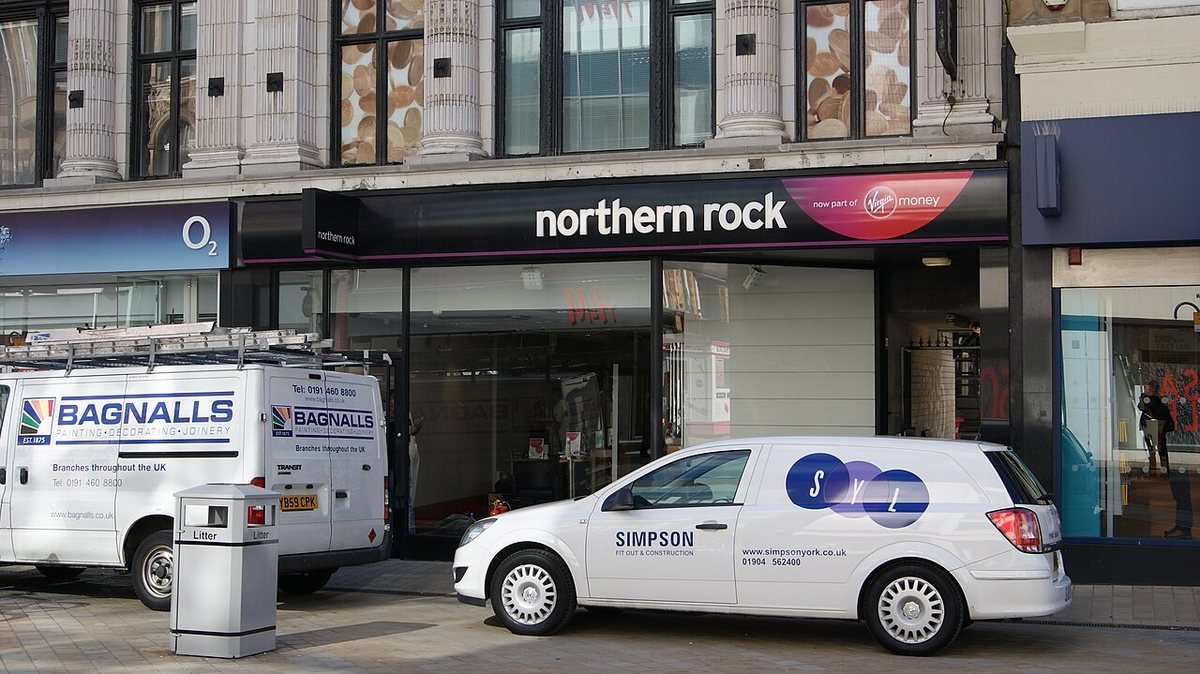
Nationwide Building Society completed a banking business transfer moving almost all of Virgin Money’s business, including the savings and mortgages descended from Northern Rock plc, into the society itself on 2 April 2026. The High Court had approved the scheme on 23 February.
There is an irony in the ending: the savings business of a building society that demutualised in 1997 is back inside a building society, Britain’s largest.
2026
Former Northern Rock borrowers lose at the Court of Appeal 2026
A group of 392 former Northern Rock customers argued that TSB had breached their mortgage contracts by charging the inherited Whistletree variable rate, 4.29 points above Bank Rate, instead of TSB’s own rate of 2 points above. Some also held Northern Rock’s ‘Together’ packages, a mortgage plus a linked unsecured loan.
The Court of Appeal upheld the High Court and ruled for TSB on both preliminary issues: the contracts let TSB keep Northern Rock’s rate, and regulated mortgages cannot be challenged through the linked loans under consumer-credit unfairness rules. It is a reminder that many Northern Rock borrowers became ‘mortgage prisoners’, unable to switch after the crash.
2025
Deposit protection rises to £120,000 Policy
The Prudential Regulation Authority raised the Financial Services Compensation Scheme limit to £120,000 per person per bank, from £85,000, to reflect inflation. In 2007 the most a Northern Rock saver could have got back was £31,700, and only after a slow payout process.
The higher, faster safety net is one of the most direct legacies of the queues of 2007.
2024
Nationwide buys Virgin Money Resolution
Nationwide completed its £2.9 billion takeover of Virgin Money, the bank that had absorbed Northern Rock plc in 2012. The deal brought the old Gosforth savings and mortgage operation into a mutual once more, ahead of the full legal transfer in 2026.
2021
The last Northern Rock loans are sold Resolution
UK Asset Resolution sold the companies holding the remaining loans of NRAM and Bradford & Bingley for £5 billion to a consortium led by Davidson Kempner Capital Management with Citibank, with PIMCO providing most of the financing. The government said it was recovering significant amounts of the taxpayer money used during the financial crisis.
It marked the end of the public sector’s balance-sheet exposure to Northern Rock, more than 13 years after the run.
May 2016
£13bn of Northern Rock mortgages go to Cerberus Resolution
UKAR agreed to sell a £13 billion portfolio of former Northern Rock mortgages and unsecured loans to Cerberus Capital Management, at the time the largest sale of financial assets by a European government. It achieved a £280 million premium over book value.
The deal completed in May 2016. NRAM plc became Landmark Mortgages, and TSB bought £3.3 billion of the loans, about 34,000 customers, from Cerberus.
2012
Virgin Money buys Northern Rock plc Resolution
The government agreed on 17 November 2011 to sell Northern Rock plc, the ‘good bank’ with the branches and savings, to Virgin Money for £747 million up front, with further payments possible. The sale completed on 1 January 2012, and the branches took the Virgin Money name in October 2012.
Virgin, which had bid in 2007, finally got the bank. The Public Accounts Committee later questioned whether taxpayers got the best price, since the government had put £1.4 billion of capital into the business.
2010
The bank is split in two Policy
Northern Rock was divided into Northern Rock plc, a smaller savings and mortgage bank to be sold, and Northern Rock (Asset Management), which kept most of the mortgage book and the government loans and was to be run down. In October 2010, NRAM and Bradford & Bingley were placed under a single holding company, UK Asset Resolution (UKAR).
2010
New rules and the first fines Policy
The Banking Act 2009 gave the Bank of England permanent powers to take over or wind down a failing bank quickly, so no future rescue would need emergency legislation. In 2010 the Financial Services Authority fined former deputy chief executive David Baker £504,000 and former managing credit director Richard Barclay £140,000 over the misreporting of mortgage arrears figures, and banned both from senior roles.
Deposit protection rose again, to £85,000, from 31 December 2010.
2008
The crisis Northern Rock foreshadowed Crisis
A year after the Northern Rock run, the global crisis peaked. Lehman Brothers filed for bankruptcy on 15 September 2008, Bradford & Bingley was nationalised on 29 September, and on 8 October the government announced a bank recapitalisation scheme that led to large public stakes in RBS and Lloyds.
Northern Rock had been the first British casualty, not the cause: its failure showed earlier than most how quickly a lender dependent on markets could fall when those markets stopped working.
2008
Northern Rock is nationalised Policy
After weighing bids from a Virgin Group consortium and an in-house team led by Luqman Arnold of Olivant, Chancellor Alistair Darling announced on 17 February 2008 that neither offered enough value for taxpayers and that Northern Rock would be taken into temporary public ownership. Parliament passed the Banking (Special Provisions) Act 2008 in days, and the shares passed to the Treasury at one minute past midnight on 22 February.
Shareholders received nothing: the independent valuer was told to assume the bank had no public support, and concluded the shares were worthless.

MPs publish ‘The run on the Rock’ Policy
The Commons Treasury Committee concluded that the directors had pursued a reckless business model that relied too heavily on wholesale funding, and that the Financial Services Authority had systematically failed in its regulatory duty. It called for a special regime for failing banks and faster, fuller deposit protection. The FSA’s own internal review in March 2008 admitted serious supervisory failings.
2007
Support grows, the bosses go Pressure
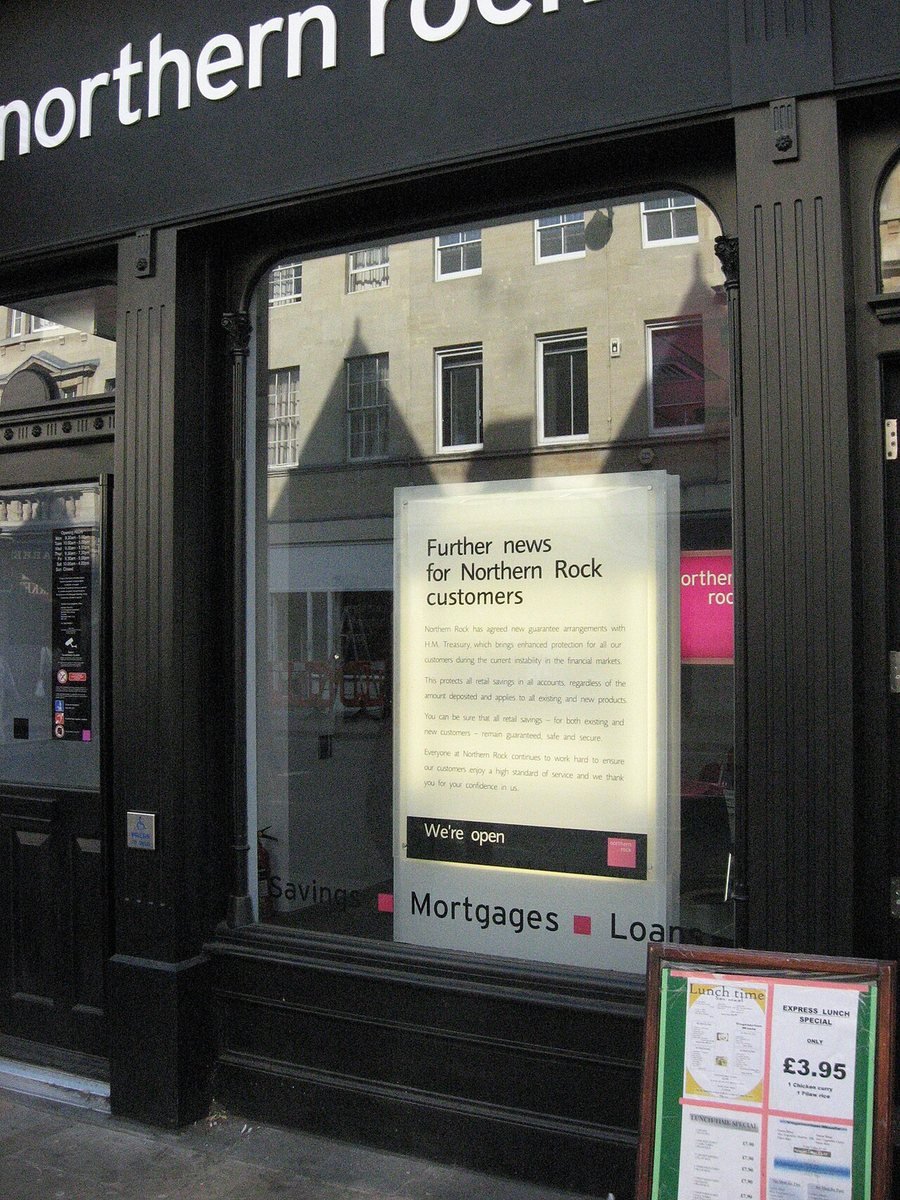
The guarantee was extended to new deposits and other liabilities, and Bank of England lending kept climbing, to about £26 billion by January 2008. Chairman Matt Ridley resigned in October, and chief executive Adam Applegarth said in November that he would leave by the end of the year.
Bidders lined up, including Virgin Group with partners and Olivant, while the deposit protection scheme was changed from 1 October 2007 to cover 100% of the first £35,000 with no co-insurance.
2007
Darling guarantees the deposits Policy
After three days of queues and a slide in the shares of other mortgage lenders, Chancellor Alistair Darling announced that the government, with the Bank of England, would guarantee all existing deposits at Northern Rock during the market turmoil. The queues faded on Tuesday.
The guarantee did what the Bank of England facility could not: it removed the reason for each saver to get out before the others.
2007
Britain’s first bank run in about 150 years Crisis
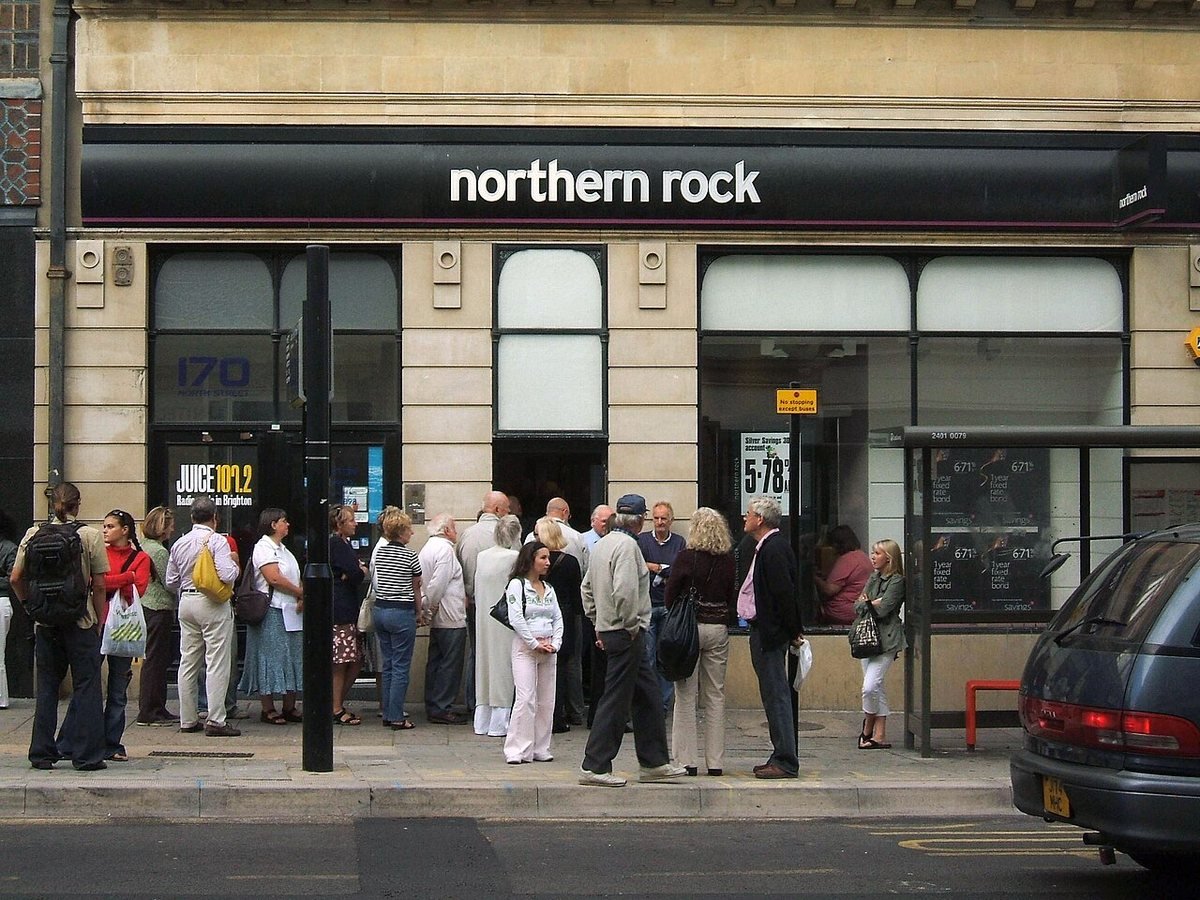
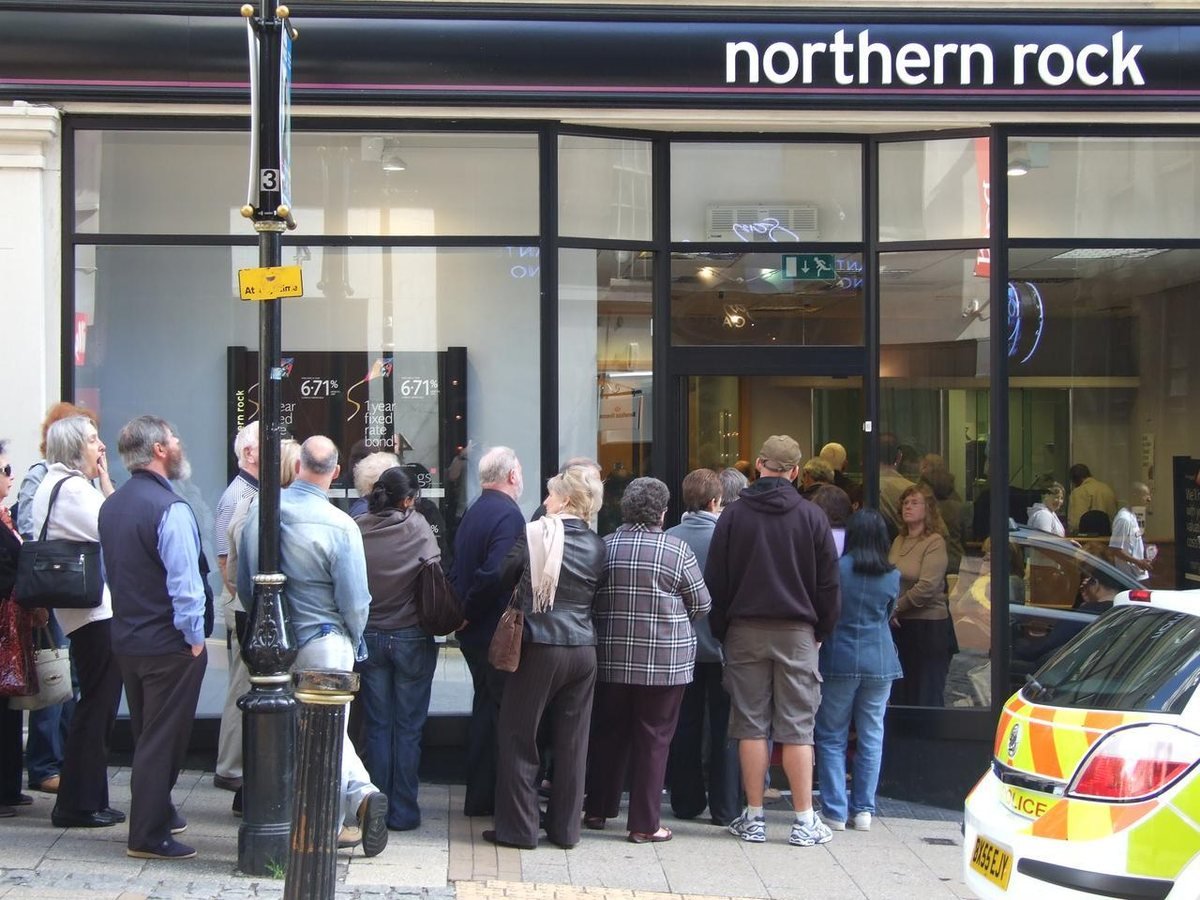
Within hours of the 7am announcement, savers were queuing outside Northern Rock branches across the country. The website struggled and phone lines jammed, pushing more people to the branches. About £1 billion was withdrawn on Friday alone, roughly 5% of retail deposits, and the queues returned on Saturday and Monday.
Each saver had a reason to run even without believing the bank was bust: deposit protection covered only 90% above £2,000, up to £31,700, and payouts could take months.
2007
The rescue becomes public Crisis
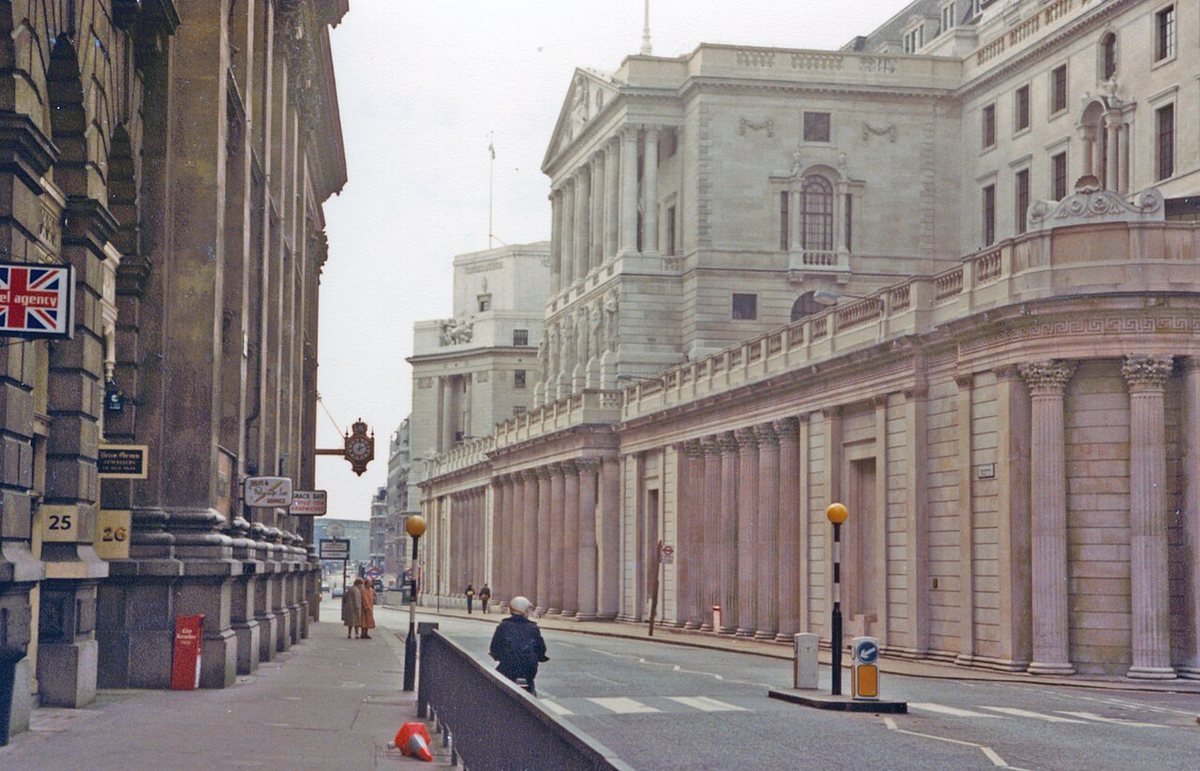
On the evening of Thursday 13 September, BBC business editor Robert Peston reported that Northern Rock had asked the Bank of England for emergency support. At 7am the next day the Bank confirmed that the Chancellor had authorised a liquidity support facility, lent against appropriate collateral at an interest-rate premium.
The facility was meant to calm fears. But it was news savers heard before any reassurance about their own money.
2007
A private rescue fails Pressure
Northern Rock, the FSA, the Bank of England and the Treasury looked for a way out. Lloyds TSB considered a takeover but wanted a large standby loan from the Bank of England, which the authorities would not give. A secret rescue was also ruled out on legal and practical grounds, and on 12 September Northern Rock asked for official support.
2007
The credit markets freeze Crisis
French bank BNP Paribas froze three investment funds, saying it could not value their US subprime mortgage assets. Banks stopped trusting each other’s balance sheets and interbank lending rates jumped. Investors stopped buying mortgage-backed securities of almost every kind.
For Northern Rock, which needed to refinance large sums every few months, the closure of these markets was a direct threat. Its own mortgages were not subprime; the problem was that it could no longer borrow.
2007
Britain’s fastest-growing mortgage lender Growth
Northern Rock wrote more new UK mortgages than any other lender in the first half of 2007, close to a fifth of the market, much of it through brokers on competitive rates. Its Together product combined a mortgage with an unsecured loan up to 125% of a home’s value.
Growing that fast needed a constant flow of new funding. At the end of June 2007 its balance sheet was about £113 billion.
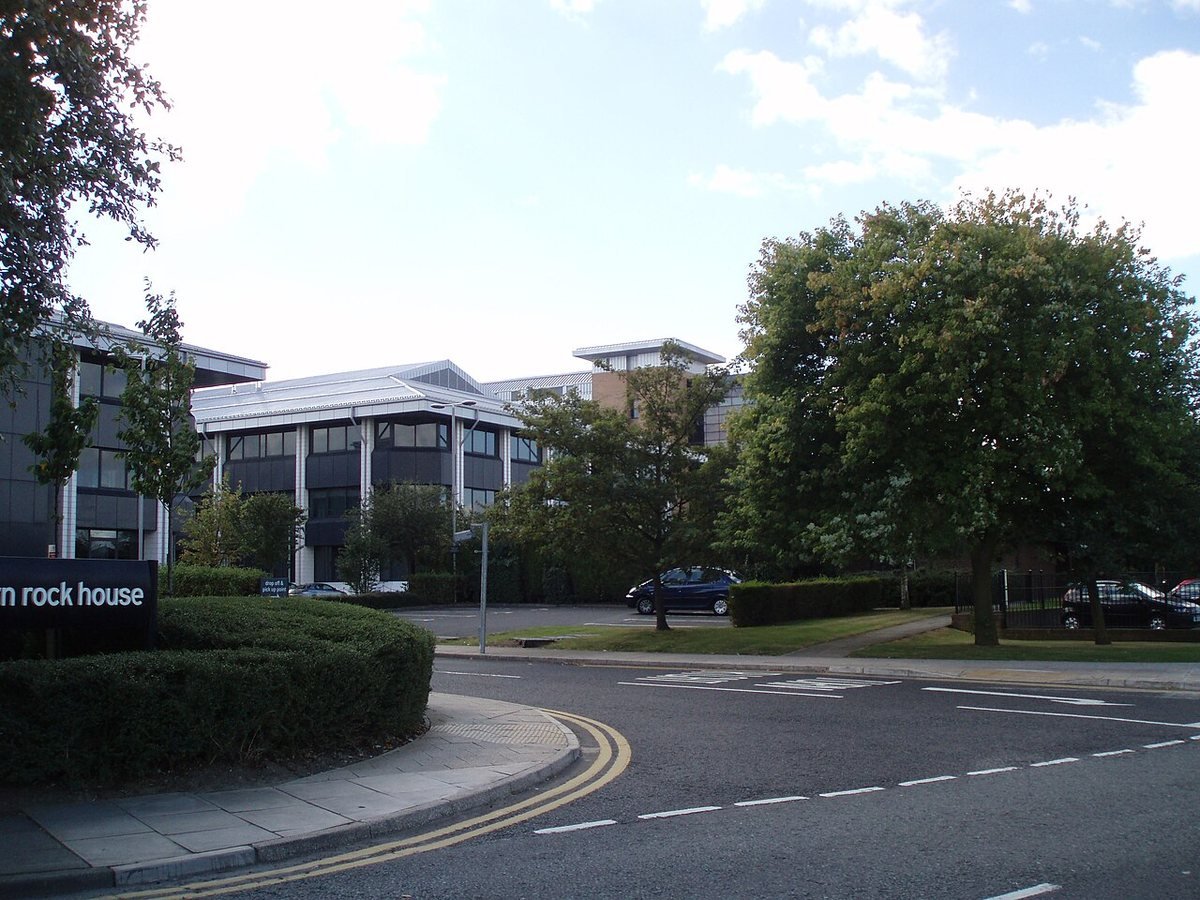
2006
A building society becomes a market-funded bank Growth
After floating, Northern Rock grew its balance sheet at roughly 20% a year. It funded that growth through short-term wholesale borrowing, covered bonds and securitisation via Granite, a Jersey-based vehicle that issued bonds backed by its mortgages.
According to the Federal Reserve Bank of St Louis, retail deposits fell from 62.7% of liabilities at the end of 1997 to 22.4% at the end of 2006. The model worked while markets were open and cheap. It had little protection if they closed for months.
1997
Northern Rock demutualises Event
Northern Rock Building Society converted into a bank and floated on the stock market, one of a wave of 1990s demutualisations. Members received free shares; the Northern Rock Foundation, a charity, received a large stake and a share of profits. The bank was later promoted to the FTSE 100.
Two North East societies merge Event
Northern Rock was formed by the merger of the Northern Counties Permanent Building Society, founded in 1850, and the Rock Building Society, founded in 1865. For three decades it was a regional mutual, owned by its savers and borrowers.
Would Your Savings Have Been Safe?
The 2007 safety net had a hole in it, and savers knew it.
Pick a balance. How much would the compensation scheme have paid back in September 2007, and how much today?
In September 2007 the FSCS paid 100% of the first £2,000 and 90% of the next £33,000. Today it pays 100% up to £120,000. The meter shows the share of your balance protected under the 2007 rules. Illustration only: one person, one bank.
Why Did Northern Rock Fail?
A liquidity crisis that confidence turned into a collapse.
1. It depended on wholesale funding
Northern Rock financed much of its lending by borrowing from other financial institutions and selling mortgage-backed bonds, rather than relying on savers. Wholesale money is cheap and plentiful in good times, but it is short-term and must be rolled over. When lenders stop rolling it over, a bank needs cash it does not have.
2. It was a funding crisis, not a subprime one
Northern Rock’s own arrears were low in 2007. The problem was liquidity, not immediate solvency: the bank owned valuable long-term mortgages but could not turn them into cash fast enough without huge discounts. That distinction is why the Bank of England could lend against its assets in the first place.
3. Securitisation stopped working
Through Granite, Northern Rock packaged mortgages into bonds to fund new loans. In August 2007 investors stopped buying mortgage-linked securities of almost any quality, so the pipeline that paid for its growth closed overnight.
4. Growth outran resilience
Writing close to a fifth of new UK mortgages in early 2007 required constant new funding. The bank had no plan that worked if markets stayed shut for months, and its insurance arrangements with other banks were too small for a market-wide freeze.
5. Supervisors and the safety net fell short
The Treasury Committee said the FSA had ‘systematically failed’ in its duty, and the FSA’s internal review admitted it. The tripartite system split responsibility between the Treasury, the Bank and the FSA, with no clear leader in a crisis. And a deposit scheme with co-insurance and slow payouts gave savers every reason to queue.
Pick a moment. How much of Northern Rock was funded by ordinary savers?
The meter shows retail deposits as a share of the bank’s liabilities, from Northern Rock’s accounts as analysed by the Federal Reserve Bank of St Louis. Everything else depended on markets staying open.
How Much Did the Northern Rock Rescue Cost?
Loans, guarantees, capital and sale proceeds are different things. Adding them together is misleading.
| Figure | Value | What it measures |
|---|---|---|
| Withdrawals, first day | ~£1bn | 14 Sep 2007, about 5% of retail deposits |
| Withdrawals, whole run | just over £4.6bn | Over a few days in September 2007 (NAO) |
| Bank of England lending | ~£26bn | Peak liquidity support, January 2008; repaid |
| Government guarantees | deposits and other liabilities | A promise to cover losses, not cash spent |
| Capital into Northern Rock plc | £1.4bn | Injected before the sale to Virgin Money |
| Virgin Money price | £747m up front | Plus possible later payments; completed 1 Jan 2012 |
| Cerberus portfolio | £13bn | NRAM mortgages and loans; £280m over book value |
| Final NRAM / B&B sale | £5bn | February 2021, Davidson Kempner-led consortium |
| Shareholder compensation | £0 | Independent valuer assumed no public support |
| Deposit protection, 2007 | £31,700 max | 100% of £2,000 + 90% of next £33,000 |
| Deposit protection, 2026 | £120,000 | Per person per bank, since 1 Dec 2025 |
Lending is not spending
The Bank of England’s peak lending of about £26 billion was secured against Northern Rock’s assets and repaid. Government guarantees were commitments to cover losses if they arose, not cash handed over. Both put public money at risk, but neither is the same as a loss.
What came back
The retail bank was sold to Virgin Money for £747 million up front, after the government had injected £1.4 billion of capital into it. The much larger mortgage book was run down and then sold, including £13 billion to Cerberus in 2016 at a £280 million premium to book value and a final £5 billion sale with Bradford & Bingley assets in 2021.
What it really cost
The government has said it recovered significant sums of taxpayer money from Northern Rock and Bradford & Bingley. A full account would also include the cost of public borrowing, the risk taxpayers carried for more than a decade, shareholders wiped out at a zero valuation, and borrowers who became mortgage prisoners. There is no single honest headline number.
What Changed After Northern Rock?
- Stronger deposit protection: co-insurance ended in October 2007; the limit is now £120,000, and payouts are designed to arrive within days.
- A Special Resolution Regime: the Banking Act 2009 lets the Bank of England take over or wind down a failing bank without emergency legislation.
- Liquidity rules: banks must now hold enough liquid assets for a 30-day stress (the liquidity coverage ratio) and fund long-term loans with stable money (the net stable funding ratio).
- New supervisors: the FSA was abolished in 2013 and replaced by the Prudential Regulation Authority, inside the Bank of England, and the Financial Conduct Authority.
- Communication: central banks learned that a rescue announced without depositor reassurance can start the panic it is meant to prevent.
Northern Rock vs Silicon Valley Bank
Same warning, different era. Scroll sideways on a phone.
| Factor | Northern Rock (2007) | Silicon Valley Bank (2023) |
|---|---|---|
| Main business | UK mortgage lending | Banking for tech and venture-capital clients |
| Funding weakness | Wholesale markets and securitisation | Concentrated, mostly uninsured deposits |
| What went wrong first | Credit markets froze | Losses on bonds as interest rates rose |
| Speed of the run | Branch queues over days (~£4.6bn) | Online, $42bn in one day |
| Public response | Bank of England loan, then deposit guarantee | FDIC closure; all deposits protected |
| Outcome | Nationalised, split, sold | Sold to First Citizens within weeks |
The details differ, but the lesson matches: a bank’s funding structure can turn market stress into a crisis within days, and once people believe others will run, running first becomes the rational choice. Read the full Silicon Valley Bank collapse timeline.
Who Was Involved
Adam Applegarth
Led Northern Rock’s rapid growth from 2001; announced his departure in November 2007.
Matt Ridley
Chaired the board through the run; resigned on 19 October 2007.
Alistair Darling
Guaranteed deposits on 17 September 2007 and announced nationalisation on 17 February 2008.
Bank of England
Governor Mervyn King’s Bank provided the support facility, peaking at about £26 billion.
Financial Services Authority
Admitted supervisory failures; abolished in 2013.
Virgin Money
Bid in 2007, bought Northern Rock plc in 2012; itself bought by Nationwide in 2024.
Why It Matters for Indian Readers
India has had its own confidence shocks, from the 2020 moratorium on Yes Bank to the 2019 failure of PMC Bank, where savers were limited to small withdrawals. Indian deposit insurance through the DICGC covers ₹5 lakh per depositor per bank, raised from ₹1 lakh in 2020, with payouts promised within 90 days. Northern Rock’s lesson applies directly: a protection limit only calms savers if they know it exists and believe it will pay quickly.
Explore More Timelines
People Also Ask
Frequently Asked Questions
Conclusion: When Confidence Became the Crisis
Northern Rock’s failure began with a funding model that assumed markets would always be open. When they closed, the bank needed emergency help, and the way savers learned about that help turned a funding problem into a public run. It was nationalised, split, and sold off piece by piece over 13 years, and in 2026 its descendants are still changing hands and still in court.
The lesson has not aged: a bank does not need to run out of valuable assets to fail. It only needs to run out of cash, and out of the confidence of the people who lent it money.
Related AiTimeline Stories
⚠️ Editorial Note
Figures come from the Bank of England, the National Audit Office, the Commons Treasury Committee, HM Treasury, UK Asset Resolution, the FSCS and PRA, the Federal Reserve Bank of St Louis and court reporting. The £4.6 billion figure is the NAO’s total for the run; earlier running totals were lower. Loans, guarantees and sale proceeds measure different things and should not be added together. Current to 14 October 2026. This is general information, not financial advice.
Sources & further reading
Every dated entry above was checked against these references. Last reviewed 14 October 2026.
- Bank of England: Liquidity support facility for Northern Rock plc, 14 September 2007
- National Audit Office: HM Treasury, The nationalisation of Northern Rock (2009)
- House of Commons Treasury Committee: The run on the Rock (2008)
- Federal Reserve Bank of St Louis Review: Shattered on the Rock? British financial stability from 1866 to 2007 (Milne and Wood)
- HM Treasury: Chancellor announces sale of Northern Rock plc to Virgin Money (2011)
- Public Accounts Committee: The creation and sale of Northern Rock plc
- UKGI: Largest ever sale of financial assets by a government in Europe (UKAR sale to Cerberus)
- HM Treasury: Government completes final £5 billion sale of Bradford & Bingley plc and NRAM Limited (2021)
- Bank of England / PRA: FSCS deposit limit increased to £120,000 from 1 December 2025
- Addleshaw Goddard: Court of Appeal 2026 ruling on Northern Rock mortgage claims (Breeze v TSB)
- Santander UK: Santander UK completes cash acquisition of TSB Banking Group (2026)
- Virgin Money: Transfer of Virgin Money's business to Nationwide